1930 Austin Seven 'Box' Saloon

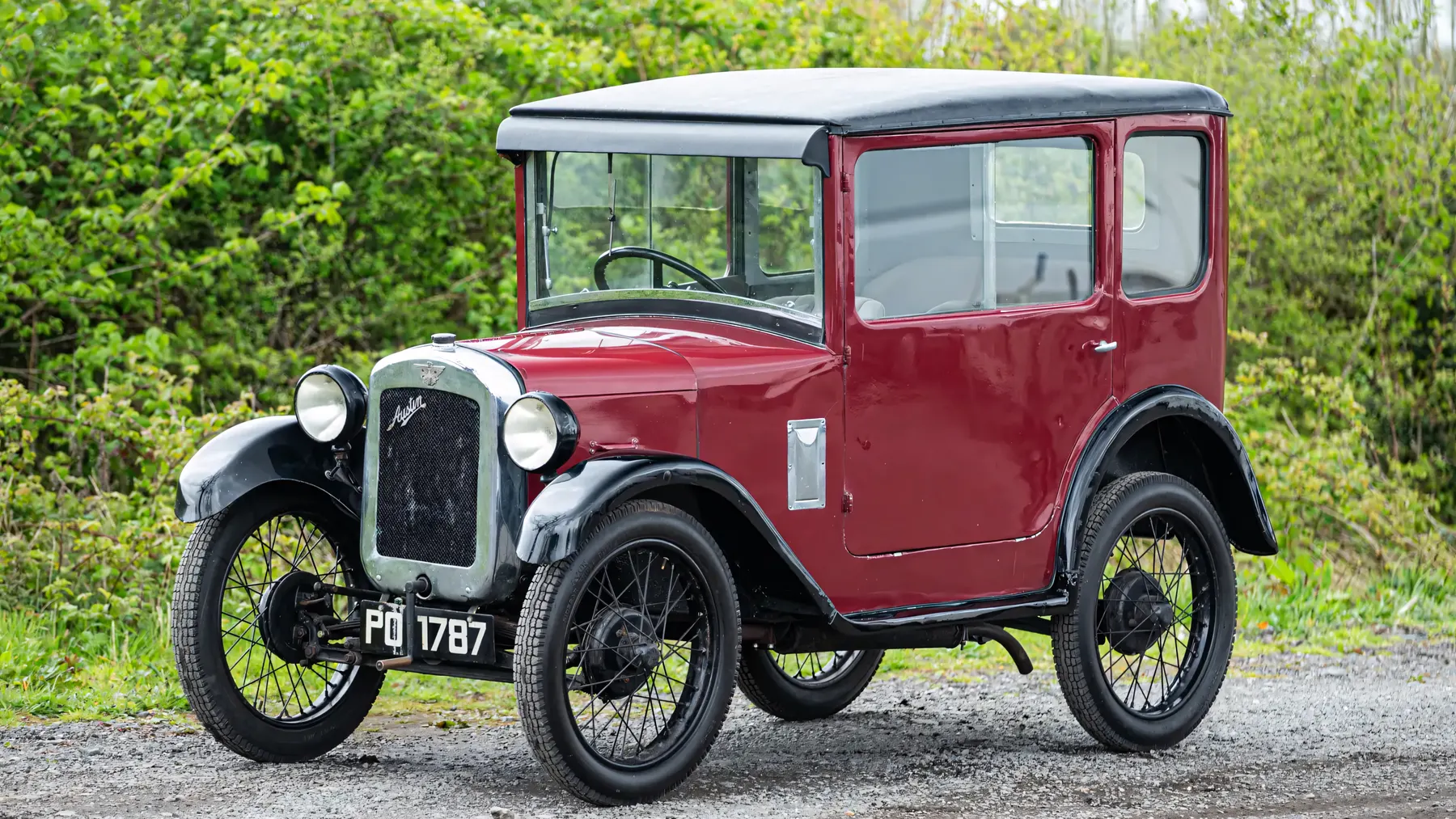
The automotive landscape of the late 1920s witnessed a fundamental shift in consumer preferences that would reshape the British motor industry forever. As the decade drew to a close, the romance of open-air motoring began yielding to practical considerations, and closed saloon cars started outselling their open-topped counterparts. Austin Motor Company, keenly aware of this trend, responded with characteristic ingenuity by developing what became known as the Austin Seven ‘Box’ Saloon, a remarkably practical interpretation of their revolutionary small car concept.
The Box Saloon represented Austin’s pragmatic answer to changing market demands while maintaining the essential character that made the Austin Seven such a transformative vehicle. By 1930, the writing was clearly on the wall - ‘tin tops’ had overtaken open tourers in popularity, prompting Austin to create this steel-bodied derivative of their immortal Seven. This wasn’t merely a case of following trends; it was Austin recognizing that their customers wanted the freedom and economy of small car ownership without sacrificing weather protection and comfort.
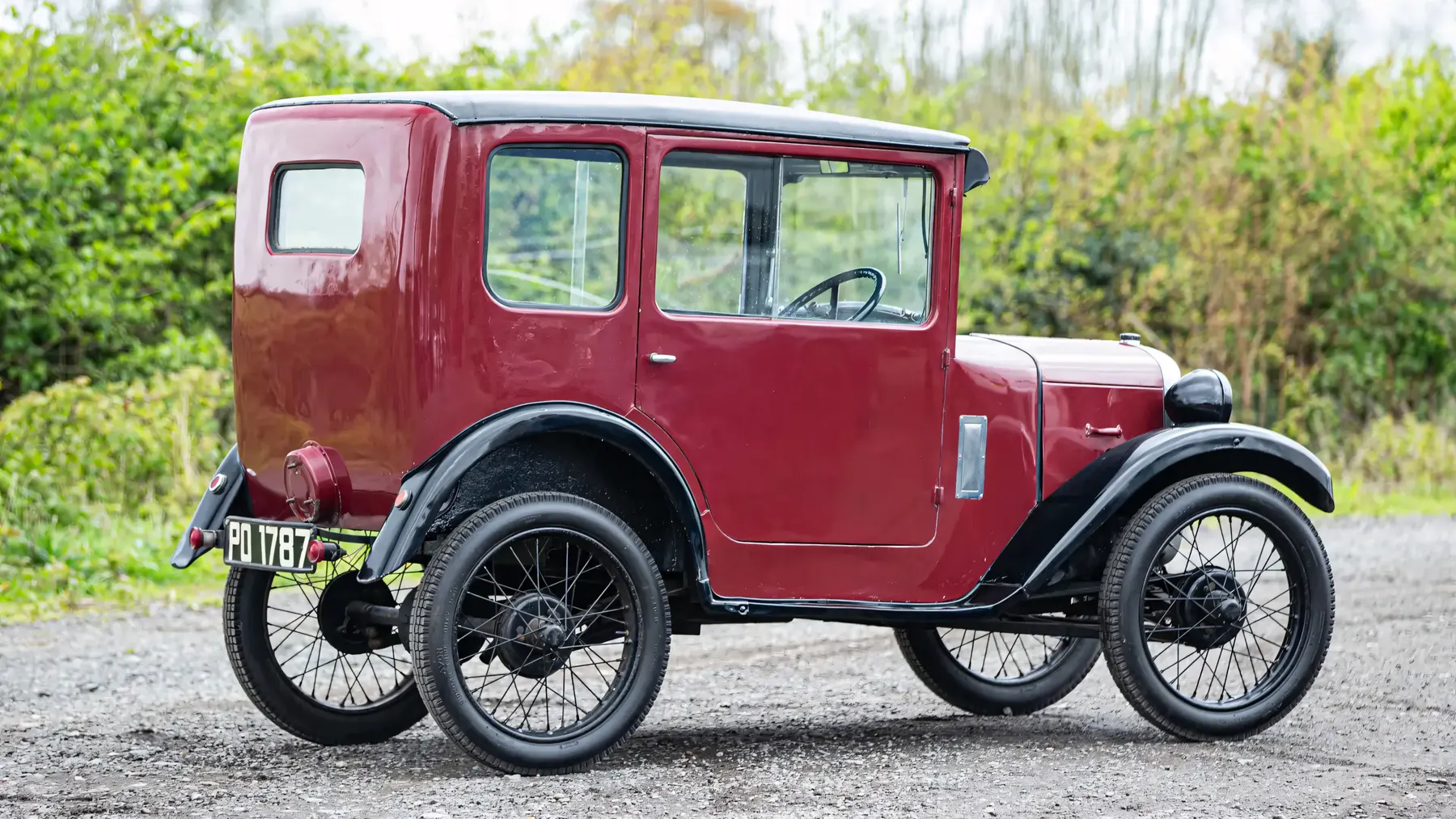
The Box Saloon retained the fundamental engineering brilliance that made the original Austin Seven such a revolutionary machine. At its heart lay the familiar A-frame chassis design, a stroke of engineering genius that Sir Herbert Austin and his young draughtsman Stanley Edge had conceived in Austin’s billiard room during their clandestine development work. This chassis configuration, with its engine mounted between the channel sections at the narrow front end, provided exceptional rigidity for such a diminutive vehicle while keeping weight to an absolute minimum.
The steel body was bolted directly to this A-frame chassis, creating a remarkably robust structure for such a small car. This construction method represented a significant advancement over the fabric-bodied alternatives that had initially dominated the closed car market for the Seven. Where Gordon England’s aircraft-inspired fabric saloon had pioneered the concept of an enclosed Austin Seven, the Box Saloon democratized it with steel construction that was both more durable and more affordable to produce.
The powerplant that drove these charming saloons was Austin’s proven 747cc side-valve four-cylinder engine, a masterpiece of compact engineering that developed 24 brake horsepower at 4,500 revolutions per minute. This modest output might seem laughable by today’s standards, but in the context of the early 1930s, it provided entirely adequate performance for a car weighing just 360 kilograms. The engine featured a cast iron cylinder block with detachable head mounted on an aluminium crankcase, with the crankshaft running in roller and ball bearings and big-ends splash lubricated.
What made the Box Saloon genuinely remarkable was how it balanced performance with economy in a package that ordinary families could actually afford. The gutsy little engine could propel the compact four-seater to 96 kilometres per hour for those brave enough to explore its upper limits. More importantly for daily use, fuel consumption was rated at an impressive 35-40 miles per gallon, making it an economical choice during an era when every penny counted.
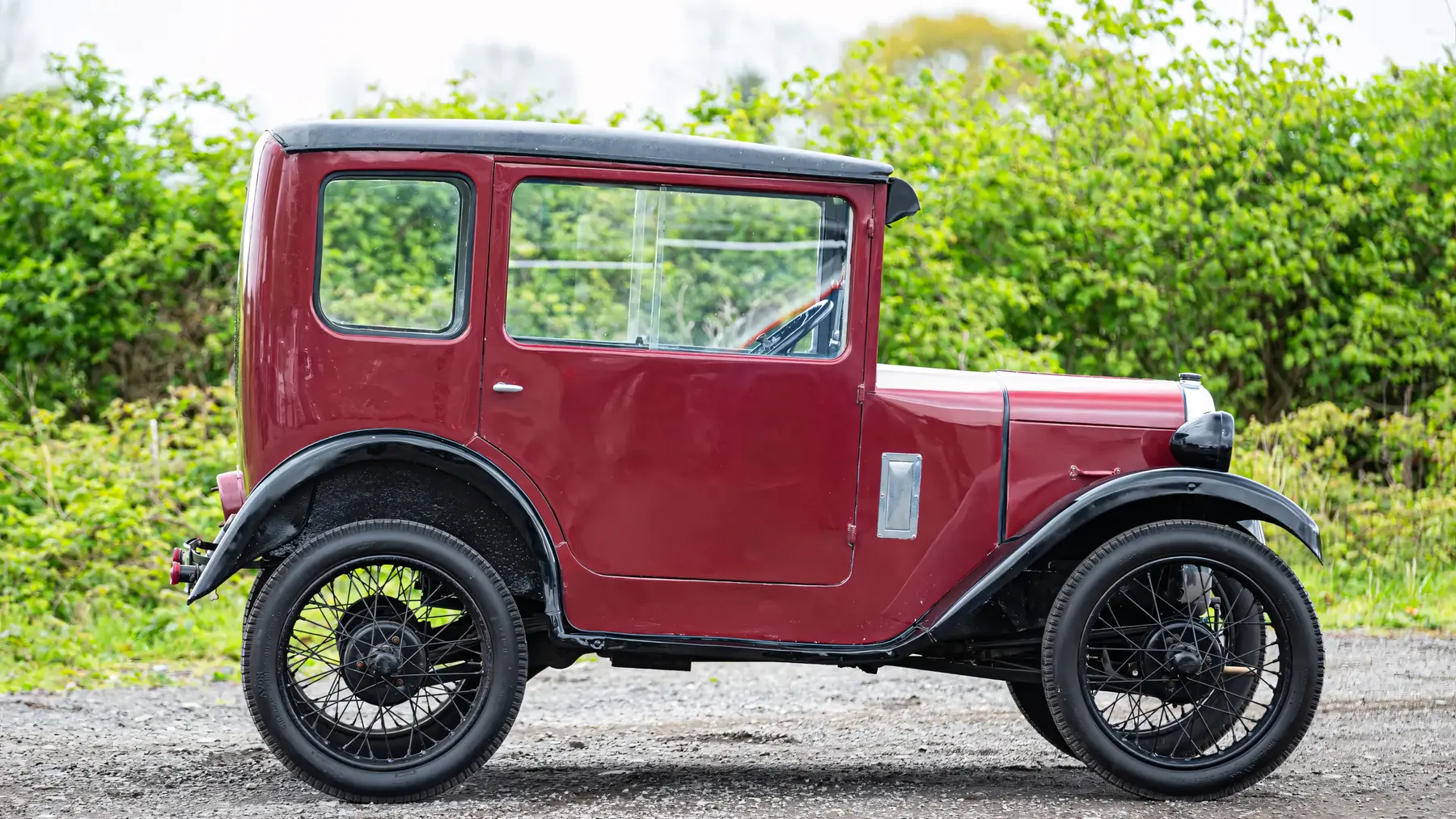
The car’s handling characteristics were transformed by Austin’s decision to lengthen the chassis by 152 millimetres in late 1931, creating what became known as the RN series introduced in 1932. This extended wheelbase particularly benefited rear seat passengers, addressing one of the few criticisms leveled at the original Seven’s compact dimensions. The longer wheelbase also improved the car’s stability and ride quality without significantly compromising its nimble character.
Steering was accomplished through a worm and wheel mechanism that provided positive control despite the car’s diminutive proportions. While not power-assisted, the Seven’s light weight made steering effort manageable even at parking speeds. The braking system represented one of the Seven’s most progressive features - cable-operated drum brakes on all four wheels were standard equipment, an unusual luxury for a small car in the 1920s.
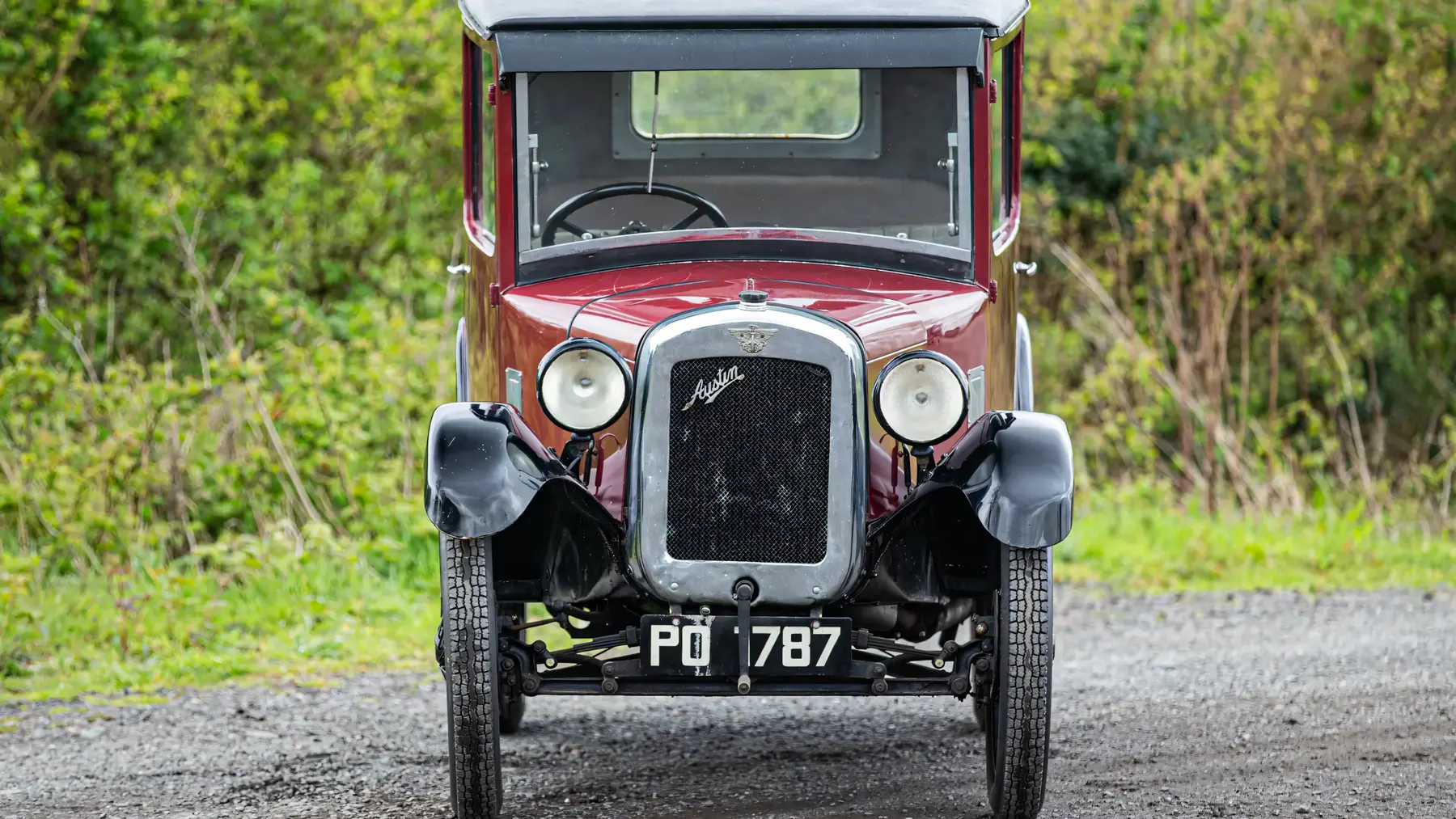
The Box Saloon incorporated several features that were genuinely advanced for its time and price point. The four-wheel braking system gave it stopping power that many larger, more expensive cars lacked. Initially, the system required some driver education, as the foot brake operated only the rear wheels while the handbrake controlled the fronts, but from 1930 onwards, Austin coupled the front and rear brakes for more conventional operation.
The transmission evolved throughout the Box Saloon’s production run, beginning with a three-speed gearbox that served until 1932, when a four-speed unit took over. This progression reflected Austin’s commitment to continuous improvement and their responsiveness to customer feedback. The gear ratios were carefully chosen to maximize the small engine’s modest torque output while providing reasonable top-speed capability.
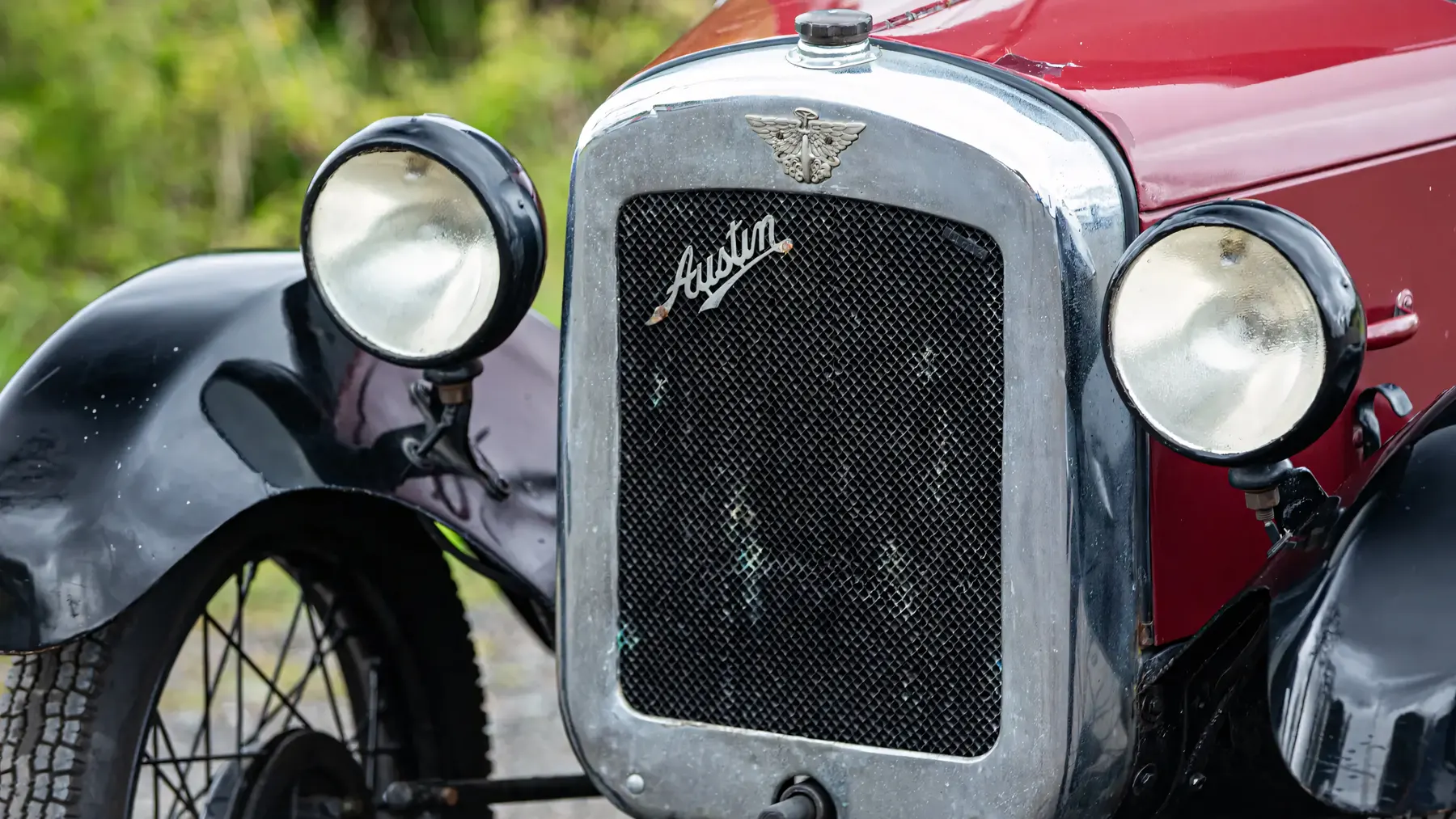
The Box Saloon’s introduction coincided with the Austin Seven reaching its stride as a mature, refined product. By the time these steel-bodied saloons appeared, Austin had already established the Seven as the car that transformed British motoring from a luxury pursuit to everyday transportation. The Box Saloon represented the culmination of this process, offering weather protection and respectability that opened car ownership to an even broader demographic.
The timing proved perfect, as the economic uncertainties of the early 1930s made the Seven’s combination of low purchase price, minimal running costs, and genuine practicality increasingly attractive. The Box Saloon provided all the benefits of motorized transport without the social stigma that might have attached to a more obviously utilitarian vehicle.
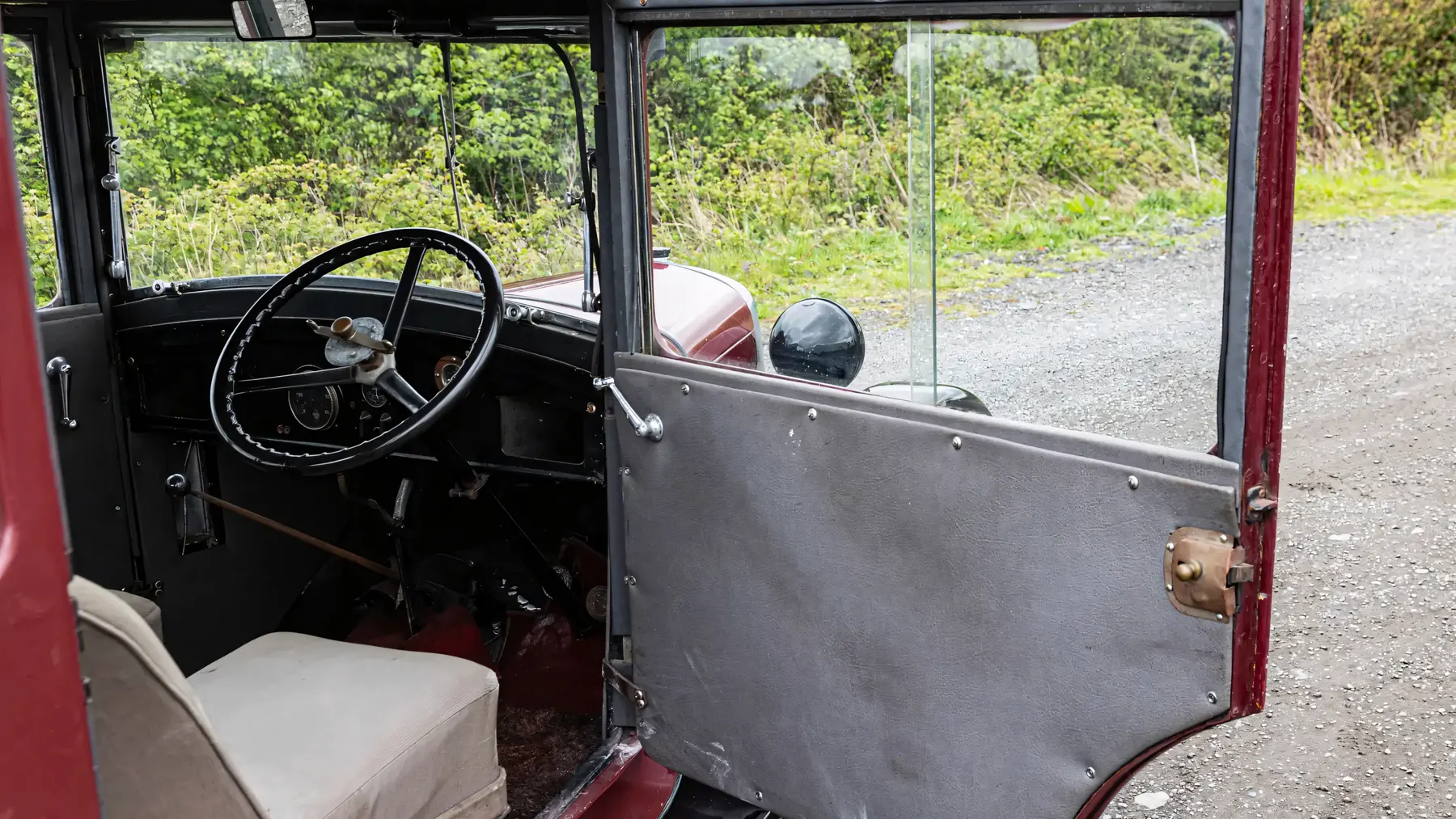
The RN series, with its longer wheelbase and improved passenger accommodation, represented the final refinement of the original vintage design concept before Austin introduced the more modern Ruby model in 1934. These charming saloons embodied everything that made the Austin Seven special - ingenious engineering, honest construction, and democratic accessibility - while adding the practical advantages of weather protection and increased respectability.
Today, the Austin Seven Box Saloon stands as a testament to the power of thoughtful engineering and market awareness. It demonstrated that innovation doesn’t always require revolutionary change; sometimes the greatest advances come from taking proven concepts and refining them to meet evolving needs. The Box Saloon helped establish the template for affordable family transportation that influenced automotive design for decades to come.
Join the discussion
Comments
Loading comments…
Leave a comment
Share a detail, memory, or perspective. Every comment is reviewed before publication.