1932 Ford Model 18 Two-Door Coupe Custom

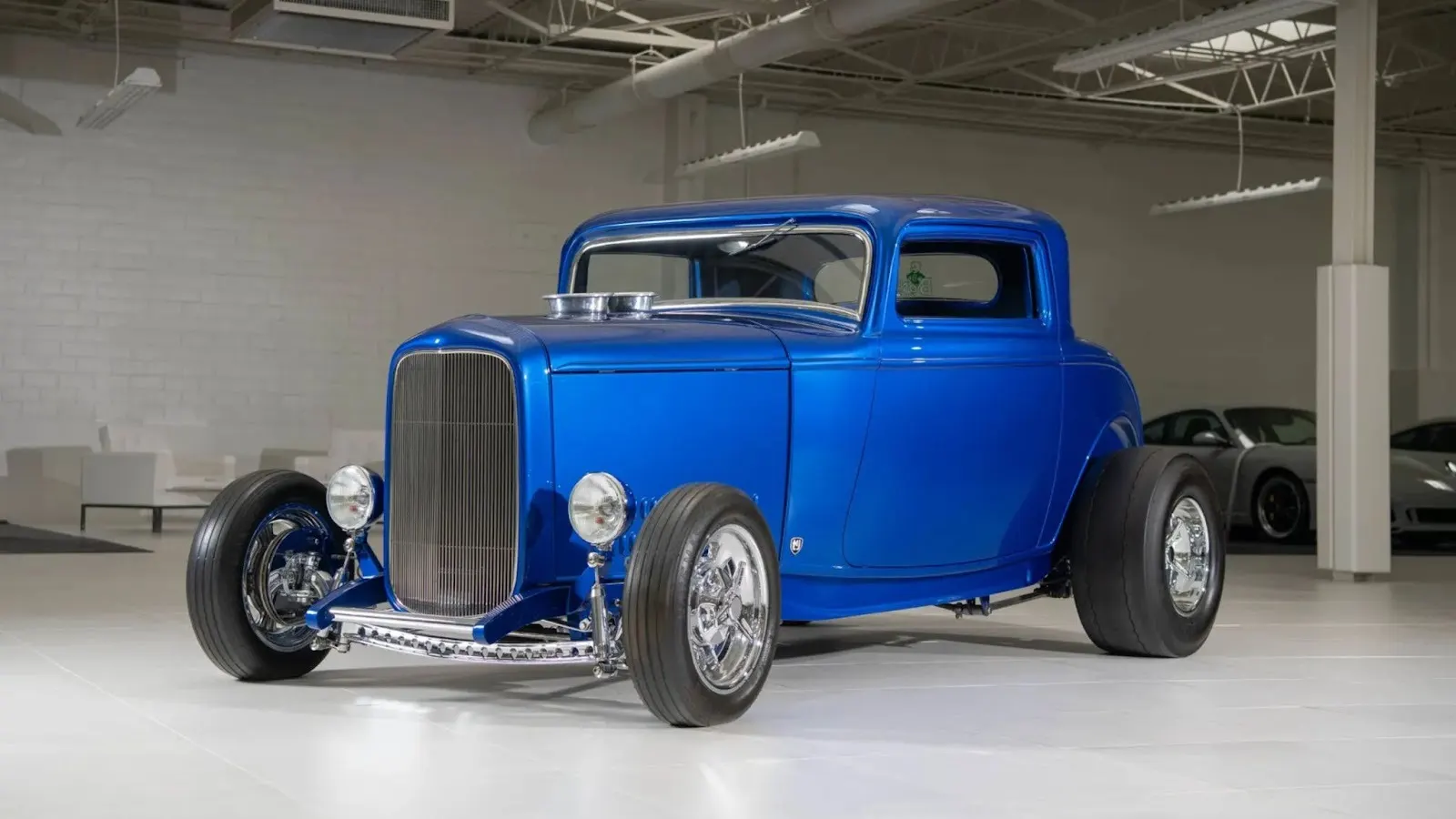
When it comes to American automotive icons, few cars hold a candle to the 1932 Ford Model 18. Known as the first low-priced, mass-marketed car to feature a V8 engine, the Model 18 revolutionised the industry and solidified Ford’s place in automotive history. But it’s the Model 18’s transformation into the quintessential hot rod that has truly immortalised this vehicle in popular culture.
The 1932 Ford lineup included the Model B, Model 18, and later, the Model 40, each succeeding the Model A. The Model 18 was particularly significant as it introduced the legendary flathead V8 engine. With a 221 cubic inch (3.6 L) displacement, this engine was rated at 65 horsepower,an impressive figure for its time. The Model 18’s powerful yet affordable V8 engine made it an instant hit, appealing to a wide range of drivers and enthusiasts.
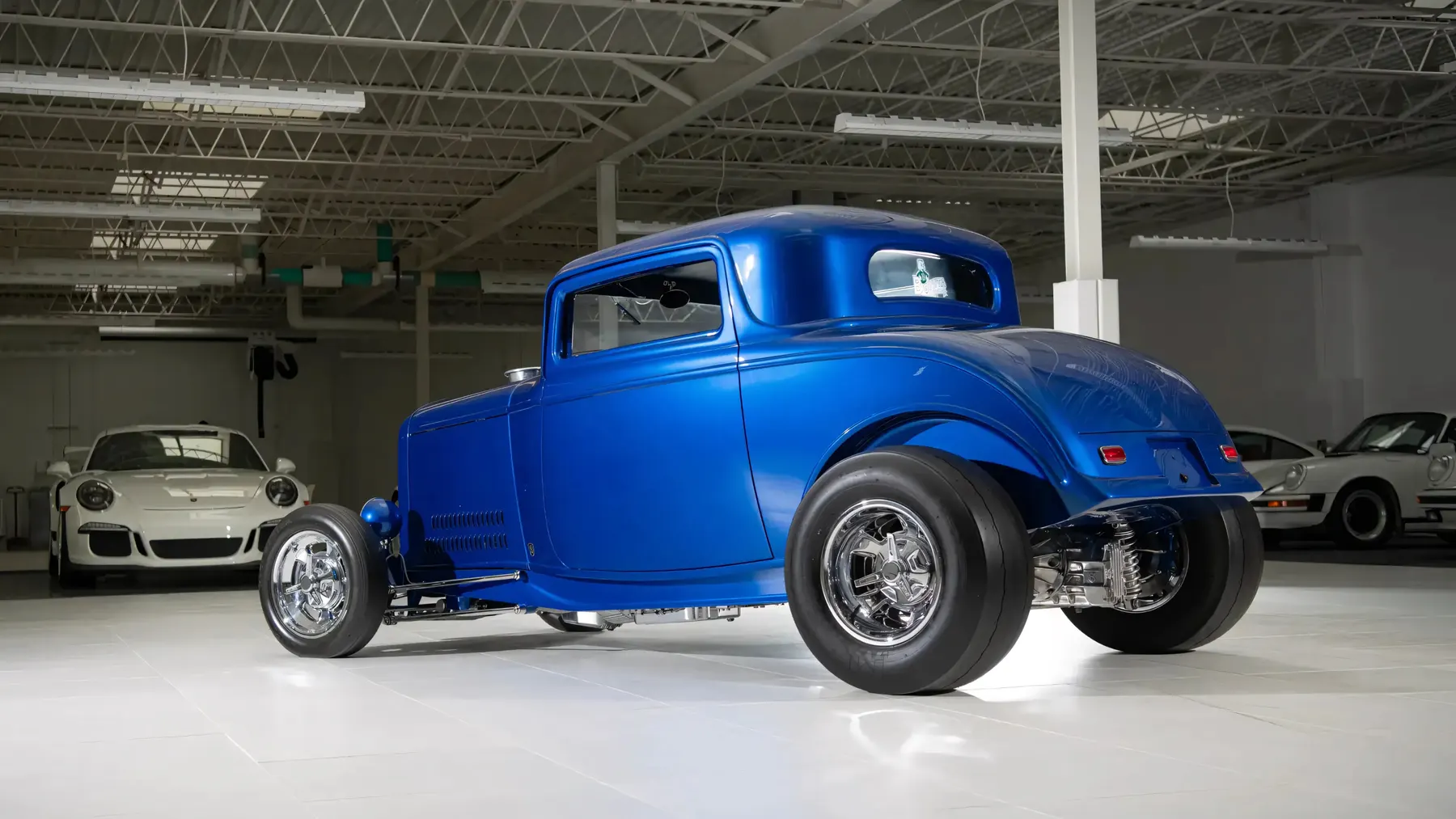
Ford offered the Model 18 in a variety of body styles, ranging from the utilitarian to the luxurious. This lineup included two-door roadsters, cabriolets, phaetons, sedans, station wagons, convertibles, and various commercial vehicles. Among these, the two-door coupe,particularly the three-window Deluxe Coupe,emerged as a favourite, especially among customizers and hot rod enthusiasts.
Post-World War II, young American men found the Model 18 to be an ideal canvas for customization. Plentiful and affordable, these cars became the foundation of the hot rod culture. Enthusiasts would strip down the cars to reduce weight and “hop up” the engines for increased power, transforming them into high-performance machines. This trend gave rise to the term “hot rod,” a nod to the souped-up nature of these vehicles.
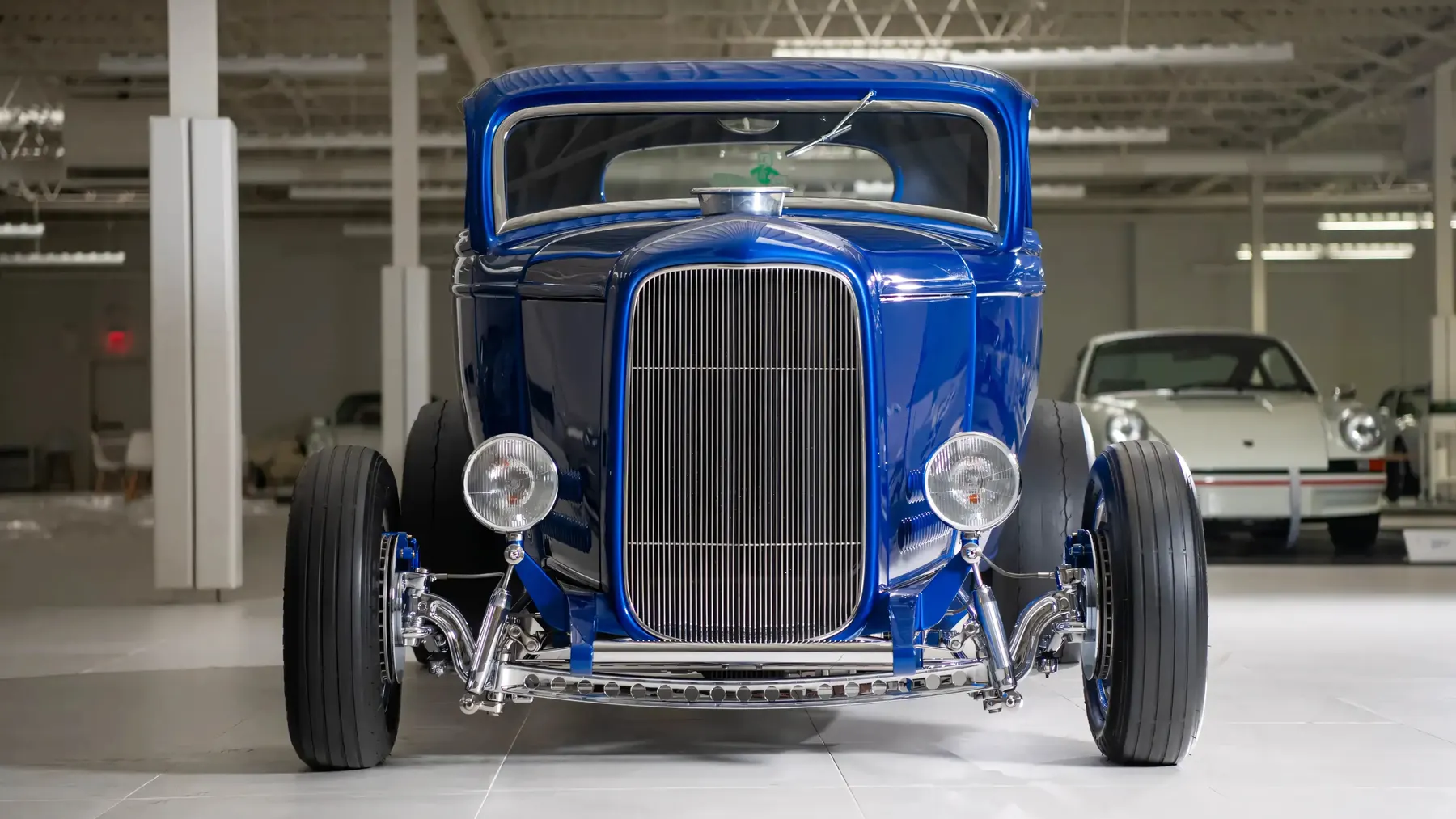
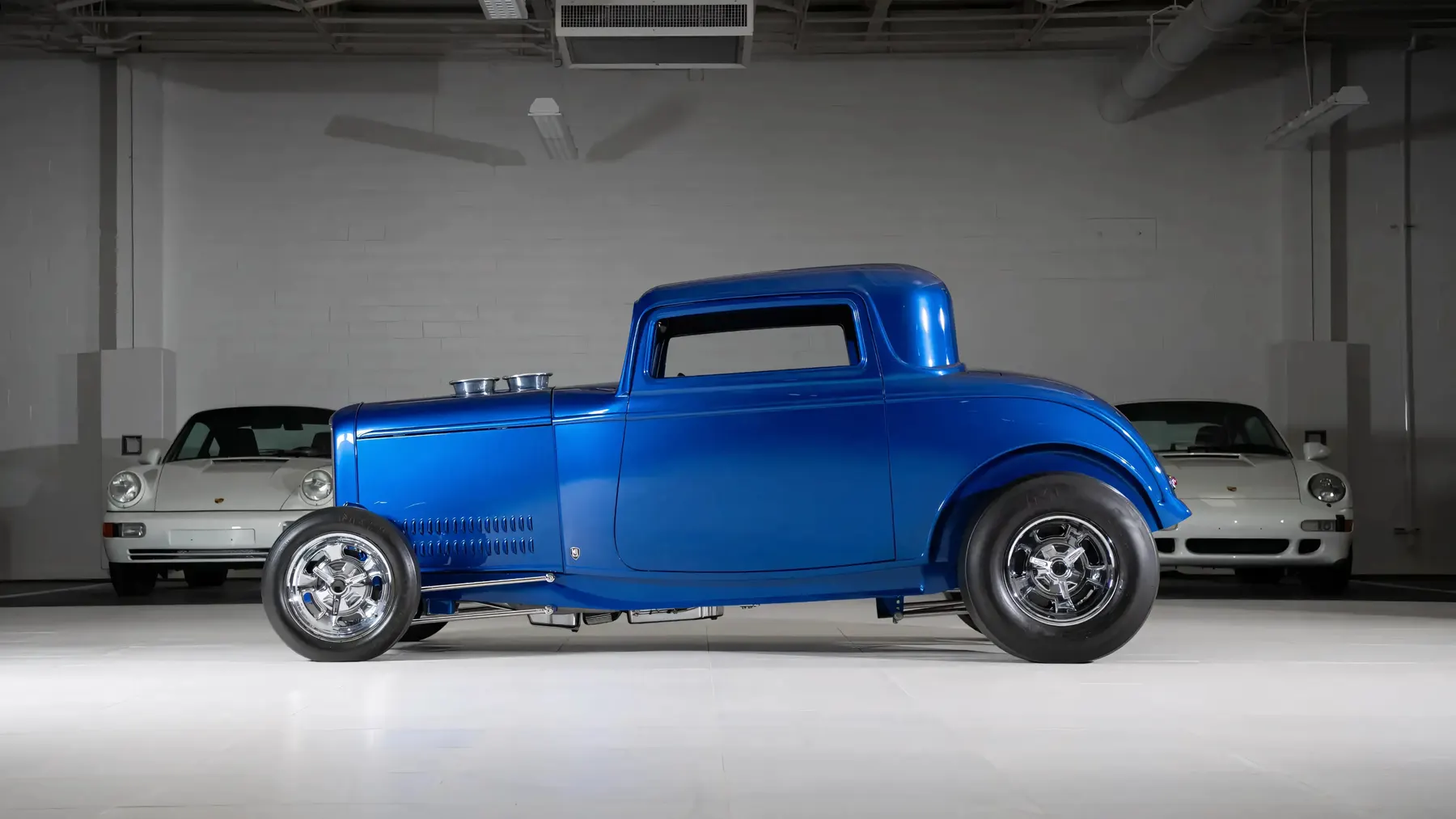
The 1932 Ford Coupe, affectionately dubbed the “Deuce Coupe” (with “deuce” indicating the year '32), gained iconic status in the world of hot rods. The Deuce Coupe, particularly the three-window model with its suicide doors, became synonymous with the hot rod culture of the 1940s and 1950s. These cars were often modified with features like '35 Ford wire-spoke wheels, hydraulic brakes, and sealed-beam headlights.
The Deuce Coupe’s cultural impact was further cemented by its presence in music and film. The Beach Boys immortalised it in their 1963 hit “Little Deuce Coupe,” while it played a starring role in the 1973 film “American Graffiti.” Bruce Springsteen also paid homage to the Deuce Coupe in his 1973 song “Blinded by the Light,” popularised by Manfred Mann’s Earth Band in 1977.
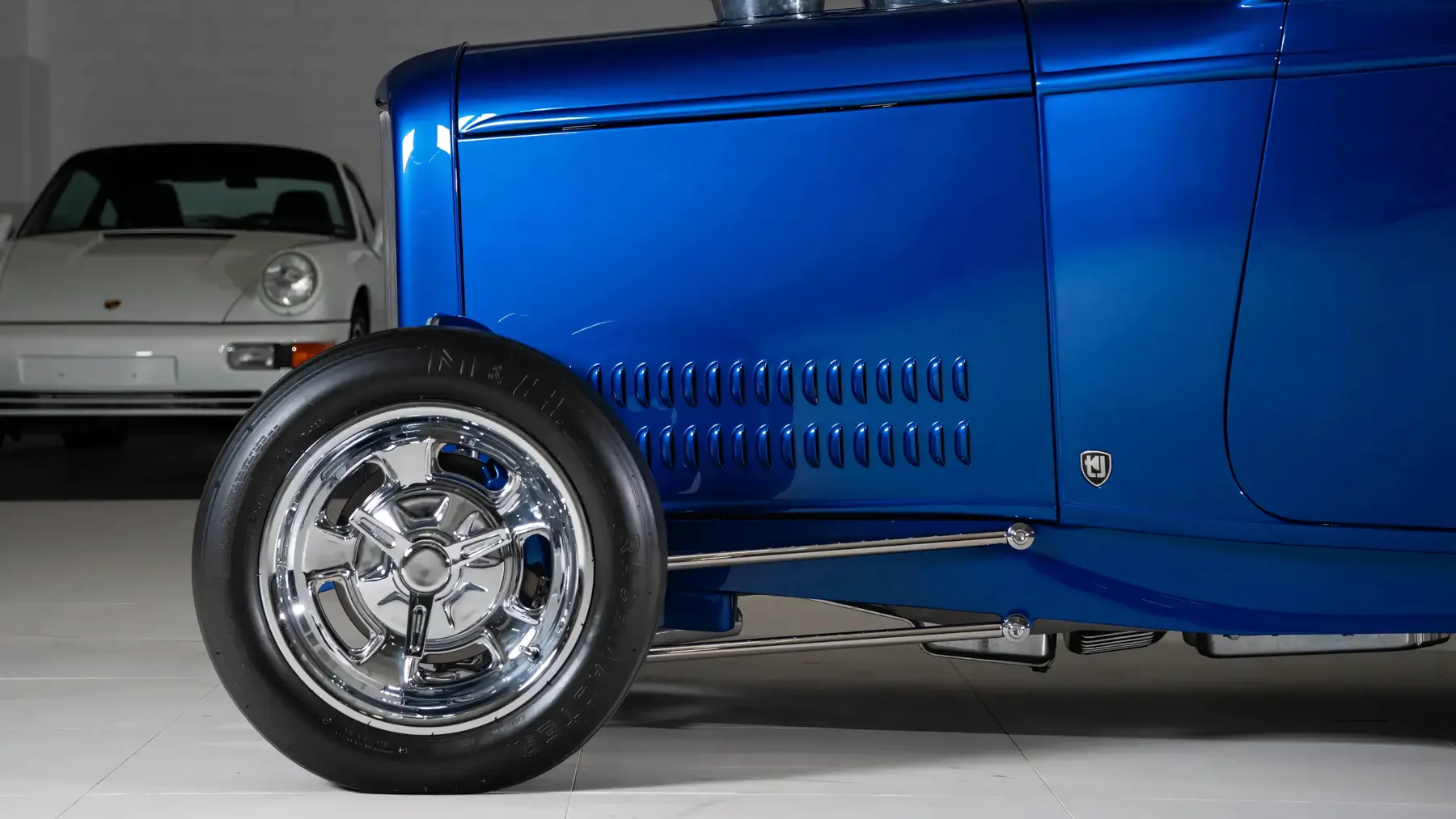
The custom Deuce Coupe of the mid-1950s to early 1960s typically featured a fenderless design and a chopped roof, enhancing its sleek and aggressive look. Many of these hot rods retained their original Ford or Mercury flathead V8 engines, often enhanced with aftermarket parts like Edelbrock intake manifolds and Navarro cylinder heads. A Halibrand quick-change rearend and front suspension hairpins adapted from sprint cars were also common modifications.
Today, companies like Brookville Roadster continue to reproduce 1932 Ford bodies in steel, allowing new generations of enthusiasts to build and restore these classic hot rods. Modern builds often incorporate vintage and reproduction parts, maintaining the spirit of the original hot rods while utilising contemporary technology.
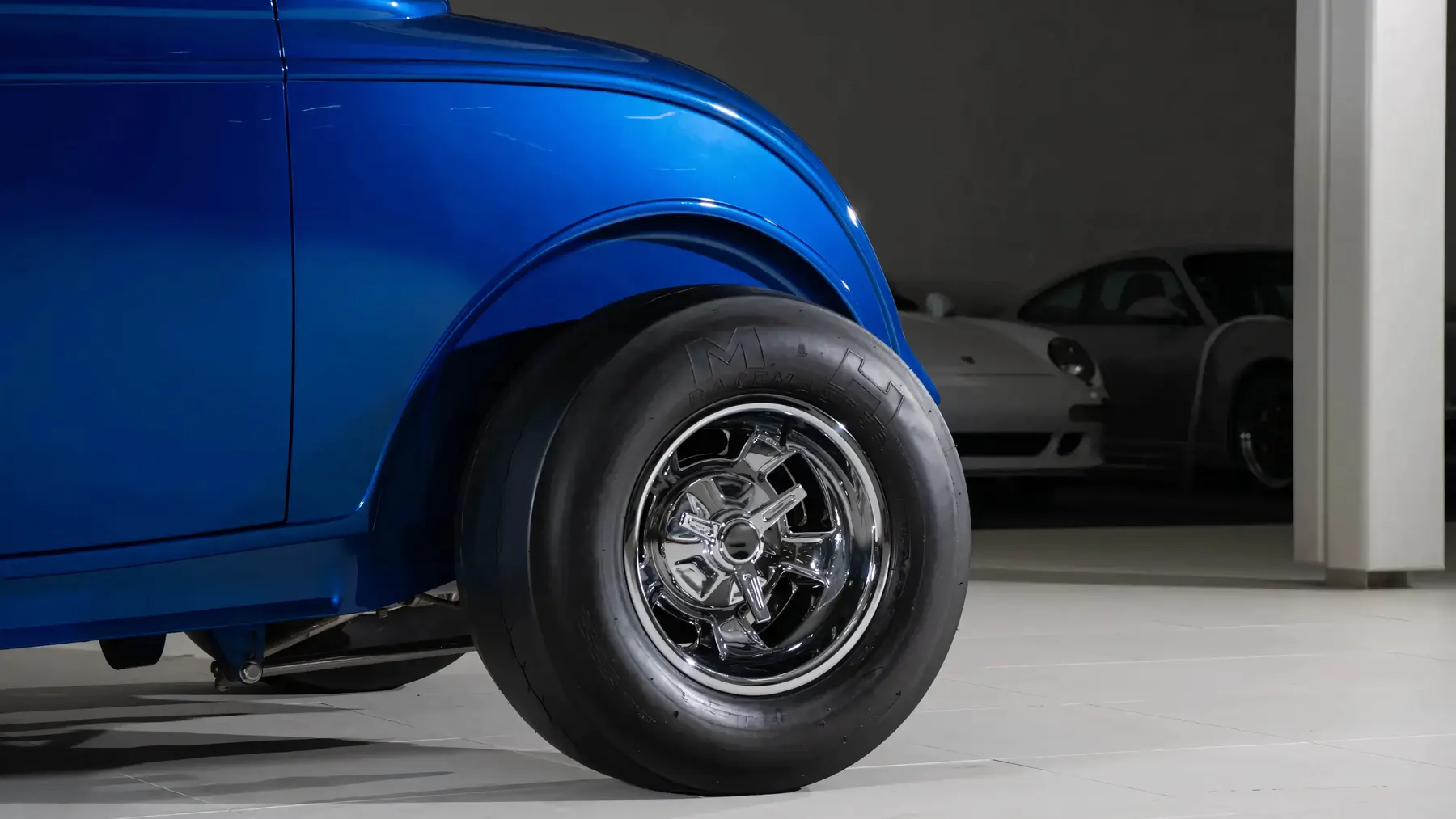
The Ford Model 18 Two-Door Coupe Custom is more than just a car; it is a symbol of American ingenuity, creativity, and culture. From its revolutionary V8 engine to its enduring legacy as the ultimate hot rod, the Deuce Coupe continues to captivate car enthusiasts and collectors around the world. Its storied history and iconic status ensure that the Ford Model 18 will remain a beloved and celebrated vehicle for generations to come.
**
Join the discussion
Comments
Loading comments…
Leave a comment
Share a detail, memory, or perspective. Every comment is reviewed before publication.