1933 Rigling & Henning-Duesenberg 'Jack C. Carr Special' Indianapolis
1933 Rigling & Henning-Duesenberg "Jack C. Carr Special" Indianapolis

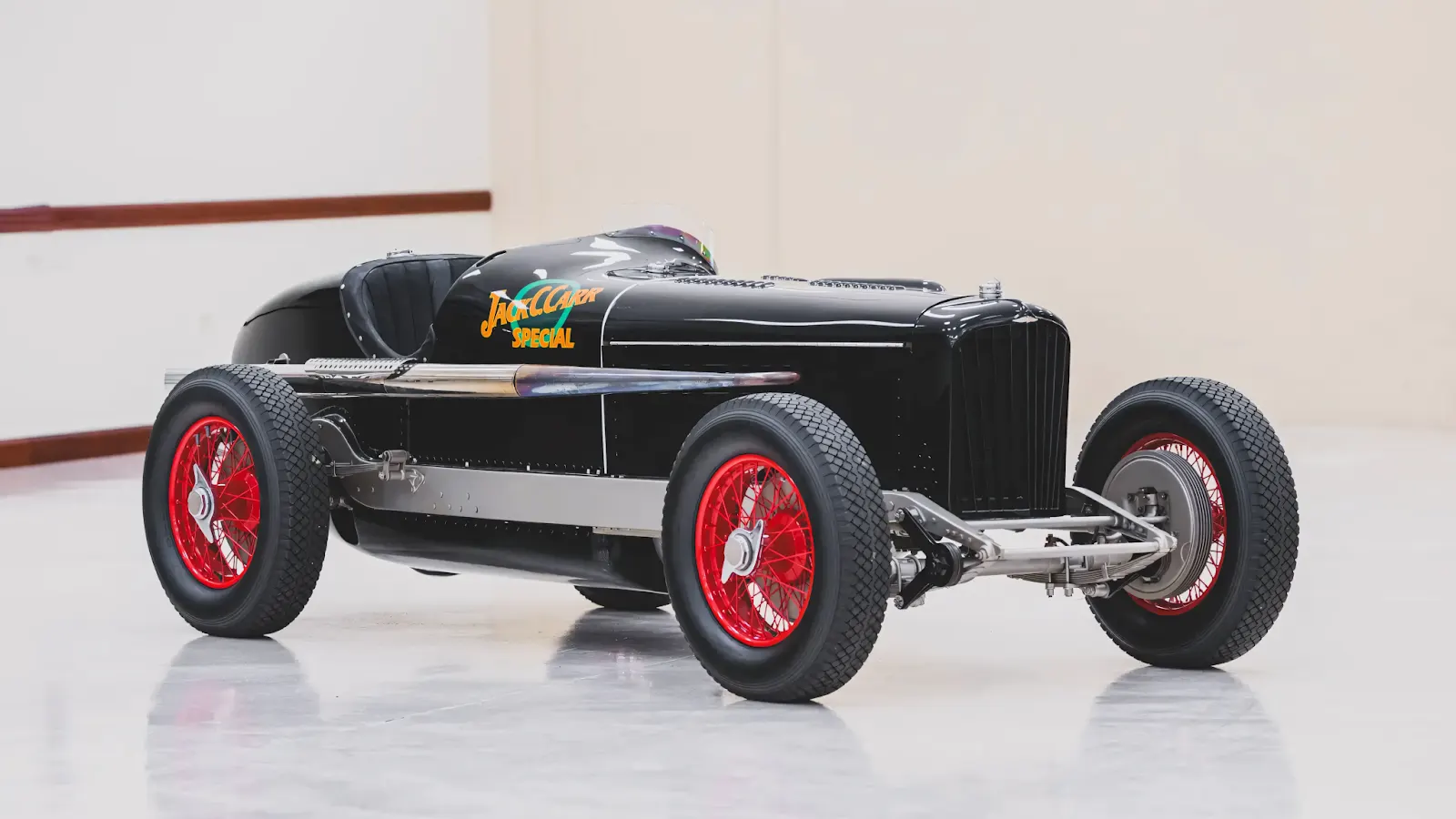
The Rigling & Henning-Duesenberg “Jack C. Carr Special” stands as a testament to innovation, resilience, and the storied history of American motorsport. This Duesenberg-powered race car, first constructed in 1931 by Herman Rigling and “Cotton” Henning, embodies the transition of the Indianapolis 500 into the “junk formula” era, which required production-based entries. With its fascinating engineering and rich history, the car is a rare survivor among vintage racing vehicles.
At its debut, the car featured a Duesenberg Model RA engine, modified with a performance crankshaft and an advanced competition cylinder head designed by August Duesenberg. Notable for its pioneering camshaft design, which included positive valve opening and closing lobes, it foreshadowed the desmodromic systems used in later decades. This engineering pushed the limits of production-based racing, blending high performance with durability.
In 1933, the car was upgraded with the engine from the Duesenberg Model Y prototype road car, further emphasizing its racing pedigree. This engine, paired with its streamlined body, contributed to its ability to run 200 laps at an average speed of 93.59 mph in the Indianapolis 500, a remarkable feat for its time.
The car debuted at the 1931 Indianapolis 500 with Babe Stapp behind the wheel. Qualifying 6th but starting from 35th due to oil and clutch issues, it finished 12th,a strong showing for a private entrant. Over the next few years, it saw various modifications and drivers. In its best showing as the “Jack C. Carr Special” in 1933, the car completed the full race, finishing 13th overall. However, subsequent seasons were less successful, with the car failing to qualify in 1934.
Its performance was bolstered by innovations such as dual Winfield carburetors during its later restoration, ensuring it remained competitive even decades after its prime. These features, combined with its lightweight construction and advanced aerodynamics, made it a standout among its contemporaries.
The “Jack C. Carr Special” has long captivated racing enthusiasts and historians. Its association with August Duesenberg and its role in the junk formula era add to its allure. The car’s appearances at concours d’elegance and events like the Duesenberg Tour highlight its enduring appeal. It is celebrated not only for its competitive history but also as a piece of engineering artistry that exemplifies the ingenuity of early American motorsport.
What sets this car apart is its blend of engineering innovation, competitive legacy, and preservation. Few Duesenberg-powered race cars from this period survive, and even fewer retain such an extensive provenance. The support it received from August Duesenberg, despite not being a factory entrant, underscores its importance within the Duesenberg racing lineage.
Its journey from the Indianapolis Motor Speedway to private collections showcases its resilience and significance. The painstaking restorations by passionate owners ensure it remains a functional and authentic artifact, ready to inspire a new generation of enthusiasts.
The Rigling & Henning-Duesenberg “Jack C. Carr Special” is a piece of motorsport history that captures the innovation and spirit of an era. With its rich backstory, exceptional engineering, and continued presence at major events, it remains a cherished example of the golden age of racing. For its next caretaker, it offers an opportunity to not only preserve but also continue its remarkable legacy.
Join the discussion
Comments
Loading comments…
Leave a comment
Share a detail, memory, or perspective. Every comment is reviewed before publication.