1933 Rolls-Royce 20-25 Saloon by Hooper
1933 Rolls-Royce 20/25 Saloon by Hooper

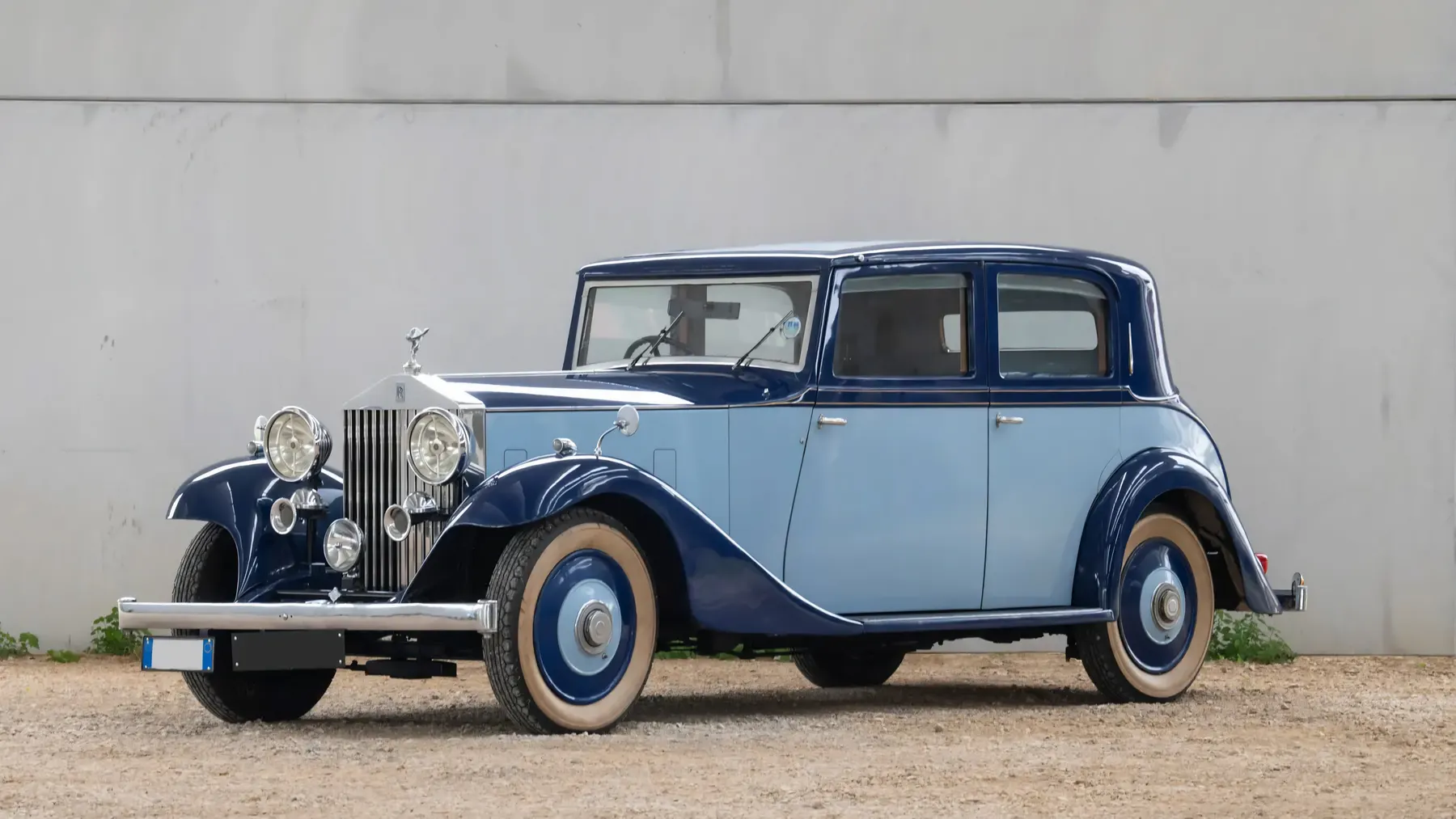
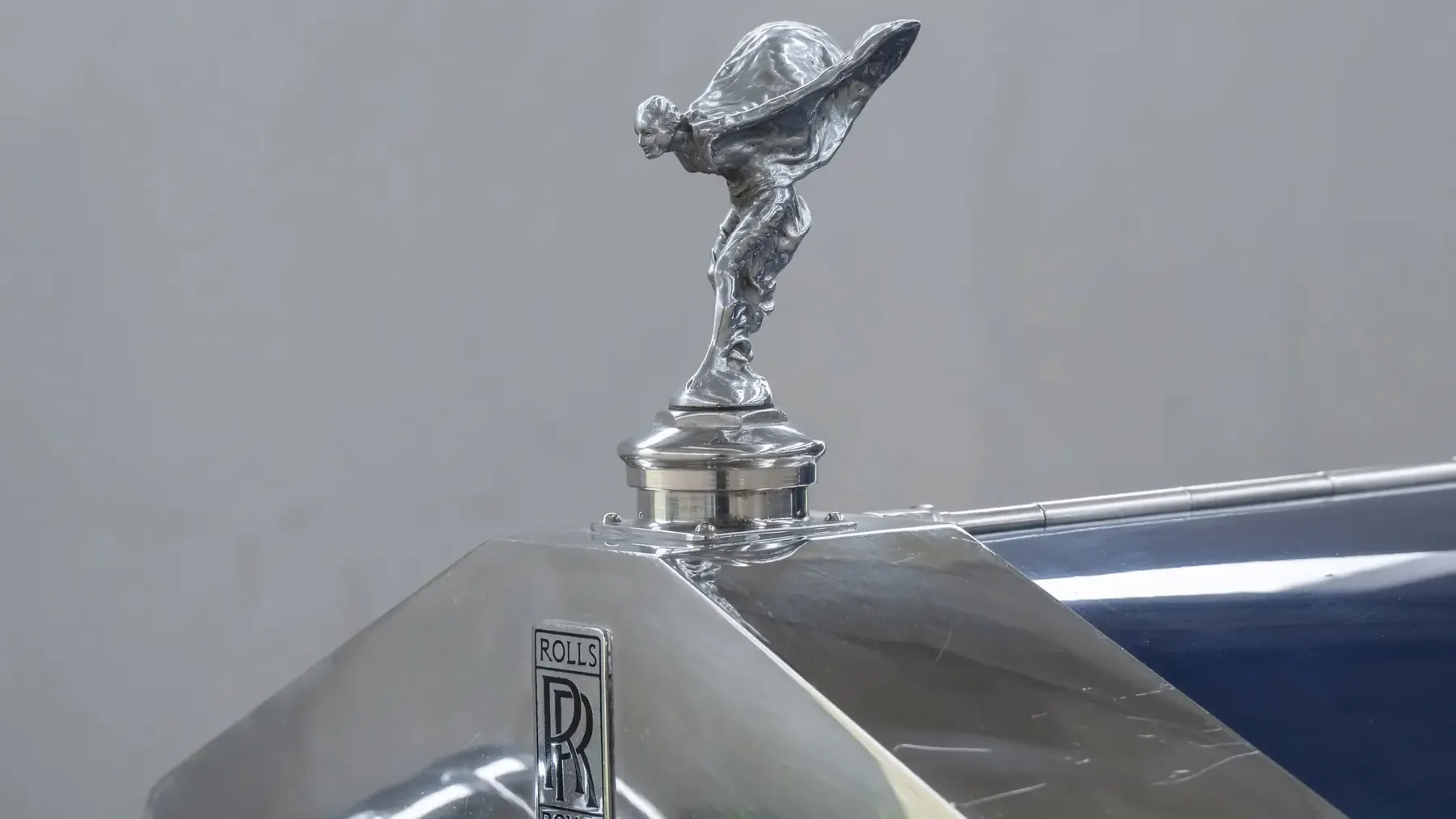
The gravel crunches softly underfoot as you approach it, a stately presence that somehow manages to be both imposing and inviting. The gleaming radiator, topped with the Spirit of Ecstasy, catches the morning light. This is the Rolls-Royce 20/25 Saloon by Hooper, and despite being nearly a century old, it still commands attention with quiet authority. Created during the tumultuous period between two world wars, this remarkable automobile tells a story of adaptation, refinement, and surprising resilience.
When Rolls-Royce unveiled the 20/25 at the 1929 Olympia Motor Show, few could have predicted how crucial this model would become to the company’s survival. The timing couldn’t have been more challenging, just weeks before the Wall Street Crash that would trigger the Great Depression. Yet this “baby Rolls,” as some affectionately called it, would go on to become the company’s most successful pre-war model, with 3,827 examples produced over seven years.
The 20/25 wasn’t born from a desire to create something revolutionary, but rather from the need to address the shortcomings of its predecessor, the Twenty. Customers loved the smaller Rolls-Royce concept but wanted more power, particularly as they increasingly fitted larger, heavier bodies to their cars. The solution was elegantly simple: increase the engine’s bore from 76mm to 82.6mm while keeping the 114mm stroke, expanding displacement from 3,128cc to 3,675cc. This modest change boosted power output significantly while maintaining the smoothness and reliability that made Rolls-Royce renowned.
This was a car created for changing times. The traditional aristocratic Rolls-Royce customer with a chauffeur was giving way to the wealthy industrialist or professional who preferred to drive themselves. The 20/25 perfectly captured this transition, grand enough to maintain the marque’s prestige yet manageable enough for the owner-driver.
Slip behind the wheel of a 20/25, and you’re immediately connected to Rolls-Royce’s obsession with engineering perfection. The straight-six engine sits under that long bonnet with its characteristic precision, every component manufactured to tolerances that were extraordinary for the era. This wasn’t just mechanical snobbery; it translated directly to the driving experience.
The engine itself is a masterclass in refinement. With its seven-bearing crankshaft and vibration damper, it delivers power with remarkable smoothness. Early examples produced approximately 65 horsepower, though Rolls-Royce, in keeping with tradition, never officially published power figures, considering it vulgar to discuss such matters. Their stance was simple: the power was “sufficient.”
What makes the 20/25 special isn’t outright performance, though a well-maintained example can reach about 122 km/h, but rather how it delivers that performance. Everything happens with deliberate grace. The four-speed gearbox (with synchromesh on third and top gears from 1932 onwards) shifts with precision. The mechanical servo-assisted brakes slow the approximately 1,900 kg vehicle with progressive confidence. The controls require intention rather than muscle, rewarding the driver with mechanical sympathy.
Throughout its production run, Rolls-Royce continually enhanced the 20/25, introducing improvements like flexible engine mounting, thermostatically controlled radiator shutters, and a centralized chassis lubrication system. Each change wasn’t about chasing headlines but refining the driving experience, making the car more reliable, more comfortable, and more satisfying to own.
While Rolls-Royce created magnificent chassis, the bodies were the domain of coachbuilders, and Hooper & Company stood among the most prestigious. Founded in 1805 and holding Royal Warrants since the mid-19th century, Hooper had built carriages for Queen Victoria before transitioning to automobiles. Their craftsmanship on the 20/25 chassis represents the pinnacle of pre-war British coachbuilding.
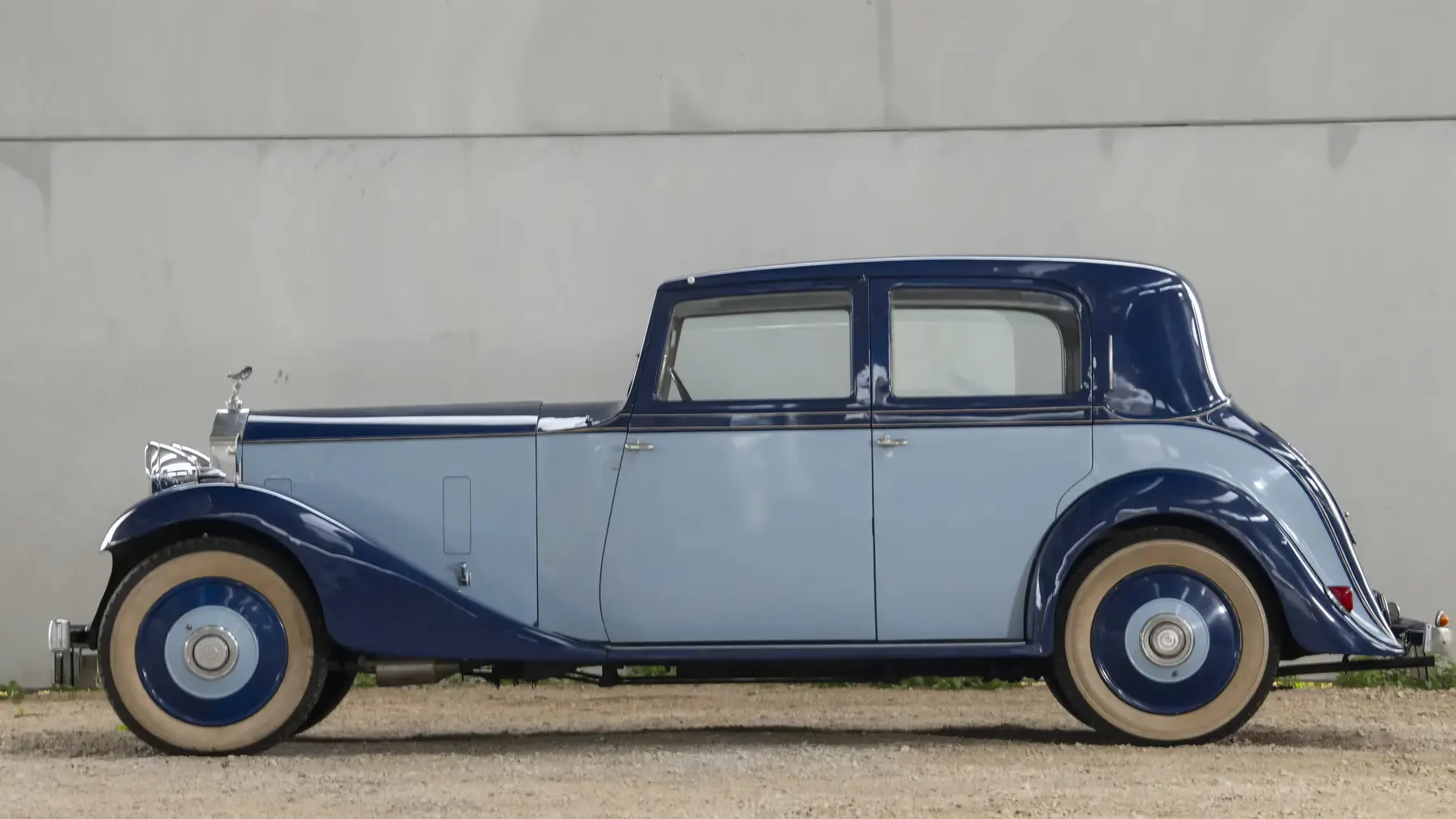
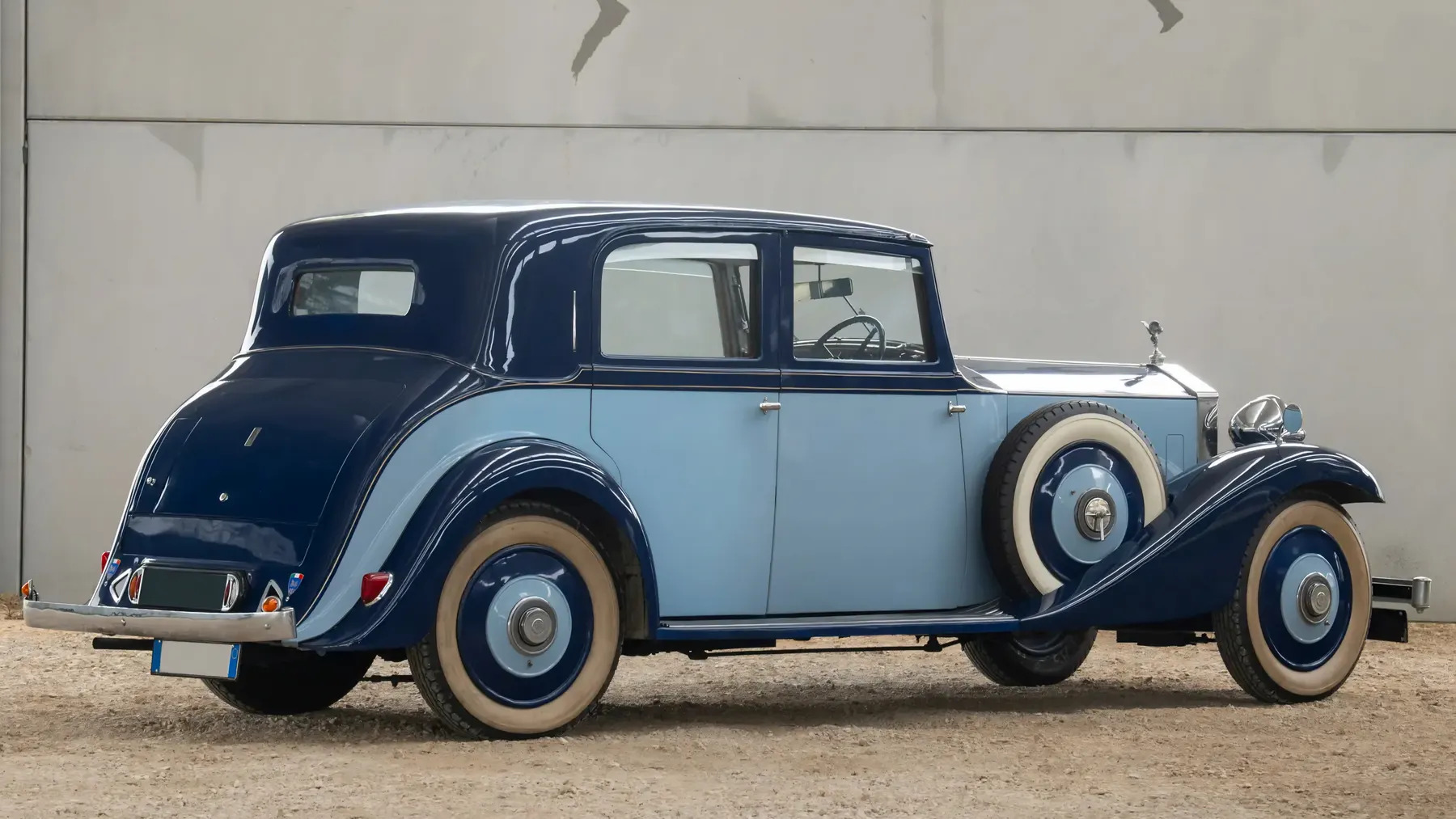
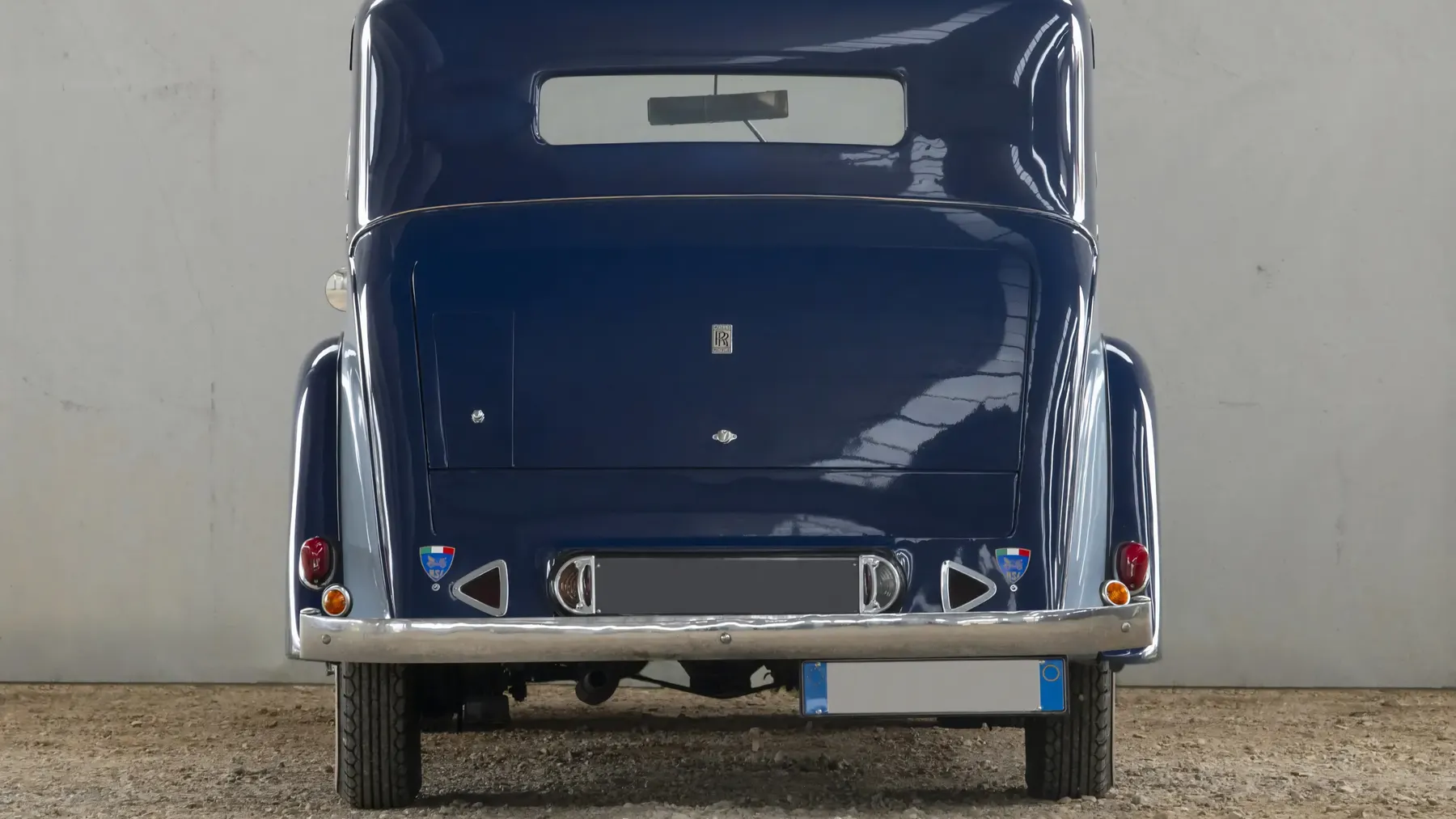
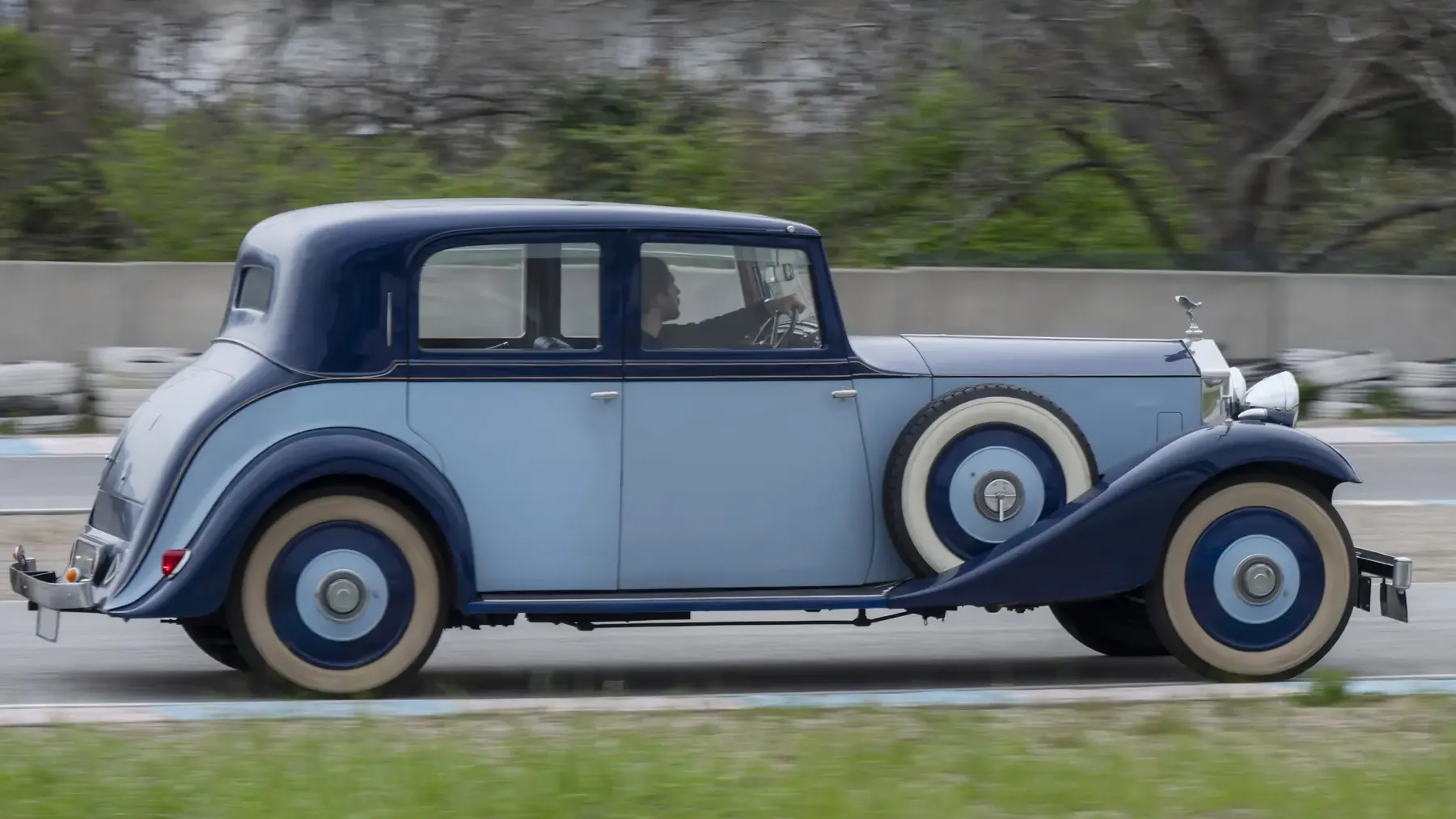
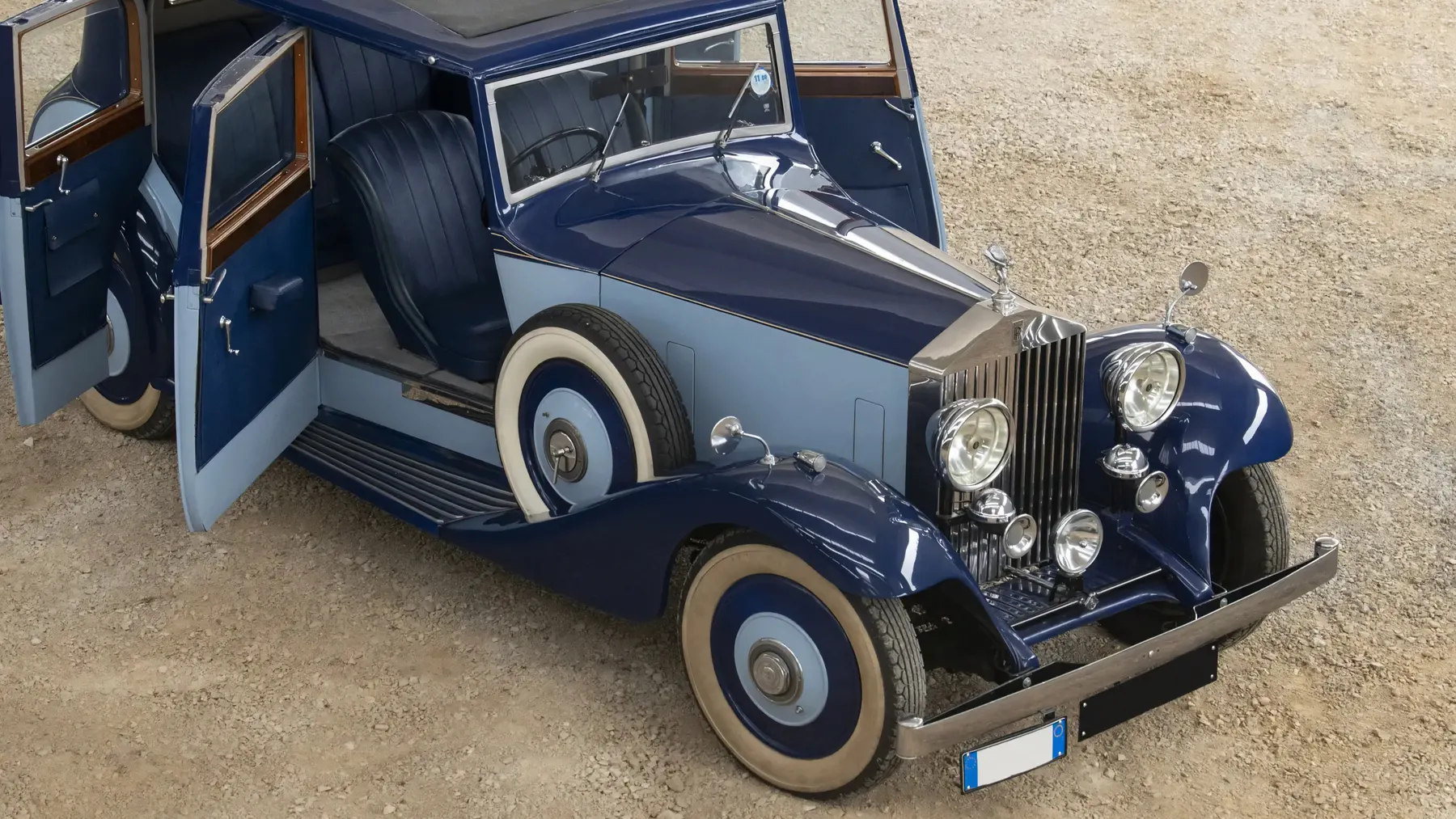
A Hooper-bodied Saloon on the 20/25 chassis expresses restrained elegance rather than flamboyance. The proportions are masterfully balanced, the bonnet flowing into the passenger compartment with subtle curves that avoid both excessive formality and flashy sportiness. The typical Hooper Saloon features a relatively upright windscreen, gracefully rounded rear quarters, and carefully considered details like the placement of exterior lights and handles.
Inside, the atmosphere is one of understated luxury. The finest hides cover comfortable seats designed for long-distance touring. Burr walnut veneers, hand-selected for grain and color, adorn the dashboard and door cappings. Every visible screw head is aligned perfectly, a small detail that speaks volumes about the attention lavished on these cars. The rear compartment often features fold-down occasional tables, vanity sets with sterling silver fittings, and reading lights positioned just so.
What makes Hooper’s work on the 20/25 special is how it complemented the car’s character. Their designs enhanced the dignity of the Rolls-Royce without overwhelming it with ornamentation. This was craftsmanship that whispered rather than shouted, perfect for the discerning owner who valued quality over ostentation.
Driving a 20/25 today is a revelation. The large steering wheel requires just two turns lock-to-lock, making the car surprisingly nimble for its size. The accelerator responds with deliberate progression rather than sudden urgency. Contemporary road tests noted that the car could reach 80 km/h from standstill in about 21 seconds, not quick by modern standards but perfectly adequate for its time and purpose.
The ride quality remains impressive nearly a century later. Those semi-elliptic leaf springs, combined with the substantial weight of the car, absorb bumps with dignified composure. At cruising speeds, the engine settles into a barely perceptible hum. The interior becomes so quiet that, as one period journalist noted, “the ticking of the clock on the dashboard becomes the most prominent sound.”
This wasn’t a car designed for racing, it was created for covering long distances with minimum fatigue and maximum pleasure. A 20/25 owner might drive from London to their country estate, arriving as refreshed as when they departed. The fuel consumption of roughly 17 liters per 100 kilometers was considered quite reasonable given the car’s weight and capabilities.
The true testament to the 20/25’s quality is its survival rate. Over 70% of all examples built still exist today, an extraordinary figure for vehicles approaching their centenary. Many remain in regular use, their owners enjoying the unique pleasure of piloting automotive history through modern traffic.
For today’s enthusiast, the 20/25 represents perhaps the most accessible entry point into pre-war Rolls-Royce ownership. More affordable than the larger Phantom II yet offering much of the same experience, these cars have developed a devoted following. Owners speak of their practical usability, with sympathetic maintenance, a 20/25 can be a surprisingly reliable classic, capable of being driven rather than merely displayed.
The model’s significance extends beyond its own production run. The 20/25 engine and chassis formed the foundation for the first “Derby Bentley,” the 3 1⁄2 Litre, after Rolls-Royce acquired their rival in 1931. This connection cemented the 20/25’s place in automotive history as the progenitor of what became known as “the silent sports car.”
In films and television, from “To The Manor Born” to “Indiana Jones and the Last Crusade,” the 20/25 has come to represent a particular vision of British refinement. Its dignified presence makes it the perfect visual shorthand for old-world elegance and understated wealth.
The 20/25 Saloon by Hooper embodies a moment when automotive luxury was defined not by technology or speed but by craftsmanship and refinement. In our modern era of mass production, there’s something profoundly appealing about a car built with such care, where every component was designed to last indefinitely, where beauty emerged from function rather than styling, and where quality was never compromised.
For those fortunate enough to experience one today, the 20/25 offers more than transportation. It provides a tangible connection to an age when patience was considered a virtue, when craftsmanship was expected rather than exceptional, and when a motor car could be truly personal, a reflection of its owner’s taste and status. That such machines continue to grace our roads nearly a century after their creation isn’t just remarkable, it’s inspirational.
**
Join the discussion
Comments
Loading comments…
Leave a comment
Share a detail, memory, or perspective. Every comment is reviewed before publication.