1952 Kleinschnittger F-125 Roadster

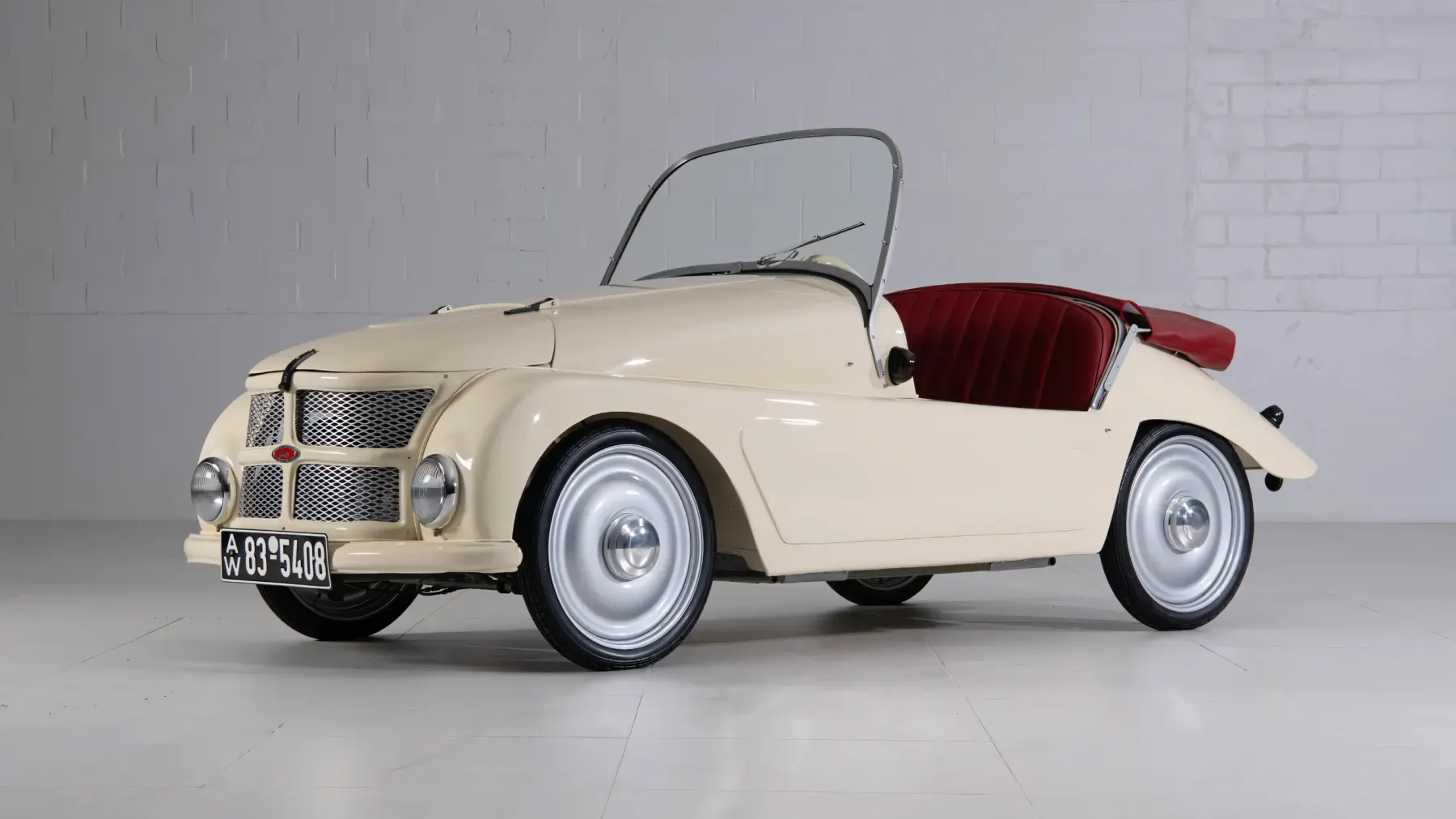
The post-war era was a fertile ground for innovation in the automotive industry, especially in the realm of microcars. Among the many compact and economical vehicles that emerged during this period, the Kleinschnittger F-125 Roadster stands out as a remarkable blend of simplicity, efficiency, and charm. Built by Kleinschnittger GmbH from 1950 to 1957, this diminutive vehicle captured the essence of frugal motoring while offering a surprisingly engaging driving experience.
The Kleinschnittger F-125 was the brainchild of German designer Paul Kleinschnittger, who aimed to provide an affordable and practical alternative to the full-sized cars of the time. The roadster was powered by a modest 125 cc single-cylinder two-stroke engine from ILO, initially producing 4.5 hp and eventually increasing to 6 hp. Despite its small power plant, the F-125 could reach a top speed of 70 km/h (43 mph) and boasted impressive fuel efficiency, consuming less than 3 litres of fuel per 100 kilometres.
One of the most striking features of the F-125 was its lightweight aluminium body, which contributed to the car’s total weight of just 150 kg. The vehicle’s design prioritised simplicity and ease of maintenance. For instance, it lacked a reverse gear, requiring drivers to lift and turn the car manually if they needed to back up,a task made feasible by its featherlight construction.
The engine was mounted transversely in front of the front axle, driving the front wheels through a chain and roller freewheel system, eschewing the need for a conventional differential. This setup, coupled with a three-speed gearbox integrated into the engine housing, made the F-125 both economical to produce and maintain.
The Kleinschnittger F-125 was designed with practicality in mind. Its central tube frame supported a suspension system comprising longitudinal swing arms and adjustable rubber bands. The vehicle featured mechanically operated drum brakes on all four wheels, ensuring adequate stopping power. Inside, the spartan interior included a white spring-spoke steering wheel and a gear lever positioned under the steering wheel for easy access.
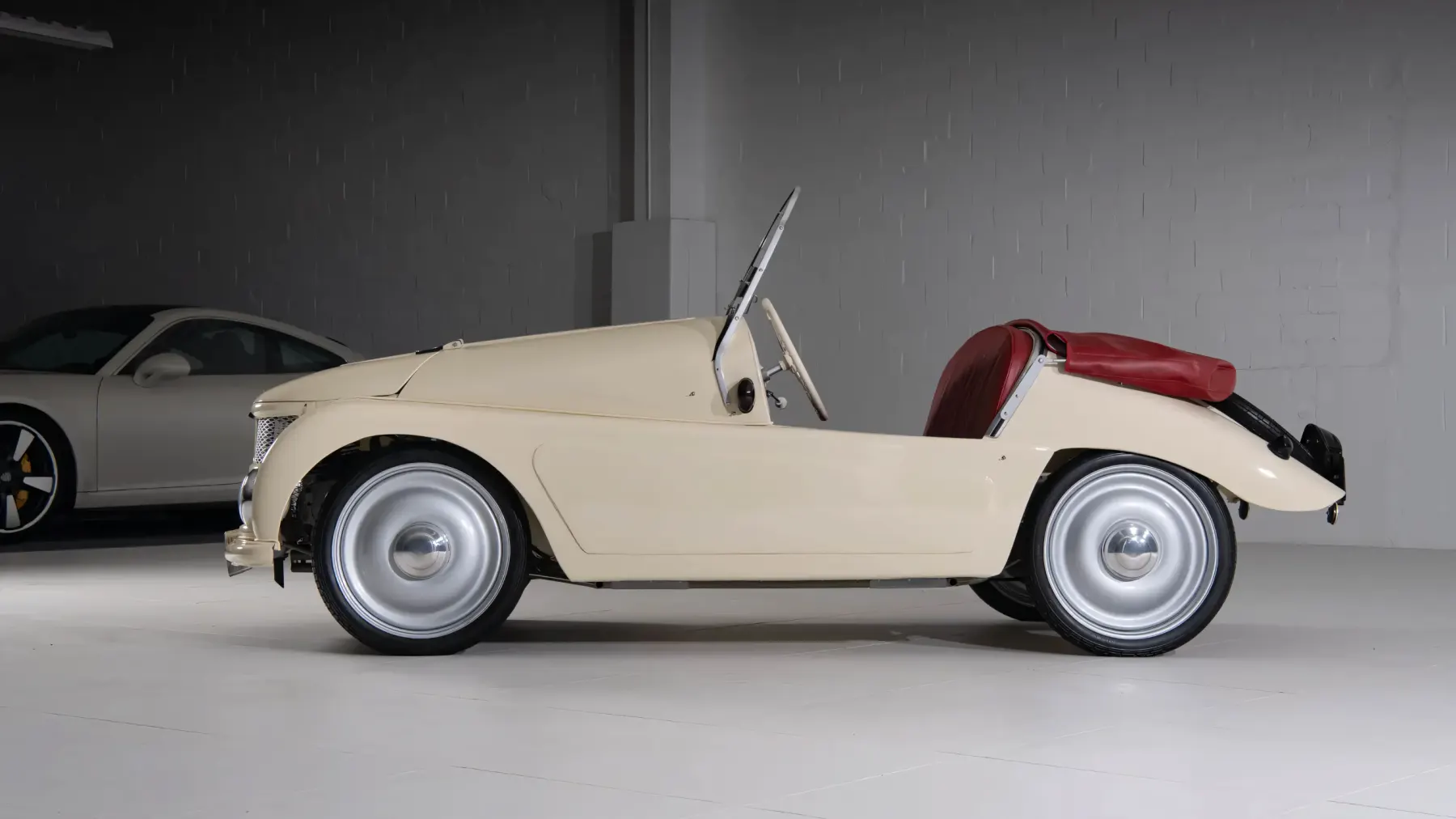
While the F-125 might not have been intended as a replacement for a full-fledged automobile, it provided a safer and more comfortable alternative to motorcycles and scooters, particularly for those seeking protection from the elements. The car’s open-top design included a large windshield and a fold-down top for weather protection, along with a small trunk capable of holding a spare tire and modest luggage.
The Kleinschnittger F-125 wasn’t just a practical microcar; it also proved its mettle in motorsports. In the Lisbon-Madrid Rally of August 1953, an F-125 took second place in the up-to-1100 cc class, finishing behind a Porsche 356. This achievement highlighted the car’s robust engineering and competitive spirit, earning it respect and recognition in the automotive community.
With around 2000 units produced, the Kleinschnittger F-125 became a symbol of post-war ingenuity and resourcefulness. Its affordability and unique design appealed to a wide audience, particularly those transitioning from two-wheelers to four. Despite its narrow wheels and minimalistic features, the F-125 was considered safe and fast for its time, capable of accelerating from zero to 60 km/h in just 16.5 seconds.
Today, the Kleinschnittger F-125 is a prized collector’s item, valued for its historical significance and charming design. Prices for well-preserved examples can range from 5,000 to 15,000 euros, depending on their condition.
The Kleinschnittger F-125 Roadster is more than just a microcar; it is a testament to the innovative spirit of its era. Combining lightweight construction, economical performance, and a touch of sporting flair, the F-125 remains a beloved icon of automotive history. Its legacy continues to inspire enthusiasts and collectors alike, celebrating a time when creativity and practicality converged on four tiny wheels.
Join the discussion
Comments
Loading comments…
Leave a comment
Share a detail, memory, or perspective. Every comment is reviewed before publication.