1953 Dodge M43 3-4-Ton Military Ambulance
1953 Dodge M43 3/4-Ton Military Ambulance

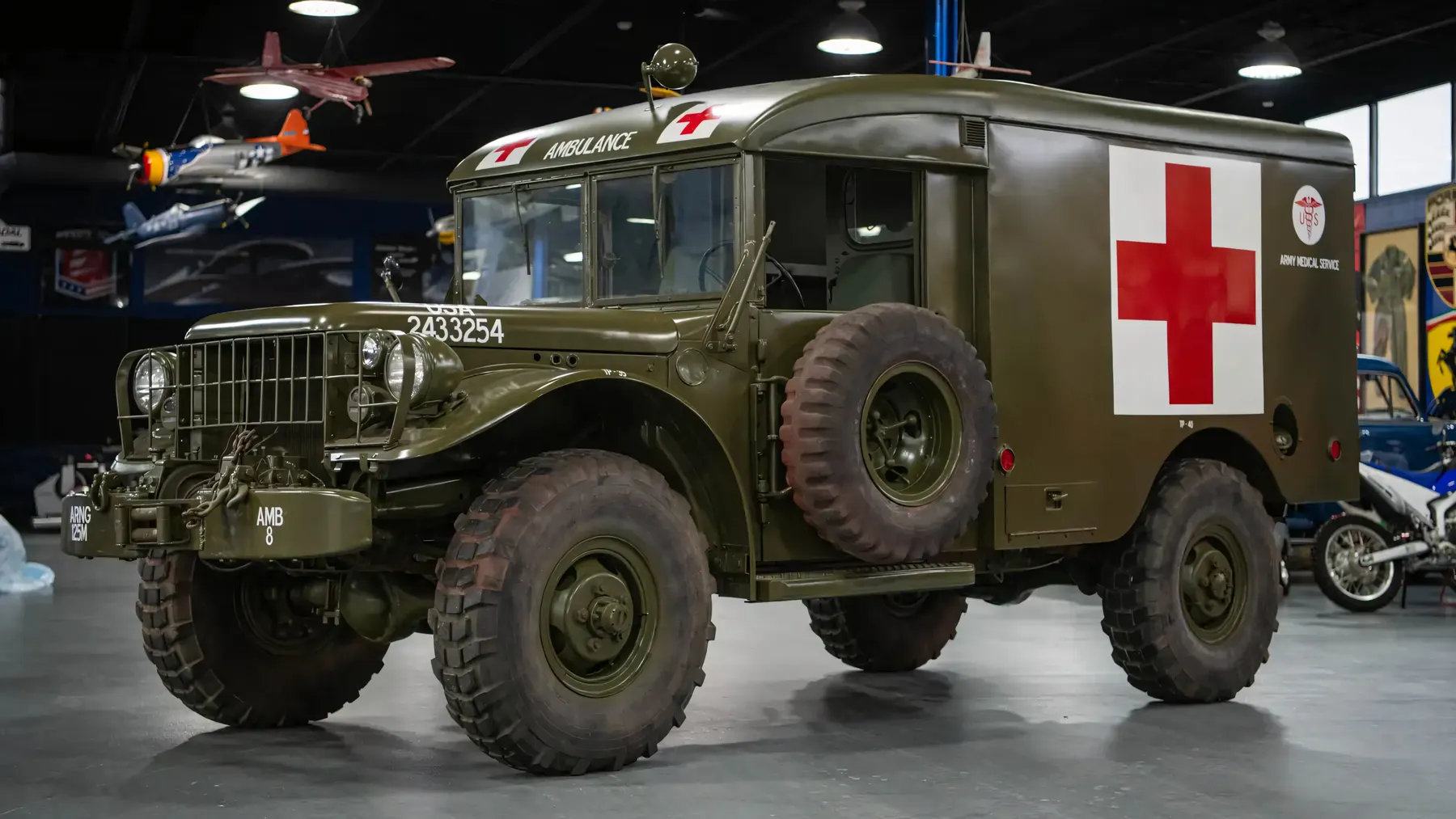
The Dodge M43 represents one of the most purposeful and life-saving iterations of the legendary M37 platform, a vehicle that perfectly exemplifies how thoughtful engineering can transform a rugged utility truck into a specialized lifeline for wounded soldiers. This ambulance variant stands as a testament to American automotive ingenuity during the early Cold War period, when military vehicle design balanced battlefield practicality with humanitarian necessity.
The M43 emerged from a pressing military need to replace the aging World War II-era Dodge WC-54 and WC-64 KD ambulances. When Dodge engineers began developing the G-741 family of 3/4-ton trucks in the late 1940s, they understood that medical evacuation required specialized considerations beyond the standard cargo truck configuration. The M43 shared the fundamental DNA of the M37 cargo truck but represented a complete reimagining of how battlefield medical transport should function.
Production commenced in January 1951 and continued through July 1954, with some vehicles delivered beyond that date. The timing was crucial, as these ambulances would serve extensively during the Korean War, proving their worth in the harsh mountainous terrain where medical evacuation meant the difference between life and death.
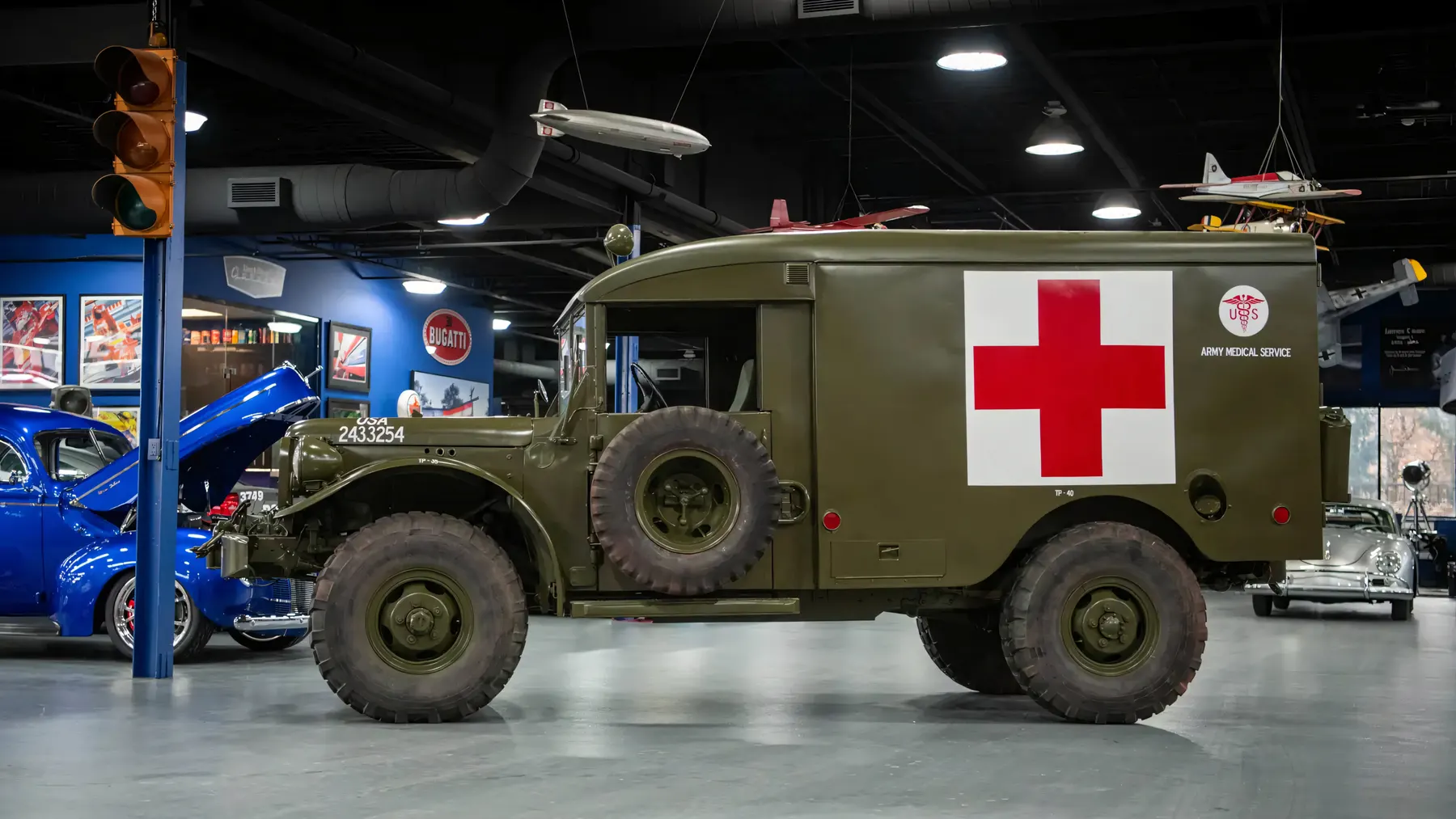
What immediately distinguishes the M43 from its M37 siblings is its extended wheelbase of 3.2 meters compared to the standard 2.8-meter configuration. This 14-inch stretch might seem modest on paper, but it fundamentally transformed the vehicle’s capability as a medical platform. The longer wheelbase provided the crucial space needed for patient care while maintaining the legendary off-road prowess that made the M37 family so effective.
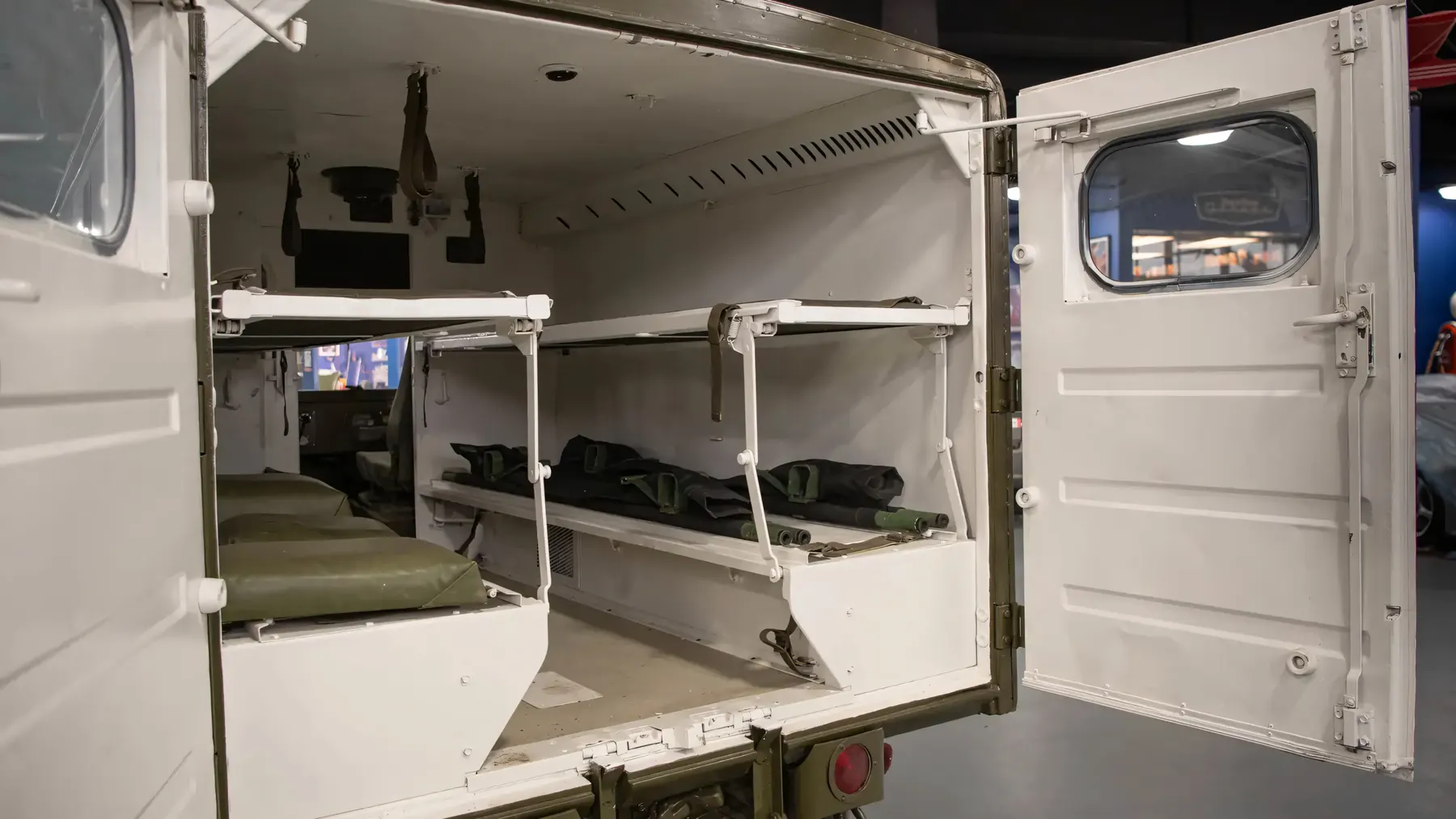
The steel ambulance body represents a masterpiece of functional design. Unlike conventional trucks where the cabin and cargo areas remain separate, the M43 features an integrated unit that combines the driver’s compartment with the litter compartment. This seamless integration eliminated the barriers that could complicate patient loading and medical care during transport.
Each side of the rear compartment incorporates two ingeniously designed litter racks that demonstrate the thoughtful attention to versatility. These racks fold up and latch securely to the wall, instantly transforming the space to accommodate upright passengers on bench-style seating. This dual-purpose design meant that a single M43 could handle multiple casualties sitting upright or fewer patients requiring stretcher transport, maximizing the vehicle’s utility in various emergency scenarios.
The M43’s interior systems reveal an impressive level of sophistication for a 1950s military vehicle. The integrated heating and ventilation system ensured patient comfort in extreme weather conditions, while the surgical light provided adequate illumination for medical procedures during transport. A dome light illuminated the entire litter area, creating a functional medical environment that rivaled many civilian ambulances of the era.
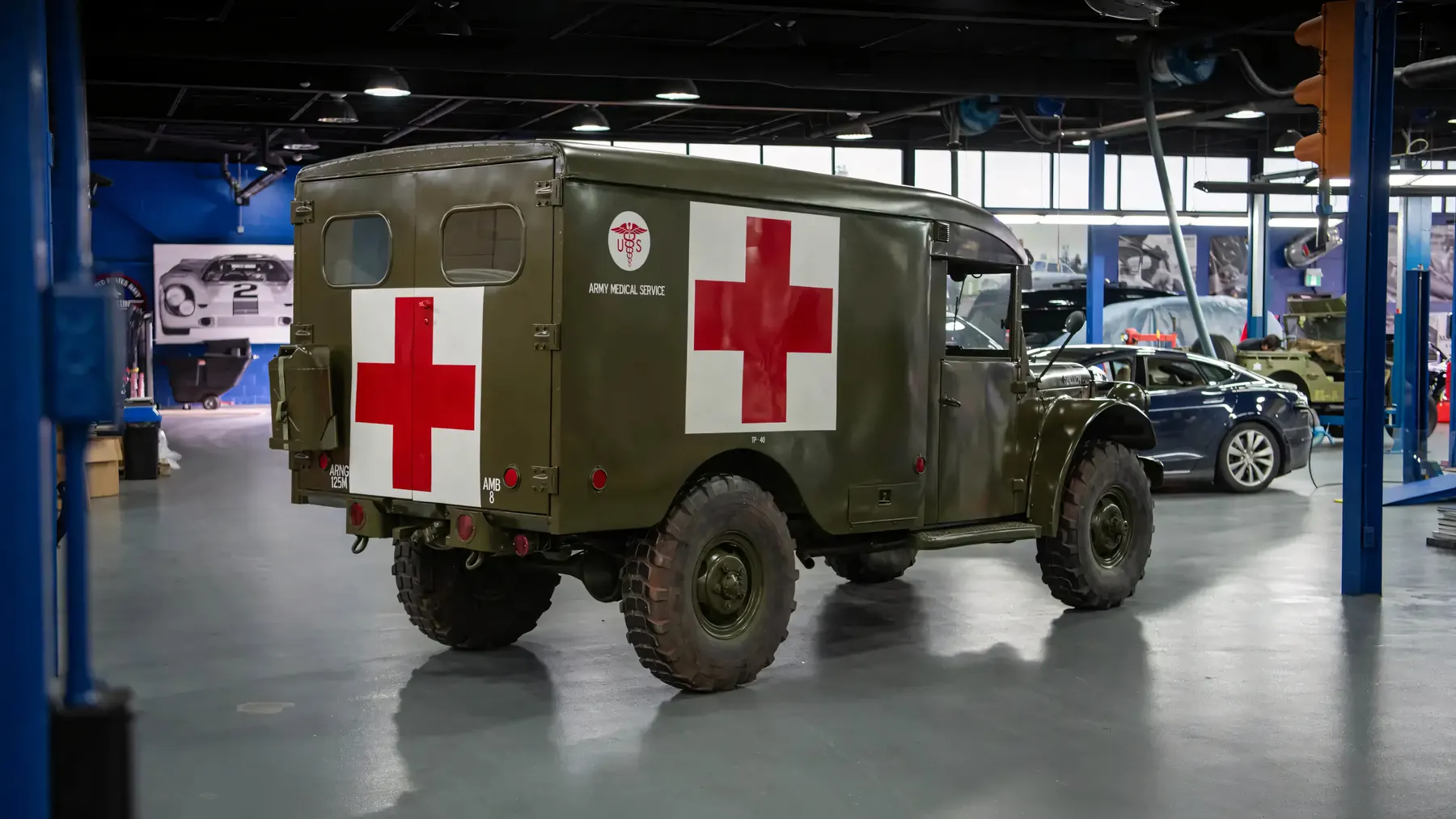
The rear access system demonstrates practical engineering at its finest. Double doors provide wide, unobstructed access to the patient compartment, while a folding step facilitates safe entry and exit for medical personnel. These seemingly simple features represent careful consideration of how medical teams actually work under pressure in challenging conditions.
The M43 utilized the same proven Dodge T-245 engine that powered the entire M37 family, producing 78 horsepower at 3,200 rpm from its 3.8-liter displacement. This L-head, six-cylinder engine traced its lineage to 1930s passenger car designs, but its robust construction and wide availability made it ideal for military service. The engine’s undersquare design with its long stroke provided excellent low-end torque, perfect for navigating difficult terrain while carrying precious human cargo.
Weighing approximately 2,580 kilograms without the optional winch, the M43 maintained excellent mobility despite its specialized medical equipment. The 24-volt electrical system powered all the medical lighting and ventilation equipment while maintaining compatibility with standard military electrical accessories.
The M43’s excellence earned international recognition when Canada ordered a specialized version designated the M43CDN. Beginning in 1952, Dodge fulfilled orders from the Canadian Army and Air Force for 409 ambulances before production ended in 1955. These Canadian variants featured a Chrysler Canada-produced T249 engine with 250.6 cubic inches of displacement, along with different transmission and power take-off systems. Remarkably, the M43CDN remained visually indistinguishable from the standard M43, demonstrating the design’s fundamental soundness.
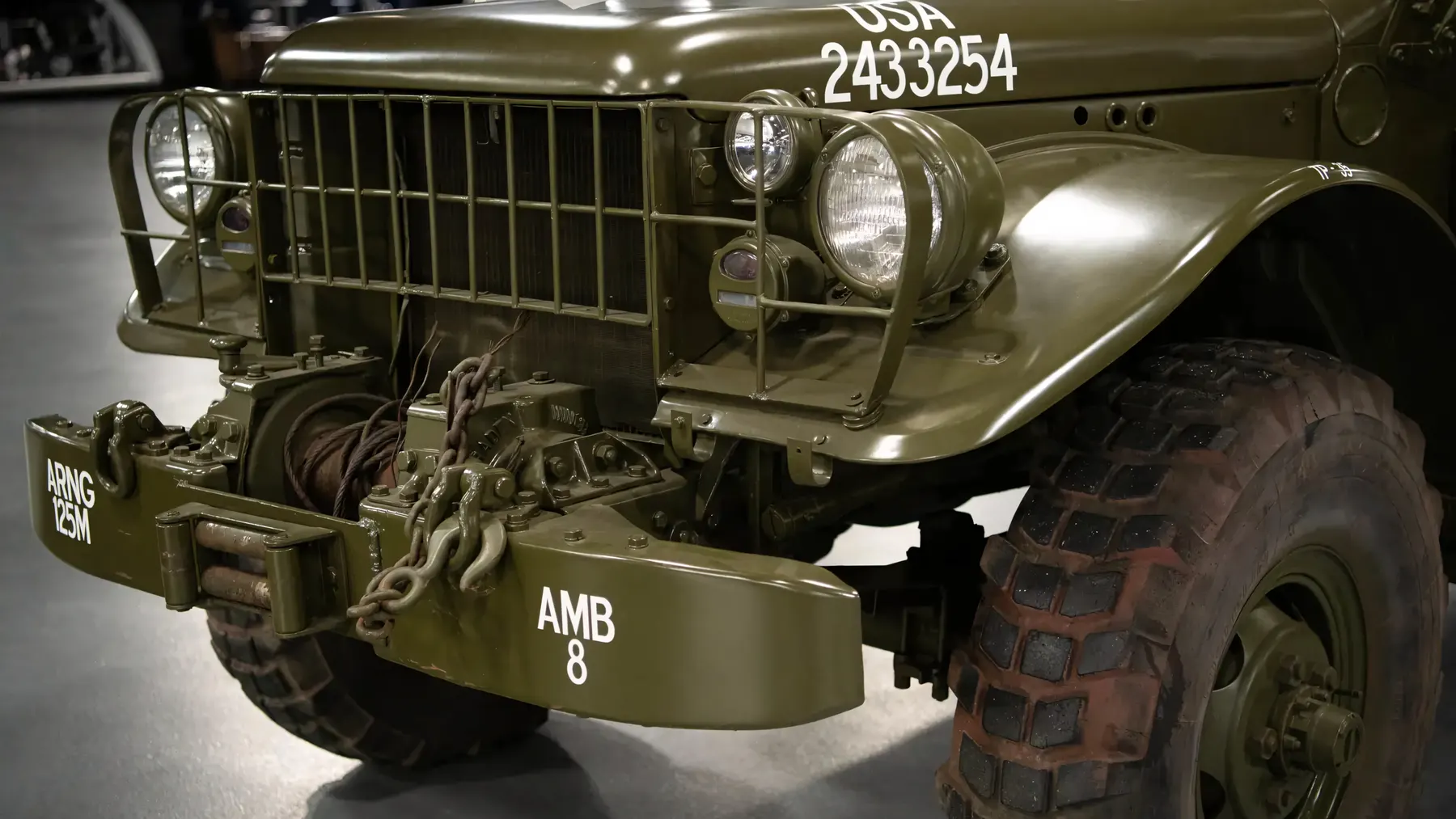
From 1959 to 1968, Dodge produced the updated M43B1 ambulance, incorporating improvements developed for the M37B1 cargo truck. These updates included transitioning from Douglas metal waterproof wiring connectors to Packard rubber connectors, reflecting ongoing refinements in military vehicle technology. Both M43 and M43B1 variants could be equipped with front-mounted winches, adding self-recovery capability for operations in challenging terrain.
The M43’s influence extends far beyond its military service. After military phase-out, many found second careers with civilian fire departments, forestry services, and emergency medical services, where their rugged construction and reliable performance continued saving lives. The Comox Air Force Museum’s restored 1952 M43 CDN Ambulance, finished in Robin-egg blue, demonstrates the vehicle’s enduring appeal and historical significance.
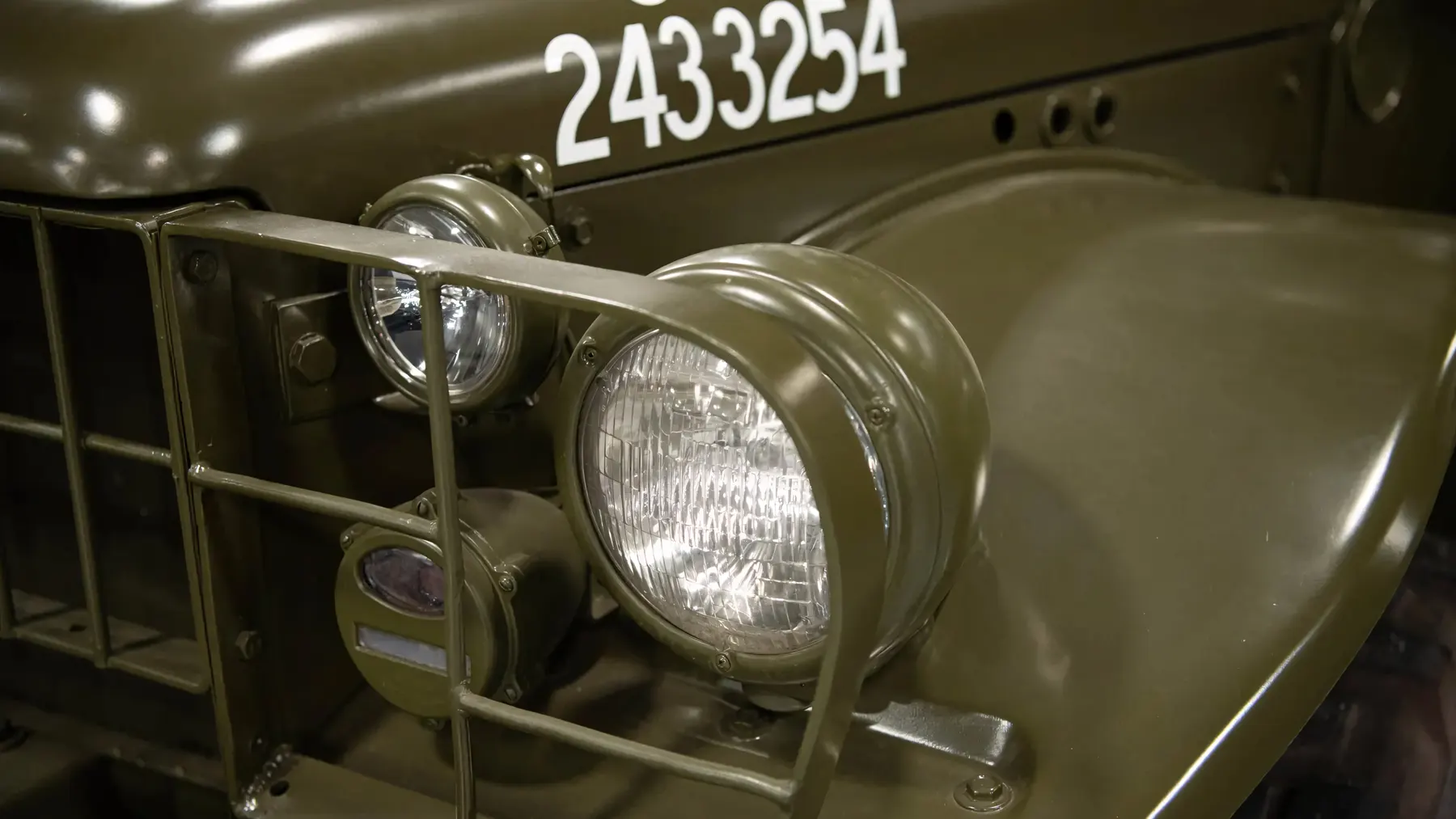
Today, the M43 stands as a remarkable example of specialized military vehicle design, proving that purposeful engineering can create machines that serve humanity’s most fundamental needs. Its combination of battlefield durability, medical functionality, and thoughtful design details represents the pinnacle of 1950s military ambulance development, earning its place as one of the most important variants in the celebrated M37 family lineage.
**
Join the discussion
Comments
Loading comments…
Leave a comment
Share a detail, memory, or perspective. Every comment is reviewed before publication.