1957 BMW Isetta 300

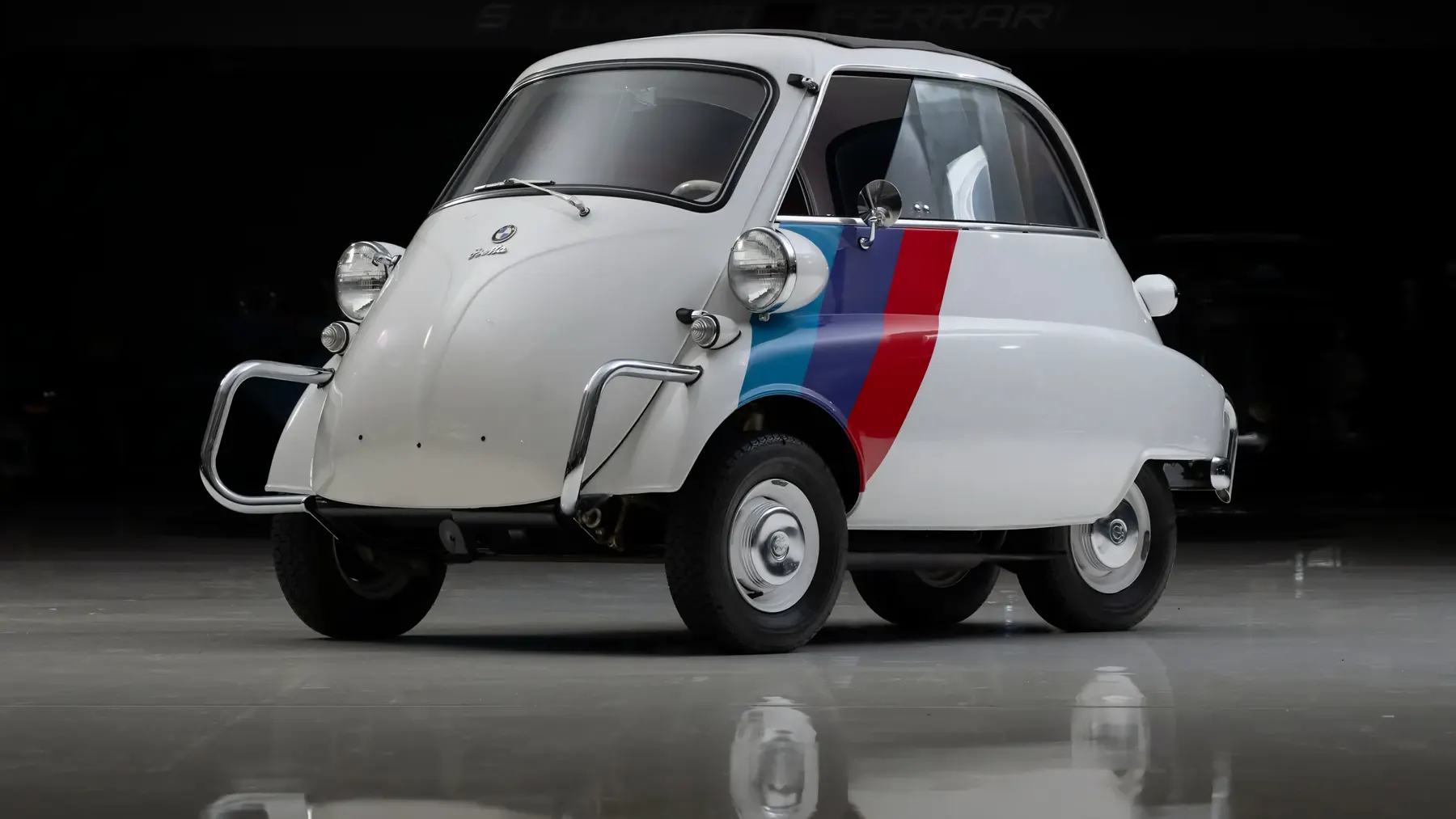
BMW’s history is filled with engineering marvels and luxury vehicles, but perhaps none are as quirky and pivotal as the diminutive Isetta 300. This egg-shaped microcar with its refrigerator-like front door didn’t just turn heads, it rescued BMW from financial collapse and cemented its place in automotive history as one of the most recognizable and beloved microcars ever produced.
In the mid-1950s, BMW found itself teetering on the brink of bankruptcy. Motorcycle production was declining, and the company was losing money on luxury models like the 503 and 507. The situation was dire, and BMW needed a solution, fast.
The answer appeared at the 1954 Turin Car Show, where BMW representatives spotted an unusual vehicle at the Iso Rivolta booth. This Italian refrigerator manufacturer had created a tiny three-wheeled car called the Isetta with a distinctive front-opening door. Seeing potential, BMW quickly acquired the licensing rights and production equipment.
Instead of simply building the Italian design, BMW thoroughly re-engineered the vehicle, so much so that no parts between the BMW Isetta and the original Iso version were interchangeable. The first BMW Isetta rolled off the production line in April 1955, initially as the 250cc model, followed by the more powerful 300cc version in February 1956.
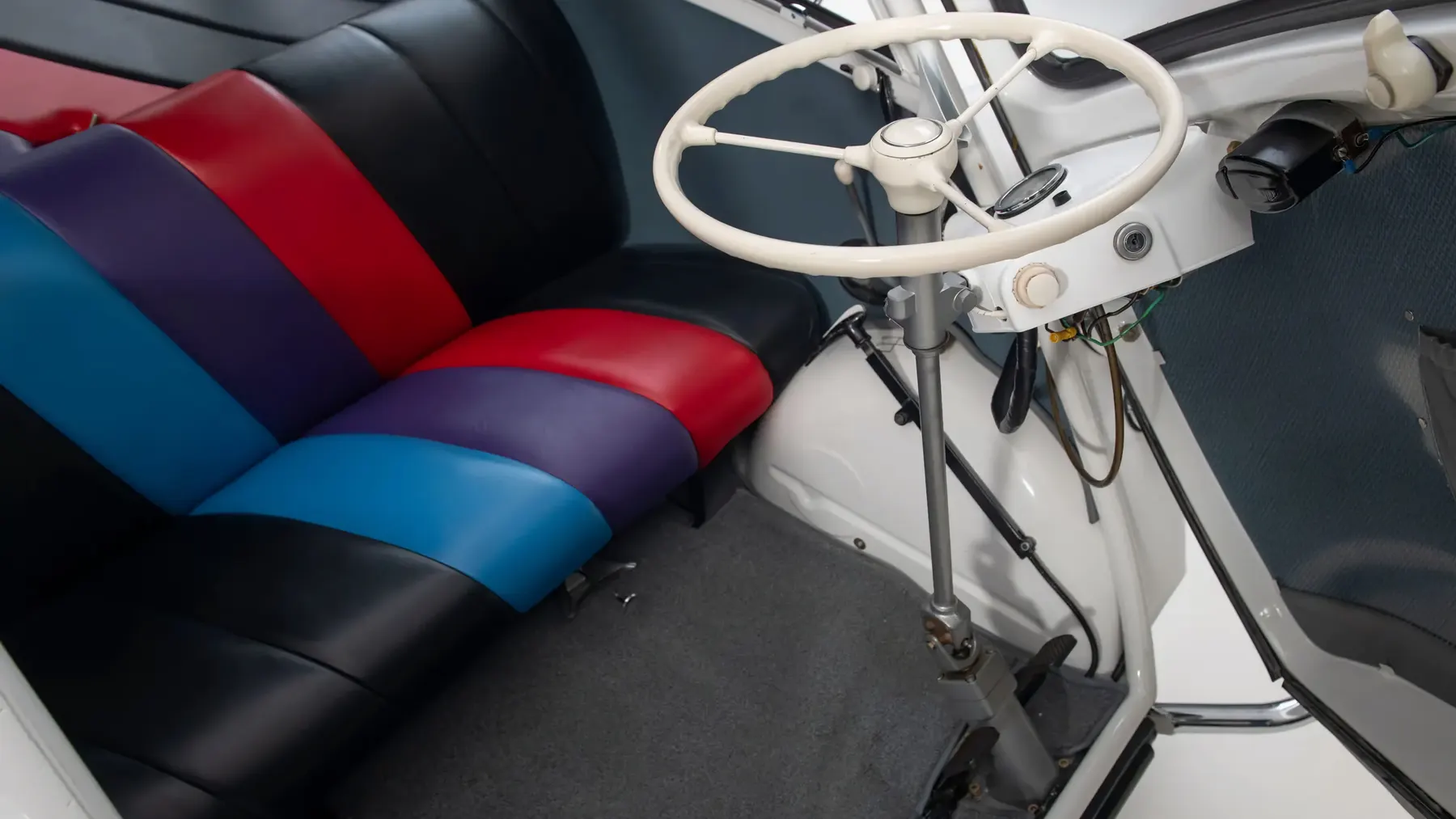
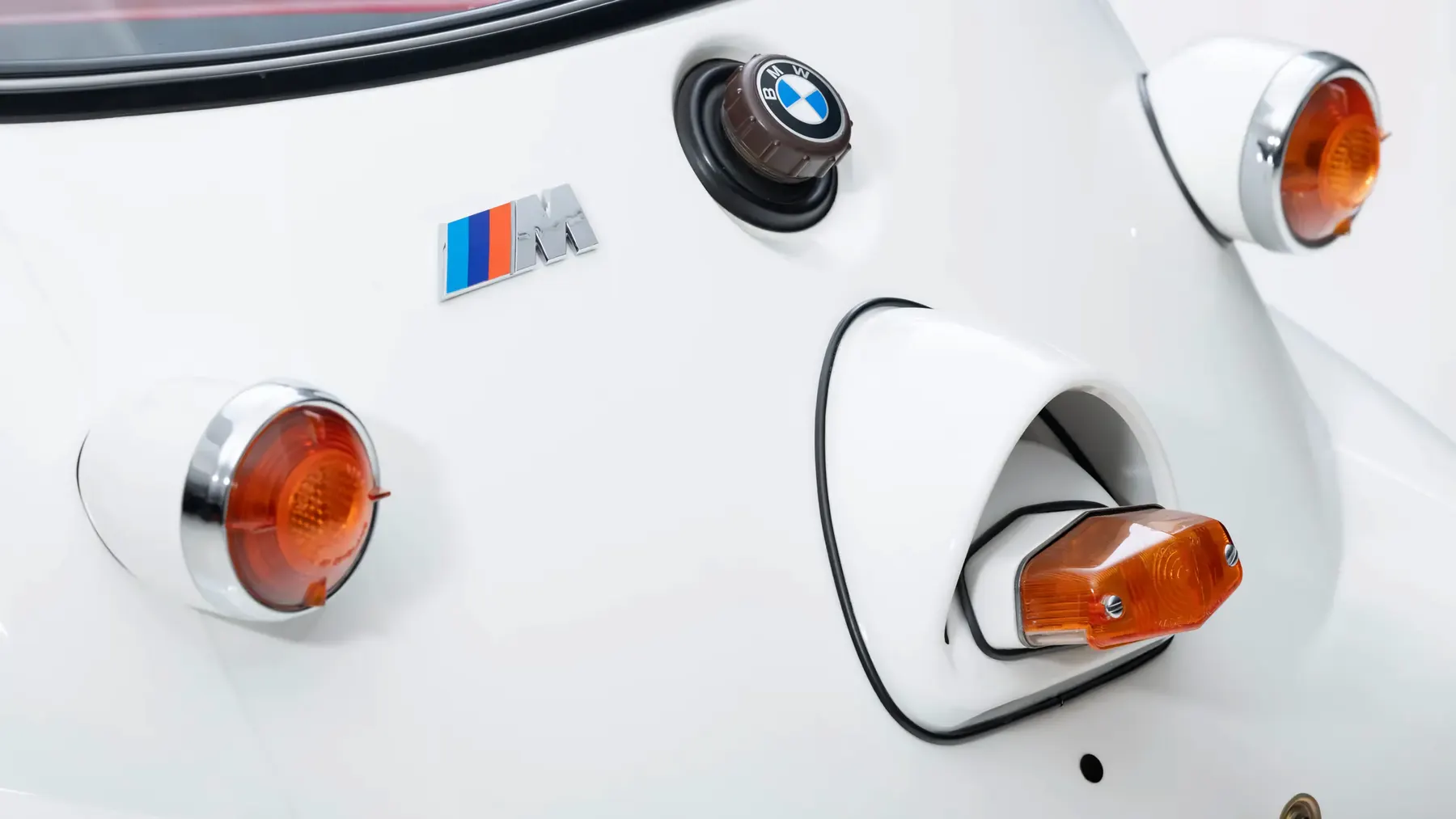
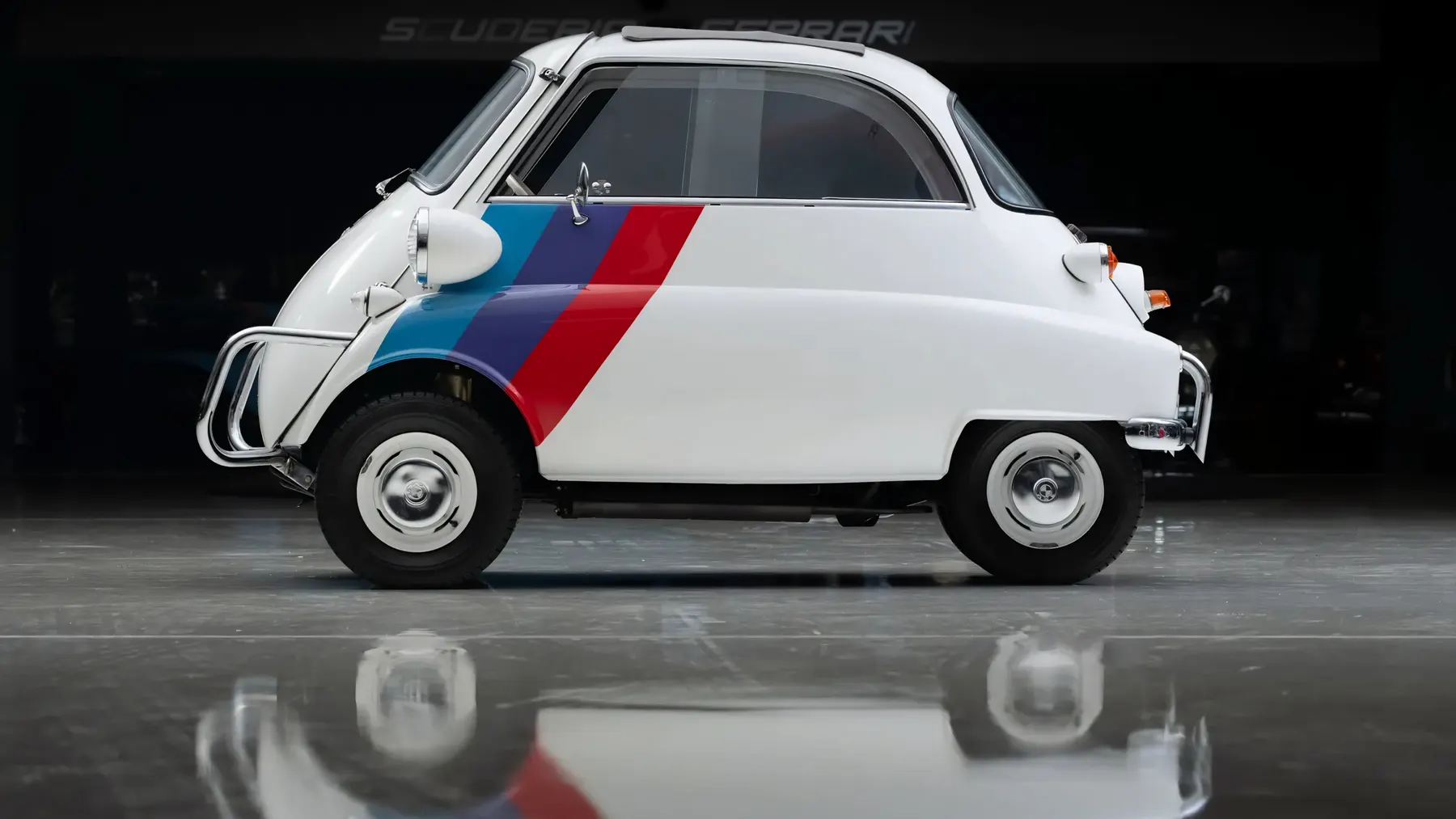
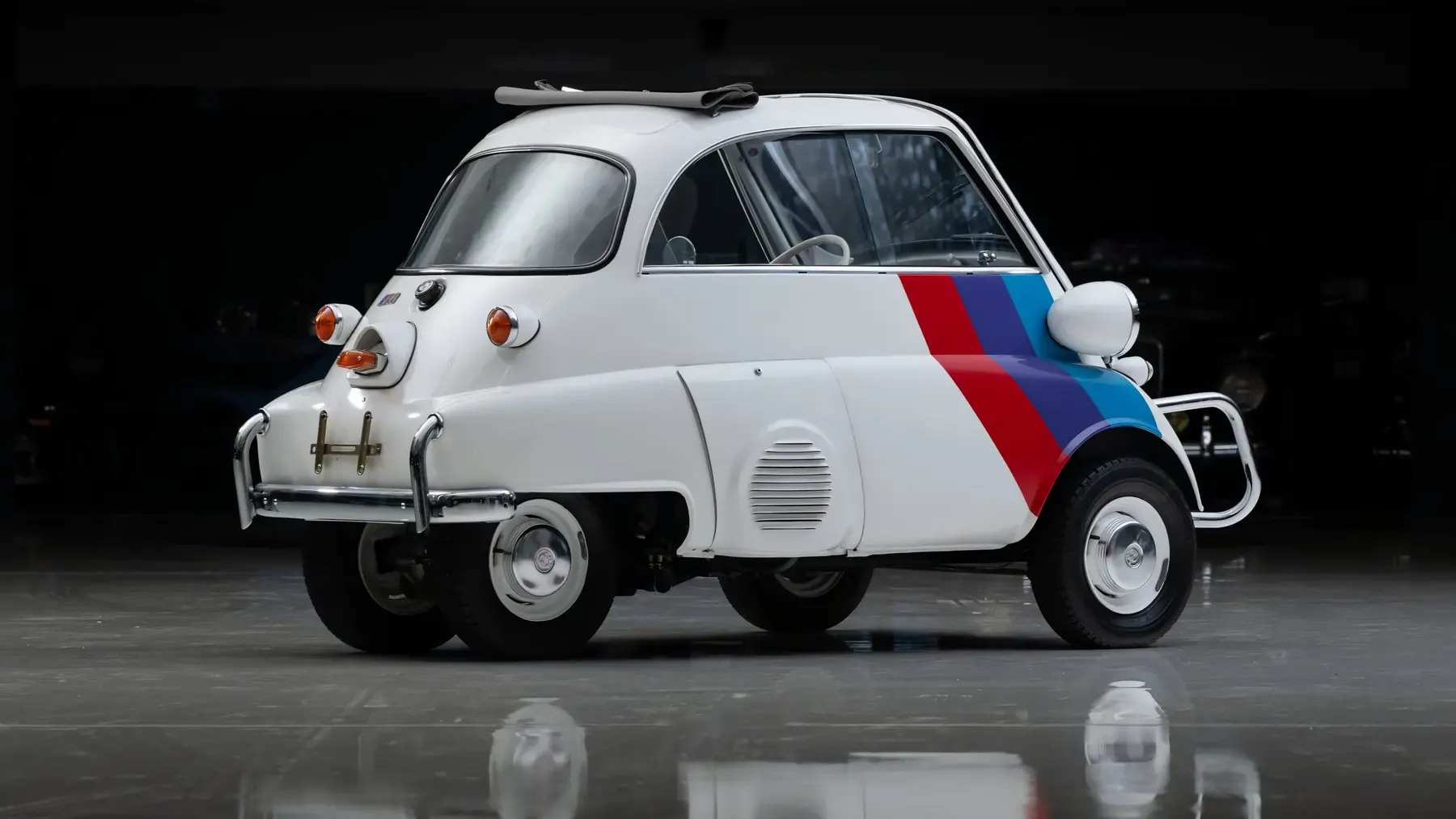
The BMW Isetta 300 broke all conventional automotive design rules of its time. Its most distinct feature was the front-hinged door, which opened outward along with the steering wheel and instrument panel to allow entry. This innovative design made it perfect for tight European streets and urban parking.
Measuring just 2.36 meters in length, 1.38 meters in width, and 1.34 meters in height, the Isetta was comically small by today’s standards. Yet this compact bubble-shaped vehicle could comfortably seat two adults on its single bench seat, with a small parcel shelf behind them. In case of an accident, occupants could escape through the canvas sunroof.
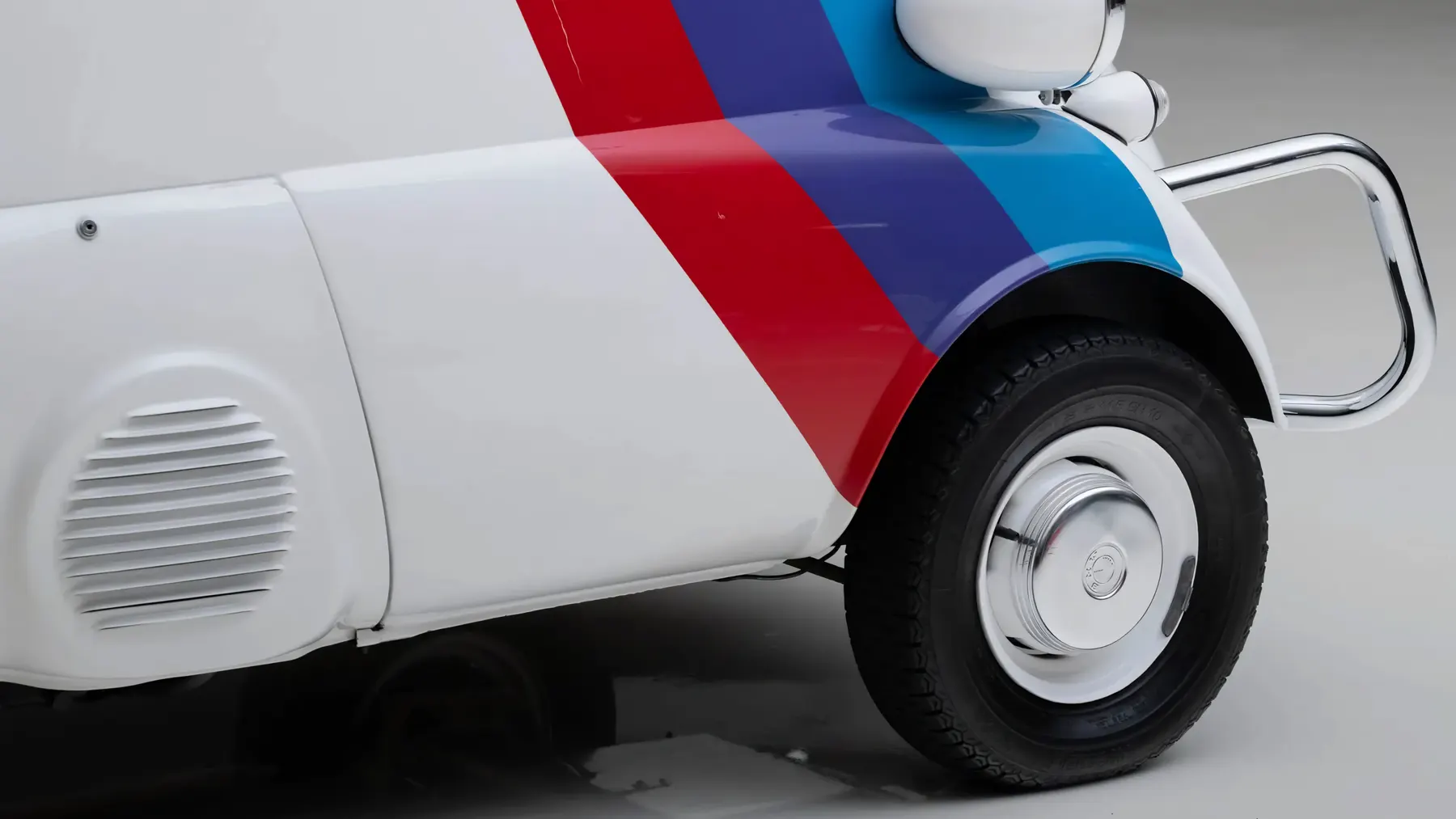
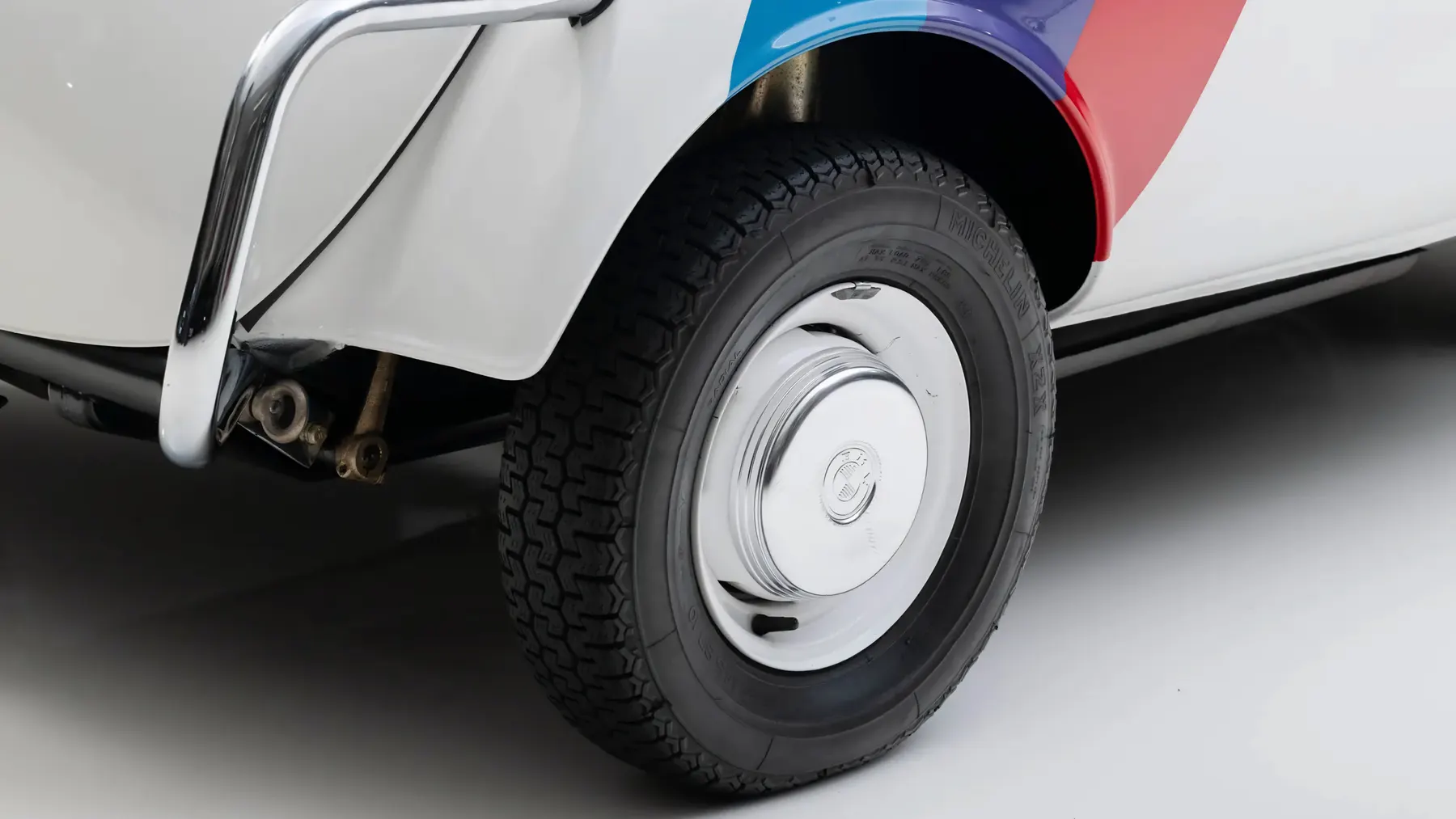
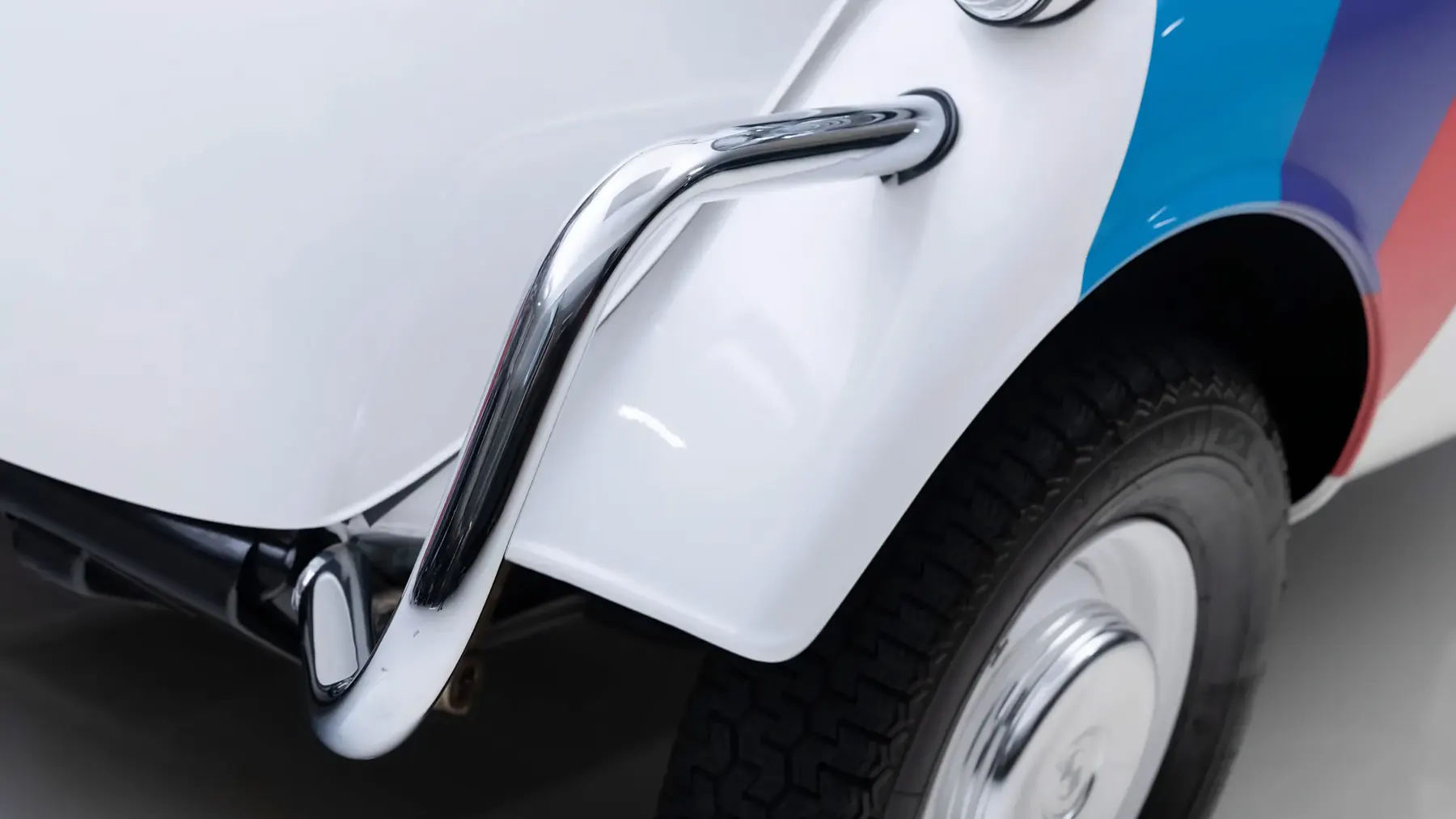
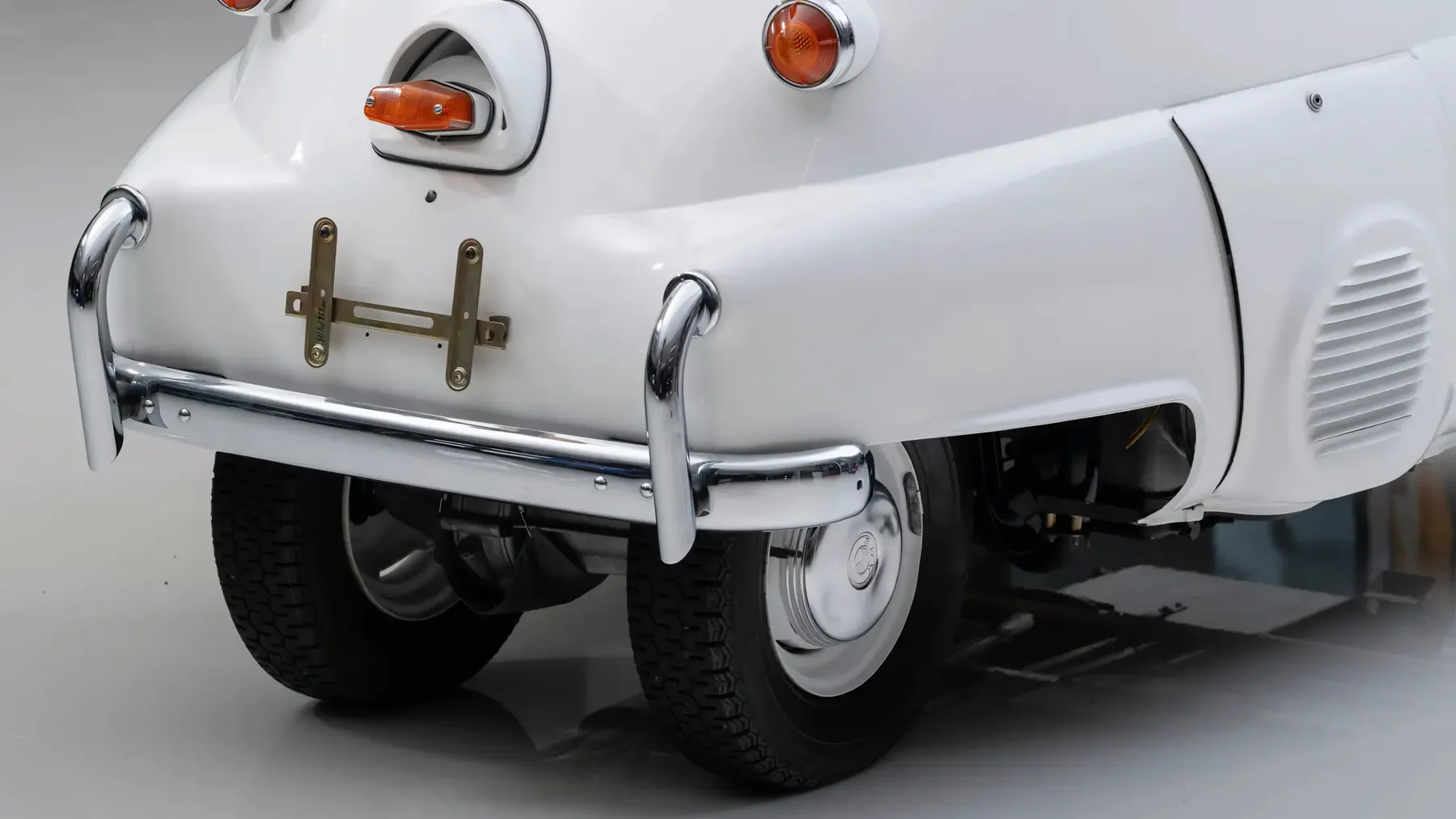
Unlike the original Italian three-wheeled design, BMW added a fourth wheel to improve stability, placing the rear wheels just 48 centimeters apart to eliminate the need for a differential. The 1956 model year was particularly special, featuring the desirable Z-bar trim design that was offered for only one year.
The BMW Isetta 300 was powered by a 298cc single-cylinder four-stroke engine derived from BMW’s motorcycle line. This tiny power plant produced 13 horsepower at 5,800 rpm and 18 Nm of torque at 4,600 rpm. Power was sent to the rear wheels through a four-speed manual transmission.
Performance figures reflected the Isetta’s modest power. It could reach a top speed of 85 km/h (53 mph) and accelerated from 0 to 60 km/h in about 15 seconds. But straight-line speed was never the point, the Isetta was built for efficiency and urban maneuverability.
What the Isetta lacked in power, it more than made up for in fuel economy. In 1955, it became the world’s first mass-production car to achieve a fuel consumption of 3 liters per 100 kilometers (94 mpg). Most owners regularly saw consumption figures between 3.5 and 3.9 liters per 100 km. With its 13-liter fuel tank, the Isetta could travel impressive distances between fill-ups.
The introduction of the Isetta couldn’t have come at a better time for BMW. Not only was the company facing financial difficulties, but in 1956, the German government changed vehicle regulations. Class IV licenses could no longer be used to operate vehicles with less than a 250cc engine, and tax classes were restructured with one category limit set at 300cc. This change prompted BMW to introduce the 300cc engine, which increased power and flexibility, particularly noticeable on gradients.
The Isetta was marketed as having the efficiency of a motorcycle with the comfort and safety of a car. In many countries, it could be driven with just a motorcycle license, broadening its appeal. Priced at around the equivalent of $1,450 in today’s money, it was genuinely affordable.
Sales were robust, with over 161,000 units sold during its production run that ended in May 1962. The Isetta became the top-selling single-cylinder car in the world and played a crucial role in BMW’s survival.
The Isetta’s distinctive appearance has made it a cultural icon that transcends its original purpose. It has appeared in popular media such as the television show “Family Matters” as Steve Urkel’s car, and inspired characters in movies like “Cars 2” and “Wallace & Gromit: The Curse of the Were-Rabbit”.
The little car even demonstrated its sporting capabilities. In 1954, Isettas entered the legendary Mille Miglia race and took the top three spots in the economy classification, achieving an average speed of over 70 km/h over a distance of 1,600 km.
Today, the BMW Isetta 300 is a highly sought-after collector’s car, admired for its quirky charm and historical significance. What some might view as a strange outlier in BMW’s history is actually one of its most important models, a car that helped save the company and allowed it to become the automotive powerhouse we know today.
The impact of the Isetta extends far beyond its production years. It demonstrated BMW’s ability to adapt and innovate in difficult circumstances, a trait that continues to define the company. The spirit of the Isetta lives on in BMW’s modern small cars and urban mobility solutions.
With its unique design, remarkable efficiency, and pivotal role in BMW’s history, the Isetta 300 stands as a testament to how sometimes the smallest things can have the biggest impact. For a car that many viewed as odd or unconventional, the little bubble car certainly had the last laugh, saving a company that would go on to become one of the world’s premier automotive manufacturers.
Join the discussion
Comments
Loading comments…
Leave a comment
Share a detail, memory, or perspective. Every comment is reviewed before publication.