1957 Pontiac Star Chief Custom Bonneville

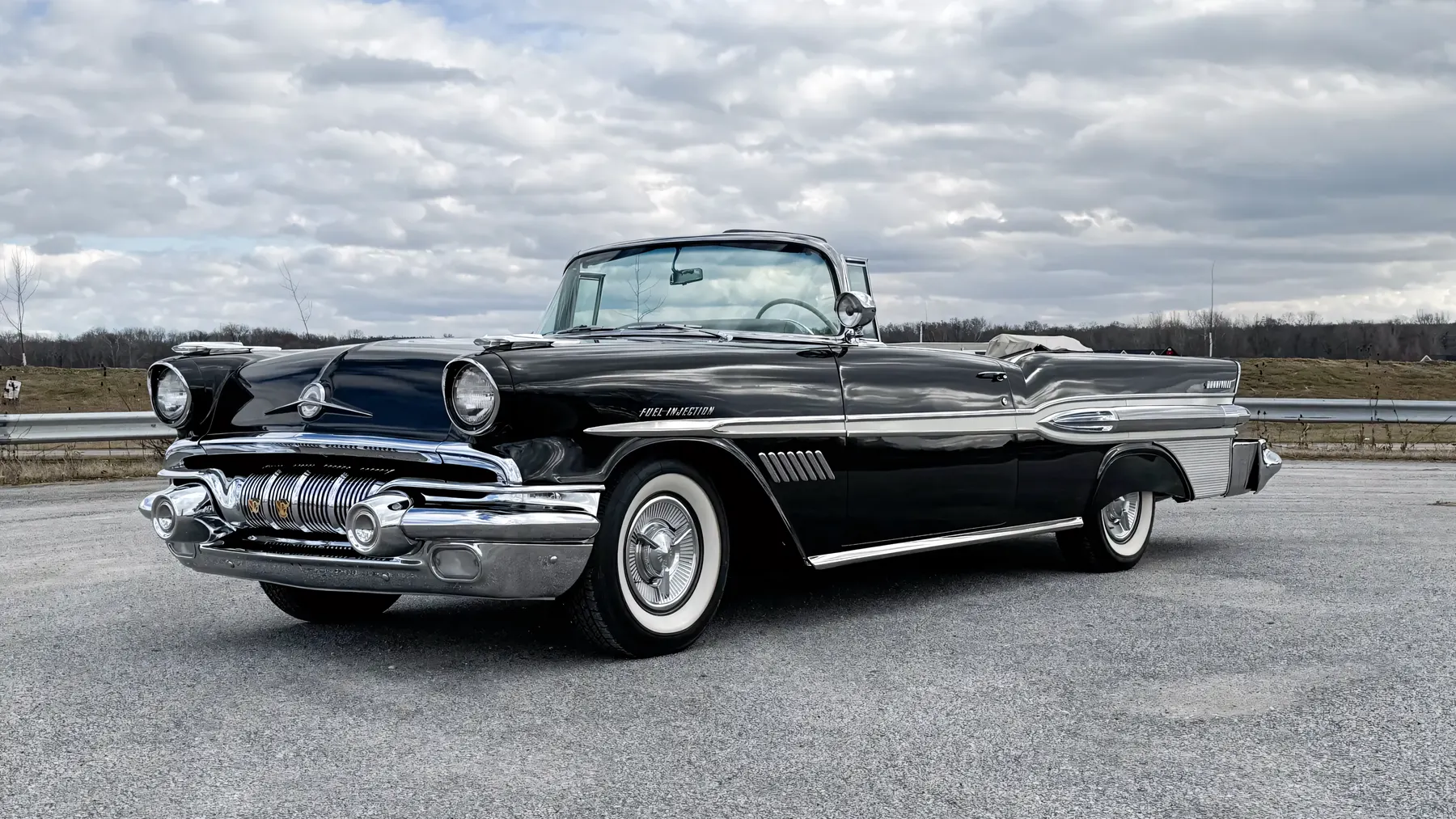
The Pontiac Star Chief Custom Bonneville, introduced in 1957, marked a significant turning point for the Pontiac brand. Known simply as the Bonneville, this model combined cutting-edge technology, bold design, and exclusive luxury, making it one of the most coveted American cars of its era.
The Bonneville was based on the Pontiac Star Chief platform, the brand’s flagship model since 1954. Positioned as Pontiac’s top trim package, the Star Chief already exuded prestige, with unique styling details such as the “Silver Streak” chrome bands running down the hood and its star-shaped trim accents. However, the introduction of the Bonneville redefined the platform by pushing the boundaries of performance and luxury to rival even Cadillac.
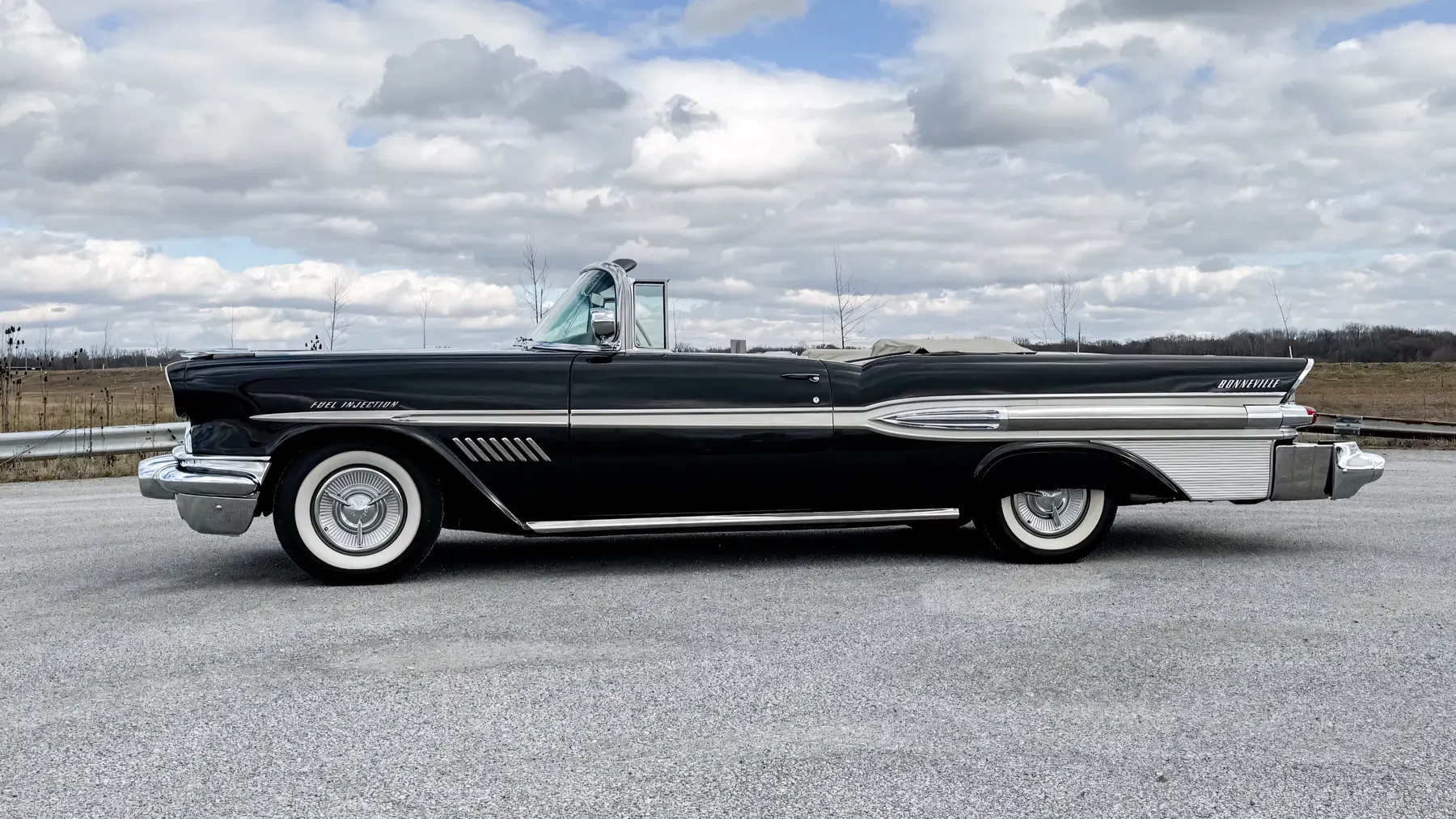
The 1957 Bonneville featured a distinctive “Star Flight” design that moved away from the Star Chief’s traditional styling. The hood’s “Silver Streak” elements were replaced with a cleaner, sleeker look, while a missile-shaped chrome spear extended along the side trim, emphasizing the car’s jet-age inspiration.
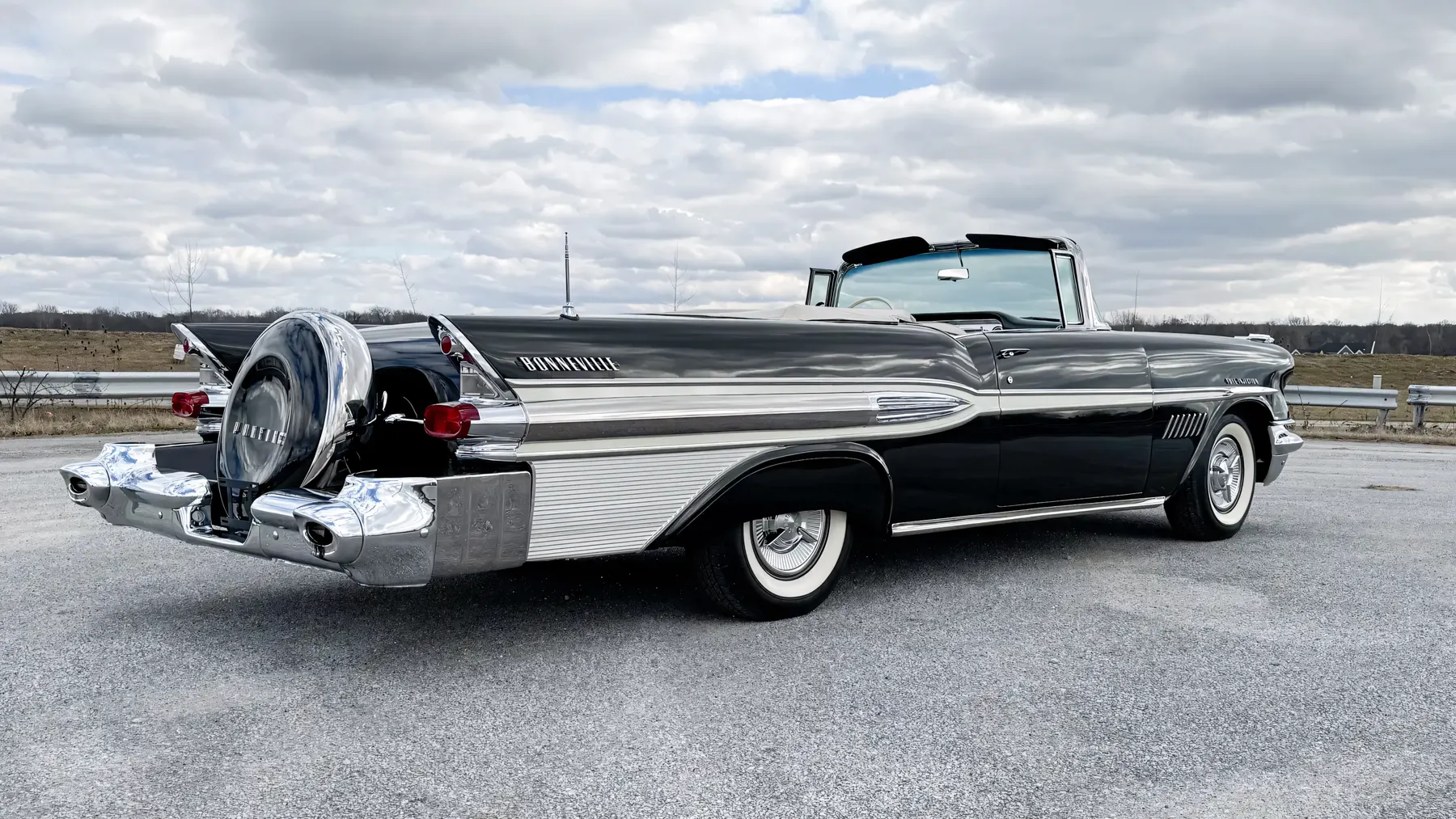
Offered exclusively as a convertible, the Bonneville was luxurious inside and out. It came loaded with every available feature as standard equipment, including leather upholstery, power-adjustable seats, power windows, power steering, power brakes, and a power-operated convertible top. These features were unheard of in most cars at the time, making the Bonneville a technological marvel.
The amber-lit “Indian” hood ornament, a hallmark of Pontiac design, added a final touch of elegance and highlighted the car’s heritage.
Under the hood, the Bonneville packed Pontiac’s first-ever fuel-injected engine. The 347-cubic-inch V-8, equipped with Rochester’s mechanical fuel injection, delivered an impressive 315 horsepower. While contemporary road tests suggested the Tri-Power carburetor setup was more reliable and nearly as powerful, the fuel injection system was a groundbreaking innovation, aimed at boosting both performance and efficiency.
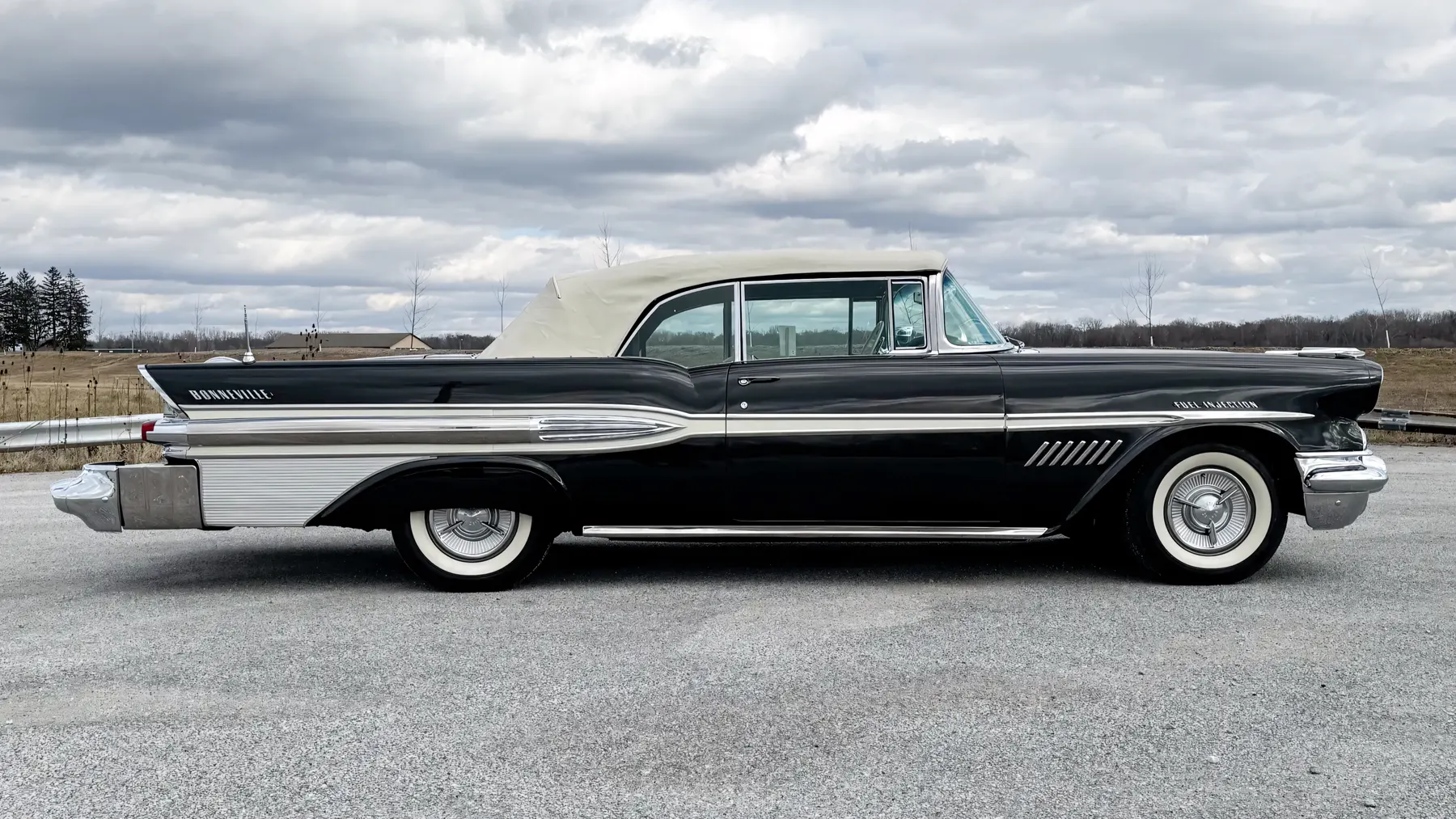
This powertrain allowed the Bonneville to compete directly with performance leaders like the Chrysler 300C, solidifying Pontiac’s reputation as a builder of fast, luxurious cars.
The 1957 Bonneville was produced in limited numbers,only 630 units were built. Each Pontiac dealership in the United States was allocated just one car, further enhancing its exclusivity.
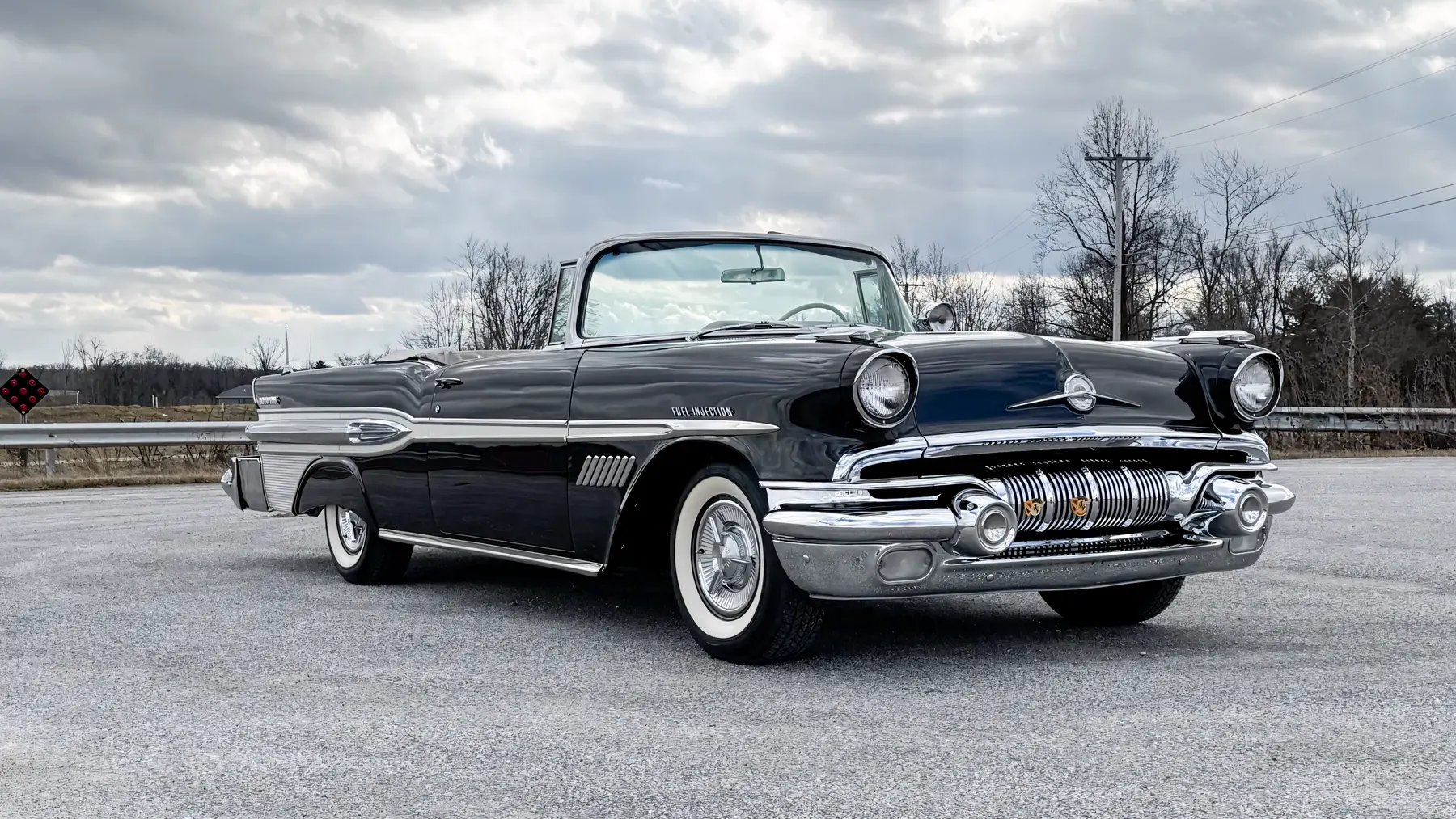
The price tag reflected its premium status. At $5,782 (equivalent to over $62,000 in today’s money), it cost more than double the base model Chieftain and even rivaled Cadillac’s Series 62. Despite its high price, the Bonneville’s advanced technology and limited production made it highly desirable, and today it remains one of the most collectible Pontiacs ever produced.
The Bonneville’s debut received widespread acclaim. It was seen as a bold statement from Pontiac, signaling a shift toward performance and luxury. The car helped elevate the brand’s image, shedding its reputation as a middle-tier manufacturer and aligning it with more prestigious competitors.
Its exclusivity, innovative features, and striking design resonated with car enthusiasts, further solidifying its status as a 1950s icon. The limited production run also ensured that the 1957 Bonneville became a collector’s dream in later decades.
The Bonneville nameplate became a permanent part of Pontiac’s lineup in 1958, evolving into the brand’s top model for nearly five decades. While subsequent Bonnevilles were more accessible and less exclusive than the 1957 model, they carried forward the tradition of combining performance, luxury, and innovation.
The 1957 Pontiac Star Chief Custom Bonneville remains a benchmark in automotive history. It represents a time when Pontiac took risks to redefine itself, creating a car that was as much a statement of ambition as it was a masterpiece of engineering and design. Today, it stands as a testament to Pontiac’s golden era, celebrated by collectors and enthusiasts worldwide.
**
Join the discussion
Comments
Loading comments…
Leave a comment
Share a detail, memory, or perspective. Every comment is reviewed before publication.