1958 Ferrari 250 GT Cabriolet Series I by Pinin Farina

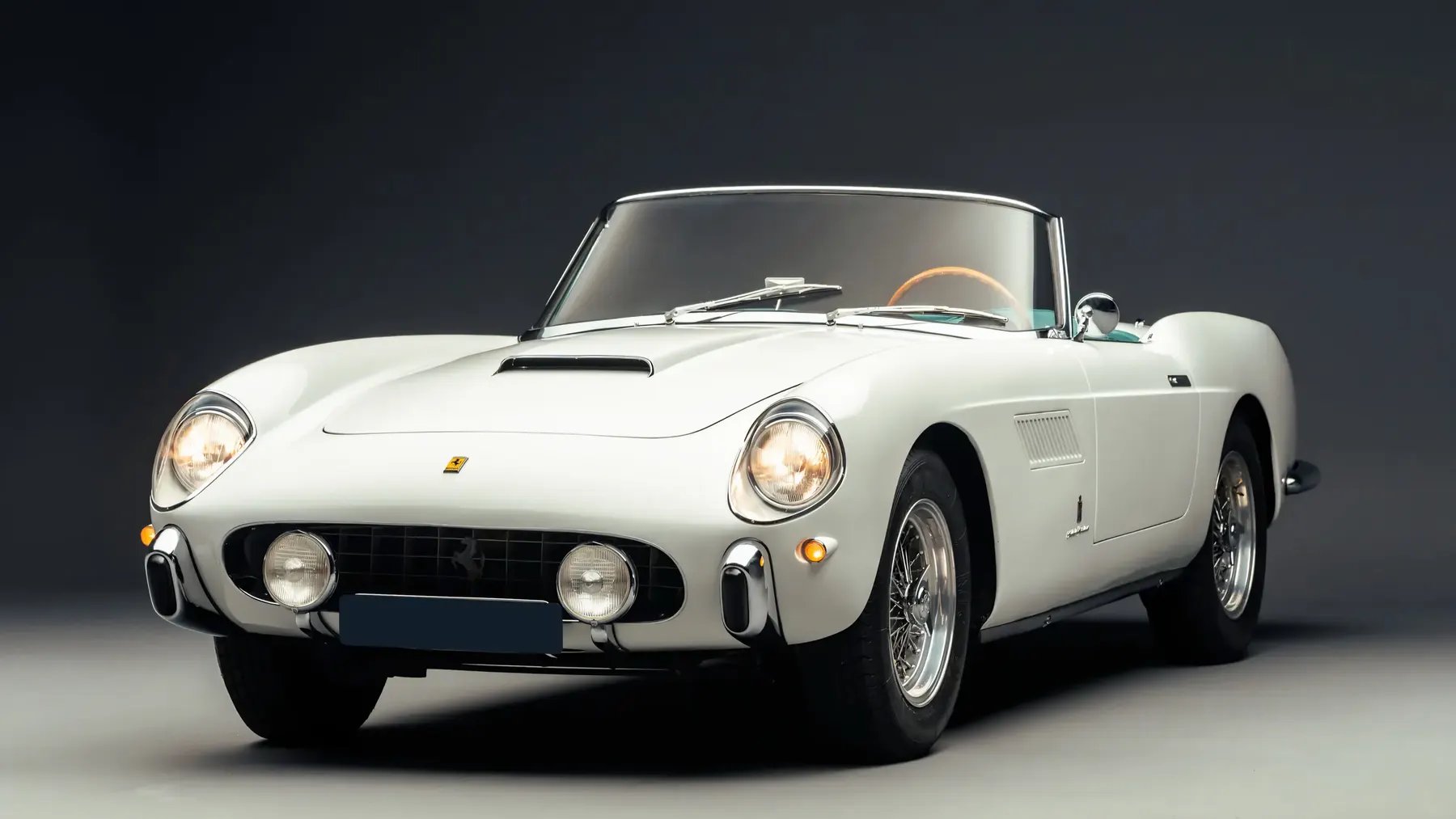
Summer, 1957. The roar of a V12 engine breaks the morning silence as a gleaming white convertible winds its way through the Italian countryside. Behind the wheel sits a wealthy industrialist, the wind tousling his hair as he navigates each curve with precision. This isn’t just any Sunday drive,it’s a moment that captures the essence of la dolce vita, powered by Ferrari’s first true production convertible: the 250 GT Cabriolet Series I by Pinin Farina.
Created during a pivotal moment in Ferrari history, the 250 GT Cabriolet Series I represents the fascinating transition between Ferrari’s early bespoke creations and its future as a producer of exclusive production sports cars. With just 40 examples built between 1957 and 1959, each one meticulously hand-crafted, these machines tell the story of how Enzo Ferrari reluctantly embraced series production without sacrificing the soul that made his cars legendary.
By the mid-1950s, Enzo Ferrari faced a crucial business decision. His company had built its reputation on racing success and ultra-exclusive road cars, but financial sustainability demanded higher production numbers. The 250 GT lineage became the platform for this evolution, with the Boano/Ellena coupes marking Ferrari’s first step toward standardization.
The 250 GT Cabriolet Series I, introduced at the Geneva Salon in March 1957, represented the next logical step: Ferrari’s first convertible built in meaningful numbers. Before this, Ferrari had produced a handful of one-off cabriolets, including the 1953 “Ariowitch” based on the 250 Europa, but none were intended for series production.
What makes the Series I so fascinating is how it embodies the tension between standardization and exclusivity. Despite being considered a “production” model, each car was handcrafted in Pinin Farina’s custom shop rather than on the factory floor. The craftsmen who built Ferraris for heads of state and Hollywood stars applied the same attention to detail to these cabriolets, creating what historians now describe as “virtual one-offs” despite their shared basic design.
Battista “Pinin” Farina approached the 250 GT Cabriolet with clear intent: create an elegant, refined grand touring convertible distinct from the more aggressive California Spyder that would follow. The result was a perfectly proportioned convertible that balanced sportiness with sophistication.
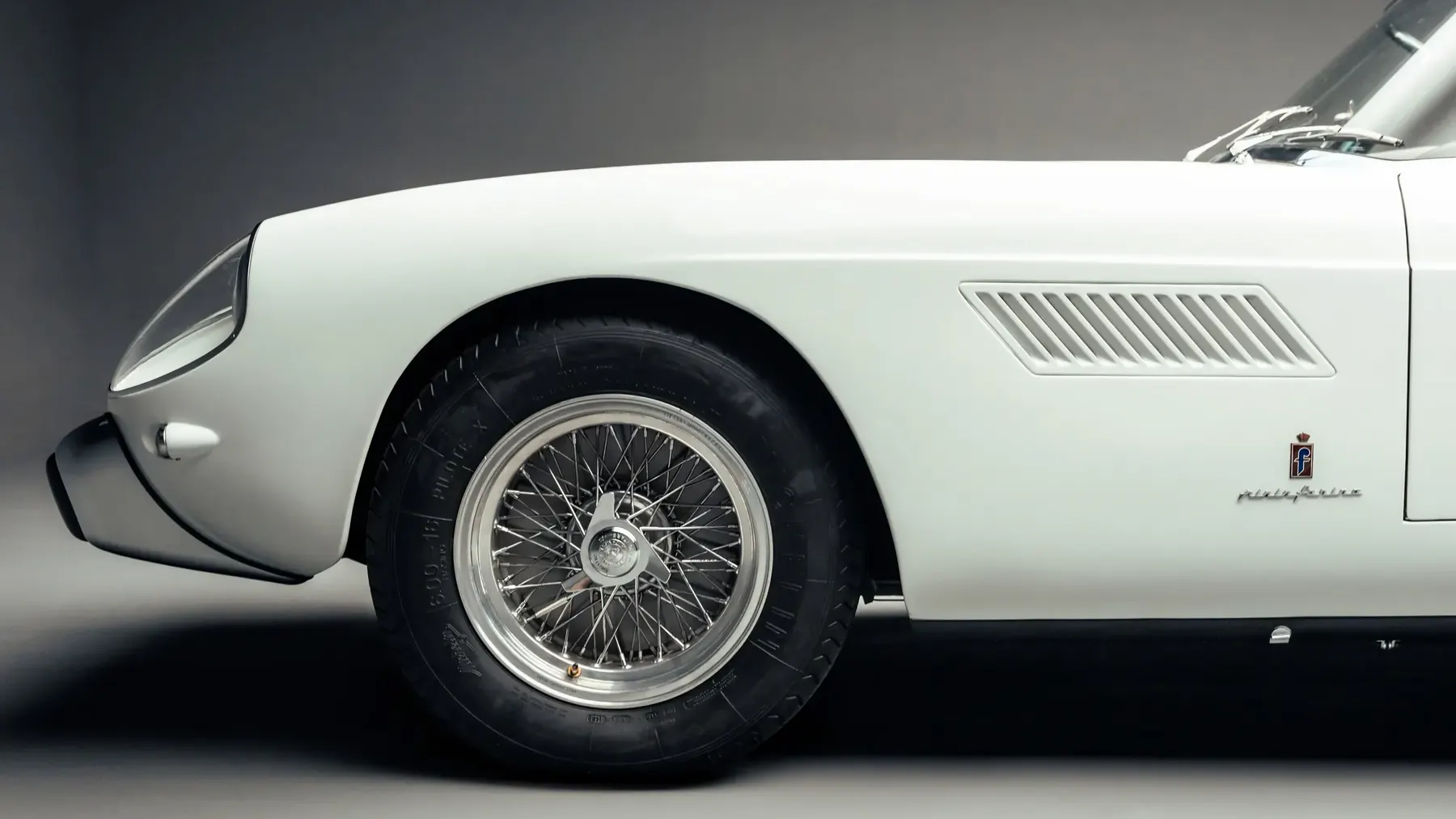
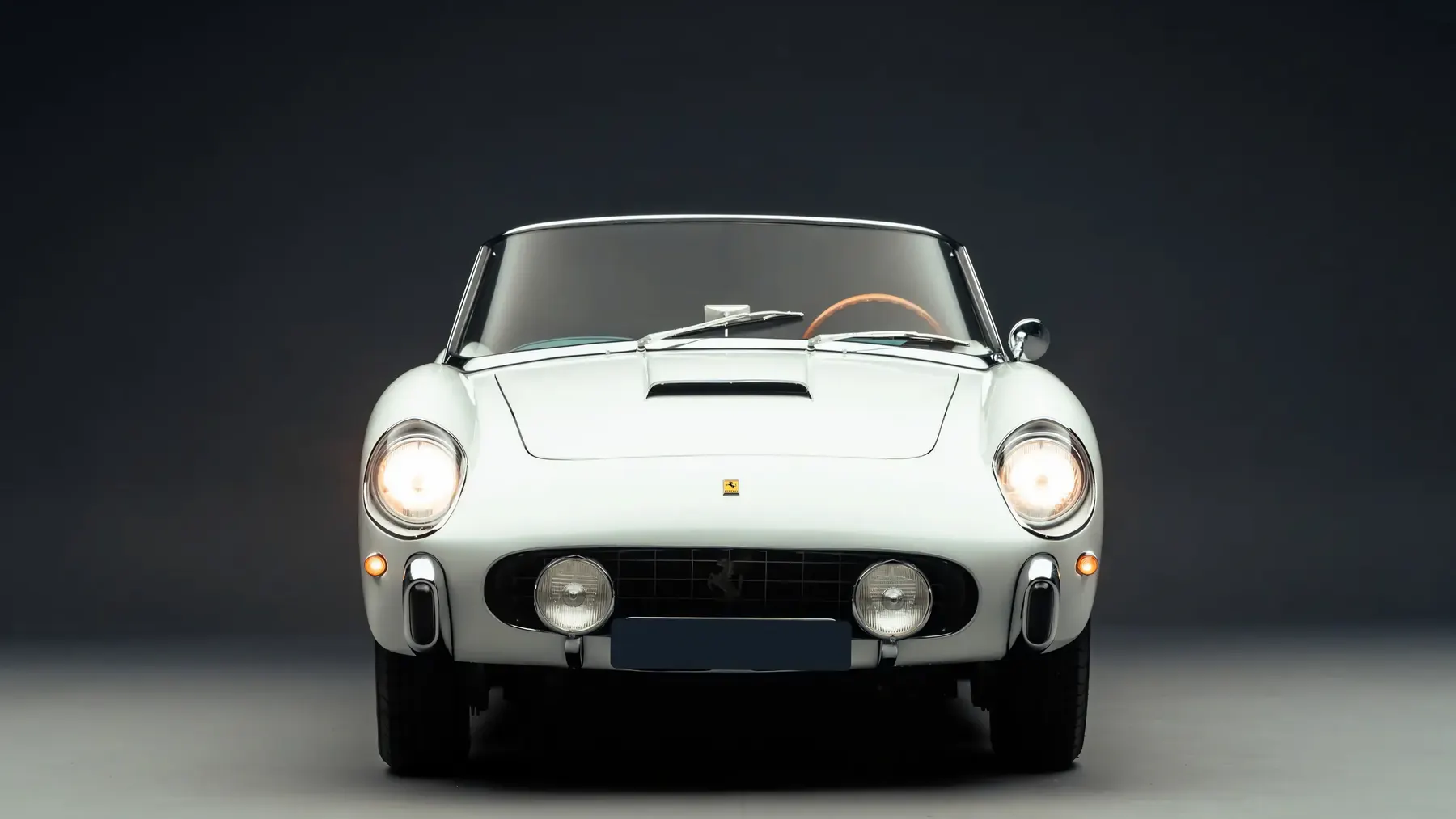
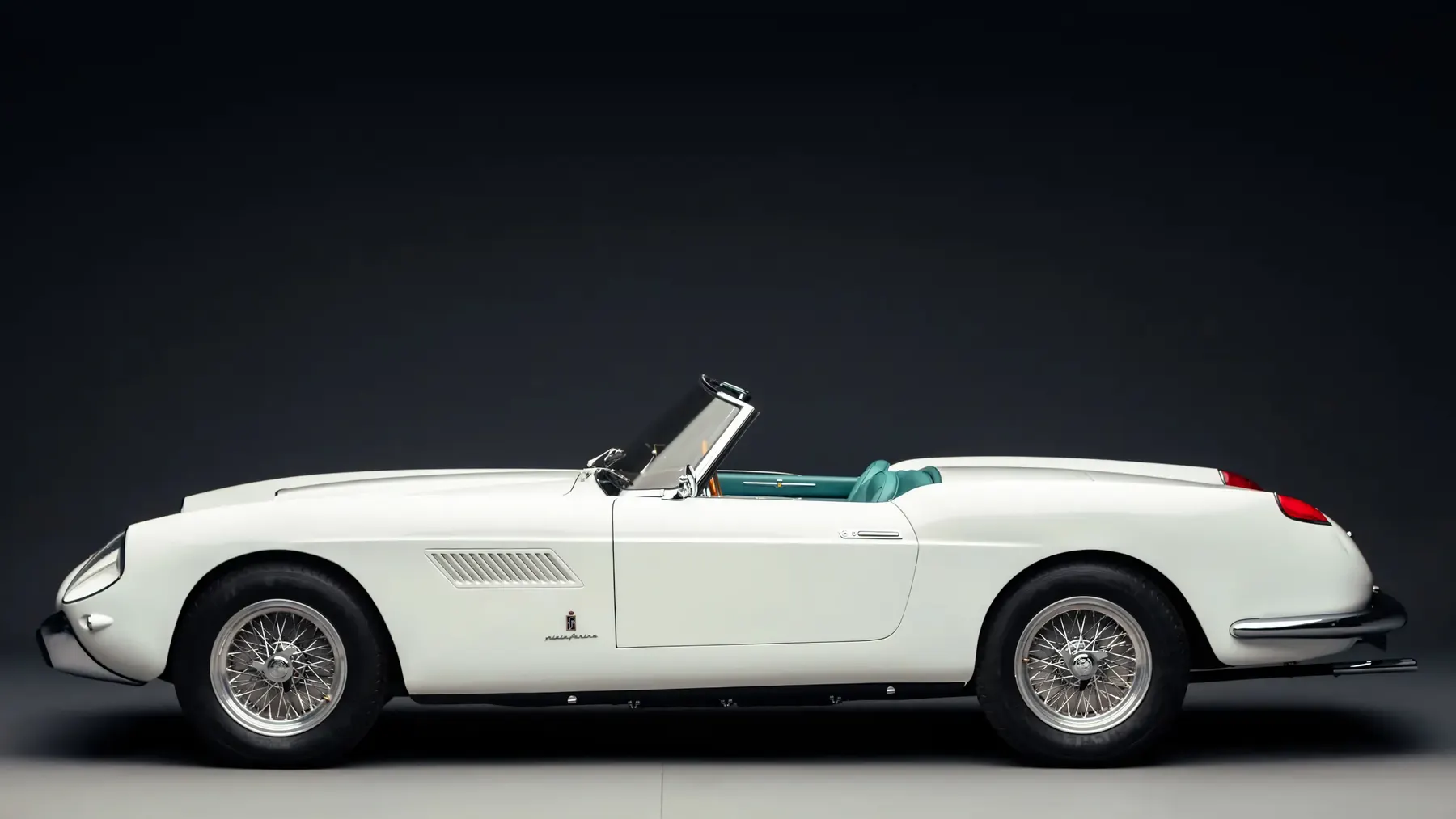
The Series I cabriolet is immediately recognizable by its clean, flowing lines. The front features distinctive covered headlamps (on most examples), giving the car a sleek, predatory appearance. Two vertical bumperettes frame the iconic egg-crate grille, with the prancing horse proudly displayed at its center. The long bonnet stretches back from this face, featuring delicate central ventilation to extract heat from the powerful V12 beneath.
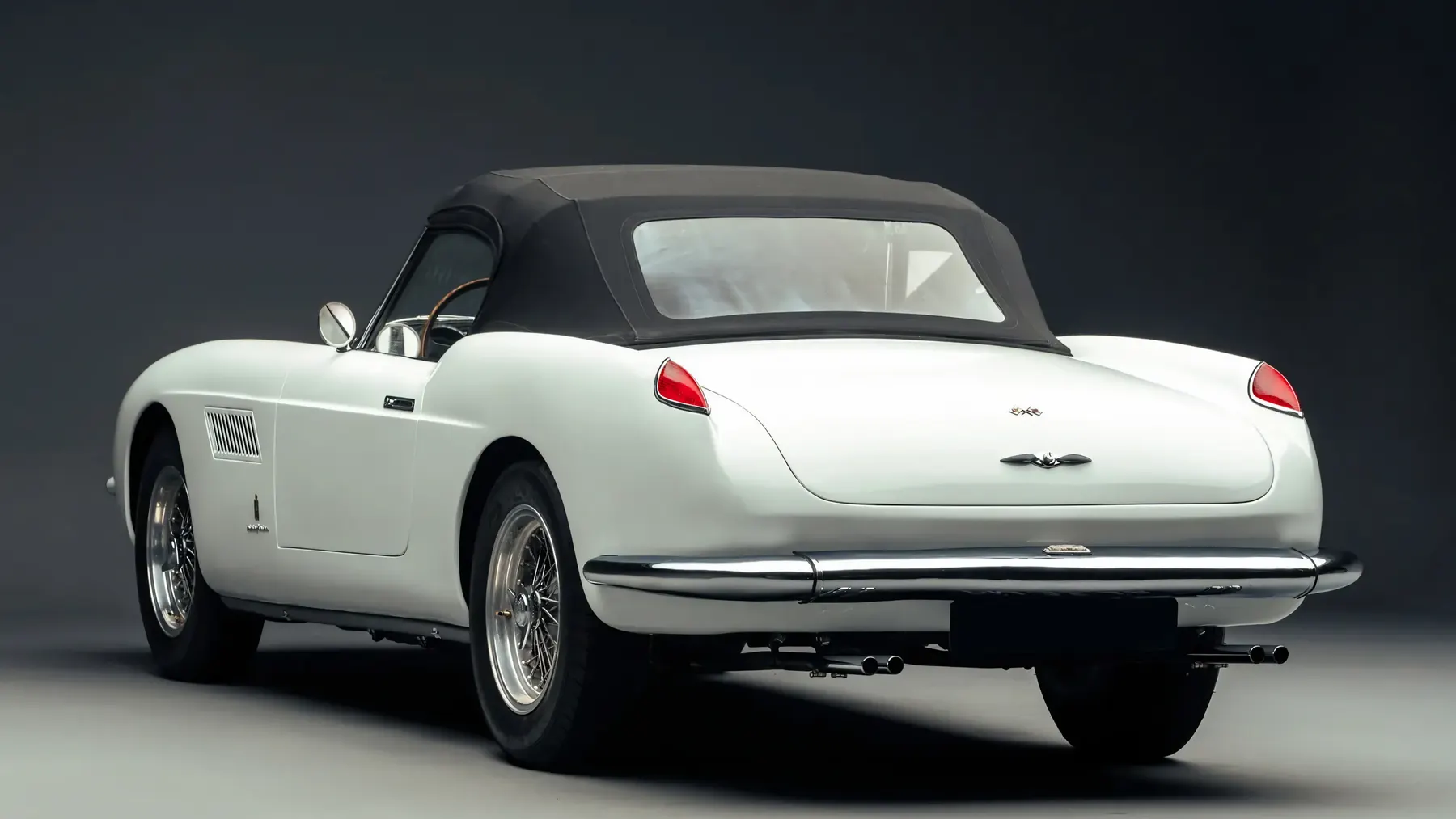
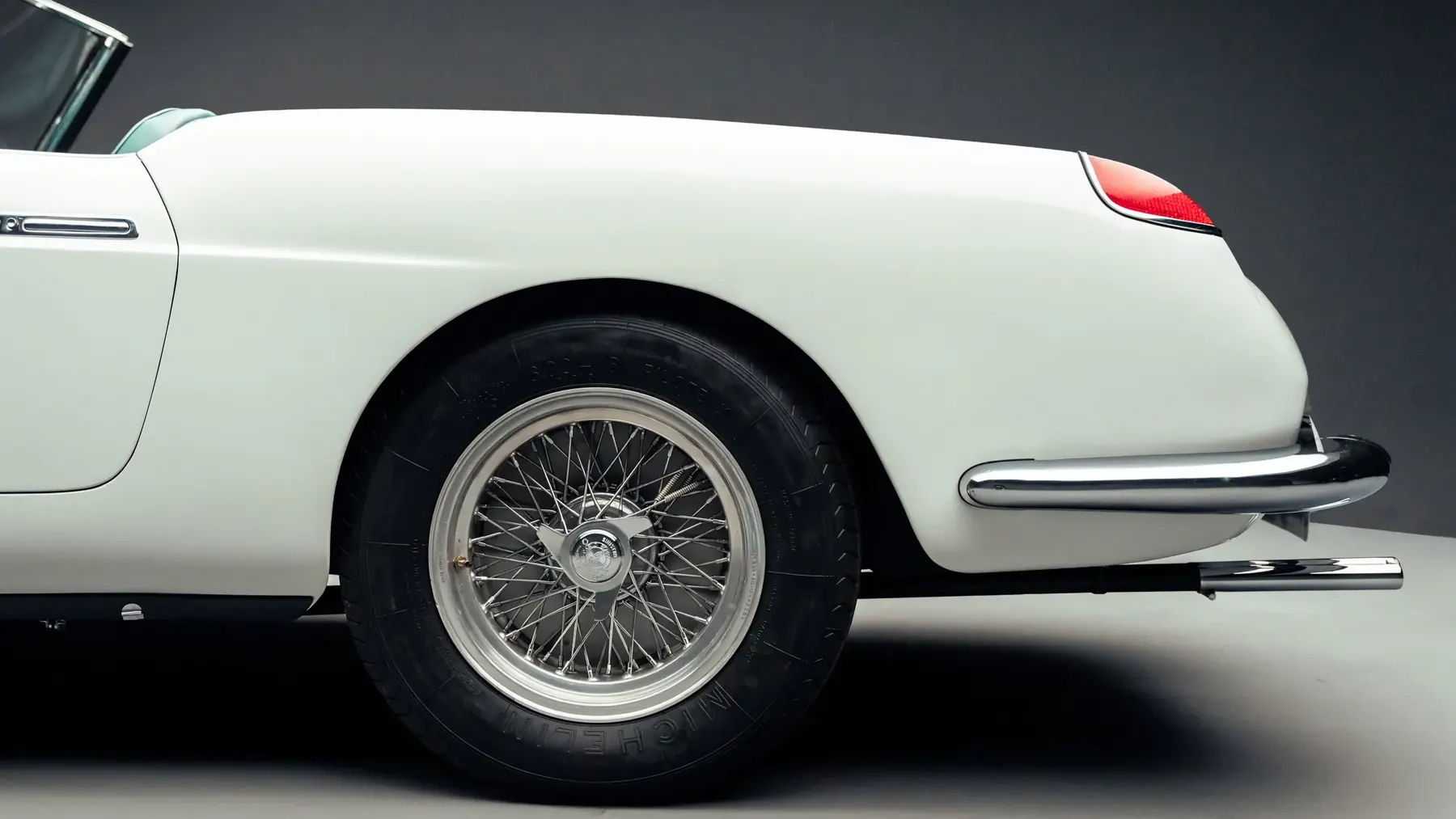
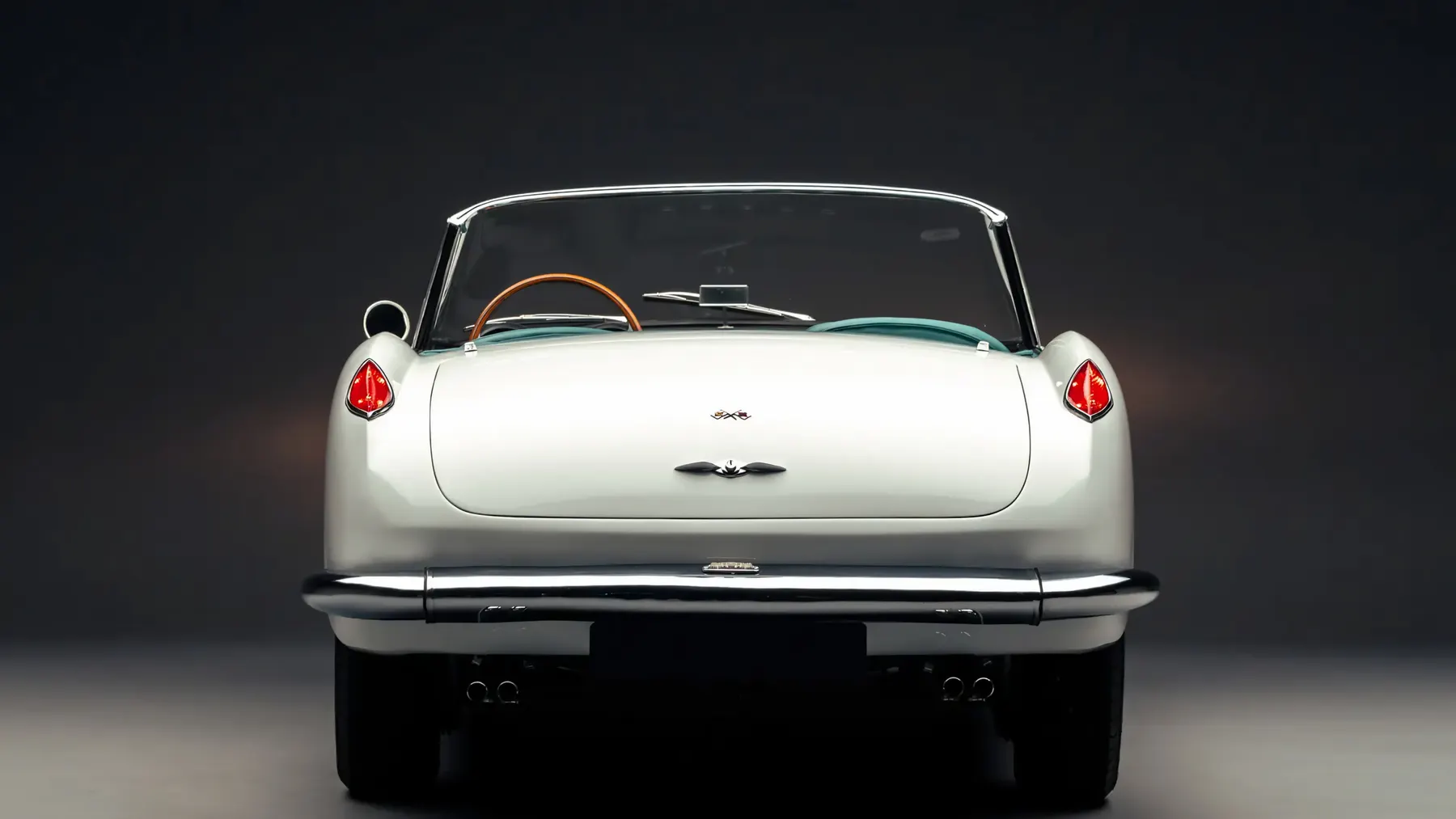
Perhaps most beautiful are the rear haunches, which rise gently before tapering toward the tail,a design element that gives the car a sense of motion even when parked. The rear features simple, elegant taillights and a clean trunk lid that conceals ample space for weekend luggage.
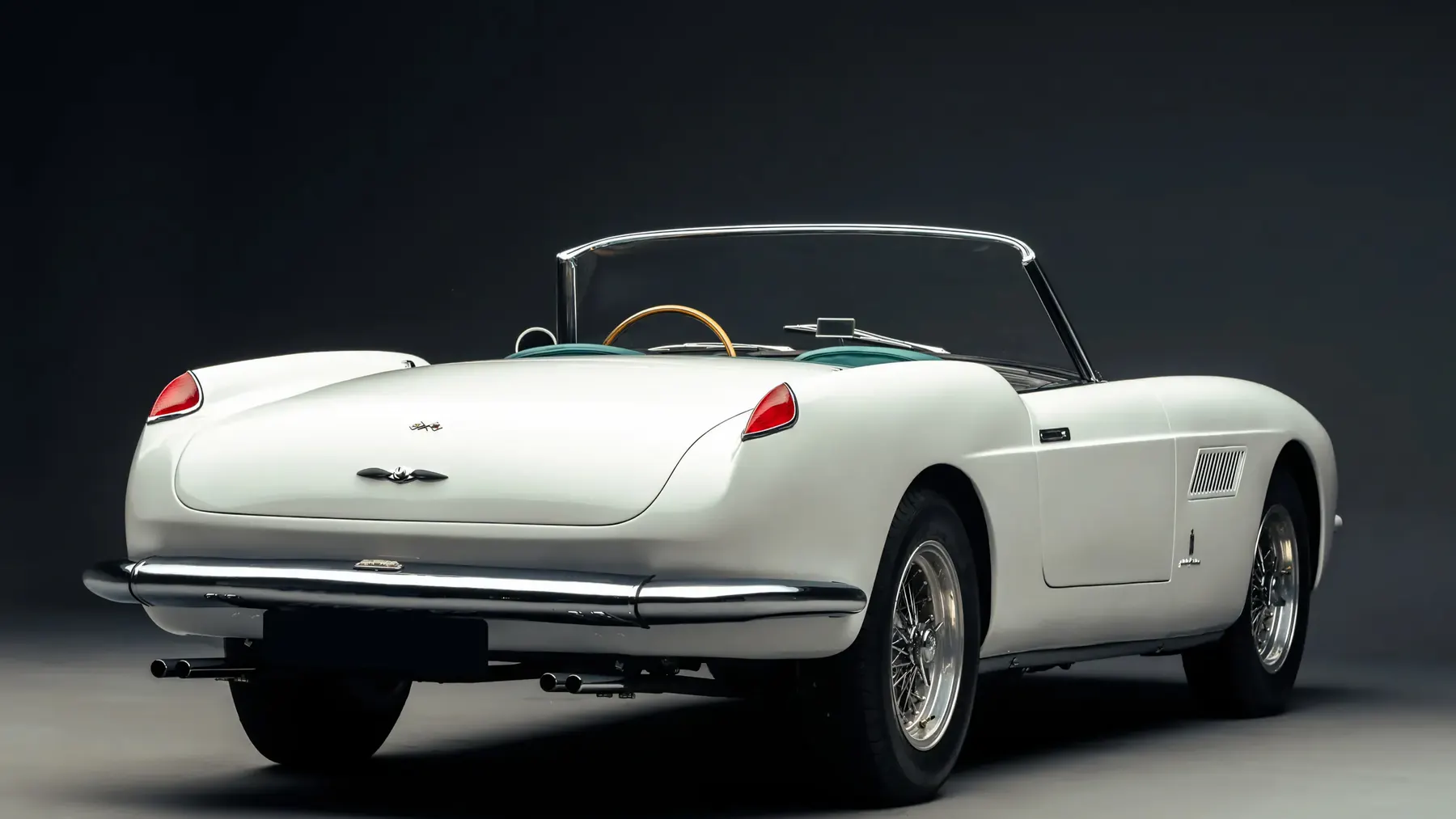
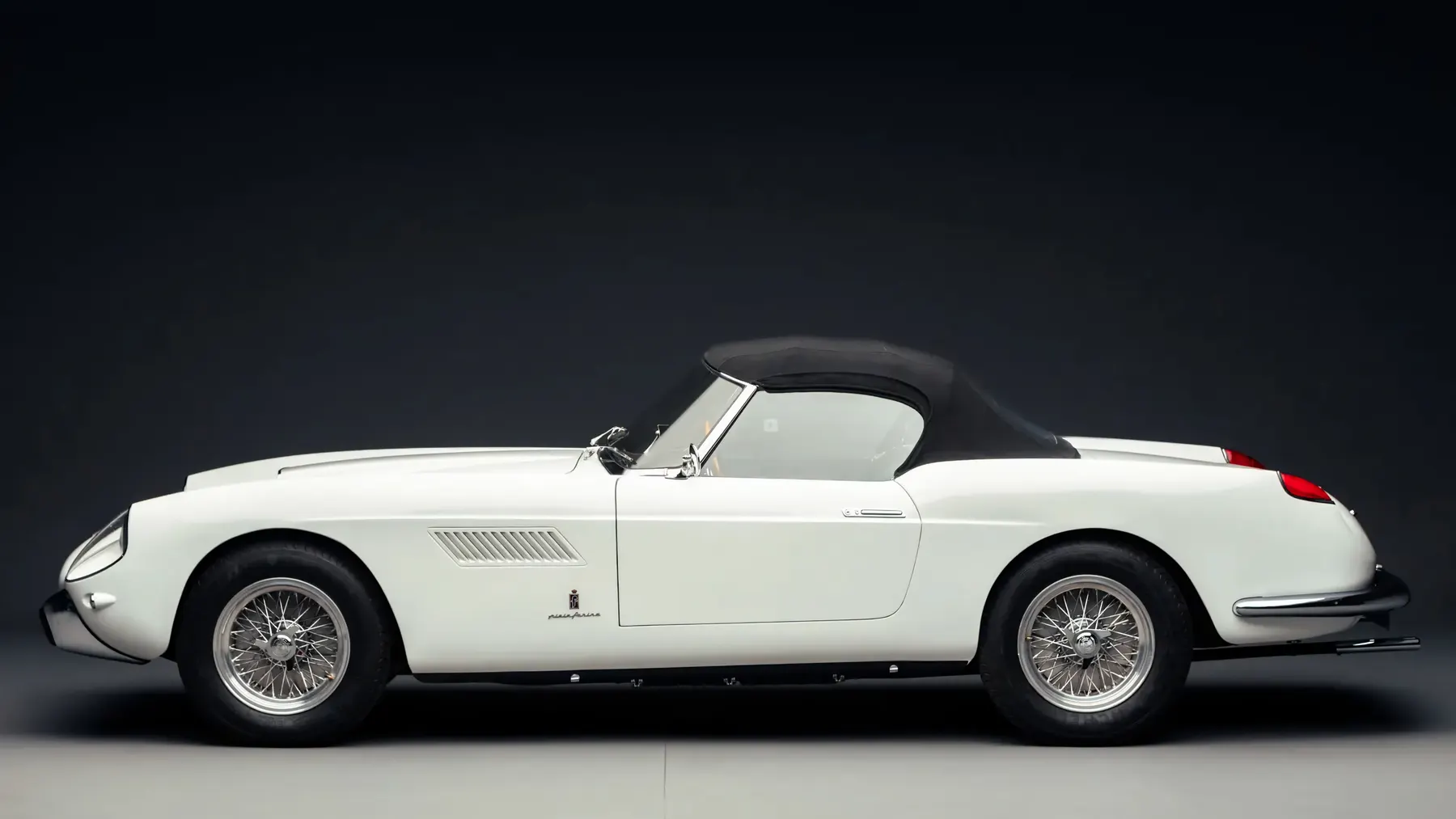
The convertible top deserves special mention for its elegant design. When lowered, it disappears completely beneath a color-matched boot cover, preserving the car’s clean lines. When raised, its taut fabric maintains a graceful profile unlike the awkward appearance of many convertibles of the era.
Each cabriolet featured subtle custom touches,a unique side vent design here, a special interior detail there,ensuring that no two examples were identical despite sharing the same basic design. This attention to individual specification reflected Ferrari’s commitment to exclusivity even as production numbers increased.
Beneath the elegant bodywork beats the heart that made Ferrari famous: the 3.0-liter “Colombo” V12. This masterpiece of engineering, designed by Gioacchino Colombo, represents one of the most celebrated engines in automotive history. With a 60-degree cylinder bank angle, dual overhead camshafts, and a displacement of precisely 2,953 cubic centimeters, it produced 240 horsepower at 7,000 rpm.
The Series I cabriolets featured the Tipo 128C variant of this engine, fed by three Weber 36 DCL 3 twin-choke carburetors. The symphony produced by twelve cylinders drawing air through these carburetors and expelling exhaust through the tuned system remains one of the most intoxicating sounds in motoring,a high-pitched mechanical wail utterly distinct from American V8s or British straight-sixes of the era.
Power flowed through a four-speed manual transmission with overdrive, allowing for both spirited acceleration and relaxed high-speed cruising. Performance figures included a 0-100 km/h time of approximately 7.1 seconds and a top speed approaching 240 km/h,exceptional numbers for the late 1950s.
The chassis beneath this powertrain was derived from Ferrari’s competition experience. A tubular steel frame provided both lightness and rigidity, while the suspension,independent double wishbones up front and a live axle with semi-elliptic leaf springs at the rear,struck a balance between handling precision and grand touring comfort.
Perhaps most significant was the braking system. Following successful testing by Ferrari driver Peter Collins, who fitted Dunlop disc brakes to an early prototype, Enzo Ferrari adopted this technology for the production cars,a forward-thinking decision at a time when many sports cars still relied on drums. This gave the cabriolet stopping power to match its performance, a crucial safety consideration for a 240 km/h open car.
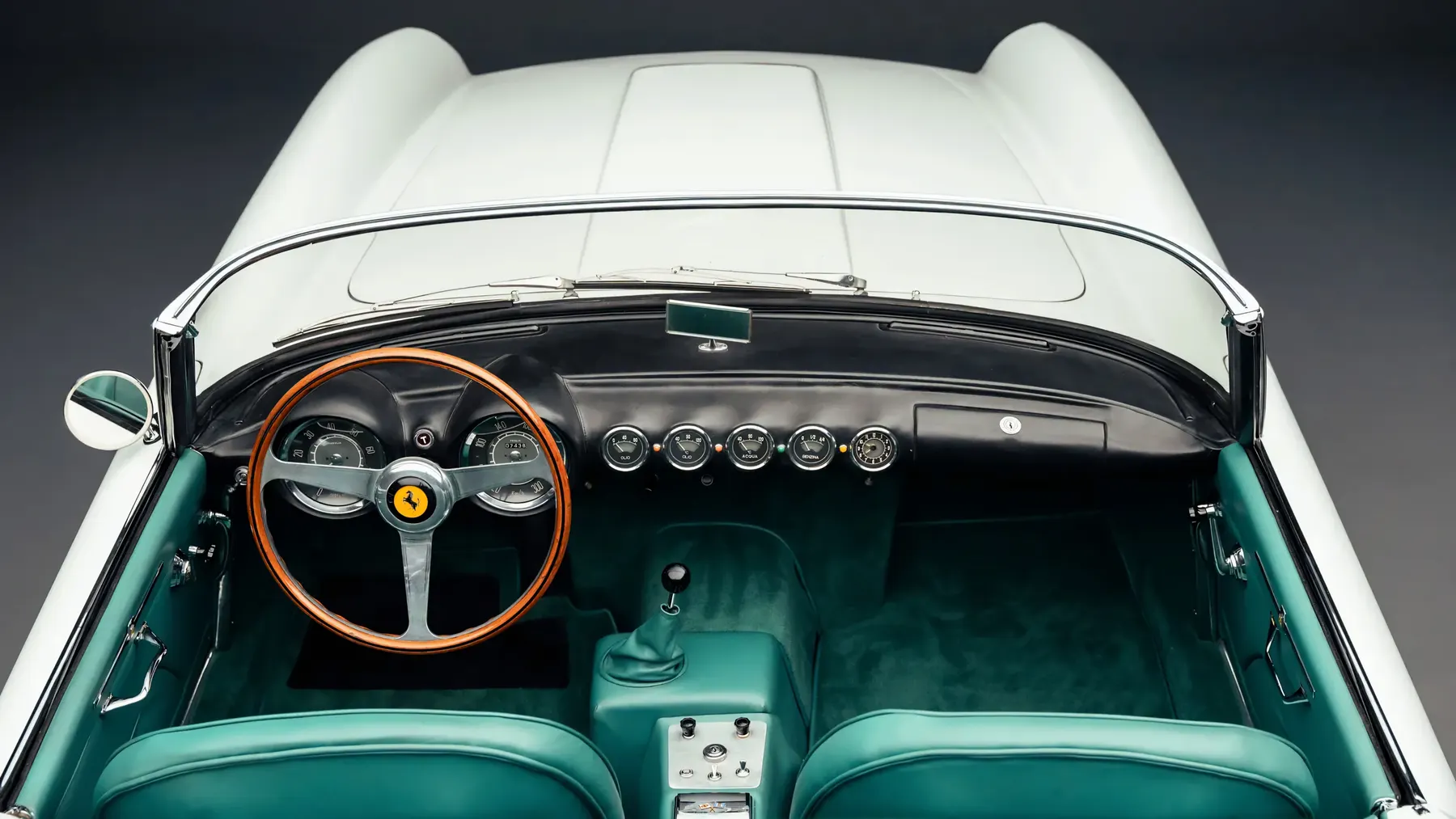
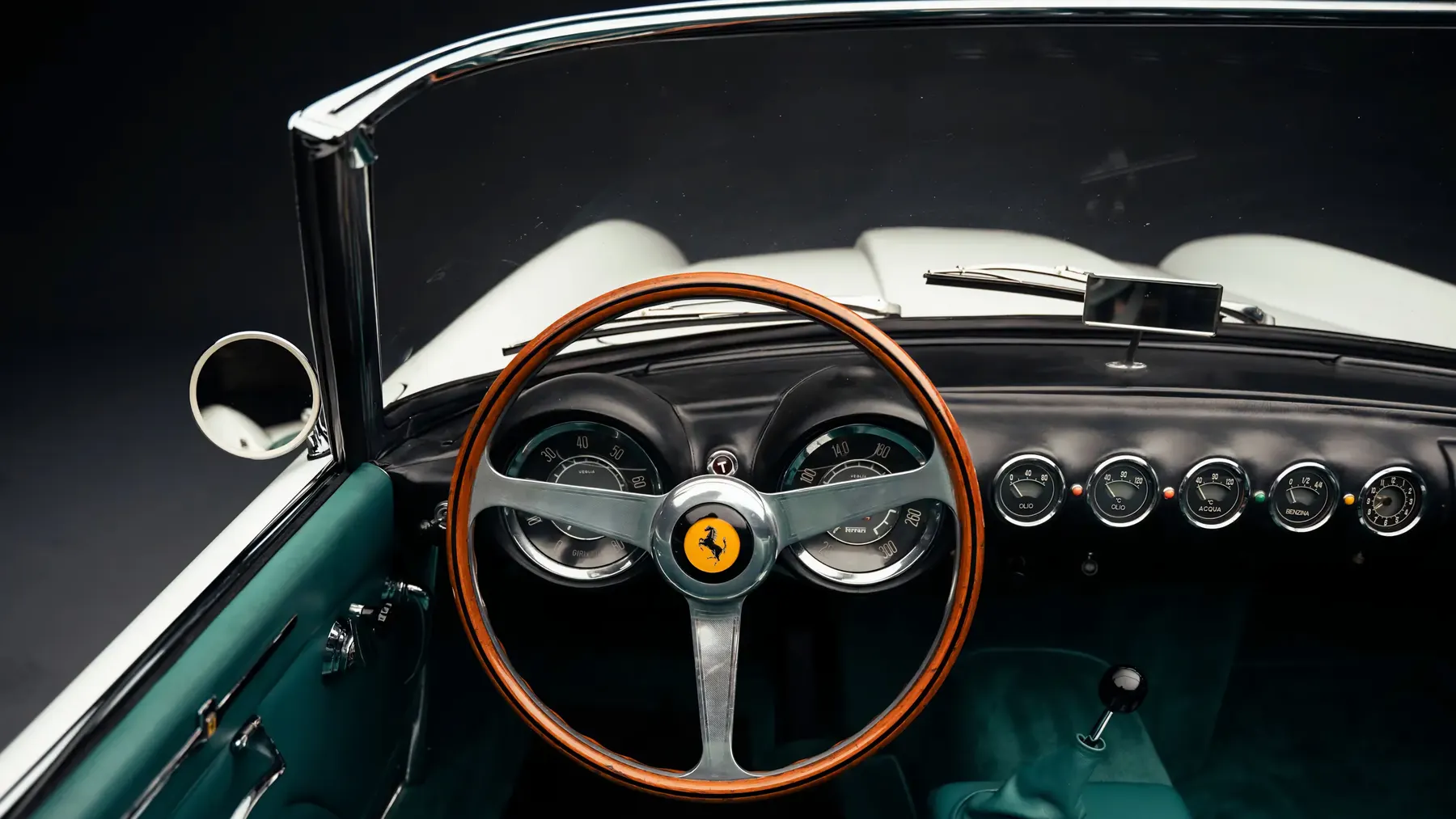
Step inside a 250 GT Cabriolet Series I, and you’re transported to an era when automotive interiors were crafted rather than manufactured. The dashboard presents a perfect blend of form and function, with seven circular instruments set into a leather-covered panel. The large Nardi steering wheel,featuring three aluminum spokes and a wooden rim,provides direct connection to the front wheels.
The seats, upholstered in the finest Connolly leather, offer surprising comfort for long-distance touring. The original color combinations often reflected the flamboyant tastes of the late 1950s,turquoise leather with white exterior paint, burgundy with silver, and other combinations that might seem daring today but perfectly captured the optimistic spirit of the era.
Every interior element reflects meticulous attention to detail. The door panels feature elegant metal handles and window cranks. The shifter, topped with a simple metal ball, falls perfectly to hand. Even the pedals,floor-hinged and widely spaced for proper heel-and-toe downshifting,demonstrate Ferrari’s commitment to the driving experience.
With a price tag approximately double that of the later California Spyder, the 250 GT Cabriolet Series I positioned itself at the absolute pinnacle of the grand touring market. This wasn’t a car for showing off or racing,it was a sophisticated touring machine for the discreet connoisseur who appreciated craftsmanship and engineering excellence.
The typical buyer was often older and more established than those who gravitated toward the racier California Spyder. European industrialists, Middle Eastern royalty, and Hollywood elite made up the exclusive client list. These were people who could afford any car but chose the cabriolet for its perfect balance of performance, comfort, and understated elegance.
Contemporary road testers praised the car’s dual personality,comfortable and refined when cruising, yet capable of transforming into a proper sports car when pushed. The combination of open-air motoring with genuine high-speed capability and Ferrari prestige proved irresistible to those who could afford the substantial price of entry.
By mid-1959, Ferrari and Pinin Farina had refined their approach further, introducing the Series II cabriolet with a revised design that shared more components with the 250 GT coupe. While approximately 200 of these Series II cars would be built, the original Series I remains more coveted by collectors for its rarity, hand-built nature, and purer design.
Today, a Ferrari 250 GT Cabriolet Series I represents one of the most significant Ferrari road cars of the 1950s. Its value has risen accordingly, with exceptional examples commanding prices well over €1 million at auction. The Ferrari Classiche certification program, which confirms the authenticity of classic Ferraris, has become particularly important for these cars, with “Red Book” certified examples featuring original matching-numbers components commanding significant premiums.
Beyond monetary value, these cabriolets represent a crucial chapter in Ferrari’s evolution,the moment when Enzo Ferrari proved that his company could create series-produced cars without sacrificing the exclusivity and craftsmanship that defined the brand. The lessons learned from this model would influence Ferrari’s approach to grand touring cars for decades to come.
For enthusiasts fortunate enough to experience one today, the 250 GT Cabriolet Series I delivers a driving experience that modern cars, for all their technology, simply cannot replicate. The unfiltered connection between driver and machine, the mechanical symphony of the V12, and the sheer beauty of the design combine to create something transcendent,a reminder of when cars were created by artisans rather than algorithms, when driving was an occasion rather than a commute.
The Ferrari 250 GT Cabriolet Series I by Pinin Farina stands as rolling proof that standardization and soul need not be mutually exclusive,a lesson that remains relevant in today’s automotive landscape, where genuine character becomes increasingly rare. For that alone, beyond its beauty and performance, it deserves its place among Ferrari’s most significant creations.
Join the discussion
Comments
Loading comments…
Leave a comment
Share a detail, memory, or perspective. Every comment is reviewed before publication.