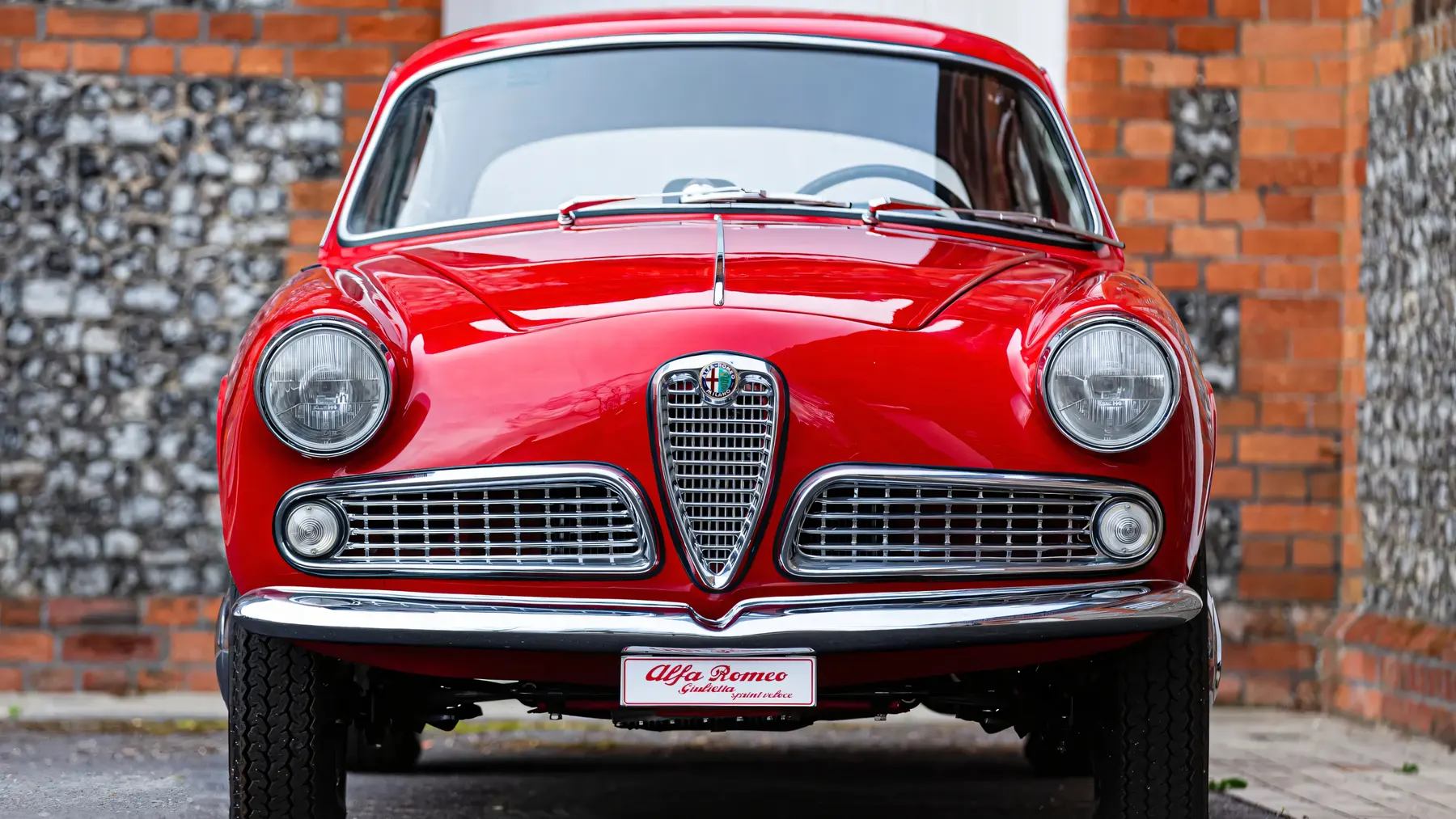
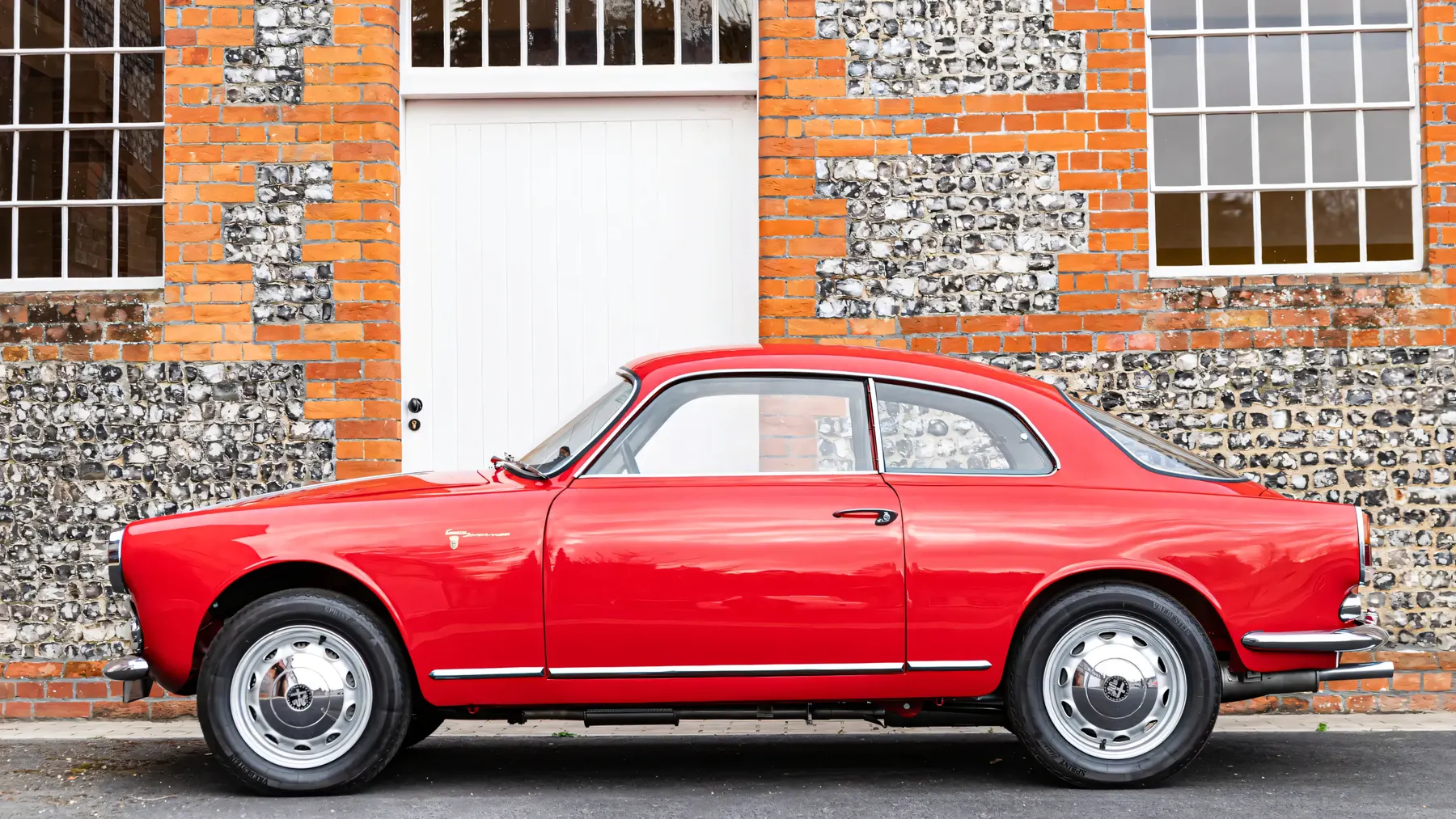
1961 Alfa Romeo Giulietta Sprint Veloce

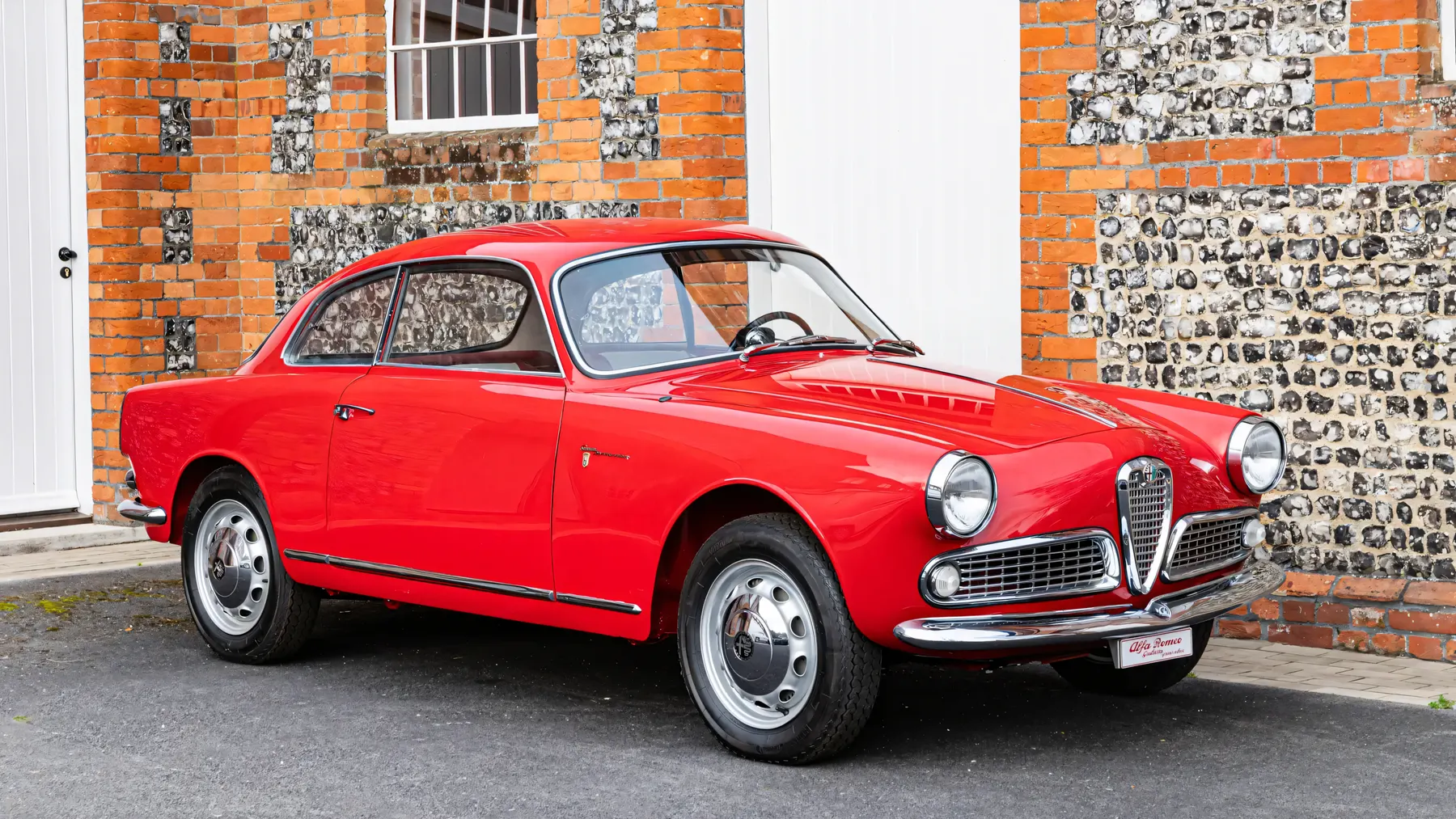
There’s something almost ritualistic about how Alfa Romeo approached the Giulietta Sprint Veloce. Two years after Franco Scaglione’s elegant Sprint coupé debuted at Turin in 1954, Alfa’s racing department took that beautiful machine and transformed it into something altogether more serious. This wasn’t just a matter of bolting on a few extra horsepower-though Giuseppe Busso’s engineering team certainly delivered those-but rather a comprehensive reimagining of what a 1.3-liter GT car could be. Production ran from 1956 through 1962, with just 3,058 examples built from roughly 132,000 total Giulietta Sprints, making the Veloce a rare and purposeful variant in a popular lineup.
The Sprint Veloce represented Alfa Romeo’s calculated response to humiliation. At the 1955 Mille Miglia, standard Sprints had been thoroughly trounced by Porsche’s 356 entries in the 1300 GT class, finishing a distant third. For a company with Alfa Romeo’s racing pedigree, this was unacceptable. So the technicians at Portello, the same minds responsible for the company’s competition program, set about creating a weapon specifically designed to reclaim class dominance. The result made its debut at the 1956 Mille Miglia, and promptly delivered exactly what Alfa intended-Sgorbati and Zanelli took eleventh overall and first in the 1300 GT class, beating not just the Porsches but finishing ahead of much larger-engined machinery, including 1600cc Porsche variants.
Under the bonnet sat Busso’s twin-cam 1.3-liter four-cylinder, an engine that would remain in production for four decades and establish the template for every subsequent Alfa Romeo four-cylinder. For the Veloce, Busso’s team raised the compression ratio from 8.0:1 to 9.1:1, fitted a pair of Weber 40DCO3 sidedraught carburetors fed by cold air ducted through the grille, polished the cylinder head ports, and installed high-lift camshafts. The connecting rods were shot-peened for durability, while a baffled aluminum sump with integrated oil cooler kept temperatures in check during extended competition use. Power climbed from the standard Sprint’s 80 brake horsepower to 90 bhp at 6,500 rpm in the early Veloce, later reaching 97 bhp in second-series cars. This doesn’t sound like much by modern standards, but it was the method of delivery that mattered-rev-happy, willing, and engineered with the precision Busso had learned designing aviation engines where weight was paramount.
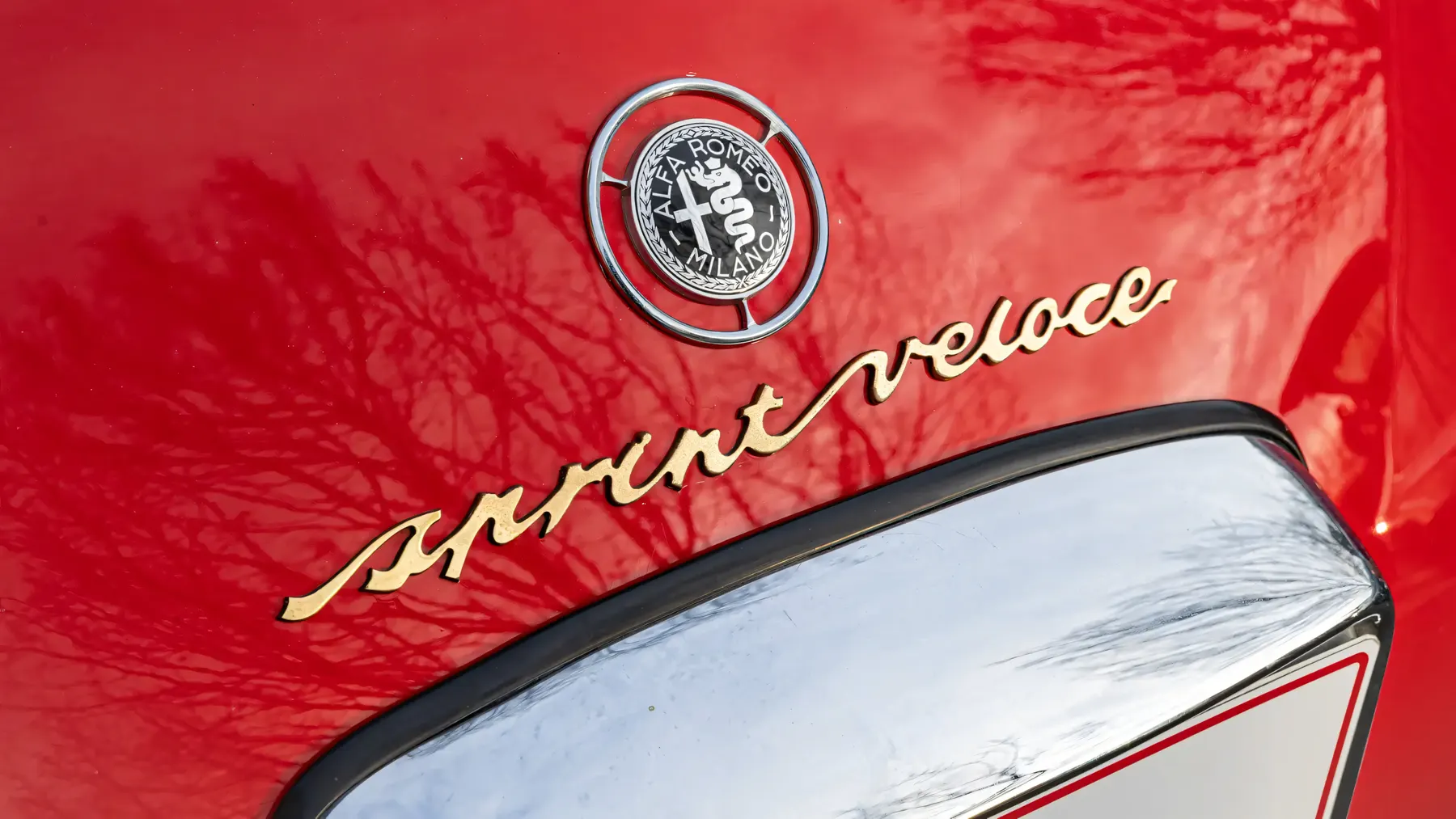
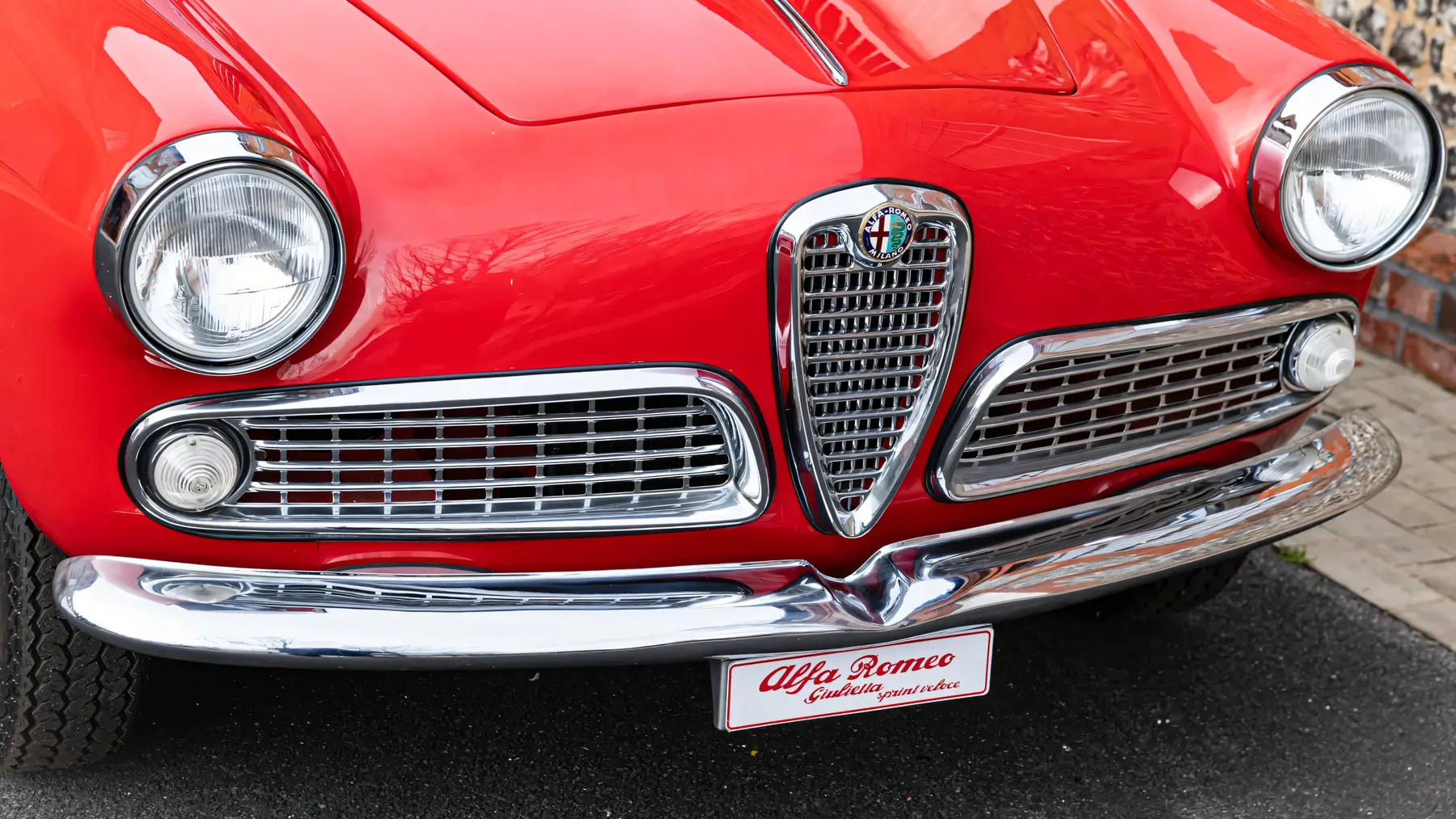
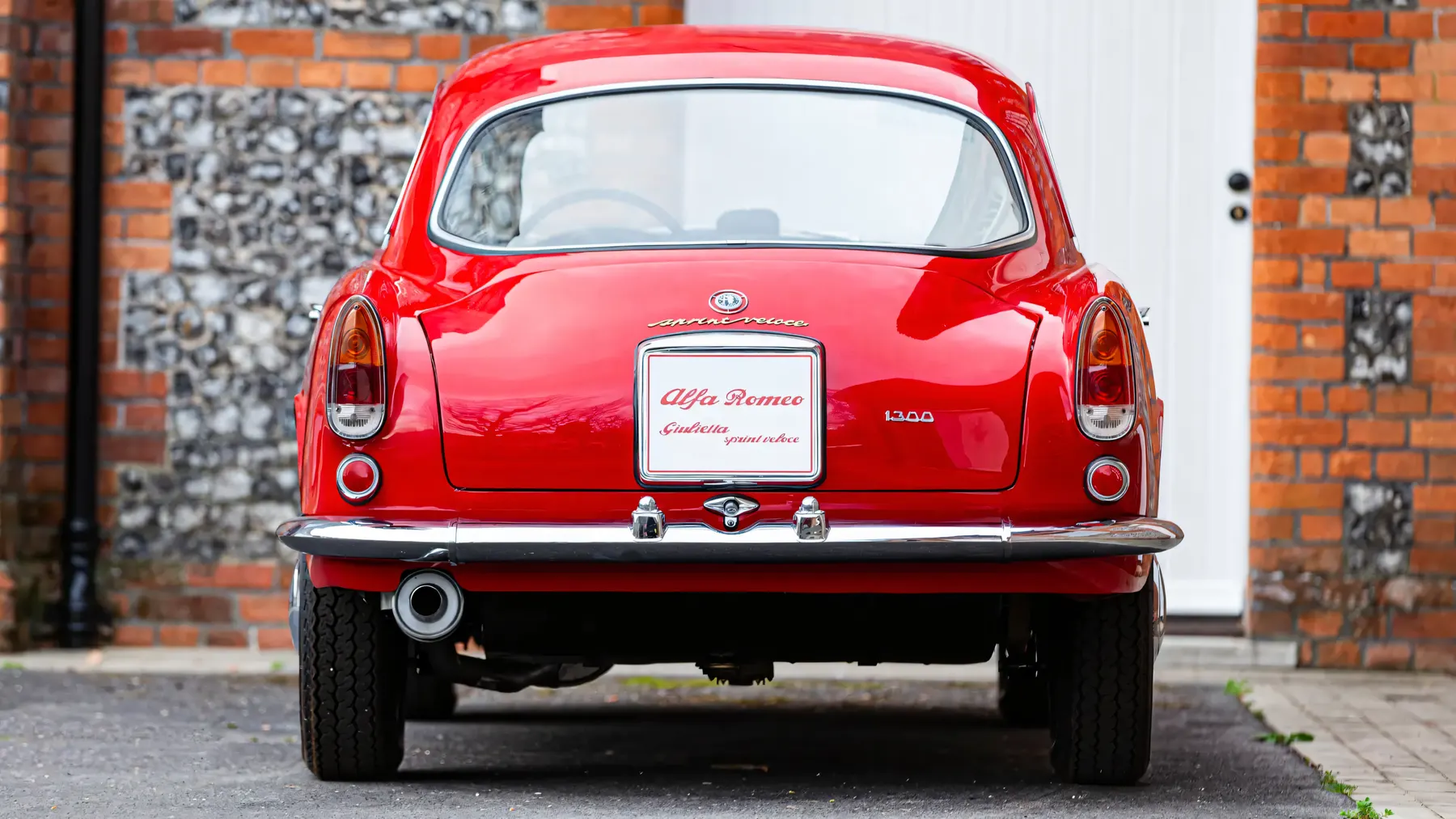
The real genius lay in the obsessive weight reduction. Alfa Romeo stripped approximately 100 kilograms from the standard Sprint, bringing the Veloce down to a featherweight 780 kilograms. Steel bonnets, boot lids, and doors gave way to aluminum alternatives, as did the bumpers. The rear screen and side windows were replaced with perspex, though this created an interesting quirk-the sliding side windows that resulted became the Veloce’s most obvious visual identifier, along with the “Giulietta Sprint Veloce” script along the front wings. Inside, lightweight competition seats provided better lateral support, and crucially, more elbow room thanks to the elimination of roll-up window mechanisms. Bertone stamped these special models with an “E” designation to denote their enhanced specification, typically finished in Rosso Alfa with a striking two-tone red and white interior.
On the road, the transformation was immediately apparent. When Sports Car Illustrated journalist Jesse Alexander tested a privately-owned Sprint Veloce in February 1957, he immediately grasped what Alfa had achieved, noting that “whilst the Sprint is a fine, high speed, touring-sports car, the Sprint Veloce is considerably more than this”. He understood that this was “a true Italian competition machine with just enough comfort and flexibility left in the design to make it a really outstanding piece of equipment”. The car had been “literally born in the mountains of Italy-on the Radicofani, the Futa and the Raticosa mountain passes which make up the most rugged part of the Mille Miglia”. Auto Italiana went further after a 4,200-kilometer test in early 1957, declaring the Sprint Veloce “so different to the standard Sprint that it might almost have been another car altogether” and “an almost unbeatable car”.
The independent front suspension with unequal-length A-arms, coil springs, and anti-roll bar worked in concert with the well-located live rear axle to create handling that punched well above the car’s displacement. Chief test driver Consalvo Sanesi famously proved to Sprint Veloce driver Egidio Gorza that the car could take Monza’s daunting Curva Grande flat-out in fourth gear, a lesson Gorza learned well as he went on to win both the Italian 1300 GT Championship and the Italian 1300 Mountain Trophy in 1956. The large finned drum brakes were excellent by period standards, though stopping power was never the Veloce’s strongest suit compared to its nimble handling.
What the Sprint Veloce excelled at was exploiting technical courses where its low weight and responsive chassis could overcome larger-engined competition. At the 1956 Coppa delle Dolomiti, Gorza’s Sprint Veloce finished fourth overall-behind an Osca, a Ferrari 290MM, and a Ferrari 250 GT-but ahead of multiple Mercedes 300 SLs with vastly more power. On twisty mountain roads and island circuits like the Tour de Corse, the Veloce could humiliate supposedly superior machinery. Nicol and de Lageneste’s outright victory in Corsica in 1957, and Bauer and Zannini’s overall win at the Austrian Alpine Rally the same year, proved the concept.
Yet the Sprint Veloce was compromised by its very nature. Those lightweight aluminum panels were expensive-the Veloce commanded 2,050,000 lire versus 1,735,000 for the standard Sprint, a substantial premium. Later 101-series cars reverted to standard steel bodywork, bumpers, and glass, ballooning the weight to 895 kilograms and negating much of the original concept. The perspex windows were miserable in poor weather, the sliding mechanisms leaked, and the spartan interior made long-distance touring less pleasant than the standard Sprint. The floor-mounted gear lever, while welcomed by most period testers, was ironically considered slower than the standard Sprint’s column-mounted “waggle stick” by some Mille Miglia competitors, according to Autosport’s Gregor Grant. The enlarged 80-liter fuel tank was essential for endurance racing but occupied valuable space, and the dual Weber carburetors demanded constant attention and expertise to keep properly synchronized.
By 1957, the writing was already on the wall. Massimo Leto Di Priolo’s Zagato-bodied Sprint Veloce-even lighter and more aerodynamic-won the 1300 GT class at the Coppa Intereuropa at Monza, comfortably beating established Veloce pilots Jo Bonnier and Egidio Gorza. The Zagato SV became the car to beat, and the standard Sprint Veloce gradually shifted from frontline competition weapon to fast road car for committed enthusiasts. Still, the Sprint Veloce managed some final glory-Van Beuren and Velasquez took the 1300 GT class at the 12 Hours of Sebring in early 1958, and Sprint Veloces scored class wins at the Giro di Sicilia and Targa Florio that same year.
The Sprint Veloce established a template that Alfa Romeo would follow for decades: take an already excellent sporting machine, strip away unnecessary weight, sharpen the engine, and create something more focused for those who understood the difference. It proved that intelligent engineering could overcome displacement disadvantages, that nimble handling mattered more than raw power on technical circuits, and that a 1.3-liter engine designed by a former aviation engineer could sing all the way to 6,500 rpm and beg for more. The twin-cam engine Busso created for the Giulietta remained in production for 40 years, its aluminum construction and philosophy of weight containment influencing every subsequent Alfa Romeo four-cylinder.
Period journalists and competitors understood exactly what Alfa had achieved. The Sprint Veloce won because it was right for its time and purpose-technically advanced, beautifully executed, and focused enough to succeed without being so extreme it couldn’t function as transport. It represented the last moment when a major manufacturer could develop a serious competition GT with aluminum body panels and perspex windows, hand-build 3,058 examples over six years, and see them driven both to victory on Sunday and to work on Monday. That it looked beautiful doing so was simply Alfa Romeo being Alfa Romeo-even their weapons were styled by Bertone.
Join the discussion
Comments
Loading comments…
Leave a comment
Share a detail, memory, or perspective. Every comment is reviewed before publication.