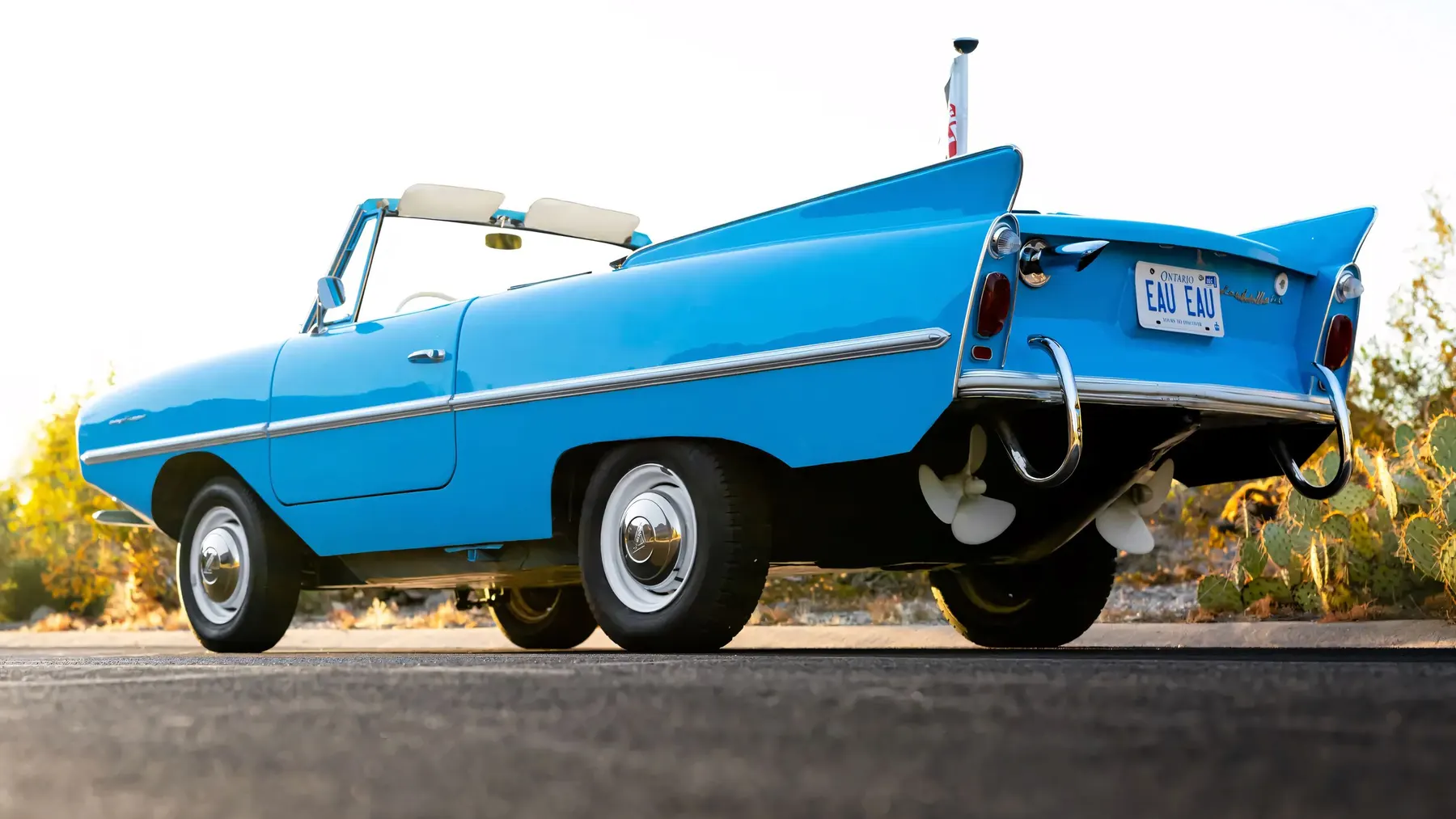
1962 Amphicar 770

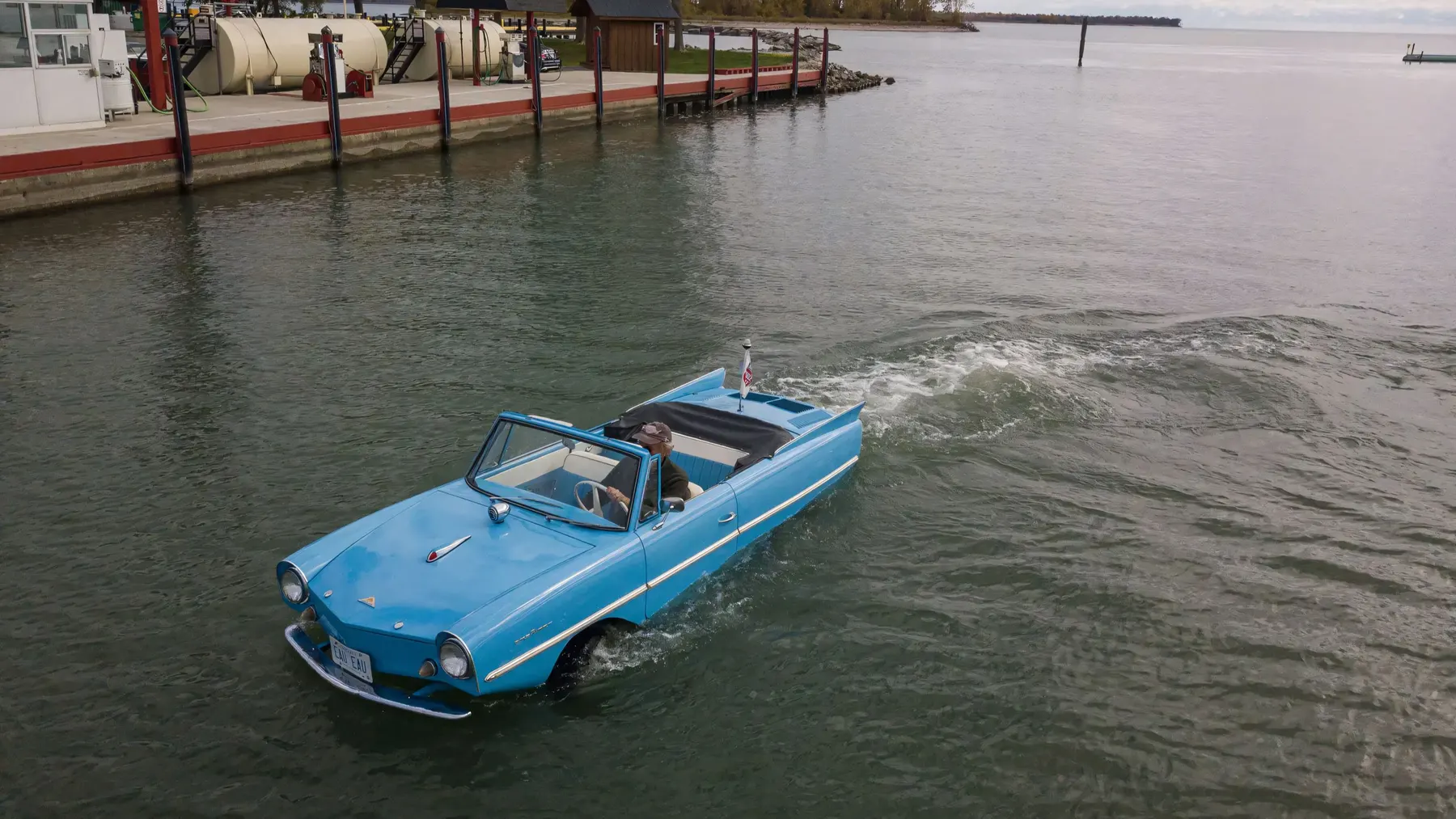
In the pantheon of automotive oddities, few vehicles stand out like the Amphicar 770. Unveiled at the 1961 New York Auto Show, this German-engineered marvel was the world’s first mass-produced amphibious car. Designed by Hans Trippel and built by the Quandt Group, the Amphicar 770 offered a unique blend of automotive and marine engineering. Although it was far from perfect as either a car or a boat, the Amphicar has become a beloved icon, remembered as much for its quirks as for its engineering feats.
The Amphicar’s name, a portmanteau of “amphibious” and “car,” captures the essence of this unique vehicle. Its ability to transition seamlessly from land to water made it a technological curiosity and a head-turner on the roads,or on the lakes, for that matter. The car’s design was inspired by earlier amphibious military vehicles, such as the Volkswagen Schwimmwagen, but the Amphicar was aimed squarely at the civilian market. It was intended to be a practical vehicle for those who lived near water, though it quickly became clear that it was more of a novelty than a daily driver.

Under the hood,or rather, in the rear,was a 1147 cc four-cylinder engine sourced from the Triumph Herald. This modest power plant produced 43 horsepower, allowing the Amphicar to reach speeds of up to 70 mph on land and 7 knots on water. The “770” in its name refers to these dual performance capabilities. While neither of these speeds was particularly impressive, they were enough to make the Amphicar functional as both a car and a boat.
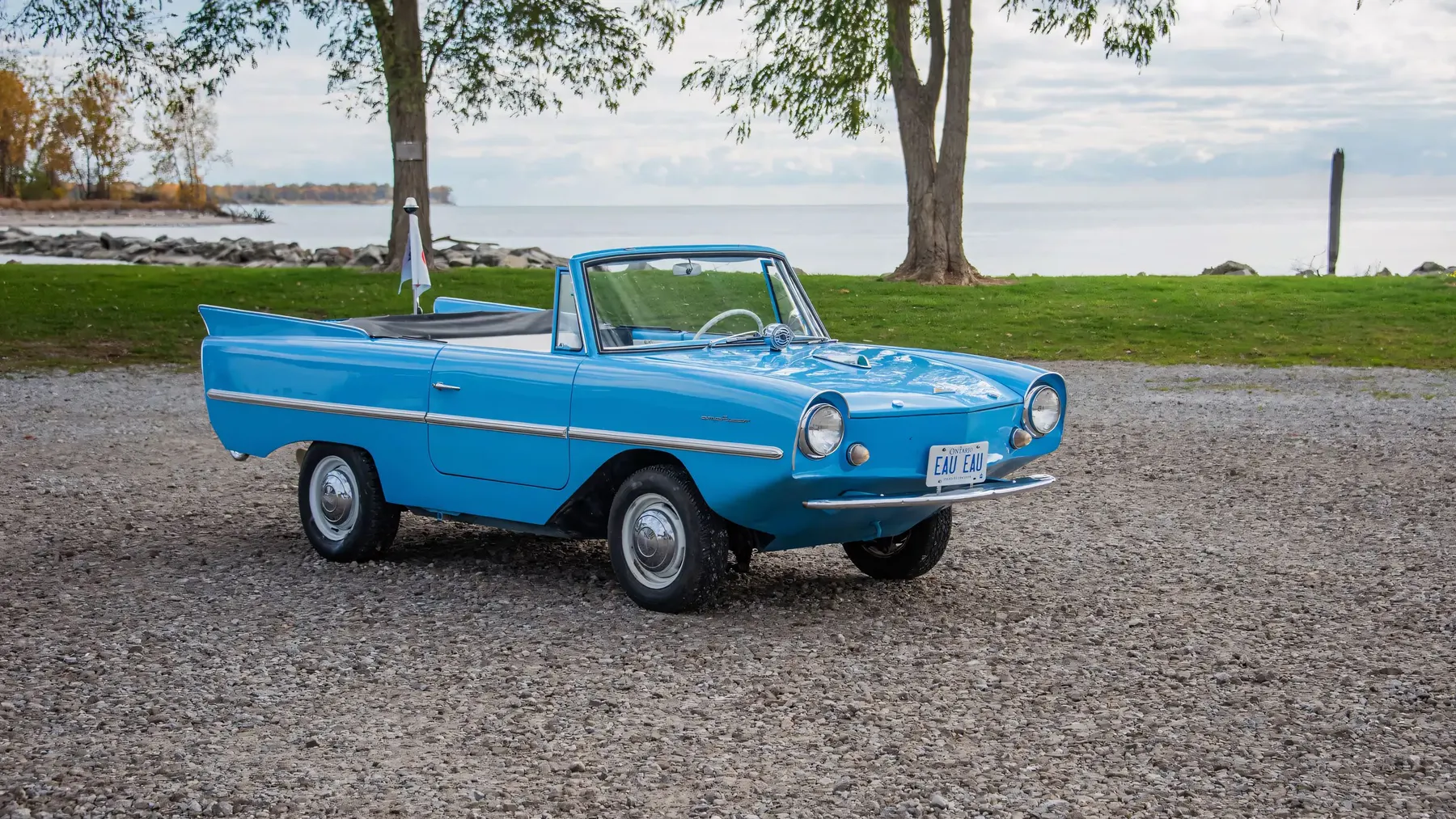
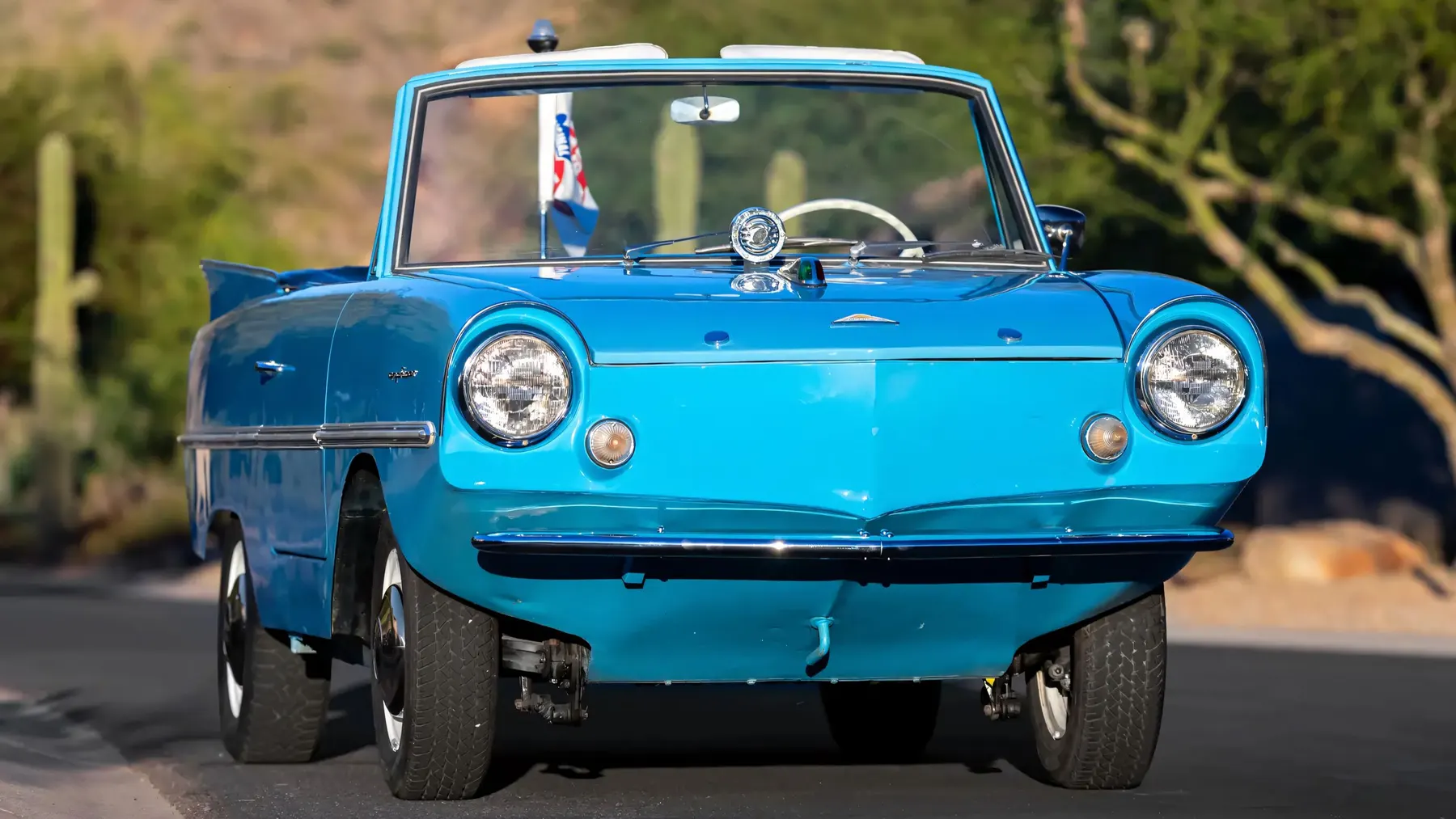
On land, the Amphicar drove much like any other small European car of its era, albeit with a few quirks. The front wheels, which doubled as rudders in the water, provided the vehicle’s steering. The suspension was raised, and the chassis was designed to keep the car high off the ground, giving it a somewhat ungainly appearance. Despite its peculiar proportions, the Amphicar was relatively easy to drive, with a 4-speed manual transmission handling the gear changes.
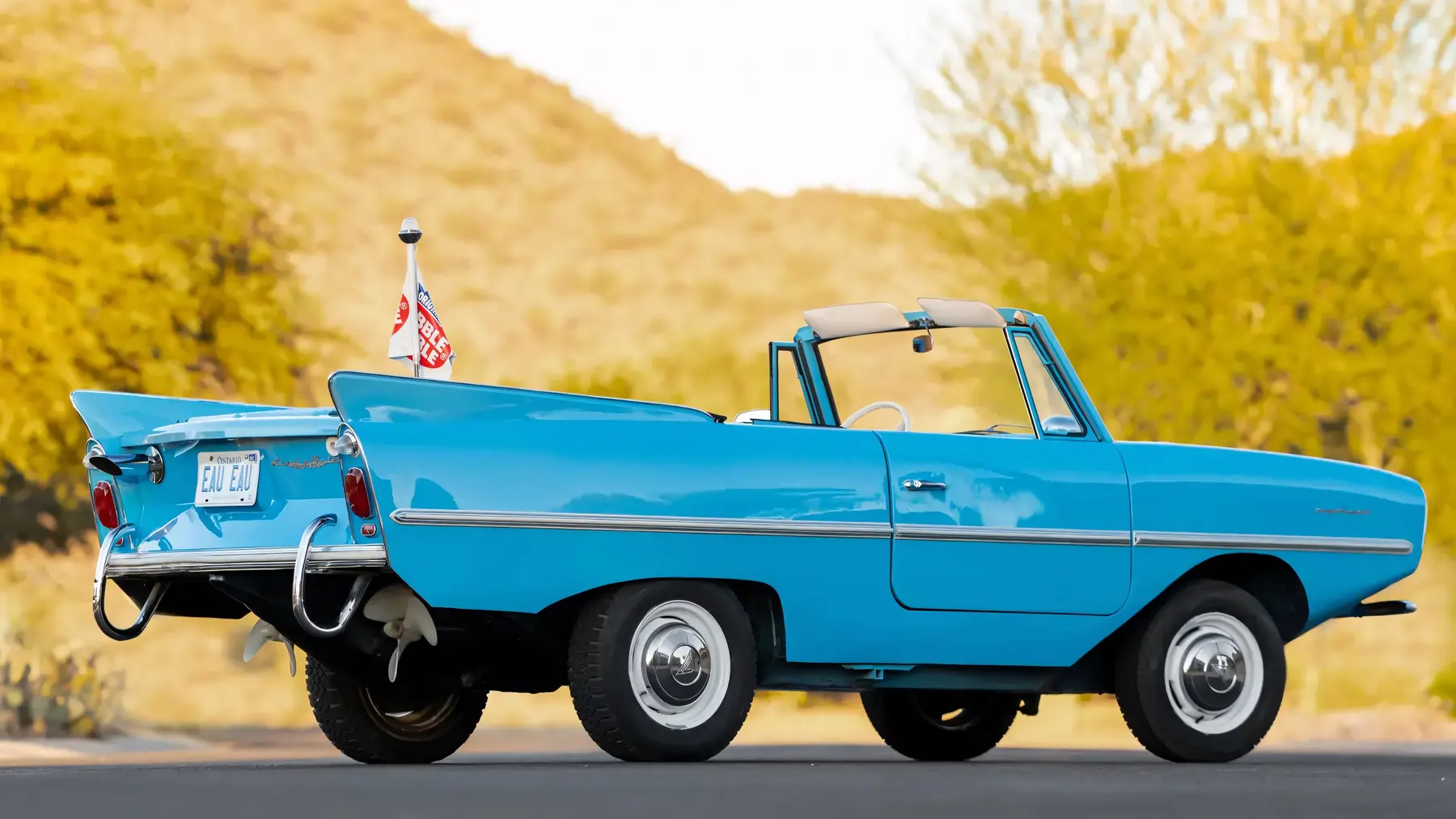
The real magic happened when the Amphicar hit the water. After locking the watertight seals on the doors and front luggage compartment, the driver (now captain) would engage a lever that transferred power from the rear wheels to twin propellers mounted under the rear bumper. Steering was accomplished using the front wheels, which acted as rudders. The transition from road to water was remarkably smooth, but the Amphicar’s performance as a boat was, understandably, limited. It was less manoeuvrable than a conventional boat, and its speed on water was modest. However, the sheer novelty of driving straight into a lake and motoring away was enough to make up for these shortcomings.
The Amphicar may not have been the fastest car on land or the most agile boat on water, but it certainly had its moments. In 1965, two Amphicars successfully navigated the treacherous Yukon River in Alaska, proving their durability and versatility. That same year, another pair of Amphicars made the 20-mile crossing of the English Channel, further cementing the vehicle’s reputation as a capable,if eccentric,amphibious craft.
One of the Amphicar’s most famous owners was U.S. President Lyndon B. Johnson, who loved to surprise unsuspecting guests by driving them straight into the lake on his Texas ranch. Shouting about brake failure as he sped towards the water, Johnson would watch in delight as his passengers panicked, only to be amazed when the car floated serenely on the water.
By the time production ceased in 1965, only 3,878 Amphicars had been built, with the majority sold in the United States. The car’s high price, coupled with its niche appeal and the arrival of stricter safety and emissions standards, meant that it never achieved commercial success. However, its rarity and unique capabilities have made it a sought-after collector’s item today. Amphicar enthusiasts regularly gather for “swim-ins” across the U.S., with the largest event taking place at Grand Lake St. Marys State Park in Ohio.
In recent years, the Amphicar has enjoyed a resurgence in popularity, thanks in part to its appearances in films and television shows, and even in theme parks. At Walt Disney World’s Disney Springs, visitors can take a ride in one of several restored Amphicars, experiencing the thrill of driving on both land and water for themselves.
The Amphicar 770 is a vehicle that defies conventional categorization. It’s not the fastest car or the most capable boat, but it’s a delightful blend of both, offering a unique driving experience that’s hard to replicate. While it may have been a commercial flop, the Amphicar has earned its place in automotive history as a symbol of innovation, whimsy, and sheer fun. For those who value the journey as much as the destination,especially when that journey includes a splash,the Amphicar remains an unforgettable classic.
Join the discussion
Comments
Loading comments…
Leave a comment
Share a detail, memory, or perspective. Every comment is reviewed before publication.