1962 Austin-Healey 3000 Mk II BN7

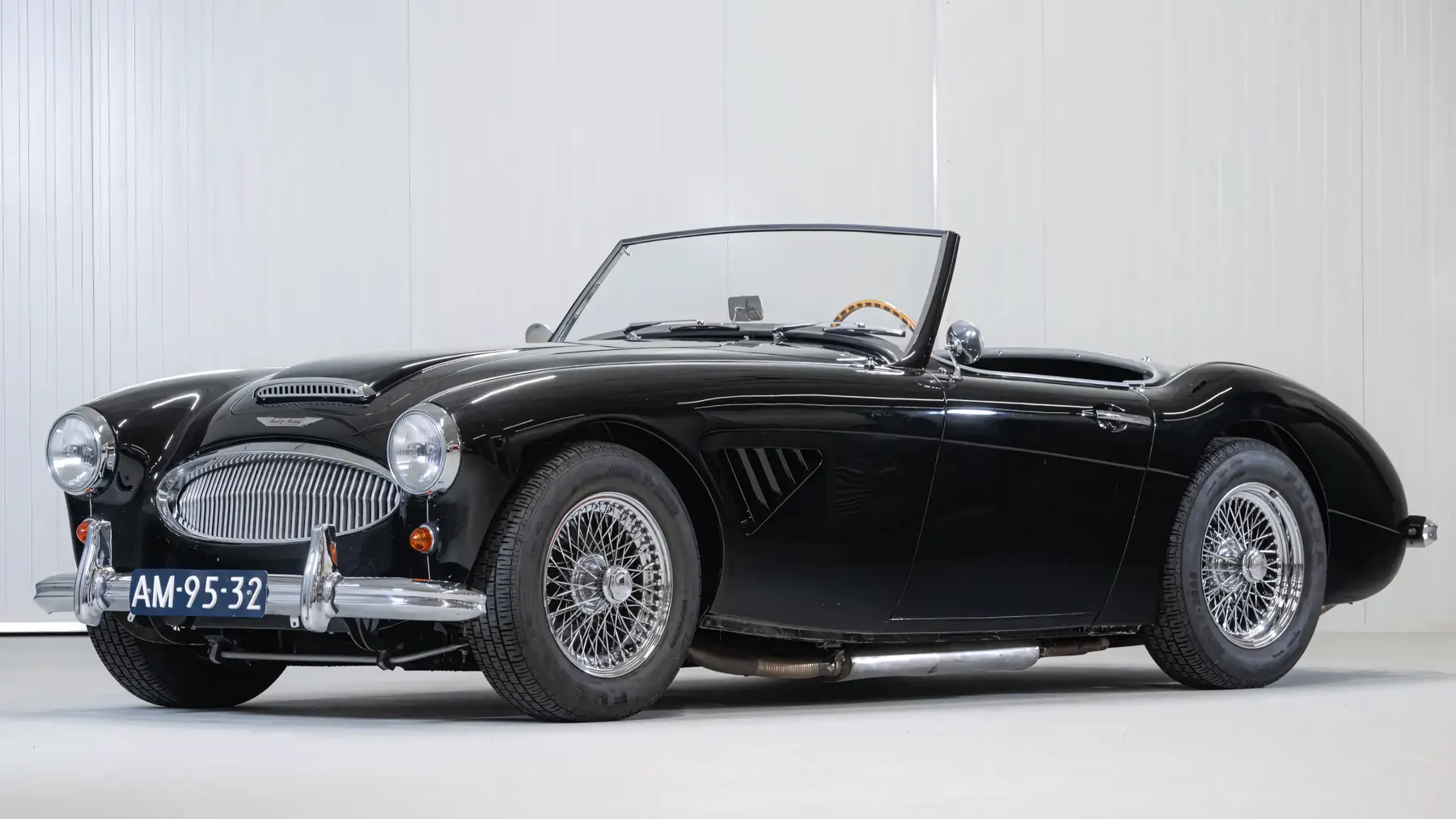
The Austin-Healey 3000 Mk II BN7 stands out as a significant chapter in British sports car history, representing both the zenith of the “Big Healey” era and a high-performance variant that embodied the marque’s racing pedigree. With its aggressive yet elegant design, enhanced mechanicals, and global reputation for competitive success, the Mk II BN7 offers an excellent snapshot of what made Austin-Healey vehicles beloved.
The Austin-Healey 3000 series, first introduced in 1959, quickly became renowned for its blend of performance, style, and affordability relative to the competition. Built by Jensen Motors and assembled at BMC’s MG Works in Abingdon, it offered a 3-litre inline-six engine that brought it into the league of capable grand tourers, earning respect on European rallies and North American race circuits. It saw a high export rate, particularly to North America, and remains a sought-after classic car among enthusiasts today.
Introduced in 1961, the Austin-Healey 3000 Mk II BN7 represents a notable evolution in the series, boasting some subtle but impactful refinements. The most significant upgrade came with the triple-SU HS4 carburetors and an improved camshaft, elevating engine performance and solidifying its credentials as a proper sports car. This configuration allowed for better fuel-air mixture control, leading to more efficient combustion and a modest power bump over the Mk I.
Visually, the Mk II BN7 retained much of the graceful, curvaceous silhouette of its predecessors, with a distinguishing touch: a vertical-barred front grille that freshened its overall appearance. The Mk II was also the final iteration to feature the classic swooping dashboard design, a hallmark of early Big Healeys.
A British automotive magazine, The Motor, tested a BT7 variant (similar to the BN7 but with a 2+2 seating configuration) in 1961, highlighting its respectable performance figures. The vehicle reached a top speed of 112.9 mph (181.7 km/h) and sprinted from 0 to 60 mph (97 km/h) in 10.9 seconds,commendable numbers for its era. Fuel economy was measured at 23.5 miles per imperial gallon (12.0 L/100 km), and its tested price was £1362, reflecting its status as a high-performing, mid-priced sports car.
The Mk II BN7 was built with driver engagement in mind, featuring a nimble chassis that responded well to spirited driving. From August 1961, buyers had the option of a brake servo, significantly enhancing stopping power and improving overall safety,a crucial upgrade given the vehicle’s capabilities. The BN7 is notable as one of the last two-seat “true” roadsters produced by Austin-Healey before production shifted to a more comfortable sports convertible configuration in later models.
Despite its relatively short production run, which ended in March 1962, the Austin-Healey 3000 Mk II BN7 remains a favourite among collectors and enthusiasts for its purity of form and purpose. These vehicles often make appearances at classic car events and continue to compete in vintage racing, a testament to their lasting appeal and robust engineering.
In sum, the Austin-Healey 3000 Mk II BN7 encapsulates what made the “Big Healeys” iconic: stylish design, strong motorsport heritage, and a thrilling driving experience that still resonates with drivers more than half a century later.
Join the discussion
Comments
Loading comments…
Leave a comment
Share a detail, memory, or perspective. Every comment is reviewed before publication.