1962 Messerschmitt KR 200

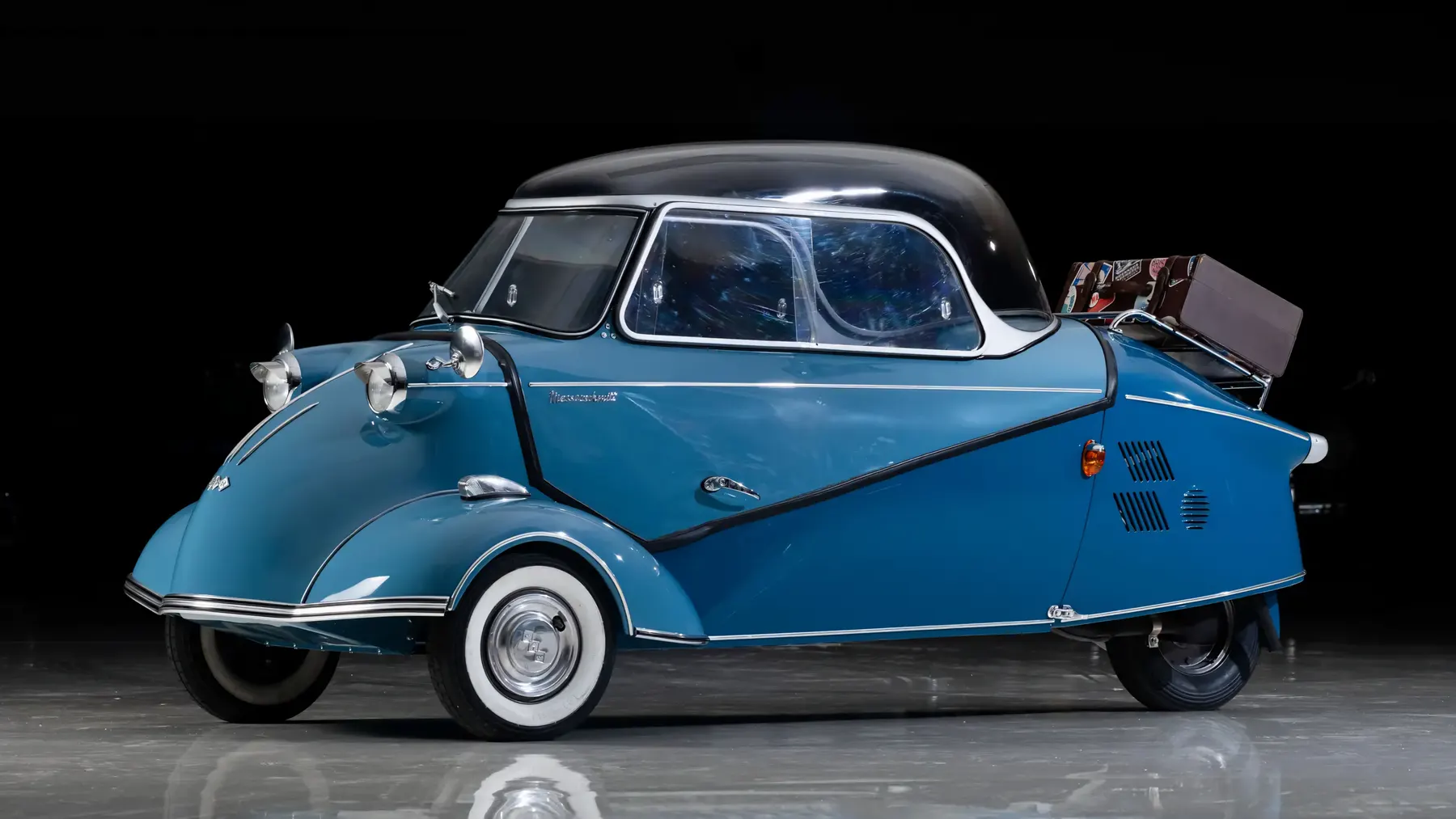
The Messerschmitt KR200 remains one of the most fascinating vehicles ever created, blending aircraft design principles with automotive functionality in a package that couldn’t be more distinctive. This three-wheeled bubble car captured the imagination of post-war Europe with its quirky charm and innovative engineering. Born from necessity during a time when Messerschmitt was prohibited from manufacturing aircraft, the KR200 became an unexpected success story and created an enduring legacy in automotive history.
The story of the KR200 begins with aircraft engineer Fritz Fend, who approached Messerschmitt in 1952 with a novel proposal. At that time, Messerschmitt was barred from producing aircraft following Germany’s defeat in World War II and had pivoted to manufacturing other products. Fend suggested they produce small motor vehicles based on his existing Fend Flitzer invalid carriage design.
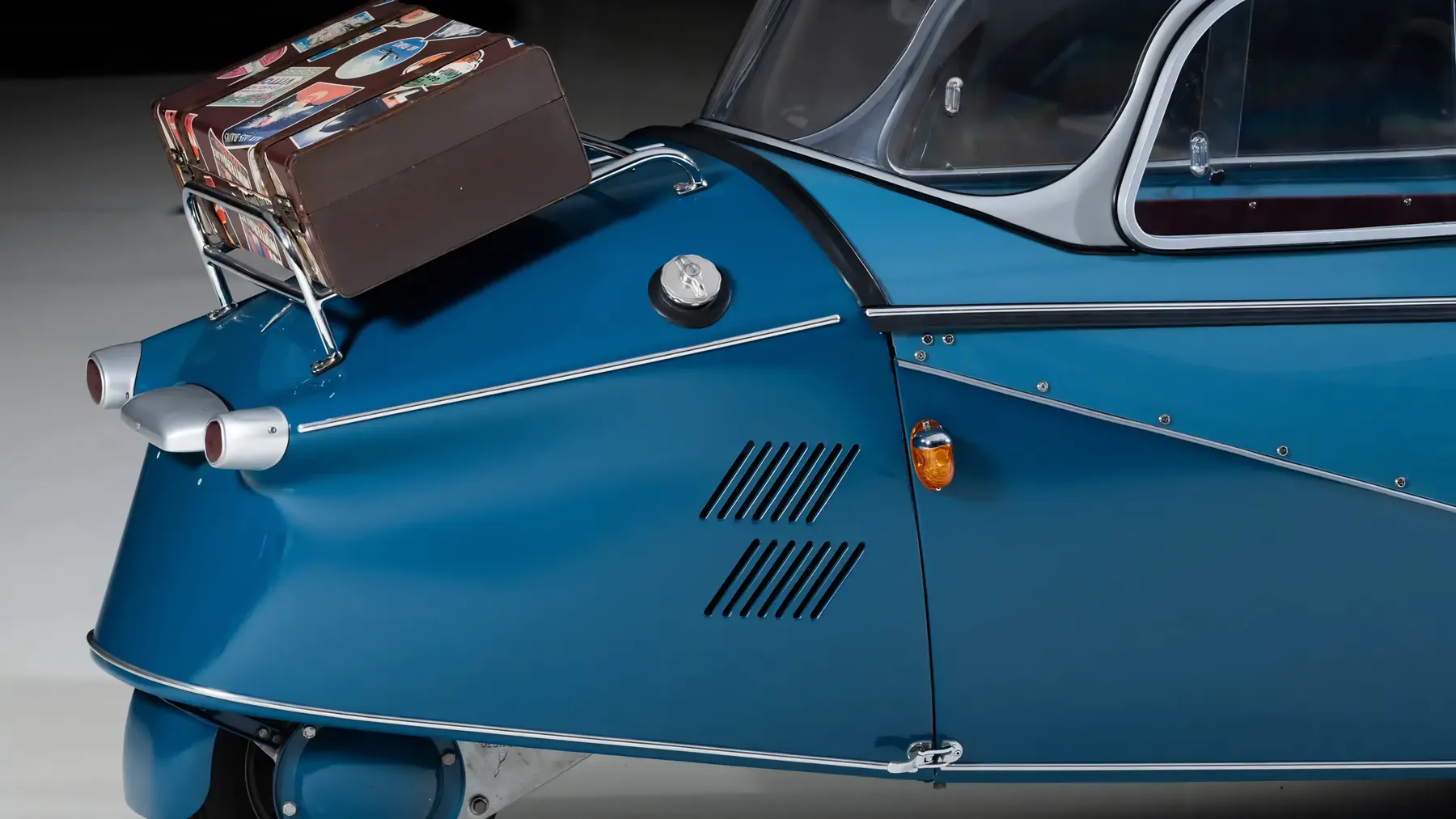
Messerschmitt agreed, and the partnership resulted in the creation of the KR175 in 1953, which was manufactured at their Regensburg factory. The “KR” stood for “Kabinenroller,” literally meaning “scooter with cabin”-a perfectly descriptive name for this unique vehicle concept. While the Messerschmitt name and logo adorned these vehicles, a separate company called Regensburger Stahl- und Metallbau GmbH was established specifically to manufacture and market them.
In 1955, the improved KR200 replaced the KR175, retaining the same basic frame but incorporating numerous enhancements. These included revised bodywork with wheel cutouts in the front fenders, an improved canopy design, reworked rear suspension and engine mounting, and hydraulic shock absorbers on all three wheels. The tire size was also increased to 4.00×8 for better road handling.
The KR200’s design was unlike anything else on the road, drawing heavily from Messerschmitt’s aviation background. The narrow body with its low frontal area was achieved through tandem seating-passengers sat one behind the other, similar to aircraft seating. This arrangement centralized the mass along the longitudinal axis and allowed the body to taper like an aircraft fuselage while keeping the vehicle at a practical length.
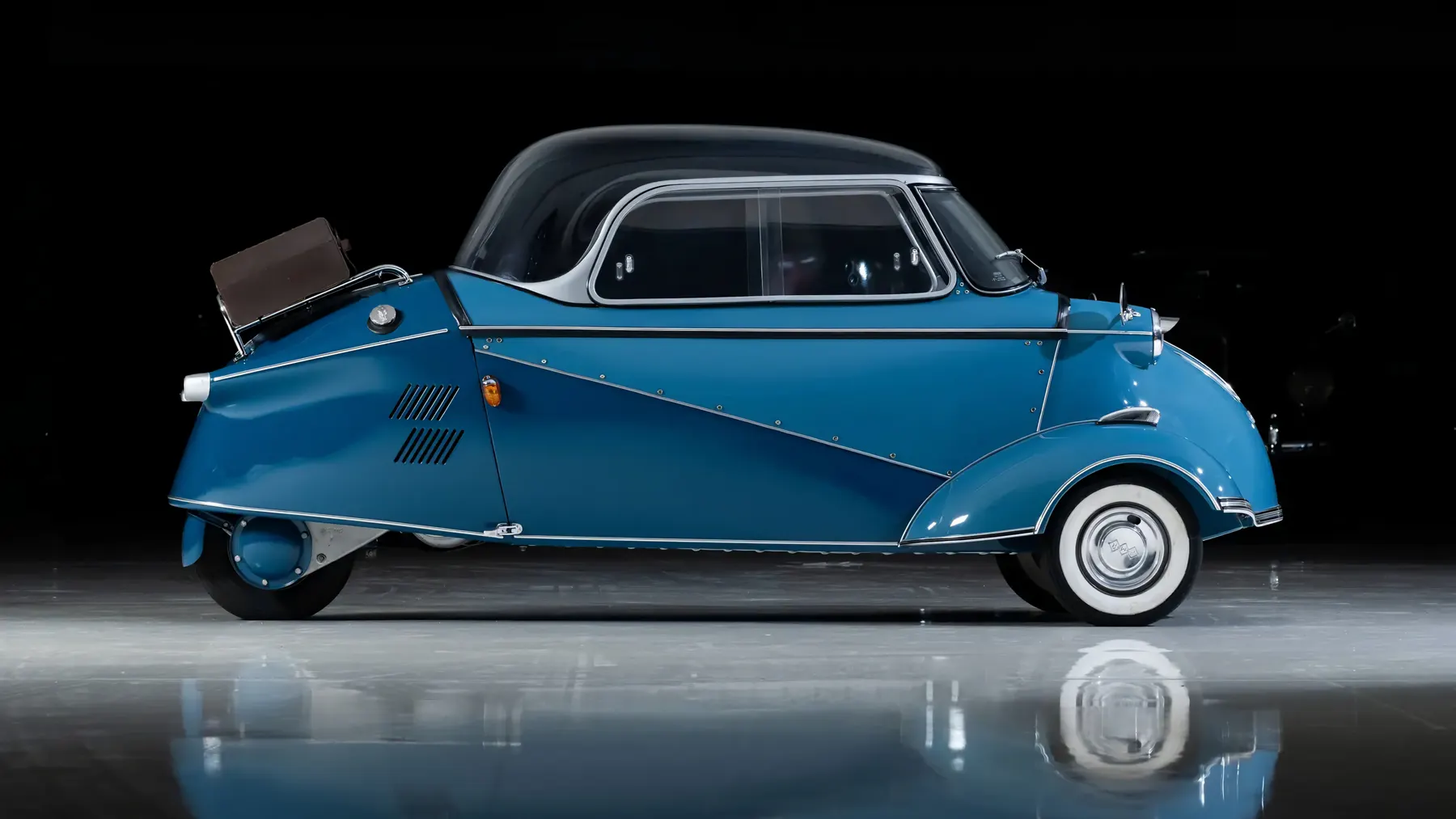
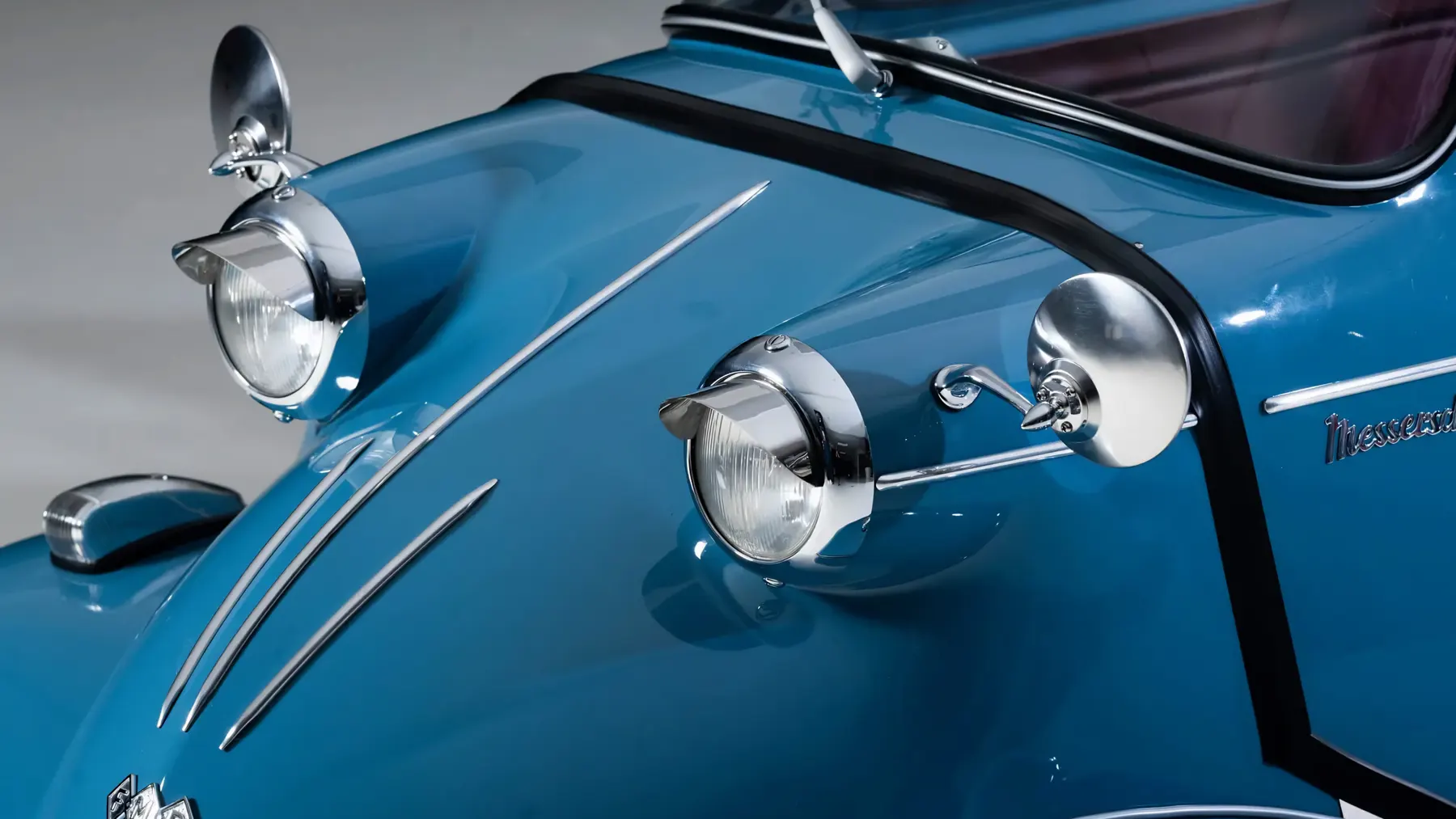
Its most distinctive feature was undoubtedly the transparent Plexiglas bubble canopy that opened to the side for entry and exit, reminiscent of a fighter plane cockpit. The front wheel arches even resembled the stubs of wings, further emphasizing its aviation heritage.
Inside the KR200, the aviation theme continued with a steering bar that operated more like an aircraft control than a conventional steering wheel. Rather than rotating the steering mechanism, drivers would swivel the bar about its axis horizontally, providing extremely direct response to steering inputs. The interior was efficiently designed with an adjustable front seat and a full-width rear seat that could fold up to provide additional luggage space.
Under its diminutive body, the KR200 featured a 191cc Fichtel & Sachs air-cooled single-cylinder two-stroke engine positioned just ahead of the rear wheel. Despite its modest 10 horsepower output, the KR200’s light weight of just 230 kg allowed it to reach speeds over 90 km/h. Acceleration was modest but adequate for city use, achieving 0-60 km/h in 12.2 seconds.
The transmission system was particularly innovative. The KR200 featured a four-speed manual gearbox, but with an extraordinary capability-the engine could operate in both directions of crankshaft rotation. To reverse, the driver would stop the engine and restart it in the opposite direction using a special ignition position, giving the car the same four gear ratios in reverse as it had moving forward. This unique system eliminated the need for a dedicated reverse gear.
Fuel efficiency was another strong point, with consumption ranging between 3.5-5.0 liters per 100 kilometers, equivalent to approximately 47-67 mpg US. This impressive economy came from both the small engine and the vehicle’s aerodynamic design.
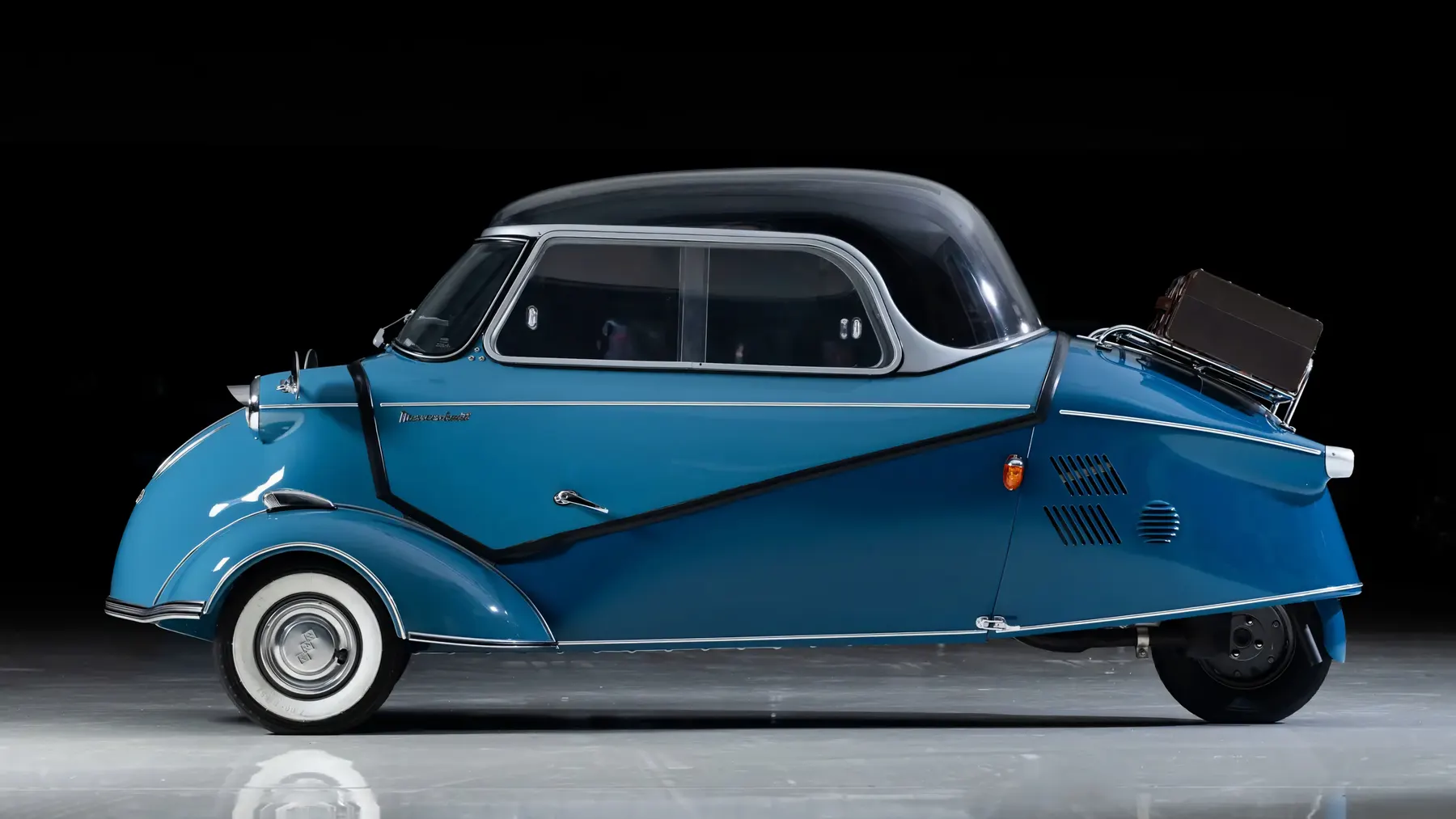
To prove the KR200’s capability and durability, Messerschmitt prepared a special version for record attempts in 1955. This modified KR200 featured a single-seat low-drag body and enhanced engine, though it retained stock suspension, steering, and braking components. On August 29-30, 1955, at the Hockenheimring, this special KR200 broke 22 international speed records for vehicles under 250cc, including the 24-hour speed record at an impressive 103 km/h average.
The KR200 was an immediate commercial success, with nearly 12,000 units produced in its first year alone-the highest annual production figure for any Kabinenroller model. Several variants were developed over the years, including the KR201 Roadster in 1957, which featured a frameless windscreen and optional folding cloth roof. In 1958, the KR200 Kabrio Limousine appeared with a cloth convertible top and fixed side window frames. The rare Sport model offered a cut-down Plexiglas windscreen with no roof and fixed side panels.
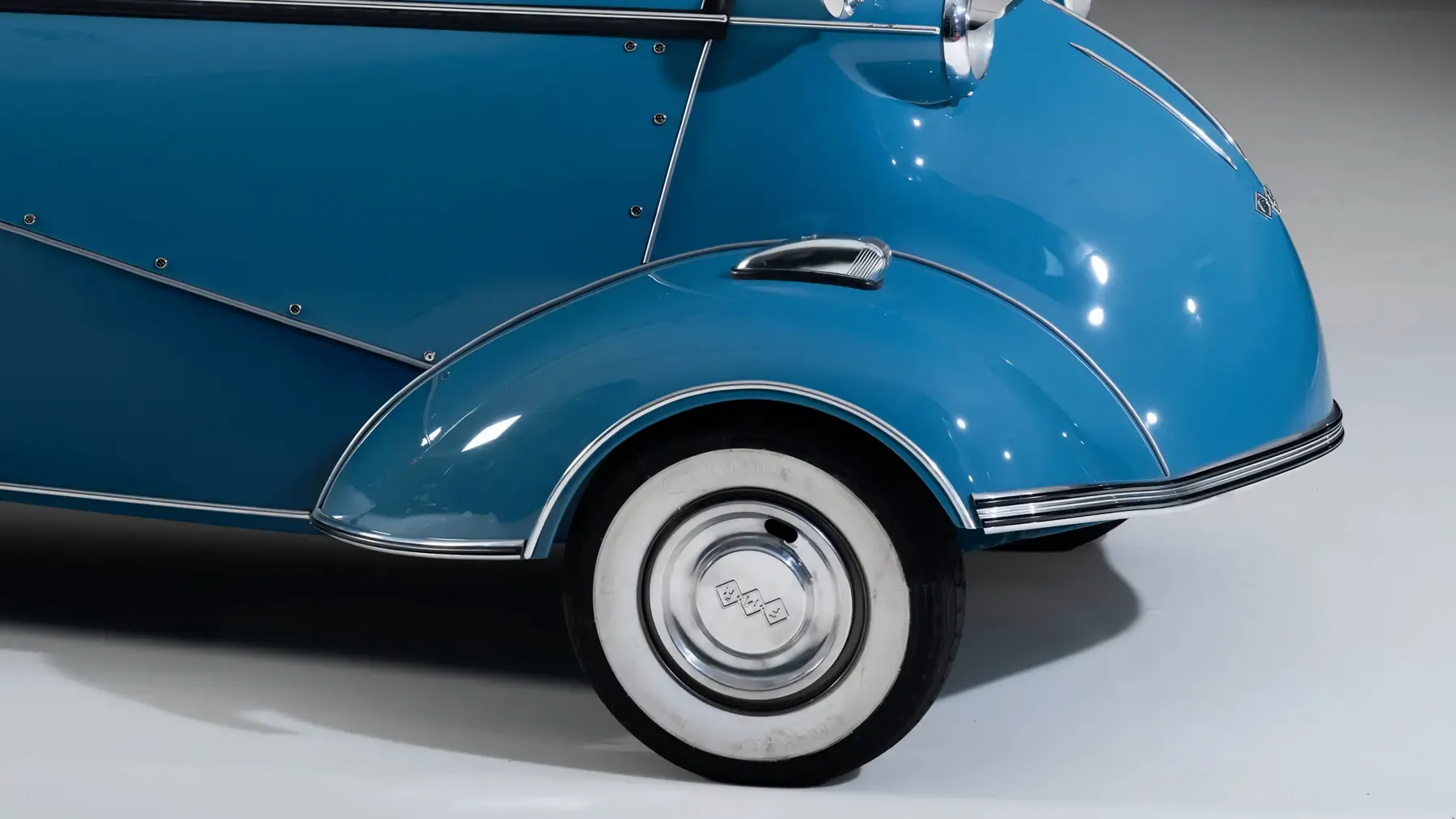
An “Export” package was also available, featuring a two-tone paint scheme, painted hubcaps, fully trimmed interior, heater, clock, and canopy sunshade.
The KR200 developed a following in Hollywood, appearing in films like “Strictly for Pleasure” (1958) starring Tony Curtis and Janet Leigh. Even Elvis Presley owned one, famously trading his KR200 to Bernard Lansky (owner of a Memphis department store) in exchange for a shopping spree in 1957.
In 1956, Messerschmitt was permitted to resume aircraft production and consequently lost interest in Fend’s microcar venture. Undeterred, Fend partnered with brake and hub supplier Valentin Knott to purchase the Regensburg works from Messerschmitt, forming Fahrzeug- und Maschinenbau GmbH Regensburg (FMR) to continue production.
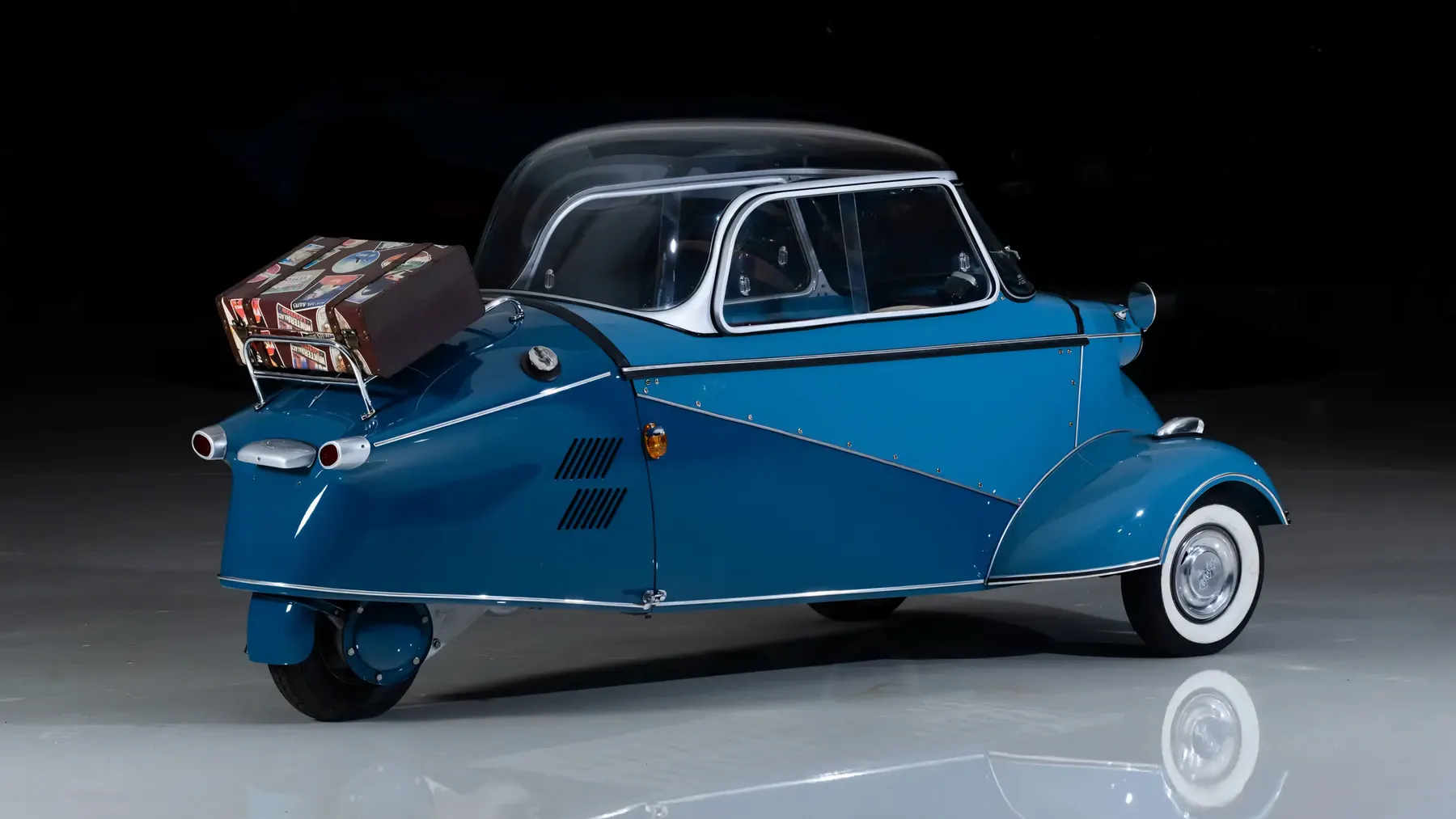
Production continued until 1964, though it declined significantly from 1962 onward. As the German economy strengthened, demand for basic economical transport diminished, and competition from vehicles like the Mini further impacted sales. By the end of production, a total of 30,286 KR200s had been manufactured.
The Messerschmitt KR200 remains one of automotive history’s most distinctive creations-a perfect example of how necessity, innovation, and creative engineering can produce a vehicle that transcends its practical purpose to become a genuine cultural icon. Its aircraft-inspired design, ingenious mechanical solutions, and unmistakable profile ensure its place not just as a fascinating curiosity but as a true milestone in automotive design.
Join the discussion
Comments
Loading comments…
Leave a comment
Share a detail, memory, or perspective. Every comment is reviewed before publication.