1963 Ferrari 250 GTE 2+2 Series III by Pininfarina

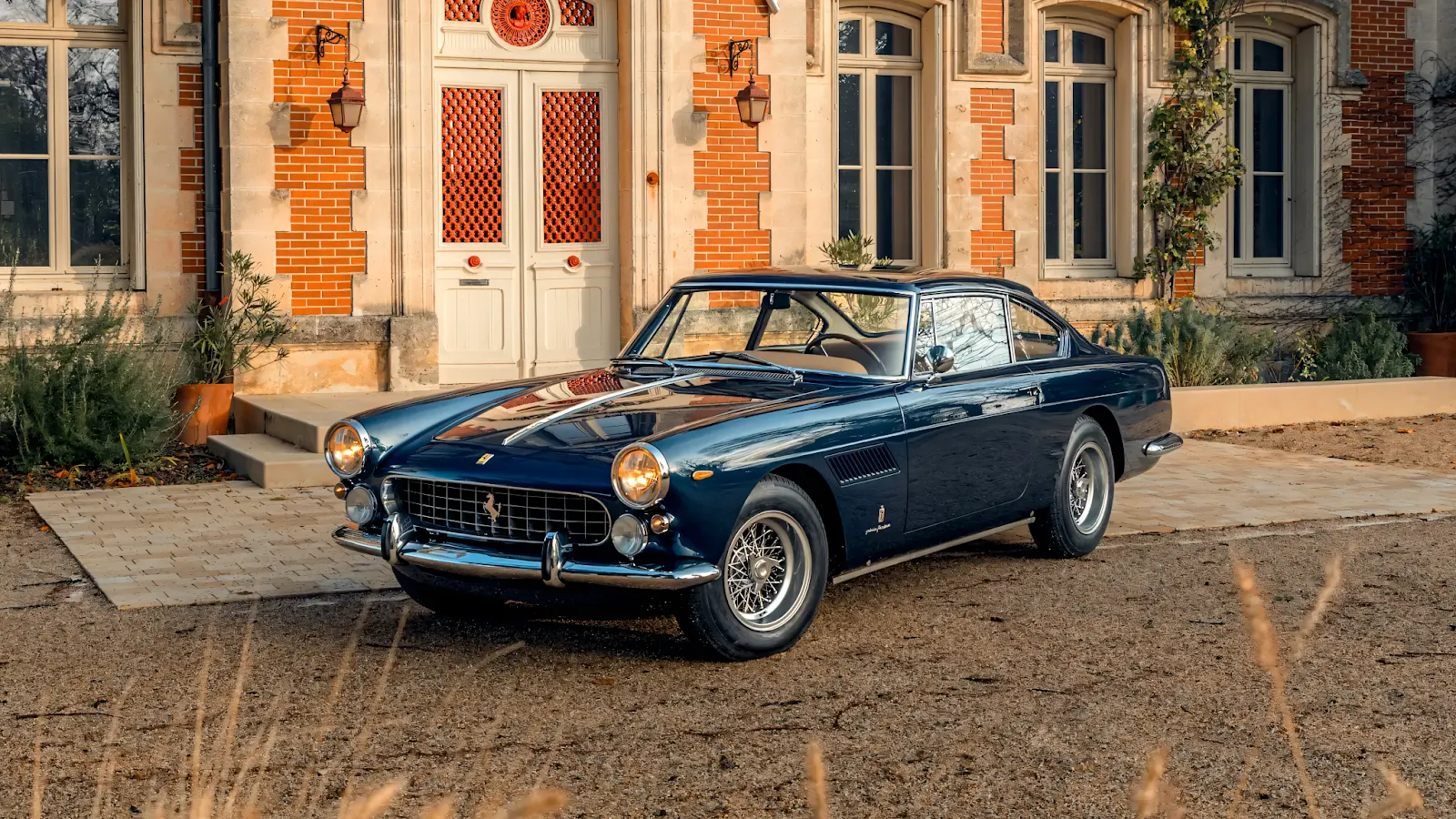
The Ferrari 250 GTE 2+2 Series III, designed by Pininfarina, was Ferrari’s first foray into large-scale production of a four-seater grand tourer, marking a significant shift for the brand. Launched in 1960, the 250 GTE was a car that not only carried Ferrari’s race-bred DNA but also offered something the brand had rarely emphasised before: practicality.
Ferrari purists may have been sceptical at first, but the 250 GTE was a resounding success and remains one of the most important cars in Ferrari’s history. It allowed Ferrari to reach a broader market, offering a grand tourer that could accommodate a family,well, at least two adults and two children,without sacrificing the thrill and prestige of driving a Ferrari.
At the core of the 250 GTE is the same 3.0-liter Colombo V12 engine that powered Ferrari’s legendary racing cars. Designed by Gioacchino Colombo, this engine became the backbone of the 250 series, propelling both road and race cars to countless victories on the track. With its 2,953 cc displacement, the V12 was renowned for its lightweight construction and remarkable power output.
In the 250 GTE, the engine produced 240 PS (237 horsepower) at 7,000 rpm, providing enough power to satisfy even the most discerning grand touring drivers. While it wasn’t as aggressive as the racing-focused variants like the 250 GTO or Testa Rossa, the GTE’s engine offered a perfect blend of performance and refinement, making it ideal for long-distance driving.
The 250 GTE was the first Ferrari designed to seat four people, addressing a demand for a more usable Ferrari that could be driven daily without compromising on luxury or performance. Ferrari achieved this by pushing the V12 engine forward in the chassis, creating enough room for two small rear seats. While those back seats were better suited for children or shorter adults, they added a level of practicality not seen in previous Ferraris.
Despite the addition of rear seats, the GTE did not lose its grand touring pedigree. The car’s long wheelbase of 2,600 mm (102.4 inches) gave it a stately presence, while the smooth lines designed by Pininfarina ensured it retained the elegance expected from the marque. The classic Ferrari design cues were all present: the long hood, short rear overhang, and a cabin-forward design that emphasised the car’s performance capabilities.
The 250 GTE went through three distinct series during its production, with the Series III being the final and most refined version. By the time Ferrari introduced the Series III in 1962, the model had benefited from various improvements in both mechanical and aesthetic aspects. The Series III was visually similar to its predecessors but came with subtle refinements, including updated interior trim and slight modifications to the exterior that aligned it with Ferrari’s evolving design language.
The car rode on Borrani RW3690 wire wheels, a staple of Ferrari’s grand tourers, and came equipped with Pirelli Cinturato 185VR15 tires, ensuring that it handled with grace and stability on Europe’s winding roads.
The 250 GTE was more than just a design and engineering success; it was also a crucial model for Ferrari’s financial stability. Nearly 1,000 units of the GTE were produced between 1960 and 1963, making it one of the highest-volume Ferraris of its time. At a price of $11,500 when new, it was a significant investment, but for Ferrari, the GTE’s sales success helped the brand fund its racing program and develop more exclusive, performance-focused models.
Although it was succeeded by the Ferrari 330 America in 1963, which featured a larger 4.0-liter engine, the 250 GTE remains a highly respected model among collectors and enthusiasts. Its importance lies not only in its commercial success but also in how it broadened Ferrari’s appeal to a new type of customer,one who wanted the prestige of Ferrari ownership without the compromise of a cramped, impractical cabin.
Today, the 250 GTE 2+2 is often overshadowed by Ferrari’s more famous racing variants from the 250 series, like the GTO and California Spider, but it stands as a pivotal model in the brand’s history. It was a car that helped ensure Ferrari’s financial survival in the 1960s and demonstrated that a four-seat Ferrari could be both desirable and functional. The GTE, with its exquisite Pininfarina design, race-bred V12 engine, and grand touring capabilities, remains one of the finest expressions of a classic Ferrari 2+2.
Join the discussion
Comments
Loading comments…
Leave a comment
Share a detail, memory, or perspective. Every comment is reviewed before publication.