1967 Mercedes-Benz 250 SL 'Pagoda'

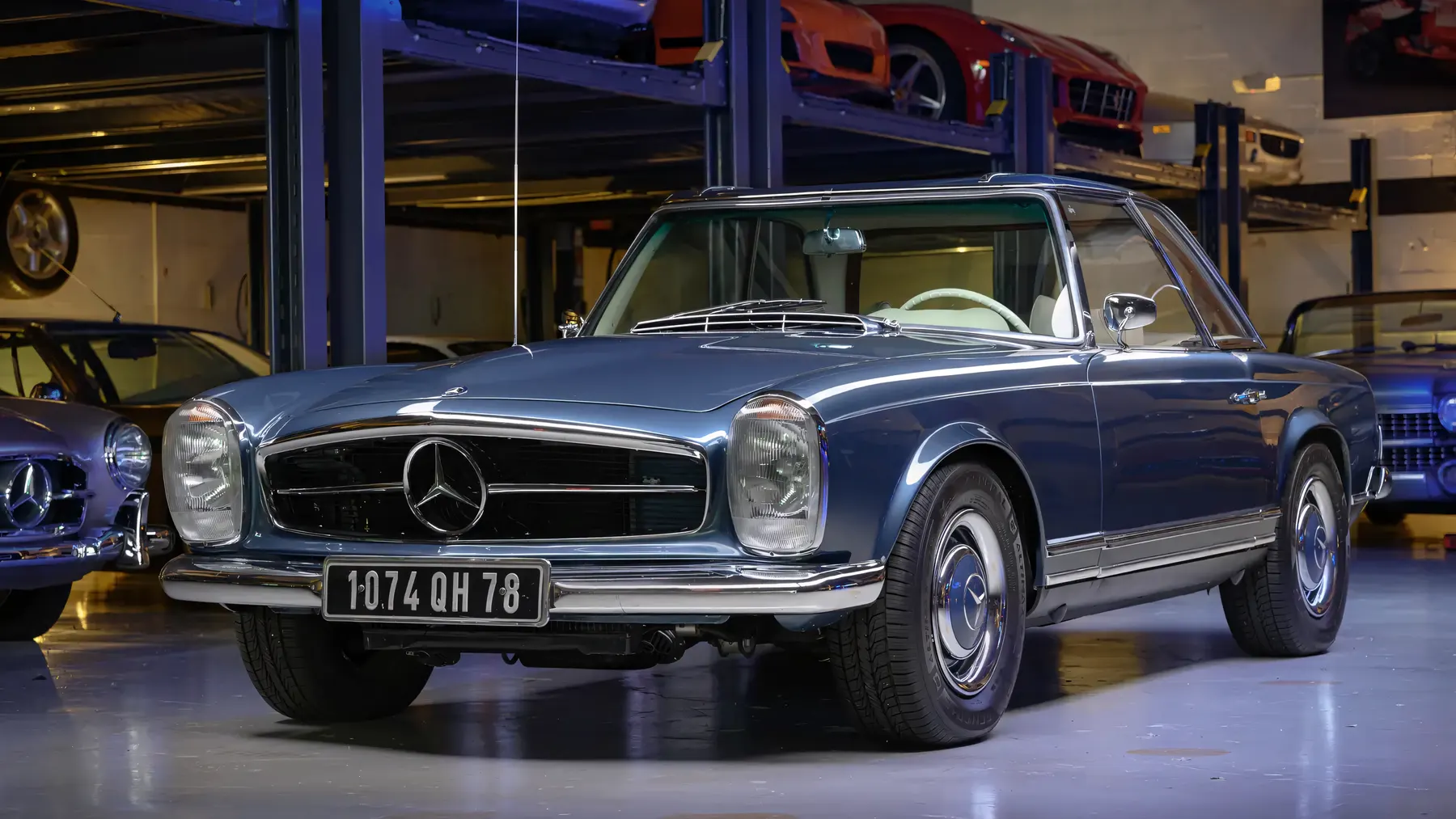
The Mercedes-Benz 250 SL ‘Pagoda,’ produced between 1967 and 1968, occupies a special place in automotive history as a harmonious blend of style, innovation, and performance. Part of the iconic W113 series, this car continues to captivate enthusiasts with its distinctive design, advanced engineering, and limited production, which makes it the rarest of the W113 lineup.
The 250 SL was born in a period when Mercedes-Benz was redefining the concept of grand touring sports cars. Positioned between the luxurious but expensive 300 SL and the more accessible 190 SL, the W113 series replaced both models, starting with the 230 SL in 1963. The 250 SL debuted at the Geneva Motor Show in 1967, building on the foundation of its predecessor while incorporating significant mechanical and aesthetic improvements. Its short production run of just over a year resulted in only 5,196 units being produced, adding to its exclusivity and collectible appeal.
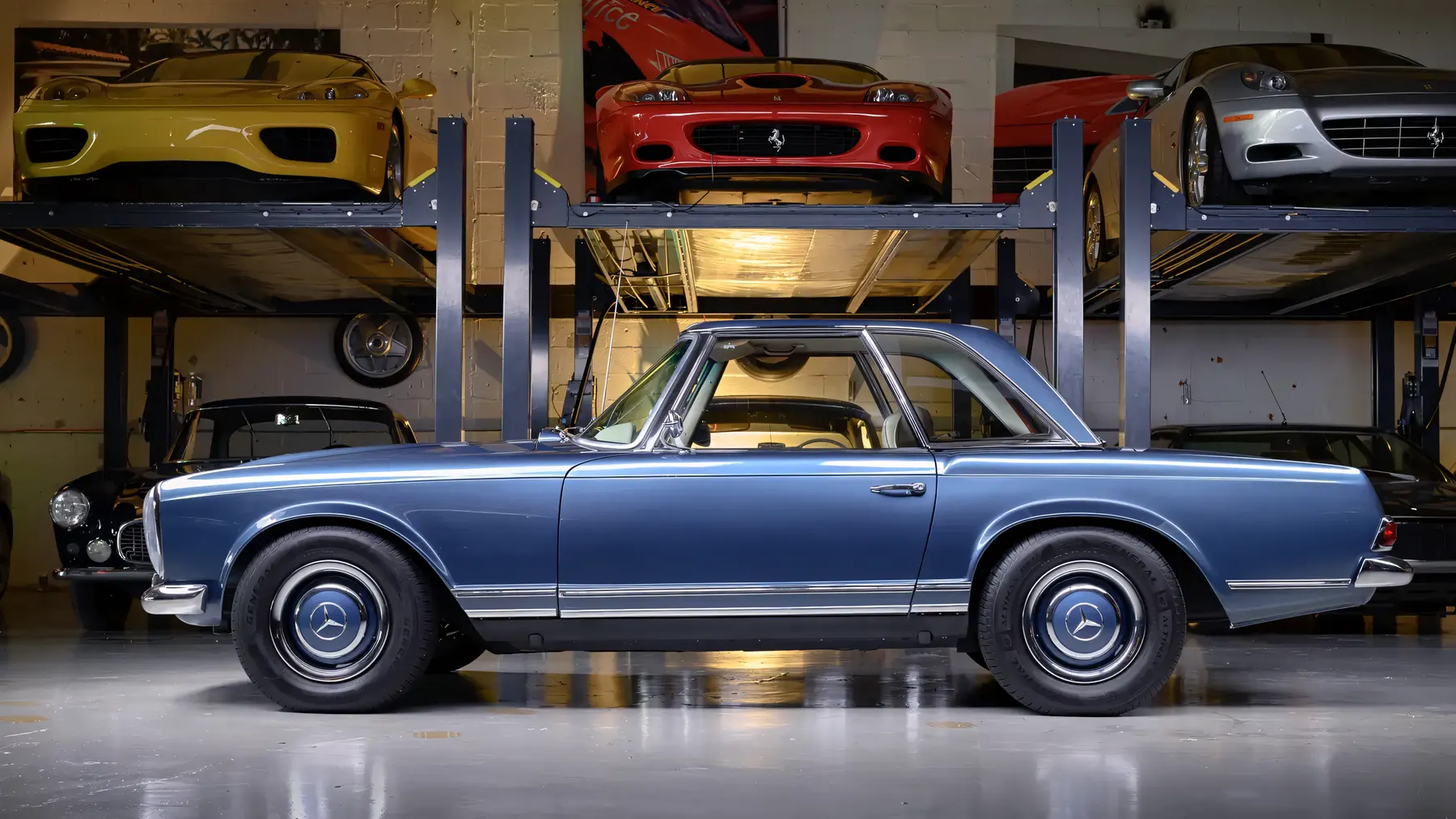
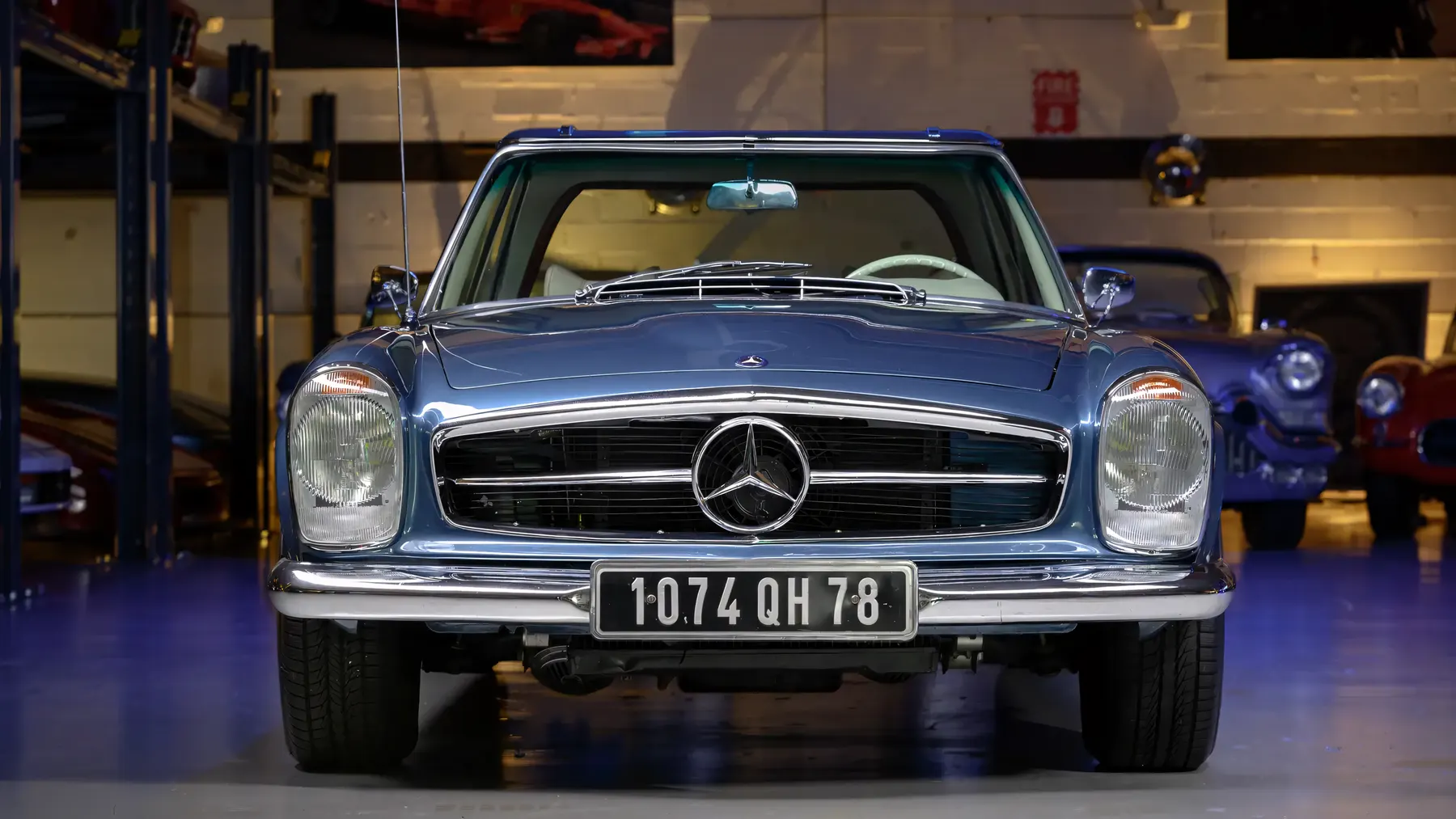
The 250 SL is perhaps best recognized for its iconic concave hardtop, which earned it the nickname “Pagoda.” This innovative design, the brainchild of Paul Bracq and Béla Barényi, was not only visually striking but also functional, offering structural strength and enhanced safety. The car’s exterior featured clean, balanced lines with a low waistline and large, curved windows that created a bright and airy cabin. The signature upright Bosch “fishbowl” headlights and the large three-pointed star on the chrome grille evoked a sense of understated luxury.
To reduce weight and improve performance, several components, including the hood, trunk lid, and door skins, were crafted from aluminum. The car’s proportions, with its short, wide chassis, gave it a planted stance, complemented by radial tires and a suspension system that offered remarkable handling for its time.
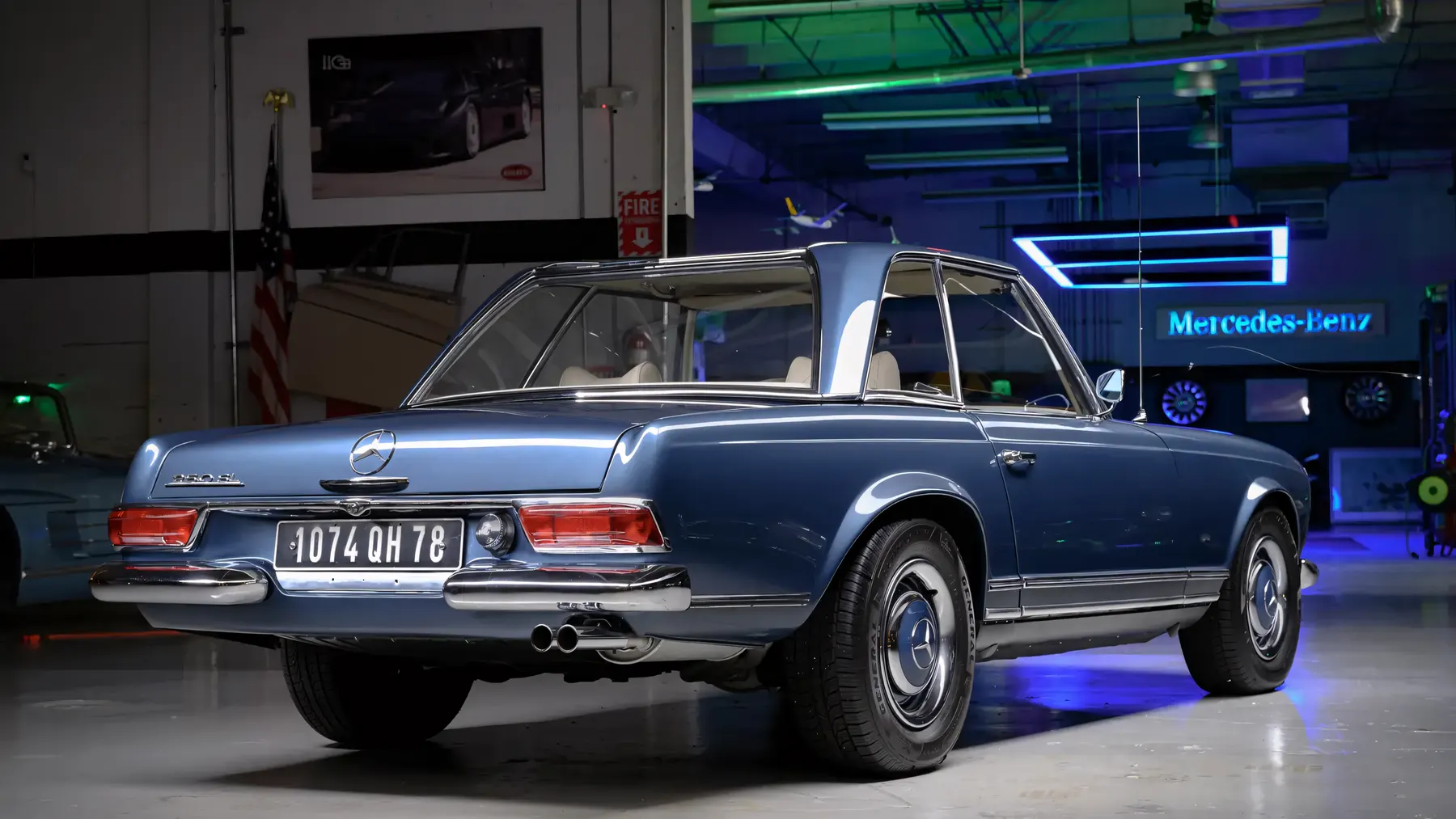
Under the hood, the 250 SL housed a 2.5-liter inline-six engine (M129.II), which featured an increased stroke and seven main bearings for enhanced durability. The engine delivered 150 horsepower and 159 lb-ft of torque, providing a smoother and more robust performance compared to the 230 SL. Paired with either a 4-speed automatic or a choice of 4-speed or ZF 5-speed manual transmissions, the car catered to both leisurely cruisers and driving purists.
The 250 SL also introduced rear disc brakes for improved stopping power and a larger fuel tank, extending its range for long-distance touring. An optional limited-slip differential further enhanced traction and driving dynamics, making the car a capable performer on winding roads and highways alike.
The 250 SL was not just about style and speed; it was a pioneer in automotive safety. Based on Barényi’s “safety body” principles, the car featured a rigid passenger cell, crumple zones, and rounded interior edges to minimize injury during collisions. Innovations like a collapsible steering column, padded dashboard, and elastic door pockets underscored Mercedes-Benz’s commitment to occupant safety.
The 1967 model retained much of the classic chrome interior of its predecessor, while the 1968 version incorporated modernized elements, such as concave control knobs and a padded steering wheel hub, to meet evolving safety standards. US models were further equipped with side reflectors, emission controls, and Kangol three-point seat belts, reflecting the brand’s attention to regional requirements.
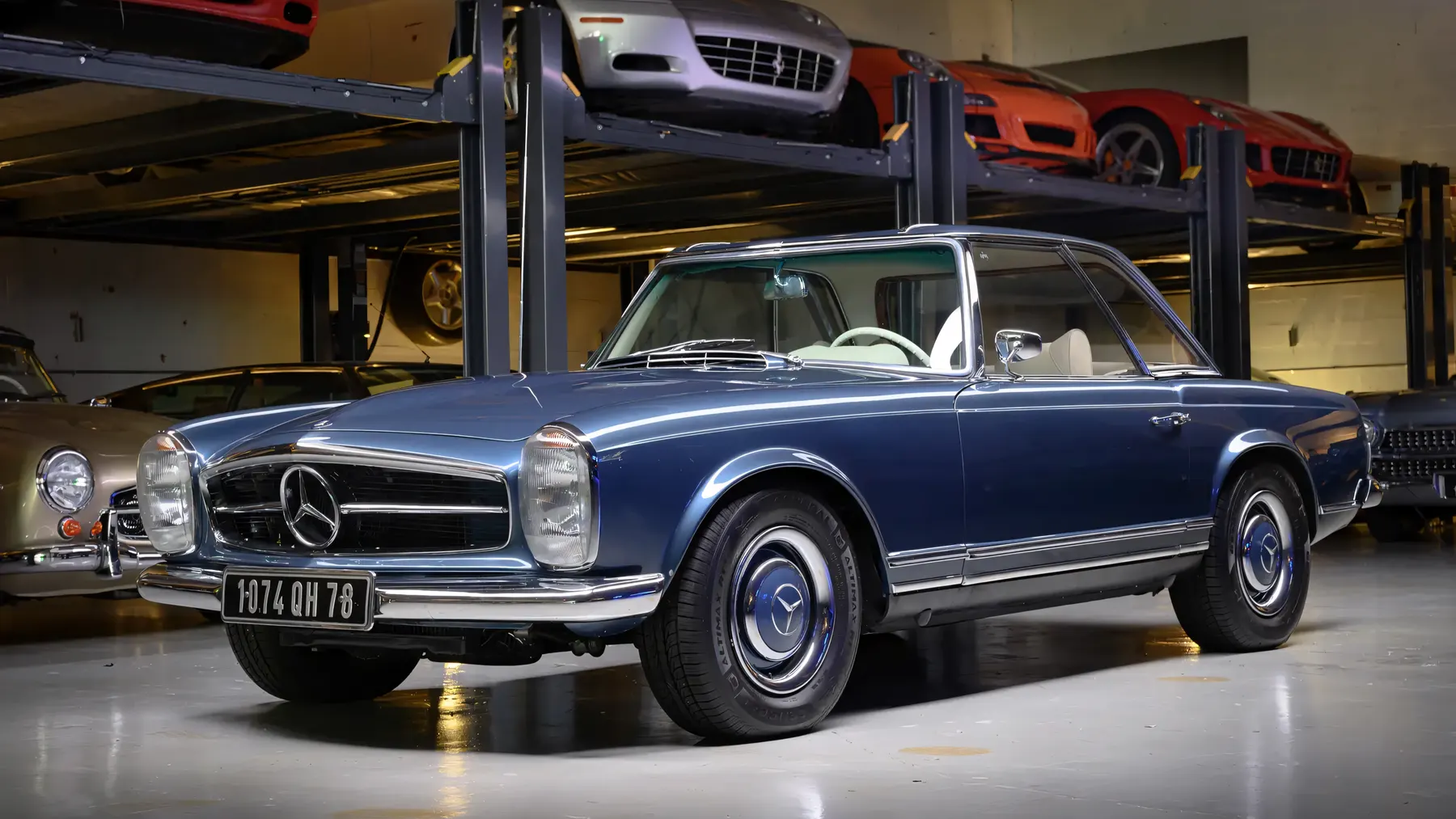
The 250 SL’s rarity, timeless design, and well-balanced performance make it a sought-after classic among collectors. Its introduction of safety innovations and practical luxury helped set new standards in the grand touring segment. The “Pagoda” design remains a defining characteristic, embodying the perfect marriage of form and function.
Even today, the 250 SL evokes admiration for its blend of elegance and engineering excellence. It stands as a testament to Mercedes-Benz’s ability to craft vehicles that are as enjoyable to drive as they are beautiful to behold. Whether parked at a classic car show or cruising along a scenic coastal road, the 250 SL continues to turn heads and inspire a sense of nostalgia for the golden age of motoring.
Join the discussion
Comments
Loading comments…
Leave a comment
Share a detail, memory, or perspective. Every comment is reviewed before publication.