1969 Merlyn Mk11a


In 1969, a modest British engineering firm from Colchester made an outsized impact on the world of entry-level motorsport. The Merlyn Mk11a, an unassuming open-wheel racer, became the vehicle of choice for a generation of drivers cutting their teeth in Formula Ford. This wasn’t just another cookie-cutter racing machine,it was a precision tool that balanced affordability with track-tuned brilliance, earning nicknames like “The Magic Merlyn” from awestruck competitors.
The story of the Mk11a begins with Colchester Racing Developments (CRD), a small operation founded by Selwyn Hayward and Clive Maskrey. CRD had been crafting Merlyn-branded racers since 1960, starting with Formula Junior cars that hinted at their engineering prowess. By the late 1960s, Formula Ford emerged as motorsport’s new democratizing force,a cost-controlled category where driver skill trumped budget. CRD spotted the opportunity early.
Their initial Formula Ford entry, the Merlyn Mk11, scored immediate success in 1968 when Australian driver Tim Schenken clinched the British Racing Sports Car Club (BRSCC) championship. But CRD wasn’t content. For 1969, they refined the design into the Mk11a, addressing subtle handling queries and optimizing components based on real-world racing feedback. The result? A car so intuitive that future Formula 1 star Emerson Fittipaldi reportedly mastered its limits within days of sliding into the cockpit.
Underneath the Mk11a’s fiberglass body,painted in the era’s ubiquitous British racing green or client-chosen liveries,lay a recipe for success. The space-frame chassis, constructed from welded steel tubes, prioritized rigidity over flashy materials. Front suspension used a conventional double-wishbone setup, while the rear featured a lightweight De Dion axle. This combination gave drivers clear feedback through the wheel,critical in a category where mechanical grip reigned supreme.

Power came from Ford’s humble Kent 1.6-liter inline-four, tuned to produce a reliable 100 horsepower. Governed by Formula Ford’s strict regulations, engines were sealed to prevent costly modifications, putting the onus on chassis design. CRD paired the Kent motor with a Hewland transaxle, renowned for its bulletproof durability. The package weighed just 465 kilograms, allowing brisk acceleration despite the modest output.
“The Merlyn didn’t numb you with horsepower,” recalls historic racer James Whitney, who campaigns a restored Mk11a. “It taught you to carry speed through corners. Get it right, and you’d exit with momentum to overtake on the straights.”
Three key upgrades distinguished the Mk11a from its predecessor. Revised front suspension geometry sharpened turn-in response, allowing drivers to attack curbs without unsettling the car. Aerodynamic tweaks to the nose cone and cockpit surround reduced drag at circuits like Silverstone and Brands Hatch. Most critically, CRD softened the rear spring rates slightly, trading raw stability for adjustable balance mid-corner,a trait that rewarded trailing-throttle technique.
The Mk11a’s genius lay in its adaptability. Novices found it forgiving, with progressive breakaway characteristics at the limit. Pros could exploit its nimbleness, rotating the car with precise brake modulation. This duality made it a favorite at racing schools and championship events alike. At Mallory Park in 1969, three Mk11as finished within half a second after 20 laps,a testament to how evenly matched drivers became in these machines.
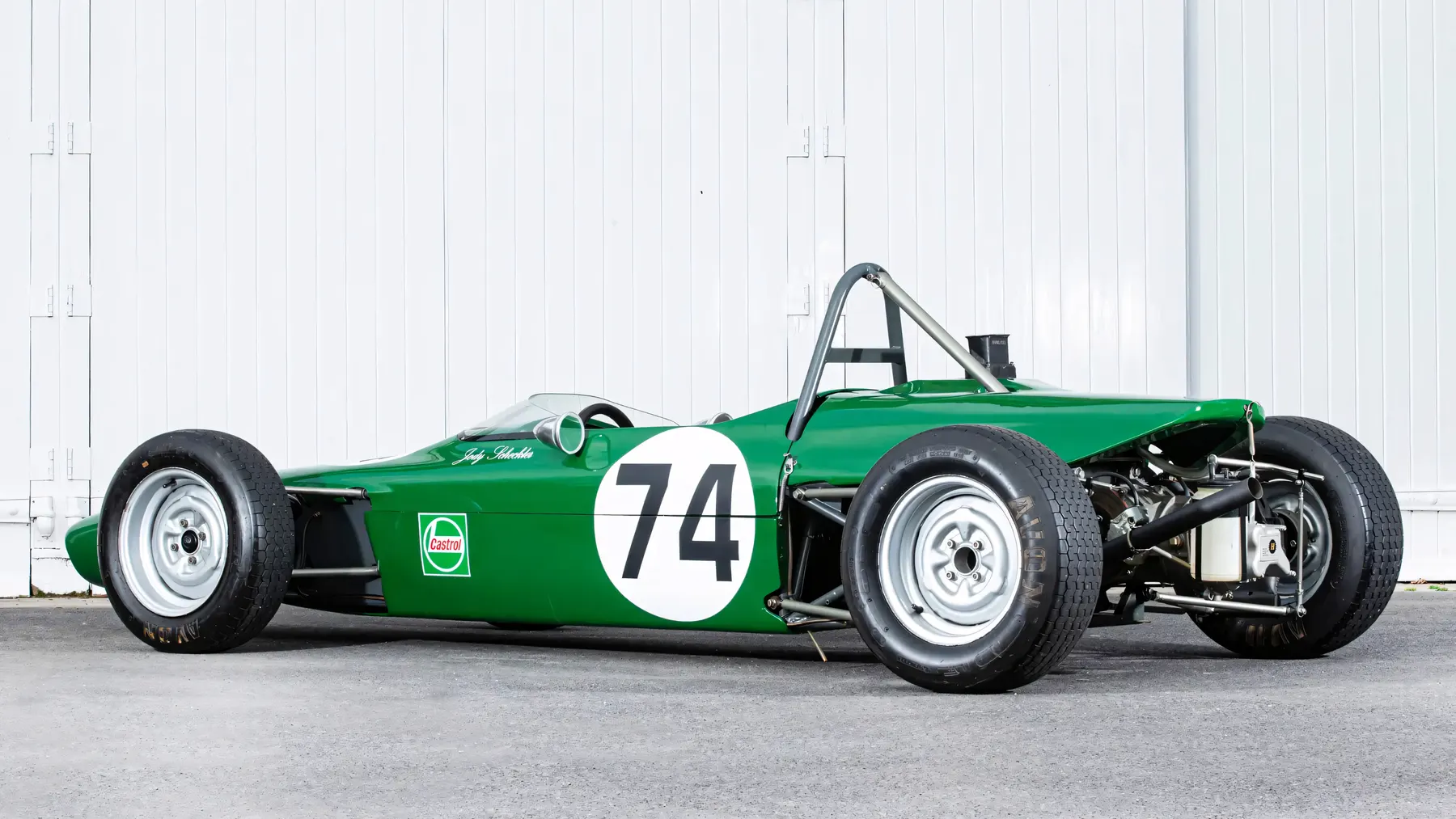
In the hands of future legends, the Mk11a became a giant-killer. Emerson Fittipaldi, then a 22-year-old Brazilian unknown, dominated UK circuits in 1969 before graduating to Formula 1. His chassis, nicknamed “Magic Merlyn” by mechanics, later passed to Colin Vandervell, who racked up 29 wins in 1970. Across the Atlantic, the Mk11a cleaned up in SCCA events, with privateers praising its robust construction during endurance races.
The car’s reputation wasn’t built on outright speed alone. At the 1970 Formula Ford Festival,a grueling test of durability,Mk11as claimed six of the top ten spots. “You could thrash it all weekend without rebuilding the gearbox,” notes vintage specialist Martin Cliffe, who restores these cars. “That reliability made it a budget racer’s dream.”
Pop the rear cowl, and the Mk11a’s no-nonsense approach shines. The Kent engine sits exposed, its single Weber carburetor fed by a trunk-mounted fuel cell. Suspension adjustments require basic wrenches, not specialized tools. Even the brake system uses standard Girling components, keeping maintenance costs in check,a rookie mechanic could overhaul the entire car in a weekend.

This simplicity extended to the cockpit. The fiberglass seat molds to the driver’s body, while a wood-rimmed steering wheel and bare-metal shifter keep distractions minimal. There’s no telemetry, no adjustable differential,just a tachometer and oil pressure gauge. “It’s pure driving,” says Whitney. “Every input matters.”
Early reactions to the Mk11a were mixed. Established teams favored pricier Lotus 51s, doubting CRD’s ability to out-engineer Colin Chapman’s squad. But as podium finishes piled up, perceptions shifted. By 1970, Merlyn accounted for nearly 40% of UK Formula Ford grids. Privateers loved that a used Mk11a could be had for under £1,500,half the cost of a new Brabham,while still being competitive.
Critics initially dismissed its agricultural looks compared to the sleeker Lotus, but practicality won out. The Mk11a’s upright seating position gave taller drivers room to breathe, while the robust chassis handled curb strikes without bending. “It was the working man’s racer,” Cliffe explains. “You didn’t need a factory contract to win.”
The Mk11a’s impact resonates today. Modern Formula Ford categories still emphasize driver development, a philosophy the Merlyn helped codify. Historic racing events regularly feature Mk11as, their hoarse Kent engines echoing through circuits like Goodwood and Oulton Park.

CRD’s creation also proved small teams could innovate on limited budgets. The Mk11a’s success against factory-backed rivals inspired later garagistes like Van Diemen and Mygale, who dominate Formula Ford today.
For collectors, well-preserved examples command up to £65,000,a fraction of classic F1 car prices but a premium for the category. “It’s not just nostalgia,” says auctioneer Jessica Forres. “People still race these hard. The design stands up.”
Sixty-five years after CRD’s founding, the Mk11a remains a fixture at historic meets. At Silverstone Classic 2023, a pack of Mk11As dueled through Maggotts and Becketts, their engines wailing at 7,000 rpm. In an era where junior formulae cost millions, these cars keep grassroots competition alive.
The Merlyn Mk11a wasn’t just a racing car,it was a passport. For mechanics-turned-drivers, teenagers with big dreams, and weekend warriors, it offered a taste of professional motorsport without the corporate price tag. That legacy of access and excitement ensures its place in paddock lore. As one owner summed it up: “This isn’t a museum piece. It’s a time machine that still teaches lessons.”
Join the discussion
Comments
Loading comments…
Leave a comment
Share a detail, memory, or perspective. Every comment is reviewed before publication.