1971 McLaren M19A

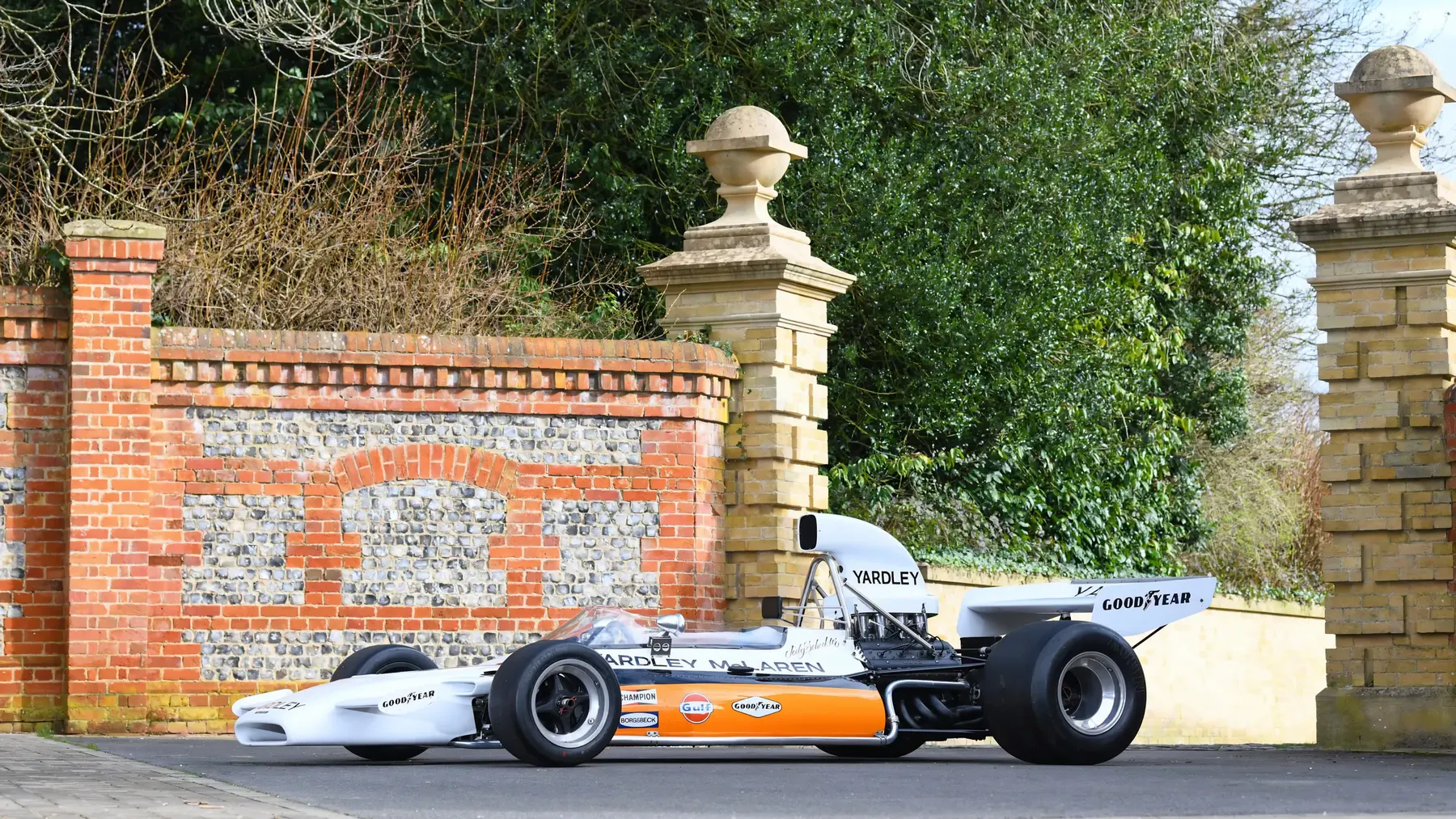
When the McLaren team arrived at Kyalami for the 1971 South African Grand Prix, they carried more than just a new racing car. The M19A represented something deeper,a statement that despite the devastating loss of founder Bruce McLaren just months earlier, the team he created would continue pushing the boundaries of Formula 1 design. As Denny Hulme strapped himself into the cockpit of this peculiar-looking machine, few suspected this transitional design would help establish the foundation for McLaren’s future success.
The M19A emerged during one of McLaren’s most challenging periods. Following Bruce McLaren’s fatal testing accident at Goodwood in June 1970, the team found itself navigating uncharted waters without its visionary leader. With chief designer Gordon Coppuck focused on developing the M16 for Indianapolis, responsibility for creating a new Formula 1 challenger fell to Ralph Bellamy, who faced the daunting task of improving upon the underwhelming M14.
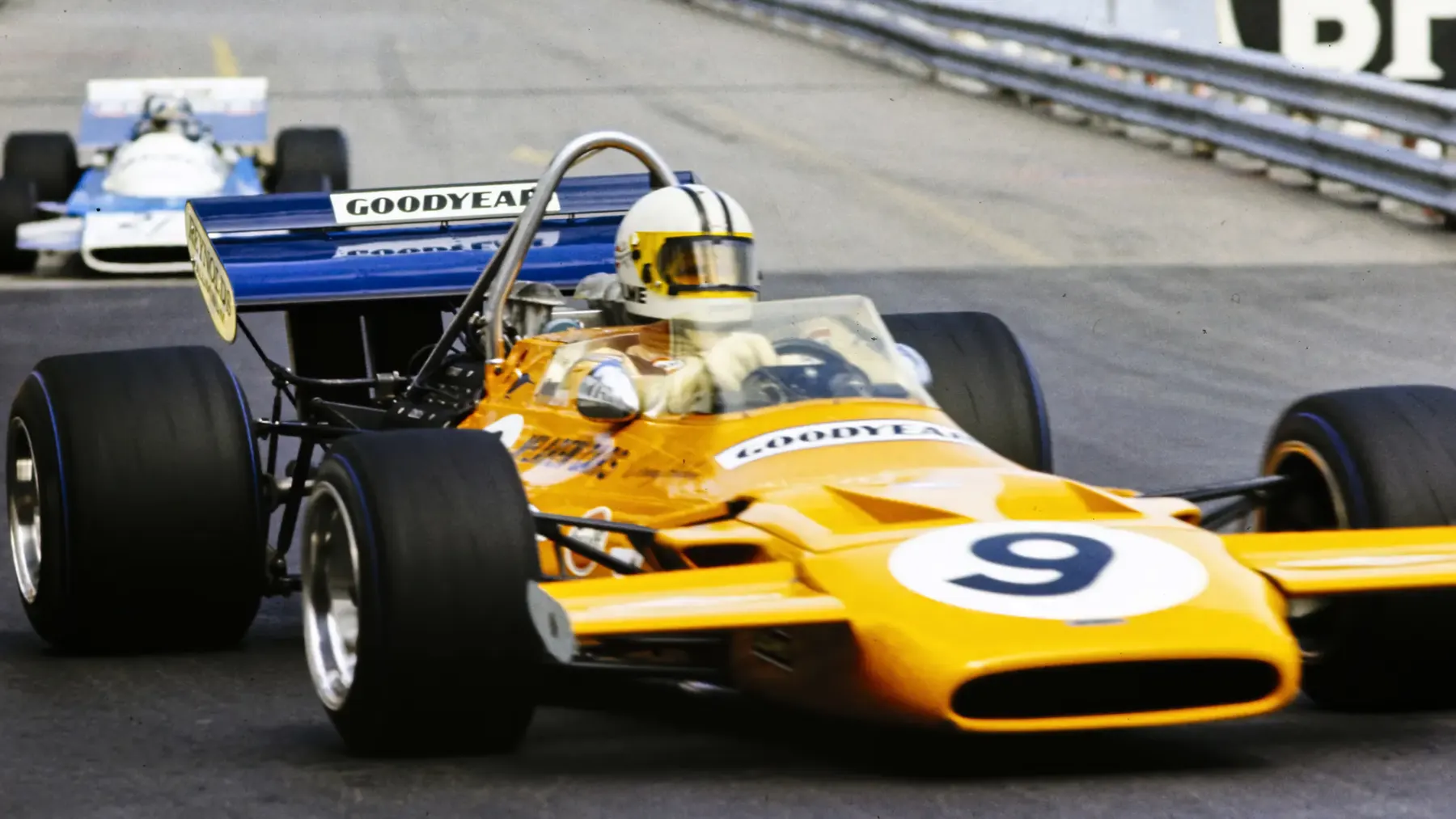
Working under the leadership of Teddy Mayer, who had assumed control after McLaren’s death, Bellamy conceived a car that embodied innovative thinking while addressing the practical realities facing a team in transition. The result was distinctive enough to earn an immediate nickname,“The Alligator Car”,due to its unusual silhouette.
What made the M19A instantly recognizable was its pear-shaped cockpit, a direct result of practical engineering choices rather than aesthetic considerations. Bellamy positioned two of the car’s three 68-liter fuel tanks alongside the driver, creating bulging sidepods that resembled an alligator’s head when viewed from above. This unconventional arrangement served a clear purpose: concentrating mass around the center of the chassis to improve weight distribution and handling balance.
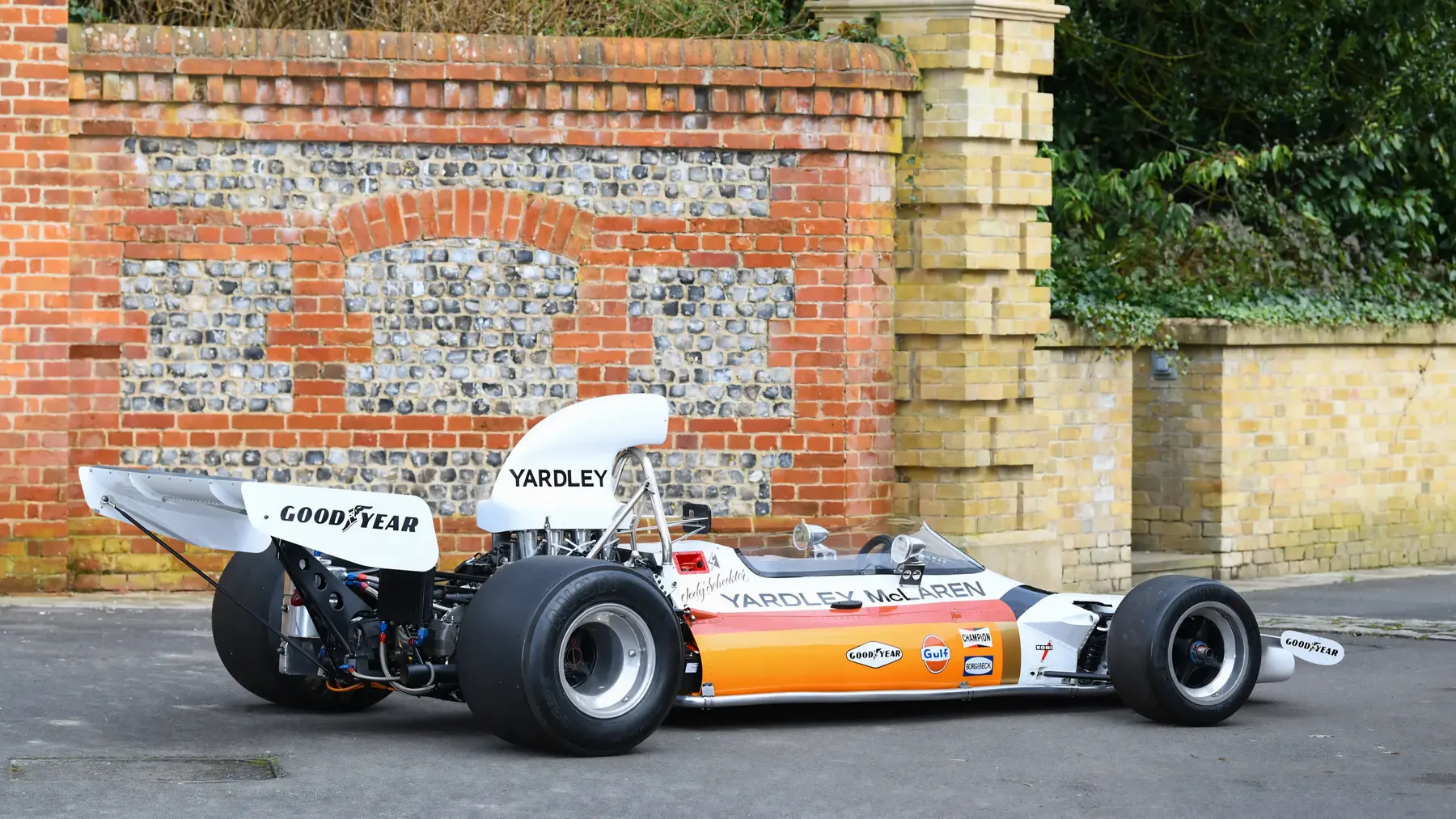
The M19A featured a “Coke bottle” monocoque that was both longer and wider than its predecessor. Weighing approximately 590 kilograms, the chassis represented state-of-the-art Formula 1 design for 1971, a period when aerodynamic understanding was rapidly evolving but before ground effects would revolutionize the sport.
At its heart, the M19A utilized the near-universal engine choice of the era,the Ford-Cosworth DFV V8. This naturally aspirated 3.0-liter powerplant generated about 485 horsepower, transmitted to the rear wheels through a Hewland five-speed manual gearbox. While this powertrain configuration was common among competitors, Bellamy’s chassis design incorporated several forward-thinking elements that differentiated the M19A.
Perhaps the M19A’s most significant technical contribution was its sophisticated inboard suspension system. Using coilover shocks for both front and rear suspension, the car featured an ingenious arrangement of push-rods and actuating rockers that effectively created a progressive spring rate. As the suspension compressed, the spring rate increased,a design that enhanced driver feedback while providing engineers greater flexibility to optimize setup for different circuits.
This rising-rate suspension concept represented a meaningful advancement over conventional systems of the era. Though the team would later abandon this approach in favor of a more conventional linkage in the M19C variant, the principles established in the M19A’s suspension design influenced McLaren’s approach to chassis development for years to come.
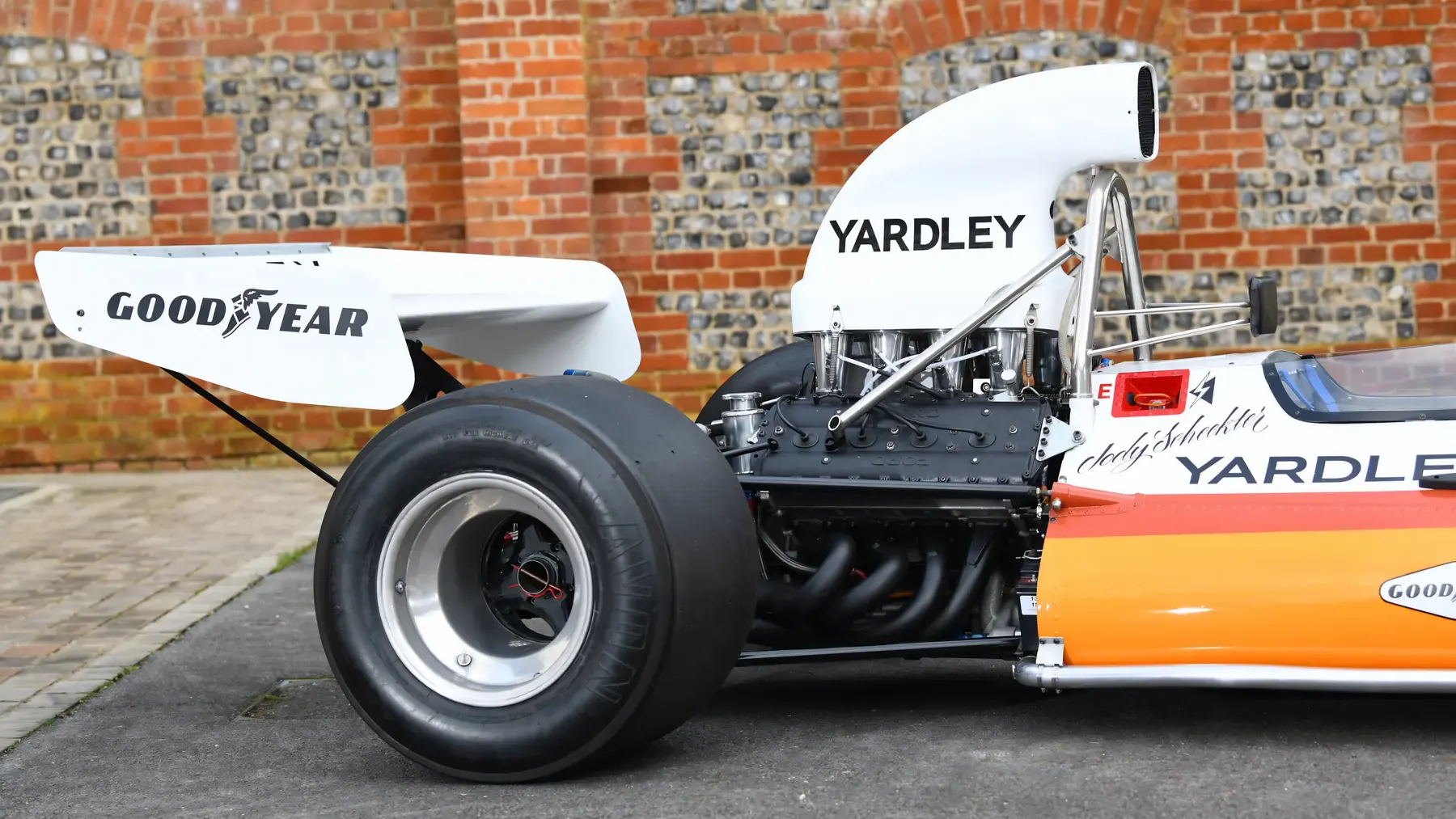
The M19A’s competition record reflects a car that showed occasional brilliance amid consistency challenges. When Denny Hulme debuted the car at the 1971 South African Grand Prix, he demonstrated its potential by briefly leading before mechanical gremlins intervened,a pattern that would become familiar during the M19A’s early races.
Despite recording the car’s first fastest lap at the Canadian Grand Prix, reliability issues hampered the team throughout 1971, resulting in a disappointing sixth-place finish in the Constructors’ Championship. McLaren produced only two M19A chassis, with the second car appearing at the Dutch Grand Prix and later leased to Roger Penske’s team for the North American rounds.
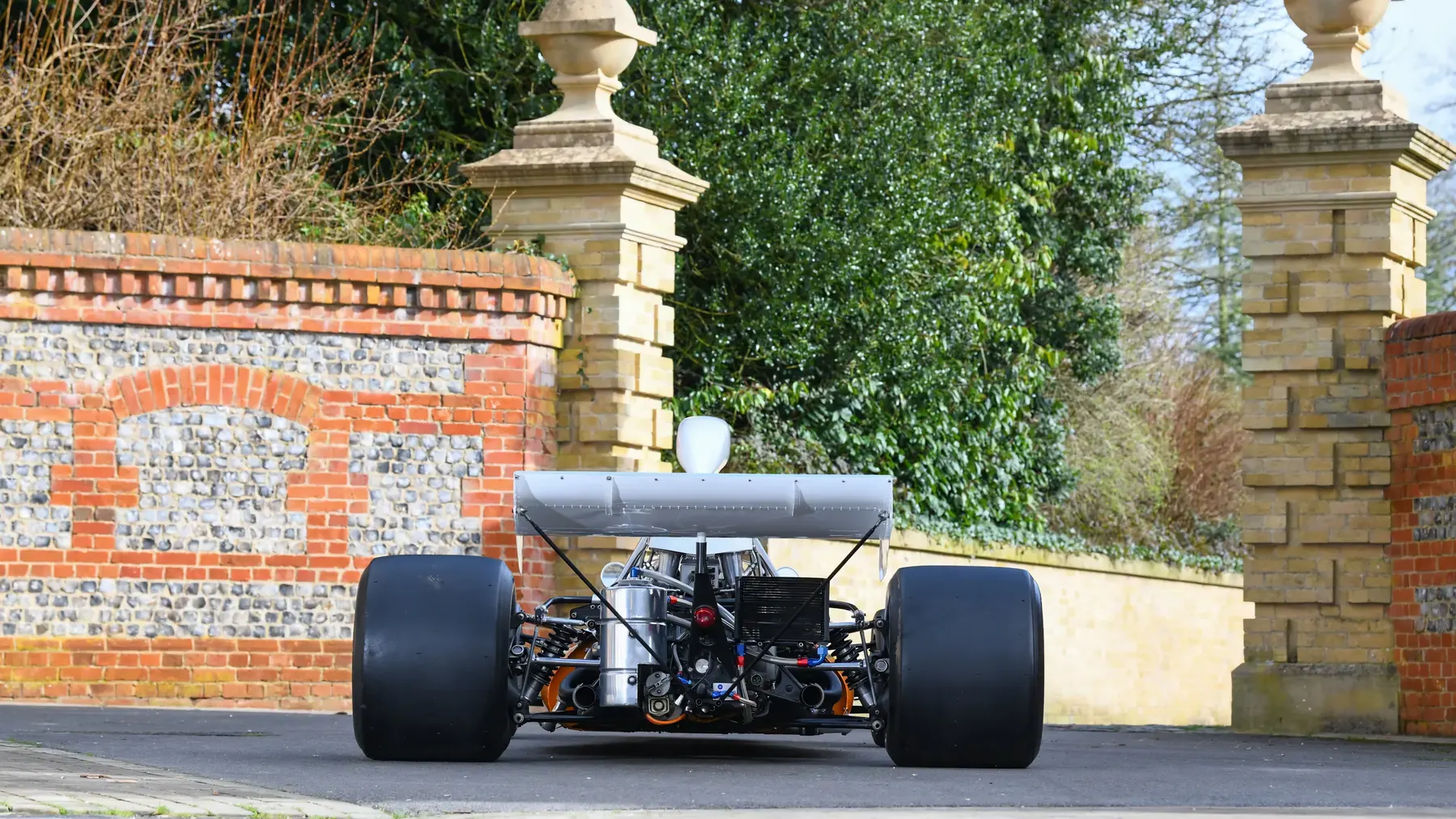
The 1972 season brought renewed optimism and a fresh look. McLaren secured sponsorship from Yardley of London, leading to the cars being repainted white with the side fuel tanks retaining their traditional McLaren orange,creating one of Formula 1’s most distinctive liveries. Performance improved significantly, with Denny Hulme securing the car’s first podium at the Argentine Grand Prix, followed by victory,McLaren’s first since 1969,at the subsequent race in South Africa.
Peter Revson joined the team, bringing consistency that complemented Hulme’s experience. The American driver would later secure the M19’s place in history by claiming McLaren’s first-ever pole position at the 1972 Canadian Grand Prix. Improved reliability and consistent podium finishes elevated McLaren to third in the 1972 Constructors’ Championship.
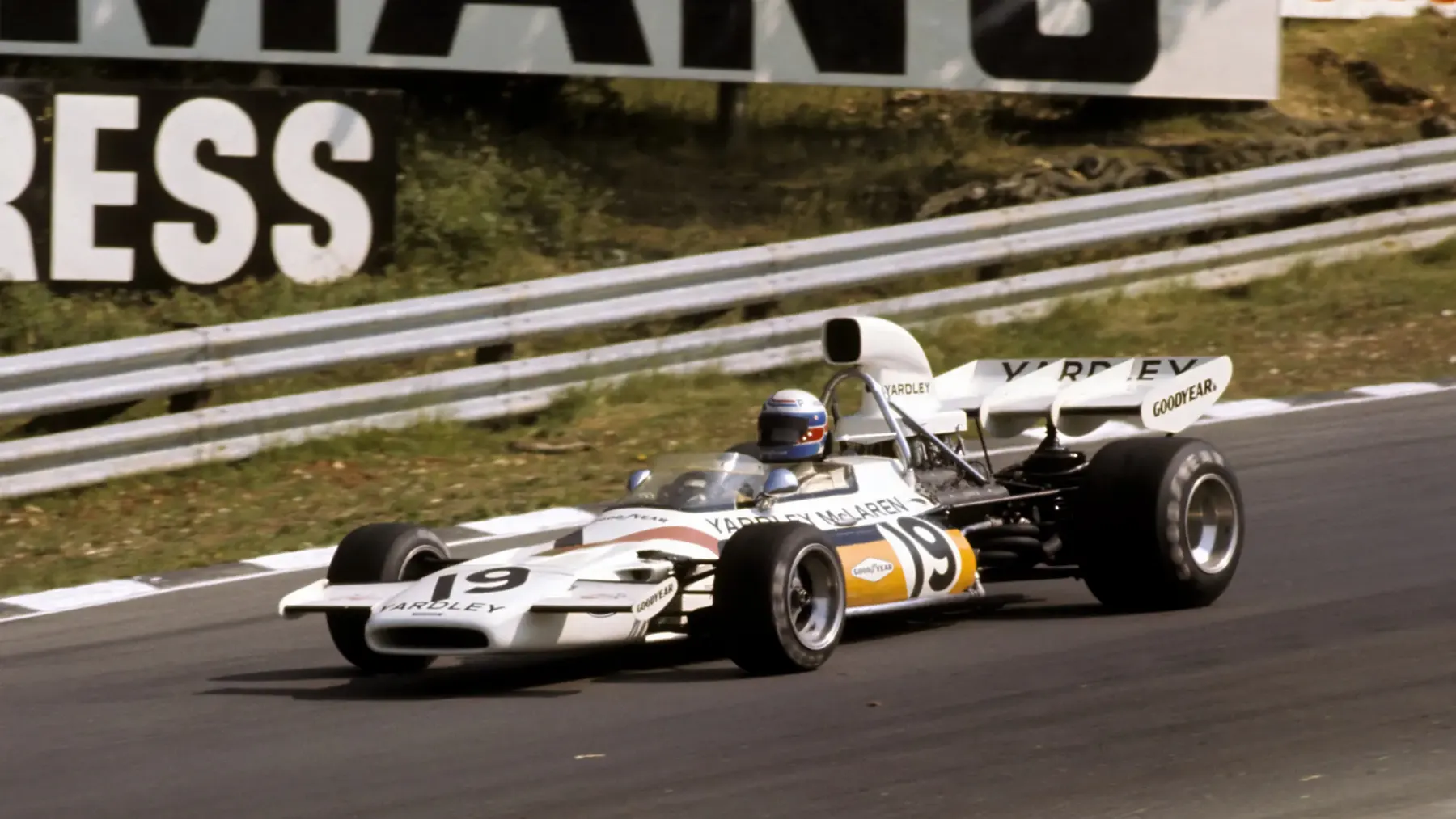
One of the M19A’s most enduring legacies was its role as a Formula 1 debut platform for several significant drivers. Most notably, future World Champion Jody Scheckter made his Grand Prix debut in an M19A at the 1972 United States Grand Prix, finishing an impressive ninth at Watkins Glen.
Throughout its relatively brief career, the M19A was piloted by an extraordinary roster of driving talent: Denny Hulme, Peter Gethin, Jackie Oliver, Mark Donohue, David Hobbs, Peter Revson, Brian Redman, and Jody Scheckter all took turns behind the wheel. Donohue’s third-place finish at the 1971 Canadian Grand Prix stands as one of the car’s most notable results, secured while running under Penske-White Racing colors.
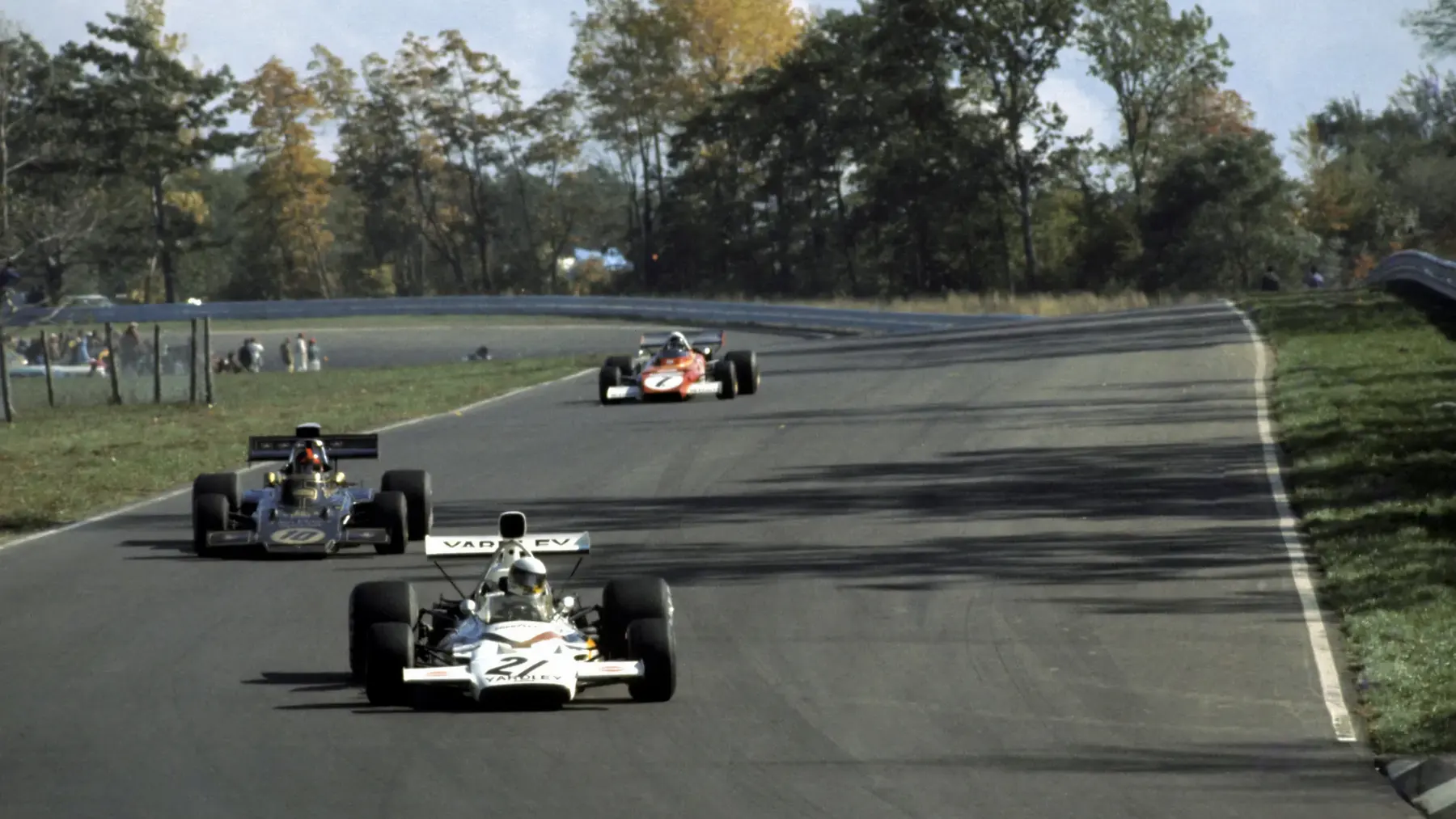
By 1973, the M19 had evolved into its final form. The improved M19C variant appeared, retaining the basic architecture while addressing some of the original car’s shortcomings. Both Hulme and Revson started the season in M19Cs before the arrival of the new M23, which would carry the team to championship glory in 1974.
The M19A made its final appearance at the 1973 South African Grand Prix, where Peter Revson secured second place,the design’s 13th and final podium finish. Though the M19 was soon overshadowed by the more successful M23, its fundamental soundness was demonstrated by its adaptation to Formula 5000 racing, where M19 chassis competed successfully with 5-liter Chevrolet engines.
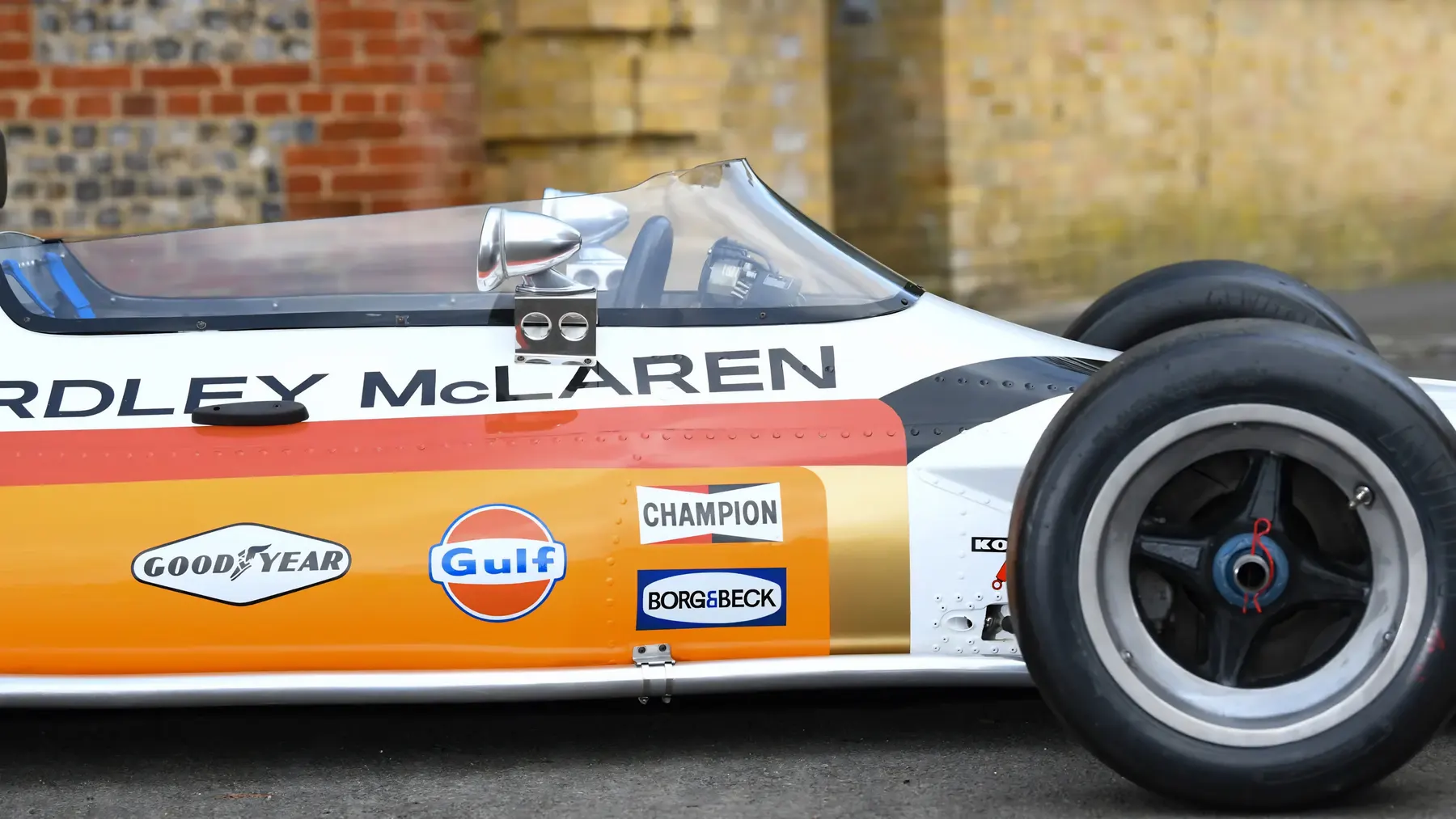
Looking back, the M19A represents a critical transitional design that helped bridge the gap between McLaren’s founding era and their emergence as a dominant force in Formula 1. While not as ultimately successful as later models, the M19A established technical principles and operational approaches that contributed significantly to the team’s championship-winning future.
Today, the extreme rarity of the M19A,with only two examples constructed,combined with its technical significance and association with legendary drivers, ensures its position among the most historically important McLaren Formula 1 cars. Both surviving examples remain eligible for prestigious historic racing events, where they continue to showcase the engineering thinking of a team rebuilding after tragedy.
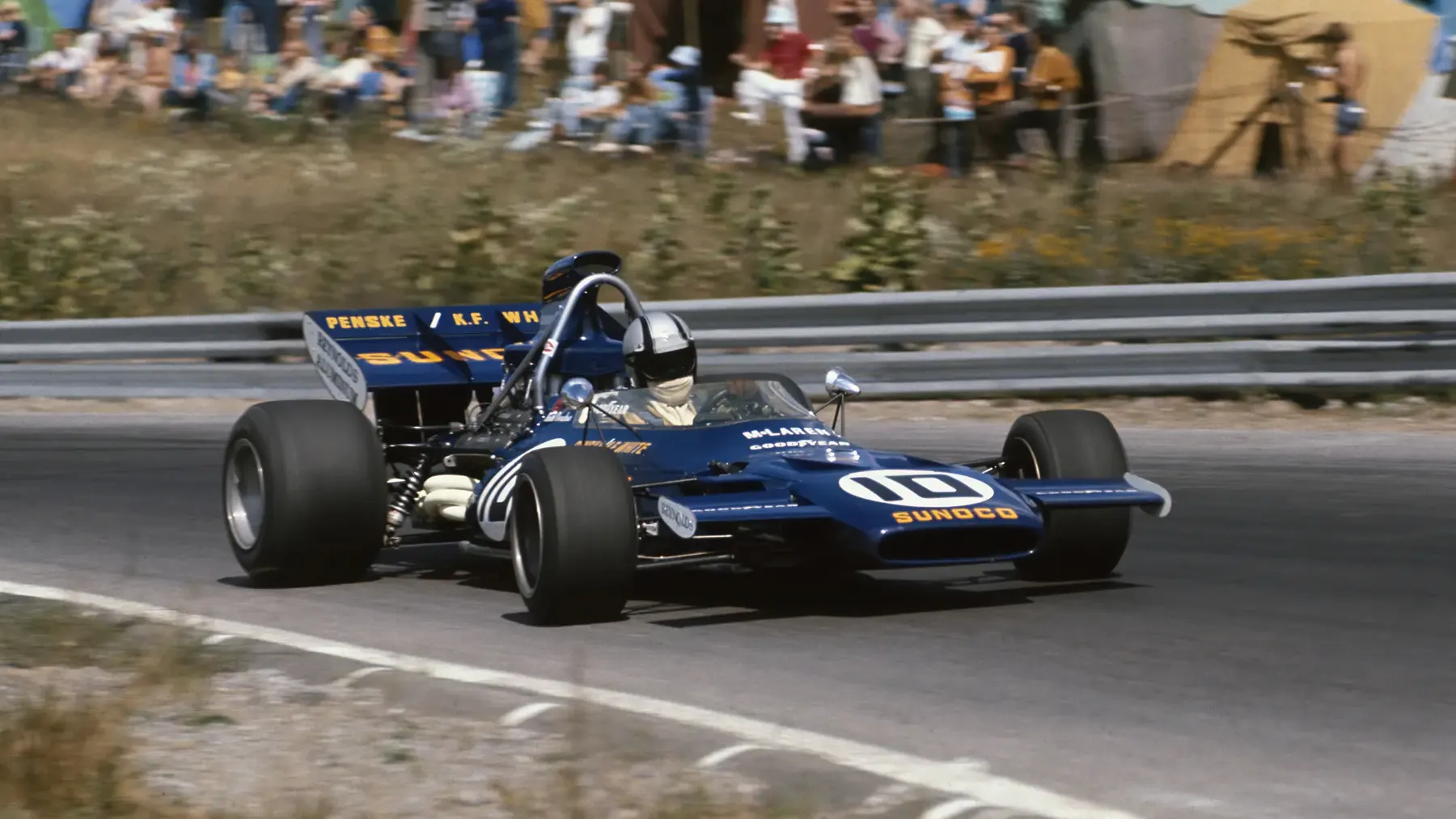
The M19A stands as a testament to McLaren’s resilience,a machine born during the team’s darkest hour that helped establish the technical foundation and organizational structure that would eventually carry them to the pinnacle of motorsport. Its unusual appearance and innovative suspension may have earned it the “Alligator” nickname, but its legacy proved far more substantial than any playful moniker could suggest.
Join the discussion
Comments
Loading comments…
Leave a comment
Share a detail, memory, or perspective. Every comment is reviewed before publication.