1974 Lancia Beta Coupé Group 4

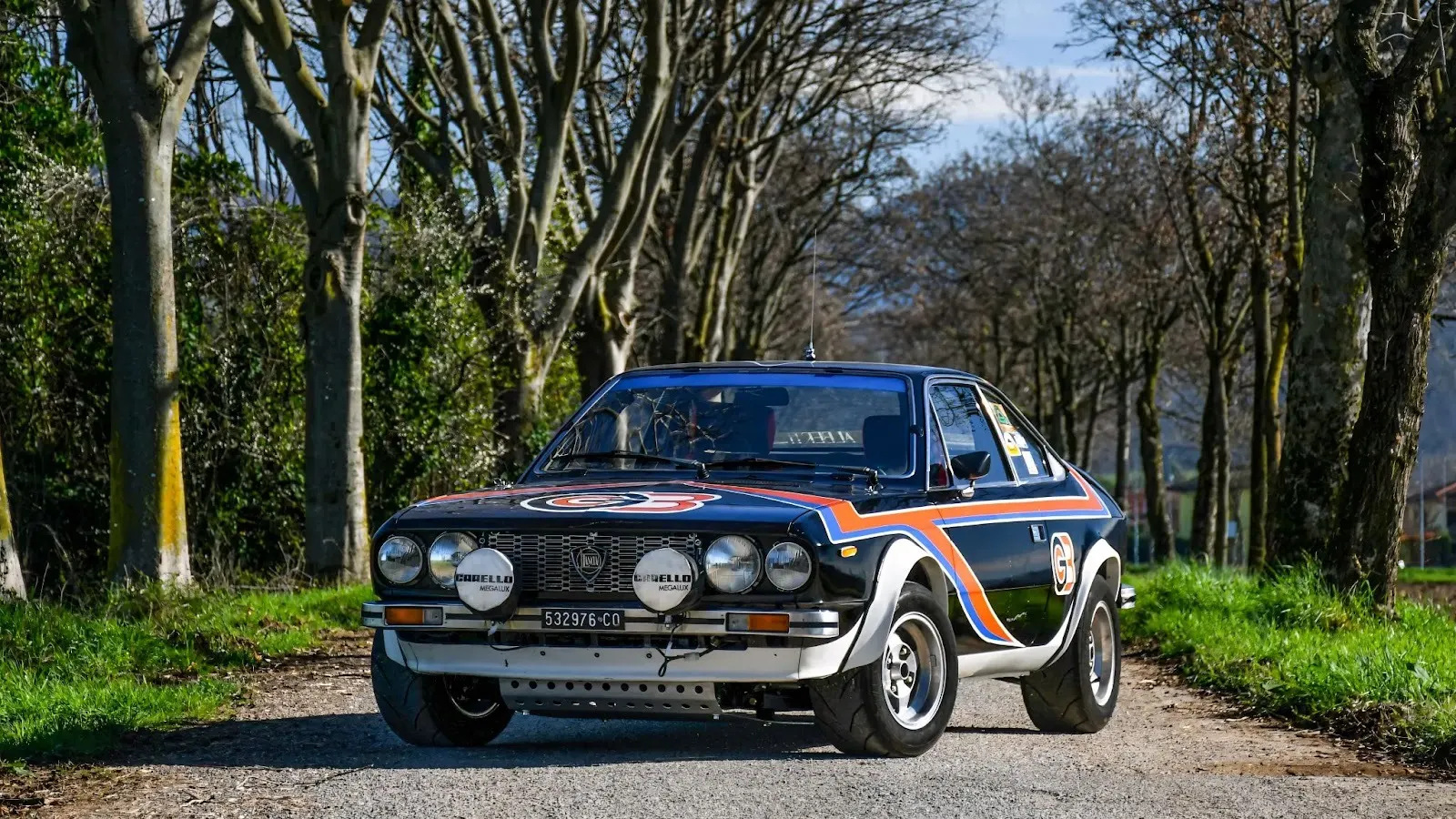
In the turbulent wake of Fiat’s 1969 acquisition of Lancia, the Beta Coupé emerged as a symbol of resilience and innovation. Designed to reignite Lancia’s sporting pedigree while appealing to consumers, the Beta Coupé Group 4 became a rallying workhorse during the 1970s. Though overshadowed by its stratospheric sibling, the Lancia Stratos, the Beta Coupé carved its niche in Group 4 rallying, blending accessible performance with competitive engineering.
Launched in 1973, the Lancia Beta Coupé arrived as part of Fiat’s strategy to revitalize the marque. While the aging Fulvia Coupé and the radical Stratos dominated rallies, Lancia sought a dual-purpose model to boost sales and maintain competitive relevance. The Beta Coupé answered this call, debuting as a sleek 2+2 grand tourer with rally ambitions.
To prove its mettle, Lancia Works prepared a dozen early 1.8-liter models for Group 3 homologation, entering them in Italy’s 1974 Beta Coupé Championship. By April 1974, homologation for Group 4 was secured, and these cars were upgraded with wider wheel arches, reinforced chassis, and competition-tuned suspensions. Though never a title contender like the Stratos, the Beta Coupé became a staple in European rallies, fielded by privateers and factory-supported teams alike. Its adaptability ensured longevity, competing well into the late 1970s.
Penned by Lancia’s Centro Stile under Aldo Castagno, with input from Piero Castagnero (designer of the Fulvia), the Beta Coupé blended Italian elegance with motorsport pragmatism. The road car’s flowing lines and fastback silhouette hinted at performance, while Group 4 iterations added flared arches to accommodate wider tires and improved aerodynamics.
Inside, road models featured plush interiors, but rally versions stripped back to essentials. Roll cages, lightweight bucket seats, and simplified dashboards underscored their purpose. Distinctive liveries,from crisp white-and-blue factory schemes to vibrant privateer designs,made the Beta Coupé a visual standout, reflecting the era’s flamboyant rally culture.
The Beta Coupé Group 4 leveraged Lancia’s twin-cam engines, initially the 1.8-liter unit producing around 140–160 hp in rally trim. Later iterations adopted the 2.0-liter engine, with fuel injection boosting output to approximately 180–200 hp. While modest compared to the Stratos’s 275 hp V6, the Beta’s front-engine, rear-wheel-drive layout (a departure from the Stratos’s mid-engine configuration) offered predictable handling on tarmac and gravel.
Modifications for Group 4 included reinforced suspension, limited-slip differentials, and upgraded brakes. The cars excelled in endurance rallies, where reliability and balance outweighed outright power. Though victories were sparse, the Beta Coupé earned respect for its tenacity, particularly in Italian and regional European events.
The Beta Coupé’s standout feature was its dual identity: a consumer-friendly GT and a homologation special. Lancia’s strategy to homologate the car for Group 4 ensured privateers could access affordable, competitive machinery. This democratized rallying, allowing smaller teams to compete against factory giants.
Visually, the transition from road to race car was striking. Group 4 models sported aggressive wheel arches, Perspex windows, and roof-mounted antennas, while retaining the road car’s elegant proportions. Mechanical upgrades, like magnesium alloy wheels and close-ratio gearboxes, highlighted Lancia’s engineering ingenuity.
The road-going Beta Coupé faced challenges. While praised for handling and style, corrosion issues,linked to poor rustproofing,tarnished Lancia’s reputation. However, the rally-focused Group 4 cars escaped this stigma. Enthusiasts celebrated their underdog spirit, and their presence in events like the Tour de Corse and Targa Florio bolstered Lancia’s motorsport credentials.
Today, the Beta Coupé Group 4 enjoys a renaissance. Restored examples, often clad in period liveries, star in historic rallies like the Mille Miglia and Rallye Monte-Carlo Historique. Specialist workshops meticulously preserve their mechanical heritage, ensuring these cars remain competitive in vintage events.
The Beta Coupé Group 4 represents a pivotal chapter in Lancia’s history. It bridged the Fulvia’s classic charm and the Stratos’s radical innovation, proving that accessibility and competition could coexist. While not as celebrated as its successors, its role in sustaining Lancia’s rally presence during a transitional era cannot be understated.
For collectors, the Beta Coupé Group 4 offers a tangible link to 1970s rally culture,a time when privateers and factory teams shared stages, and passion trumped budgets. Its enduring appeal lies in its duality: a graceful road car that morphed into a gritty competitor, embodying Lancia’s relentless spirit.
The Lancia Beta Coupé Group 4 is a testament to resilience and adaptability. Born from corporate upheaval and engineered for versatility, it carved a niche in an era dominated by specialized rally machines. Though overshadowed in its time, its legacy endures,a reminder that in motorsport, glory isn’t reserved for the fastest, but for those who endure. For Lancia enthusiasts and rally historians, the Beta Coupé Group 4 remains a cherished symbol of ingenuity, proving that even underdogs can leave tire marks on history.
Join the discussion
Comments
Loading comments…
Leave a comment
Share a detail, memory, or perspective. Every comment is reviewed before publication.