1977 Ferrari 512 BB

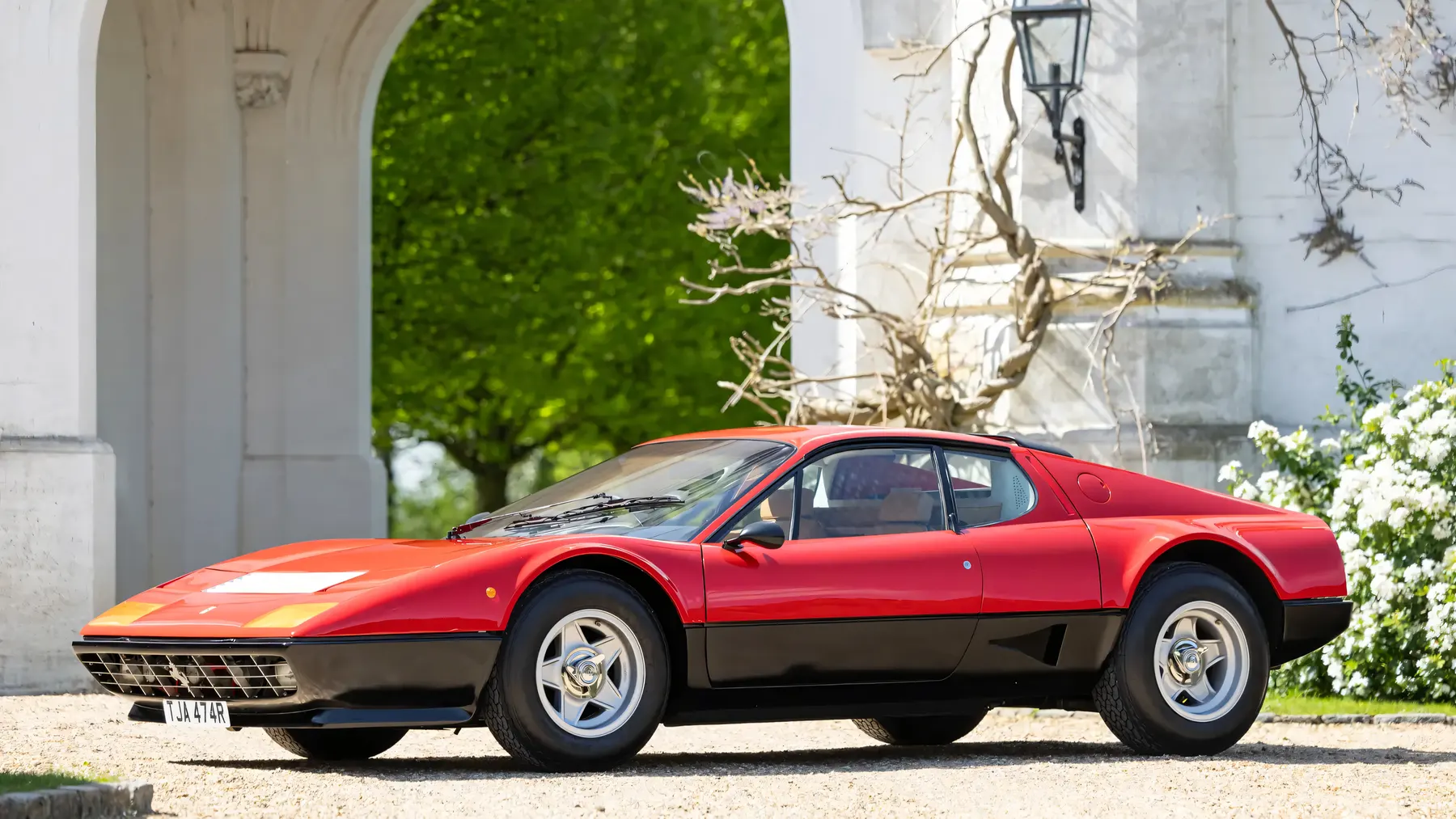
There is something almost counterintuitive about the story of the Ferrari 512 BB. Here was a car that, by the mid-1970s, represented Maranello’s most emphatic statement of intent - a flat-twelve, mid-engined supercar that traced its mechanical bloodline directly to Grand Prix racing - and yet it has spent much of the intervening half-century living in the shadow of cars it inspired rather than basking in glory of its own. That, perhaps, is the 512 BB’s most interesting quality: a machine of genuine greatness that the world has been slow to fully appreciate.
To understand what the 512 BB meant, you need to understand what preceded it. Enzo Ferrari himself was deeply reluctant to put a mid-mounted engine behind paying customers, fearing that such a layout would be beyond their abilities. It took years of persuasion from his engineers, and the increasingly uncomfortable sight of mid-engined competitors dominating racing, to shift his position. Ferrari had already proven the layout’s potential through the 246 P Formula 1 car in 1960, and the Dino 206 GT road car of 1967 had quietly demonstrated that a mid-engined Ferrari could be both manageable and desirable - though the Dino deliberately avoided wearing the prancing horse badge. The flagship V12 road cars remained resolutely front-engined through the Daytona era. When the 365 GT4 Berlinetta Boxer finally arrived in 1973, it was a watershed moment: Ferrari’s first mid-engined twelve-cylinder road car, and proof that Enzo had at last been convinced.
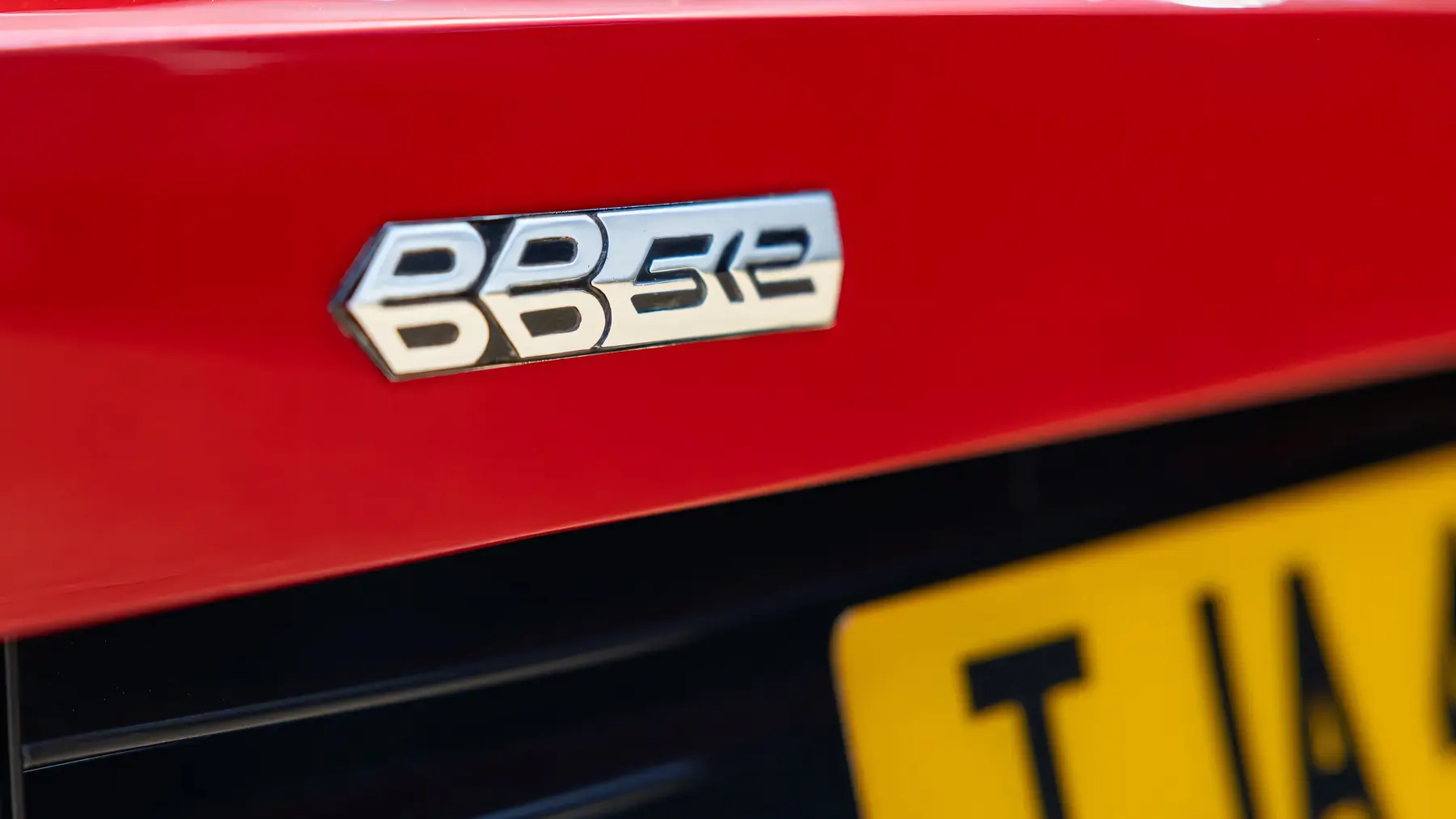
The 512 BB, which debuted at the 1976 Paris Motor Show, was the second generation of that idea - a refinement rather than a reinvention, but a significant one. The name itself was a deliberate departure from Ferrari’s convention of naming twelve-cylinder cars after individual cylinder displacement: “512” instead pointed to the 5-litre, 12-cylinder configuration, resurrecting the name of the legendary Ferrari 512 racing car and making no secret of the pedigree being claimed. At £23,868 in the UK in 1977, it occupied a stratosphere of its own, though the Lamborghini Countach loomed as its inescapable rival - a comparison that was made endlessly in period press and has never really stopped.
The engine is where the 512 BB’s story gets genuinely thrilling. The Tipo F102 B flat-twelve was enlarged from the 365 GT4 BB’s 4,390 cc to a full 4,943 cc, with bore and stroke of 82 mm x 78 mm and a compression ratio of 9.2:1. Ferrari’s sales brochures initially claimed 360 bhp, though later publications revised this downward to 340 bhp - a quiet acknowledgment that the original figure had been optimistic. Peak power arrived at 6,200 rpm, lower than the previous model’s 7,000 rpm ceiling, and torque nudged up to 331 lb-ft at 4,300 rpm. The result was an engine character quite different from its predecessor: less peaky, more muscular, with a broader spread of power that made it both more usable on the road and better able to meet tightening emissions and noise regulations without sacrificing the performance the car demanded. The engine’s lineage ran directly through Ferrari’s flat-twelve Formula 1 programme - through the 312B that had raced from 1970 to 1975 and the cars that carried Niki Lauda to championship glory - making the road car a direct inheritor of Grand Prix technology in a way that very few production cars have ever genuinely been.
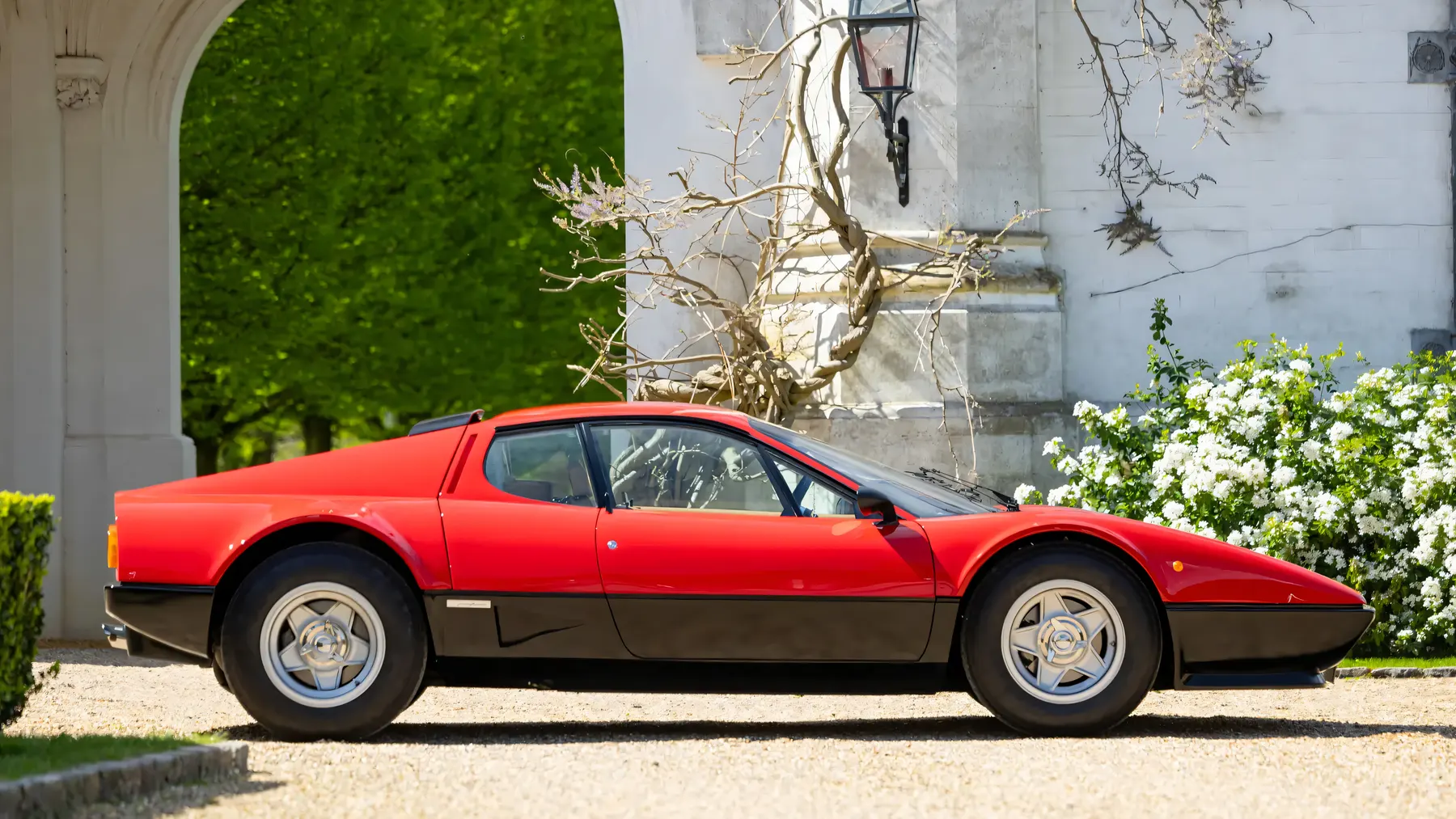
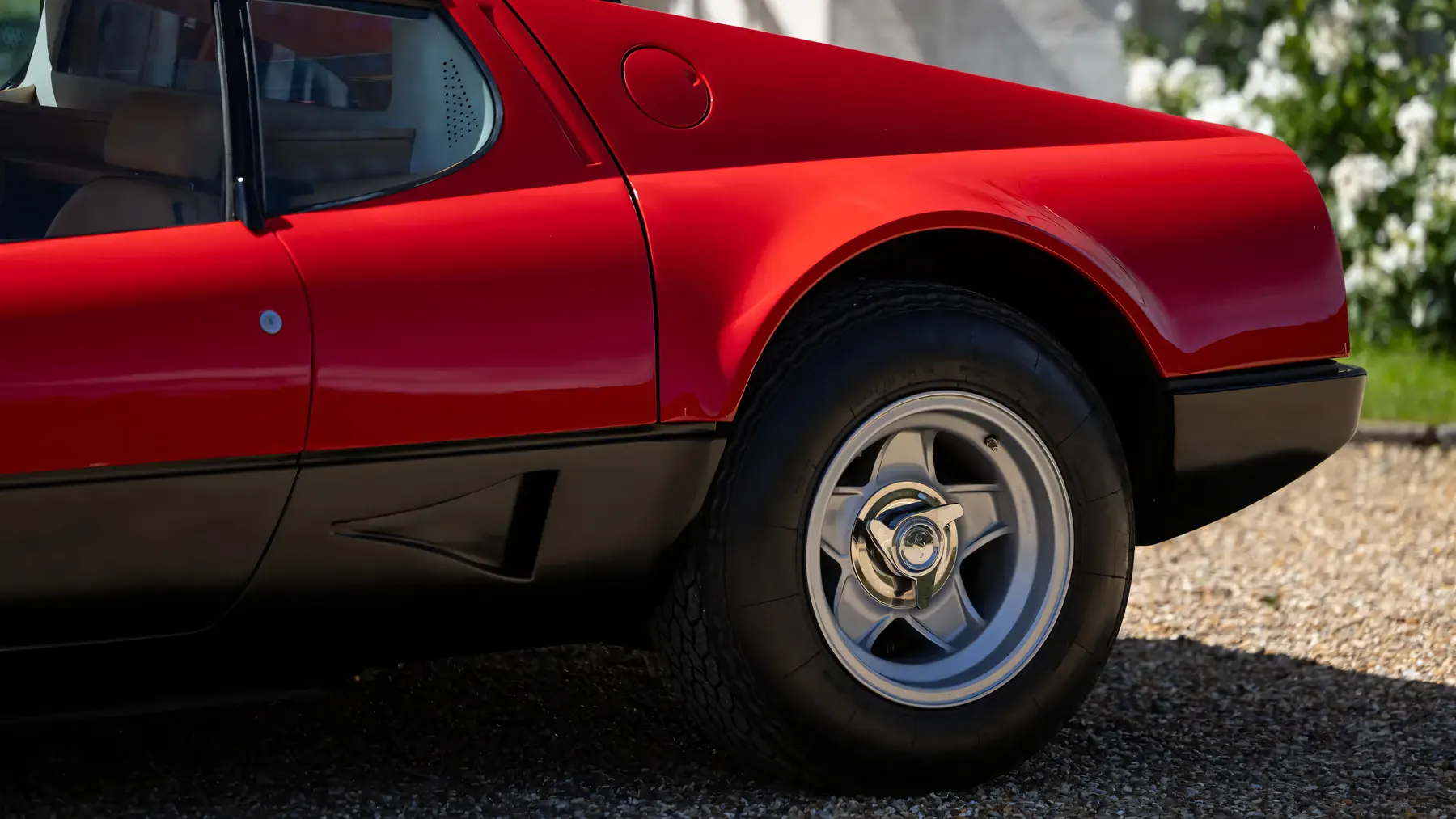
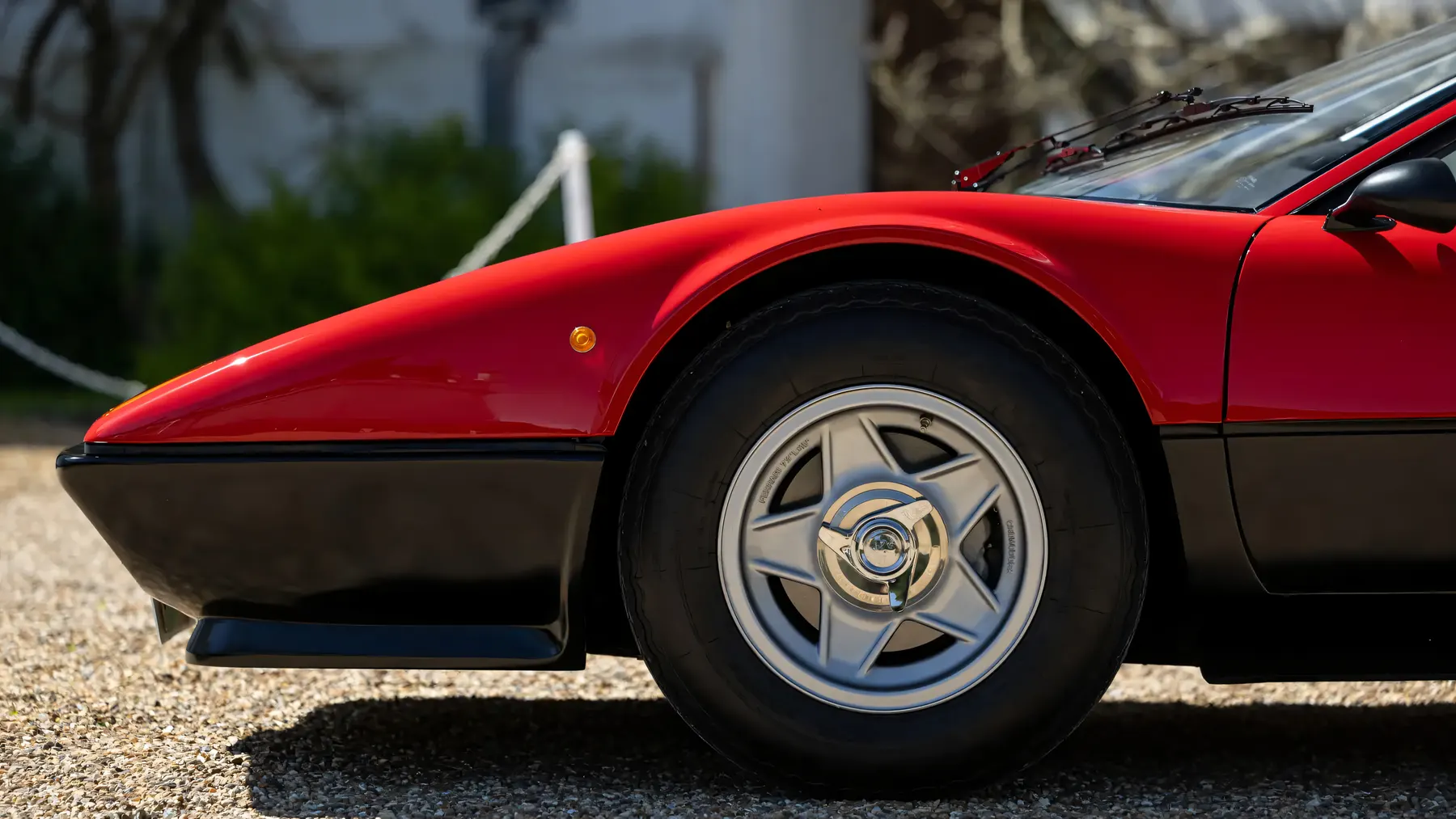
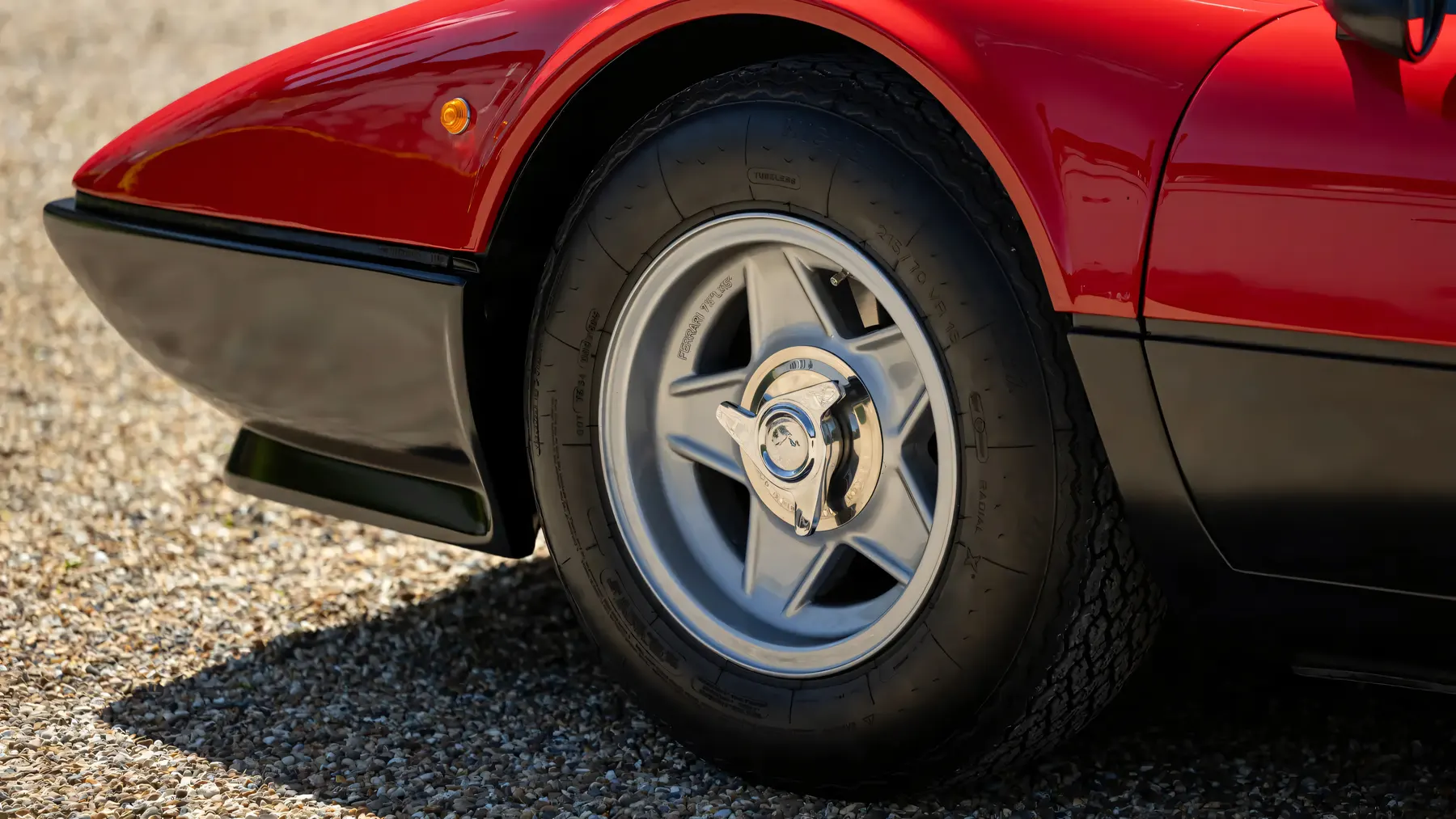
The chassis itself carried over from the 365 GT4 BB, but the 512 received meaningful chassis-level changes to accommodate its greater torque and performance. A dual-plate clutch replaced the single unit, both handling the added stress and, theoretically at least, lightening the pedal effort - though owners and journalists consistently report the clutch as formidably heavy by any normal standard. Dry-sump lubrication was retained, preventing oil starvation under the sustained lateral loads of hard cornering. The rear Michelin XWX tyres were widened to 225/70 VR15, requiring a corresponding increase in rear wheel width from 7.5 to 9 inches, and the rear bodywork was flared accordingly to accommodate the new track of 1,563 mm. The front tyres remained 215/70 VR15 - tall-sidewalled by modern standards, but significant in providing a degree of compliance that, combined with progressive spring rates, gave the 512 BB a ride quality that consistently surprised first-time drivers.
Leonardo Fioravanti’s design for Pininfarina, which had underpinned the entire BB family, deserves its own careful consideration. Its roots lay in two Pininfarina show cars: the P6 Berlinetta of 1968 and, most visibly, the extraordinary 512 Modulo concept of 1970. The production car retained the Modulo’s defining horizontal “reflection line” - that band of contrasting colour, almost always black, that bisected the bodywork and separated upper from lower mass. The result was a shape of real intelligence: low, taut, with the engine cover’s slats hinting at the mechanical drama within, the NACA ducts added to the 512 BB behind each door feeding cooling air to the exhaust and rear brakes, and the new chin spoiler up front solving, with clean engineering pragmatism, the nose-lift that had plagued the 365 GT4 BB at high speed. The rear now wore twin tail lights and twin exhaust pipes per side in place of the previous car’s triple clusters - a detail that gave the 512 a more purposeful, symmetrical face at the back.
Getting into the car is already a statement of purpose. The cabin is low, the driving position committed, and the flat-twelve sits close enough behind your shoulders that at idle its mechanical presence is immediately felt rather than merely heard. As road testers have consistently noted, the throttle cable is stiff - deliberately so, in a way that forces the driver to be intentional with their inputs rather than accidentally provoking 340 horsepower with a casual foot. The steering, unassisted and slow by contemporary supercar standards with more than three turns lock-to-lock, initially feels almost agricultural. But spend time with it and a different truth emerges: the slower rack reduces the nervous twitchiness that would otherwise accompany so much power and so little weight penalty at the front axle, and the feedback through the rim is exceptional - road surfaces, cambers, and grip levels all communicated with unusual honesty. The open-gated gearchange, that most Ferrari of sensory pleasures, is a delight once warm - a quick, mechanical snick that rewards precision and punishes hurry.
Performance figures were something of a contested issue throughout the 512 BB’s production life. Ferrari’s own claims of 188 mph top speed circulated widely, but Autocar’s rigorous independent test in May 1978 recorded 163 mph and a 0–60 time of 6.2 seconds. That test, published with the restraint and scepticism that characterised British motoring journalism of the era, was nonetheless significant enough to earn the 512 BB a place in the Guinness Book of Records as the world’s fastest independently road-tested production car. Later tests by other publications recorded the 0–60 sprint in as little as 5.4 seconds under different conditions. The truth, as always with cars of this era, lies somewhere between the manufacturer’s optimism and the test track’s conservatism - and in any case, the experiential truth of a flat-twelve revving toward its ceiling is one that numbers struggle to convey.
The 512 BB’s racing arm, the BB LM (Le Mans), took the road car’s mechanical basis and transformed it into a Group 5 silhouette racer with a dry-sump flat-twelve producing around 470 bhp, wide arch bodywork, and extensive aerodynamic intervention. The results were mixed - competitive but not dominant at Le Mans, capable of class honours but unable to challenge the prototype-class front-runners outright. The BB LM was rendered obsolete when Group 5 gave way to Group B and Group C regulations after 1982, though its legacy as one of the most visually spectacular racing cars of the early 1970s silhouette era has only grown with time.
The drawbacks are real and worth stating honestly. The heat management inside the cabin was a persistent problem - sitting a few inches from a 5-litre flat-twelve in Italian summer traffic was not a refined experience, and even in milder climates the cockpit could become genuinely uncomfortable. The clutch effort was notorious: heavier even than the Countach’s, which was itself no featherweight. Visibility was limited in the way that all mid-engined wedge cars of this era demanded acceptance of, and the fuel consumption that came with four Weber carburettors feeding twelve cylinders at sustained pace required planning of a practical kind. The power figure controversy - 360 bhp or 340 bhp depending on which Ferrari publication you trusted - nagged at the car’s credibility in period, particularly when the Countach was claiming 455 bhp. The 512 BB was measurably slower than its Sant’Agata rival in outright terms, and no amount of narrative about superior usability entirely obscured that fact in an era when supercar buyers were acutely sensitive to bragging rights.
What the 512 BB did offer, and what becomes clearer with the distance of five decades, was a car of genuine balance and engineering coherence. Where the Countach was a riot of sensation and drama, the BB engaged on more intimate terms - less theatrical, more communicative, more willing to be driven rather than merely piloted. Collectors and historians have come to recognise it as among Ferrari’s last road cars to be entirely hand-built, and as the model that finally legitimised mid-engined, non-competition technology as the proper direction for Maranello’s flagship. When the BB 512i arrived in 1981 with Bosch K-Jetronic fuel injection, the carburettor era ended; when the Testarossa replaced the entire BB line in 1984, the flat-twelve engine moved into a wider, more dramatic body, and a different kind of Ferrari began.
The 512 BB’s design manifesto quietly shaped everything that came after it. The styling themes introduced by Fioravanti - the horizontal bisection, the wedge profile, the relationship between upper greenhouse and lower sill - can be traced directly through the 308 GTB, 328, and beyond. It is perhaps the supreme irony of the 512 BB’s reputation that the very cars it spawned have overshadowed it in the public imagination. A generation of poster cars owed their visual vocabulary to the BB, yet the BB itself became, in the words of one astute commentator, a “forgotten manifesto.”
That forgetfulness is correcting itself. Collectors have rediscovered the 512 BB as something rarer and more historically significant than its production number of 929 might initially suggest - and far rarer in right-hand-drive form, with just 101 examples configured for British and other right-hand-drive markets. The wedge styling that once risked looking dated now reads as pure period classicism. The flat-twelve exhaust note, which benefits considerably from being heard in a quiet countryside rather than described on a page, remains one of the great sounds in automotive history. And the knowledge that this engine breathed the same theoretical air as Niki Lauda’s championship machinery gives the 512 BB a connection to motorsport history that most supercars of any era can only gesture toward. It was never the fastest, never the most outrageous, and never quite received its due in its own time. It deserved better then, and it has earned its reputation now.
Join the discussion
Comments
Loading comments…
Leave a comment
Share a detail, memory, or perspective. Every comment is reviewed before publication.