1977 Tyrrell P34

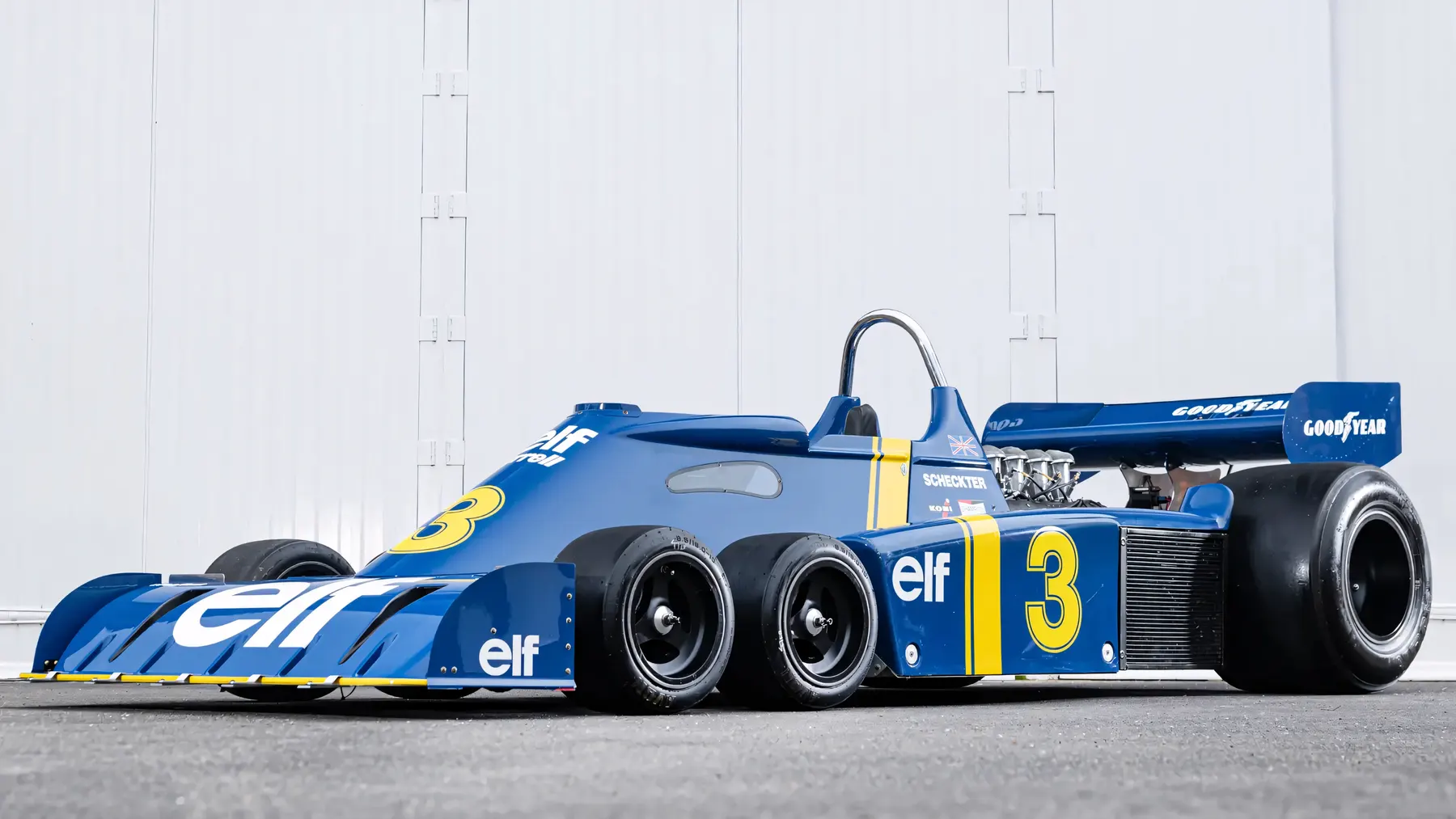
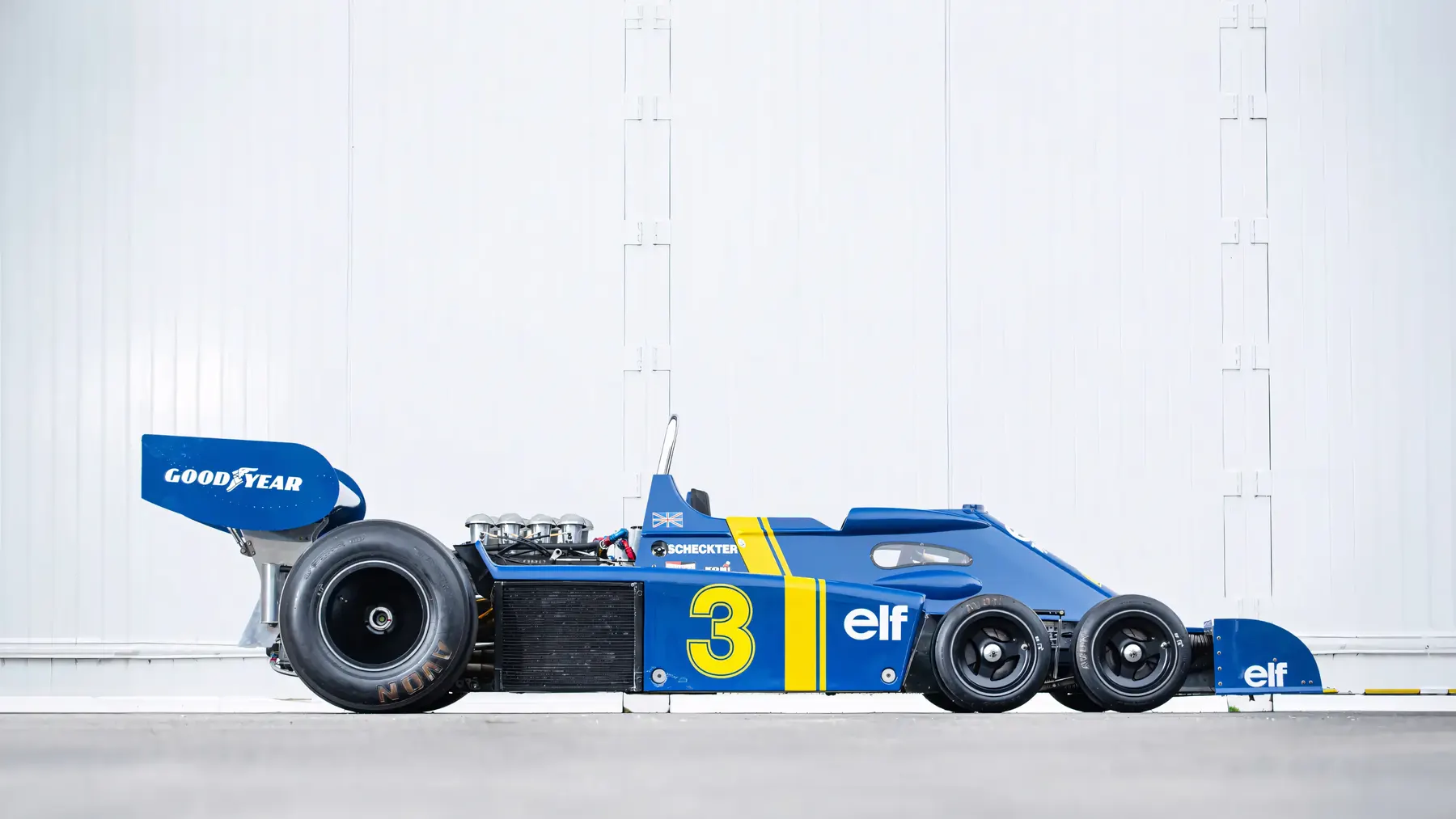
When the Tyrrell P34 rolled onto the track for the 1976 Formula 1 season, it looked like something from a science fiction movie. With four tiny front wheels and two regular-sized rear wheels, the car seemed to defy logic. Yet this bizarre machine wasn’t a gimmick,it was a serious attempt to rewrite the rules of racing. For a brief moment, it worked. The Tyrrell P34, Formula 1’s famous “six-wheeler,” became one of the most radical success stories in motorsport history, proving that unconventional ideas could compete at the highest level.
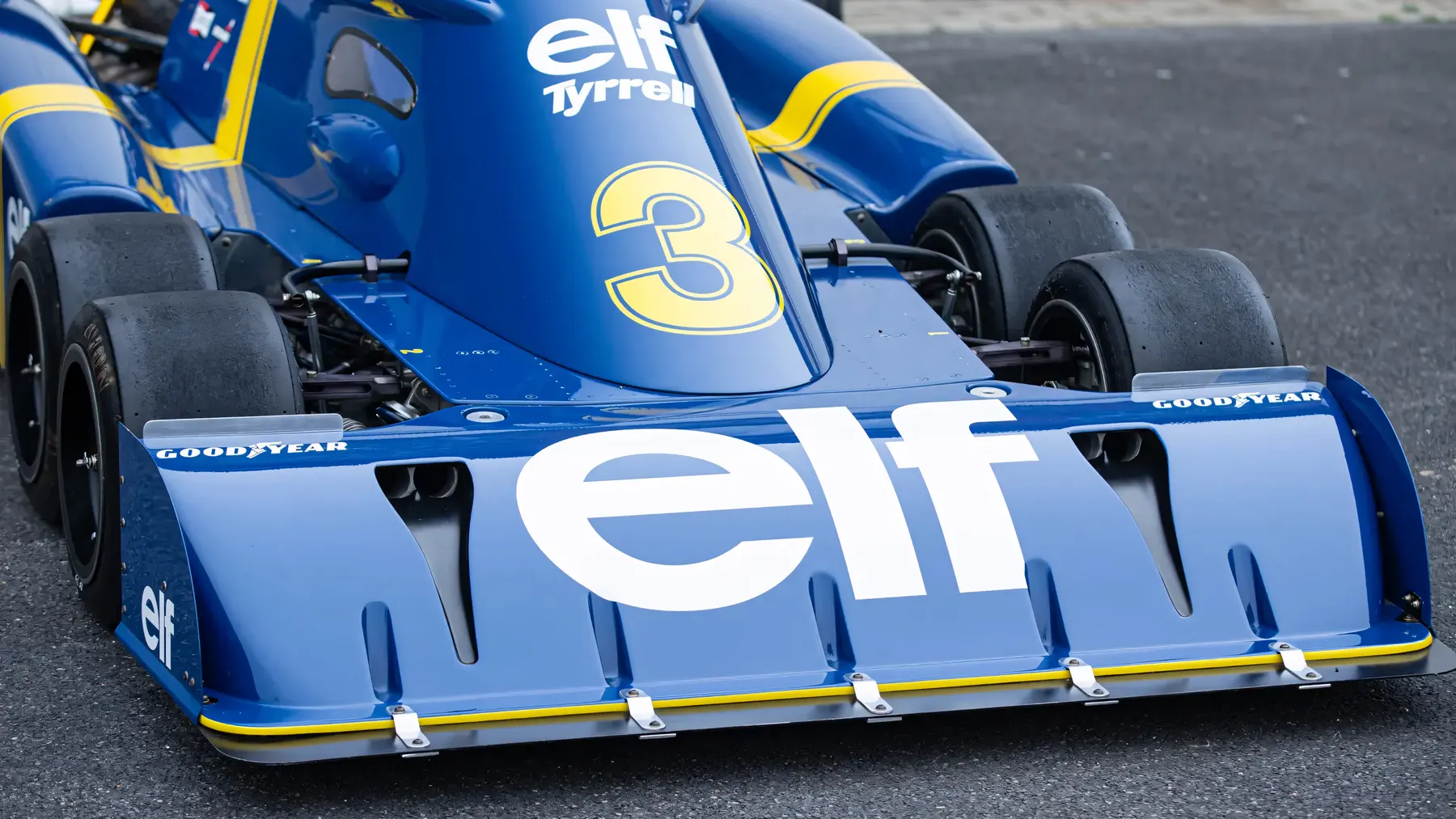
In the mid-1970s, Formula 1 was stuck in a creative rut. Most teams were using the same Ford-Cosworth V8 engine, and aerodynamic advancements had plateaued. Derek Gardner, Tyrrell Racing’s chief designer, spotted an opportunity in the sport’s technical regulations. Rules limited the front wing width to 1.5 meters, but standard 13-inch front tires protruded beyond the wing, creating drag. Gardner wondered: What if smaller front tires could tuck neatly behind the wing? Calculations showed this setup could reduce drag by 25%, giving a speed boost equivalent to 40 horsepower,huge in an era where most engines made around 475 hp.
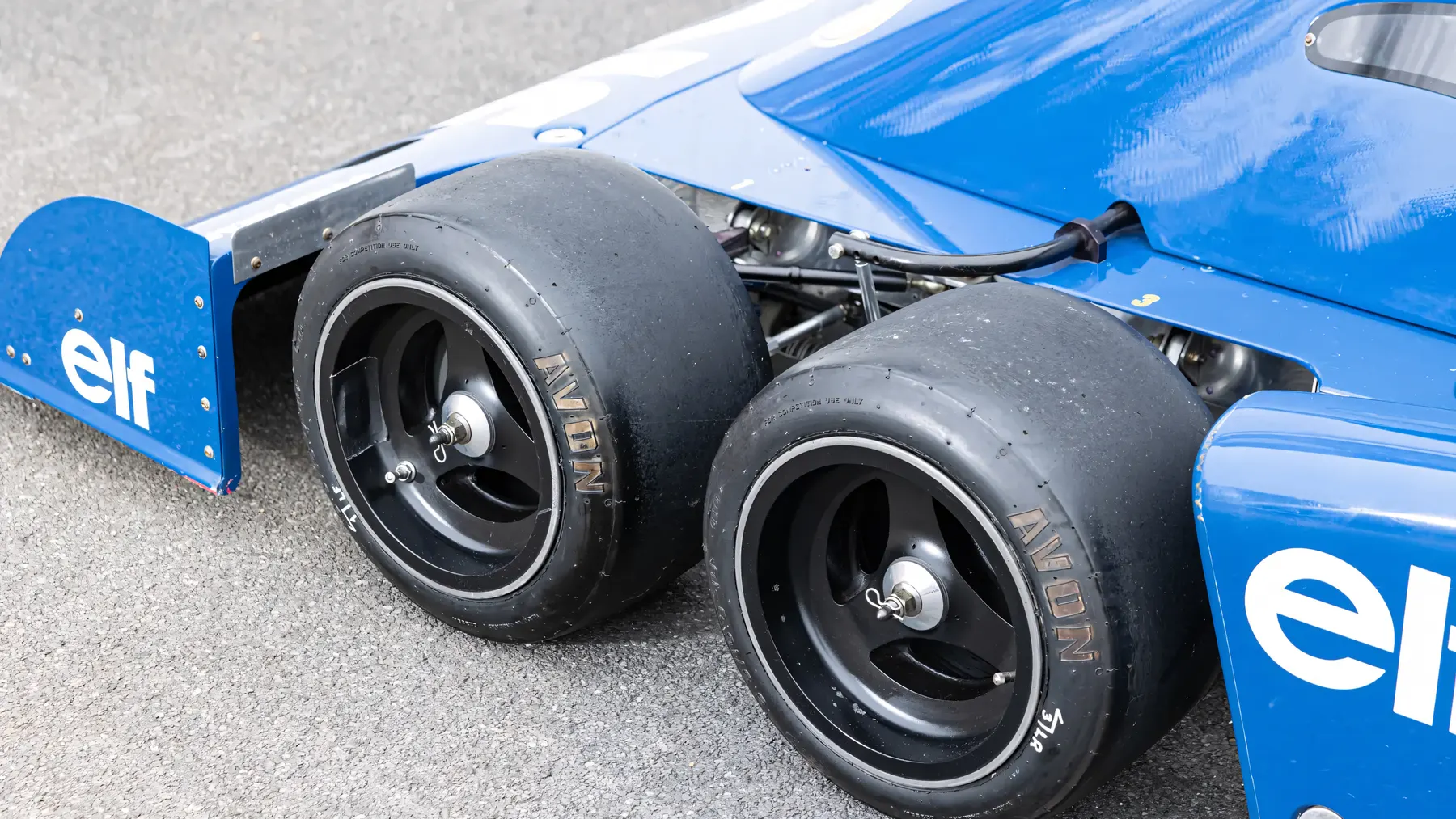
But there was a catch. Smaller tires meant less grip. Gardner’s solution was ingenious: add two extra front wheels. Four 10-inch wheels, arranged in pairs, would maintain grip while fitting under the wing. The concept was risky,steering and braking systems would need complete redesigns,but team owner Ken Tyrrell, known for bold moves, greenlit the project. Codenamed “Project 34,” the car was developed in secret, shielded even from the team’s drivers until its unveiling.
The P34’s front end was a masterpiece of complexity. Four 10-inch wheels, custom-made by Goodyear, were mounted on a dual suspension system. The front pair steered normally, while the rear pair turned via a bell crank linked to the front suspension,a solution so smooth that driver Jody Scheckter later compared it to power steering. Braking was equally innovative, with separate calipers for each front wheel to distribute stopping force evenly.
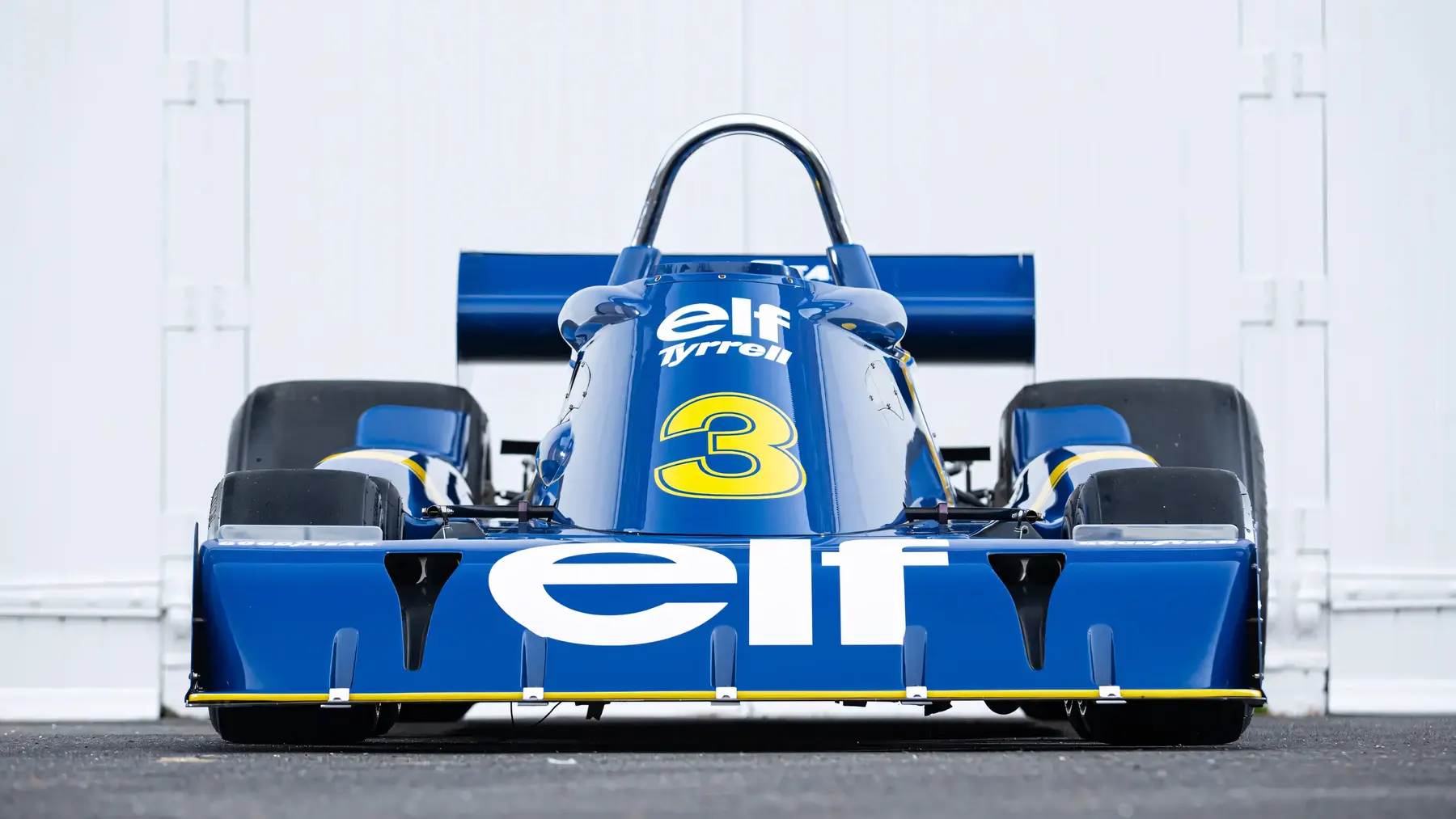
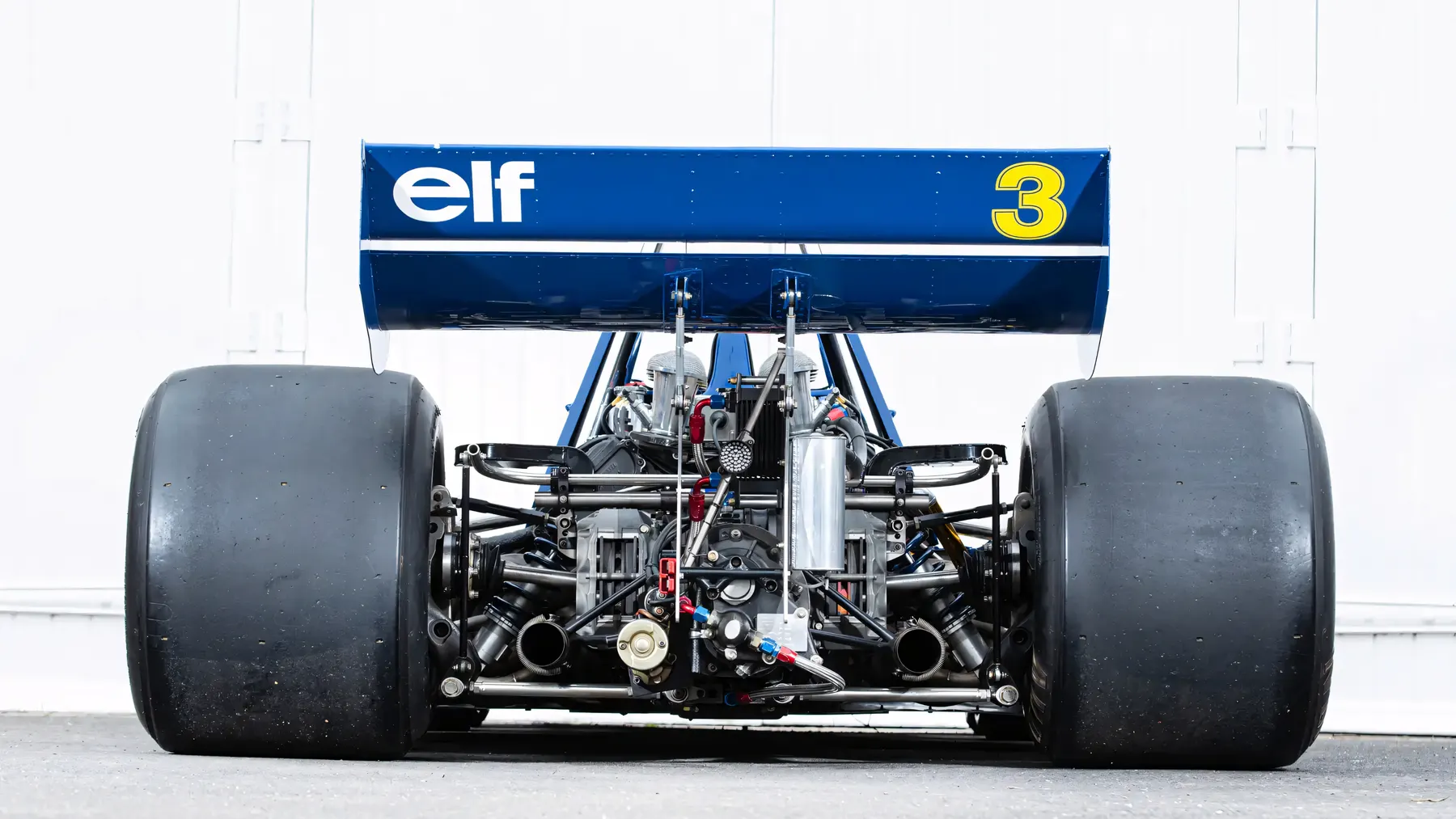
Aerodynamically, the car was sleek. By hiding the front tires behind the wing, airflow to the rear wing became cleaner, improving downforce. The chassis used a conventional aluminum monocoque, and power came from the ubiquitous Cosworth DFV V8 engine. On paper, it was brilliant. But racing isn’t fought on paper.
When the P34 debuted at the 1976 Spanish Grand Prix, it stunned the grid. Patrick Depailler qualified third, immediately proving the car’s pace. But the high point came at the Swedish Grand Prix. On Anderstorp’s fast sweeps, the Tyrrells were untouchable. Scheckter won, with Depailler second,the only 1-2 finish for a six-wheeled car in F1 history. “It felt like driving a rocket sled,” Scheckter joked afterward.
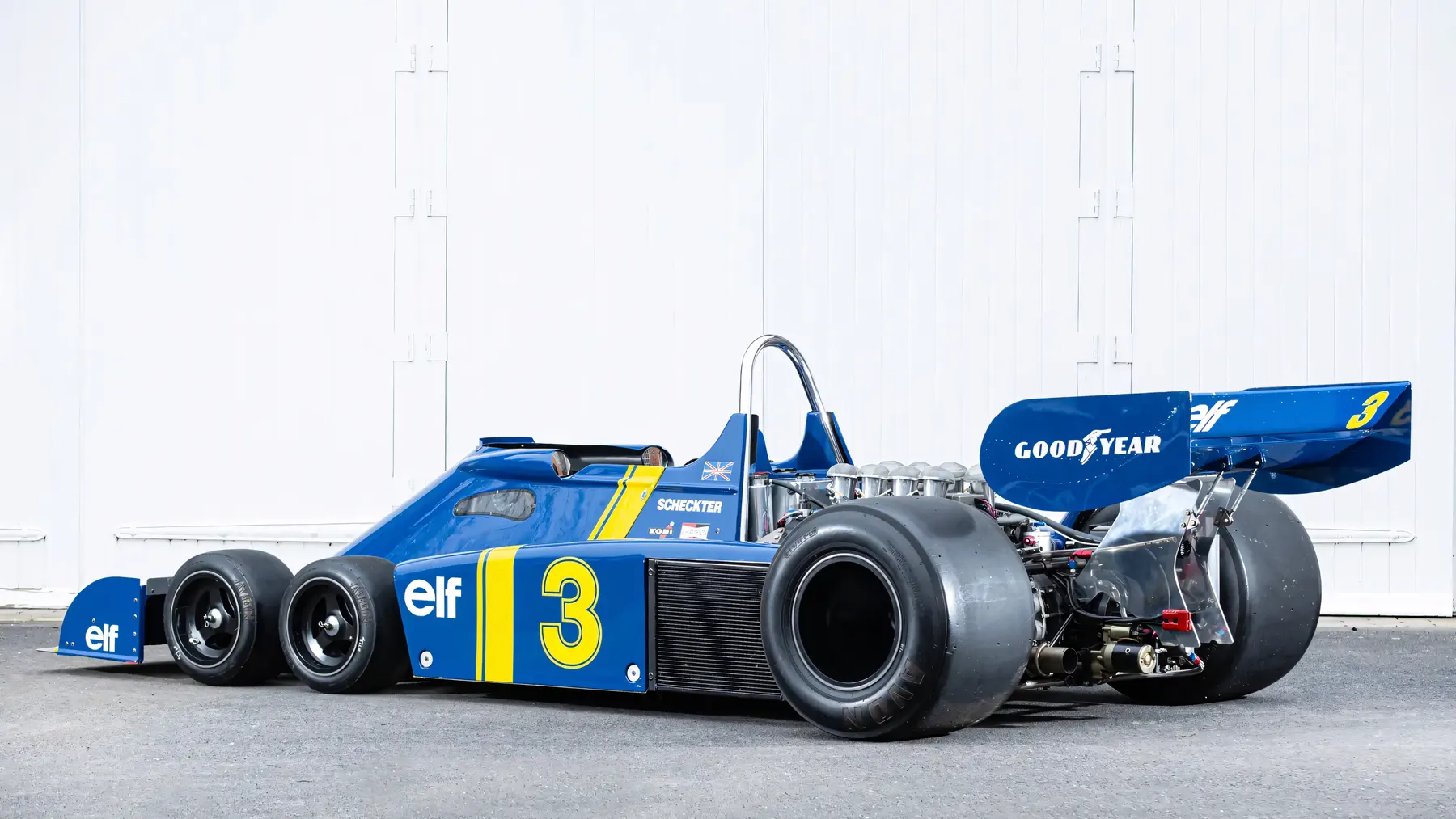
The P34 excelled on circuits where aerodynamics mattered most. At Watkins Glen and Fuji Speedway, its low drag gave it straight-line speed that rivals couldn’t match. But on bumpy tracks like the Nürburgring, the car struggled. The four front wheels often lost sync over bumps, causing unpredictable handling. Scheckter, despite his Swedish win, grew frustrated. He called the car “a piece of junk” and left Tyrrell at the end of 1976,a move that stunned the team.
For 1977, Tyrrell introduced the P34B. Revised aerodynamics and a longer wheelbase aimed to fix the car’s issues, but added weight blunted its edge. Ronnie Peterson, replacing Scheckter, scored a few podiums, but the magic was gone. Goodyear, focused on standard tires for bigger teams, neglected development of the P34’s bespoke 10-inch rubber. By mid-season, the front wheels were widened, partially undoing the aerodynamic benefits. The team abandoned the concept in 1978, reverting to four wheels.
The P34’s legacy is defined by what it inspired,and what it ended. Rival teams, including Ferrari and Williams, experimented with six-wheel designs, but none raced. In 1983, the FIA banned cars with more than four wheels, closing the door on Gardner’s vision.
When the P34 was unveiled in 1975, critics dismissed it as a publicity stunt. “[It’s] like a shopping cart,” scoffed one journalist. But after Sweden, perceptions flipped. Fans adored its weirdness, and toy companies rushed to make scale models. The car became a pop culture icon, appearing in films like Rush and even as a Transformers character named Drag Strip.
Drivers had mixed feelings. Depailler loved its precision, calling it “the most responsive car I’ve ever driven.” Scheckter, despite his wins, never trusted it. Modern drivers who’ve sampled the P34 at historic events, like Martin Stretton, praise its balance: “It’s twitchy, but that’s what makes it fun. You feel like a pioneer.”
Today, surviving P34s are prized museum pieces. Chassis No. 6, restored with custom Avon tires, dominates historic races, winning the 2000 FIA Thoroughbred Grand Prix series. At the Goodwood Festival of Speed, crowds still pack the hillsides to hear its Cosworth engine scream.
The Tyrrell P34 wasn’t just a car,it was a statement. In an era where F1 risks becoming a spec series, the six-wheeler reminds us that racing thrives on madness as much as method. It challenged conventions, briefly triumphed, and left a mark so vivid that, nearly 50 years later, we’re still staring at those four tiny front wheels, wondering what could’ve been.
Join the discussion
Comments
Loading comments…
Leave a comment
Share a detail, memory, or perspective. Every comment is reviewed before publication.