1978 Chevrolet Corvette Indianapolis 500 Pace Car Edition

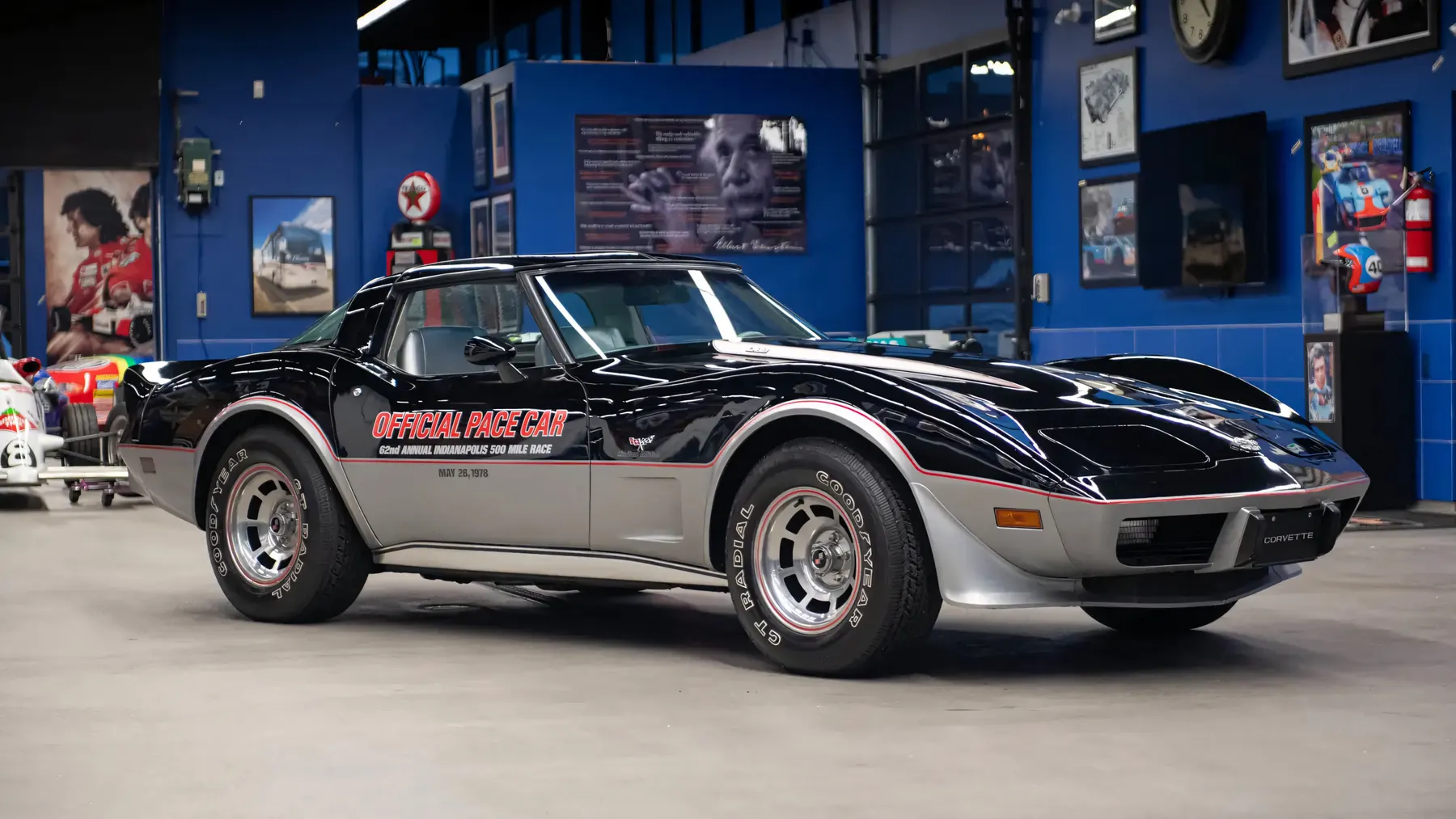
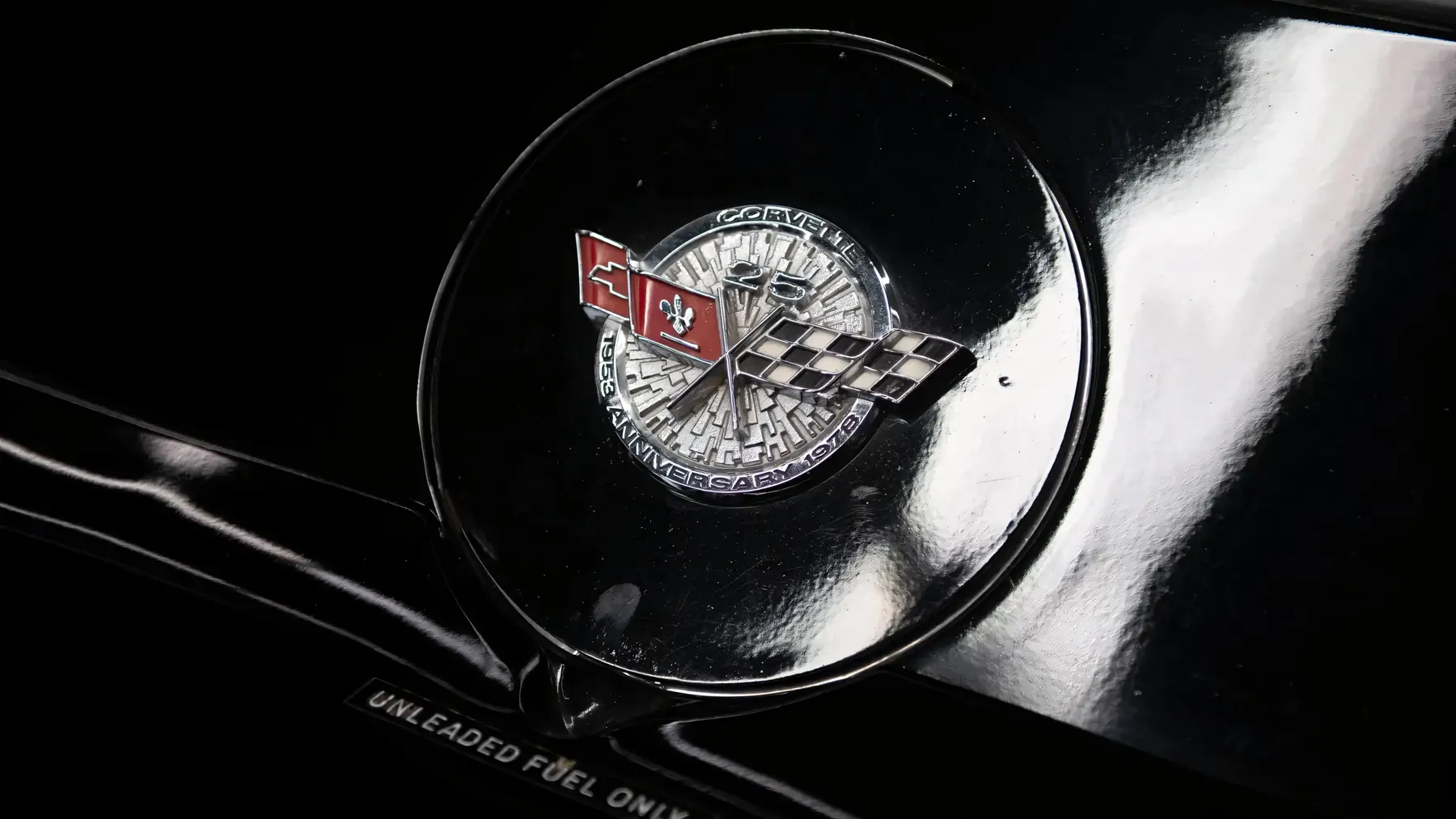
The 1978 Chevrolet Corvette Indianapolis 500 Pace Car Edition stands as one of the most significant milestones in American automotive history, marking both Corvette’s quarter-century anniversary and its debut as the official pace car for the greatest spectacle in racing. This wasn’t just another special edition – it was the birth of a collecting phenomenon that would forever change how enthusiasts viewed limited-production sports cars.
Twenty-five years had passed since the first Corvette rolled off the assembly line in 1953, and General Motors wanted to celebrate this achievement in spectacular fashion. The timing couldn’t have been more perfect. The Indianapolis Motor Speedway needed a pace car for their 62nd running of the Indianapolis 500, and Chevrolet saw an opportunity to showcase their quintessential American sports car on motorsport’s biggest stage.
The decision to use the Corvette as the Indy pace car wasn’t automatic. Chevrolet had to negotiate with Indianapolis Motor Speedway officials to secure this honor. Once approved, the company initially planned a modest production run of just 2,500 replica pace cars – symbolically representing 100 cars for each year of Corvette production. However, reality quickly intervened when Chevrolet’s network of 6,502 dealers demanded their own showroom display model, fundamentally changing the scope of this special edition.
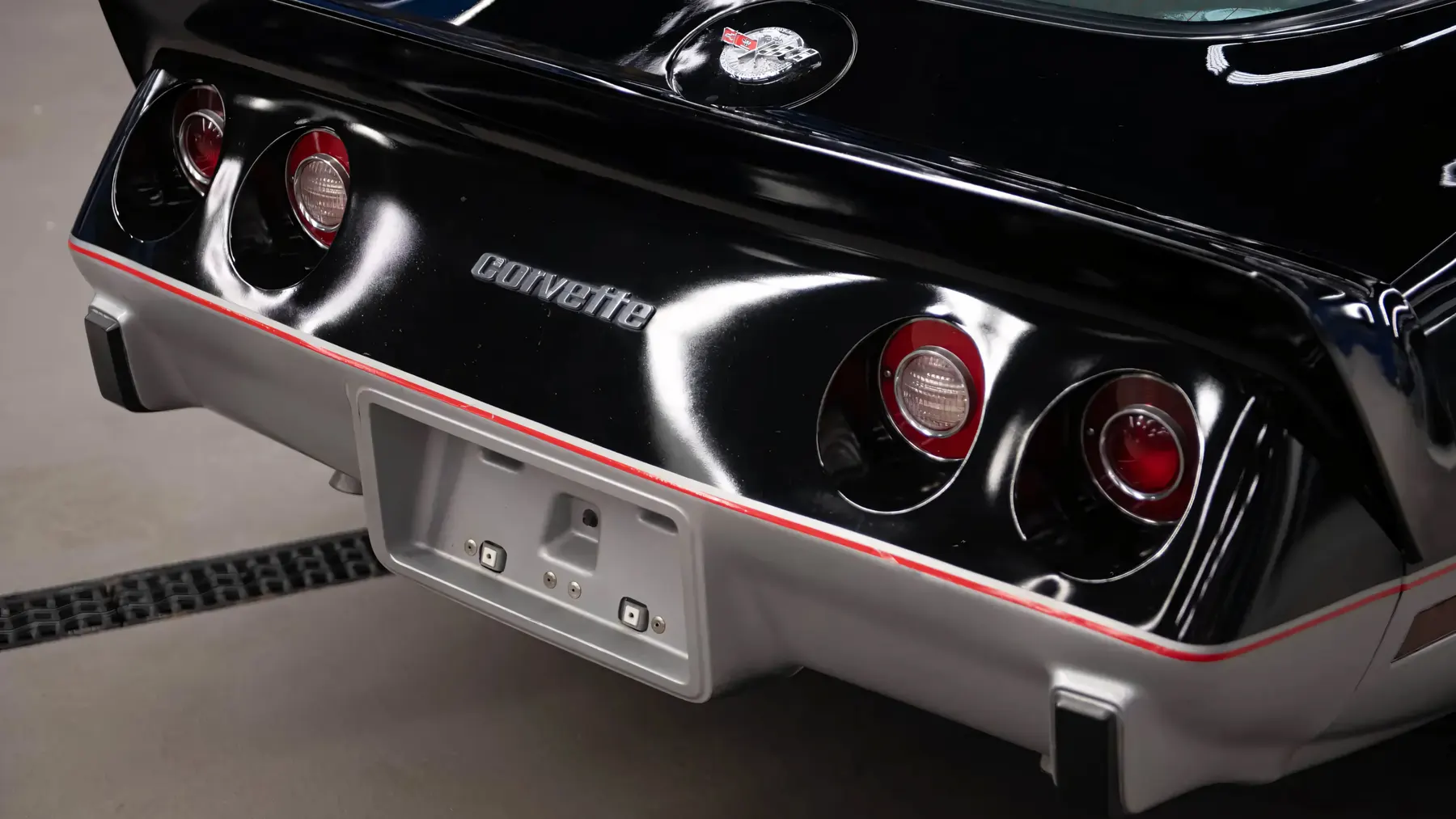
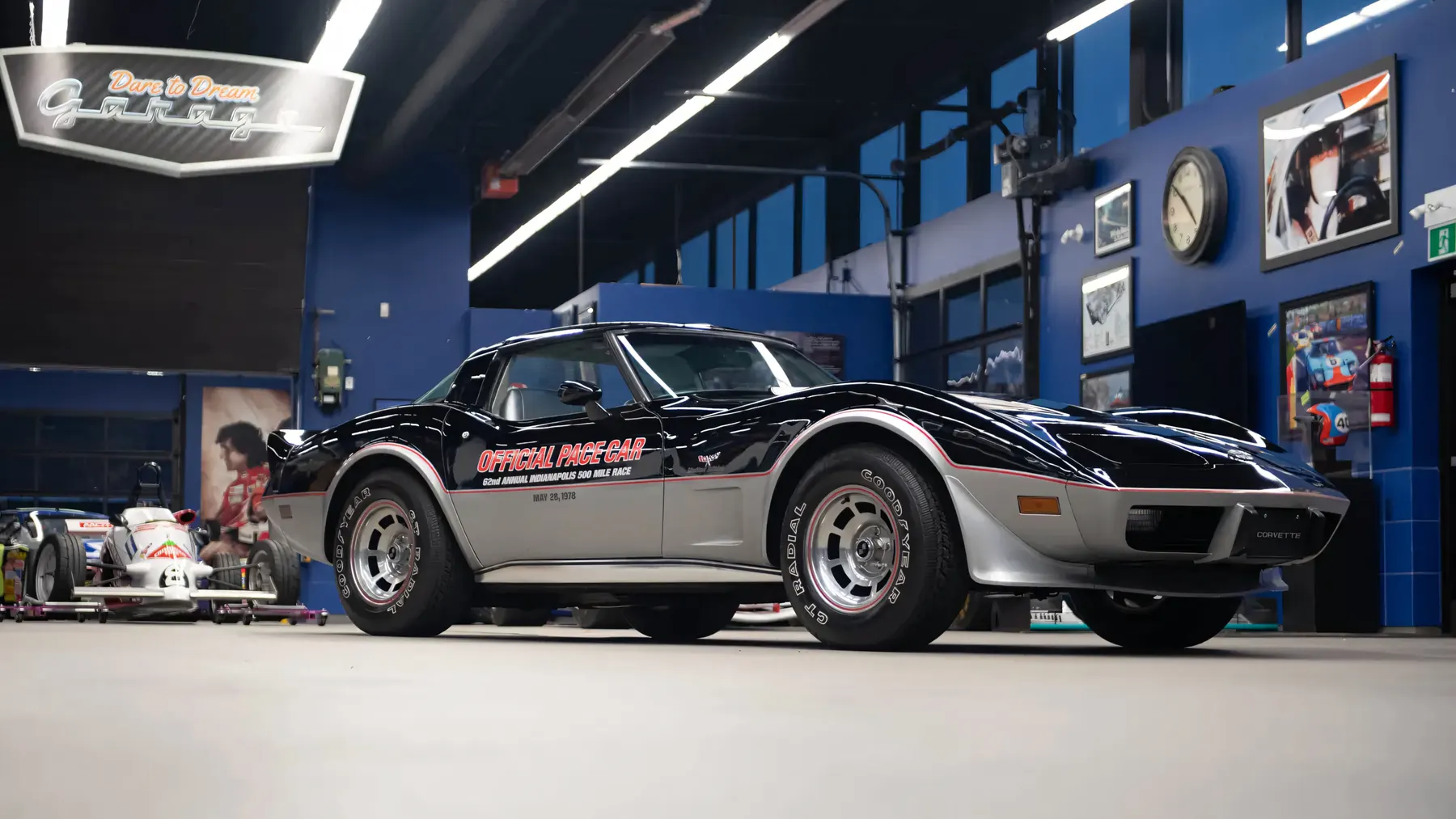
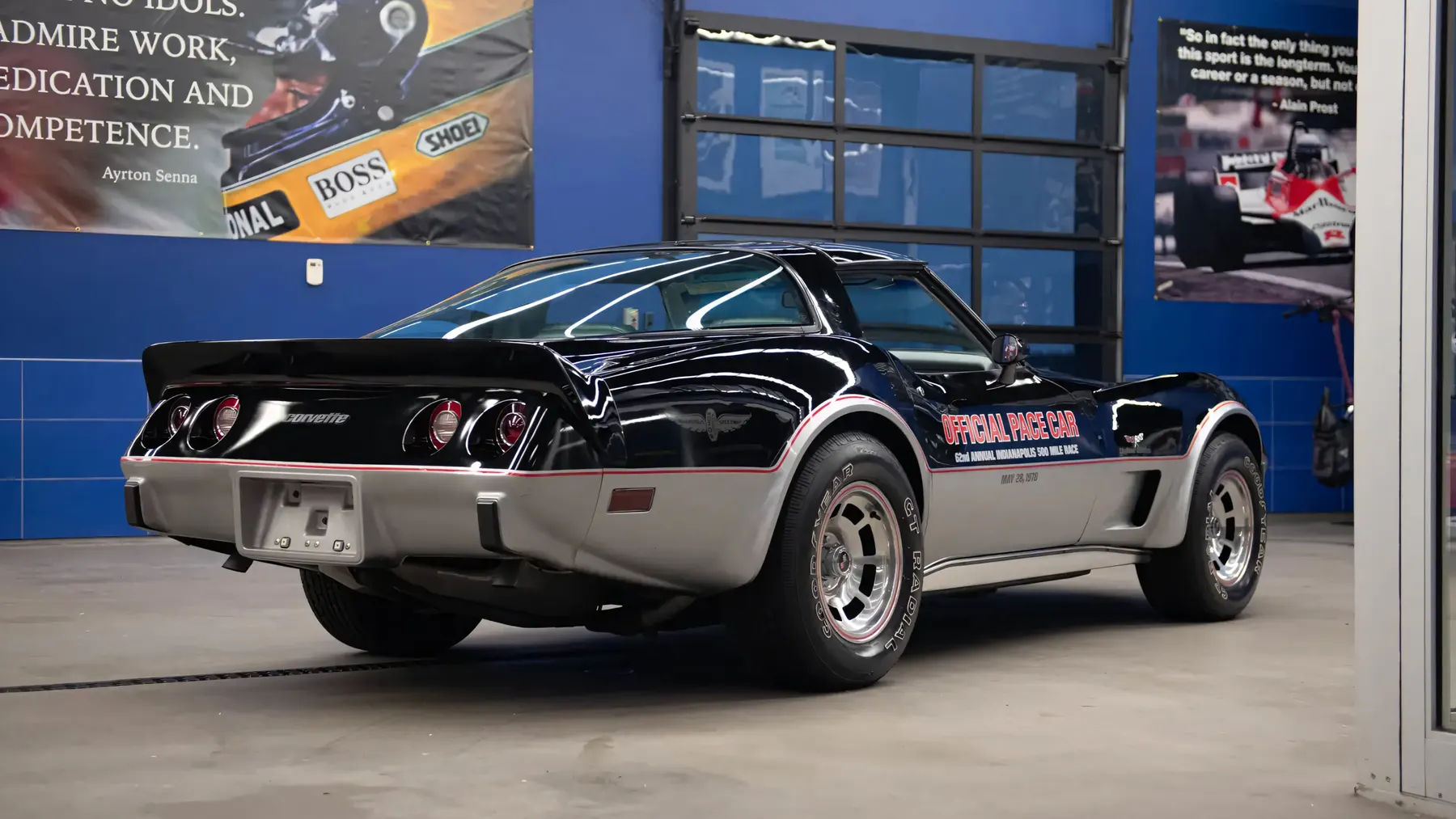
The aesthetic appeal of the 1978 Pace Car Edition was undeniable. Its distinctive black-over-silver metallic two-tone paint scheme, separated by a brilliant red pinstripe, created a visual drama that had never been seen on a production Corvette. This wasn’t merely a cosmetic exercise – the design team understood that this car needed to look fast even while standing still.
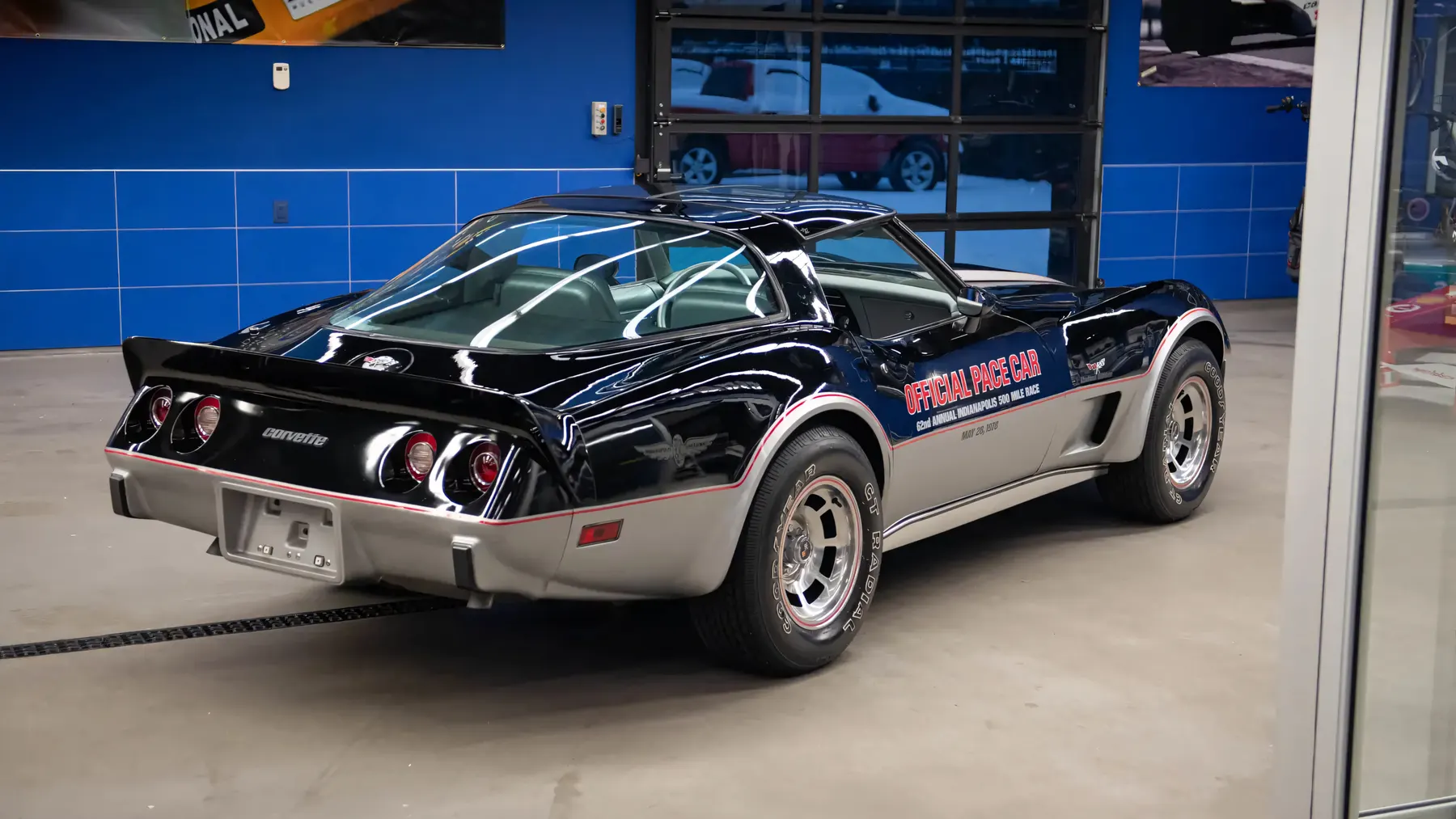
Front and rear spoilers enhanced the car’s already aggressive stance while providing functional aerodynamic benefits. The front spoiler, remarkably similar to the one used on the 1978 Pontiac Trans Am, wrapped gracefully around the nose before blending into the wheel wells. The rear spoiler featured distinctive downturned ends that merged seamlessly with the Corvette’s body sides, creating a cohesive design language that spoke of speed and sophistication.
The interior reflected the influence of legendary designer Bill Mitchell, featuring either full silver leather upholstery or a combination of silver leather with gray cloth inserts. Gray carpeting complemented this sophisticated color palette, while new thin-shell bucket seats with lumbar support provided both comfort and a racing-inspired aesthetic. The inclusion of mirrored T-tops added a premium touch that perfectly captured the late-1970s zeitgeist.
Under the sleek fiberglass body lay serious mechanical capability. The Pace Car Edition offered buyers a choice between two 5.7-liter (350 cubic inch) V8 engines. The base L48 engine produced 185 horsepower, while the optional L82 delivered a more substantial 220 horsepower at 5,200 rpm. The L82’s additional power came courtesy of an aluminum intake manifold, dual-snorkel air intake, and higher compression ratio of 8.9:1 compared to the L48’s 8.2:1.
Performance figures were impressive for the era. Road & Track magazine achieved 0-60 mph acceleration in just 6.6 seconds with an L82-equipped model, reaching a top speed of 204 km/h and completing the quarter-mile in 15.3 seconds at 153 km/h. Even the base L48 engine with automatic transmission could reach 60 mph in 7.8 seconds and achieve a top speed of 198 km/h.
Buyers could choose between a four-speed manual transmission or a three-speed automatic, though by 1978, the manual transmission was becoming increasingly rare, with less than 20 percent of Corvettes sold with three pedals.
Every Pace Car Edition came loaded with premium equipment that justified its $13,653.21 price tag – nearly $4,300 more than a base Corvette. The comprehensive package included glass T-tops, aluminum wheels, power windows, rear window defogger, air conditioning, sport mirrors, tilt-and-telescopic steering wheel, heavy-duty battery, and an AM/FM stereo with either an eight-track tape player or CB radio option.
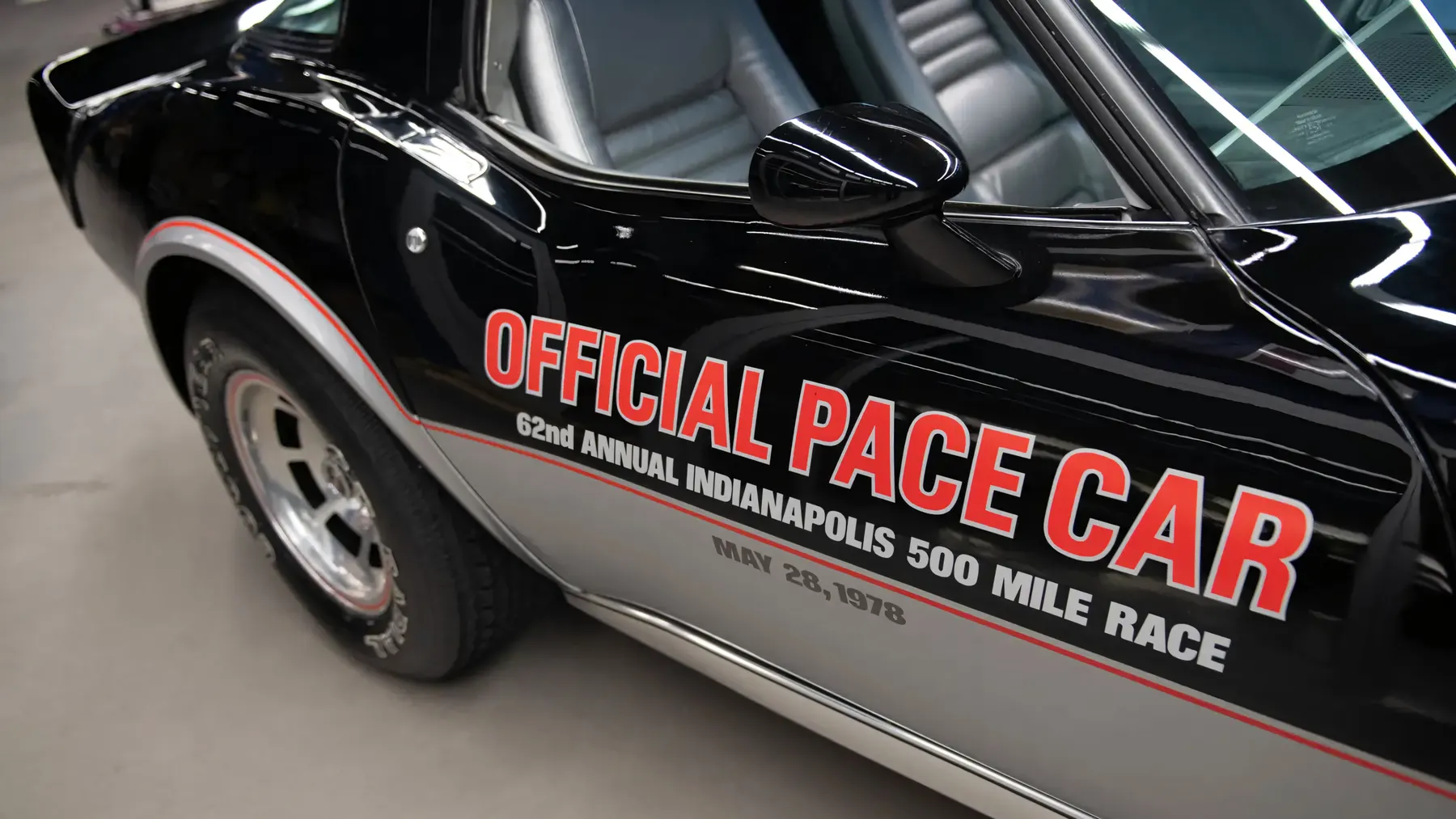
Perhaps most importantly, each car came with a complete set of “Official Pace Car, 62nd Annual Indianapolis 500 Mile Race, May 28, 1978” decals packaged separately, allowing owners to choose whether to apply the full regalia. This thoughtful decision preserved the car’s versatility while maintaining its collectible authenticity.
The 1978 Pace Car Edition created an unprecedented collecting phenomenon that caught everyone off guard. A Wall Street Journal article titled “Few Want to Drive This Car, but Many Are Eager to Buy It” fueled speculation about the car’s investment potential. Dealers began demanding markups of over $5,000, and secondary market prices quickly escalated beyond $30,000, with some reportedly reaching an astronomical $75,000.
This speculative bubble eventually burst, leaving many investors disappointed, but the Pace Car’s long-term significance endured. Today, examples in good condition typically command around $21,900, while exceptional low-mileage examples can bring significantly more. Recent auction results demonstrate the continued appeal, with the first publicly-available Pace Car selling for $57,500 and the final production car achieving $110,000.
The 1978 Corvette Pace Car Edition proved that American automotive design could create instant classics. Its combination of striking aesthetics, solid performance, and historical significance established a template for special editions that continues to influence the industry today. More than four decades later, it remains a testament to what happens when passionate engineers and designers are given the freedom to create something truly special.
**
Join the discussion
Comments
Loading comments…
Leave a comment
Share a detail, memory, or perspective. Every comment is reviewed before publication.