1985 Aston Martin V8 Vantage (Series 2)
1985 Aston Martin V8 Vantage
%20%7C%20Motor%20Archive)
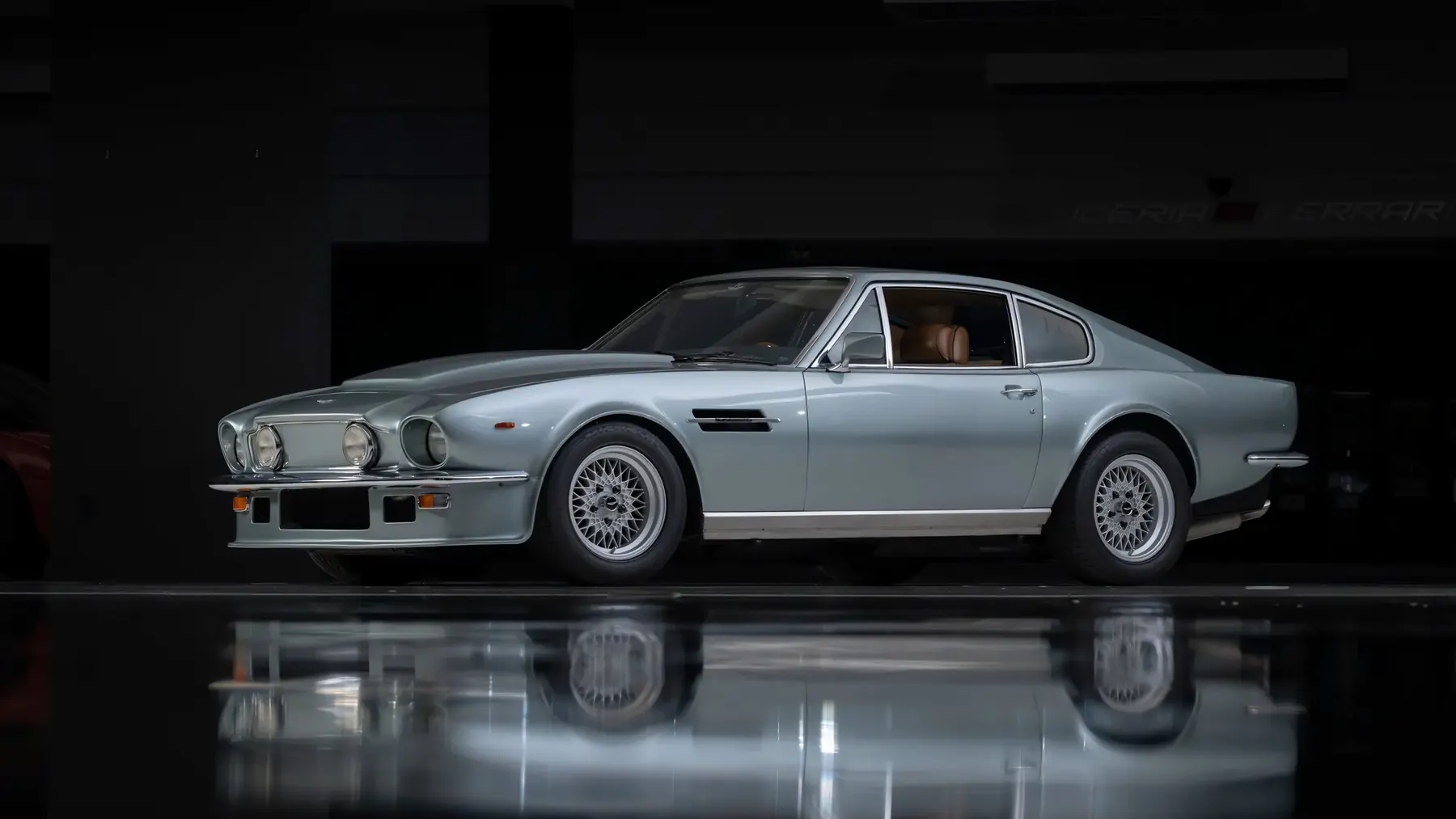
The Aston Martin V8 Vantage stands as one of the most significant grand tourers in automotive history. When unveiled on February 18, 1977, it was immediately hailed as “Britain’s First Supercar” - a title it rightfully earned with blistering performance and timeless styling. This handcrafted masterpiece would go on to become not just a flagship model for Aston Martin, but a cultural icon that continues to captivate enthusiasts decades after its production ended.
The V8 Vantage emerged as a higher-performance variant of the already impressive Aston Martin V8. At a time when Italian and German manufacturers dominated the supercar scene, Aston Martin boldly entered the arena with the Vantage - a four-seater grand tourer capable of outpacing many purpose-built sports cars of the era.
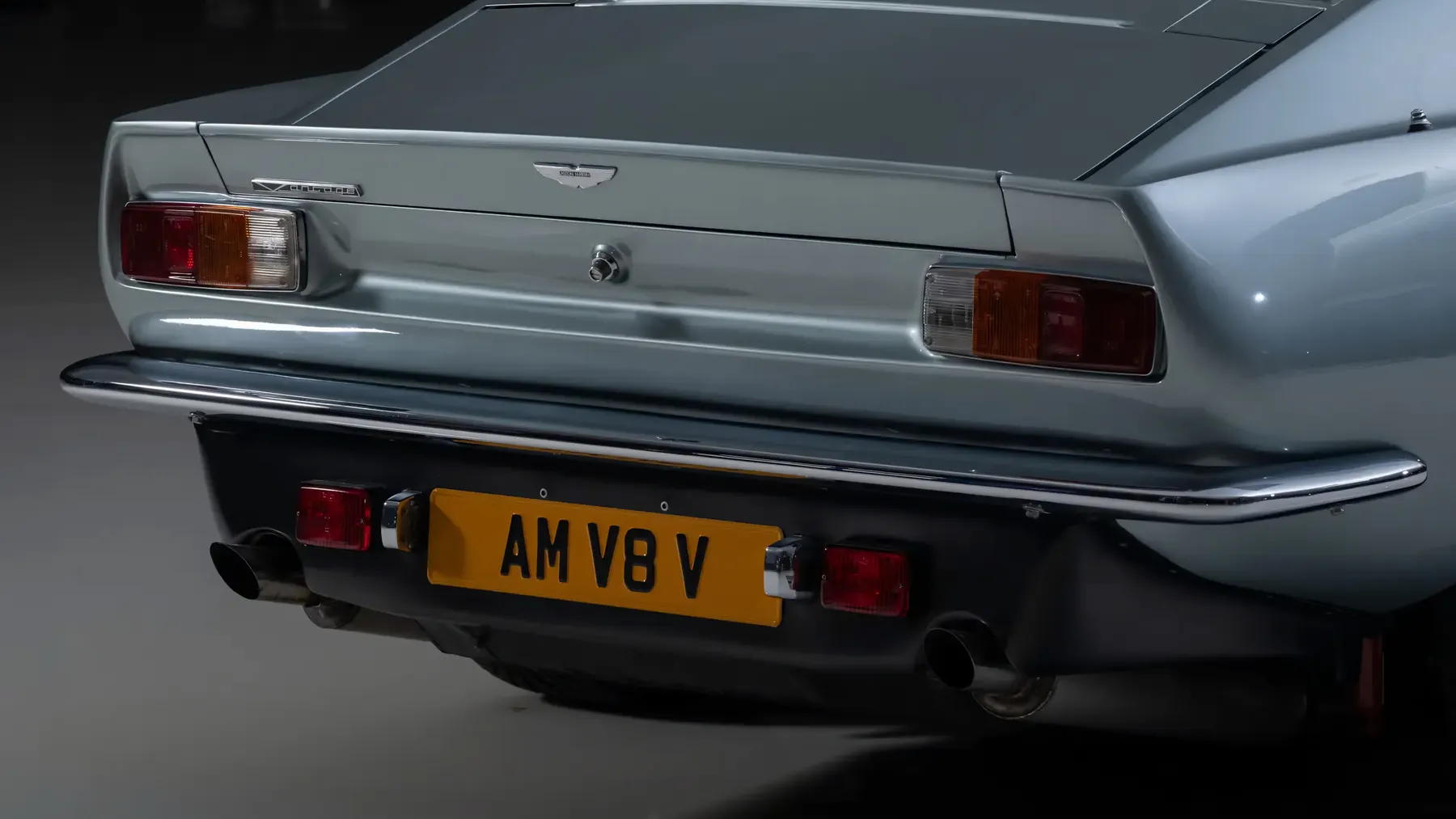
Each V8 Vantage required an astonishing 1,200 man-hours to complete, showcasing the meticulous craftsmanship that defined Aston Martin’s approach to automobile manufacturing. This hands-on production method ensured exceptional quality and allowed for a level of personalization rarely seen in mass-produced vehicles.
The original V8 Vantage featured a 5.3-liter V8 engine that produced approximately 380 bhp at 5,800 rpm and 406 lb-ft of torque at 4,500 rpm. This powerplant shared its basic architecture with the Lagonda but received significant performance upgrades, including revised camshafts, an increased compression ratio, larger inlet valves, and bigger carburetors mounted on new manifolds.
The V8 Vantage underwent several evolutionary changes throughout its 12-year production run. Late 1978 saw the introduction of the “Oscar India” (October 1) version, which featured an integrated tea-tray spoiler and smoother bonnet bulge. The interior received a more luxurious black leather-covered dashboard, though the wooden dashboard would make a comeback in the 1980s to provide a more opulent appearance.
Power output gradually increased over the years. The original 1977 model generated 380 bhp, while the Oscar India version introduced in 1978 saw a modest increase to 390 bhp. Further refinements led to models from 1986 onwards producing 403 bhp, showing Aston Martin’s commitment to continuous improvement throughout the production run.
The pinnacle of V8 Vantage development came with the 1986-1989 “X-Pack” models (designated V580X). These vehicles featured Cosworth pistons and Nimrod racing-type heads, producing 403 horsepower in standard form. For those seeking even more performance, Aston Martin offered a “big bore” after-market option with 50mm carburetors (instead of the standard 48mm) and a straight-through exhaust system, boosting output to 432 hp.
Throughout its production run, Aston Martin built 304 Series 2 Vantage coupés (including 131 X-Packs) and 192 Volante convertibles. Additionally, a “Cosmetic” Vantage variant was produced for the US, Swiss, and Japanese markets, featuring fuel injection instead of Weber carburetors but retaining most of the body modifications that made the Vantage visually distinctive.
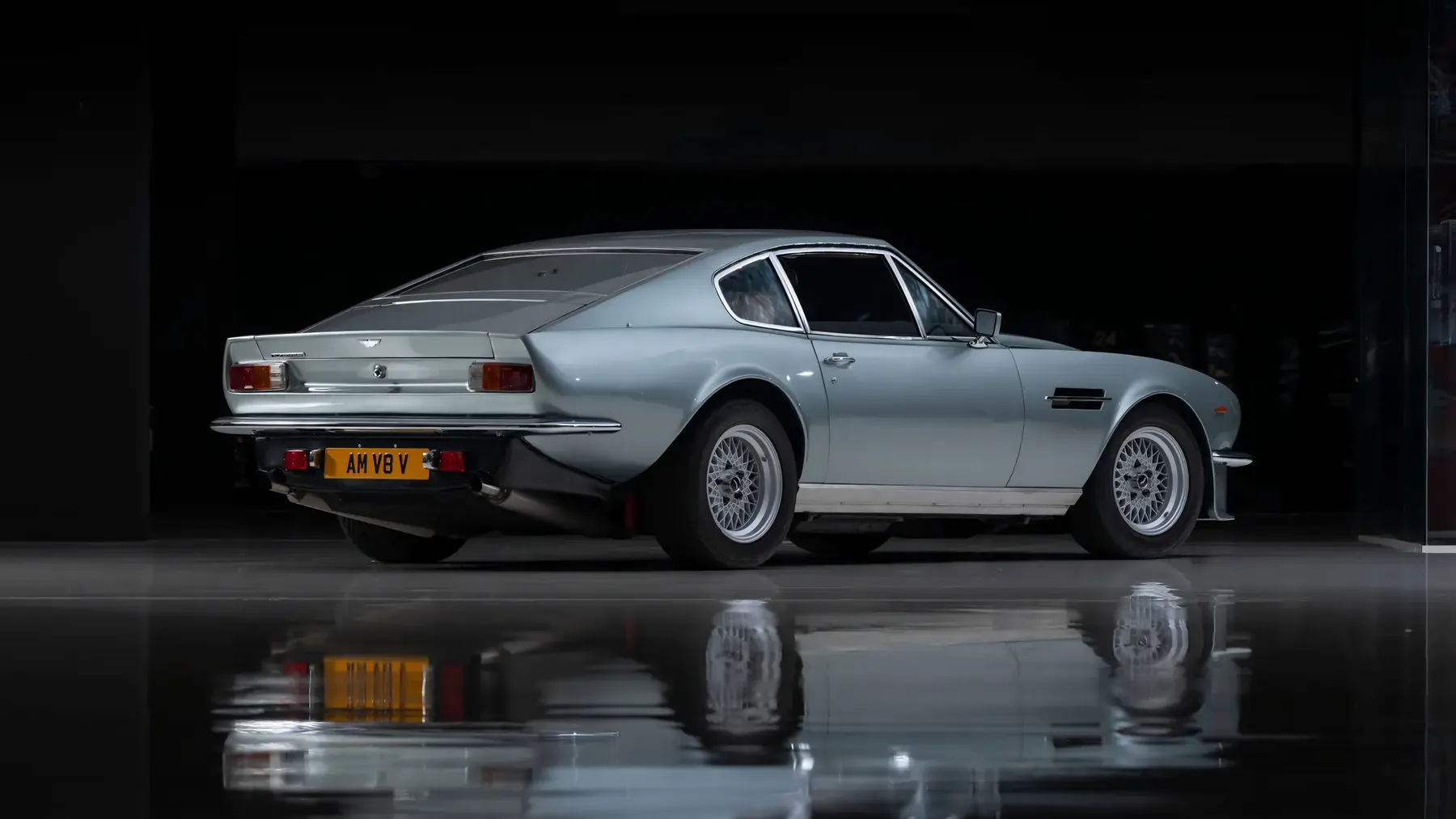
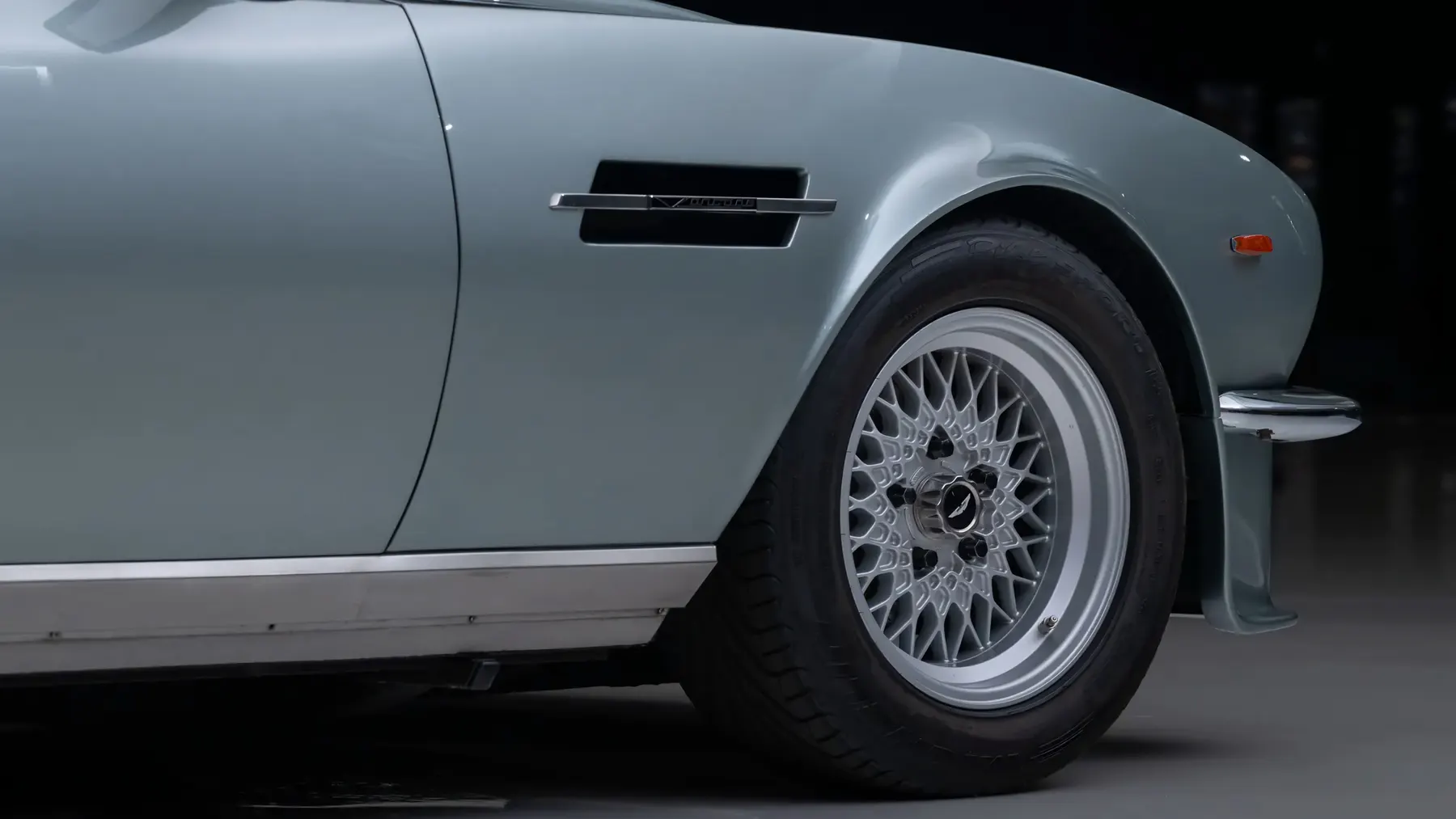
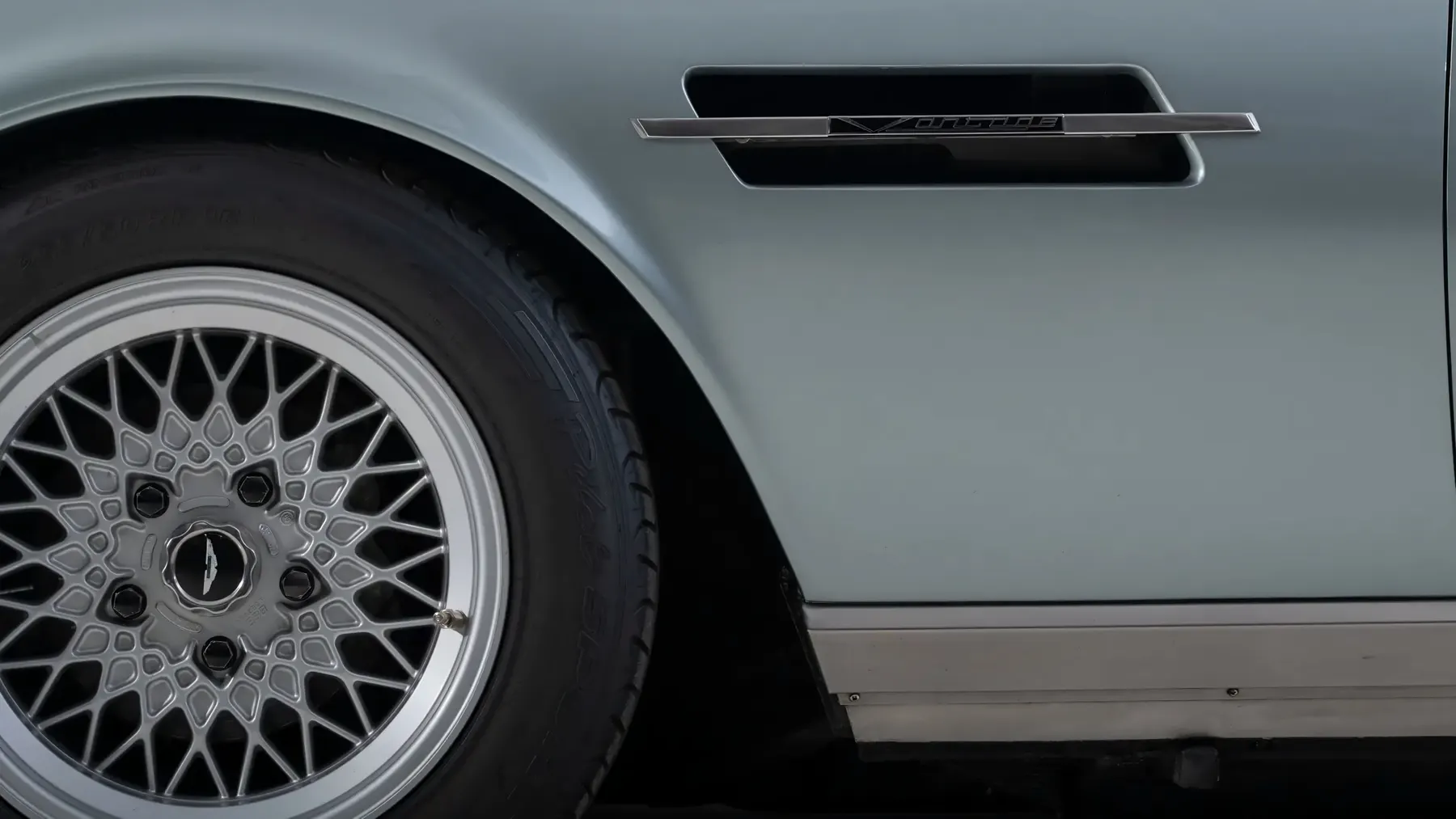
William Towns, the designer responsible for the original Aston Martin V8, created a vehicle that perfectly balanced aggression with elegance. The Vantage featured several distinctive visual cues that set it apart from the standard V8, including a closed-off hood bulge rather than the open scoop found on the normal model.
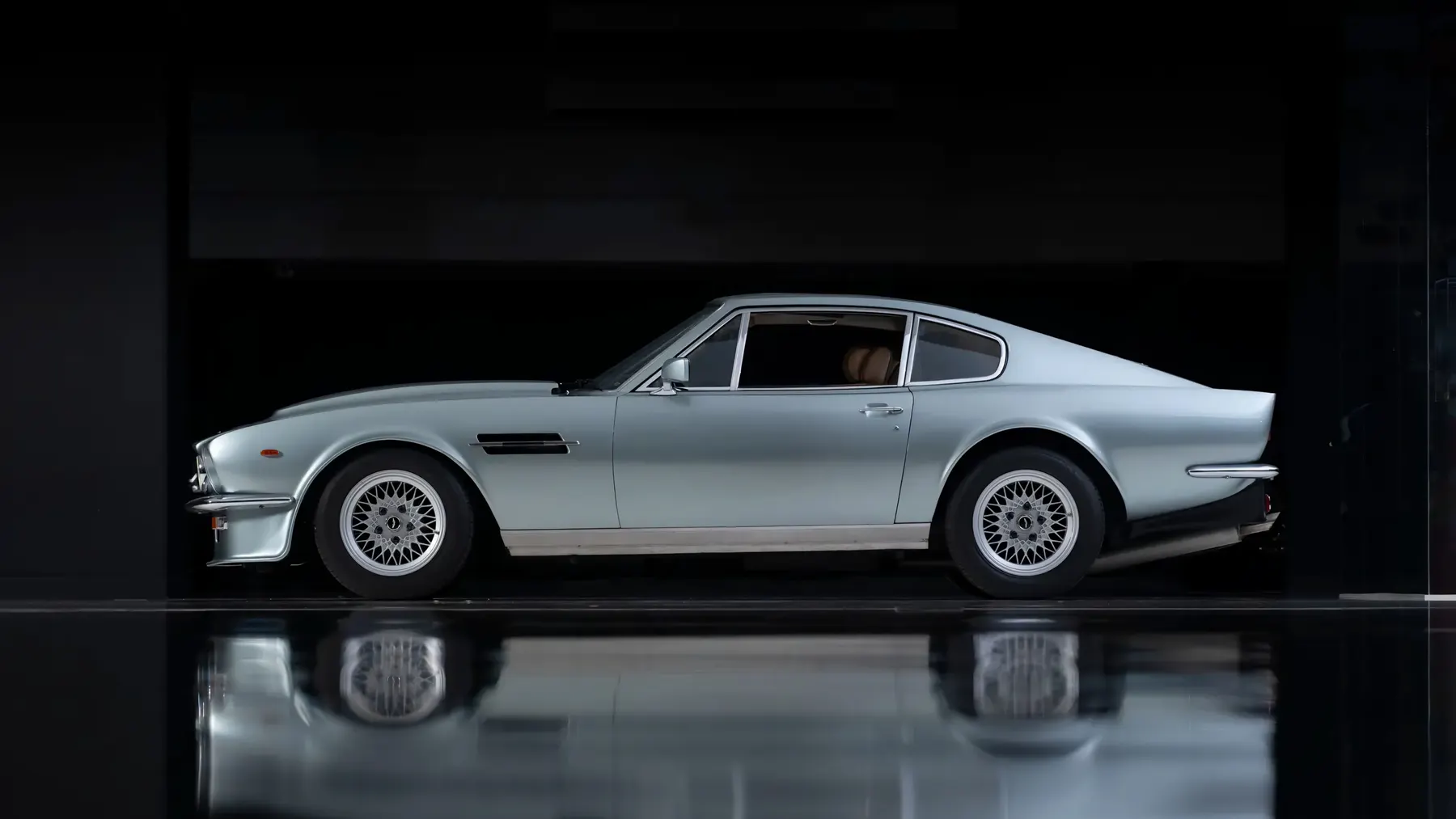
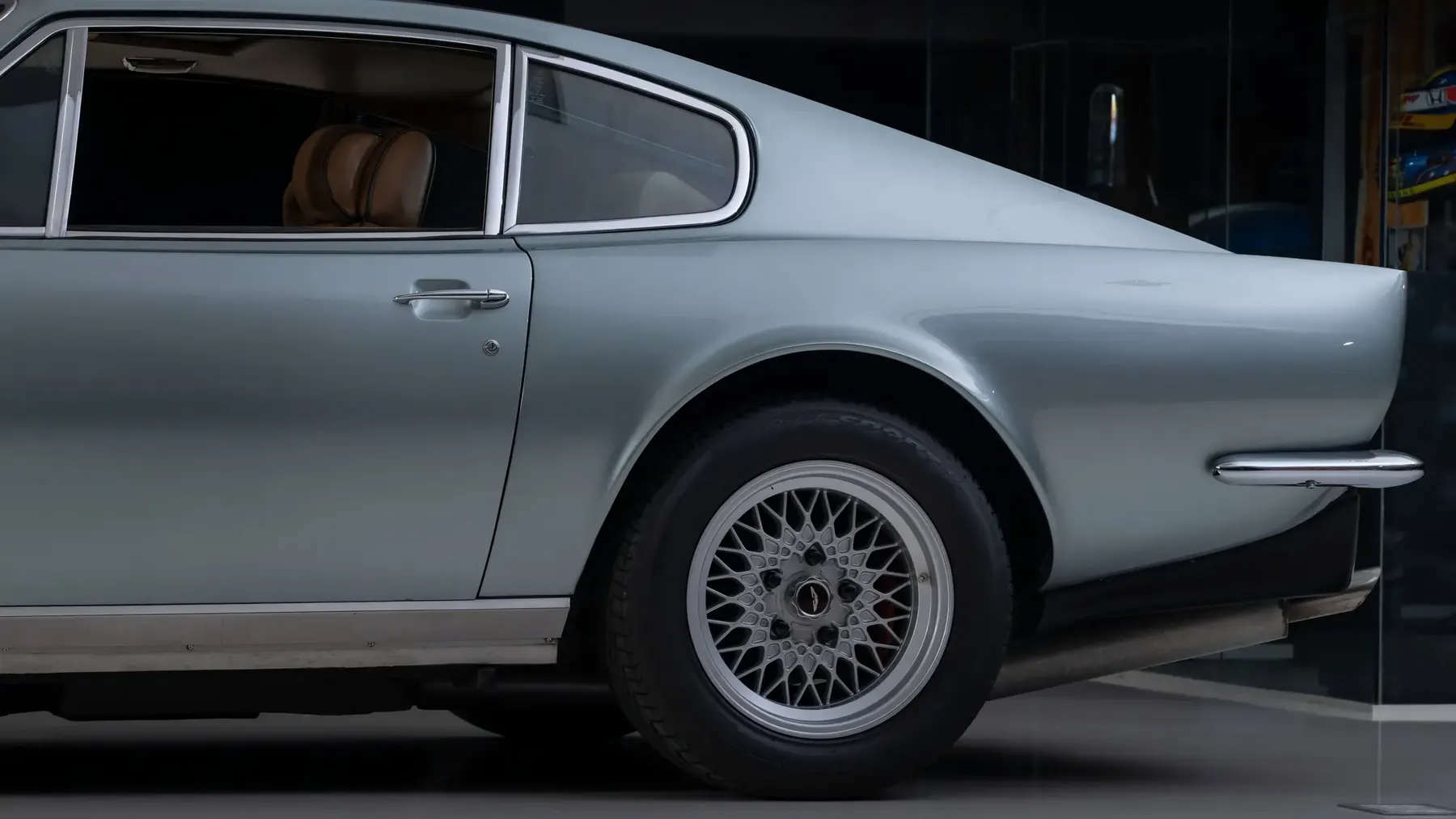
The front fascia received a closed-off grille area with twin driving lights, while a deep spoiler was fitted under the nose to improve aerodynamics at high speeds. At the rear, a purposeful spoiler was added to the bootlid, enhancing both style and stability.
The V8 Vantage’s dimensions (4,745 mm length, 1,944 mm width, 1,320 mm height) gave it a commanding presence on the road, while its 1,990 kg weight was managed through advanced suspension tuning to deliver impressive handling dynamics. The interior featured luxurious appointments befitting a flagship grand tourer, with options like a Nakamichi radio cassette stereo system and refreshment bar available for those seeking the ultimate in comfort.
When tested by Motor magazine in April 1981, the V8 Vantage recorded a 0-60 mph time of 5.2 seconds and a top speed of 168 mph (270 km/h). These figures were astonishing for the era, especially considering this was a four-seater grand tourer rather than a stripped-down sports car.
The performance was so impressive that the V8 Vantage was listed in the Guinness Book of Records as the world’s fastest independently road-tested production car. With a top speed approaching 170 mph, it wasn’t just the fastest 4-seater production car in the world but also one of the fastest vehicles of any configuration.
This remarkable performance came courtesy of a powertrain that combined brute force with surprising refinement. The European-specification models featured four dual-barrel Weber carburetors feeding the 5.3-liter V8, while a ZF five-speed manual gearbox or three-speed automatic transmission delivered power to the rear wheels. Stopping power was provided by Girling brakes with front and rear ventilated discs, and the telescopic shock absorbers ensured composed handling despite the car’s substantial weight.
Perhaps no factor has done more to cement the V8 Vantage’s place in popular culture than its association with James Bond. In the 1987 film “The Living Daylights,” Timothy Dalton’s 007 drove a V8 Volante convertible that was later “winterized” with a hardtop at Q Branch.
The car featured an impressive array of fictional gadgets, including rockets, lasers, tire spikes, and self-destruct capabilities. This cinematic appearance introduced the V8 Vantage to audiences worldwide and forever linked it with the Bond franchise. The car made a triumphant return to the series in 2021’s “No Time to Die,” where Daniel Craig’s Bond drove it on the streets of London, reaffirming its iconic status.
Beyond its silver screen fame, the V8 Vantage earned respect among automotive enthusiasts for its combination of brutal performance and refined luxury. It represented the pinnacle of Aston Martin’s V8 era, combining impressive performance credentials with quintessential British craftsmanship.
During its production years, the Aston Martin V8 Vantage was a rare and exclusive automobile, with total production numbers remaining extremely low by today’s standards. However, its reputation as a true driver’s car ensured steady demand from wealthy enthusiasts who appreciated its combination of performance, luxury, and exclusivity.
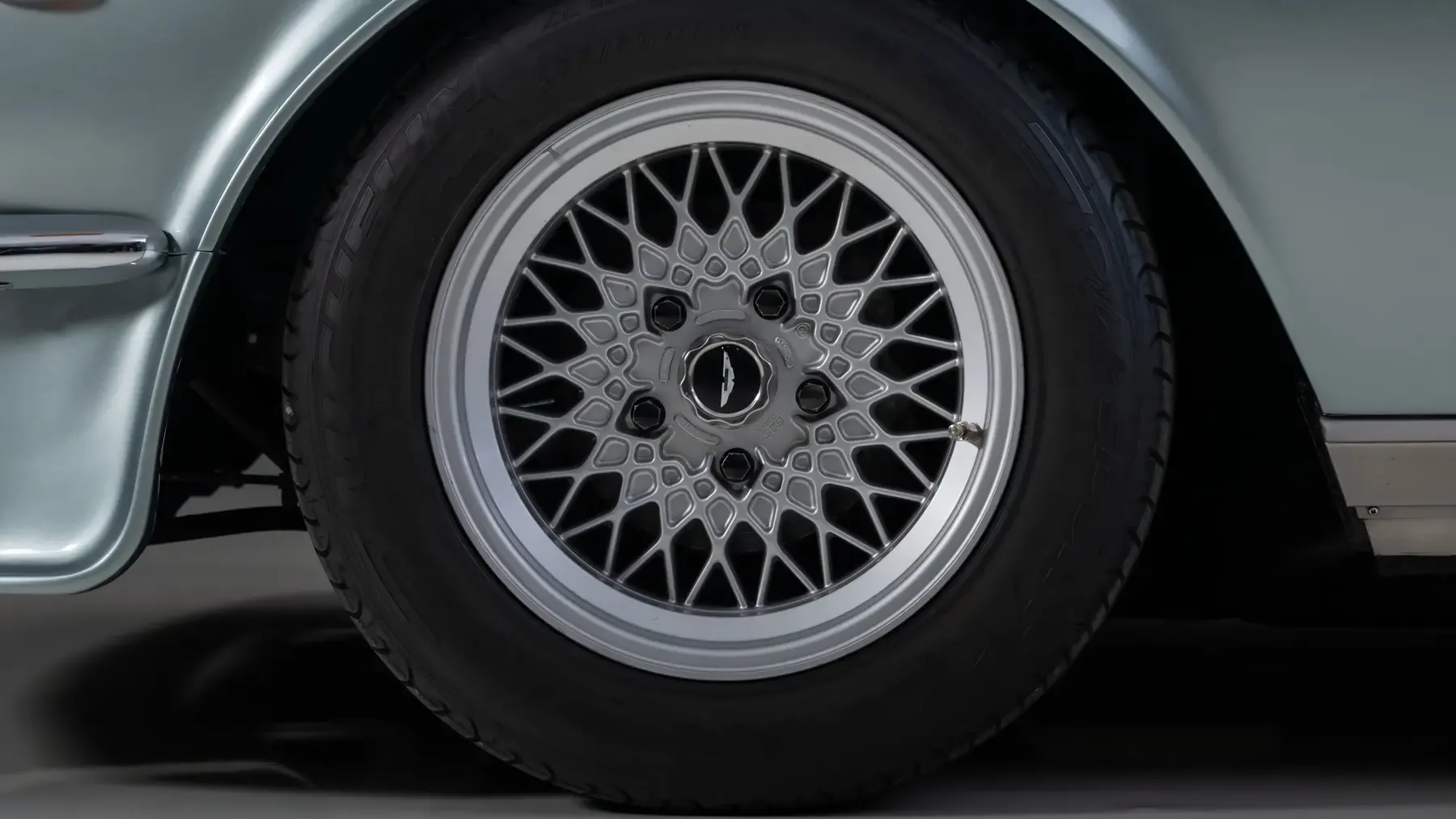
While the full-specification Vantage models were not officially imported into the United States when new, they now qualify for entry under the DOT’s ‘Show and Display’ rules in most US states. This has allowed American collectors to finally experience these remarkable vehicles.
Over the decades, the V8 Vantage has developed a strong following among collectors. Once considered a “poor man’s Aston Martin muscle car,” with some even treated as beaters, values have risen considerably as appreciation for 1980s automobiles has grown. The chrome-bumper V8 models became a popular first choice for classic Aston Martin ownership, combining supercar performance with iconic British styling.
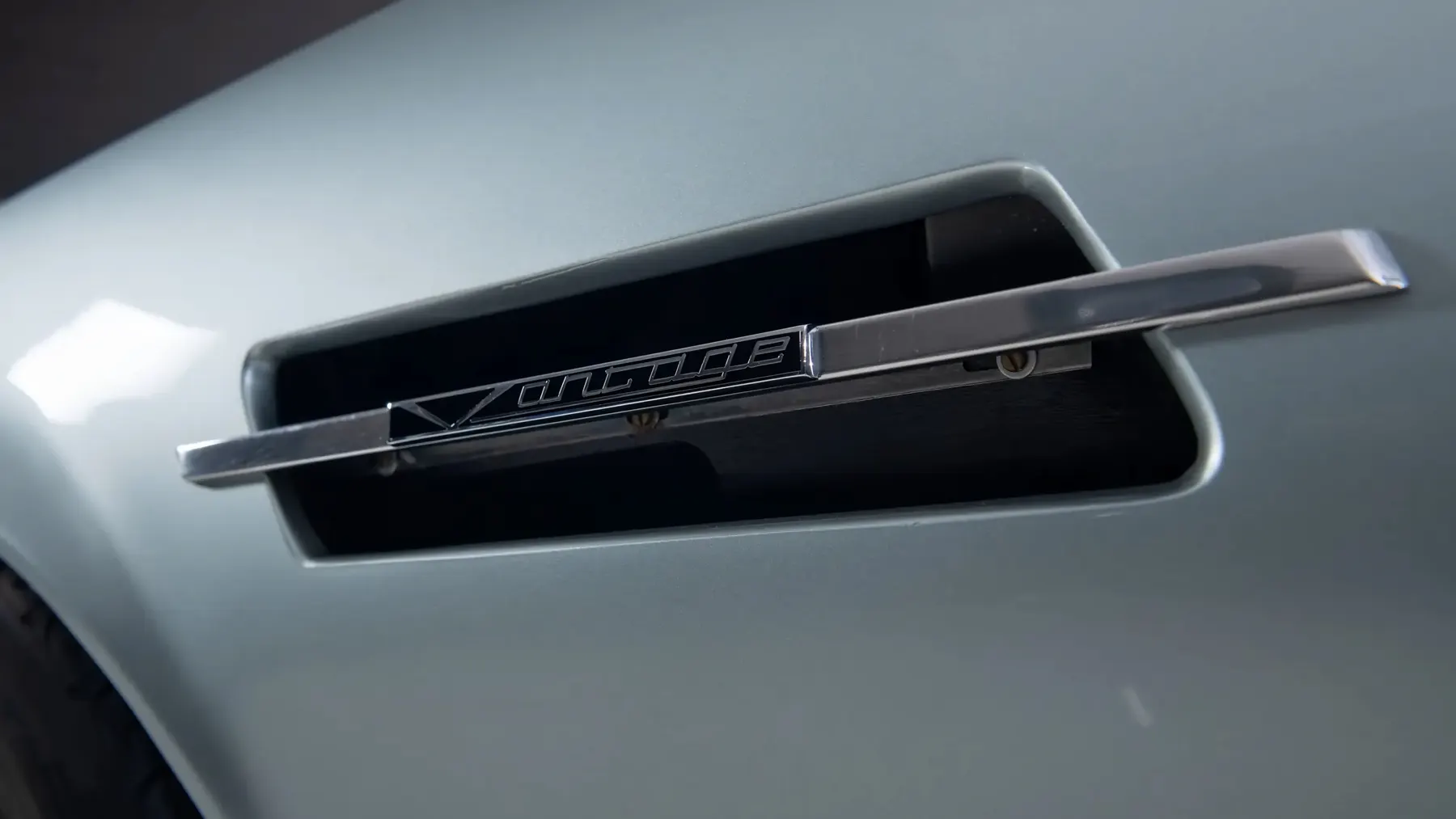
By 2025, the average price of a 1987 Aston Martin V8 Vantage has surpassed the car’s original six-figure MSRP, with examples in excellent condition fetching $283,000 and concours-level cars commanding over $400,000. The Vantage Volante convertibles are particularly sought after, with values approximately double those of the standard convertible models.
Production of the V8 Vantage continued until 1989, when it was finally retired in favor of the Virage. Despite the great age of its design by the late 1980s, constant development kept the V8 competitive with many contemporary supercars. The X-Pack V8 Vantage, in particular, offered performance that rivaled many late 80’s exotic cars, and demand remained strong even as the model neared the end of its production run.
The Aston Martin V8 Vantage stands as one of the most significant vehicles in the marque’s storied history. It proved that a British four-seater grand tourer could compete with, and in many cases surpass, the most celebrated sports cars of its era. With its combination of blistering performance, handcrafted luxury, and unmistakable presence, the V8 Vantage earned its place in the pantheon of automotive icons and continues to captivate enthusiasts nearly five decades after its introduction.
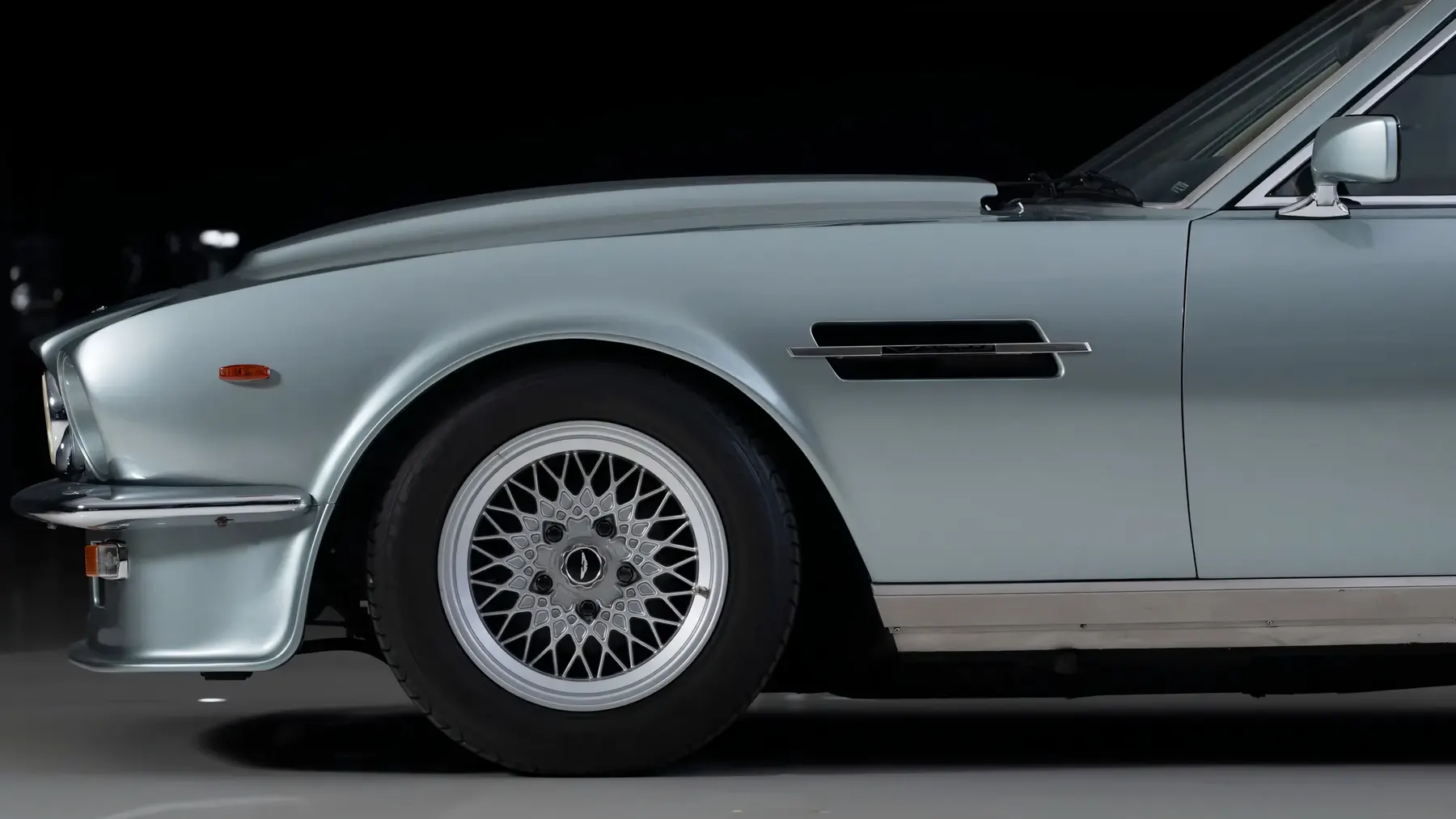
Today, this magnificent grand tourer represents not just an investment opportunity but a connection to an era when raw power, elegant design, and uncompromising luxury combined to create something truly special. The V8 Vantage remains the definitive expression of Aston Martin’s V8 era, a glorious marriage of brute force and sophisticated refinement that defined an era and continues to influence automotive design to this day.
**
Join the discussion
Comments
Loading comments…
Leave a comment
Share a detail, memory, or perspective. Every comment is reviewed before publication.