1985 Ferrari 308 GTS Quattrovalvole

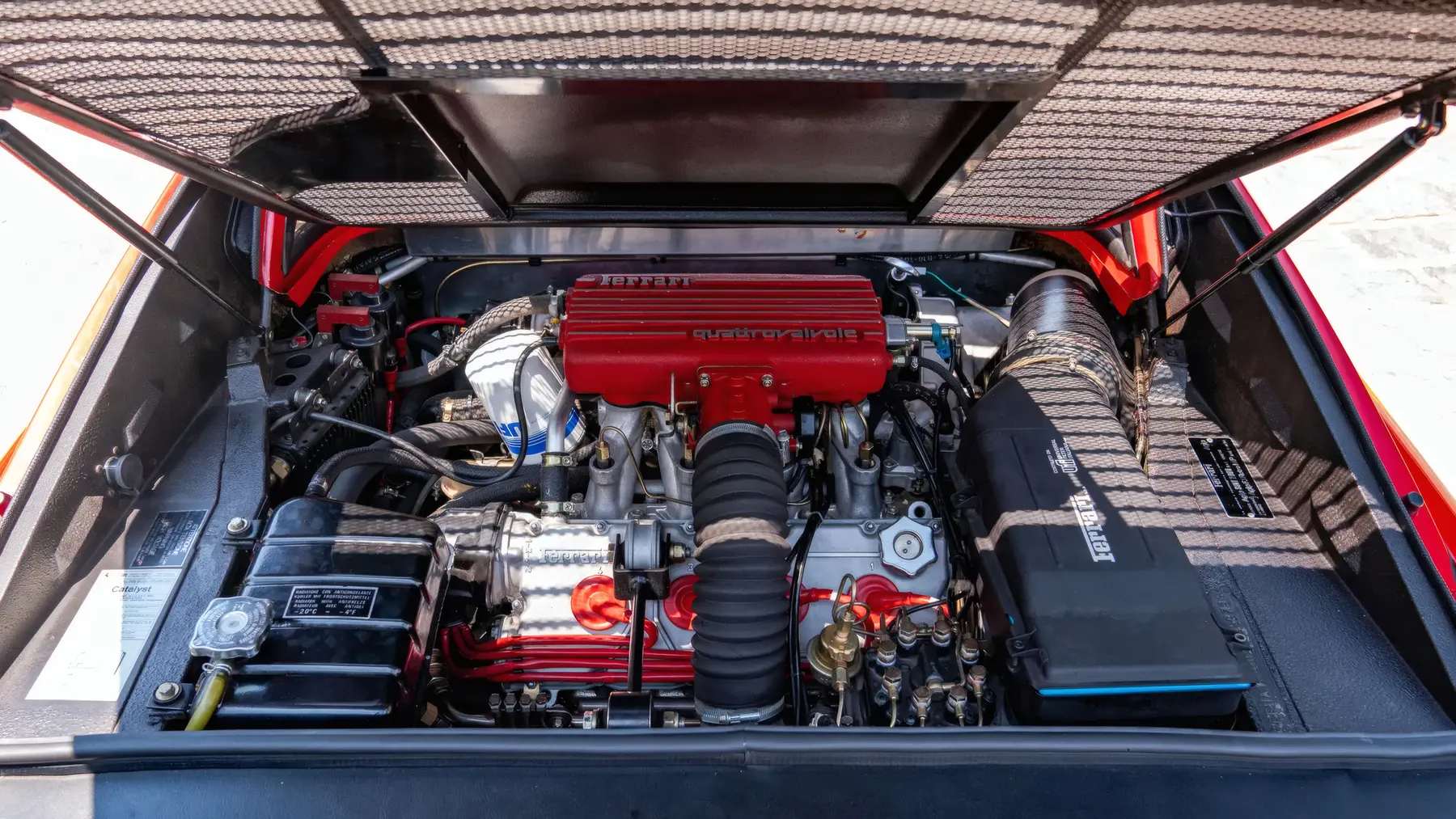
The fuel injection arrived first, in 1980, and it strangled the 308. That’s the engineering context you need to understand the Quattrovalvole: it wasn’t a clean-sheet sports car project dreamed up in isolation at Maranello. It was a rescue mission. When Ferrari bolted Bosch K-Jetronic injection onto the 308’s V8 to satisfy increasingly aggressive emissions legislation, the European power figure dropped from 255 bhp to 214 bhp, and the American version fell further still. Fuel injection brought tractability and reliability, but the carbureted car’s sense of willing, rev-hungry purpose had been quietly throttled. Ferrari’s answer, unveiled at the 1982 Paris Motor Show, was to think harder about the combustion chamber. Four valves per cylinder - quattrovalvole - changed everything that followed.
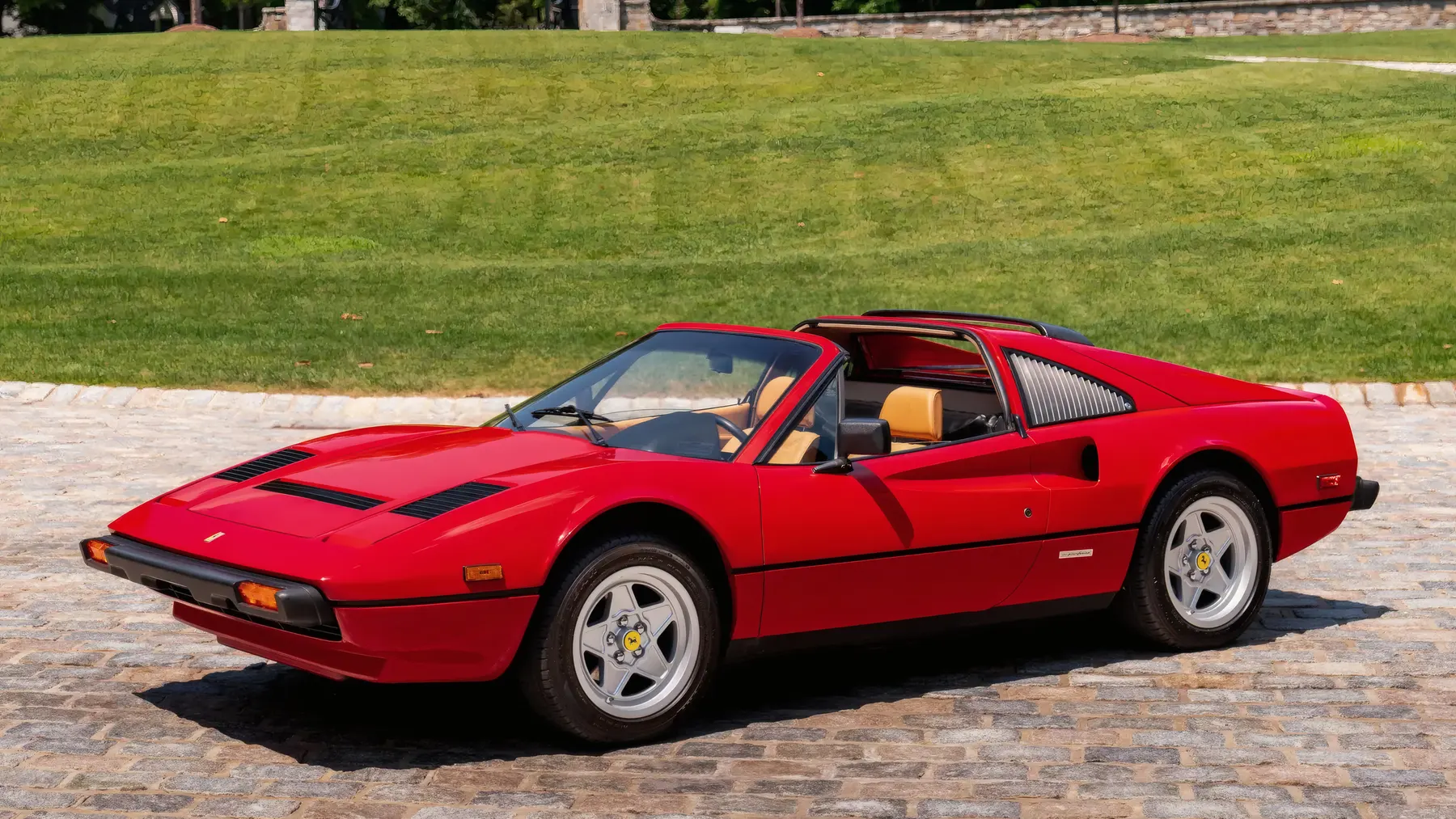
The GTS Quattrovalvole was the targa variant of this revised 308, and in many respects it was the car that completed the model’s cultural biography. The 308 had arrived in 1975 as a successor to the Dino 246 GT, carrying Pininfarina’s sharp and angular bodywork over a mid-mounted, transverse 2,926cc V8. The GTS body style, introduced in 1977 with its lift-out Targa roof panel, gave the 308 a second dimension: the ability to drop that central section of roof and transform the experience from closed cockpit to something far more theatrical. By the time the QV suffix appeared in 1982, the formula had been refined through two distinct previous iterations - the carbureted car and the GTSi - and the Quattrovalvole represented its mature, final state.
The engineering solution at the heart of the QV was precise and effective. Ferrari replaced the two-valve-per-cylinder heads with new four-valve units, retaining the existing belt-driven twin overhead camshaft arrangement but redesigning the combustion chamber geometry entirely. The bore and stroke remained unchanged at 81mm and 71mm respectively, displacement stayed at 2,926cc, and the Bosch K-Jetronic injection that had caused the power deficit was kept in place - this was not a reversion to carburettors but a genuine technical advance. Compression ratio was raised slightly to 9.2:1, and the new heads breathed far more freely at high revs than their predecessors. The result was 240 bhp at 7,000 rpm, with the redline sitting at 7,700 rpm - numbers that restored European power to near-carbureted levels while keeping the injection’s low-speed manageability intact. Maximum torque came in at around 192 lb-ft at 5,000 rpm, spread generously enough across the rev range to make the car feel strong from the moment you left a corner and began unwinding the throttle.
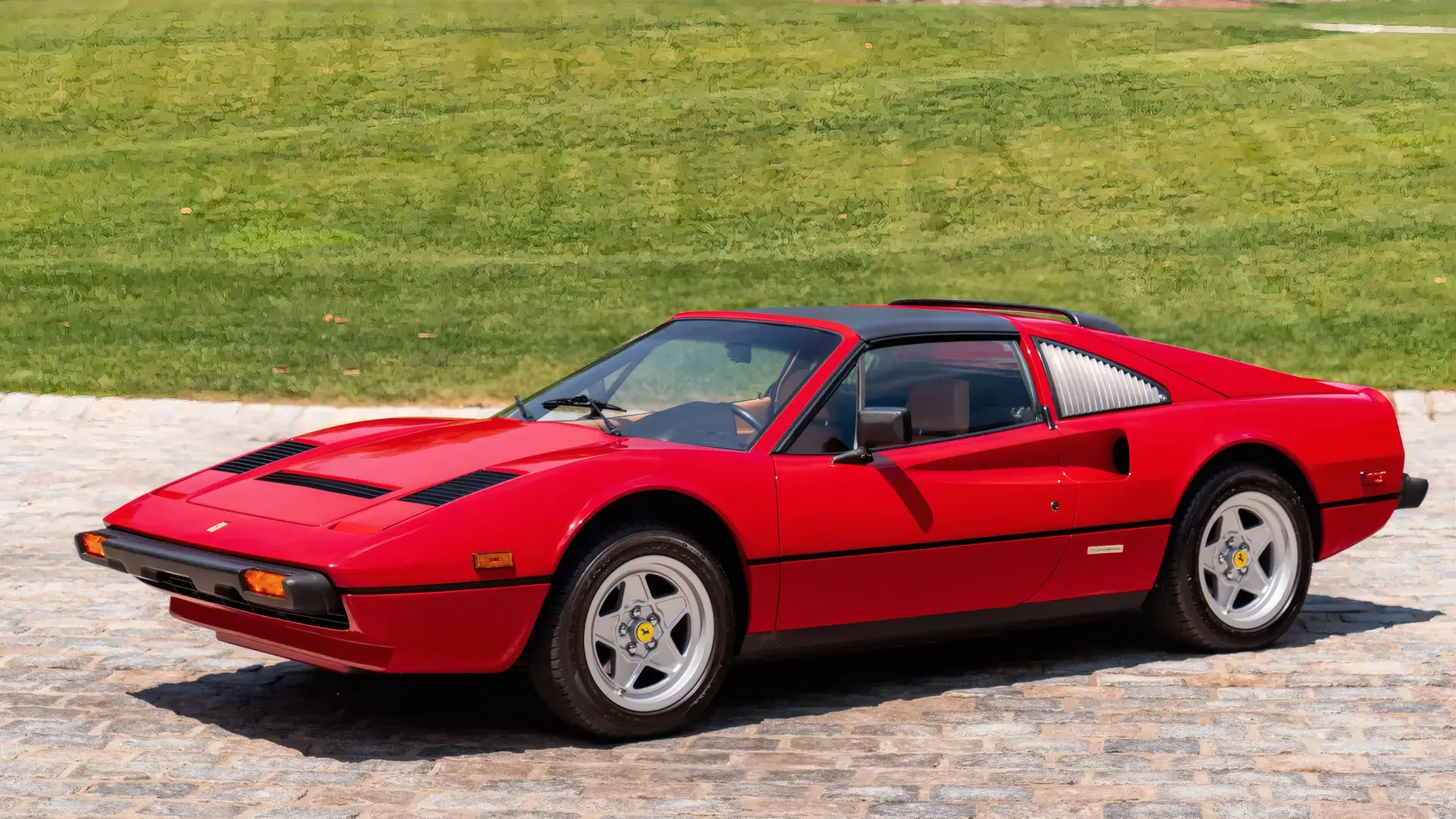
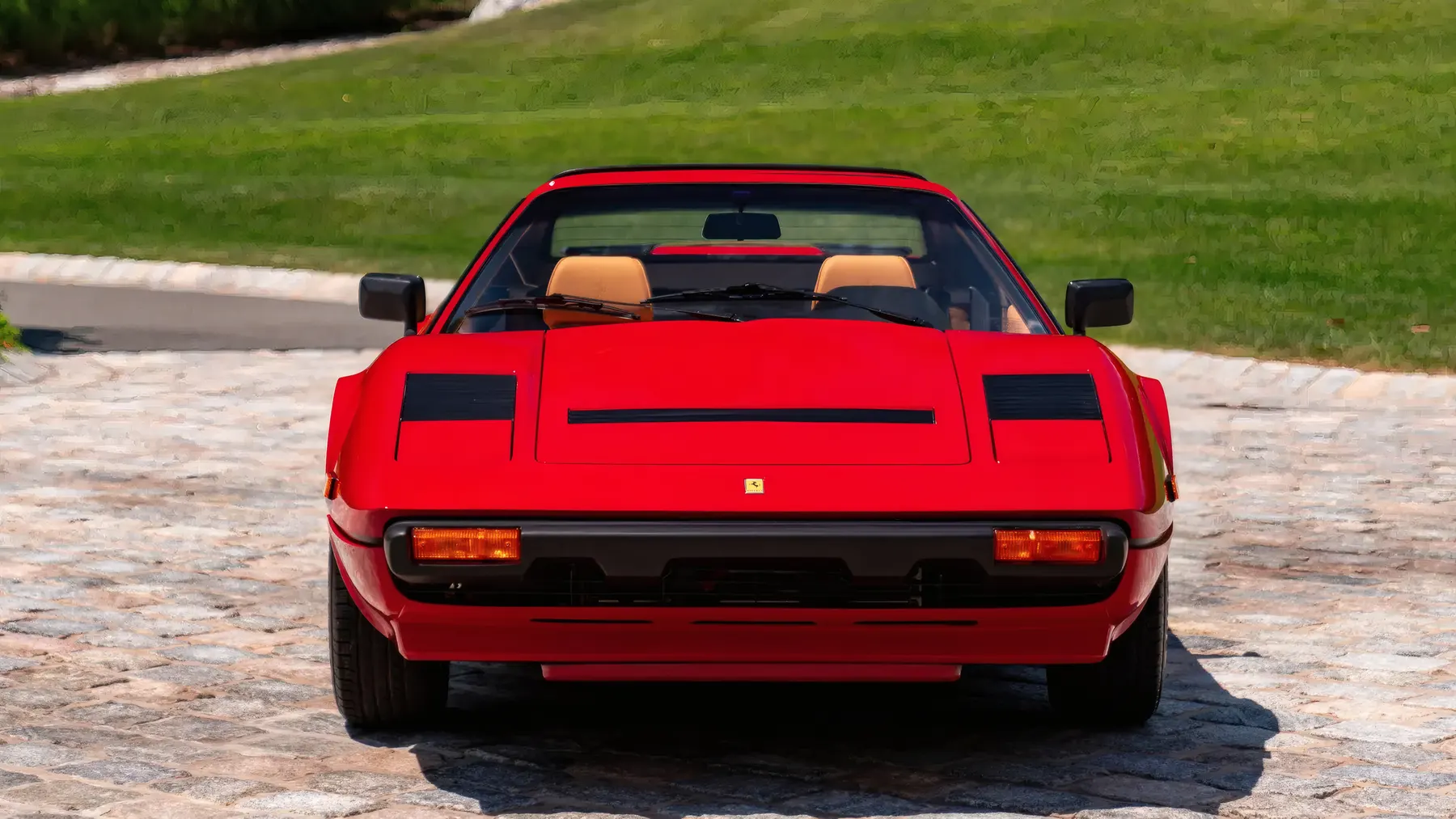
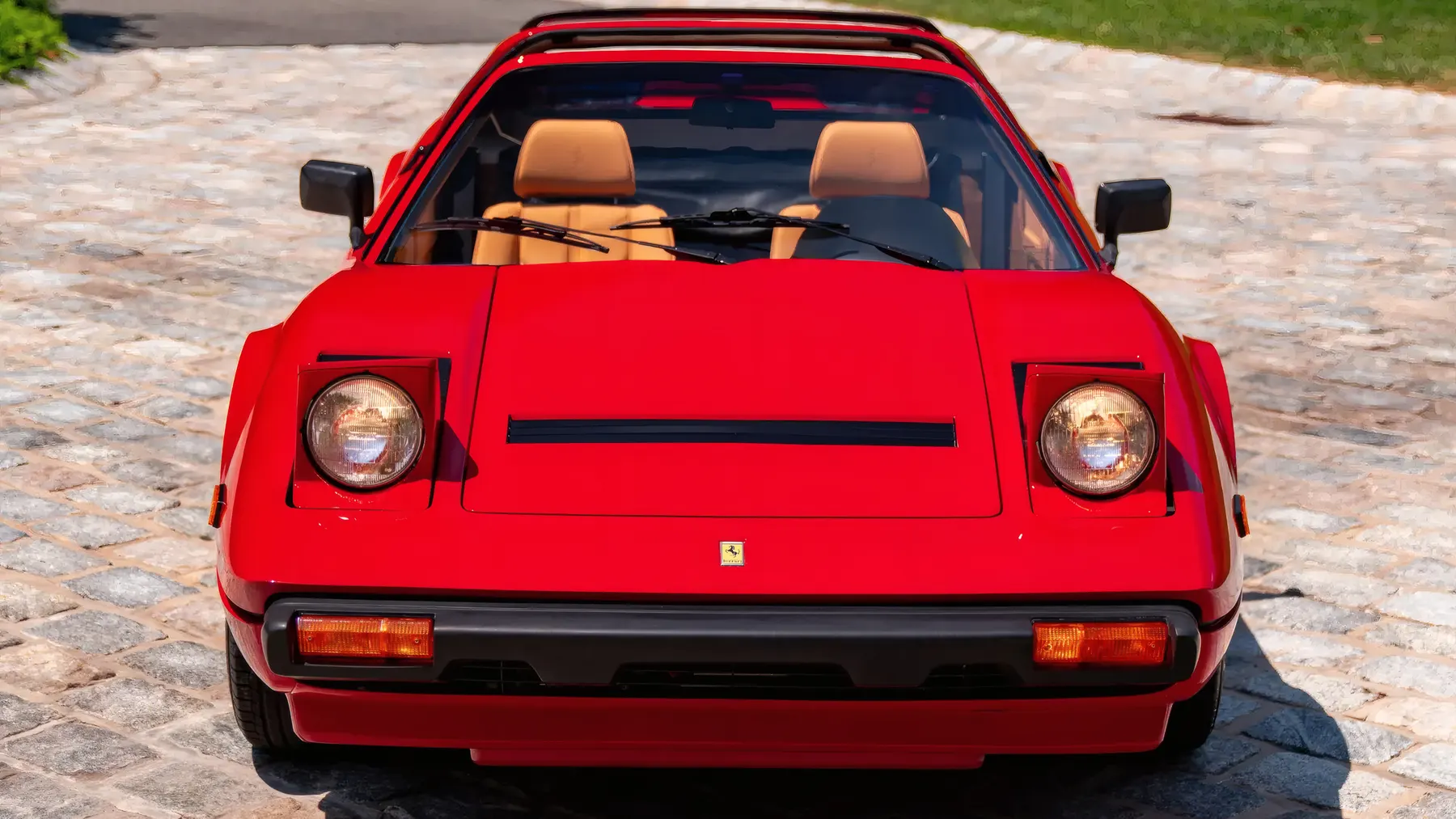
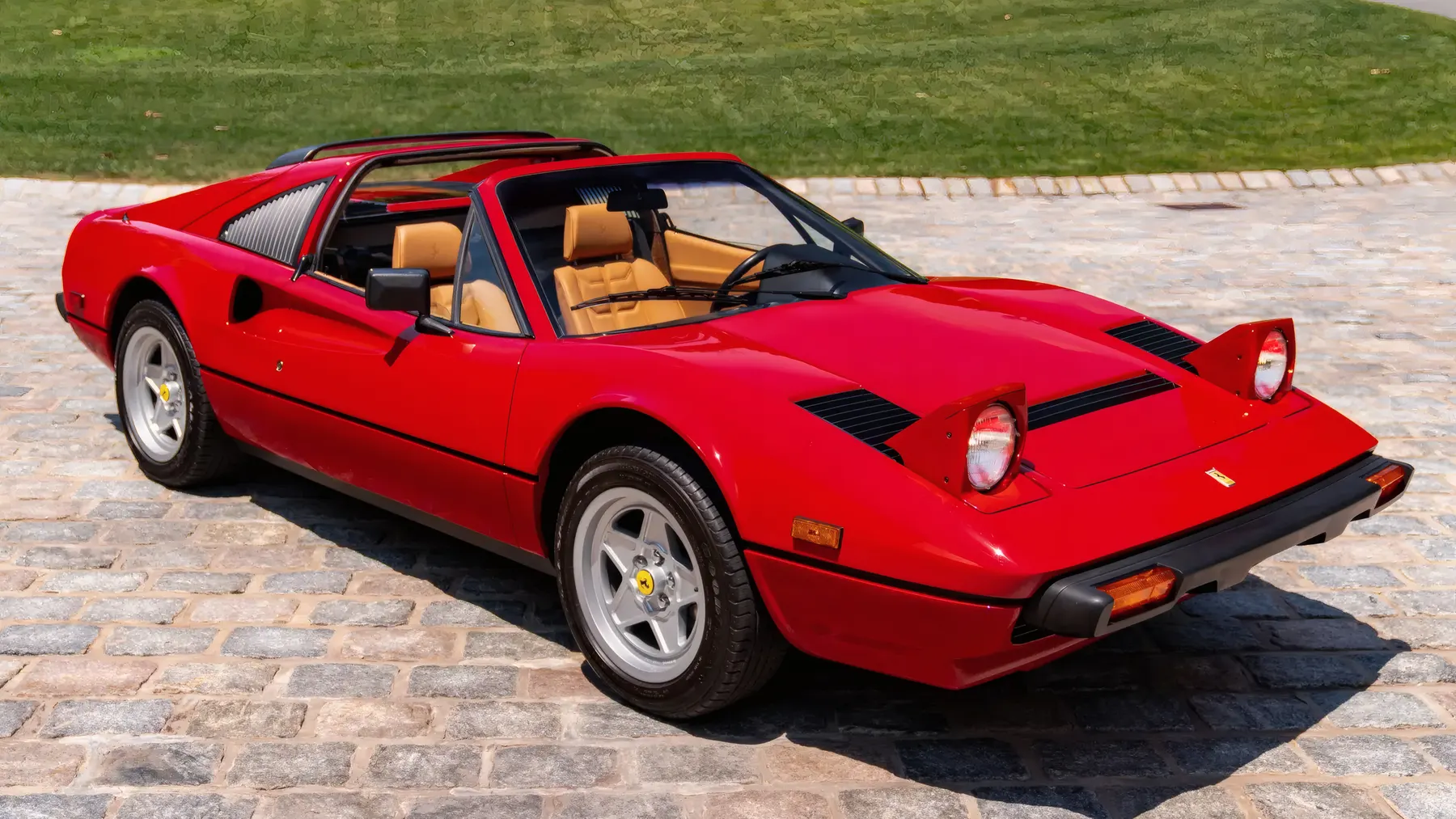
The GTS body, carrying Pininfarina’s design and built by Scaglietti, was at this point seven years old and had aged without embarrassment. The profile was low and deliberately taut, the front overhang minimal, the haunches behind the cabin just wide enough to suggest the engine’s displacement without theatrics. The removable roof section was a single fibreglass panel that stored behind the seats - a solution that was never perfectly weatherproof but gave the GTS an identity entirely separate from the closed GTB. With the roof out and the sun cooperating, the 308 GTS Quattrovalvole was one of the most visually arresting cars of the early 1980s: a mid-engine two-seater that looked genuinely exotic without the baroque excess that characterised contemporaries from Lamborghini. The pop-up headlights, the NACA ducts feeding the engine bay, the black rubber strip that wrapped the lower body - all of it was purposeful rather than decorative, which gave the design a coherence that has kept it from dating.
On the road, the QV rewarded patience and commitment in equal measure. The V8’s character was most apparent above 4,500 rpm, where the four-valve heads began their real work and the engine transformed from pleasant to genuinely insistent. Below that, it was cooperative and linear; above it, the soundtrack sharpened and the acceleration became meaningfully urgent. Kerb weight was approximately 1,250 kg - light by the standards of the era but not feathery - and the mid-engine layout with double wishbones all round gave the 308 handling responses that were fundamentally honest. The steering was quick and loaded progressively, the chassis balanced in a way that communicated its limits before reaching them, and the vented disc brakes were appropriately sized for the performance on offer. A top speed of around 152 mph placed it credibly against contemporary rivals, and the sprint to 60 mph came in approximately 6.5 seconds - brisk rather than sensational, but delivered with enough mechanical theatre to feel faster.
The five-speed gearbox deserves particular mention: its exposed open gate was a Ferrari signature that made every gearchange a deliberate mechanical event rather than an invisible transition. You could hear it, feel it, and occasionally fight it, particularly when cold. Enthusiasts considered this entirely appropriate.
Where the QV fell short was largely a function of the era and the regulations it had been designed to navigate rather than any fundamental failure of intent. American-market cars, saddled with additional emissions and safety equipment, produced around 230 bhp and carried extra weight, blunting the performance enough to matter. The wet-sump engine in export markets lacked the efficiency of the European dry-sump unit, a distinction that had existed throughout the 308’s life. The interior, by the standards of what Ferrari charged for the car, was modest in its material quality - the switchgear and dashboard presentation reflected 1970s Italian sports car pragmatism more than the lush finish buyers might have hoped for at the price. And the removable roof’s fit and finish, while charming in the way that bespoke solutions often are, was never as resolute as a factory hardtop.
The cultural weight the 308 GTS Quattrovalvole carries owes a significant debt to Thomas Magnum. The television series Magnum P.I., which ran from 1980 to 1988, became one of the most-watched shows in American television history, and its protagonist drove a red 308 GTS throughout. The Quattrovalvole variant appeared from the fourth season onward as Ferrari supplied updated examples to keep the car current - meaning the QV became the version most prominently associated with the show’s peak viewership years. The effect on public perception was enormous: the 308 went from a well-regarded enthusiast machine to a cultural shorthand for a particular kind of aspirational, sun-warmed freedom. Demand intensified, and the car’s image calcified in a way that has proved both beneficial and slightly reductive. Ask anyone outside the enthusiast world to picture a Ferrari from the early 1980s and they will describe, essentially, the GTS QV in Rosso Corsa.
The automotive press of the time was genuinely enthusiastic but clear-eyed about the limitations. Road & Track and Car and Driver tested the QV extensively and found the increase in power and engine responsiveness over the GTSi to be meaningful rather than cosmetic. European publications were similarly positive, particularly about the way the four-valve heads sharpened the car’s upper-rev character without disturbing the low-speed tractability the injection had brought. The consensus was that Ferrari had finally delivered the 308 that the fuel-injected cars had promised without quite achieving.
Production of the GTS Quattrovalvole ran from October 1982 until mid-1985, when both GTB and GTS variants were superseded by the 328 - a car that enlarged the engine to 3,185cc, updated the styling, and modernised the interior. The 328 was the better car in most measurable respects, but the 308 QV has retained a distinct following of its own, partly because its slightly rawer character and older design lineage feel more direct, and partly because the Targa variant in particular carries those irreducible Magnum associations that no successor was ever positioned to inherit.
What the 308 GTS Quattrovalvole represents in Ferrari’s history is the proof that regulatory constraint need not produce a lesser car. The Quattrovalvole’s four-valve solution was not a workaround - it was a genuine advance that left the 308 more capable than it had been with carburettors. The fact that this engineering response arrived wearing a body designed in the early 1970s, and still looked entirely right, says something important about how well Pininfarina had judged the car’s proportions from the beginning. The QV did not simply restore what had been lost; it found something the original had not quite had.
Join the discussion
Comments
Loading comments…
Leave a comment
Share a detail, memory, or perspective. Every comment is reviewed before publication.