1991 Audi V8 quattro DTM

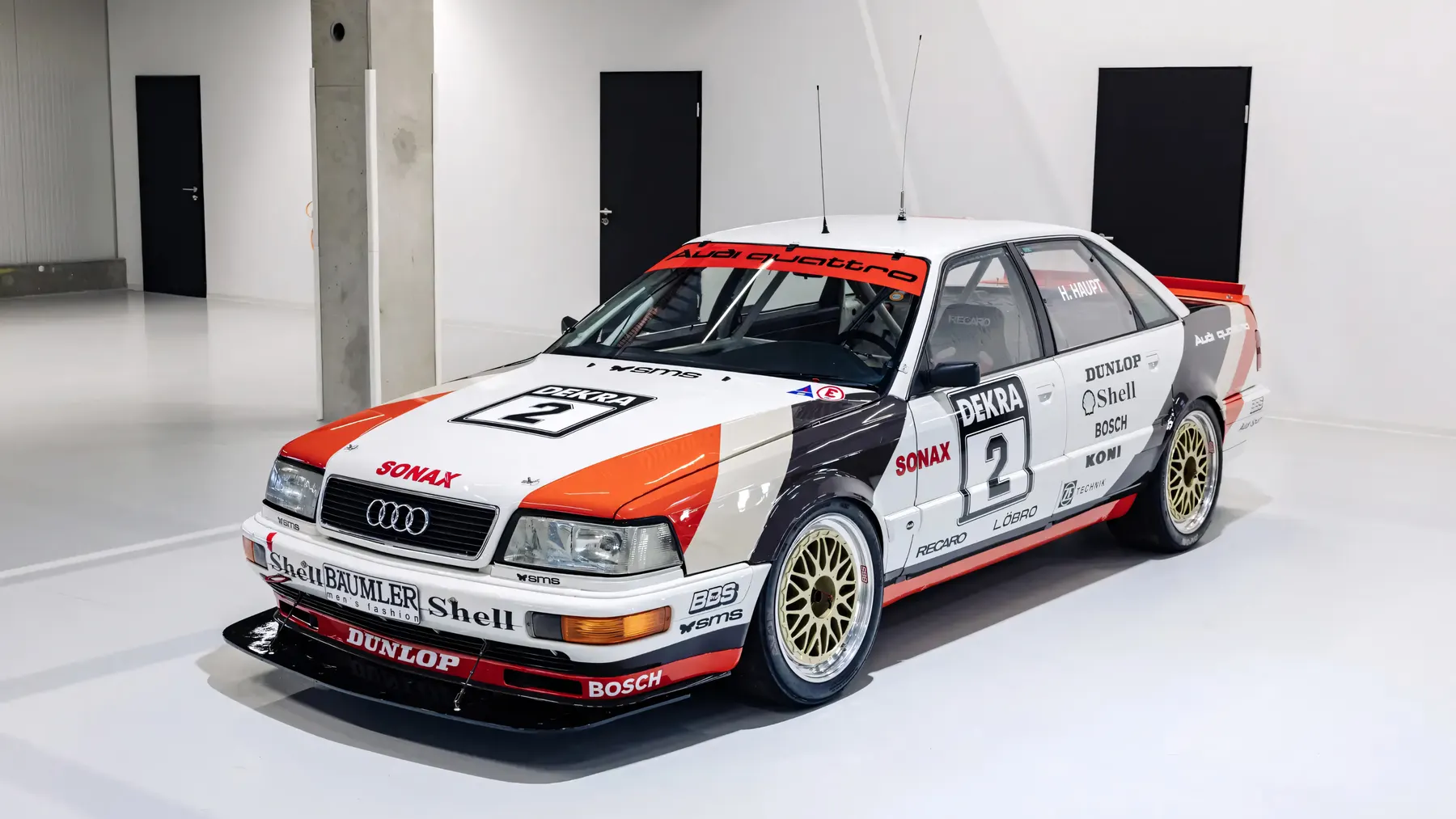
The Audi V8 quattro DTM stands as a watershed moment in motorsport history, marking Audi’s bold entry into the Deutsche Tourenwagen Meisterschaft (DTM) in the early 1990s. Built on the foundation of Audi’s first-ever V8-powered production car, this racing variant redefined expectations for touring car performance and technological sophistication.
Audi’s decision to enter DTM in 1990 came at a time when the series was dominated by lighter, smaller-displacement cars like the Mercedes 190 E and BMW M3. The German automaker leveraged its production V8 quattro,already a technological showcase with its aluminum V8 engine and permanent all-wheel-drive system,as the basis for its racing contender. Under Group A regulations, Audi transformed this luxury sedan into a competitive touring car, retaining the core quattro drivetrain while implementing radical weight reduction and performance upgrades.
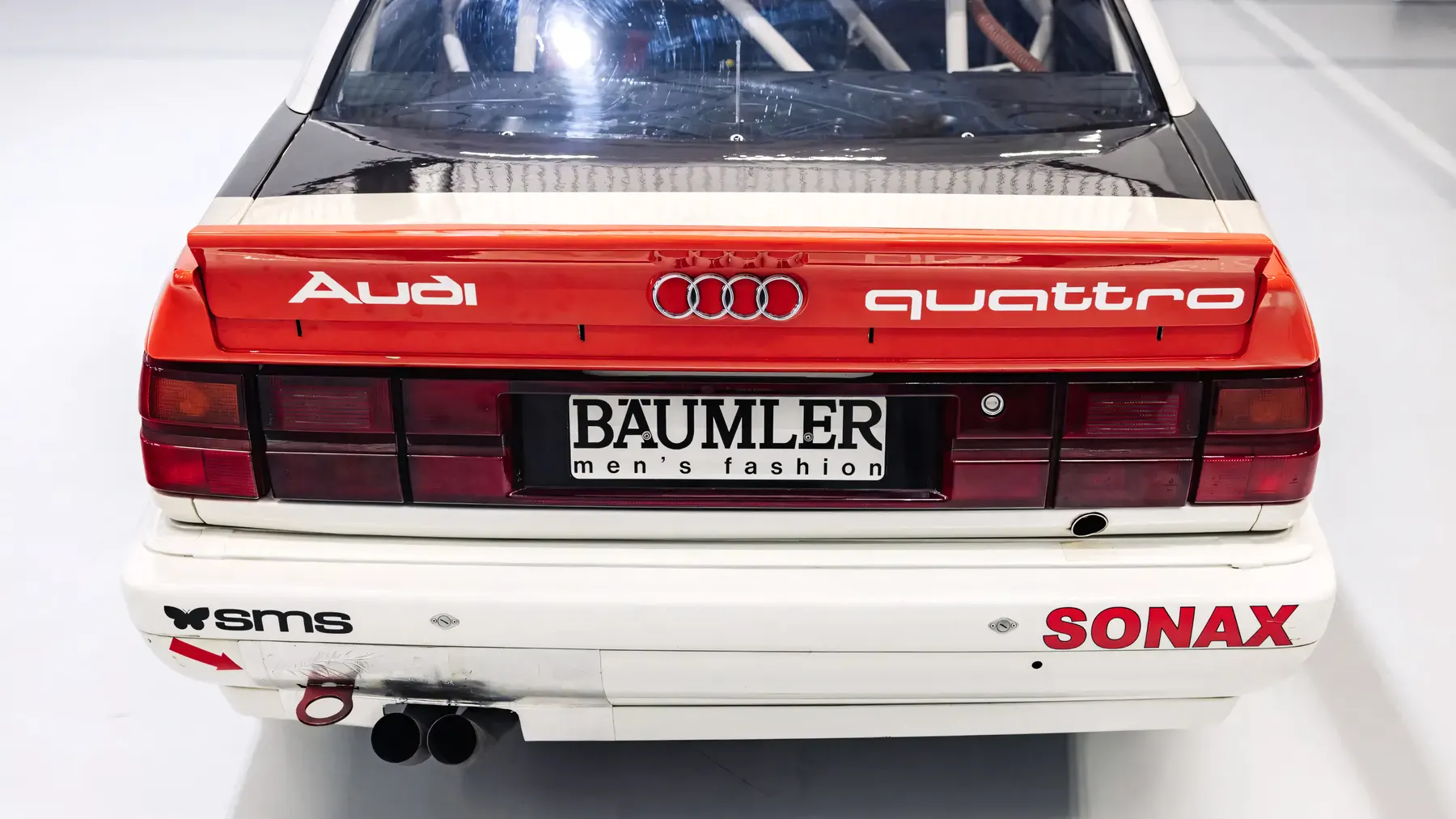
The competition model began with the production V8’s galvanized steel body, stripped of luxury amenities and reinforced with racing-specification components. The 3.6-liter aluminum V8 engine, derived from Audi’s road car but extensively modified, initially produced 420 horsepower before evolving to 462 horsepower in later iterations. Power reached the wheels through a six-speed manual transmission specifically developed for racing, while the quattro system’s torque-sensing differentials were recalibrated for circuit use, balancing traction with agility.
Aerodynamic enhancements proved critical in overcoming the car’s weight disadvantage. Engineers added an adjustable rear wing, redesigned front splitters, and optimized underbody airflow to generate downforce. The suspension system, using bespoke geometry and racing dampers, allowed precise handling despite the car’s 1,450 kg weight,substantially heavier than its competitors but offset by superior weight distribution.
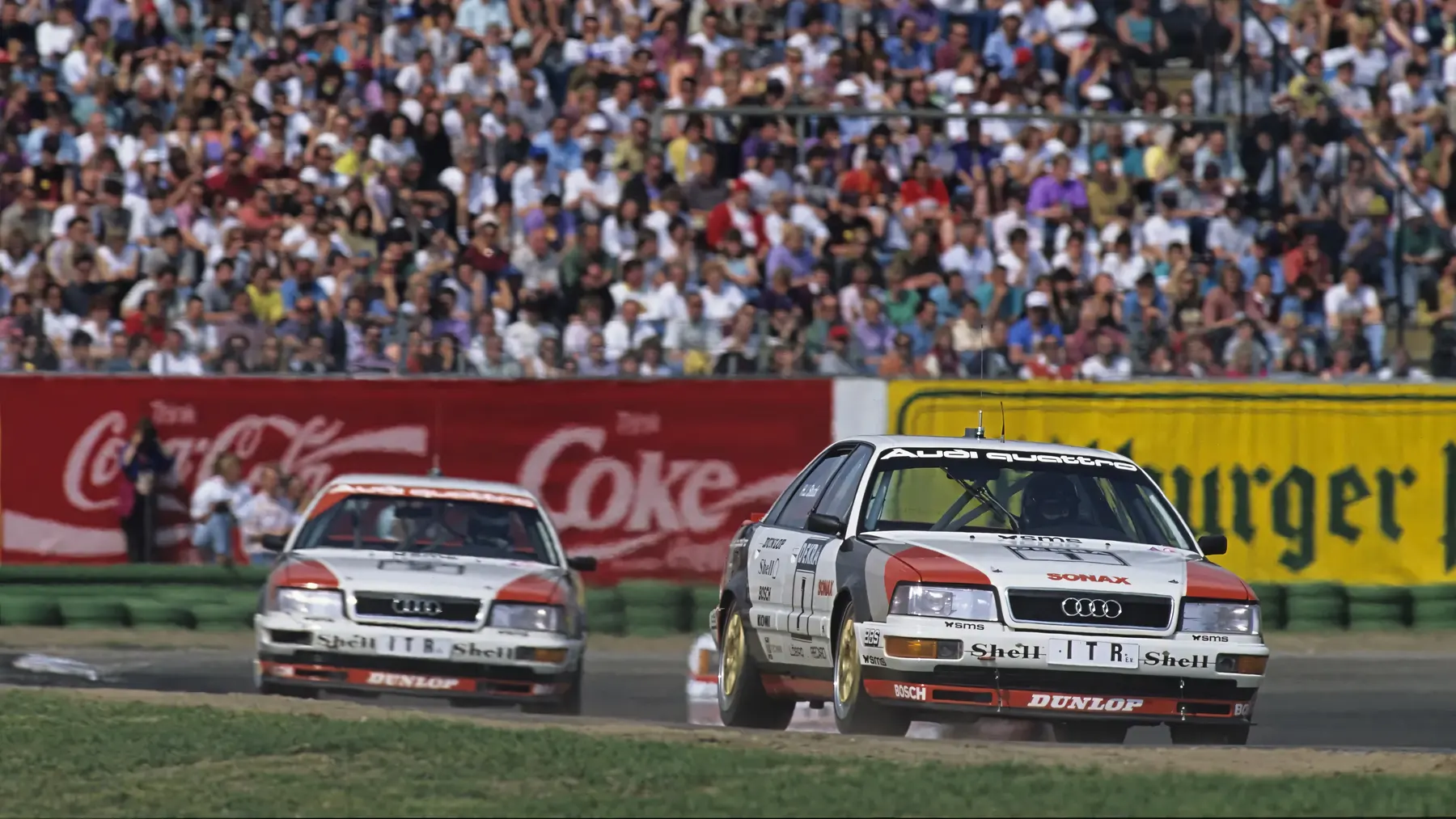
The V8 quattro DTM’s impact was immediate. In its debut 1990 season, Hans-Joachim Stuck secured the drivers’ championship, with Audi cars sweeping the podium at Hockenheim,an unprecedented achievement for a new entrant. Frank Biela repeated this success in 1991, cementing Audi’s back-to-back titles. The quattro system’s advantage in wet conditions became legendary, allowing drivers to maintain throttle control where rear-wheel-drive rivals struggled.
Controversy emerged in 1992 when Audi introduced a flat-plane crankshaft engine variant. DTM officials deemed the modification non-compliant with homologation rules, leading to Audi’s withdrawal from the series. Despite this abrupt exit, the V8 quattro’s legacy was already secure,it had demonstrated that all-wheel drive could compete at the highest levels of touring car racing.
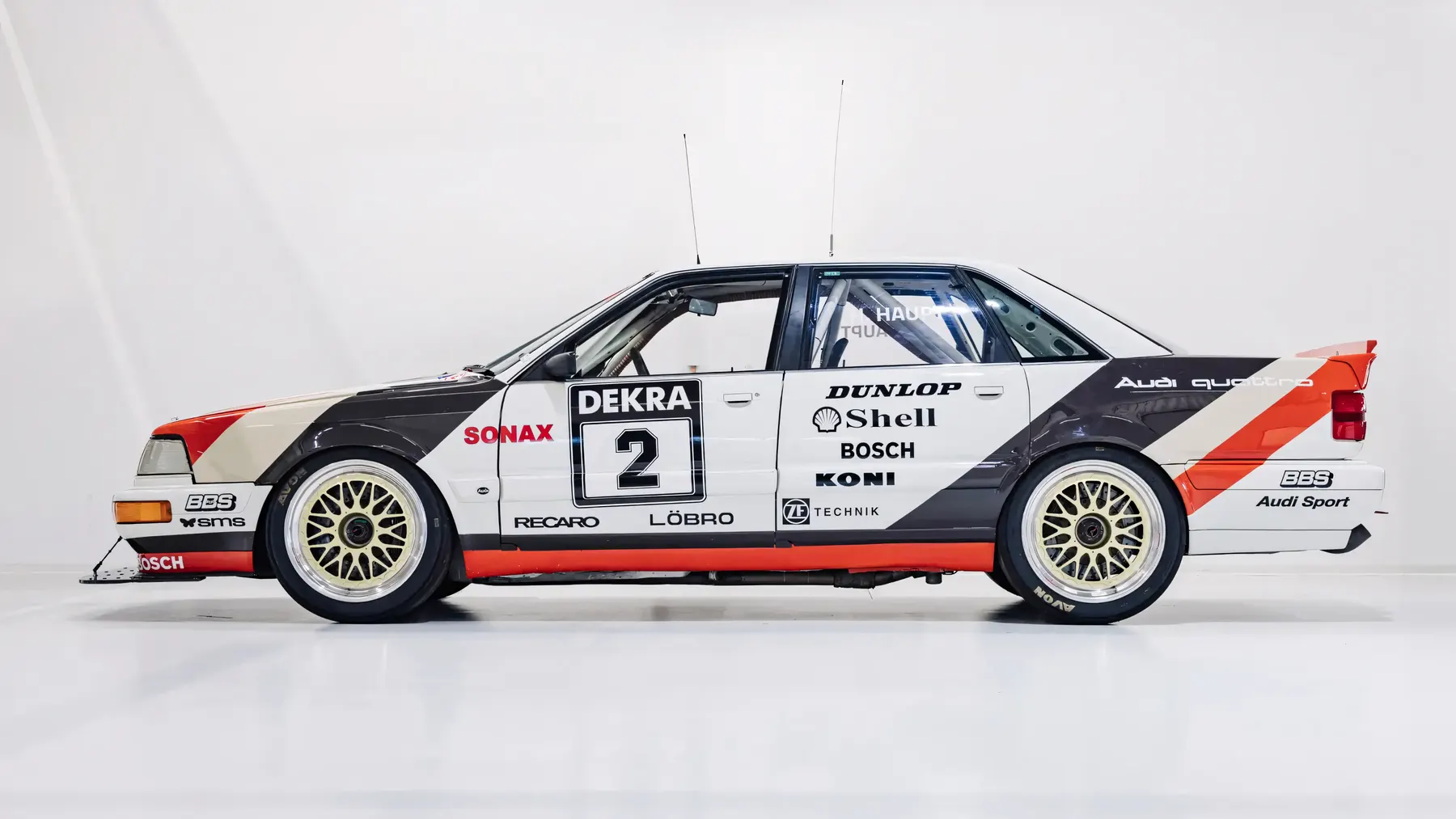
At its core, the racing V8 quattro retained the production car’s innovative engine architecture. The 32-valve DOHC V8 featured a unique hybrid timing system: rubber/Kevlar belts drove exhaust camshafts, while chains connected intake cams. This design reduced maintenance complexity while withstanding high-rpm abuse.
The braking system utilized massive 310 mm front discs with internal calipers,an unusual configuration that improved heat dissipation. Bosch ABS, rare in racing at the time, provided consistent stopping power. Inside, the cockpit featured advanced data acquisition systems that monitored everything from boost pressure to differential temperatures, giving engineers unprecedented insight into vehicle dynamics.
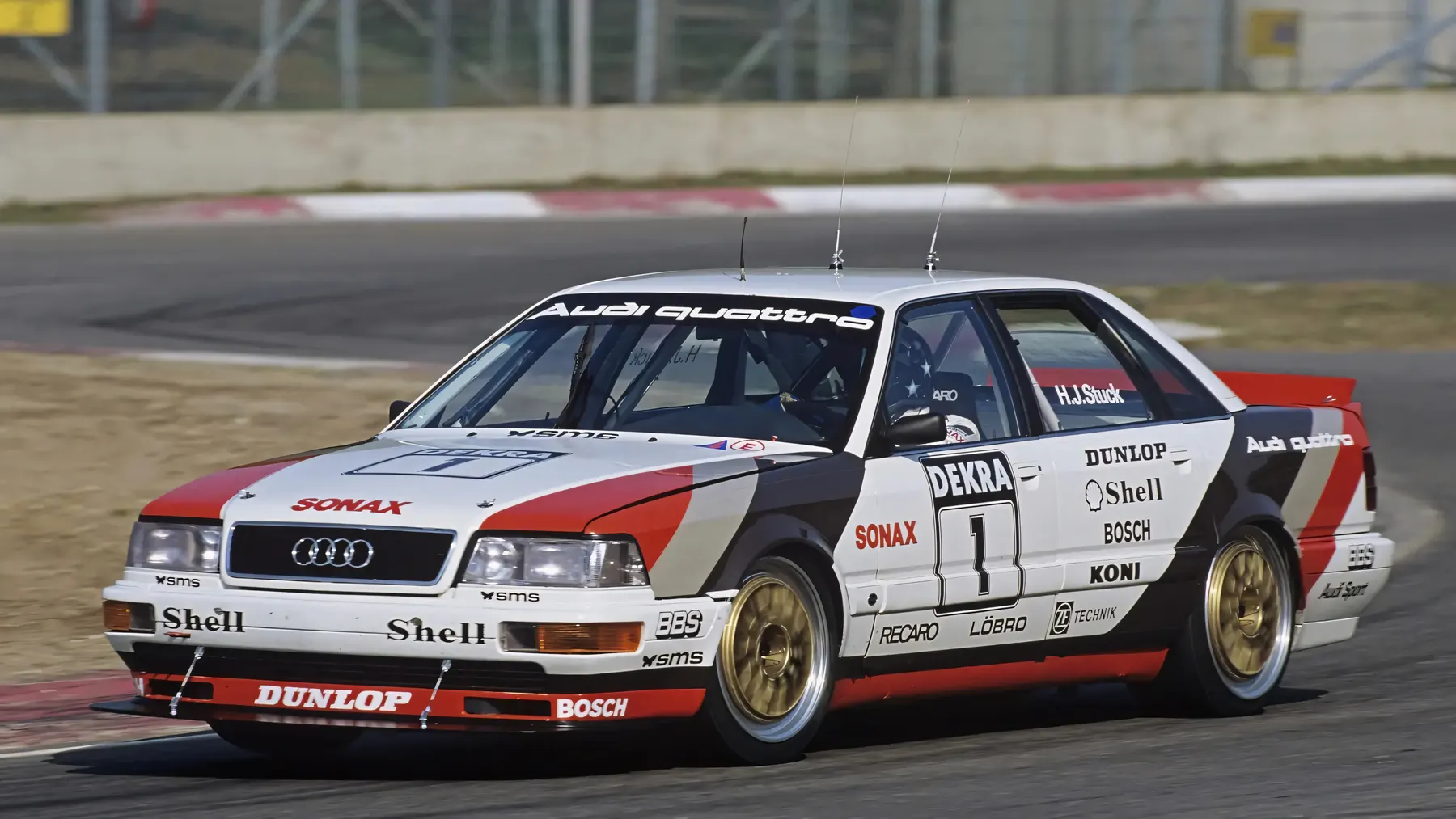
The V8 quattro DTM’s influence extended far beyond its championship trophies. It proved the viability of all-wheel drive in circuit racing, paving the way for Audi’s future motorsport endeavors. The car also elevated Audi’s brand image, transforming it from a producer of capable sedans to a technological powerhouse capable of challenging Mercedes and BMW on their home turf.
Today, these DTM cars are prized by collectors and historic racing enthusiasts. Their combination of quattro innovation, thunderous V8 soundtrack, and David-vs-Goliath racing story makes them compelling entries at events like the Goodwood Festival of Speed. Restoration requires expertise in 1990s racing electronics and quattro systems, with original components becoming increasingly rare.
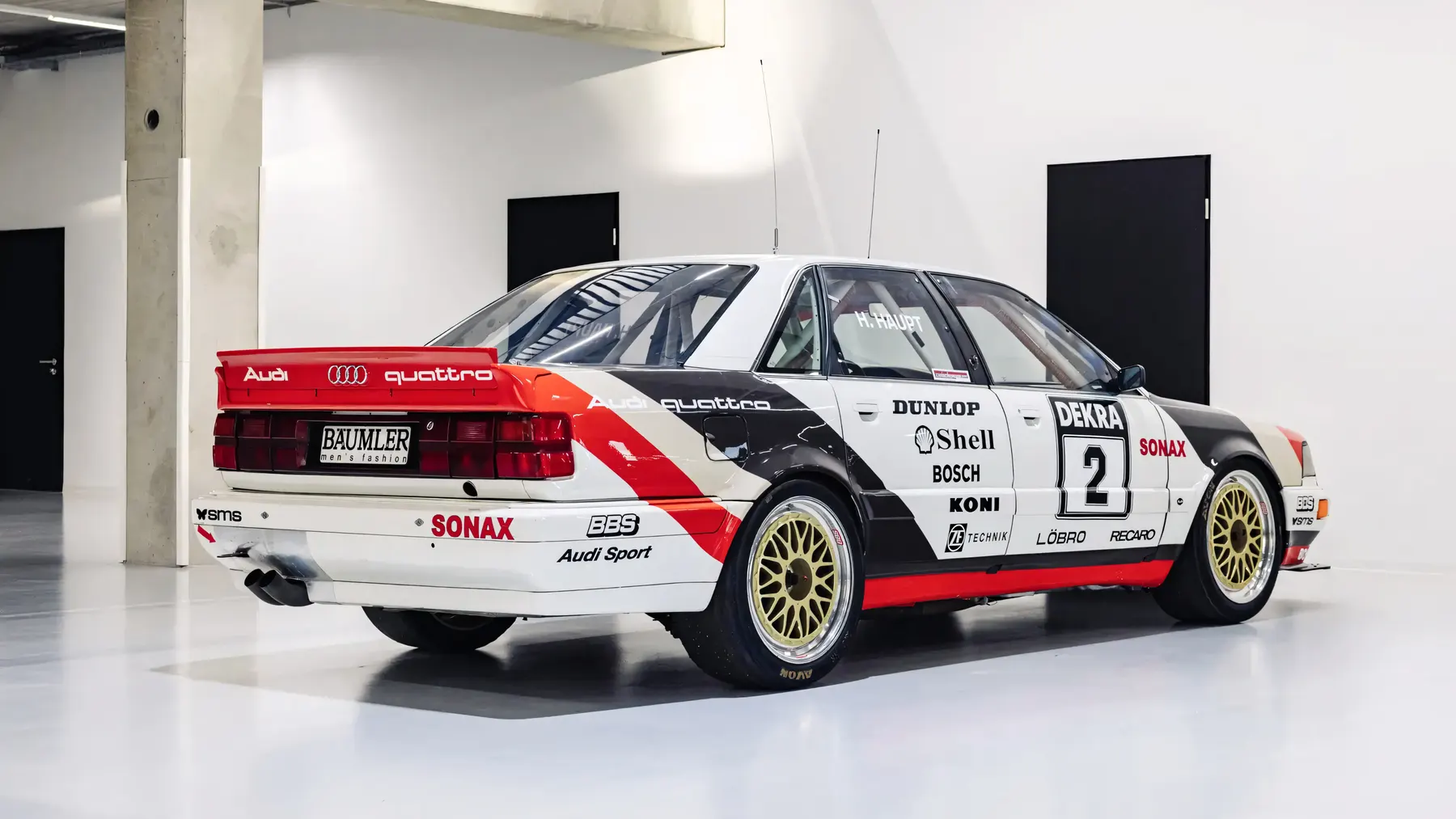
The Audi V8 quattro DTM remains a testament to engineering audacity. In an era when racing regulations favored conventional designs, Audi dared to be different, creating a machine that not only won championships but reshaped perceptions of what a touring car could achieve. Its story continues to inspire, reminding us that innovation often thrives when confronted with seemingly insurmountable challenges.
Join the discussion
Comments
Loading comments…
Leave a comment
Share a detail, memory, or perspective. Every comment is reviewed before publication.