1991 Nissan Figaro

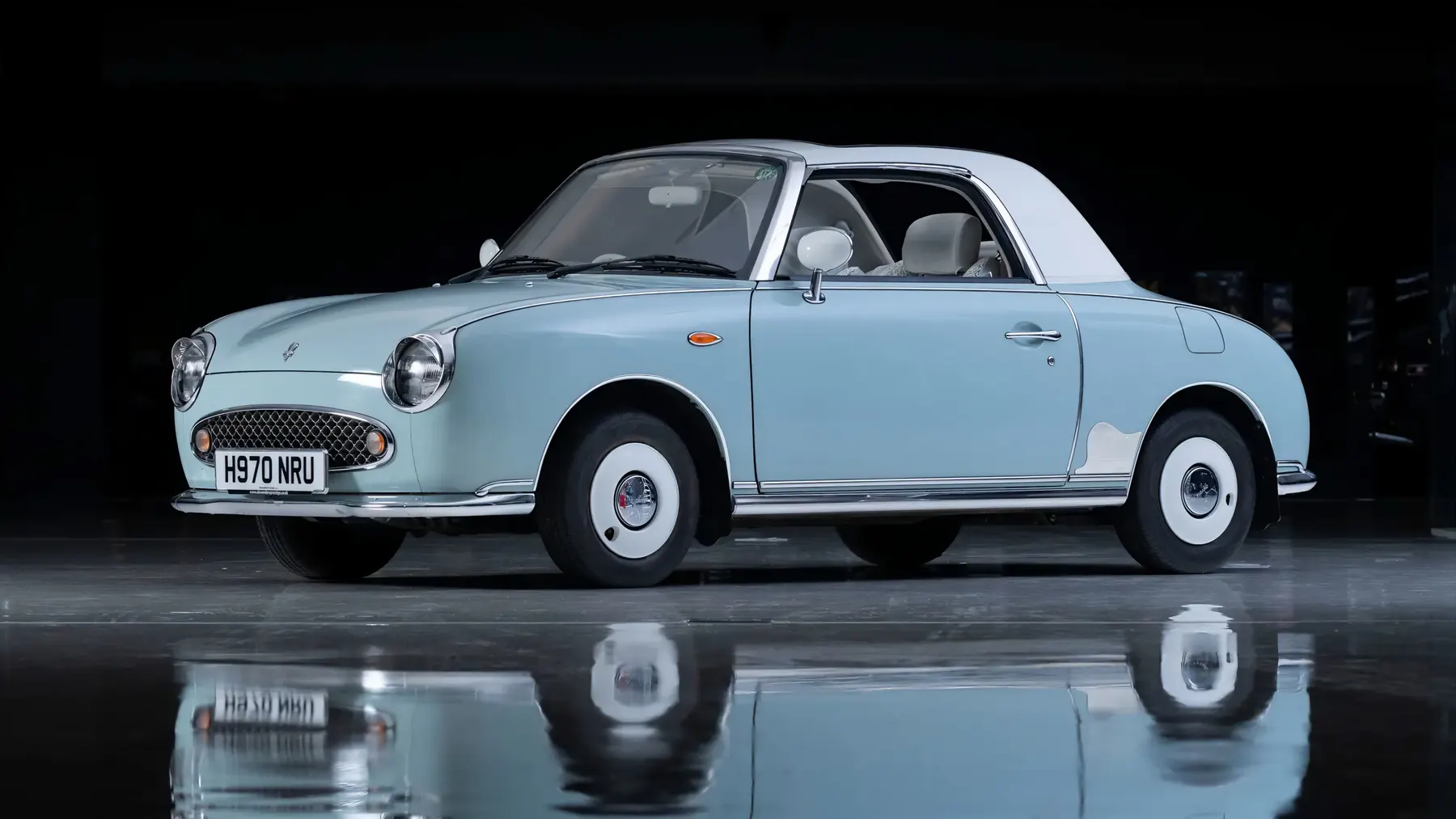
The automotive world occasionally produces vehicles that transcend their utilitarian purpose to become cultural icons. The Nissan Figaro stands proudly among these rare gems. This compact convertible, with its distinctive retro styling and cheerful demeanor, captures hearts and turns heads wherever it goes. Though produced for just one year in 1991, the Figaro’s legacy continues to flourish among enthusiasts worldwide.
The story of the Nissan Figaro began at the 1989 Tokyo Motor Show, where it debuted as a concept car under the aptly chosen slogan “Back to the Future.” Designed by the talented team of Naoki Sakai and Shoji Takahashi, this charming vehicle represented something entirely different from Nissan’s mainstream offerings. The concept proved so popular that Nissan green-lit it for production through their special projects division known as Pike Factory, which had already created other niche vehicles including the Be-1, Pao, and S-Cargo.
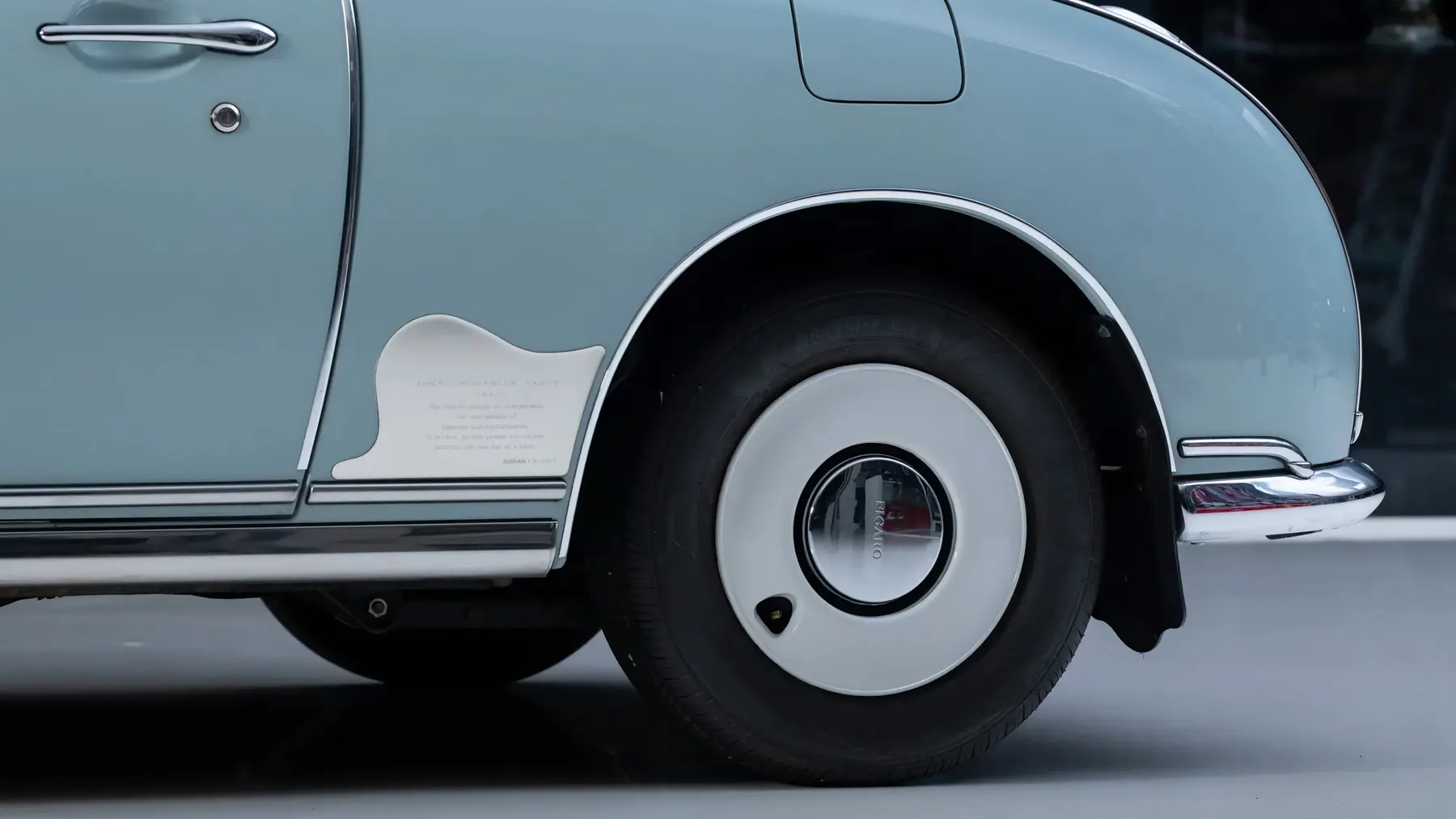
Based on the humble Nissan Micra/March platform, the Figaro transformed these practical underpinnings into something extraordinary. Despite its retro aesthetic, it was thoroughly modern underneath, representing what design critics would later call “the height of postmodernism”. The Figaro’s design philosophy adapted strategies from other industries like personal electronics, making it part of a broader Japanese design movement.
Production began in February 1991 at Nissan’s Oppama Plant in Yokosuka. Initially, Nissan planned to manufacture just 8,000 units, but overwhelming demand prompted the company to increase production. By the end of December 1991, a total of 20,073 Figaros had rolled off the assembly line.
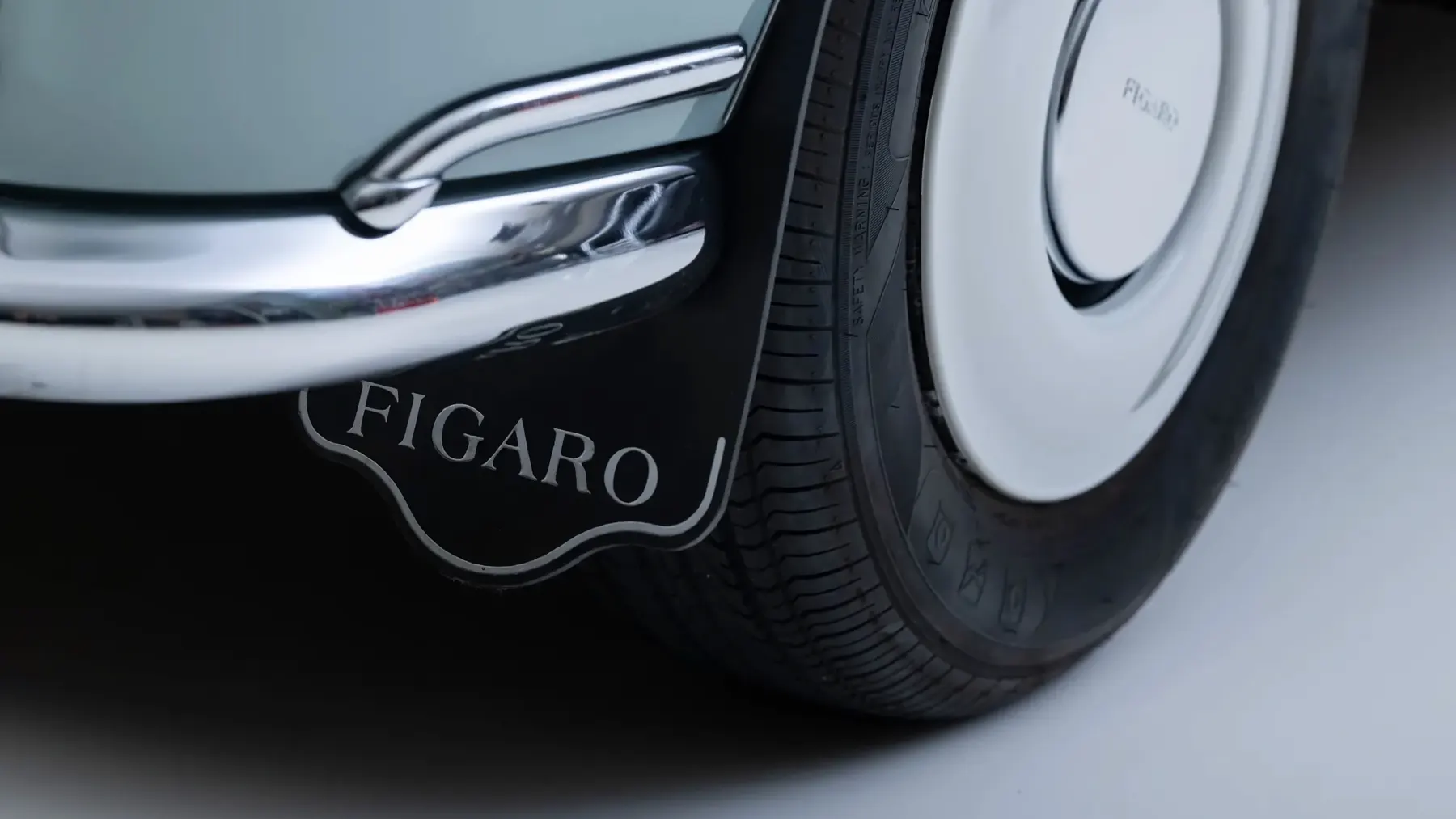
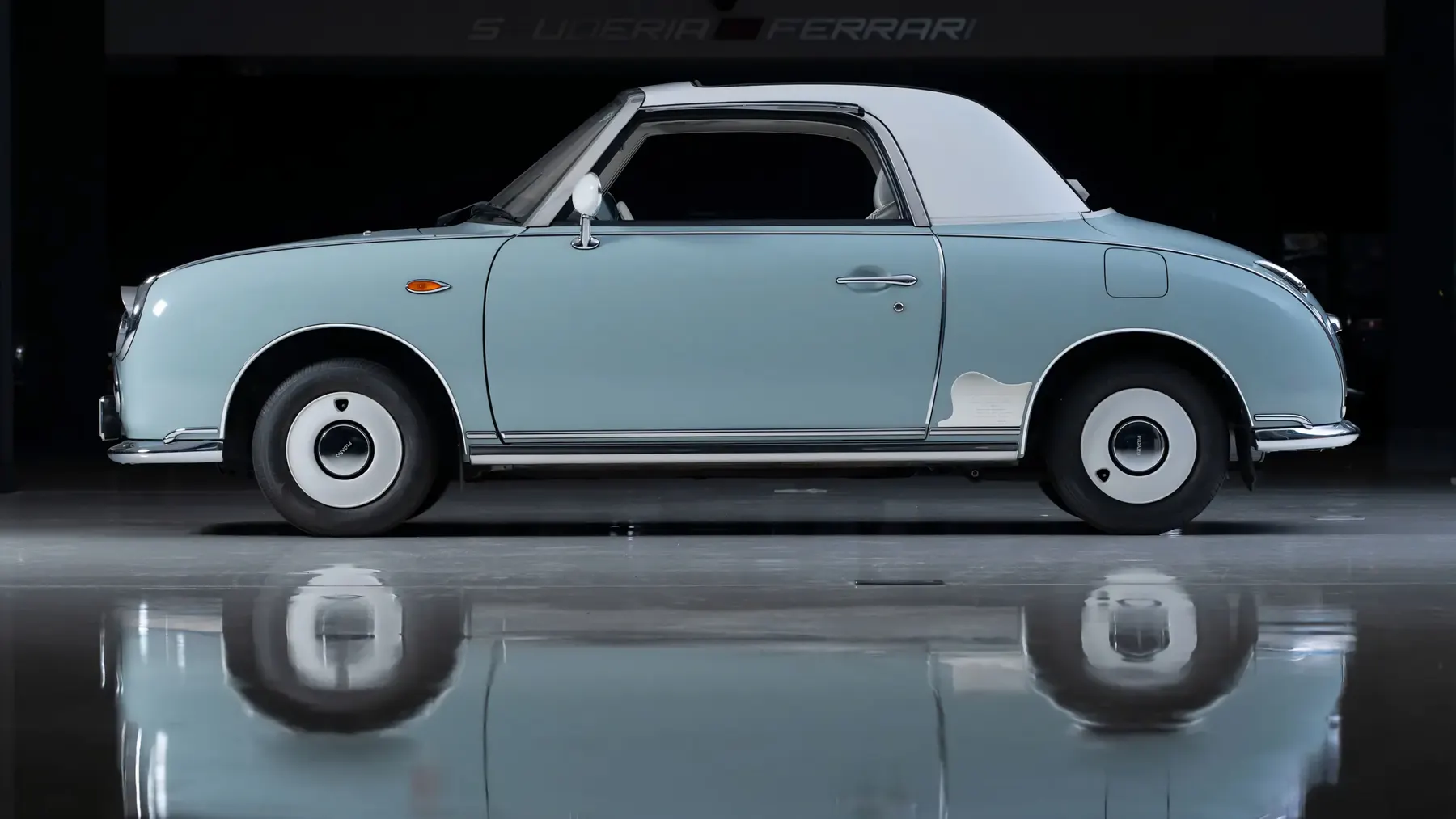
The Figaro’s visual appeal stems from its unabashed embrace of retro styling cues while maintaining a unique identity. Its fixed-profile convertible body features soft, curvy lines that evoke 1950s European roadsters, particularly reminiscent of classic vehicles like the Autobianchina Transformabile and Vespa 400.
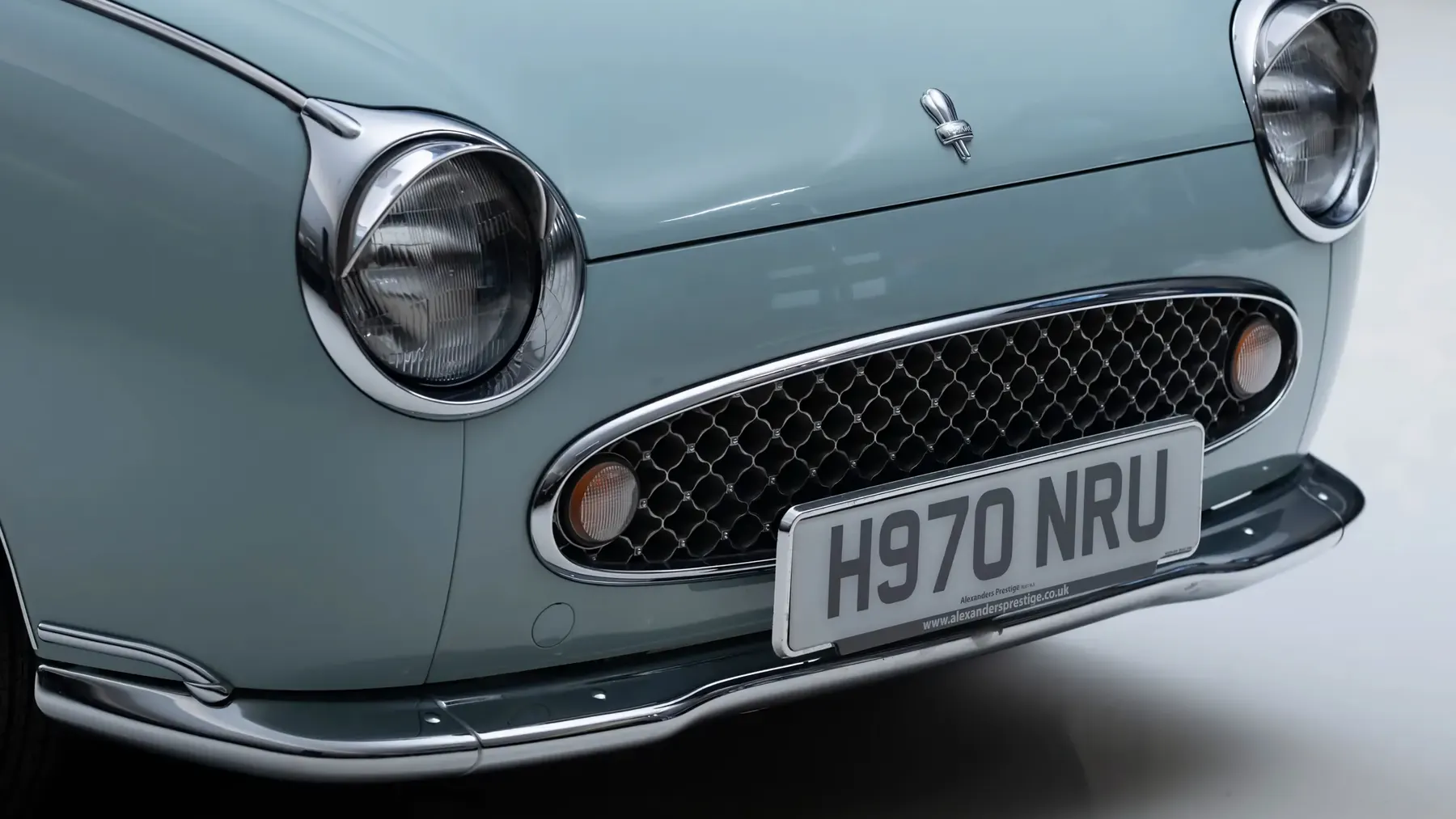
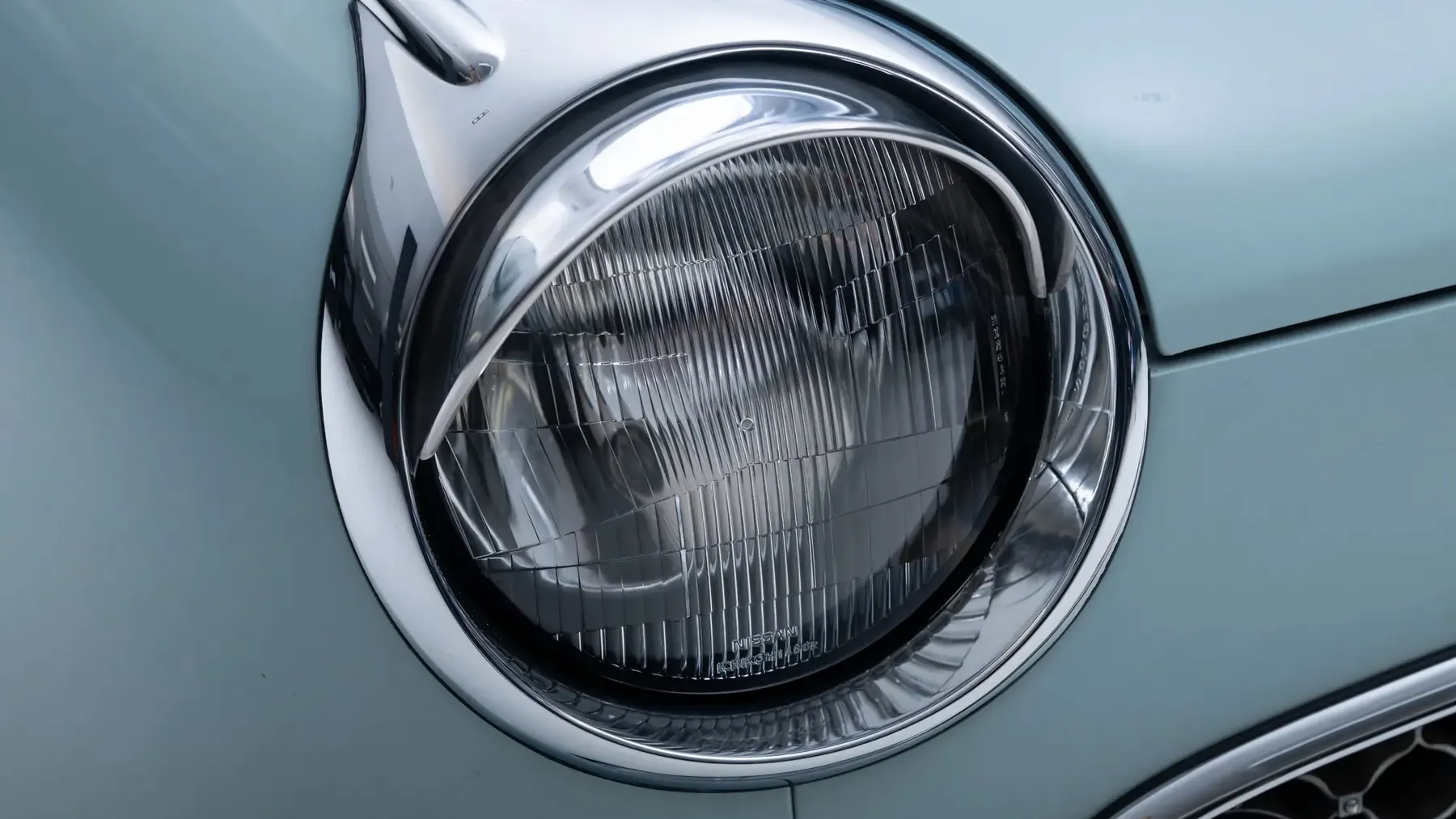
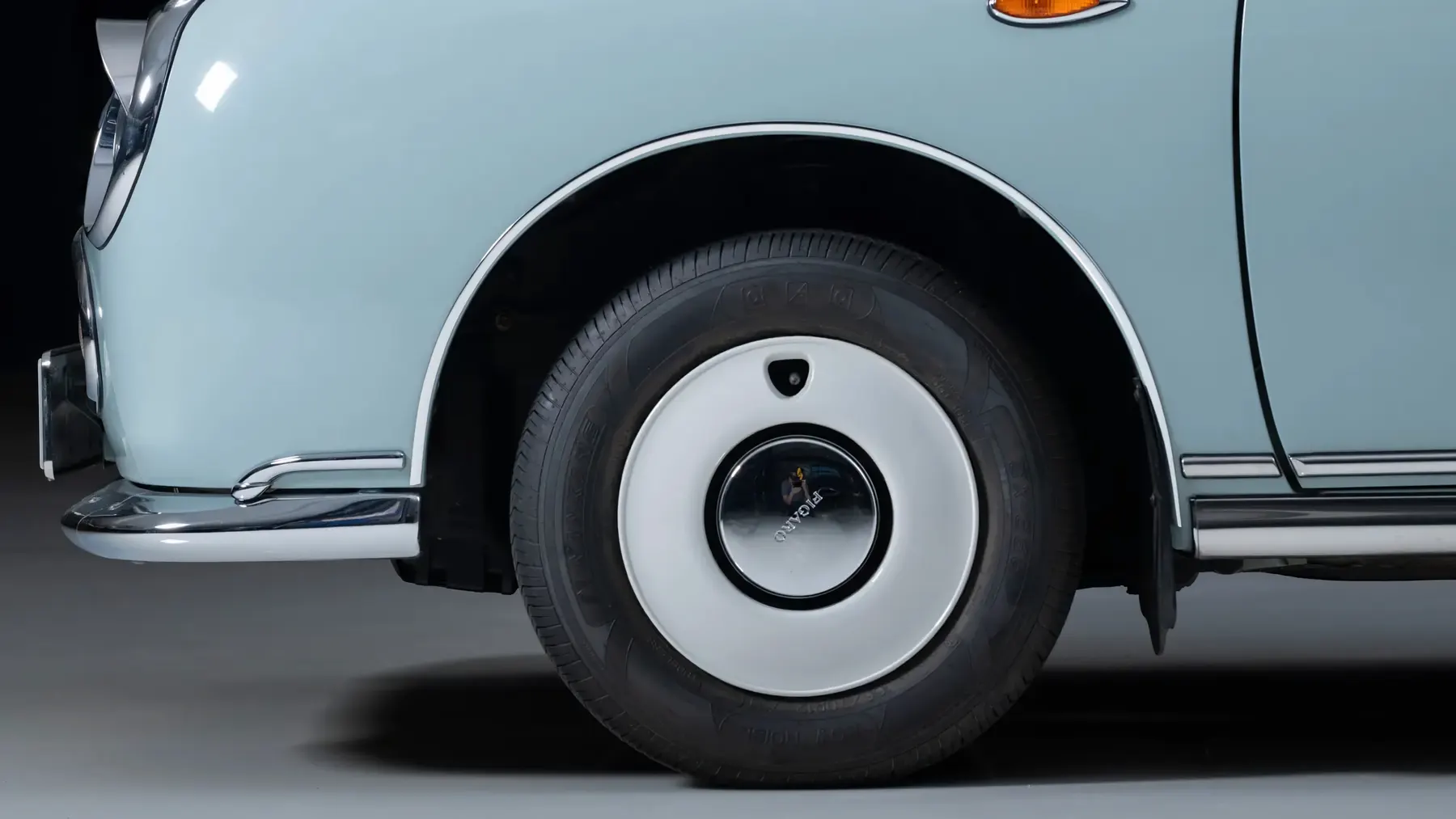
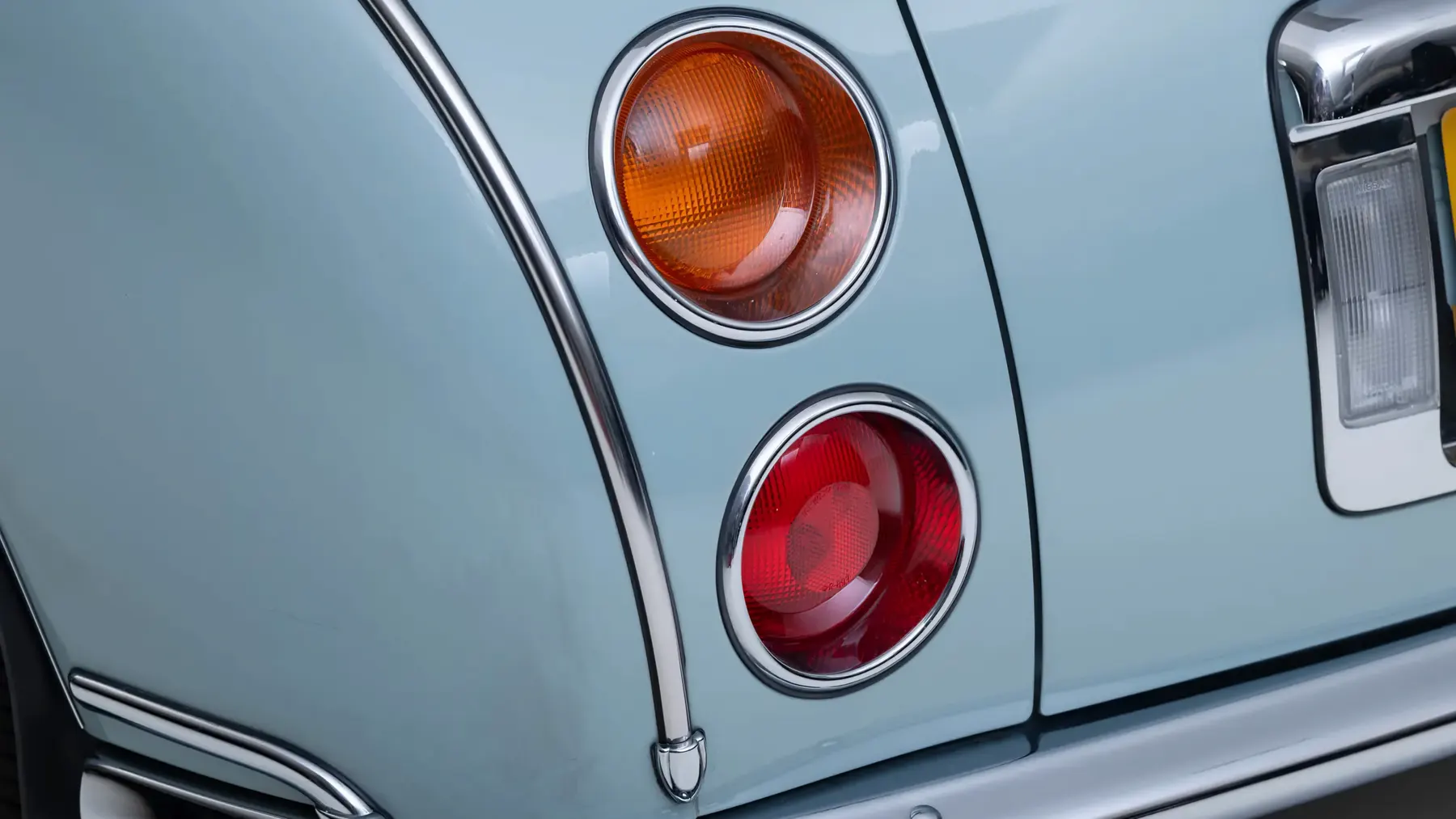
Standing just 1,365 mm tall with a length of 3,740 mm and width of 1,630 mm, the Figaro cuts a compact yet perfectly proportioned figure. Its most distinctive exterior elements include large, expressive round headlights with charming “eyelids,” chrome trim throughout, and wheels designed to evoke whitewall tires.
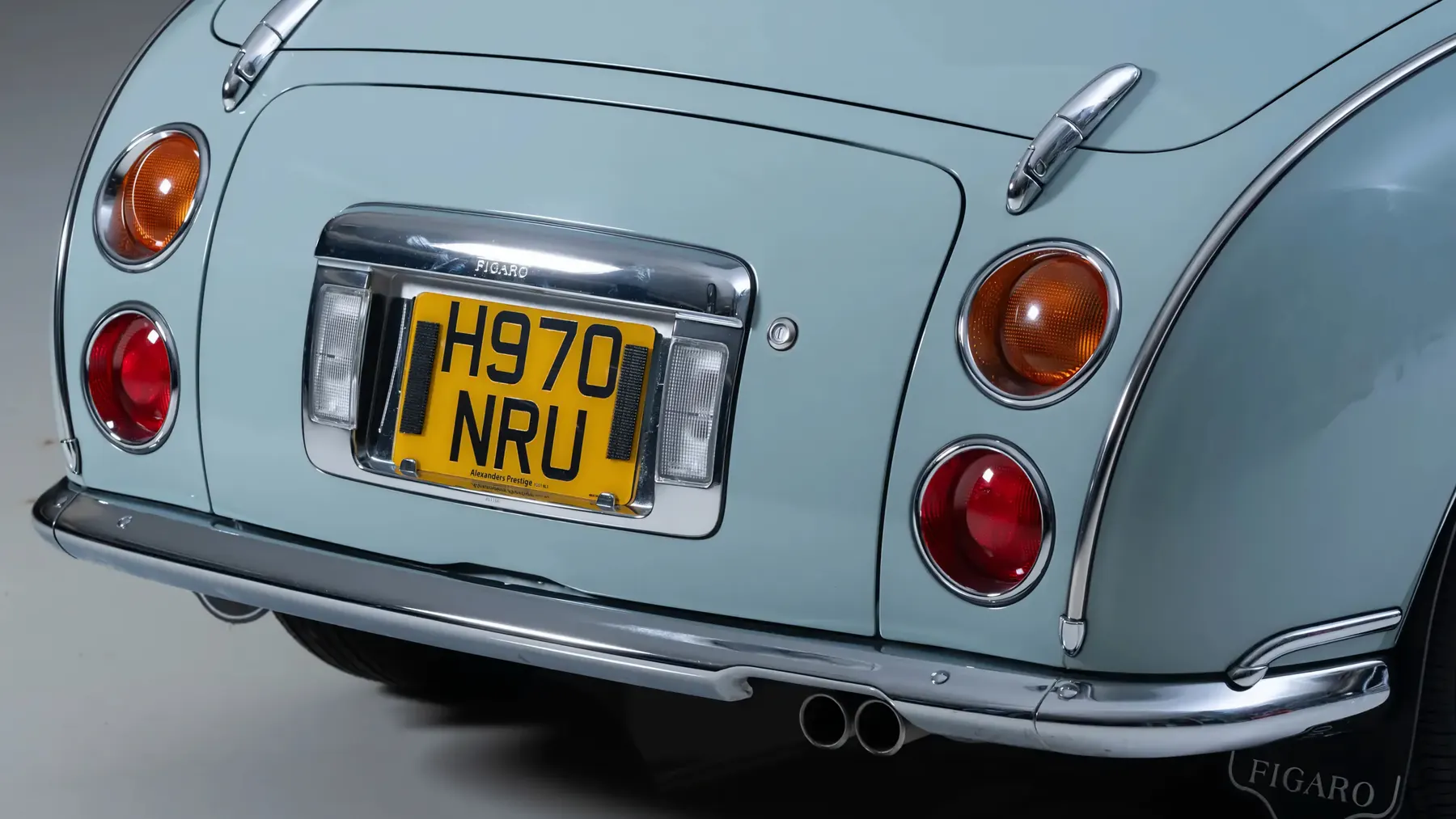
The Figaro wasn’t a full convertible in the traditional sense. Instead, it featured a central fabric roof section that rolled back while the rear pillars and windows remained fixed. This clever design maintained structural integrity while still delivering open-air enjoyment.
Available in just four colors representing Japan’s seasons, each Figaro came in Topaz Mist (autumn), Emerald Green (spring), Pale Aqua (summer), or Lapis Grey (winter). These soft, pastel hues perfectly complemented the car’s cheerful character and became integral to its identity.
Inside, the Figaro’s cabin continues the retro theme with modern conveniences. Ivory leather seats with contrasting piping create an upscale, vintage atmosphere. The dashboard features round, chrome-rimmed gauges and horizontally arranged switchgear that evokes 1960s American cars.
Perhaps most surprising for a small car from 1991 was the level of standard equipment. Every Figaro came with air conditioning, a CD player (quite advanced for its time), electric windows operated by stylish chrome switches shaped like miniature Art Deco sunbursts, and a leather-wrapped dashboard.
The interior perfectly balances nostalgic styling with practical amenities, creating a space that feels special without sacrificing comfort or functionality. Despite its compact dimensions, the Figaro offers reasonable space for front passengers, though the rear seats are best suited for occasional use or additional storage.
Beneath its charming exterior lies the mechanical heart of a Nissan Micra, albeit with significant enhancements. The Figaro is powered by a 1.0-liter (987 cc) turbocharged four-cylinder engine producing 76 horsepower (56 kW) and 106 Nm of torque. This modest but spirited powerplant connects to a three-speed automatic transmission driving the front wheels.
Performance is appropriately zippy rather than outright sporty, with a top speed of approximately 171 km/h (106 mph). The Figaro weighs just 810 kg (1,790 lb), contributing to its relatively nimble handling.
The suspension setup consists of MacPherson struts up front and a four-link coil spring arrangement at the rear. Stopping power comes from front ventilated disc brakes and rear drums. To reduce weight, Nissan cleverly constructed the front fenders from thermoplastic resin.
All 20,073 Figaros were produced in 1991, with monthly production figures meticulously documented. February saw 1,622 units built, rising to peak production of 2,211 in July, before tapering down to just 521 in December to complete the run.
Demand vastly exceeded supply, leading Nissan to implement a lottery system for potential buyers. Winners were notified if their car would be produced in March (8,000 cars), June (6,000), or August (6,000). Each car originally sold for 1,870,000 Yen (approximately $13,651 at the time).
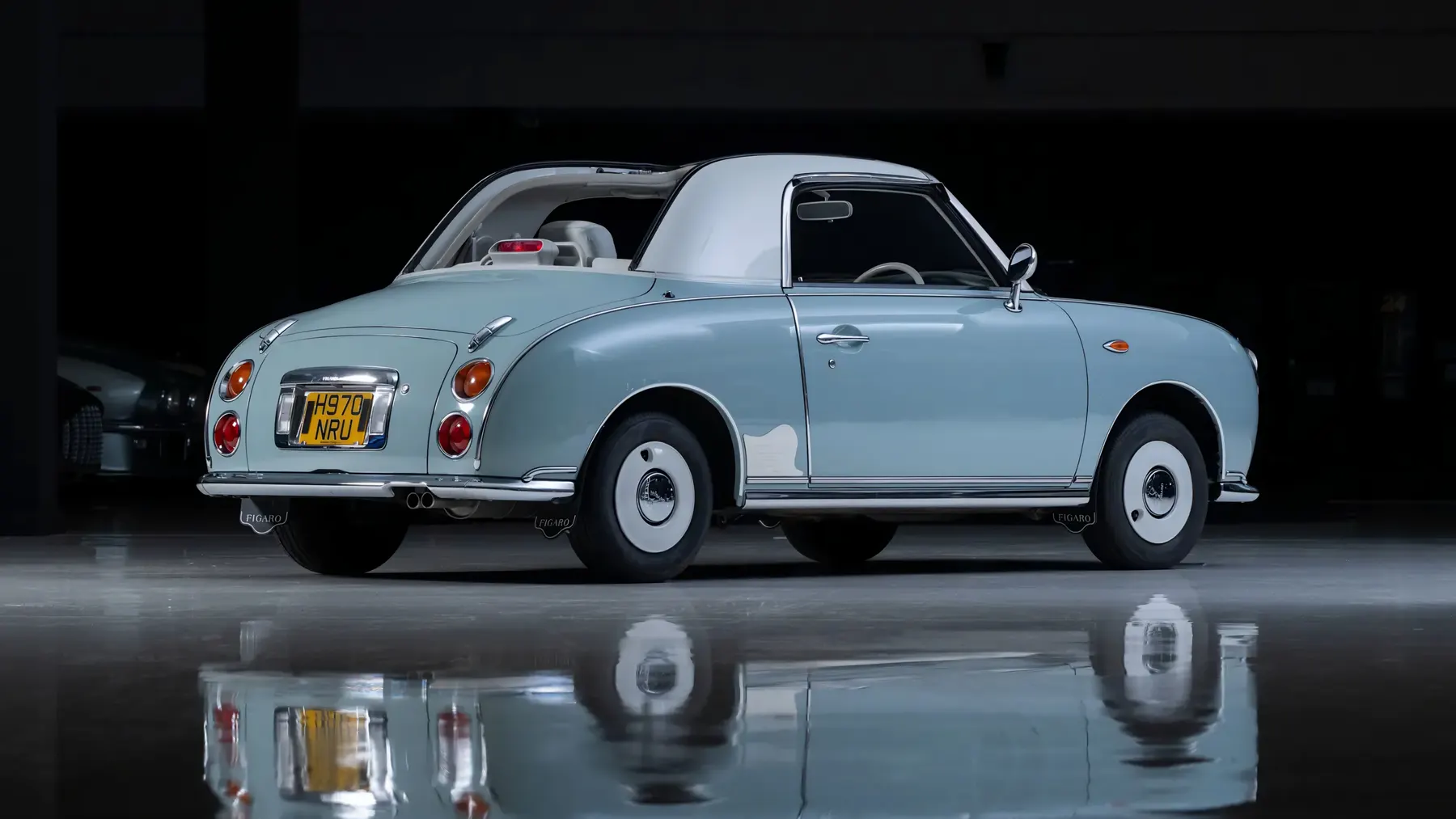
While officially produced only for the Japanese domestic market, thousands of Figaros have since been exported worldwide through grey market channels, with the UK becoming a particularly enthusiastic second home for these vehicles. Their right-hand drive configuration made them perfectly suited for British roads, contributing to their popularity there.
The Figaro’s charm has proven remarkably enduring. What began as a limited production vehicle for Japan has transformed into a global cult classic with an enthusiastic following. The car appeals to a diverse audience, though some UK dealers report that up to 70% of Figaro buyers are female.
Today, Figaros can be found commanding prices from £2,000 for projects to over £20,000 for pristine examples. Their distinctive looks and increasing rarity have helped maintain their value, making them both a delightful lifestyle choice and potentially sound investment.
The Figaro succeeded in exactly what it set out to do - create a modern car with undeniable nostalgic appeal. Unlike many retro-inspired vehicles that directly reference specific models, the Figaro cleverly evokes an era rather than any particular car, giving it a timeless quality that continues to captivate automotive enthusiasts worldwide.
Join the discussion
Comments
Loading comments…
Leave a comment
Share a detail, memory, or perspective. Every comment is reviewed before publication.