1996 Ford Thunderbird NASCAR 'Dale Jarrett'

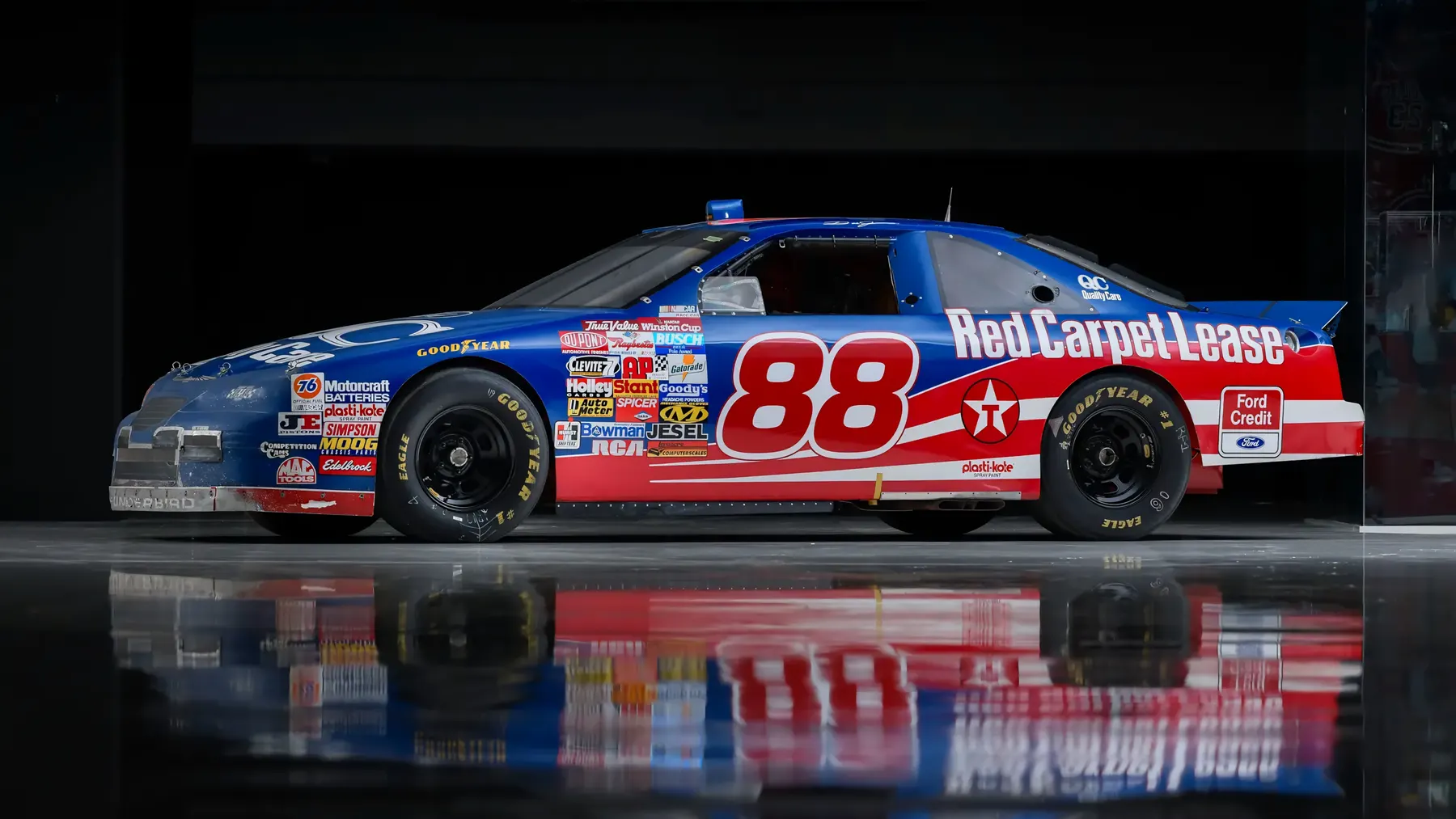
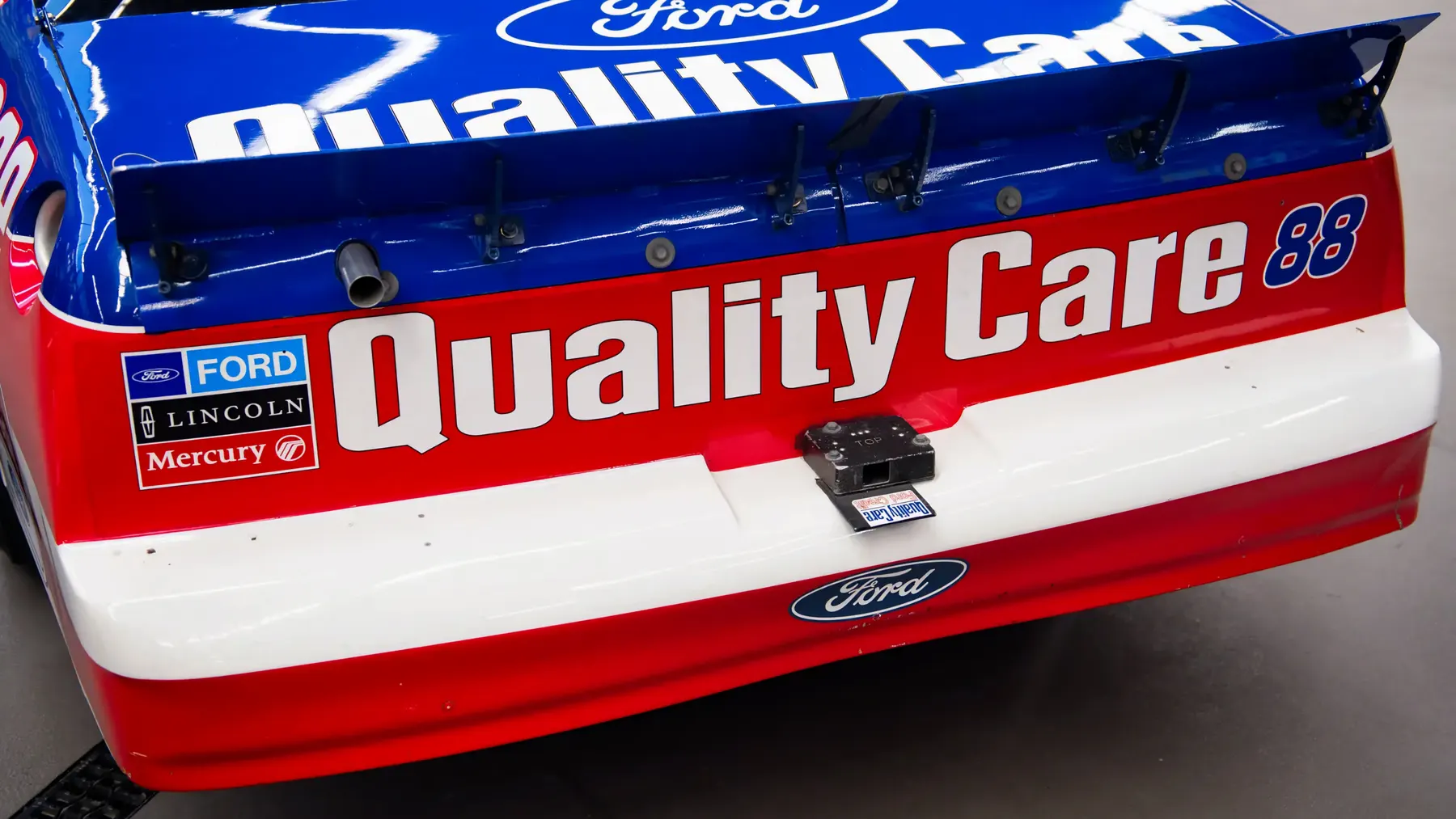
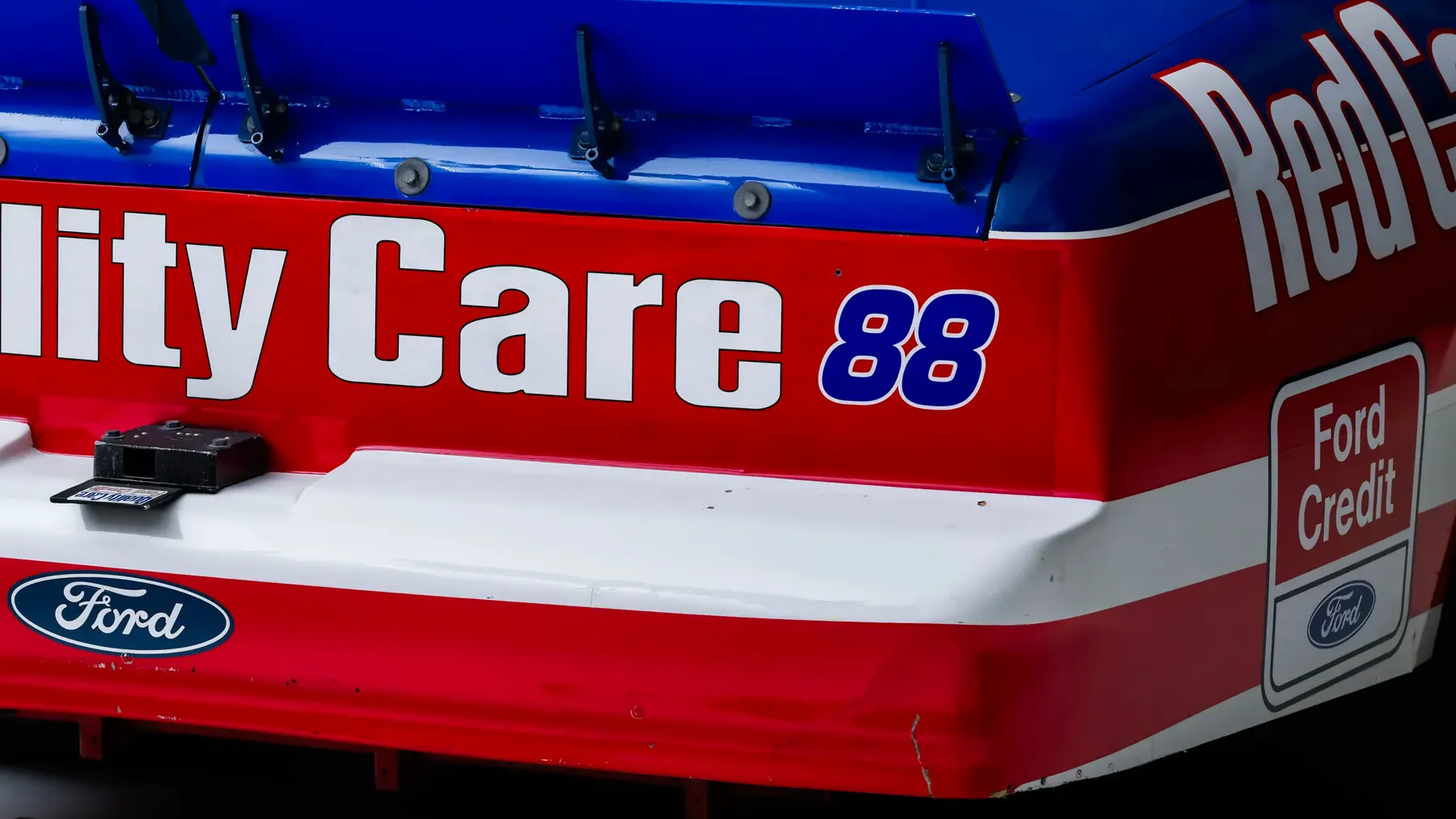
The 1996 Ford Thunderbird NASCAR race car piloted by Dale Jarrett represents a perfect marriage of automotive engineering excellence and racing prowess. The thunderous roar of its engine, the sleek aerodynamic body, and the iconic #88 Quality Care/Ford Credit livery created a legacy that remains etched in NASCAR history.
Ford Thunderbirds first rumbled onto NASCAR tracks in 1959, with the second-generation body style and 430 CID V8 engine powering drivers Curtis Turner, Johnny Beauchamp, “Tiger” Tom Pistone, and Cotton Owens to victory lane six times that season. After appearing only sporadically through the 1960s, the Thunderbird made its triumphant return in 1977, replacing the Torino as Ford’s primary body style in NASCAR racing.
The true golden era for Thunderbirds in NASCAR came during the 1980s and 1990s. From 1981 to 1997, the aerodynamically clean Thunderbirds dominated NASCAR’s superspeedways. The 1983-1988 models were particularly remarkable, exceeding 200 mph in competition. The pinnacle came in 1987 when Bill Elliott set an astonishing record-the fastest qualifying lap in NASCAR history at 212.809 mph at Talladega Superspeedway, a record that stands to this day.
When the redesigned Thunderbird returned to NASCAR in 1982, it amassed an impressive 150 victories in NASCAR’s top division, including four Daytona 500 wins. Bill Elliott and Davey Allison found particular success with these machines, with Elliott securing the 1988 championship. The underdog Alan Kulwicki also claimed the 1992 championship in a Thunderbird nicknamed “Underbird”.
Dale Jarrett’s relationship with the Ford Thunderbird began in 1990 when he took over the #21 Citgo Ford Thunderbird for the legendary Wood Brothers Racing team. The following year, he secured his first Winston Cup victory at Michigan International Speedway, showcasing both his talent and the car’s capabilities.
The partnership that would truly cement Jarrett’s place in NASCAR history began when he signed with Robert Yates Racing. Though initially driving the #28 car in 1995, he moved to the #88 Ford Thunderbird with Quality Care/Ford Credit sponsorship for the 1996 season.
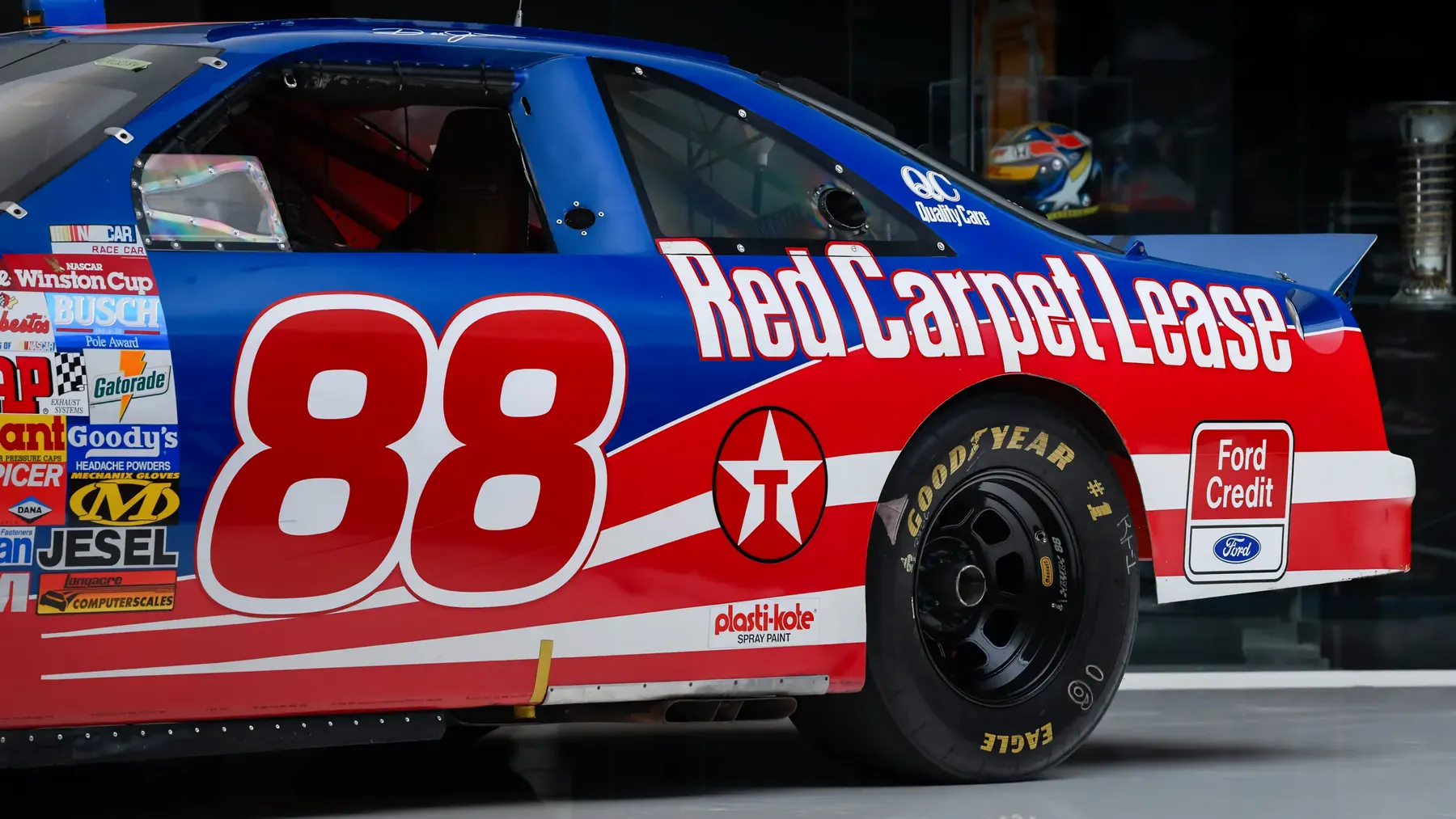
The 1996 season became legendary for Jarrett and his Thunderbird. He captured his second Daytona 500 victory that year, finishing in the top two positions in each of the first three races of the season. His success continued with wins at the prestigious Coca-Cola 600, Brickyard 400, and the second Michigan race, culminating in a third-place finish in the championship standings.
What many racing enthusiasts don’t know is that team owner Robert Yates had initially offered the #88 ride to Dale Earnhardt before it went to Jarrett. This created an alternate universe scenario that racing fans still debate-what if “The Intimidator” had switched to Ford power? Instead, the partnership between Yates and Jarrett proved formidable, with Jarrett going on to win 29 of his 32 career Winston Cup victories in Yates-owned cars.
The Thunderbird that carried Jarrett to his greatest achievements was a marvel of racing engineering. Based on the tenth-generation Ford Thunderbird (1989-1997), the NASCAR version retained the production car’s aerodynamic profile while being completely race-modified beneath the skin.
The 1996 Thunderbird was part of Ford’s MN12 (Mid-Size North American Project 12) platform development, which began in 1984 and featured significant improvements in handling and ride quality through four-wheel independent suspension in the production version.
While the production 1996 Thunderbird LX featured a 4.6L V8 SOHC 16-valve engine producing 205 hp at 4,500 rpm with a four-speed automatic transmission, the NASCAR version was vastly more powerful. The race engine in Jarrett’s Thunderbird produced well over 700 horsepower, enabling the car to reach speeds approaching 200 mph at superspeedways.
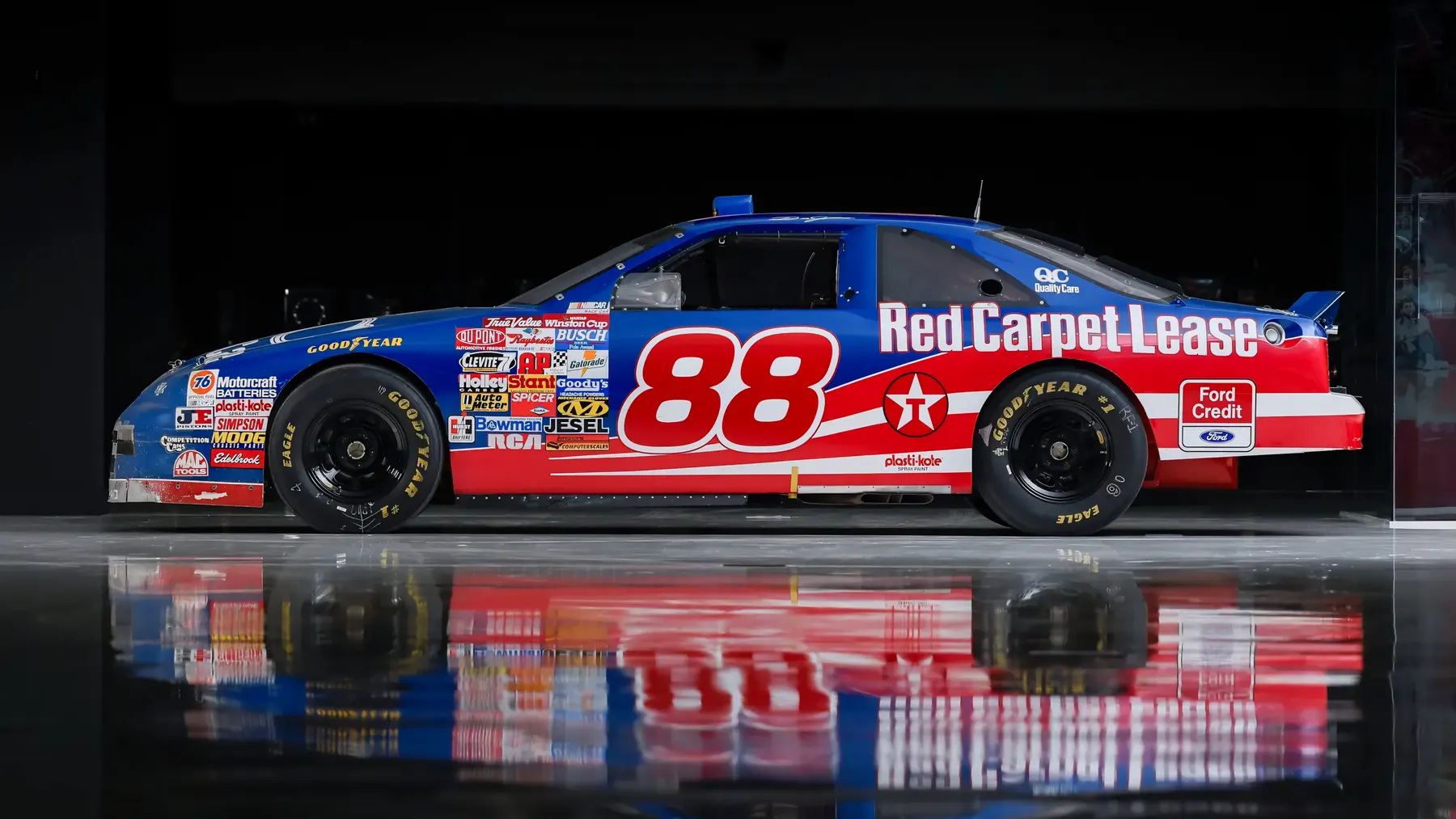
The success of Jarrett’s Thunderbird wasn’t limited to 1996. The following year, he won a career-best seven races but narrowly missed the championship by just 14 points to Jeff Gordon. This extraordinary performance demonstrated the continued competitiveness of the Thunderbird platform even as it neared the end of its NASCAR career.
The pinnacle of Jarrett’s career with the Ford Thunderbird came in 1999 when he captured the Winston Cup Series championship. Driving the #88 Robert Yates Racing Ford Thunderbird sponsored by Ford’s Quality Care/Ford Credit brands, Jarrett dominated the season with four wins at Richmond, Michigan, Daytona, and Indianapolis.
Even more impressive than the wins was his consistency-Jarrett set a then-Modern Era record with 29 top-10 finishes and an average finish of 6.76, ultimately winning the championship by 201 points over Bobby Labonte. This championship season represented the perfect culmination of driver talent, team preparation, and the Thunderbird’s racing capabilities.
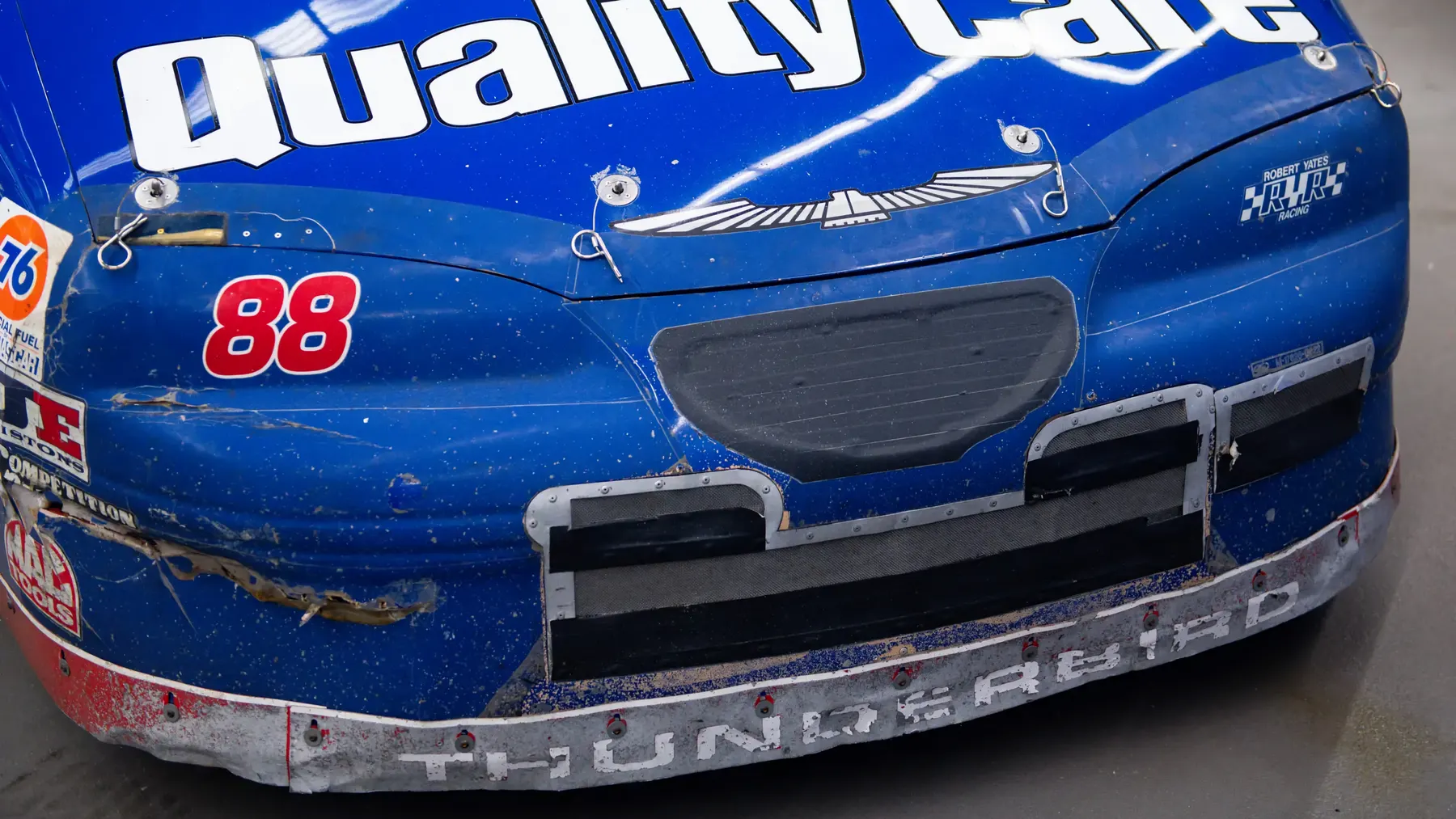
The racing version of the Thunderbird may have shared its silhouette with the production model, but underneath it was purpose-built for NASCAR competition. The race cars featured a tubular steel frame, race-specific suspension components, and massive brakes designed to handle the rigors of high-speed oval racing.
While the production 1996 Thunderbird measured 5,088 mm in length and weighed approximately 1,604 kg, the NASCAR version adhered to NASCAR’s strict rule requirements while maintaining the car’s distinctive aerodynamic profile that had proven so effective on superspeedways.
The aerodynamic efficiency of the Thunderbird was one of its greatest assets in NASCAR competition. So effective was its slippery shape that even after Ford had introduced the Taurus as its replacement for the 1998 season, some teams chose to continue running the Thunderbird at superspeedways due to concerns that the Taurus body generated too much rear drag.
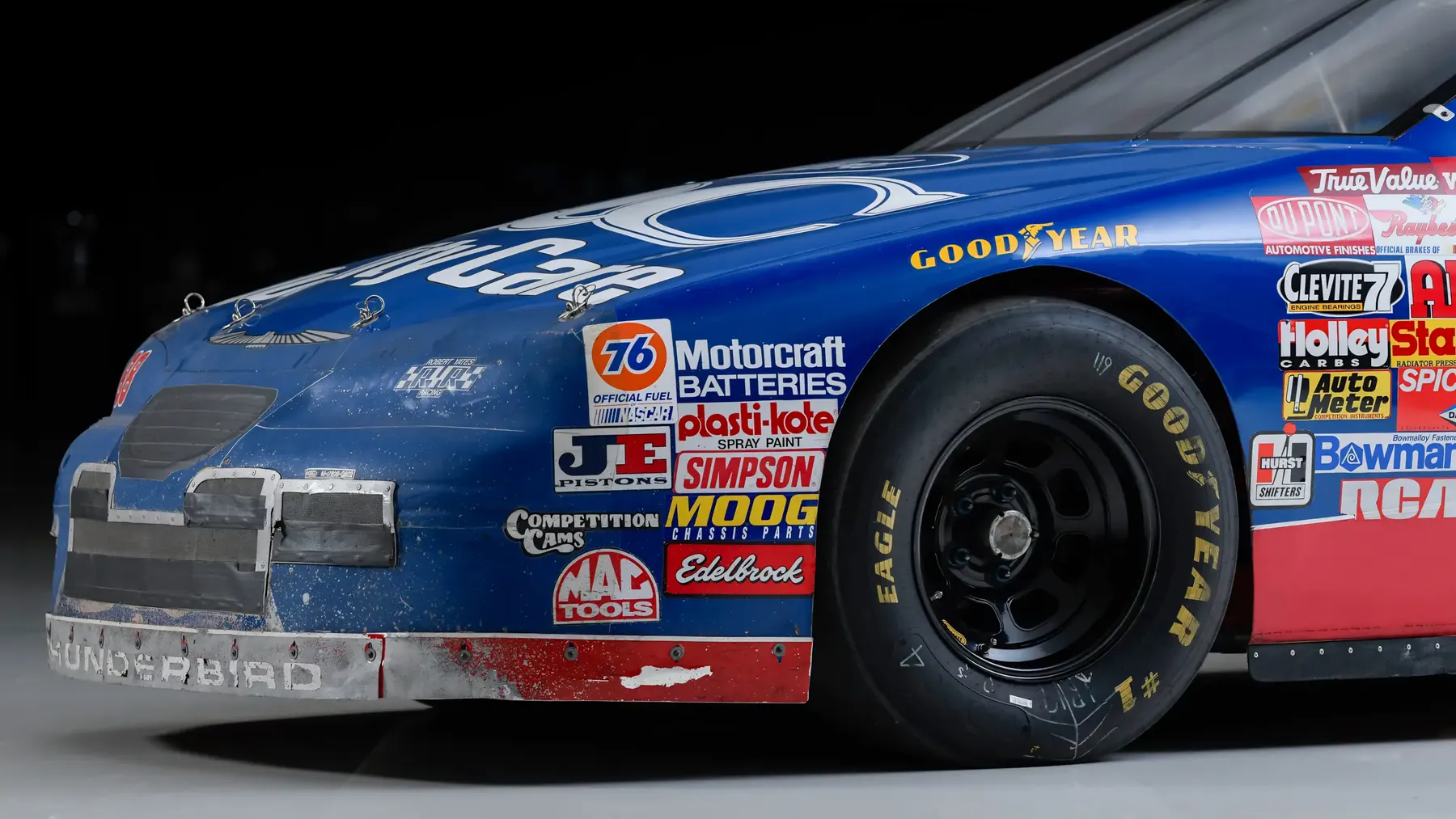
The Ford Thunderbird NASCAR ‘Dale Jarrett’ edition represents more than just a successful race car-it symbolizes an era when NASCAR was reaching its peak popularity in American culture. Jarrett’s gentlemanly demeanor, combined with his aggressive driving style and the iconic Quality Care/Ford Credit paint scheme, created a package that appealed to fans across the spectrum.
Jarrett’s achievements in the Thunderbird helped cement his place in NASCAR history. He was inducted into the NASCAR Hall of Fame in 2014, where he credited the Robert Yates Racing team: “We knew we had the best engines in the business from Robert and Doug Yates. It was incredible to work around such hardworking and dedicated people who only wanted one thing: To win. That’s what I wanted.”
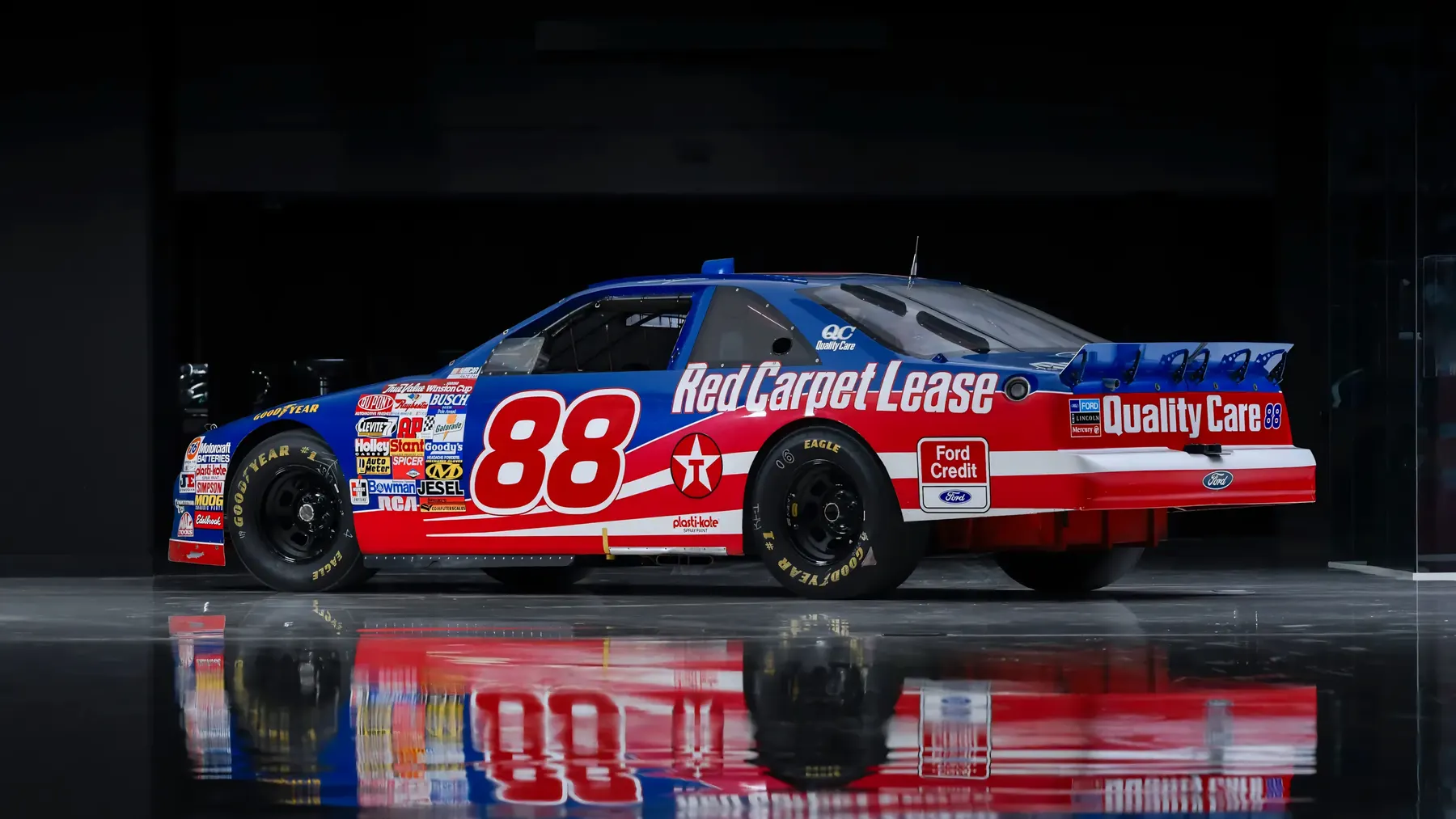
The Thunderbird’s NASCAR career came to an end after the 1997 season when Ford switched to the Taurus body style, although a few teams continued to run Thunderbirds in early 1998. The last appearance of a Thunderbird in the Cup Series came when Billy Standridge failed to qualify for the 1999 Daytona 500.
Today, the Ford Thunderbird NASCAR ‘Dale Jarrett’ edition is remembered not just for its victories but for representing a golden age in American stock car racing-a time when manufacturer identity was strong, personalities were larger than life, and the cars themselves were as iconic as the drivers who piloted them.
The 1996 Daytona 500-winning Thunderbird remains one of the most significant race cars of its era, having been preserved in its race-winning condition and displayed at various museums including the International Motorsports Hall of Fame at Talladega. Like the driver who took it to victory lane, this remarkable racing machine continues to inspire admiration and respect from racing enthusiasts around the world.
Join the discussion
Comments
Loading comments…
Leave a comment
Share a detail, memory, or perspective. Every comment is reviewed before publication.