1999 Ford Puma S1600

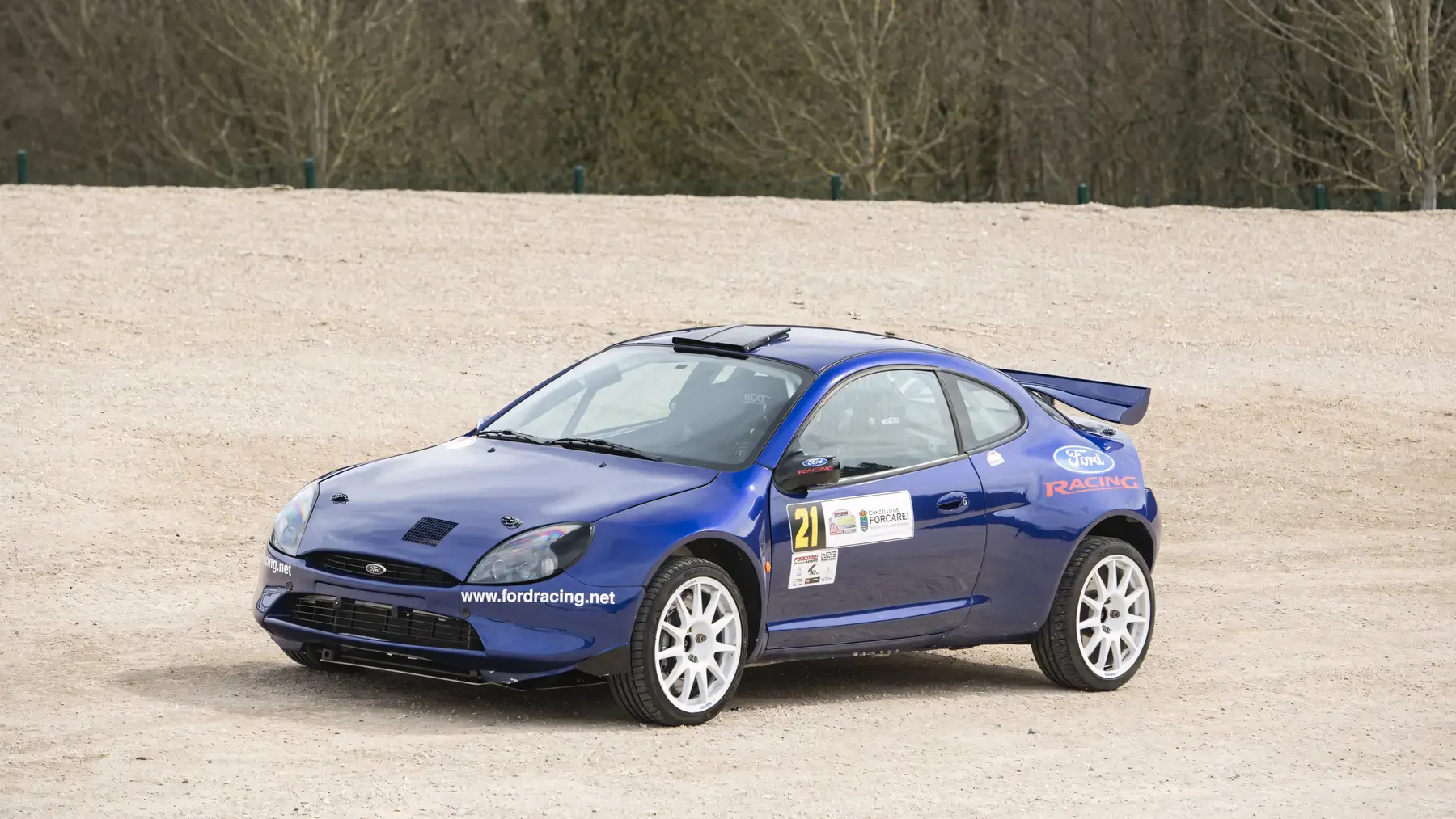
In the late 1990s, as rallying entered an era of technical innovation and grassroots competition, Ford unveiled a pocket-sized powerhouse: the Puma S1600. Born from the road-going Ford Puma coupé, this homologation special was engineered to dominate the FIA’s Super 1600 class, blending accessible motorsport engineering with the agility of a production car. A testament to Ford’s rally heritage, the S1600 became a launchpad for emerging talent and a beloved underdog in regional and national rallies across Europe.
The Ford Puma S1600 traces its roots to the 1997 road car, a sleek, New Edge-styled coupé designed to inject sportiness into Ford’s lineup. While the production Puma won accolades for its design and driving dynamics, Ford’s Boreham Motorsport division saw potential in its Fiesta-derived chassis for rallying. In 1999, the S1600 emerged as a homologation special, crafted to meet FIA Group A regulations and compete in the Super 1600 category.
Developed to bridge the gap between amateur enthusiasts and professional rallying, the S1600 offered privateer teams an affordable yet potent platform. Its creation aligned with Ford’s strategy to nurture young drivers, providing a reliable car for events like the Sanremo Rally and the Memorial Bettega. Though overshadowed by World Rally Championship giants, the S1600 carved a niche as a proving ground for future stars.
The S1600 retained the road Puma’s feline silhouette but underwent radical transformation for competition. The chassis was reinforced with a welded steel roll cage, enhancing rigidity while ensuring safety. Composite materials replaced standard body panels, and widened wheel arches accommodated 17-inch gravel wheels or 15-inch tarmac alloys, wrapped in competition tires for maximum grip.
Aerodynamic tweaks included a redesigned front bumper for improved airflow and a rear spoiler to stabilize high-speed runs. Inside, the cabin was stripped to essentials: a racing bucket seat, hydraulic handbrake, and simplified dashboard housing rally-specific instrumentation. The road car’s 55-liter fuel tank was swapped for an FIA-approved safety cell, mounted beneath the rear floor to optimize weight distribution.
At the heart of the S1600 lay a 1.7-liter Zetec SE engine, co-developed with Yamaha and fortified for rally duty. Retaining the road car’s Nikasil-coated aluminum block, it was tuned to produce 200 horsepower at a screaming 9,000 rpm,a significant leap over the standard 125 hp. A Hewland six-speed sequential “dog-leg” gearbox delivered lightning-fast shifts, while a limited-slip differential maximized traction on loose surfaces.
The front-wheel-drive layout, paired with MacPherson struts and adjustable coilovers, offered razor-sharp handling. Alcon brakes,355mm ventilated discs upfront and 260mm rears,provided stopping power, essential for navigating tight corners. Weighing just over 1,000 kg (2,205 lbs), the S1600 combined lightweight agility with relentless acceleration, achieving 0-60 mph in under 6 seconds.
The S1600’s brilliance lay in its balance of simplicity and sophistication. Unlike exotic WRC machines, it used production-based components, making maintenance affordable for privateers. Its sequential gearbox, rare in its class, gave drivers a professional edge, while the robust Zetec engine became renowned for durability in endurance events.
Ford’s focus on accessibility extended to homologation: the S1600 required only limited production runs, allowing Ford to meet FIA rules without excessive cost. This democratized rallying, enabling smaller teams to compete on technical merit rather than budget.
Though the road-going Puma earned praise (including Top Gear’s 1997 Car of the Year), the S1600 found its fame in rally circles. Drivers lauded its predictable handling and mechanical resilience, while fans adored its David-vs-Goliath spirit. Though it never claimed a world title, it thrived in regional championships, from the British Rally Championship to Italy’s Trofeo Rally Terra.
Today, the S1600 enjoys a renaissance among historic rally enthusiasts. Preserved examples, often clad in period liveries like the iconic Ford Motorsport blue-and-white, are coveted for their blend of nostalgia and competitiveness. Clubs and specialists support owners with parts and expertise, ensuring these cars remain active in vintage events.
The Puma S1600’s true victory lies in its role as a talent incubator. Drivers like François Duval and Mikko Hirvonen cut their teeth in S1600s before ascending to WRC stardom. Its emphasis on driver skill over brute power made it a masterclass in car control, embodying the essence of grassroots motorsport.
As Ford’s modern rally efforts focus on hybrid technologies and global championships, the S1600 remains a cherished relic of a purer era. It stands as a testament to the idea that greatness in motorsport isn’t reserved for factory titans,but can be found in the determined hands of underdogs, armed with nothing but passion and a well-tuned engine.
The Ford Puma S1600 is more than a rally car; it’s a symbol of accessibility and ambition. By marrying the DNA of a beloved road car with competition-grade engineering, Ford created a platform where dreams could outpace budgets. For drivers, it was a teacher. For fans, it was a thrill. And for history, it remains a reminder that in rallying, the smallest cars often leave the largest legacies.
Join the discussion
Comments
Loading comments…
Leave a comment
Share a detail, memory, or perspective. Every comment is reviewed before publication.