2011 Dodge Challenger SRT8 392

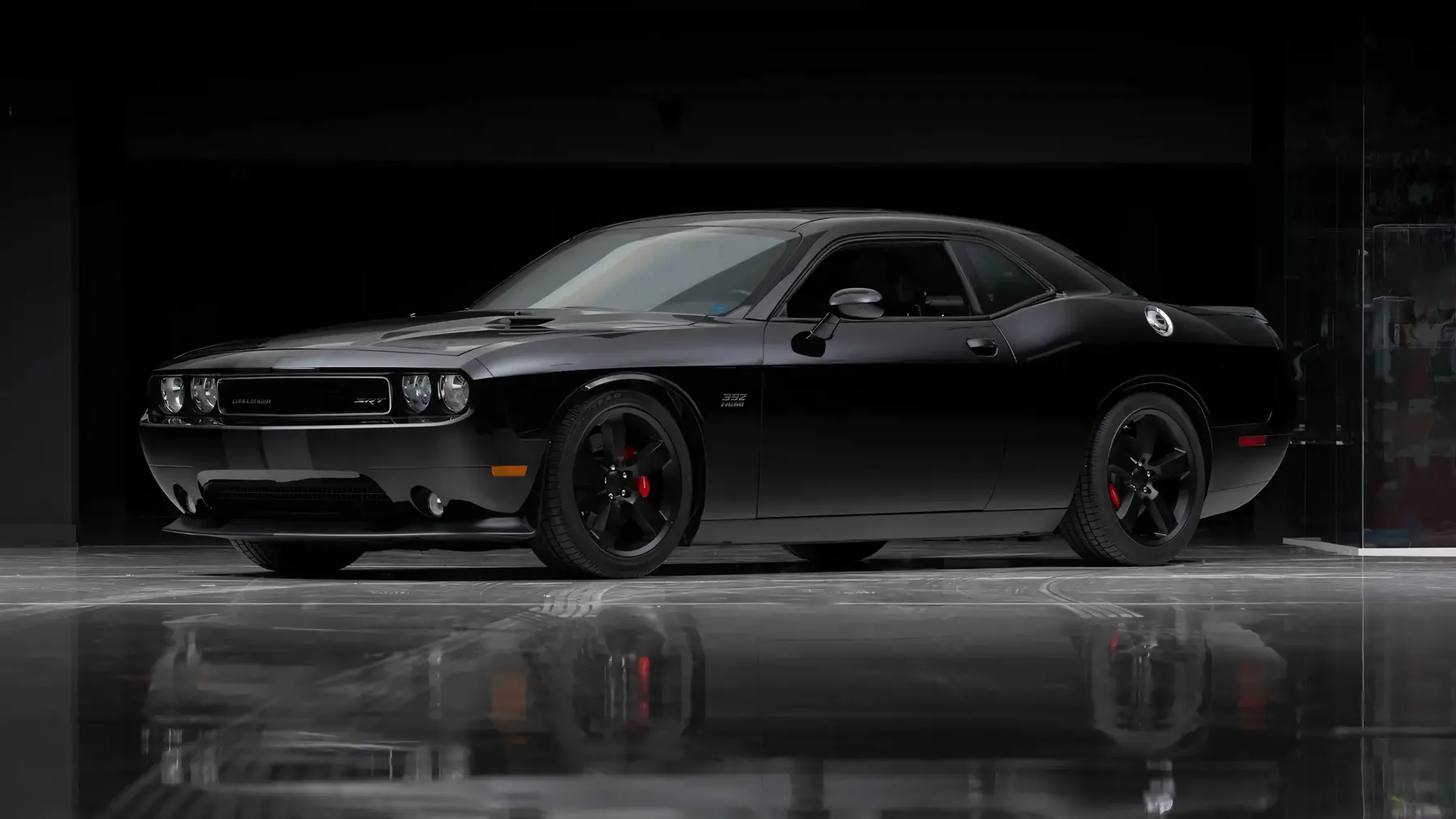
The Dodge Challenger SRT8 392 stands as one of the most compelling examples of American muscle car engineering in the modern era. This beast of a machine represents everything that made the original muscle car movement so captivating, wrapped in contemporary technology and refined with decades of automotive evolution.
When Dodge reintroduced the Challenger nameplate in 2008, they weren’t just reviving a car; they were resurrecting an entire philosophy of automotive design. The third-generation Challenger emerged as a full-size muscle car designed to challenge the fifth-generation Ford Mustang and Chevrolet Camaro, but it carved out its own distinct identity through sheer presence and uncompromising power delivery.
The SRT8 392 variant arrived in 2011 as the pinnacle of this renaissance, featuring the legendary 392 cubic inch displacement that harked back to Chrysler’s golden age of performance. This wasn’t merely nostalgia marketing; it was a genuine homage to the original 392 HEMI engine introduced in 1957, which had become legendary among drag racers and hot rod enthusiasts throughout the 1960s.
The heart of the SRT8 392 beats with a 6.4-liter HEMI V8 that produces 470 horsepower at 6,000 rpm and an equally impressive 470 lb-ft of torque at 4,200 rpm. What makes this powerplant truly special isn’t just the raw numbers, but how the engineers tuned it for real-world performance. Chrysler’s team deliberately prioritized low-end torque over peak horsepower, resulting in an additional 90 lb-ft of torque at 2,900 rpm compared to the previous 6.1-liter engine.
This engineering philosophy translates into something magical behind the wheel. The 392 delivers what enthusiasts describe as “instantaneous thrust, divisible by tiny fractions of an inch, with a flex of your toe”. The engine features modern technology like variable cam timing, an active intake manifold, and Fuel Saver technology that can operate on four cylinders when cruising, achieving surprisingly respectable fuel economy for such a powerful machine.
Transmission options included either a Tremec TR-6060 six-speed manual or a five-speed automatic with AutoStick capability. The manual transmission, in particular, earned praise for its robust construction and progressive clutch feel, making it accessible even to drivers less experienced with high-torque applications.
The SRT8 392 accelerates from 0-60 mph in approximately 4.5 to 4.8 seconds, depending on transmission choice and testing conditions. Quarter-mile times consistently fall in the 12.6 to 12.9-second range at speeds between 111 and 114 mph. These numbers place it firmly in supercar territory, yet the Challenger achieves this performance with a surprisingly refined character.
The car’s top speed reaches an impressive 180 mph, enabled by long gearing that also allows for relaxed highway cruising. This dual personality perfectly encapsulates what makes the 392 so appealing: it can transform from a tire-smoking street terror to a comfortable grand tourer with nothing more than a lighter touch on the accelerator.
Despite weighing approximately 1,890 kilograms, the SRT8 392 demonstrates remarkable composure through its sophisticated chassis engineering. The suspension borrows heavily from Mercedes-Benz development, featuring control-arm geometry from the S-Class at the front and a five-link arrangement adapted from the E-Class at the rear.
For 2012 and later models, Dodge introduced an Adaptive Damping Suspension system with selectable modes. In “Auto” mode, the system continuously adjusts damping based on vehicle speed, steering input, throttle position, and acceleration forces. “Sport” mode locks the dampers to their highest setting, providing the most aggressive handling characteristics ever offered in an SRT product.
The SRT8 392 achieves 0.90g on the skidpad, placing it among the world’s best-handling performance coupes despite its substantial size. Brembo brakes with six-piston front calipers and massive 15.4-inch front rotors provide stopping power that matches the acceleration capability.
The exterior design of the SRT8 392 successfully bridges five decades of automotive styling evolution. The long, sculpted hood, aggressive front fascia, and muscular rear proportions create an unmistakable presence that pays proper homage to the 1970 Challenger R/T while incorporating modern aerodynamic principles.
Functional design elements include hood scoops that actually enhance engine cooling, a front splitter and integrated fender spats for high-speed stability, and a rear decklid spoiler that provides aerodynamic balance. The signature dual exhaust outlets with their distinctive 4-inch rectangular tips deliver both visual drama and the thunderous exhaust note that muscle car enthusiasts demand.
Twenty-inch forged aluminum wheels became standard equipment, available in multiple finishes including the popular satin black painted pockets that emphasize the car’s aggressive stance. The wide, low profile enhances both stability and visual impact, creating what many describe as a “menacing road presence”.
Inside the cabin, the SRT8 392 achieves a remarkable balance between luxury and performance orientation. The heated, leather-wrapped steering wheel features a distinctive satin chrome rim section with a flattened bottom surface that allows drivers to instantly gauge steering input during spirited driving. Paddle shifters on automatic-equipped models provide manual gear selection without removing hands from the wheel.
The SRT Electronic Vehicle Information Center delivers real-time performance data including 0-60 times, acceleration forces, braking forces, cornering g-forces, and quarter-mile times. This system transforms the driving experience into something approaching a professional performance evaluation, allowing drivers to monitor and improve their technique.
Premium Laguna leather seating with heating and ventilation comes standard, providing comfort during extended driving sessions. Despite being a two-door coupe, the Challenger offers generous interior space with over 33 cubic feet of rear passenger volume and 16.2 cubic feet of trunk space, making it surprisingly practical for a high-performance vehicle.
The automotive press consistently praised the SRT8 392 for delivering on its promises without pretense. Road testers frequently noted how the car attracted attention from children and adults alike, creating impromptu car shows wherever it stopped. This universal appeal stems from the Challenger’s honest approach to performance: it looks fast, sounds fast, and delivers exactly the experience its appearance promises.
Critics appreciated the car’s character as a cruiser rather than a track-focused weapon. As one reviewer perfectly captured: “When I think of a Challenger SRT-8, I see myself driving down Capital Boulevard late at night, the windows down, my favorite album cranked up on the stereo, the huge pushrod V8 just barely a whisper above idle in 5th gear”. This sentiment reflects the 392’s greatest strength: its ability to be both thrilling and comfortable depending on the driver’s mood.
Consumer reviews consistently highlighted the car’s reliability and daily usability. Owners reported achieving up to 28 mpg during highway cruising when driving conservatively, impressive figures for a 470-horsepower muscle car. Long-term ownership experiences generally proved positive, with most mechanical issues limited to minor items like interior rattles or replacement of wear components.
Production of the Challenger SRT8 392 ended on December 22, 2023, when the final Challenger rolled off the Brampton Assembly Plant production line. Stellantis announced that tightening EPA emissions standards made continuation of the current platform impossible, marking the end of nearly two decades of LX platform production.
The SRT8 392 represents more than just another performance variant; it embodies the final flowering of American muscle car philosophy in its purest form. While future electrified successors may surpass its performance numbers, they will struggle to match the visceral connection between driver and machine that the 392’s naturally aspirated HEMI V8 provided.
For enthusiasts who experienced the SRT8 392 during its production run, the memories remain vivid: the instant torque delivery, the thunderous exhaust note, the way it commanded respect from both pedestrians and fellow drivers. This car proved that traditional American muscle car values could coexist with modern refinement and reliability, creating something truly special in an increasingly homogenized automotive landscape.
The Dodge Challenger SRT8 392 stands as a testament to what happens when engineers and designers share an uncompromising vision of automotive performance. It delivered exactly what it promised: honest, accessible, thrilling performance wrapped in timeless design. Few cars have managed to capture the essence of their heritage so completely while remaining thoroughly modern in execution.
Join the discussion
Comments
Loading comments…
Leave a comment
Share a detail, memory, or perspective. Every comment is reviewed before publication.