2012 McLaren MP4-12C Coupe


The McLaren MP4-12C represents one of the most significant milestones in British automotive engineering. Developed as McLaren’s triumphant return to road car production, this exceptional machine combined Formula 1 technology with everyday usability in ways that revolutionized the supercar landscape. With its carbon fiber heart and twin-turbocharged soul, the 12C didn’t just compete with established rivals – it redefined expectations.
McLaren began developing what would become the MP4-12C in 2005, marking the company’s first dedicated production car since the legendary F1 that ceased production in 1998. The development process was nothing short of extraordinary, with McLaren engineers creating over fifty experimental prototypes tested across diverse global environments – from scorching deserts in Bahrain and Nevada to Arctic conditions in Sweden.
The development team’s commitment to perfection led them to establish testing bases at Idiada in northern Spain and the Prototipo facility near Nardo in Italy, where they conducted grueling 24-hour testing sessions. This methodical approach wasn’t just about creating another fast car – it was about engineering something truly exceptional.
In 2008, Frank Stephenson joined as lead design director, refining the already well-established aesthetic with adjustments to headlights, front bumper, and interior elements. After an online unveiling in September 2009, the MP4-12C made its physical debut at the 2010 Goodwood Festival of Speed, generating immense excitement among automotive enthusiasts.
Production officially began on February 2, 2011, at McLaren’s purpose-built facility in Woking, Surrey – a £50 million investment capable of producing approximately 4,000 cars annually. This facility was officially opened by then-Prime Minister David Cameron in November 2011, highlighting the car’s significance to British engineering and manufacturing.
At the core of the MP4-12C sits its revolutionary carbon fiber monocoque – the “MonoCell.” This single-piece carbon structure weighs just 80 kilograms and represents a fundamental advancement in automotive engineering. Manufactured by Carbo Tech in Salzburg, Austria, this component exemplifies McLaren’s pioneering work with carbon fiber that began in Formula 1 racing in 1981.
The advancements in carbon fiber fabrication technology meant the MonoCell could be produced in just four hours – a staggering improvement from the 3,000 hours required for the McLaren F1’s carbon chassis. This breakthrough not only made production more efficient but created a structure 25 percent stiffer than equivalent metal chassis while being 25 percent lighter.
Unlike traditional aluminum or steel structures, the carbon MonoCell delivers exceptional rigidity without compromising weight, providing the perfect foundation for precise handling dynamics. As Claudio Santoni, Function Group Manager for Body Structures at McLaren Automotive, explained: “With the carbon MonoCell, the 12C offers owners more than just exceptional occupant safety. It is incredibly light, which helps reduce the 12C’s CO2 emissions and improve fuel efficiency. For the same reason, acceleration, braking, changes of direction and vehicle stability are all significantly improved”.

Powering the MP4-12C is a bespoke 3.8-liter twin-turbocharged V8 engine built by Ricardo in Shoreham. This exceptional power plant generates 625PS (616bhp) at 7,500 rpm and 600Nm (443 lb-ft) of torque between 3,000 and 6,500 rpm. Perhaps most impressive is that 80 percent of peak torque is available from just 2,000 rpm, ensuring explosive acceleration throughout the rev range.
The performance figures speak volumes: 0-100km/h (62mph) in just 3.1 seconds, 0-200km/h (124mph) in 8.8 seconds, and a top speed of 333 km/h (207 mph). Power delivery is managed by a sophisticated seven-speed Seamless Shift Gearbox (SSG) manufactured by Graziano Transmissioni in Turin. This dual-clutch transmission offers lightning-quick gear changes through its pre-cog system that pre-loads the clutch for virtually instantaneous shifts.

When tested on Top Gear’s track, the MP4-12C set the second-fastest lap time at 1 minute and 16.2 seconds – a testament to its extraordinary performance capabilities. As one automotive journalist described, the car’s performance is “shattering” with a “vicious surge of acceleration that few performance cars at any price can match”.
The MP4-12C introduced several groundbreaking technologies that set new standards in the supercar segment. Chief among these was the ProActive Chassis Control system – a revolutionary approach to suspension design that eliminated traditional anti-roll bars. This hydraulic interconnected system continuously adjusts damping rates to control pitch and roll, delivering a remarkably comfortable ride at lower speeds while automatically firming up during aggressive driving.

Another Formula 1-inspired innovation was the Brake Steer system, which applies braking to the inside rear wheel during cornering to reduce understeer and enhance handling precision. This technology was so effective in Formula 1 that it was banned for providing McLaren with an unfair advantage – now road car drivers could experience this same technology.
The car’s aerodynamic design was equally impressive, with hundreds of hours of computational fluid dynamics and wind tunnel testing resulting in a form that perfectly balanced downforce with minimal drag. The rear featured an innovative airbrake that deploys at high speeds to increase downforce, shift pressure rearward, and enhance stability during braking and cornering.

Inside the cockpit, the MP4-12C balanced performance focus with genuine comfort. The Alcantara and carbon-fiber-trimmed cabin felt solid and purposeful, if not quite as flamboyant as some Italian rivals. The figure-hugging seats provided excellent support while maintaining comfort for longer journeys.
The car offered three driving modes – Normal, Sport, and Track – which adjusted handling characteristics, throttle response, and gear shift speeds to suit different driving conditions. In Normal mode, reviewers were astonished by the ride quality, with one noting the car was “more comfortable than most family saloons”.
McLaren MP4-12C received widespread acclaim, winning “Car of the Year” in the Vehicle Dynamics International Awards along with “Dynamics Team of the Year” for McLaren’s engineering team. It also secured the Middle East “Car of the Year” Award as “Best Supercar” in 2012.
Owner feedback has been overwhelmingly positive, with many praising its exceptional performance, though some note occasional issues with electronic systems and relatively high maintenance costs. One owner summarized the experience perfectly: “Launching the twin turbos always brings a smile to my face. The driving dynamics are excellent”.
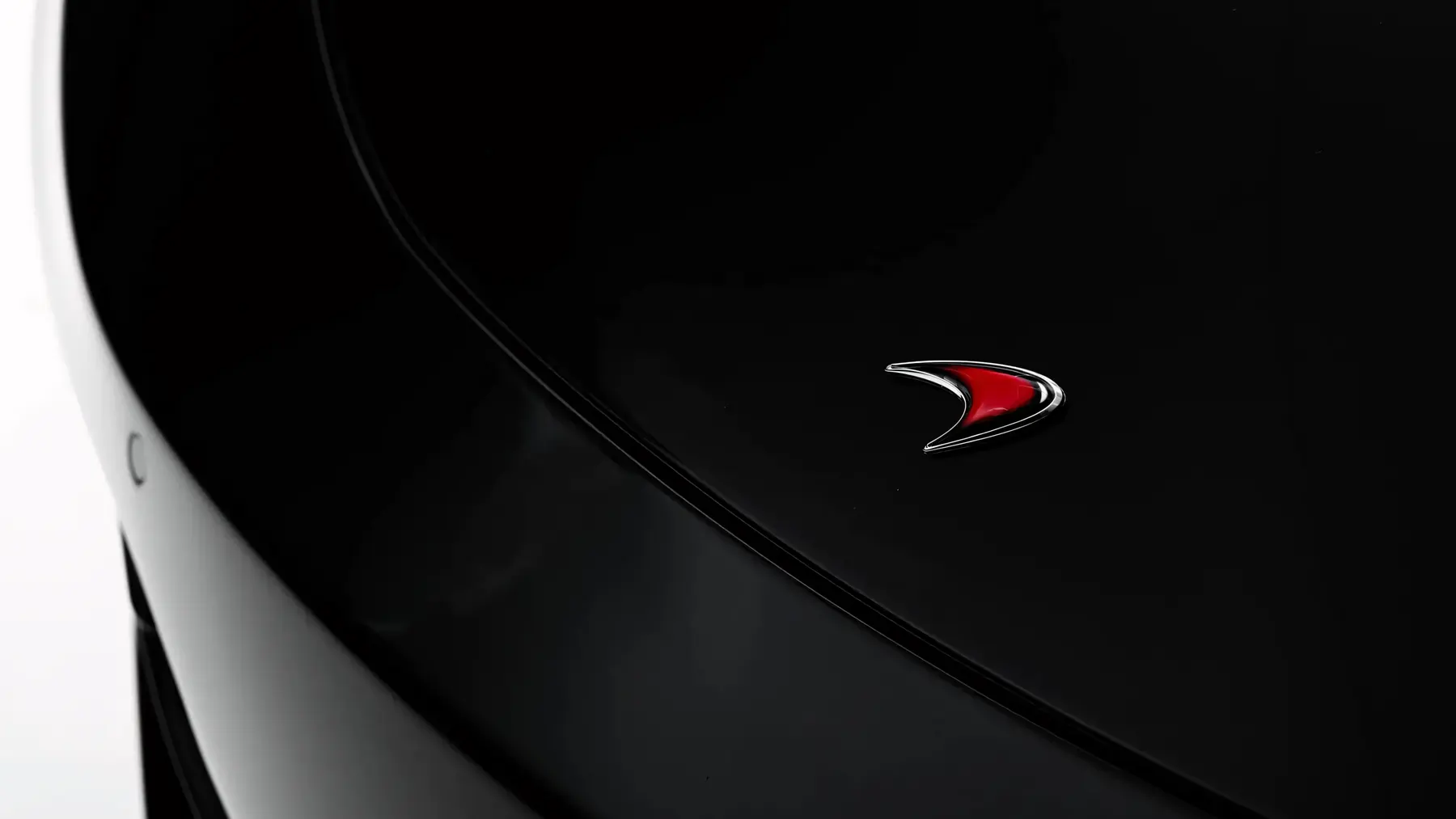
By the time production ended in April 2014, McLaren had manufactured over 3,400 units of the MP4-12C. It was succeeded by the 650S, which shared many components but built upon the remarkable foundation established by the 12C.
The McLaren MP4-12C wasn’t just another supercar – it represented the rebirth of McLaren as a production car manufacturer and established engineering benchmarks that continue to influence performance cars today. Its combination of Formula 1 technology, carbon fiber innovation, and everyday usability created a driving experience that remains extraordinary even years after its production ended.

Join the discussion
Comments
Loading comments…
Leave a comment
Share a detail, memory, or perspective. Every comment is reviewed before publication.