2016 Abarth 695 Assetto Corse Evoluzione

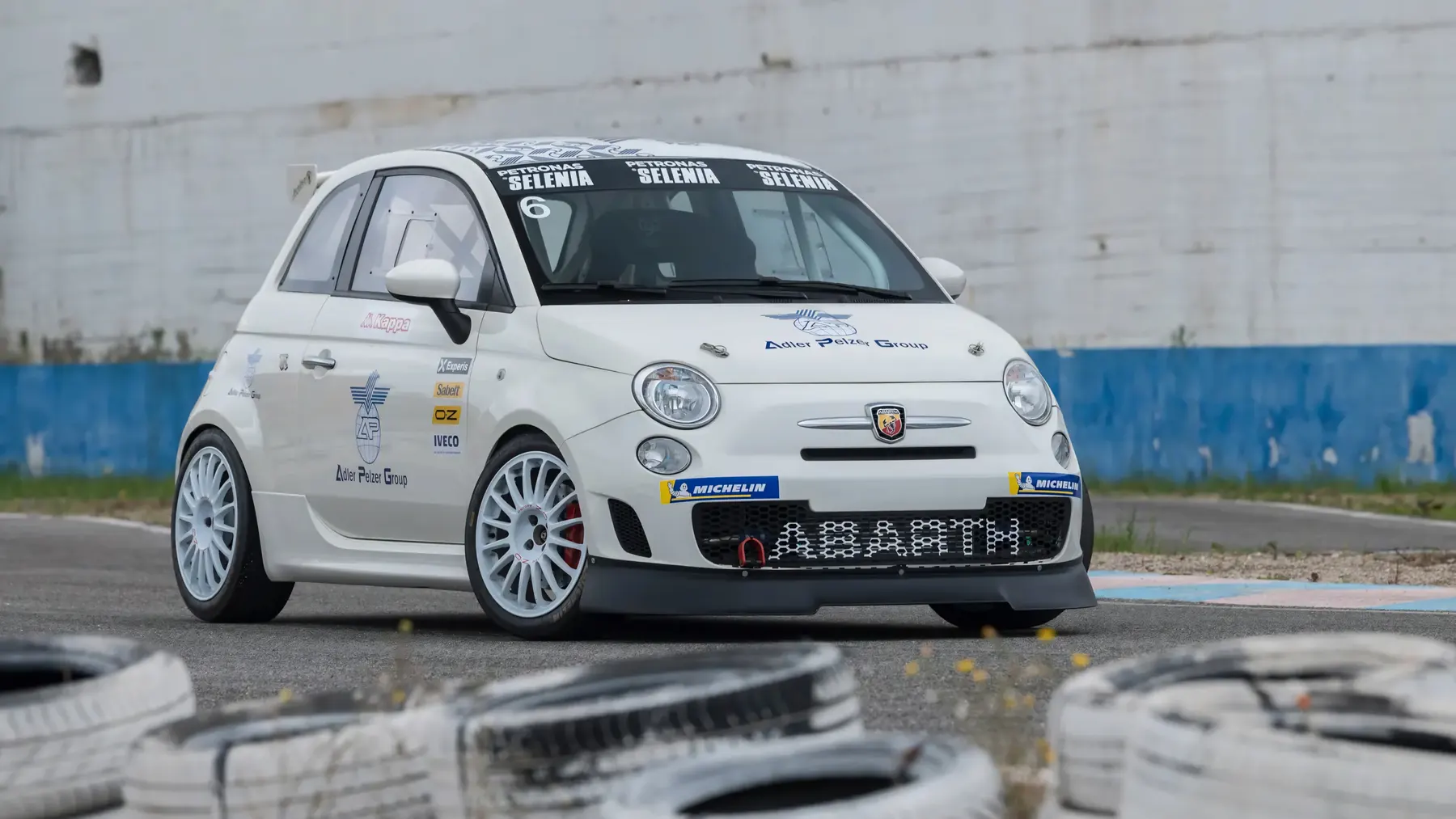
Imagine strapping into a car that looks like a tiny Fiat 500,but sounds like a swarm of angry hornets on steroids. The steering wheel shakes in your hands as the engine snarls to life, hitting octaves that make your dentist’s drill jealous. This isn’t your neighbor’s cute city car. It’s the Abarth 695 Assetto Corse Evoluzione, a unhinged Italian pocket rocket built not for gridlock but for hairpins. Born from racetracks rather than commuter culture, this machine proves you can take a grocery getter and turn it into a podium contender.
The story starts with the Fiat 500’s 2007 rebirth,a retro-styled city car that charmed Europe but wasn’t exactly track material. Enter Abarth, Fiat’s performance division named after founder Carlo Abarth, a man who once said, “Too much is never enough.” In 2008, they dropped a turbocharged beating heart into the 500, creating the road-legal Abarth 500. Fast forward to 2014: Abarth eyed the racing world and decided their plucky hatch needed sharper teeth. Thus, the 695 Assetto Corse Evoluzione (Italian for “Evolution Competition Package”) emerged.
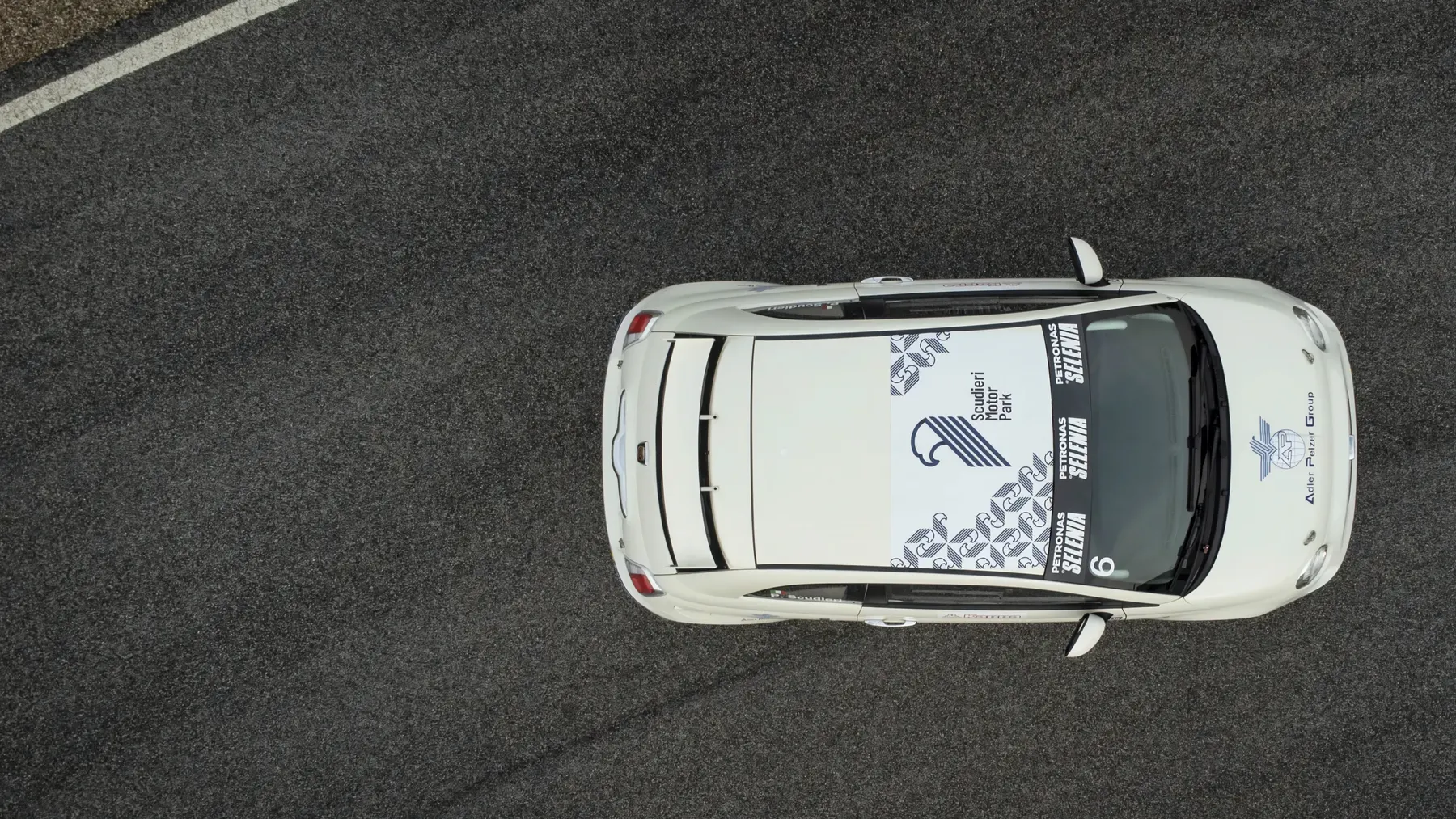
But here’s the twist,this wasn’t just a tuned-up road model. Abarth threw out the playbook. Only 120 were built, each a factory-crafted racer sold to private teams. Forget cup holders. This car came with a roll cage, fire suppression system, and a seat so tight you’ll feel every rumble strip in your spine.
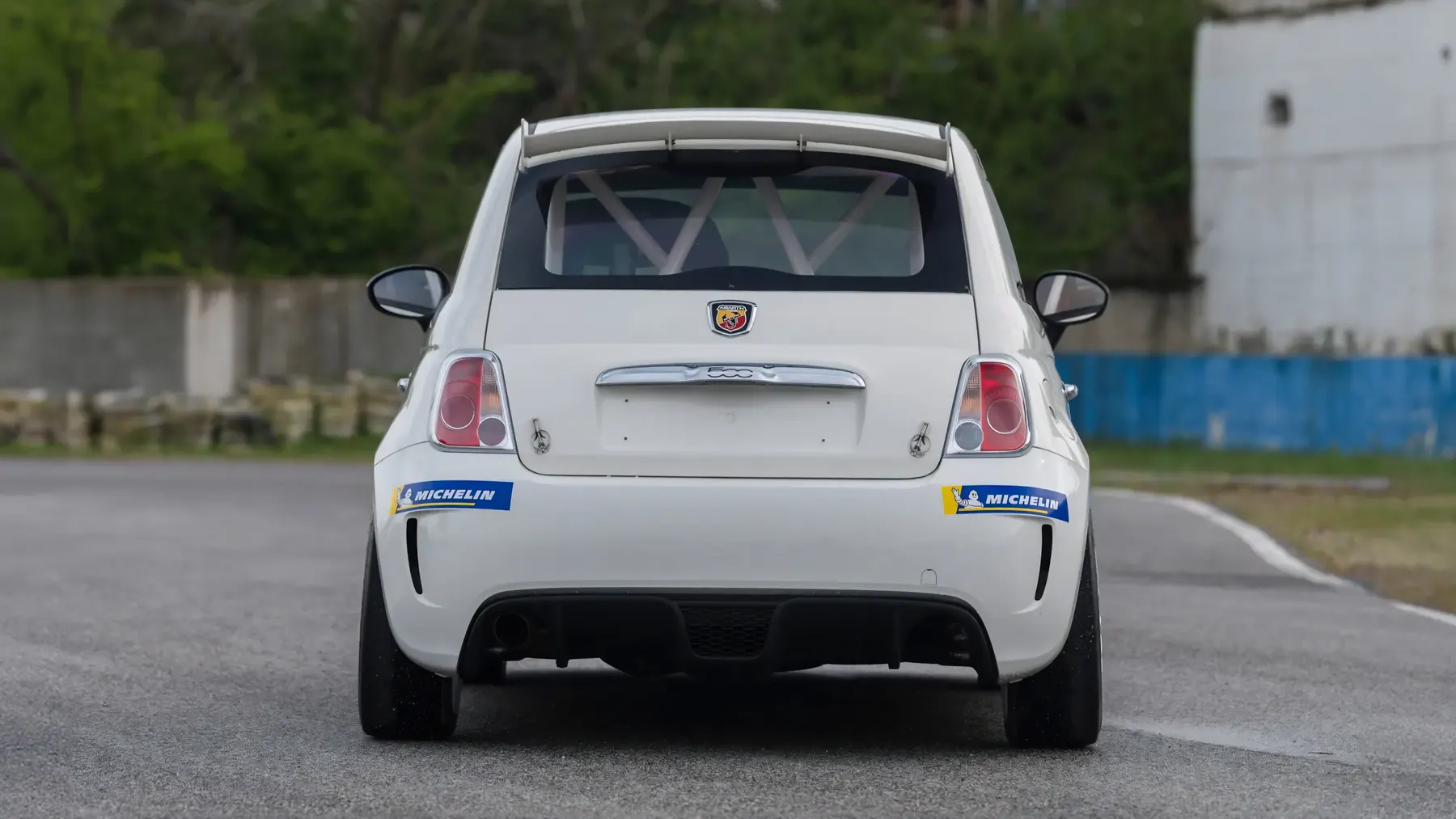
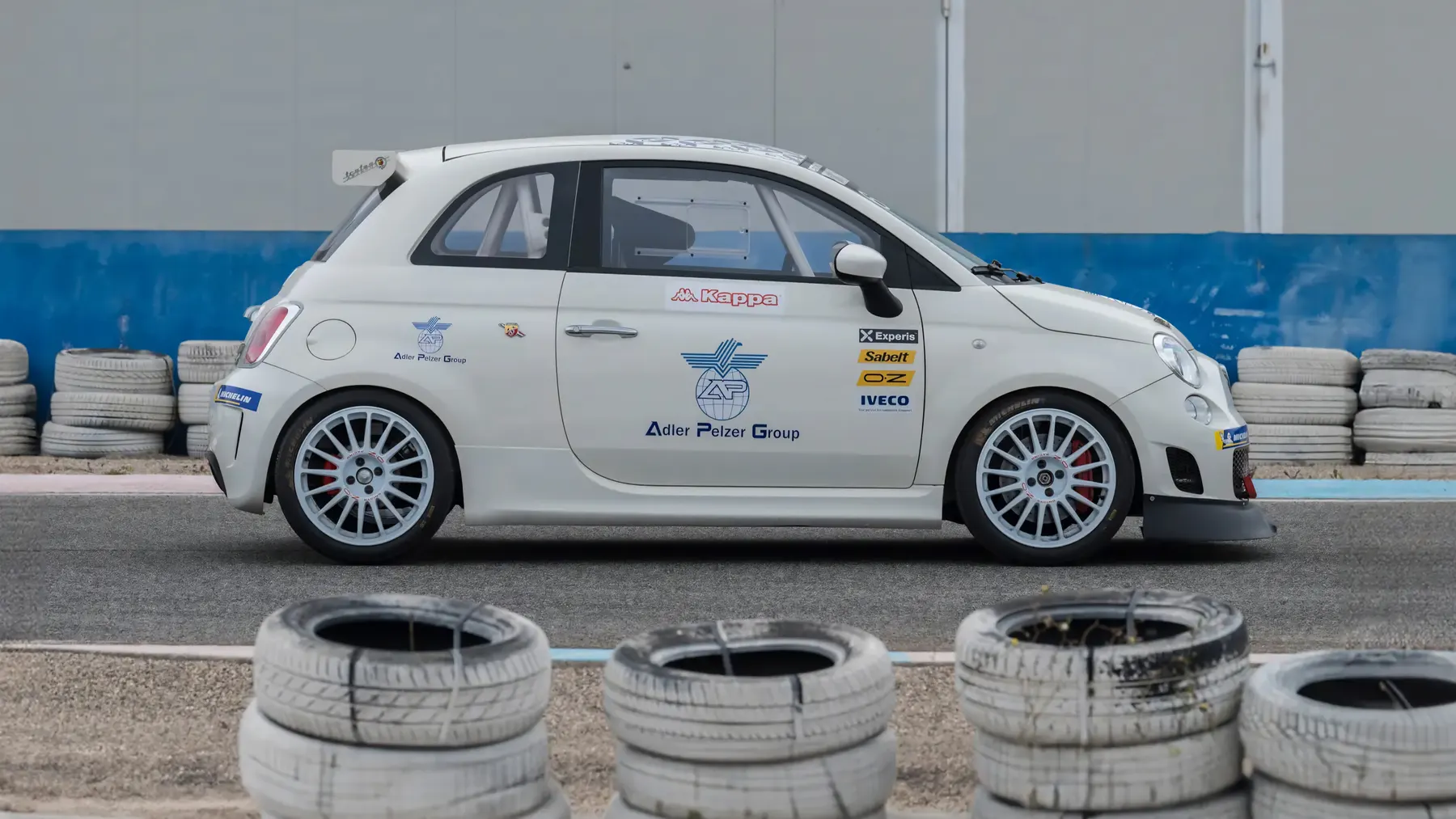
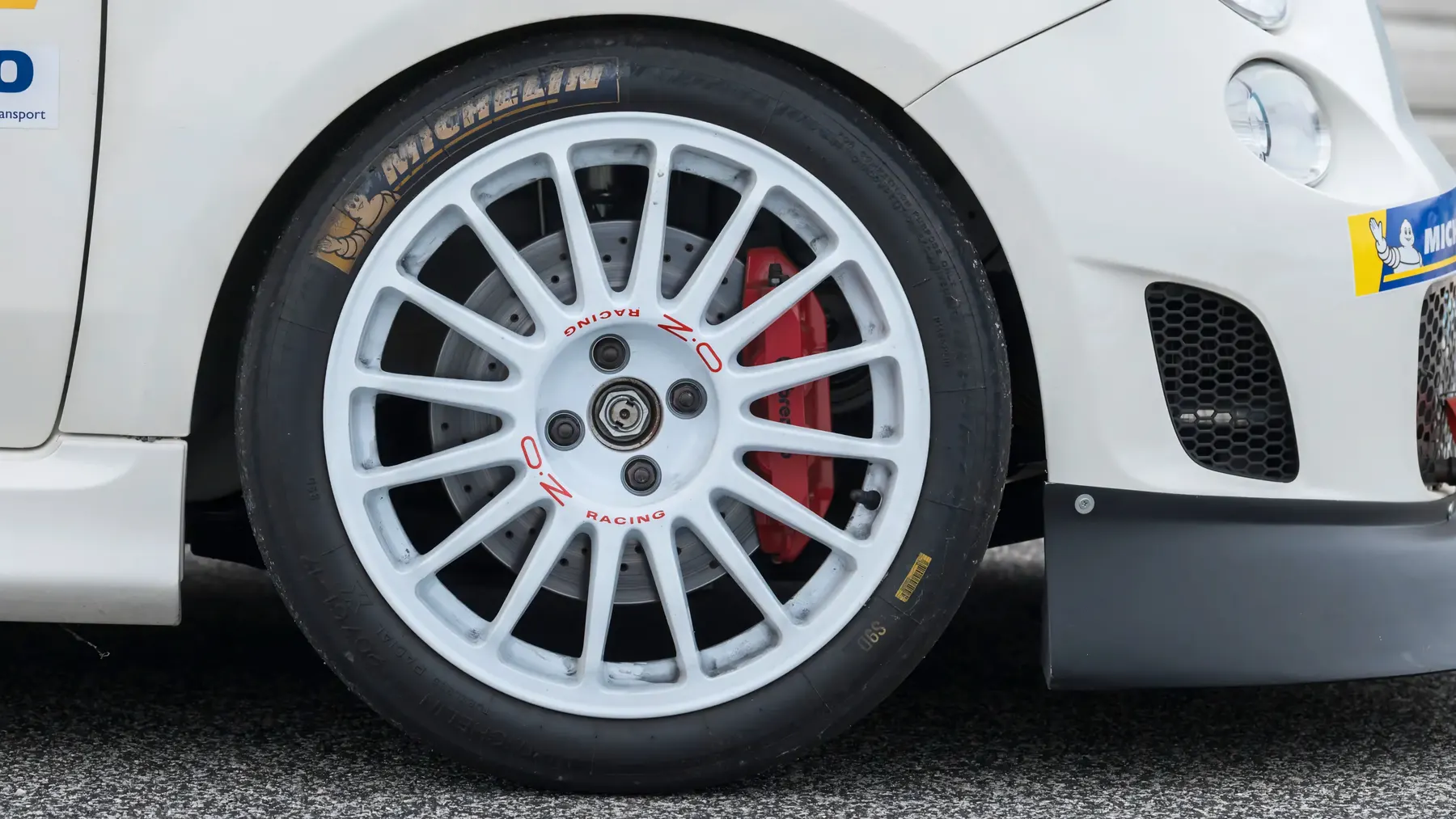
At first glance, the Evoluzione looks like a 500 that hit the gym. The body balloons with swollen fenders to house wider 17-inch OZ Racing wheels. The front bumper sprouts canards like a winged predator, while a massive rear wing big enough to land paper planes on pins the tail to the tarmac.
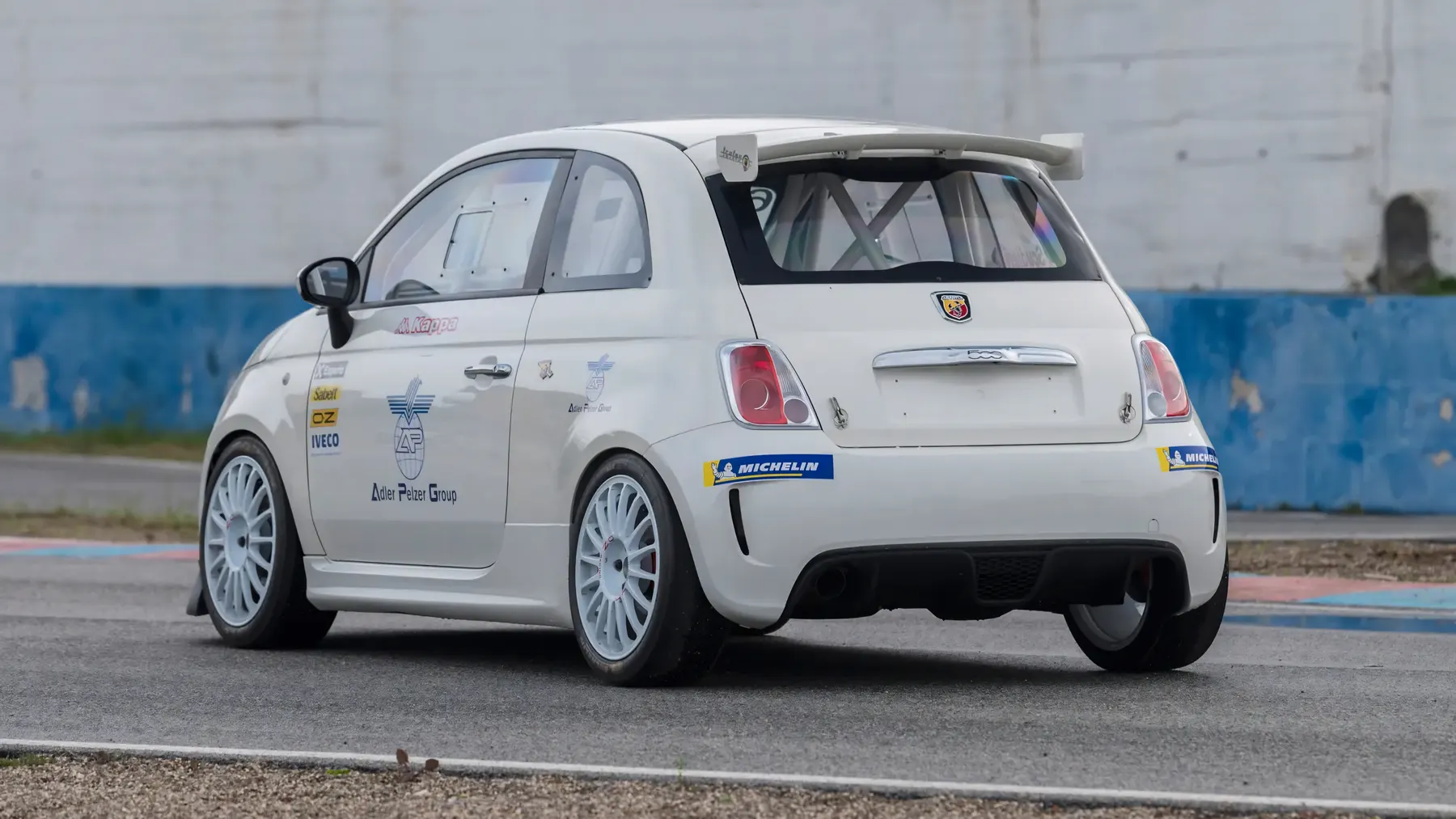
Step closer, though, and the race DNA smacks you. The polycarbonate windows weigh nothing. The hood latches with aircraft-style twists. Even the fuel cap is quick-release,because when seconds matter, no one wants to fumble with a screw-top.
Inside? There’s no “inside” to speak of. The dash is scrap metal wrapped in carbon fiber. The passenger seat? Gone. You get a single Sparco bucket seat hugging you like an overenthusiastic valet. The steering wheel,thinner than a pizza crust,has buttons for crucial stuff: ignition, pit speed limiter, and a “please don’t blow up” light for engine warnings.
Under that vented hood (you need tools to open it, because race car) lies the star: a 1.4-liter T-Jet turbo-four, boosted to 215 horsepower. To put that in perspective: The regular Abarth 500 had 135 hp. Here, engineers bored out the block, slapped on a bigger turbo, and said, “Torque steer? That’s a feature, not a bug.”
The result: 0-100 km/h in 5.9 seconds. Not supercar numbers, but in a car barely weighing a ton, it feels like being catapulted by a medieval trebuchet. The exhaust,a straight pipe exiting inches behind your ear,howls like a banshee with a megaphone. Fifth gear on a straight? You’ll be kissing 230 km/h if you’ve got the stones.
The Evoluzione proves you don’t need all-wheel drive to dominate. Abarth retained the standard 500’s front-drive setup but turned it nuclear. A locked differential routes power through fat 215/45 R17 racing slicks. The suspension? Completely reworked with adjustable Öhlins dampers and stiffer springs. They even chopped the ride height by 50 mm,low enough to scrape a credit card.
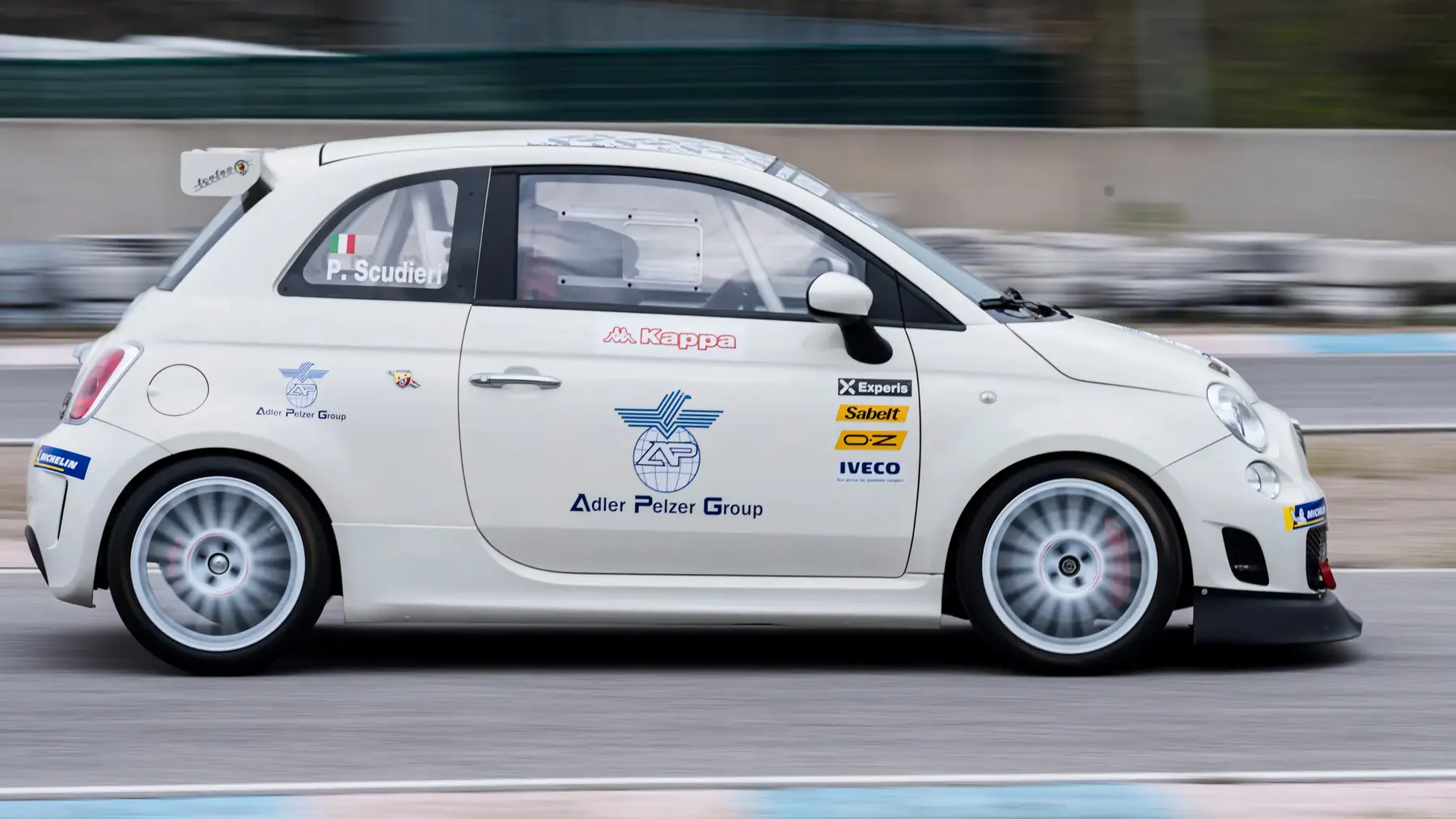
Early testers feared torque steer would kill lap times. They were wrong. The Evoluzione corners with the tenacity of a terrier chasing a mailman. Turn-in is razor sharp, the electro-hydraulic steering relaying every pebble to your palms. Oversteer? It’s on the menu if you’re brave with the throttle.
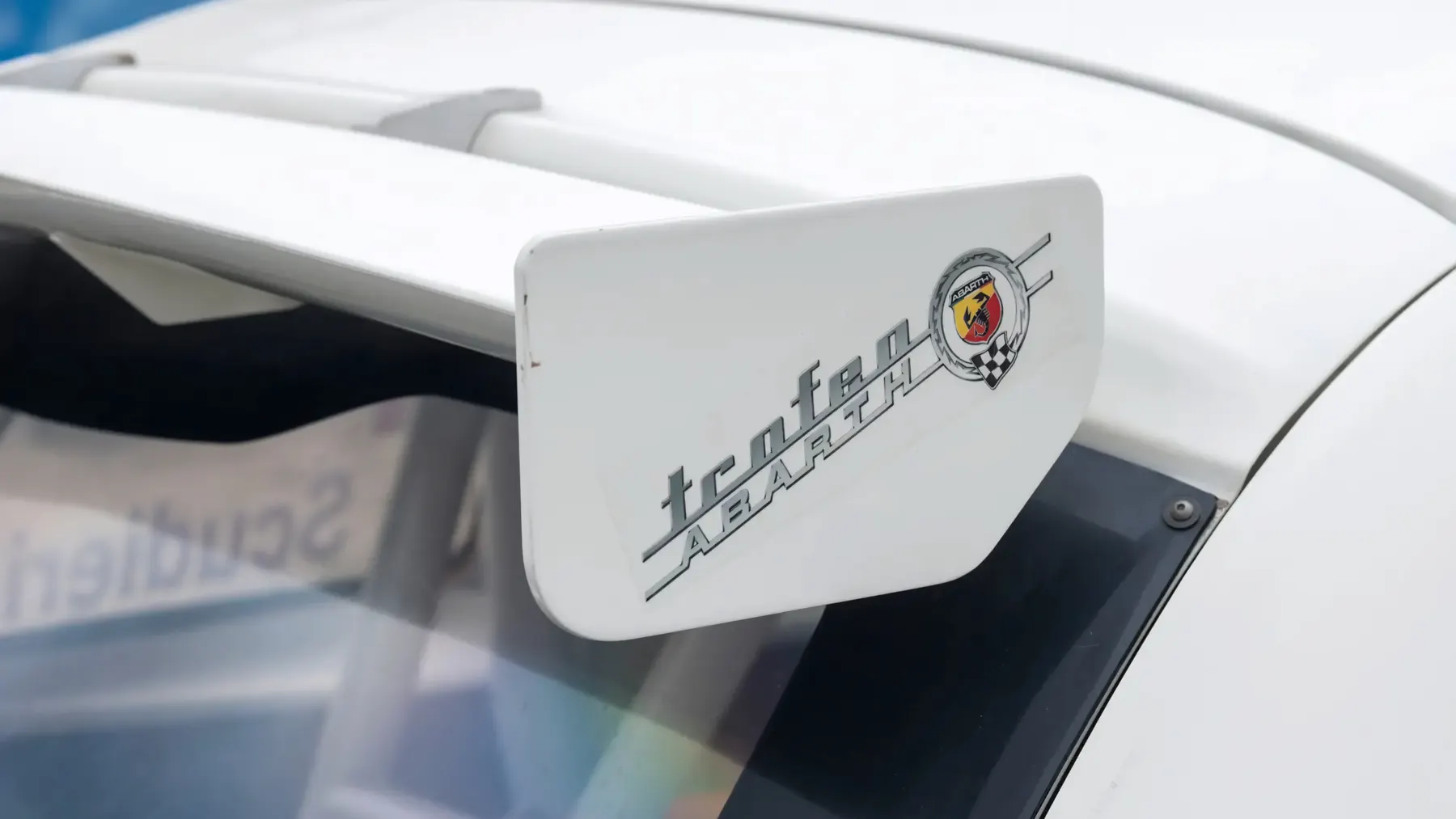
Abarth didn’t build this as a track-day toy. The Evoluzione was weaponized for the Trofeo Abarth,a one-make series across Europe. Picture 30 identical Evoluziones dicing through Monza, Spa, and the Nürburgring. Privateers loved it: maintenance was manageable, breakdowns rare.
The car dominated time attack events, too. At Italy’s Varano Circuit in 2015, an Evoluzione clocked laps within seconds of Porsche 911 GT3s,for a tenth the price. Not bad for something resembling a toaster on wheels.
Motor journalists gushed. EVO magazine called it “the most fun you’ll have sideways without a license.” Owners raved about its shocking speed in tight corners. Even rivals respected it: Ford tried countering with the Fiesta ST, but couldn’t match the Italian’s theater.
Yet the Evoluzione had flaws. The stripped interior gave tinnitus after 30 minutes. The lack of ABS (anti-lock brakes) meant drivers needed to master threshold braking. Miss a downshift? The turbo lag would bite back.
Today, surviving Evoluziones are unicorns. Most were caged and raced hard. Prices start around €80,000,triple their original €26,000 sticker. Collectors hunt them as future classics, though purists argue they belong on track, not in garages.
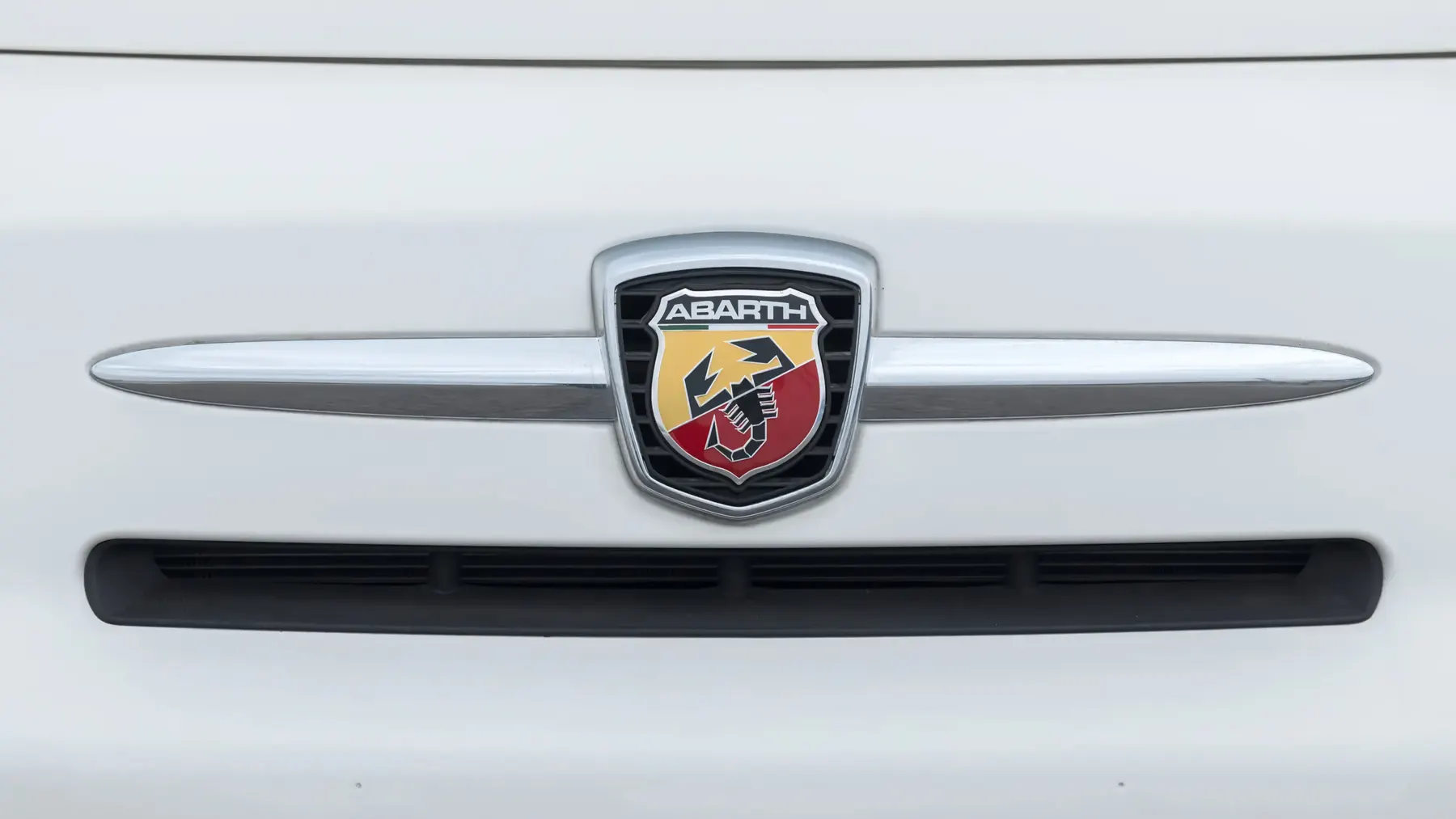
Abarth hasn’t matched this model since. Its spiritual successor, the 695 Tributo, dials back the madness for the road. The Evoluzione remains special,a car that roared when others whispered.
Firing up an Evoluzione feels like starting a riot. The engine chatters like a jackhammer until the turbo spools. First gear engages with a rifle-bolt clack. Soon you’re surfing waves of torque, the front tires scrabbling for grip. The unassisted steering takes muscle but rewards with telepathic feel.
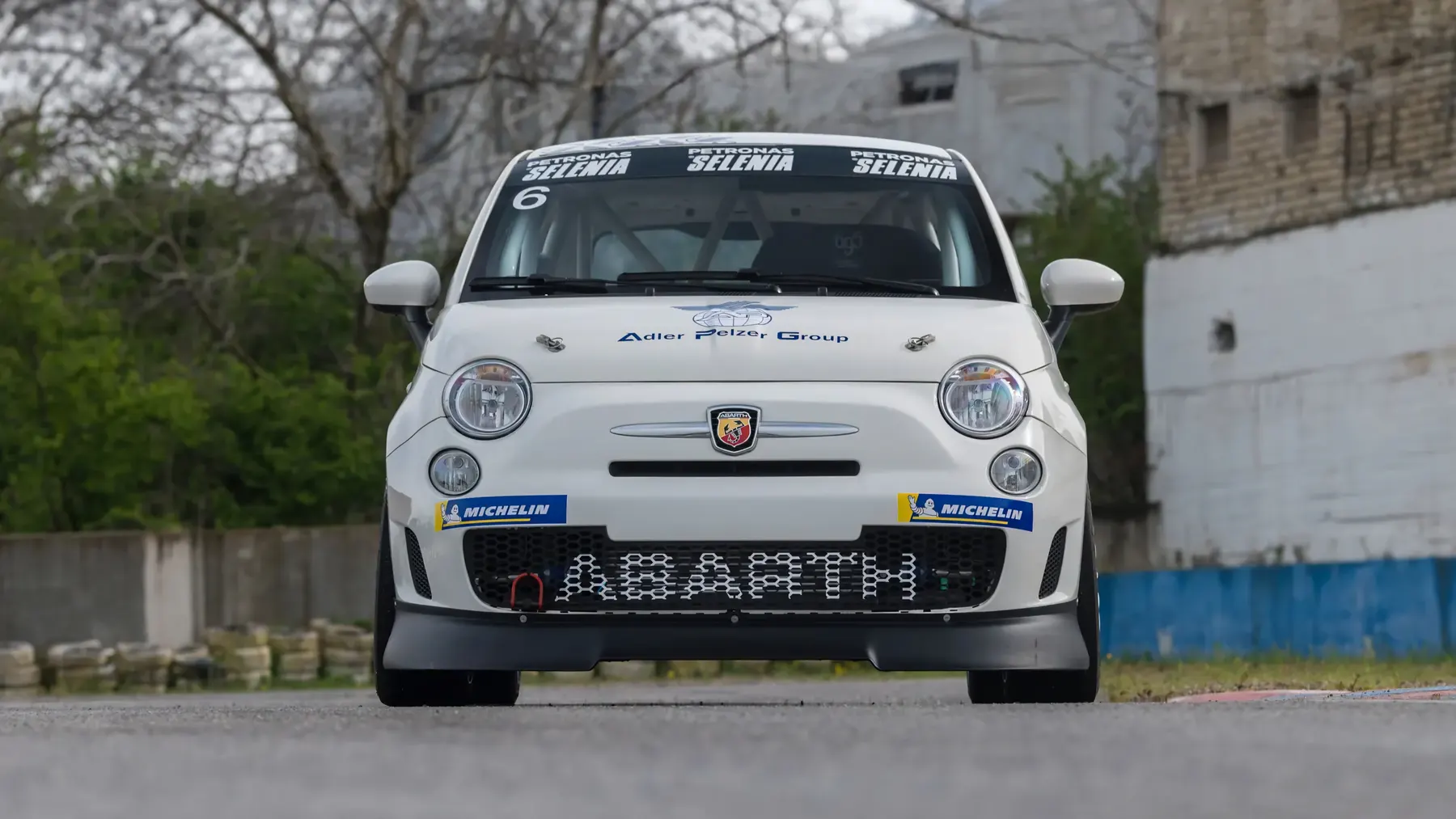
Corners are where it shines. Flick right, left, right,the chassis follows like a hyperactive terrier. Trail-braking induces playful slides. Exits? Plant the throttle early, ride the torque. It’s exhausting, addictive, raw.
The Abarth 695 Assetto Corse Evoluzione isn’t practical. It’s not even street legal. But it’s a reminder that great cars aren’t made by committee,they’re forged by lunatics who believe small can be savage. In an age of hybrids and touchscreens, this pocket rocket keeps analog passion alive. Carlo Abarth would’ve approved.
Join the discussion
Comments
Loading comments…
Leave a comment
Share a detail, memory, or perspective. Every comment is reviewed before publication.