2019 Aston Martin Vantage DTM

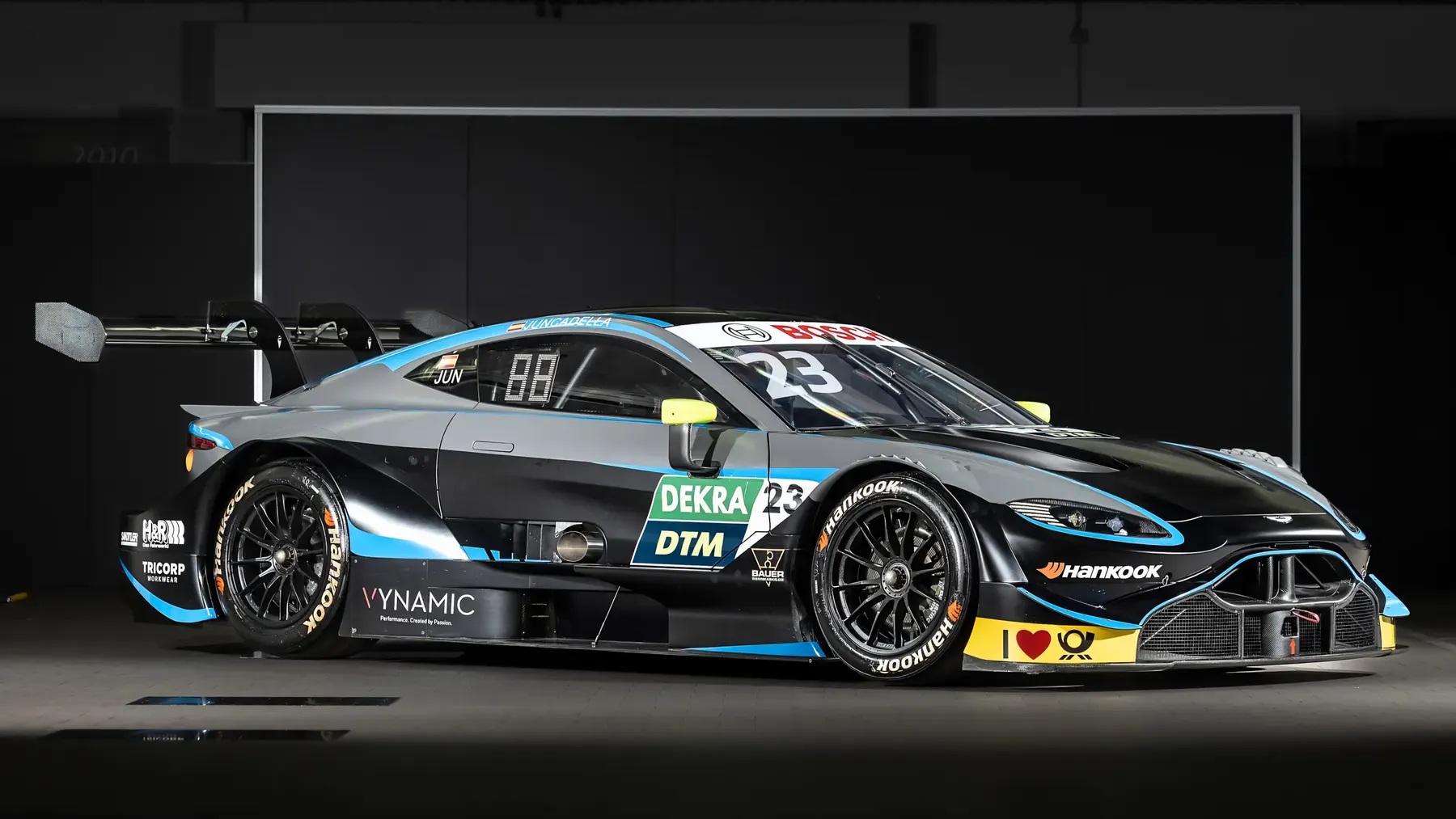
The thunder of a turbocharged engine and the sight of an Aston Martin badge competing wheel-to-wheel on German soil – these sensations lasted just one fleeting season in DTM. When Aston Martin announced their entry into Germany’s premier touring car championship for 2019, racing fans were electrified. Here was a storied British marque, famous for elegant grand tourers and James Bond associations, diving headfirst into the ultra-competitive world of Deutsche Tourenwagen Masters. The resulting Vantage DTM represents one of racing’s most fascinating “what if” stories – a promising project that vanished almost as quickly as it appeared.
The birth of the Aston Martin Vantage DTM came from necessity as much as ambition. When Mercedes-Benz announced their withdrawal from DTM after the 2018 season, the series faced a critical problem: only two manufacturers remained. Enter Swiss team R-Motorsport, who secured the rights to build and race Aston Martin-branded DTM cars.
The development timeline was nothing short of miraculous. HWA AG, the Affalterbach-based motorsport specialist previously responsible for Mercedes’ DTM efforts, received the green light in October 2018. By February 2019, the first chassis was assembled, and by early March, the completed car was unveiled at Circuito de Jerez. To develop a competitive DTM car from scratch in under 100 days seems almost impossible, yet the team pulled it off.
“What we achieved in that timeframe was extraordinary,” said Florian Kamelger, R-Motorsport team principal. “Normally, development cycles for these cars take at least a year, sometimes two. We did it in three months.”
The pressure was immense. DTM had revised its technical regulations for 2019, moving from naturally aspirated V8 engines to turbocharged four-cylinders. This meant HWA couldn’t simply adapt their previous Mercedes design – they needed something entirely new. Working around the clock, engineers created a bespoke 2.0-liter turbocharged inline-four producing approximately 610 horsepower, with an additional 30 horsepower available via the push-to-pass system.
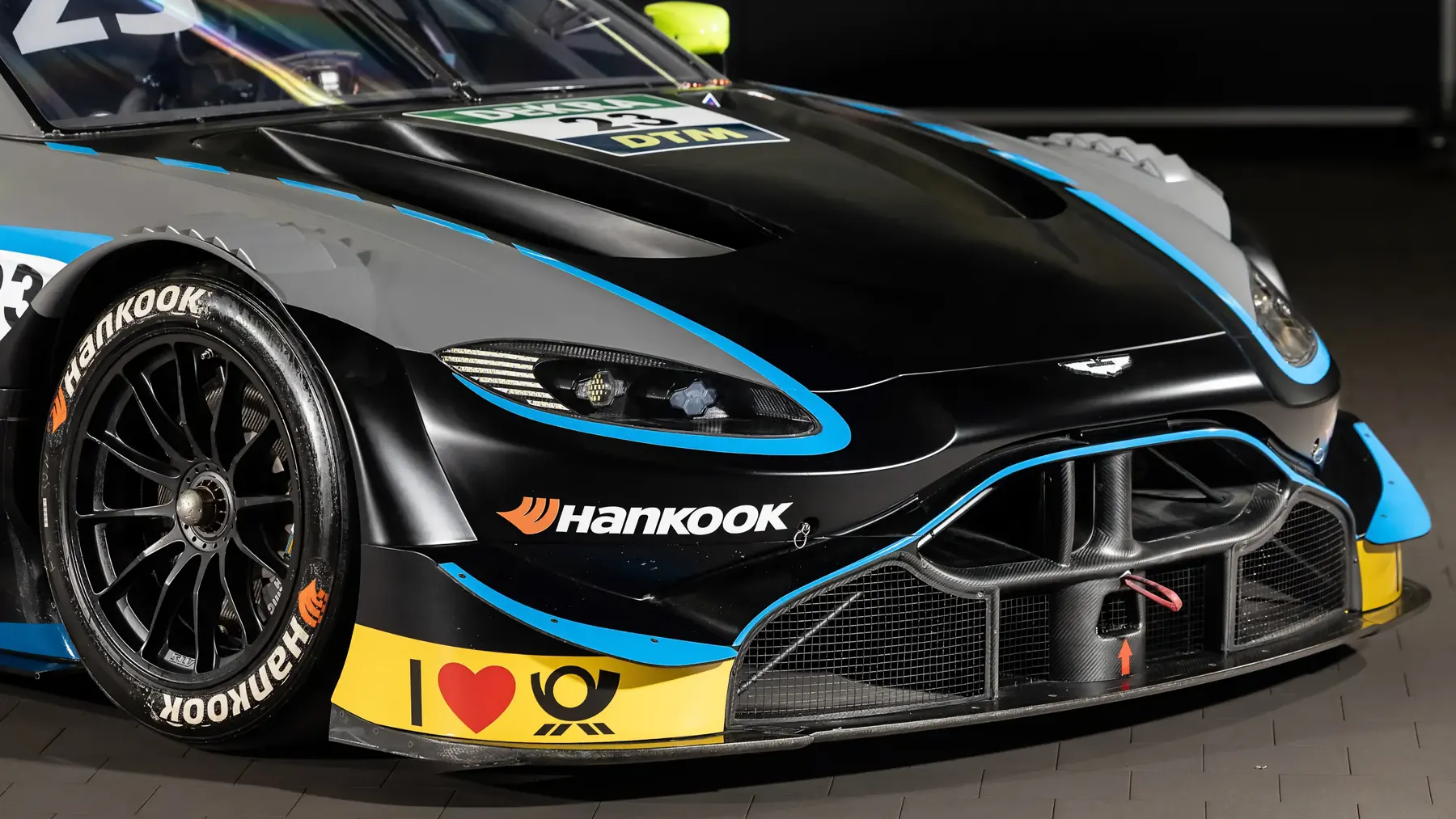
The Vantage DTM represented a fascinating interpretation of both the DTM rulebook and Aston Martin’s design language. While it shared its name and some visual cues with the road-going Vantage, this was a purpose-built racing machine from the ground up.
At its heart lay a carbon-fiber reinforced plastic monocoque with a steel tube roll cage – standard fare for modern DTM cars but still an impressive piece of engineering. The entire package weighed just 986 kg before adding the mandated 84 kg for driver and fuel, bringing the total to 1,070 kg – incredibly light for a touring car.
The suspension featured double wishbones with pushrod-operated spring-damper units at both ends, allowing for precise adjustments to suit different circuits. Massive carbon-fiber brake discs with six-piston AP Racing calipers provided stopping power, while Hankook supplied the spec tires mounted on ATS wheels.
Perhaps most impressive, however, was the engine. The Aston Martin Vantage road car uses a Mercedes-AMG-sourced 4.0-liter twin-turbo V8, but DTM regulations required something completely different. HWA developed their own 2.0-liter four-cylinder dubbed the “AFR Turbo,” featuring direct injection and a single turbocharger from Garrett.
Power reached the rear wheels through a six-speed sequential gearbox built by Hewland, featuring paddle shifters and incorporating a limited-slip differential. In true racing fashion, the clutch was only needed for starting from a standstill – shifts happened via pneumatic actuators without lifting off the throttle.
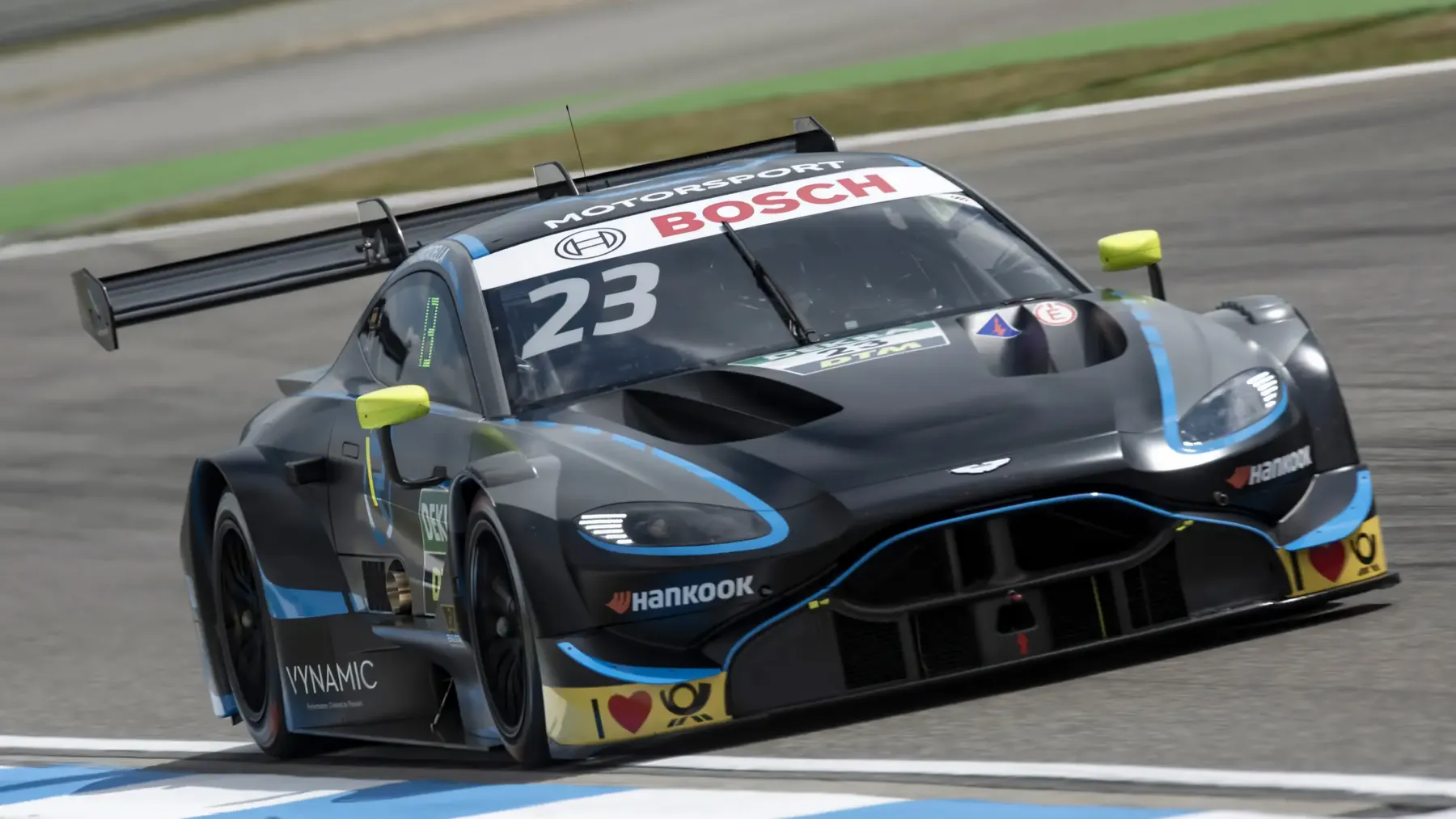
Creating a DTM car that actually resembled an Aston Martin presented a significant challenge. The series’ strict aerodynamic regulations left little room for brand-specific styling, yet the team needed something recognizably “Aston.”
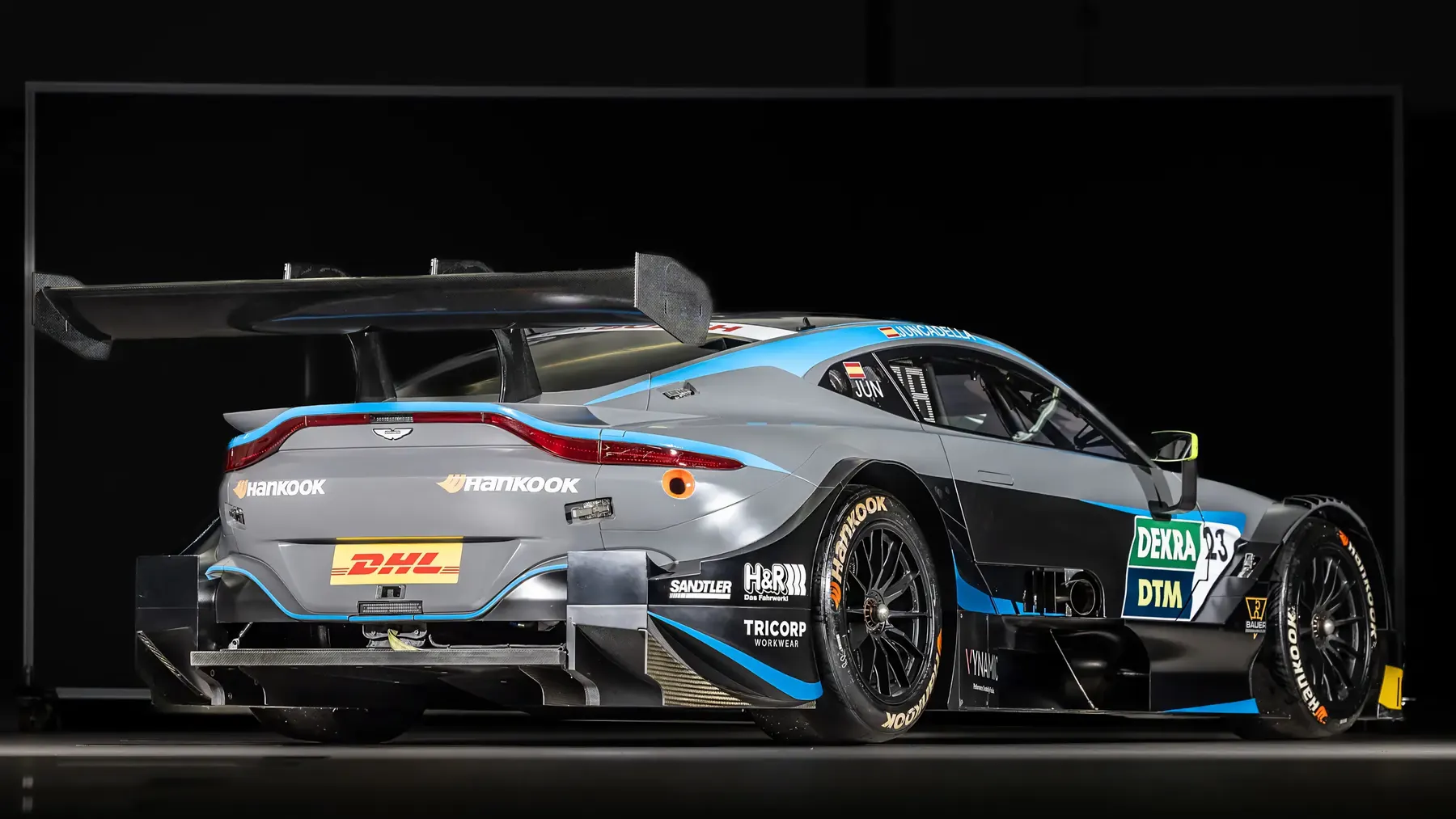
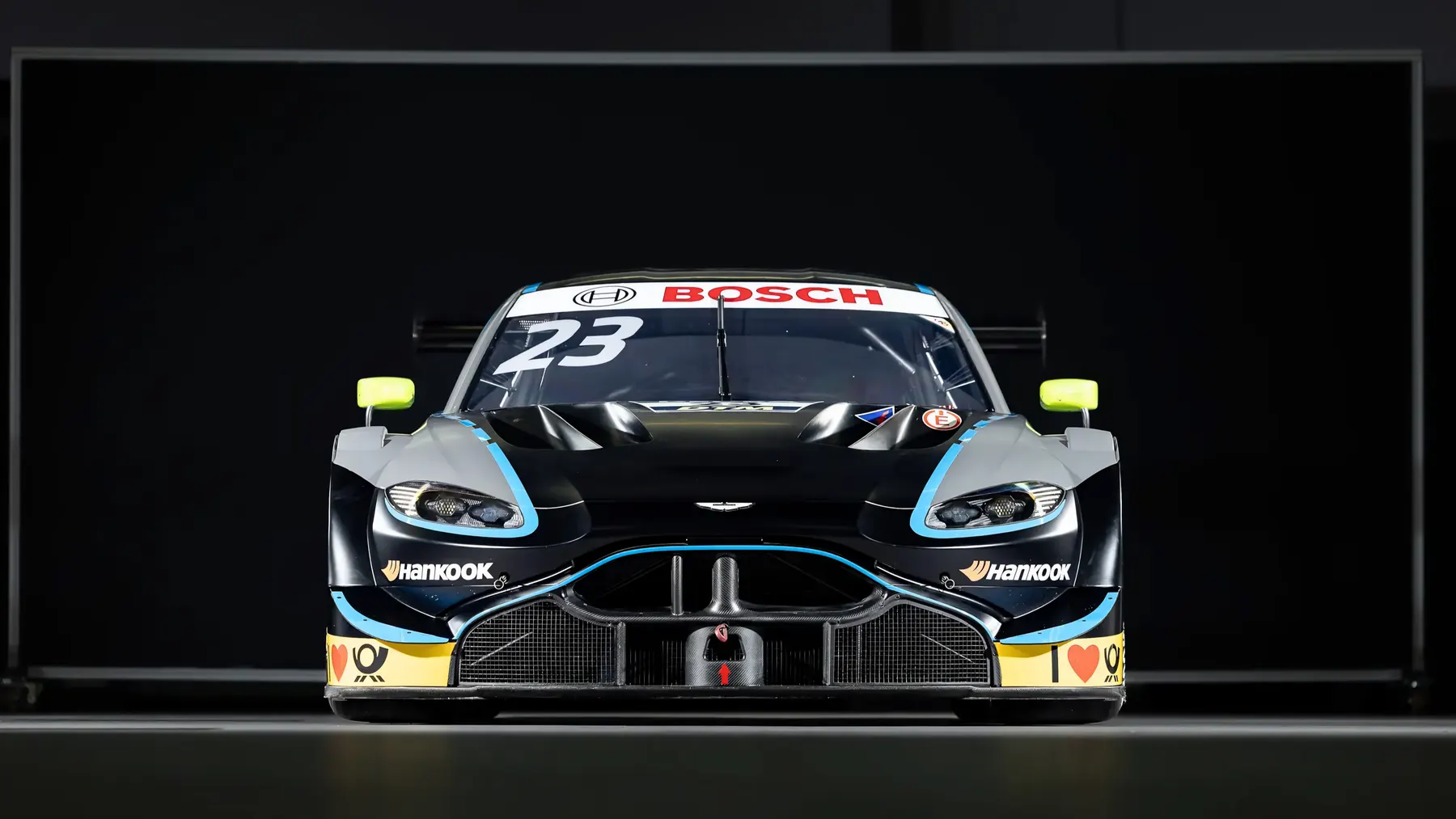
Dan Sayers led the design effort, working to incorporate Aston Martin’s signature elements within DTM’s restrictive template. The distinctive grille shape remained, albeit enlarged and more aggressive, while the headlight shapes echoed those of the road car. From certain angles, particularly the profile, the family resemblance was unmistakable despite the massive fenders, splitters, and that enormous rear wing.
The result was a curious hybrid – unmistakably a DTM car first, with Aston Martin design cues second. That said, in British Racing Green livery with lime accents, it looked spectacular on track. The car’s proportions were purposeful and aggressive, with a length of 4,730 mm (excluding the rear wing) and width of 1,950 mm. Standing just 1,280 mm tall, it had the low, predatory stance expected of a modern racing car.
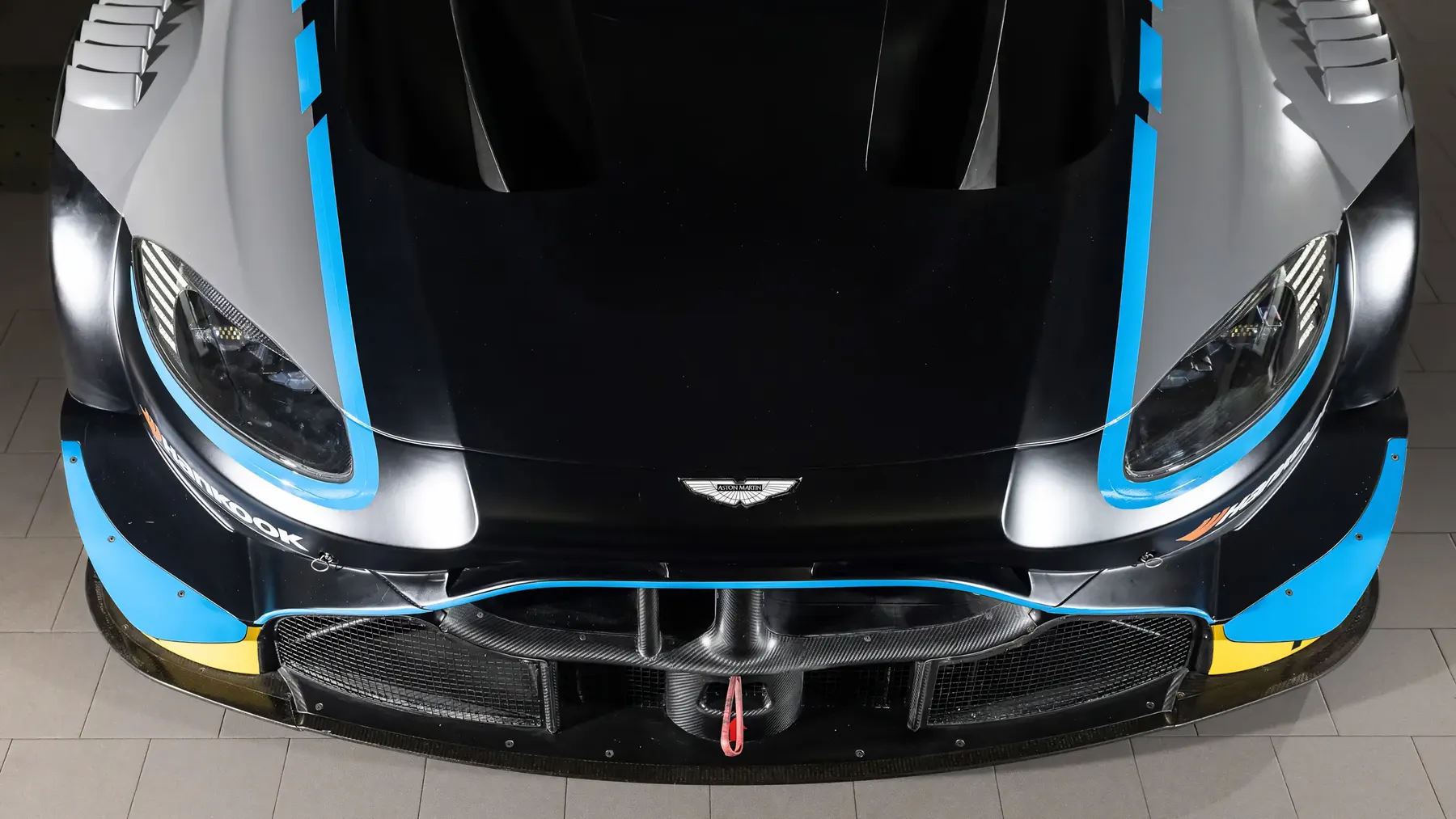
When the Vantage DTM debuted at Hockenheim on May 3, 2019, expectations were tempered by reality. The compressed development timeline meant the cars hit the track with far less testing than their Audi and BMW competitors. R-Motorsport fielded four cars with an impressive driver lineup including former Formula 1 driver Paul di Resta, DTM veteran Daniel Juncadella, young talent Ferdinand Habsburg, and Jake Dennis.
The results told the story of a team playing catch-up. Throughout the 18-race season, the Vantage DTM scored no wins, poles, or fastest laps. The highlight came at the Norisring, where Juncadella finished sixth – the car’s best result of the season. There were other promising showings at Assen and Brands Hatch with seventh and eighth-place finishes, but the team frequently found themselves battling at the rear of the field.
“We knew it would be challenging,” Juncadella explained. “The car had potential, you could feel it in certain corners, but we simply didn’t have the development time to optimize everything. We were learning every weekend while our competitors were refining already proven packages.”
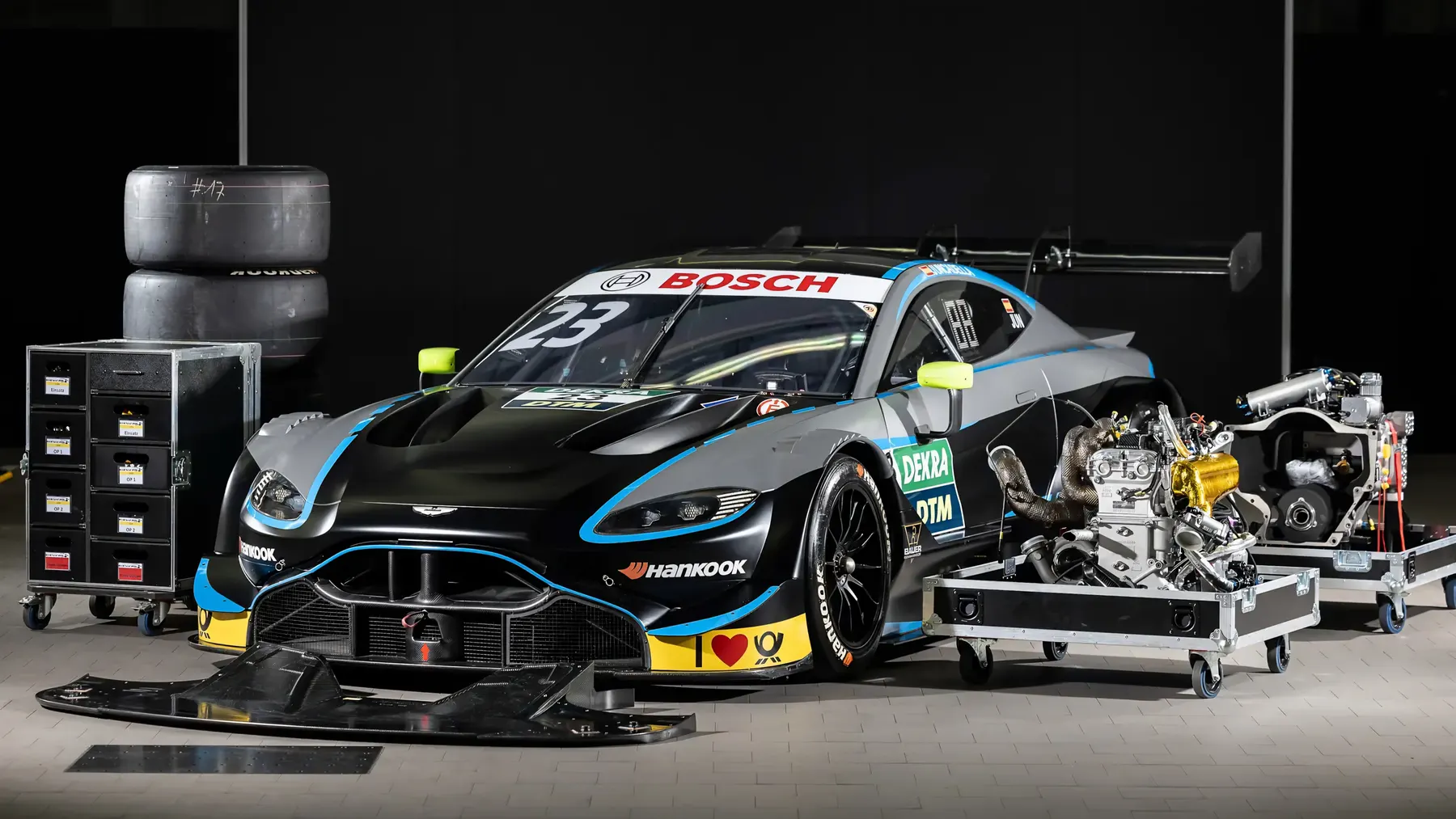
By season’s end, Aston Martin finished last in the manufacturer’s standings, with their drivers clustered at the bottom of the championship table. While disappointing, these results weren’t surprising given the circumstances – the real question was how the car would evolve for 2020 with a proper off-season of development.
That question would remain unanswered. In January 2020, R-Motorsport made the shocking announcement that they were withdrawing from DTM, citing cost concerns. Just like that, the Aston Martin Vantage DTM program was over after a single season.
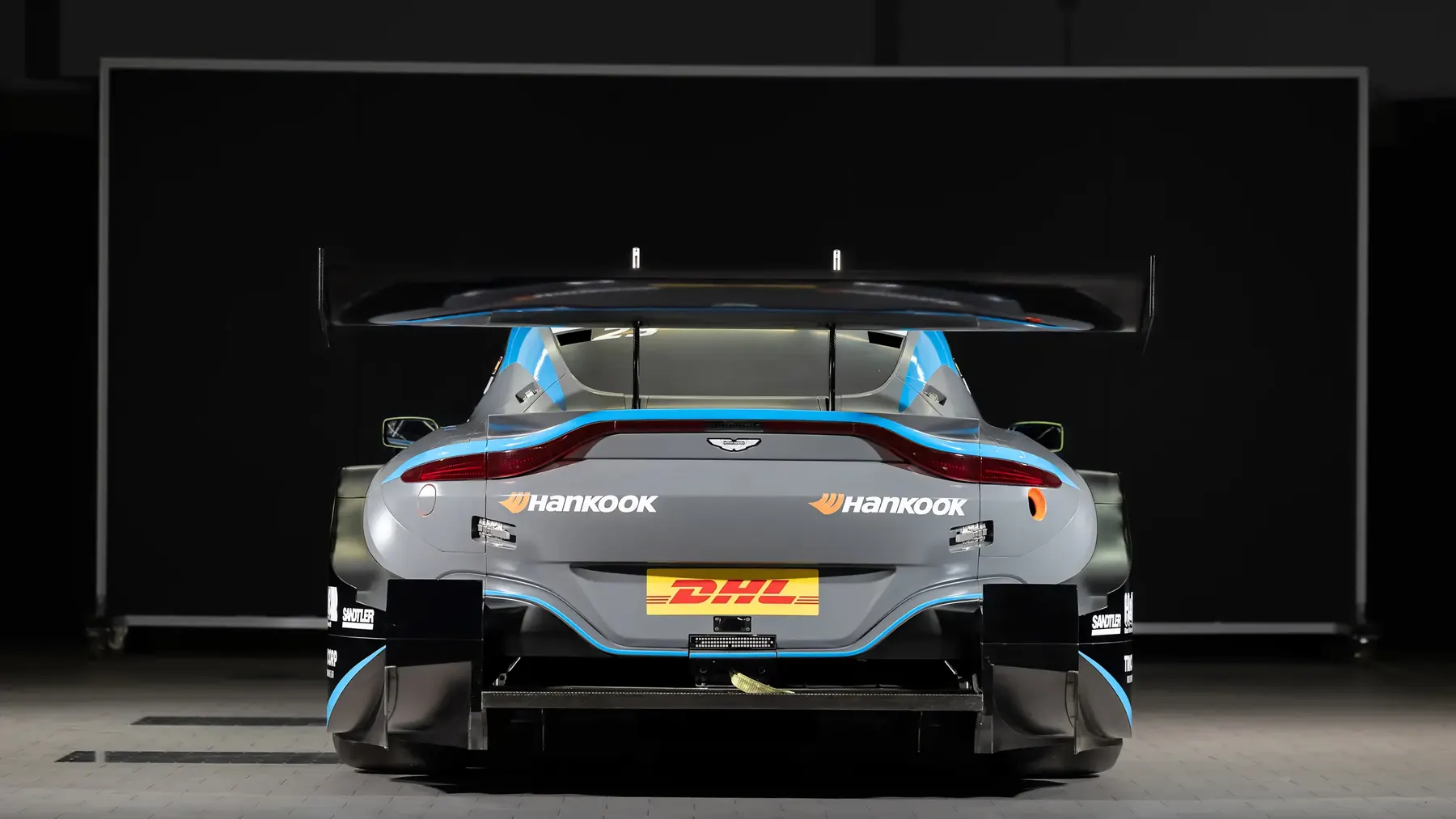
“The decision to end our DTM involvement was not an easy one,” said Dr. Florian Kamelger at the time. “However, we believe this discontinuation is the right decision for us as a team.”
Industry insiders pointed to several factors behind the withdrawal. The cost of competing in DTM had skyrocketed with the new technical regulations. Without factory backing from Aston Martin (R-Motorsport was essentially a customer team using the Aston Martin license), the financial burden proved unsustainable. Additionally, DTM itself faced an uncertain future, with rumors of major regulation changes looming.
The timing proved tragically prophetic – less than a year later, DTM would announce the end of the Class 1 touring car era, transitioning to GT3-based machinery for 2021. Had they stayed, R-Motorsport would have needed to develop an entirely new car anyway.
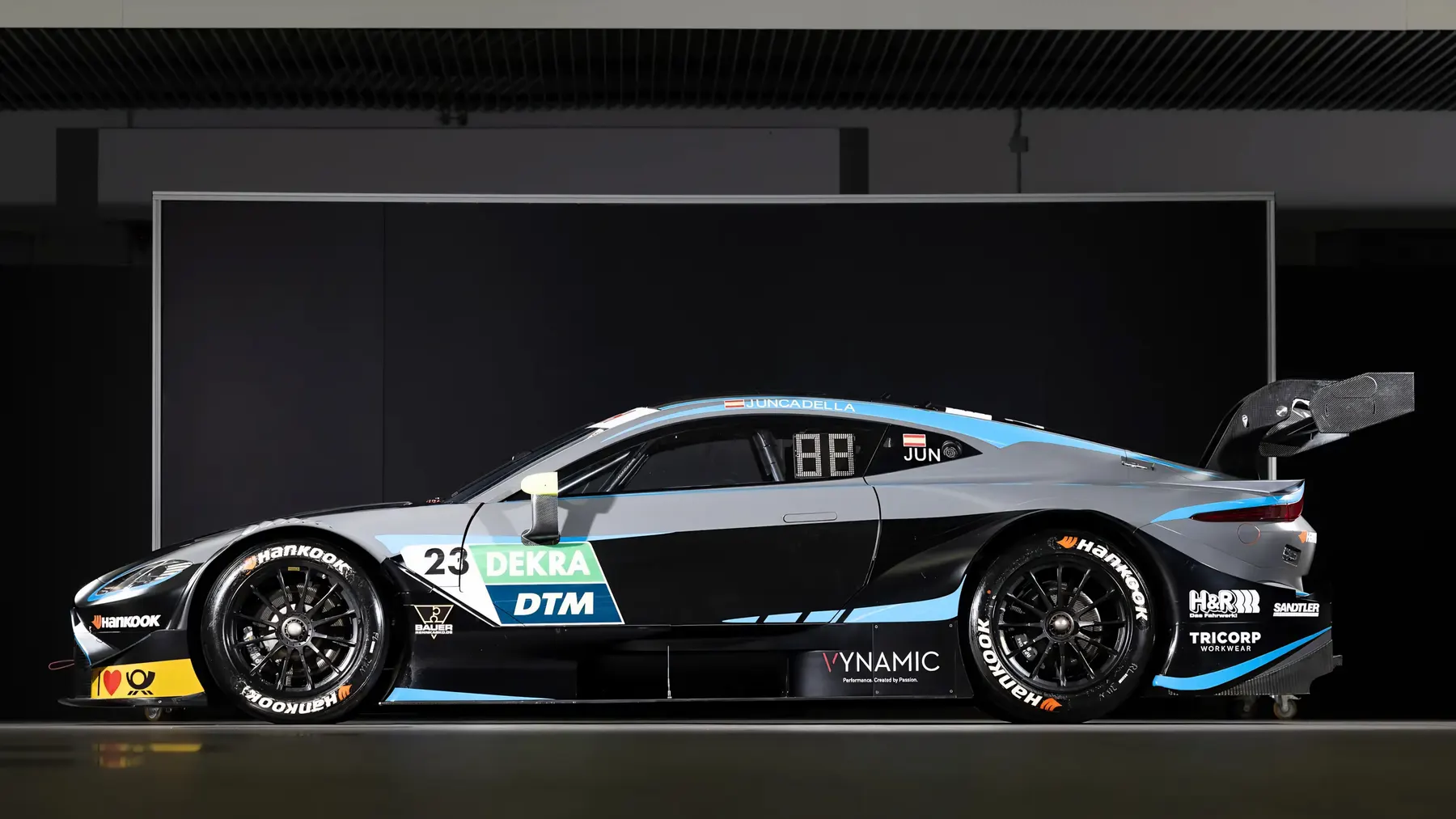
What remains of the Aston Martin Vantage DTM program today? Just five chassis were built, including one purchased by Formula 1 world champion Fernando Alonso for his personal collection. The others presumably remain with HWA or have found their way to private collectors.
Despite its limited competitive success, the Vantage DTM deserves recognition for what it represented: an incredible technical achievement created under nearly impossible time constraints. That the car ran reliably throughout the season is testament to the engineering prowess of HWA, even if ultimate performance remained elusive.
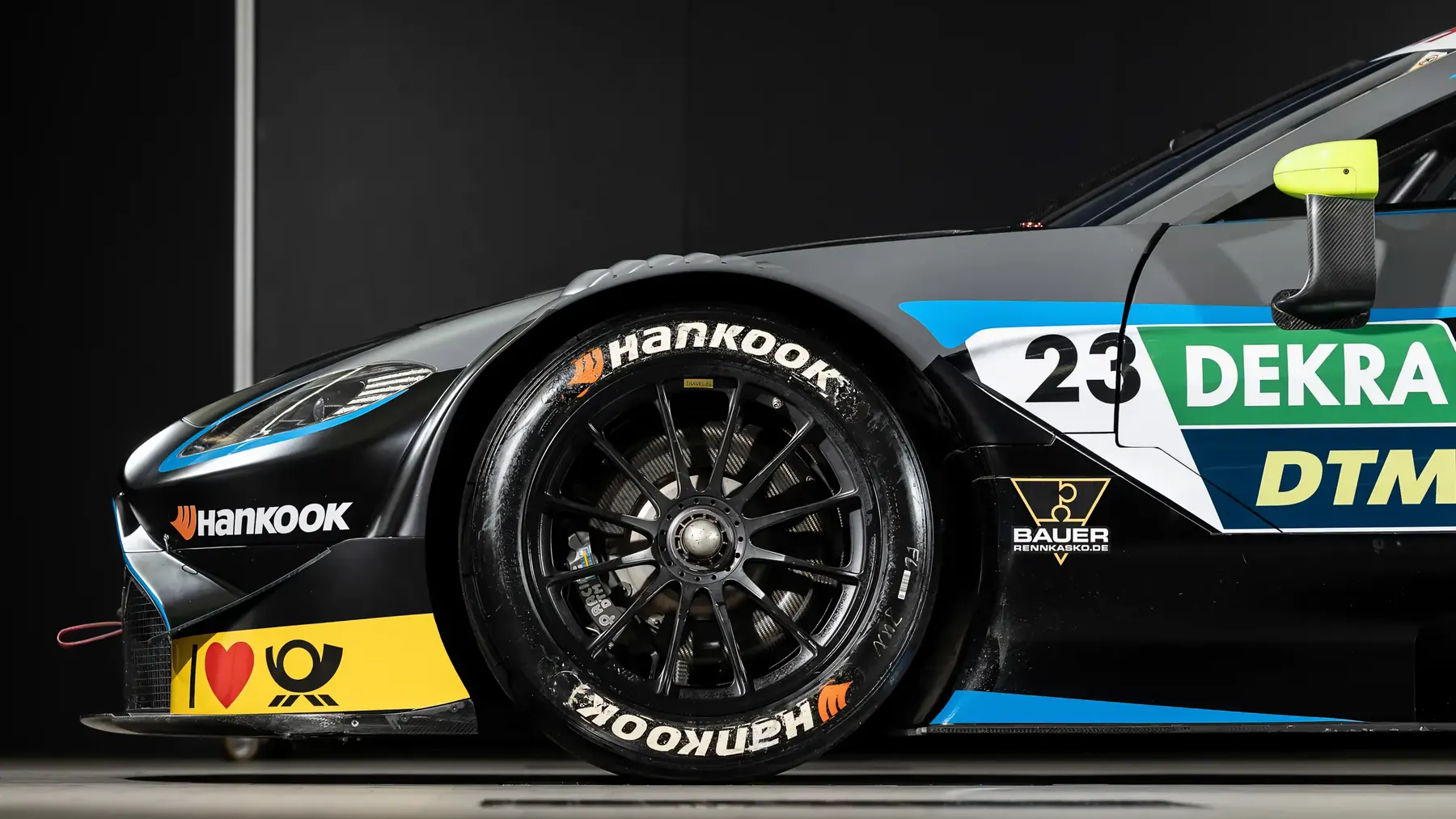
For Aston Martin, it stands as a curious footnote in their racing history – a brief, bold venture into a championship traditionally dominated by German manufacturers. While their GT racing programs continue to thrive elsewhere, the Vantage DTM remains their only purpose-built touring car of the modern era.
Perhaps the most fascinating aspect of the Vantage DTM story is contemplating what might have been. Given a proper development cycle and another season of refinement, could it have challenged Audi and BMW? We’ll never know – and that makes this short-lived racer all the more intriguing to motorsport enthusiasts.
The Aston Martin Vantage DTM may have been outpaced on track, but in terms of ambition, technical achievement, and sheer audacity, it deserves its place in racing history – a beautiful British underdog that dared to challenge the German giants on their home turf, even if only for a fleeting moment.
Join the discussion
Comments
Loading comments…
Leave a comment
Share a detail, memory, or perspective. Every comment is reviewed before publication.