2022 Alfa Romeo Giulia GTAm

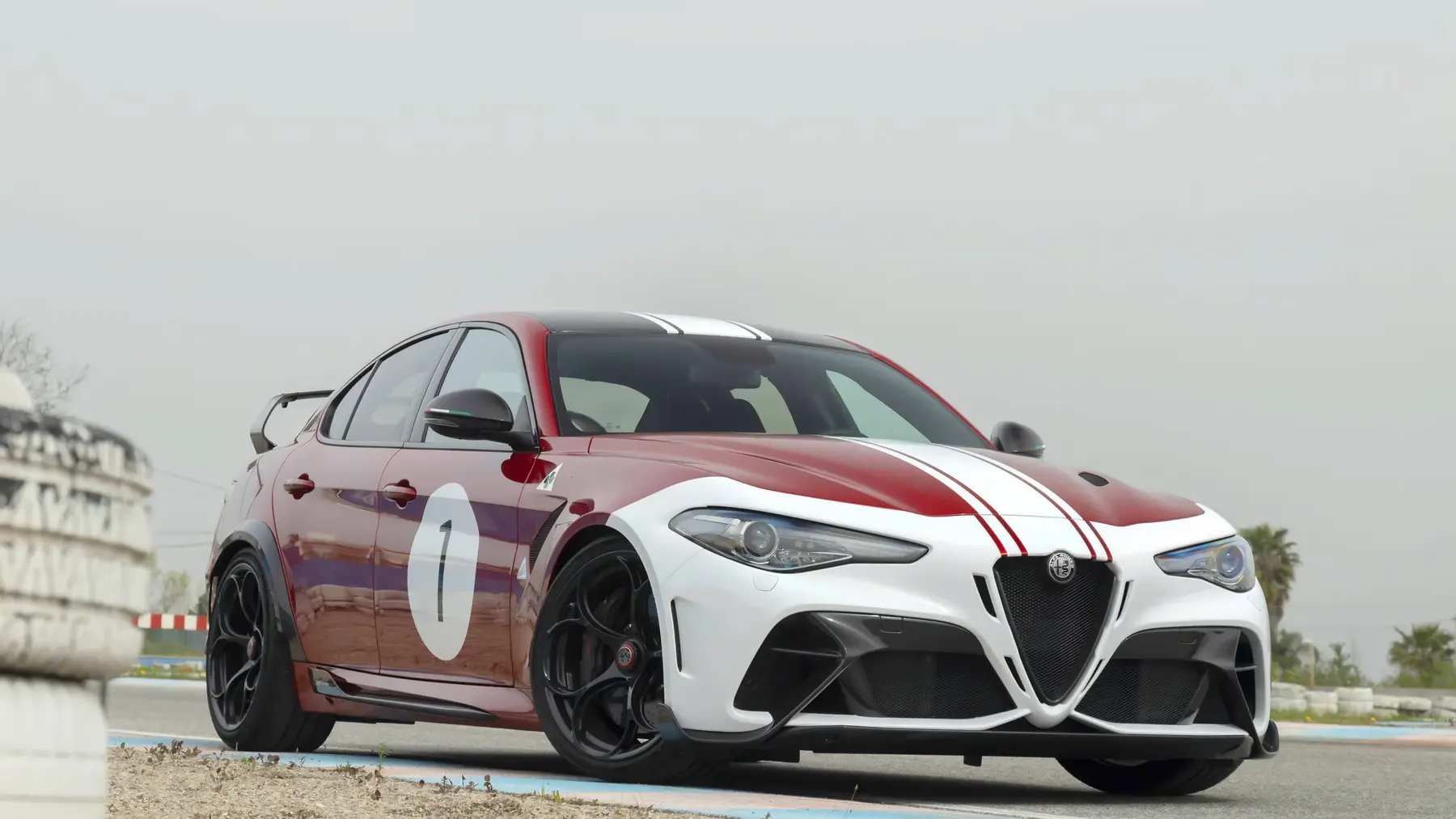
When Alfa Romeo unveiled the Giulia GTAm in March 2020, they weren’t just releasing another high-performance sedan,they were reconnecting with their most cherished racing traditions while pushing the boundaries of what a road-legal performance car could be. Created to celebrate the marque’s 110th anniversary, this extraordinary machine revives the legendary GTAm designation with a thoroughly modern interpretation.
The GTAm name carries serious weight in Alfa Romeo’s history. The original “Gran Turismo Alleggerita modificata” from the 1960s was a competition-focused version of the already lightweight GTA, dominating touring car championships with its innovative lightweight construction and potent twin-spark engine. That car established Alfa’s racing pedigree through ingenious weight reduction and performance optimization,principles faithfully carried into the modern iteration.

Unveiled alongside its slightly tamer GTA sibling, the GTAm represents the pinnacle of Alfa Romeo’s engineering capabilities in the 21st century. Limited to just 500 units combined (GTA and GTAm together), these vehicles were created as collector’s items from the start, with the GTAm serving as the more extreme, track-focused variant while maintaining road legality.
At the heart of the GTAm sits a masterpiece of an engine,a 2.9-liter twin-turbocharged V6 producing a formidable 540 horsepower, up from the standard Quadrifoglio’s 510 horsepower. This power increase comes courtesy of higher turbocharger boost pressure and a redesigned piston cooling system that now employs four oil jets instead of two.
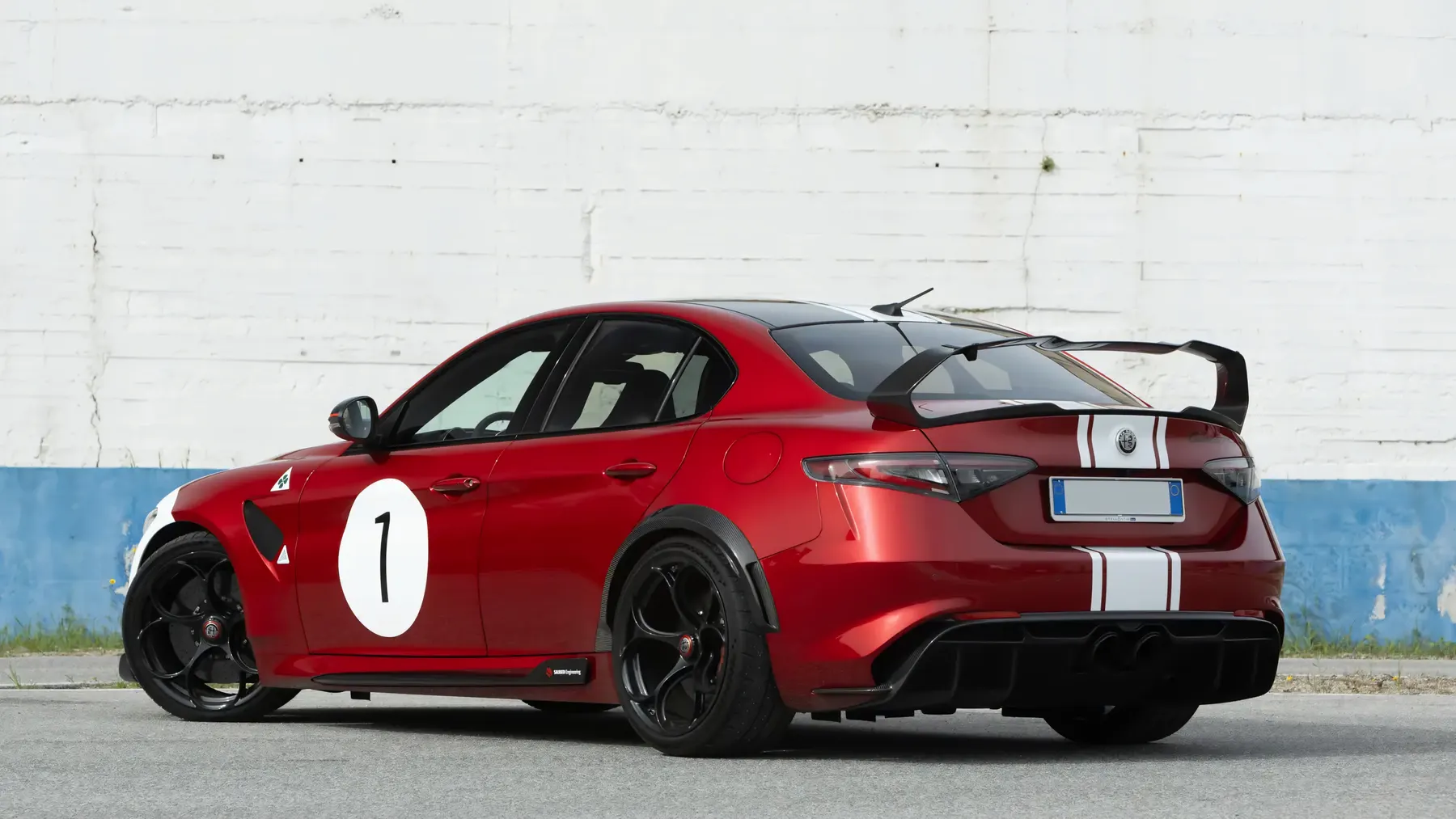
The resulting performance figures are staggering: 0-100 km/h acceleration in just 3.6 seconds with launch control, and a top speed of 300 km/h. What makes these numbers even more impressive is the power-to-weight ratio. Thanks to extensive weight-saving measures, the GTAm weighs just 1,580 kg,100 kg lighter than the standard Quadrifoglio. This gives it a power-to-weight ratio of approximately 343 bhp/ton, creating a visceral driving experience that few four-door cars can match.
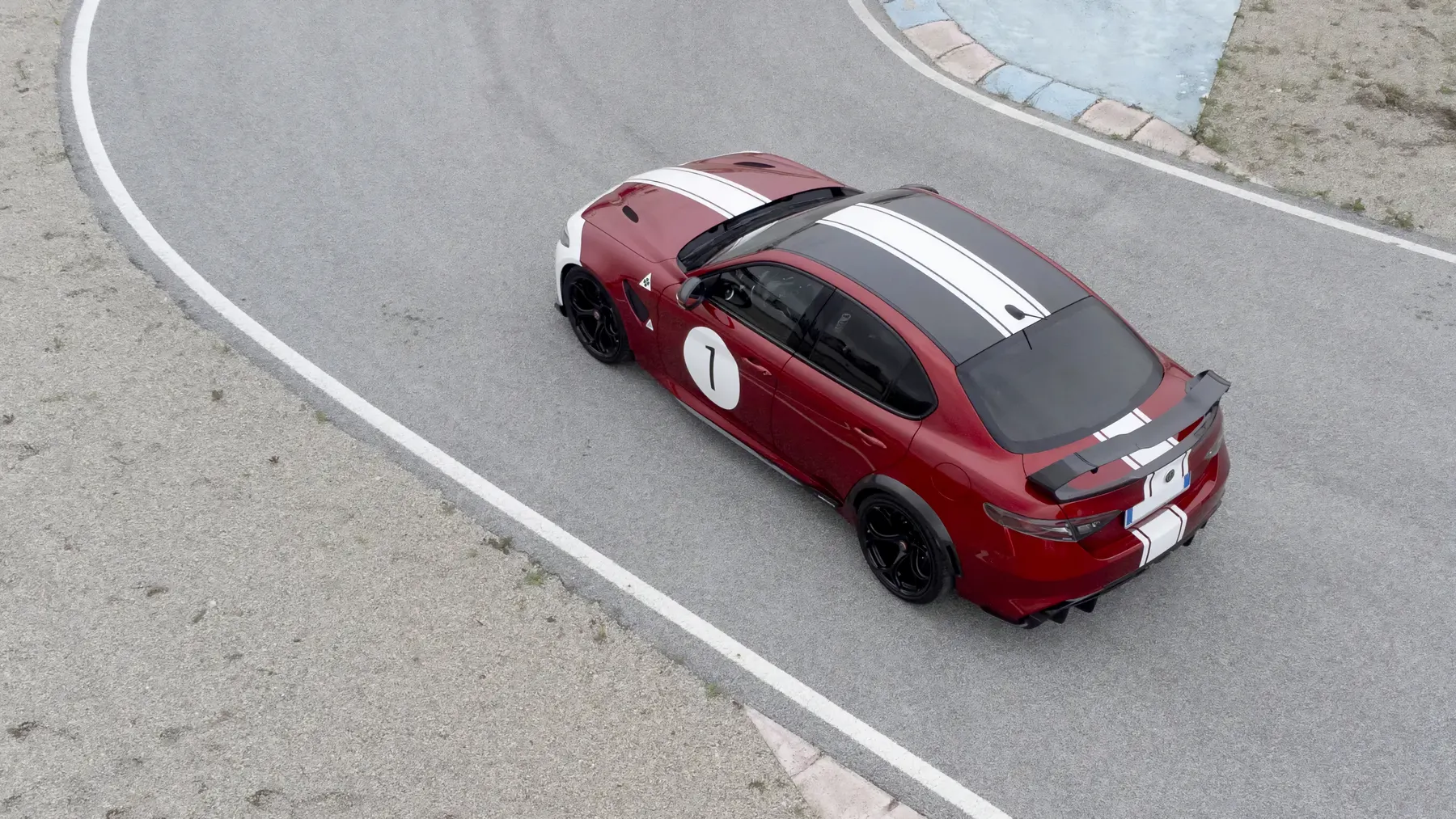
True to its “Alleggerita” namesake, the GTAm employs sophisticated lightweight materials throughout its construction. Carbon fiber features prominently, used for the drive shaft, hood, roof, front bumper, front wheel arches, and rear wheel arch inserts. The side and rear windows are crafted from Lexan polycarbonate resin rather than conventional glass, further reducing mass.

The GTAm distinguishes itself from the standard GTA by taking weight reduction even further. The rear seats are removed entirely in favor of a roll bar, and racing harnesses replace conventional seatbelts. Door handles are swapped for lightweight pull loops, a detail straight from motorsport that underscores the car’s track-focused intentions.
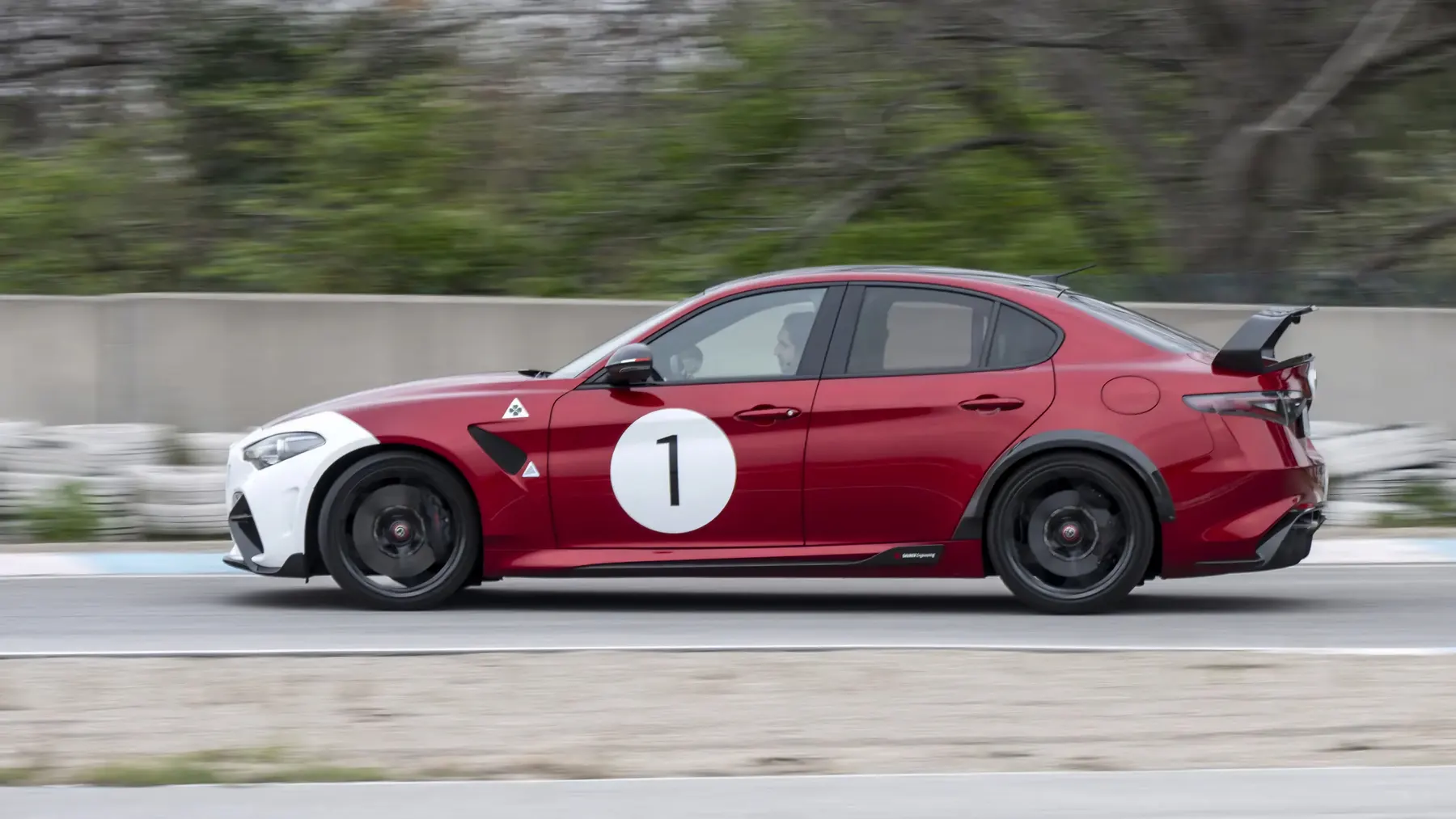
Perhaps the most visually striking aspect of the GTAm is its aerodynamic package, developed in collaboration with Sauber Engineering,Alfa Romeo’s Formula 1 partner. Former F1 driver Kimi Räikkönen even provided input on the car’s aerodynamic setup.
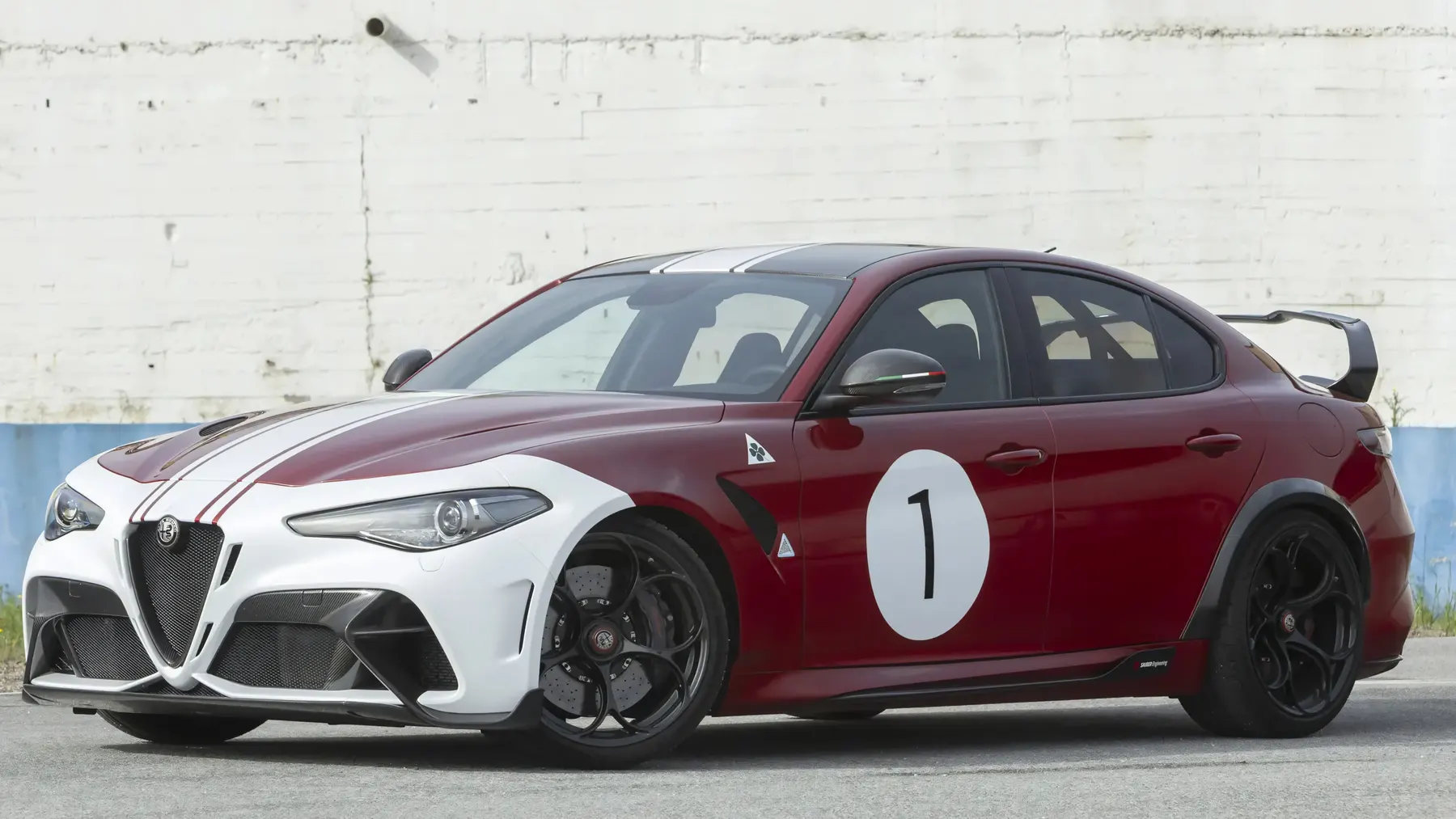
The result is nothing short of spectacular: an adjustable front splitter that can extend up to 40mm for track use, a massive visible carbon fiber rear wing adjustable to four positions, a fully-faired underbody optimized for downforce, and carbon fiber side skirts with an integrated rear diffuser. These modifications triple the downforce compared to the already capable Giulia Quadrifoglio, ensuring exceptional high-speed stability.
The GTAm’s chassis received significant modifications to match its increased power and aerodynamic capabilities. The front and rear tracks were widened by 50mm, giving the car its distinctively muscular stance. The suspension features stiffer springs, shock absorbers, and bushings, while the center-lock 20-inch wheels,a feature typically reserved for dedicated track cars,are wrapped in sticky Michelin Pilot Sport Cup 2 tires (265/30R-20 front and 285/30R-20 rear).
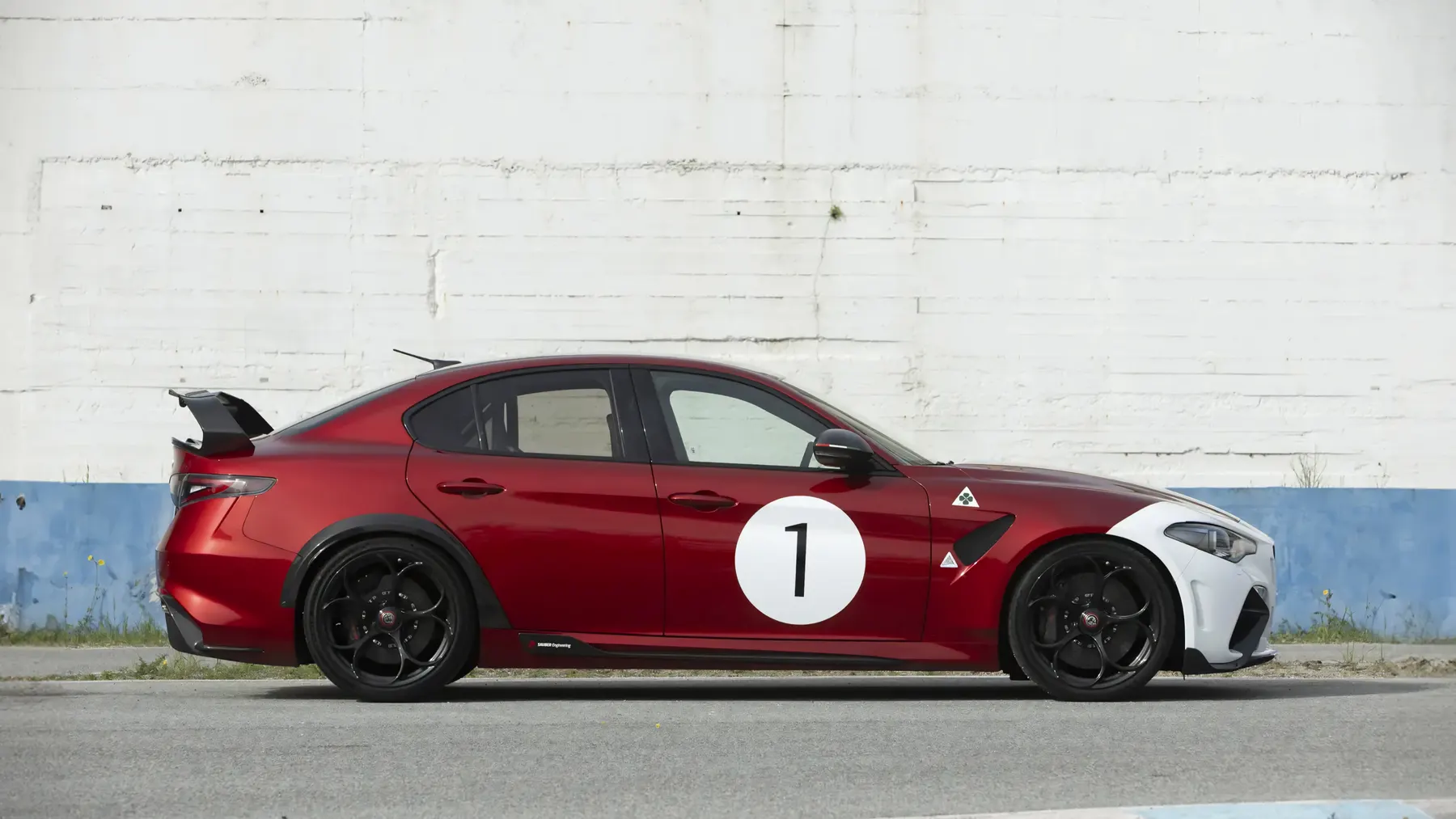
This chassis setup creates what Jeremy Clarkson described as a surprisingly forgiving character despite its track focus: “It’s not hard and unforgiving at all. It rides the bumps and the crests beautifully” while still offering “the same quick steering, the same V6 howl and the same sense of controllability” as the standard Quadrifoglio.
Inside, the GTAm makes no secret of its racing intentions. The cabin features racing-style carbon fiber shell seats with six-point SABELT racing harnesses for both driver and passenger. Though track-focused, it doesn’t abandon all creature comforts, retaining modern amenities like an 8.8-inch touchscreen with Apple CarPlay and Android Auto compatibility.
Perhaps most aurally distinctive is the bespoke titanium Akrapovič central exhaust system integrated into the carbon fiber rear diffuser. This specially designed system contributes to the car’s weight reduction while providing a thrilling and emotive sound profile that enhances the driving experience.
The GTAm’s extraordinary capabilities and limited production run come with a correspondingly extraordinary price tag. At approximately €180,000 (£155,000 at the time), it positioned itself against dedicated sports cars like the Porsche GT3 rather than conventional high-performance sedans. This pricing reflects not just the car’s performance credentials but also its position as a collector’s item and celebration of Alfa Romeo’s heritage.

What makes the Giulia GTAm so significant is how it defies the automotive industry’s current focus on electrification and practical concerns. At a time when many manufacturers were pouring resources into EV development, Alfa Romeo chose to create an unapologetically emotional, internal combustion masterpiece that celebrates driving in its purest form.
The GTAm represents a fascinating intersection between past and present,honoring the 1960s namesake while incorporating cutting-edge engineering and aerodynamic techniques derived from Formula 1. By reviving the GTAm badge for its 110th anniversary, Alfa Romeo demonstrated its commitment to maintaining the racing spirit that has defined the brand for over a century.
As automotive enthusiasts, we should celebrate the GTAm not just as an exceptional performance car but as a statement that passion and emotion still have a place in modern automotive design. In an increasingly homogenized industry, the Giulia GTAm stands as proof that cars can still stir the soul and capture the imagination, just as they have since Alfa Romeo’s founding in 1910.
Join the discussion
Comments
Loading comments…
Leave a comment
Share a detail, memory, or perspective. Every comment is reviewed before publication.