Duesenberg Model J by Murphy: The Convertible Coupe America Deserved
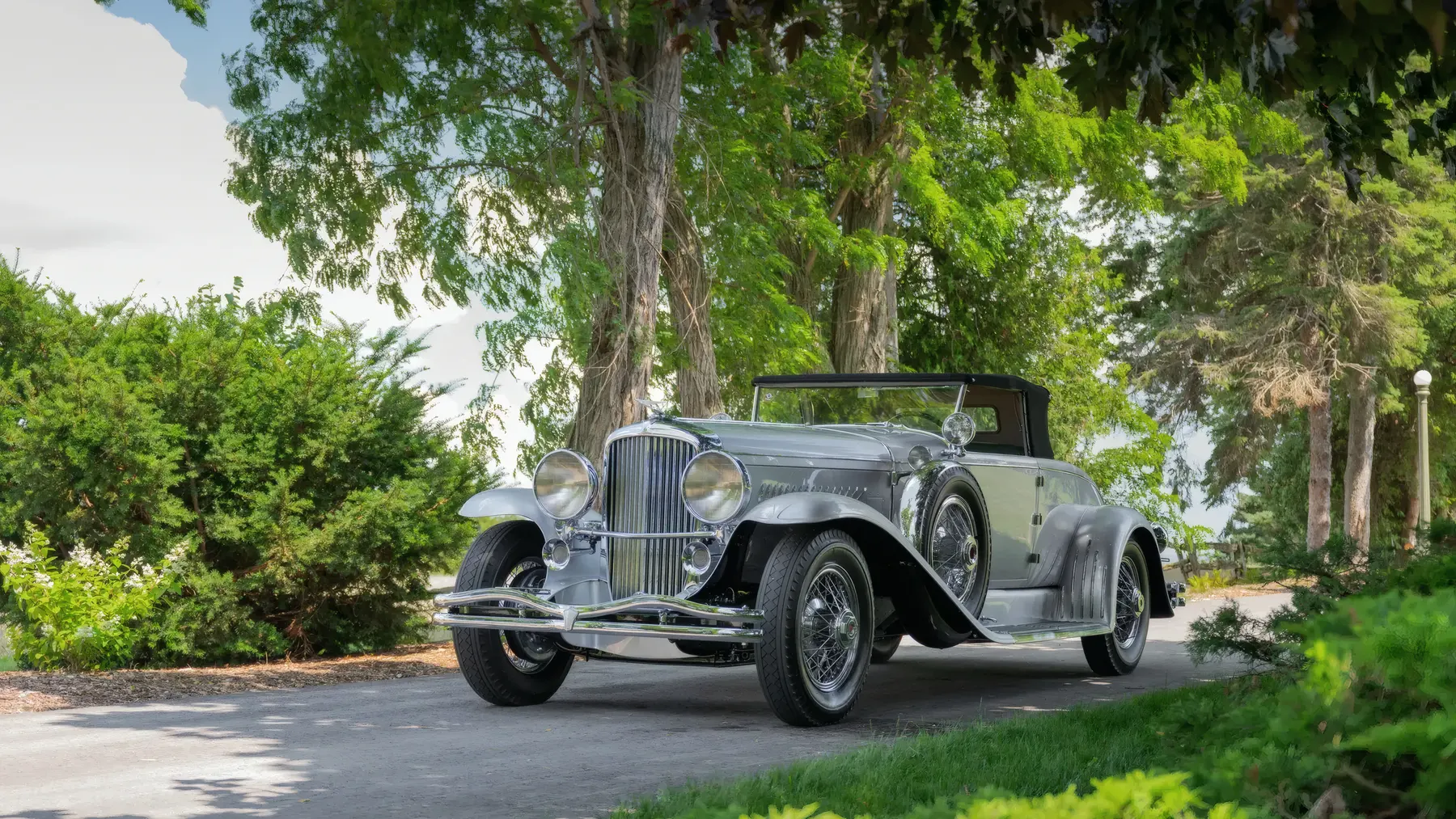
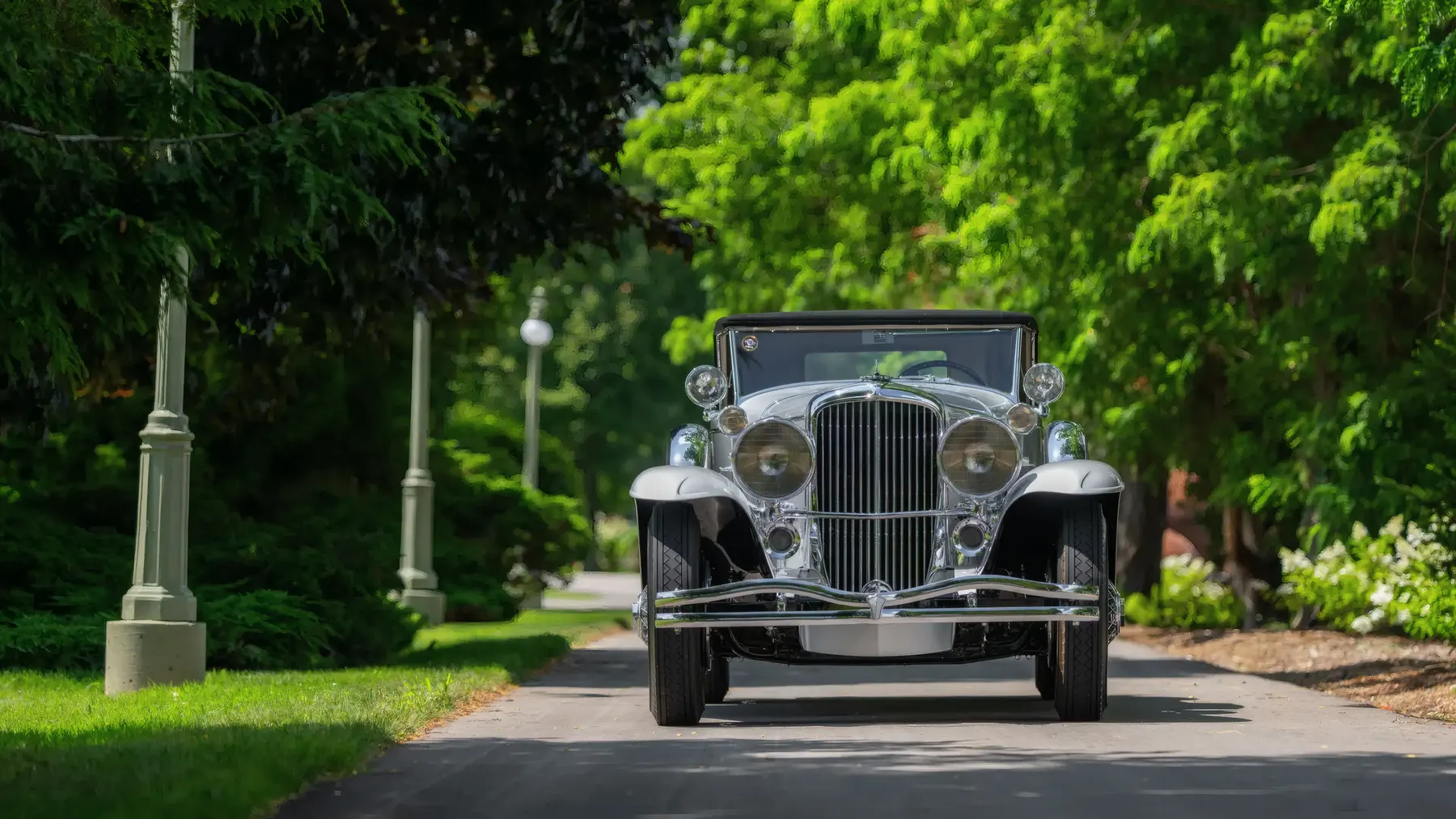
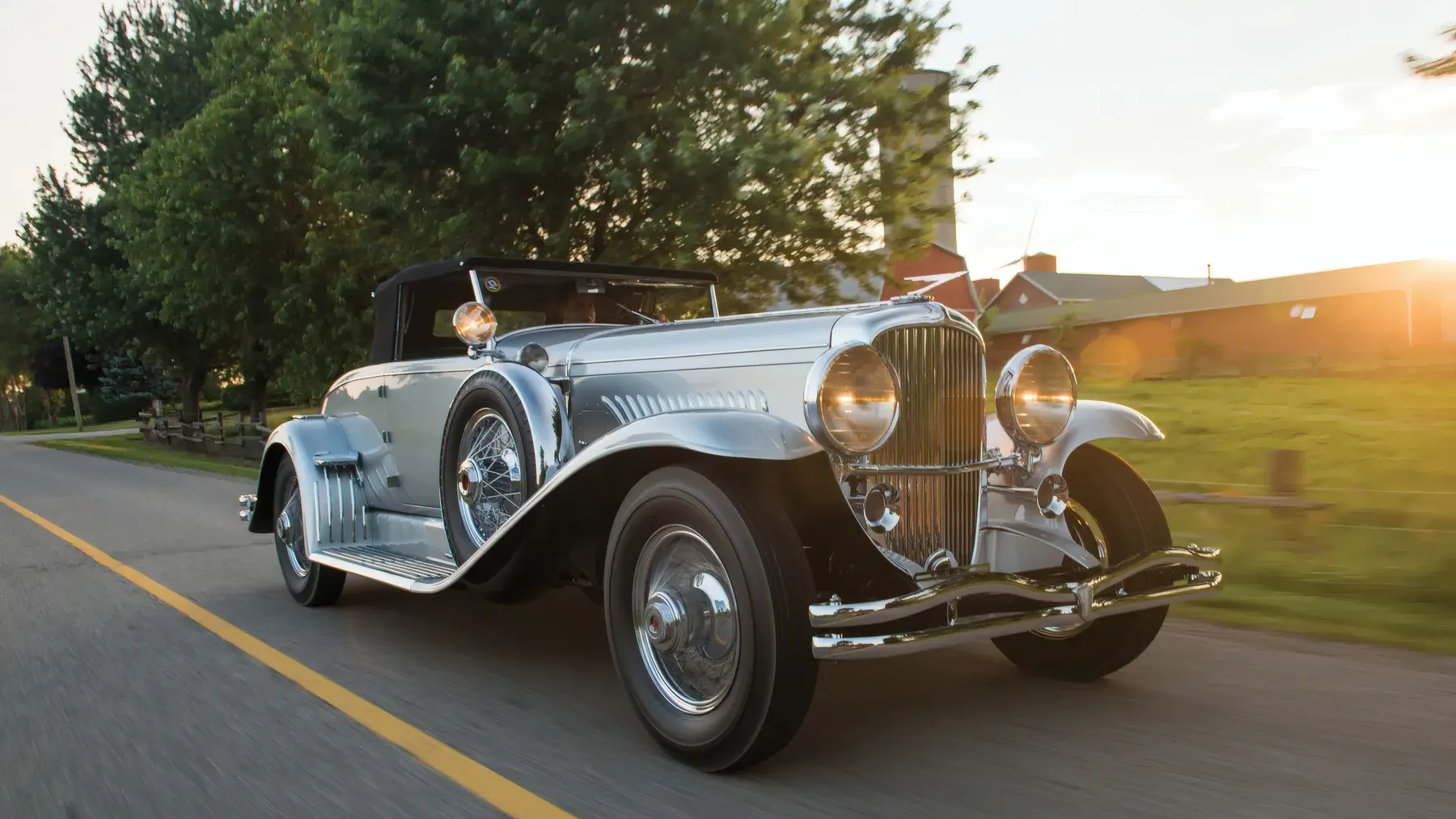
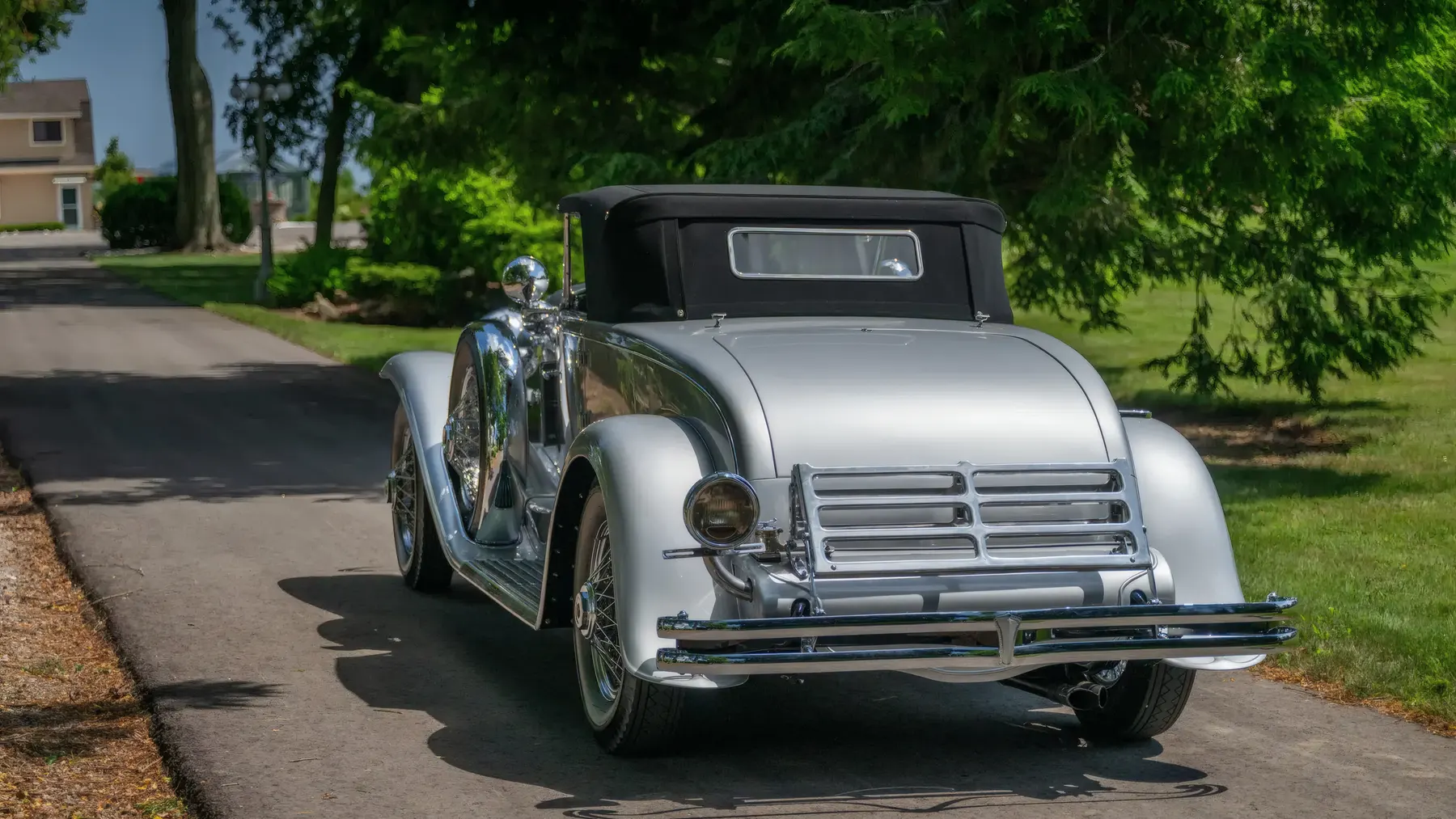
1929 Duesenberg Model J Convertible Coupe by Murphy

Images: Darin Schnabel / RM Sotheby's
The Walter Murphy Company bodied more Duesenberg Model Js than any other coachbuilder in the United States, and the Convertible Coupe that emerged from their finest work is arguably the form that the Model J always seemed to be reaching for: a long, dropped, swept-back body that made the already enormous chassis look purposeful rather than merely large. That Murphy achieved this from Pasadena, California - far from the established coachbuilding centres of Paris, London, or Turin whose work their output so closely echoed - says something revealing about the peculiar ambitions of American luxury in the years just before the Depression made such ambitions permanently unfashionable.
The genesis of the Model J belongs not to any coachbuilder but to Errett Lobban Cord, the corporate impresario who had already transformed Auburn from a regional midwesterner into a credible luxury marque before acquiring Duesenberg Inc. in 1926. Cord’s instruction to Fred Duesenberg, delivered with the blunt confidence of someone accustomed to giving impossible briefs, was essentially this: build the finest automobile in the world. Fred Duesenberg, whose racing heritage included Indianapolis 500 victories with earlier designs and who thought in terms of engineering rather than marketing, took the brief seriously to the point of obsession. The machine he produced for the 1928 Paris Salon, and subsequently shown at New York in December of that year, delivered on the promise in the most literal engineering terms.
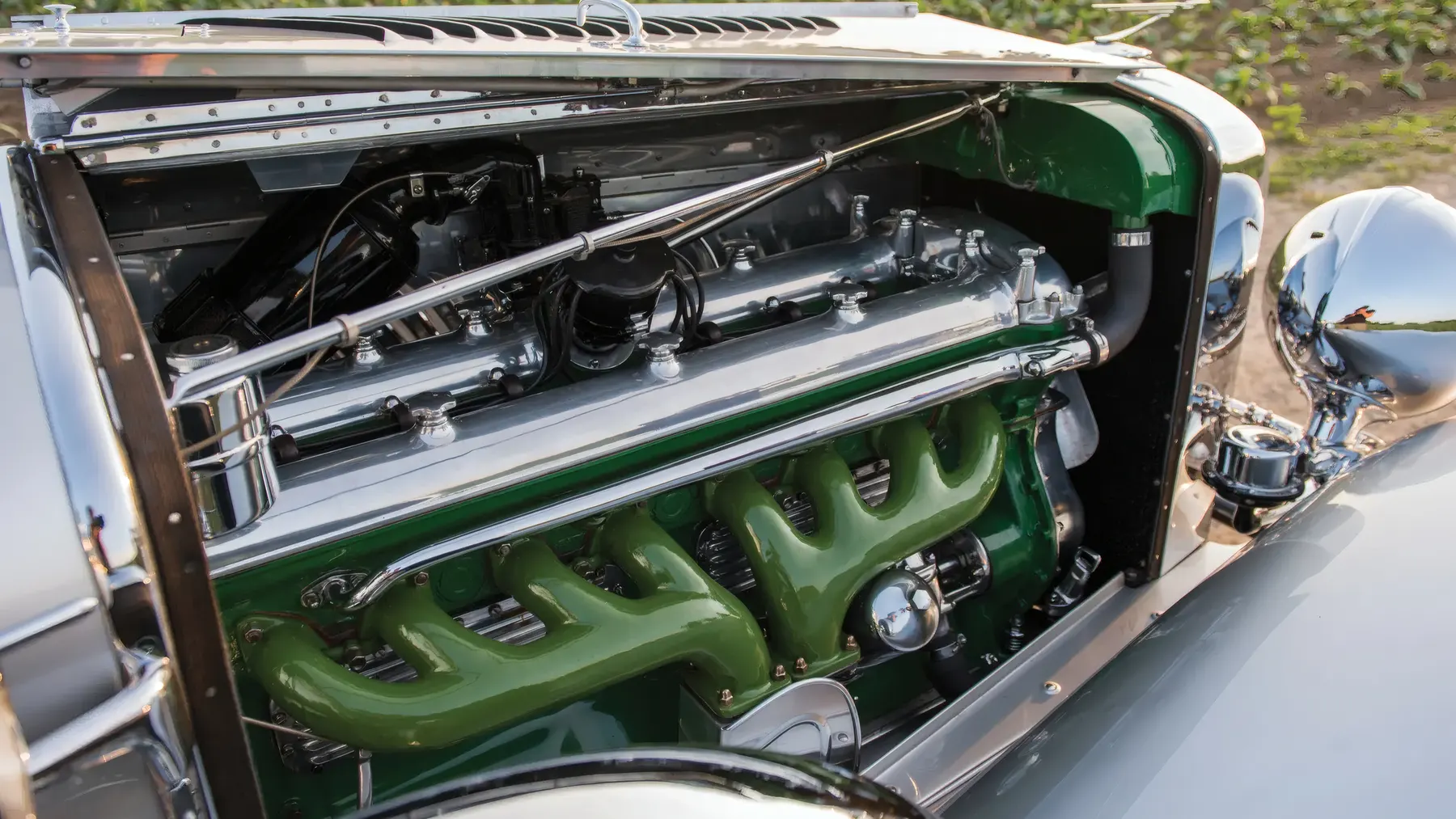
The engine was, quite simply, unlike anything available to an American buyer of the period. A 6,882cc straight-eight developed under Duesenberg direction and built by Lycoming, it featured twin overhead camshafts and four valves per cylinder - a configuration more usually associated with contemporary grand prix machinery than with a road car intended for wealthy buyers who wanted silk ride quality rather than race-track responses. The claimed output was 265 bhp, a figure that was challenged by some sceptics and confirmed by others, but which placed the J in a category of one on the American market and ahead of most European prestige cars by a substantial margin. The engineering logic behind the four-valve arrangement was straightforward: improved breathing at the expense of considerable added mechanical complexity that required skilled maintenance to keep in order. This was a car that rewarded careful ownership and penalised indifferent attention to its needs.
The chassis itself was equally sophisticated in the American context. Offered in two wheelbase lengths - 3,620mm and 3,899mm - it rode on a deep channel-section frame with hydraulic shock absorbers adjustable from the dashboard, a detail that impressed road testers as much for its convenience as for its technical novelty. Lockheed hydraulic four-wheel drum brakes represented a genuine advancement at a time when many contemporaries still relied on mechanical cable or rod systems, and the J’s twin master-cylinder arrangement was dual-circuit by effective design. The steering was of the recirculating-ball type, appropriately geared for a chassis of this length, and the three-speed gearbox - robust and adequately engineered but neither quick-shifting nor intuitive to the uninitiated - completed a drivetrain that was clearly conceived for effortless high-speed cruising rather than any form of sporting endeavour.
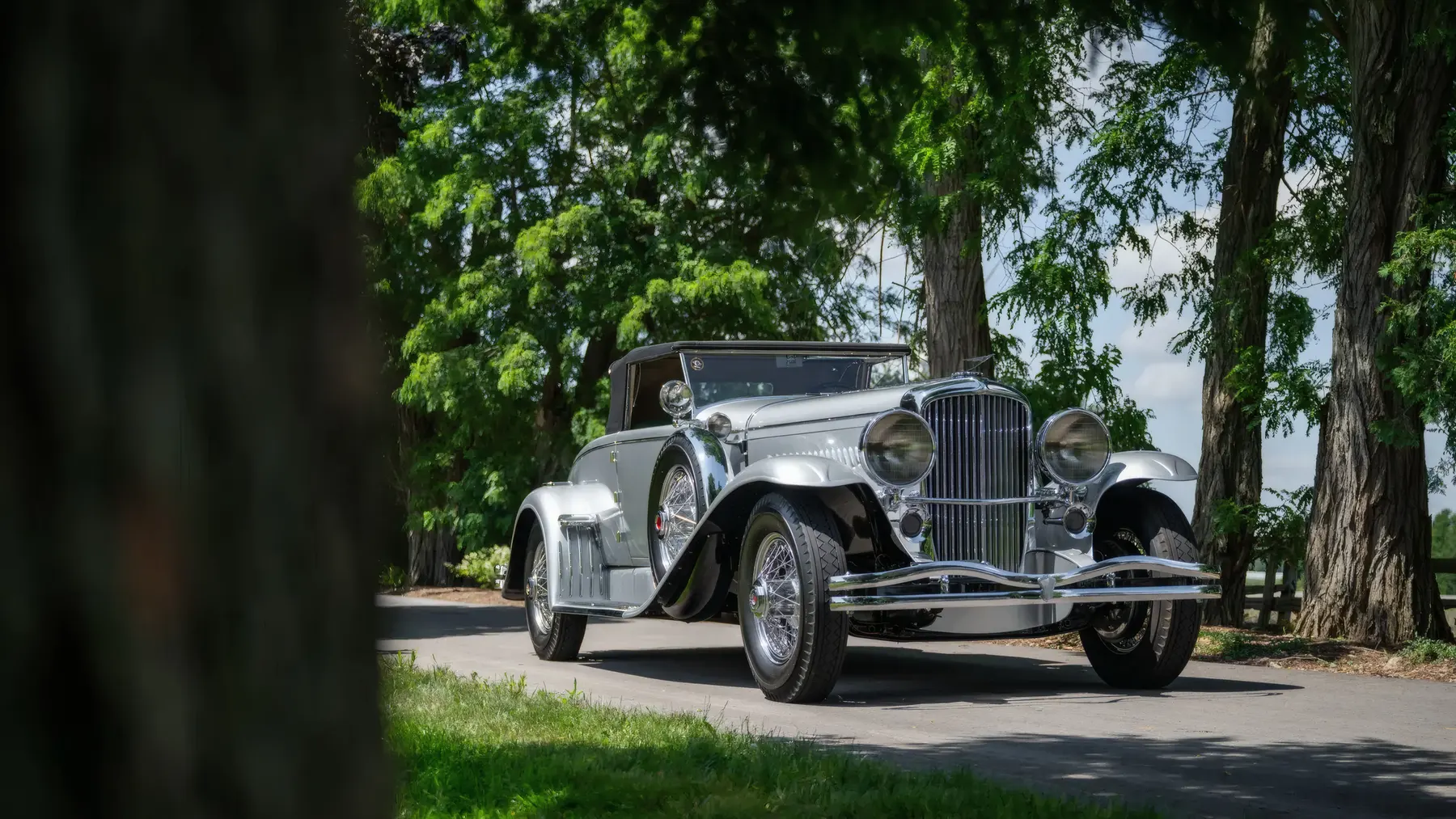
Murphy’s relationship with Duesenberg was among the most productive in American coachbuilding history. The Pasadena firm had begun operations in the early 1920s building bodies for various chassis and had steadily refined its approach to a point where its work, by the late 1920s, carried genuine distinction. On the Model J, Murphy developed several body styles - closed sedans, convertible sedans, phaetons - but the Convertible Coupe became the body type most closely associated with their name on the J chassis, and the one that most successfully translated their design sensibility into a coherent statement. The firm worked primarily with the shorter 3,620mm wheelbase for the Convertible Coupe, a choice that improved visual proportion considerably without compromising interior space beyond what the body style’s essential character required.
The body itself was characterised by several features that Murphy carried consistently across their J work. The windscreen was raked at a notably modern angle for the period, avoiding the upright slab of glass that gave many contemporaries a retrospectively dated appearance. The roofline dropped smoothly toward the tail in a continuous curve that avoided the abrupt transitions visible in less accomplished coachwork. Murphy’s folding top mechanism was designed so that, when lowered, the hood all but disappeared behind the passengers, often covered by a fitted tonnneau that allowed the body’s lines to read without interruption - a detail requiring careful engineering of the folding mechanism and a level of interior craftsmanship that Murphy consistently delivered. Long sweeping front fenders integrated with the running boards and flowed into rear fender lines that gave the car the impression of continuous movement even stationary. The headlamps, mounted on the fenders in the period manner, were incorporated into Murphy’s designs with particular elegance, sitting at a height and angle that reinforced rather than disrupted the car’s dominant horizontals.
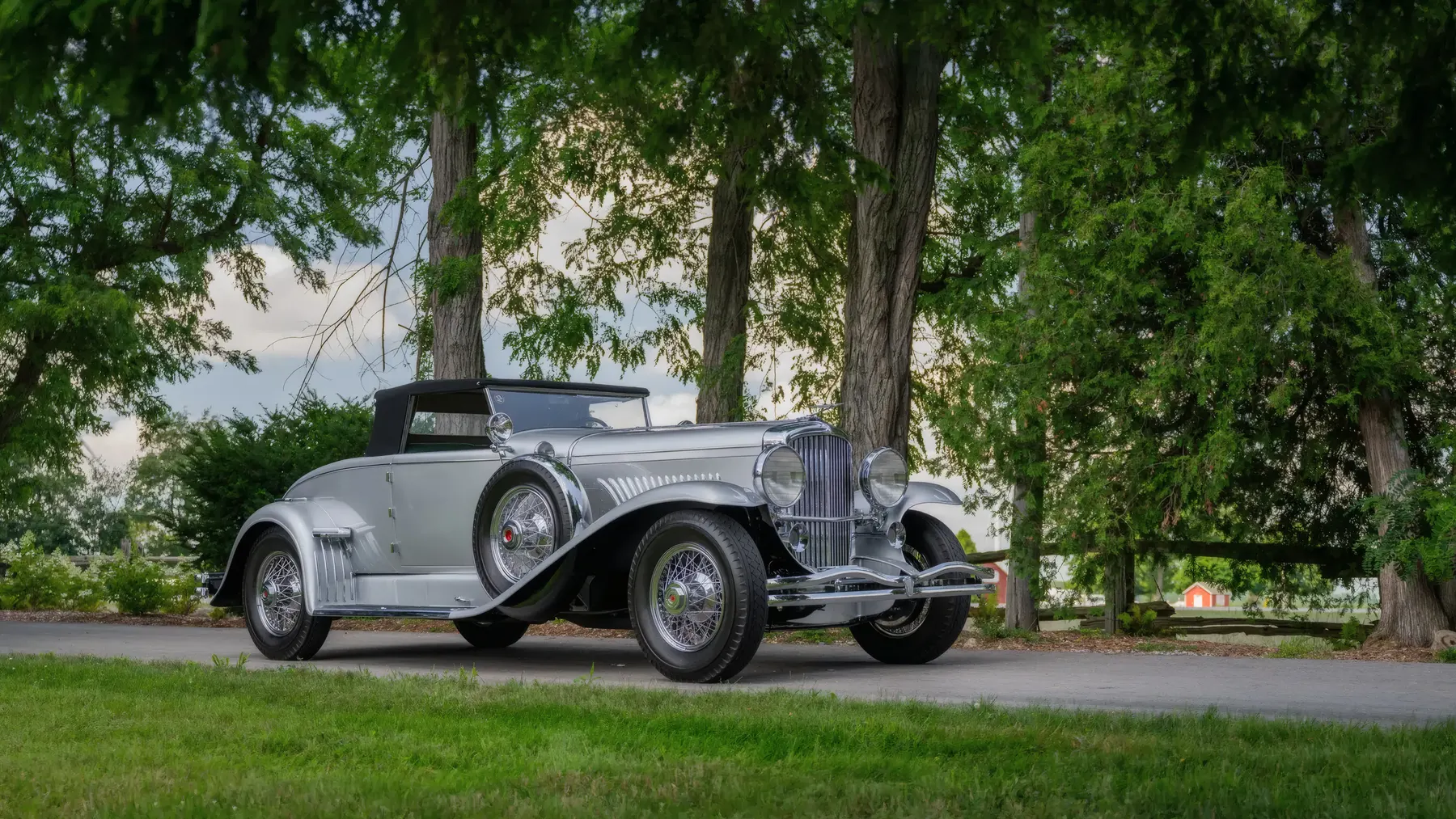
On the road, the Model J operated on an entirely different register from its European contemporaries. The twin-cam eight produced its power with a smoothness that struck period observers as almost uncanny - there was no vibratory roughness, no period of mechanical discontent at any speed within the car’s considerable range. The exhaust at moderate throttle was a low, even murmur that escalated in a linear, unhurried manner as revs built. With the tall gearing that Duesenberg fitted to J-chassis cars destined for American highway use, acceleration from rest was measured and deliberate rather than urgent; the claimed 265 bhp was not delivering its message through a narrow power band but through sustained, progressive torque across a wide range of engine speeds. Once underway, the J could sustain highway speeds that were genuinely unusual for a production automobile of the era, and it did so without the mechanical stress or structural noise that characterised far less powerful cars at similar velocities. The Murphy Convertible Coupe body was, in experienced hands at speed with the top lowered, an experience that justified every cent of the extraordinary price.
That price, however, was also the car’s most significant structural limitation. A bare Model J chassis left the Duesenberg factory at Indianapolis at approximately $8,500 in 1929 dollars - more than most Americans earned in several years - and Murphy’s coachwork added several thousand dollars further. Complete cars typically fell between $13,000 and $20,000 depending on specification and equipment, placing the Duesenberg J categorically beyond any rational comparison with other American cars and in direct competition with the most expensive European machinery. In the prosperous months of 1929, this was a tenable commercial position, sustained by a genuine engineering case and the undeniable social power of owning the most expensive automobile available. When the Depression arrived in force after October of that year, the case for the Model J did not disappear, but the number of Americans capable of making it shrank with devastating speed. Duesenberg built approximately 480 Model J chassis across the model’s production run from 1929 to 1937, a figure that reflects both the inherent exclusivity of the enterprise and the punishing commercial environment in which most of that production occurred.
The engineering limitations of the J deserve equally direct treatment. The hydraulic drum brakes, for all their period sophistication, were working against the fundamental physics of a complete car weighing in the region of 2,200 to 2,400 kg depending on body specification. Repeated hard stops from high speed - the kind of use that the J’s performance capability might invite - generated heat that the drum arrangement could not always manage gracefully, and the servo-assisted feel that period drivers appreciated was not always consistent under sustained demand. The steering was heavy at parking speeds, demanding genuine physical effort from the driver, and the large turning circle that inevitably followed from a 3,620mm wheelbase made the Convertible Coupe a vehicle that required preplanning in any urban environment. These were not failings unique to Duesenberg - every car of comparable specification faced them - but they mattered in real-world use, and they meant that the J’s extraordinary high-speed poise coexisted with considerable effort in everyday driving. The gearbox, a three-speed unit of sound construction, required deliberate and well-timed shifts and actively discouraged casual driving habits. The car was not especially forgiving of inattention at the controls.
Fuel consumption was prodigious. A 6,882cc engine delivering 265 bhp through a substantial coachbuilt body was not, and could never be, economical, and period figures where they exist suggest consumption that in demanding use would fall well below fifteen Imperial MPG. For the buyers Duesenberg was targeting this was irrelevant on its face, but the point illuminates something important about the car’s context: this was engineering and coachbuilding conceived for a world in which practical considerations simply did not apply, and the Depression made that world contract to near nothing within a year of the J’s introduction.
The supercharged SJ variant, introduced from 1932 and fitted with a centrifugal supercharger bolted to the engine’s nose, raised the claimed output to approximately 320 bhp according to Duesenberg’s own period figures, with some contemporary accounts going considerably higher, though these latter numbers should be approached cautiously. Murphy bodied at least some SJ chassis, and the difference in character over the standard J was immediately apparent - the supercharger’s signature whine under acceleration transformed the car’s personality from supremely effortless to genuinely urgent, the additional output arriving in a way that made the standard J feel, relatively, almost restrained. Whether the Convertible Coupe’s coachwork was always entirely comfortable with sustained SJ performance is a question that period owners rarely felt compelled to answer on engineering grounds.
Murphy itself did not survive to witness the J’s final years. The Pasadena firm closed in 1932, a casualty of the same Depression that was steadily strangling Duesenberg’s market, and their J bodies became, from that point, a fixed and finite record of what American coachbuilding could achieve at its peak. The closure added a certain poignancy to the best examples: they were the work of craftsmen who had no opportunity for revision or refinement beyond 1932, and they carry the quality of a last statement rather than an ongoing evolution.
The Duesenberg Model J Murphy Convertible Coupe endures in collector imagination as something close to a template - the image that forms when an informed observer is asked to picture the Model J without reference to a specific car. This is partly Murphy’s success and partly the result of the body style’s inherent aptitude for the chassis’s character. It is also the consequence of genuine quality in the coachwork: the best Murphy Convertible Coupes look as resolved today as they did in 1930, without the self-consciousness of period excess or the frailty of fashion-driven design. The car that Murphy built for the J was not the most dramatic coachwork applied to the chassis, and it was not the most technically adventurous. It was simply the most right - and in the brief, brilliant, catastrophically unlucky moment it was built to inhabit, that was enough.
Join the discussion
Comments
Loading comments…
Leave a comment
Share a detail, memory, or perspective. Every comment is reviewed before publication.