1936 Cord 810 Cabriolet

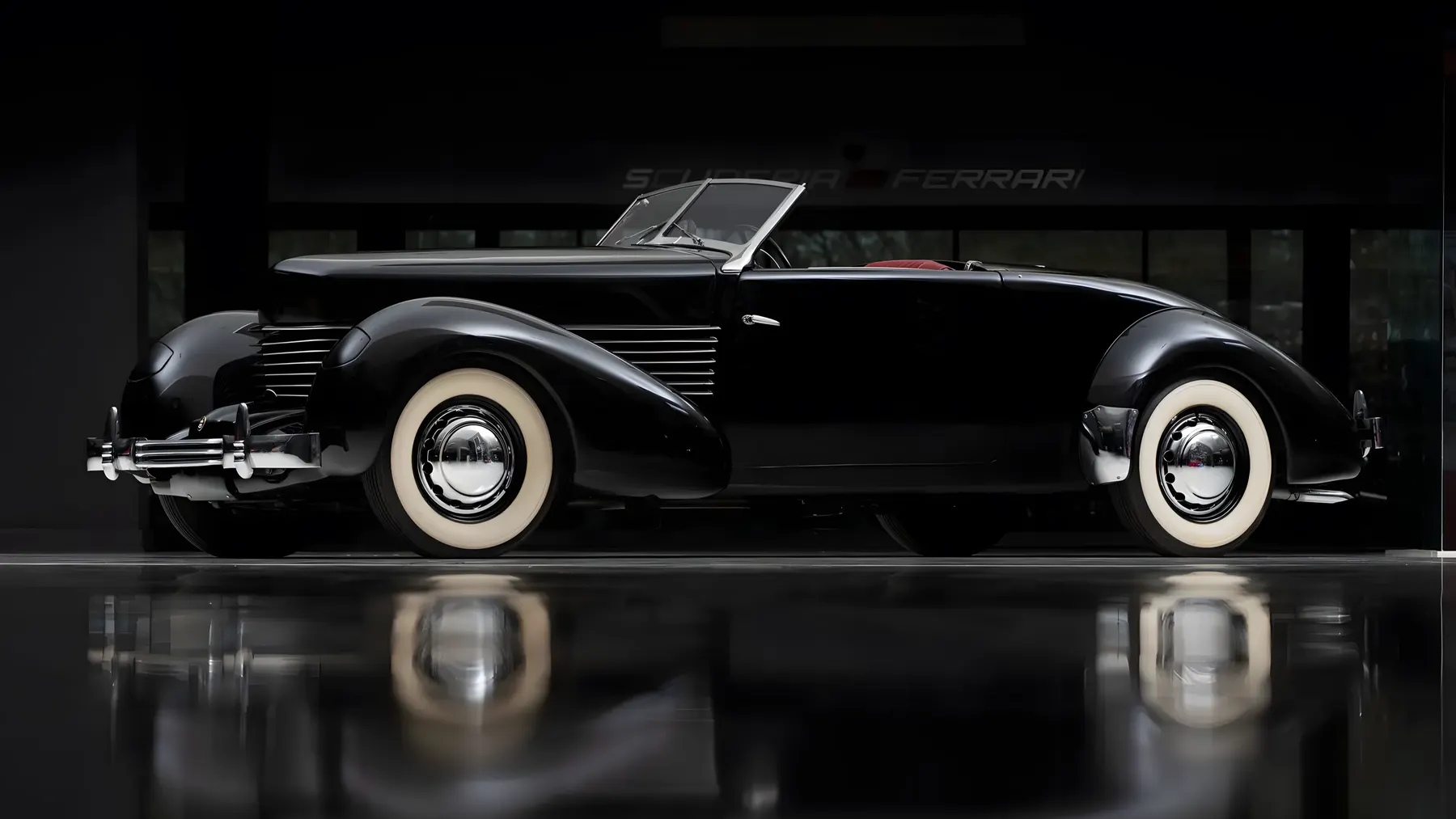
The automotive landscape of the 1930s was forever changed when the Cord 810 made its dramatic debut at the 1935 New York Auto Show. Among its various body styles, the elegant Cabriolet stands as perhaps the most striking embodiment of designer Gordon Buehrig’s revolutionary vision. This two-passenger convertible wasn’t merely a car, it was a rolling sculpture that broke nearly every automotive convention of its era while establishing new standards for design and engineering excellence.
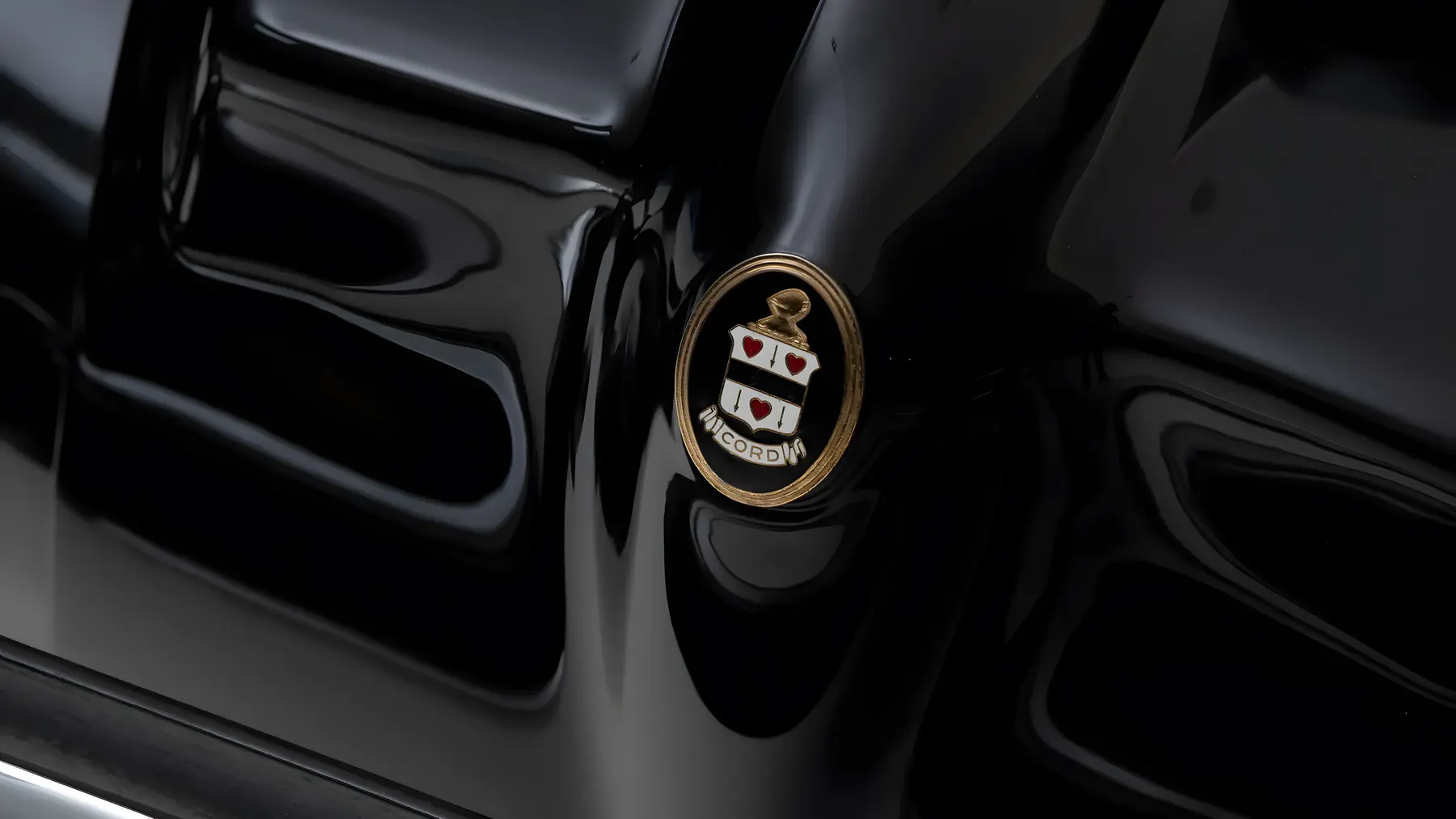
The story of the Cord 810 begins with talented automotive designer Gordon M. Buehrig, who initially conceived the vehicle as a Duesenberg. At the time, E.L. Cord owned Auburn, Cord, and Duesenberg, and the company ultimately decided to apply the Cord badge to this groundbreaking design.
The Auburn Automobile Company rushed to construct 100 cars to qualify for the 1935 New York Auto Show, where the vehicle would make its first public appearance on November 2nd. The reception was nothing short of sensational, crowds surrounding the display were so dense that some attendees stood on the bumpers of nearby cars just to get a glimpse of this automotive revolution.
Cord boldly promised production of 1,000 units monthly and Christmas delivery for orders placed at the show. However, December 25th came and went with no deliveries as the car’s innovative semi-automatic transmission proved more troublesome than anticipated. The first production Cords finally left the assembly line in February 1936, with deliveries to New York City not occurring until April that year.
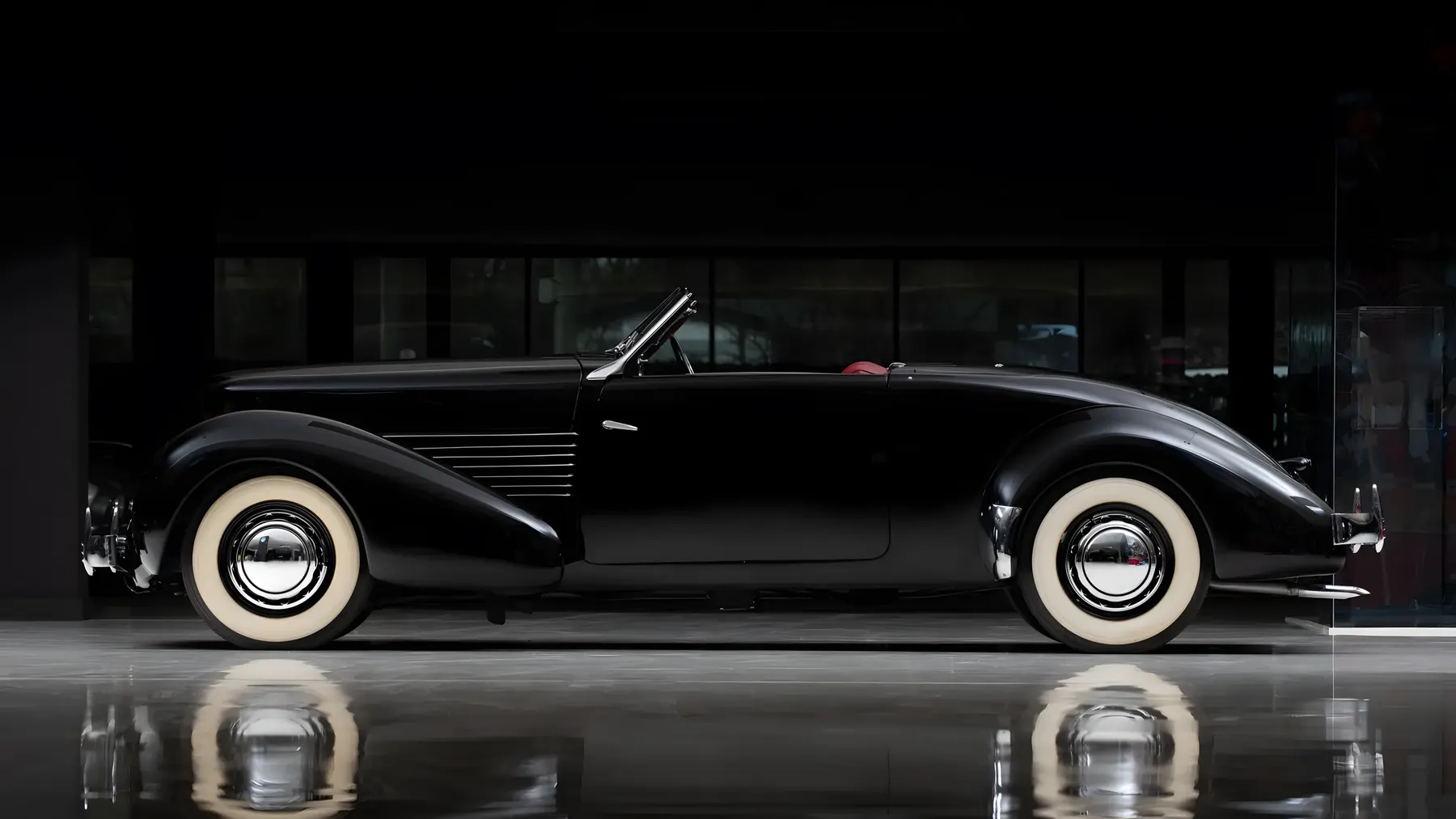
The Cord 810 Cabriolet represented an absolute departure from conventional automotive styling. Buehrig’s design was a modernist masterpiece characterized by clean, flowing lines and an absence of superfluous ornamentation.
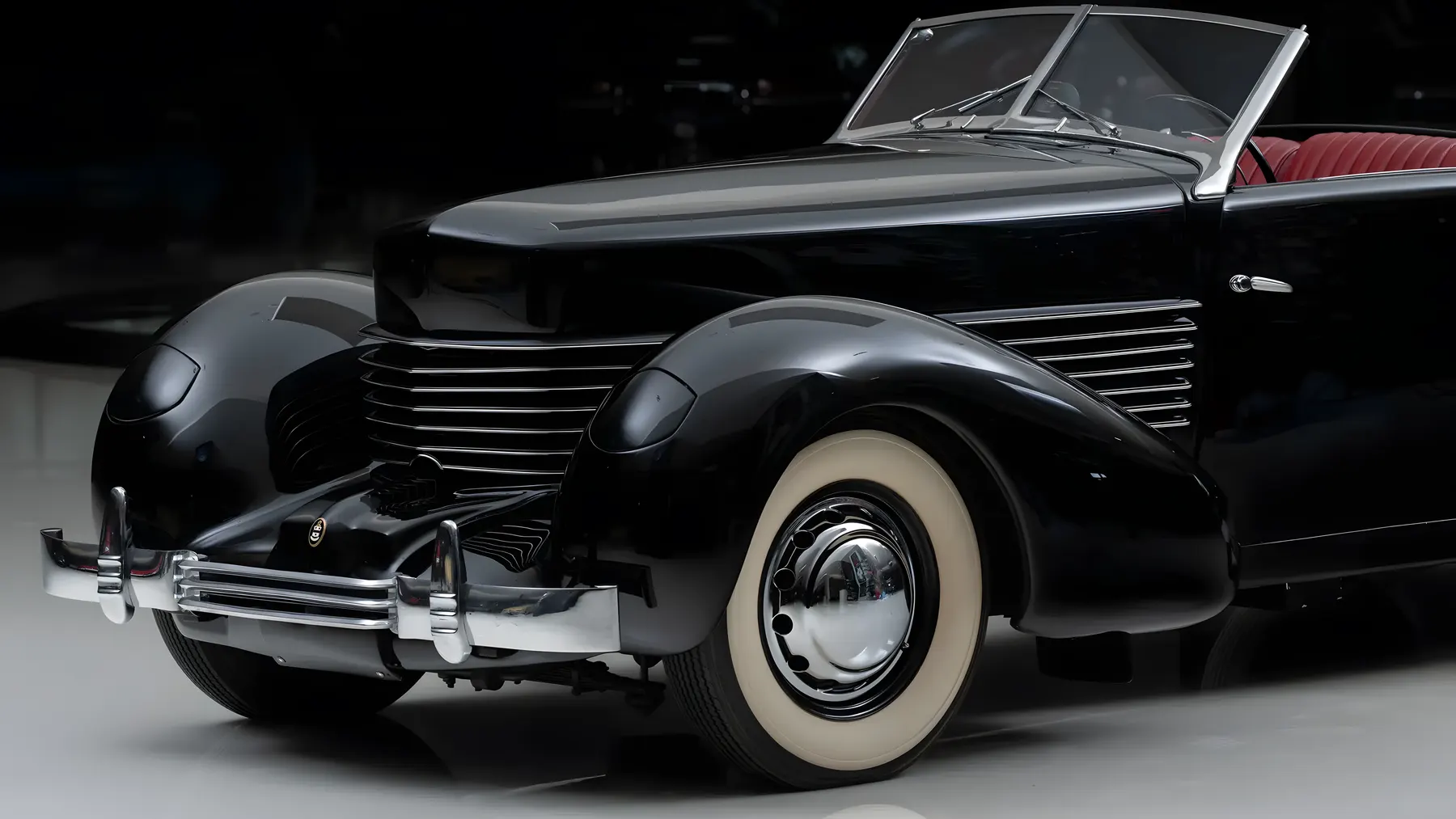
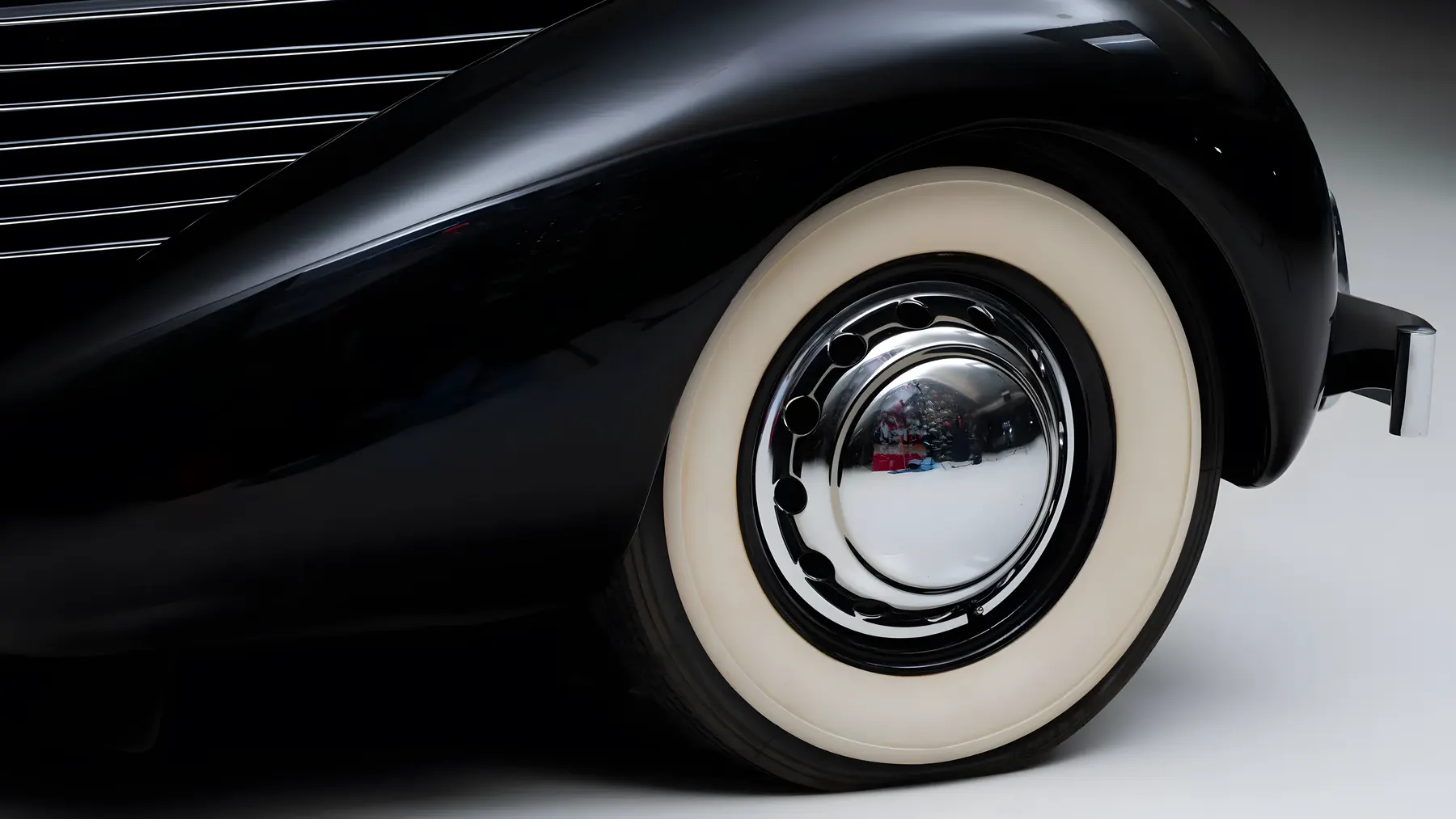
Most strikingly, the Cord lacked a traditional radiator grille, instead featuring a distinctive “coffin nose” front end with horizontal louvers that wrapped around the nose. This distinctive feature gave the car its enduring nickname and instantly recognizable profile.
The Cabriolet featured hidden headlights, a first for production automobiles, operated by small hand cranks positioned at the edges of the dashboard. This innovation contributed to the car’s sleek, aerodynamic appearance while adding a touch of mechanical theater to the driving experience.
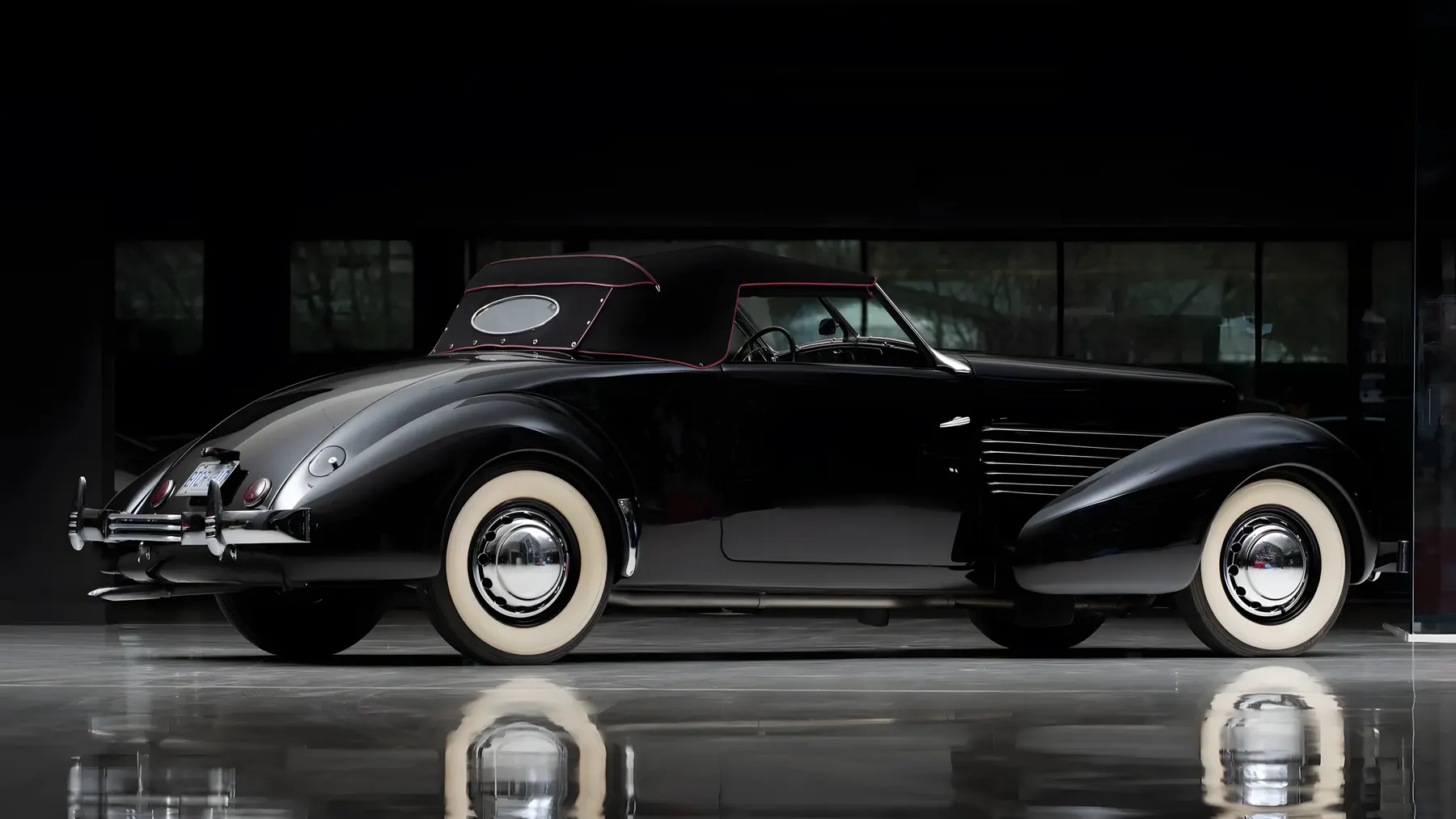
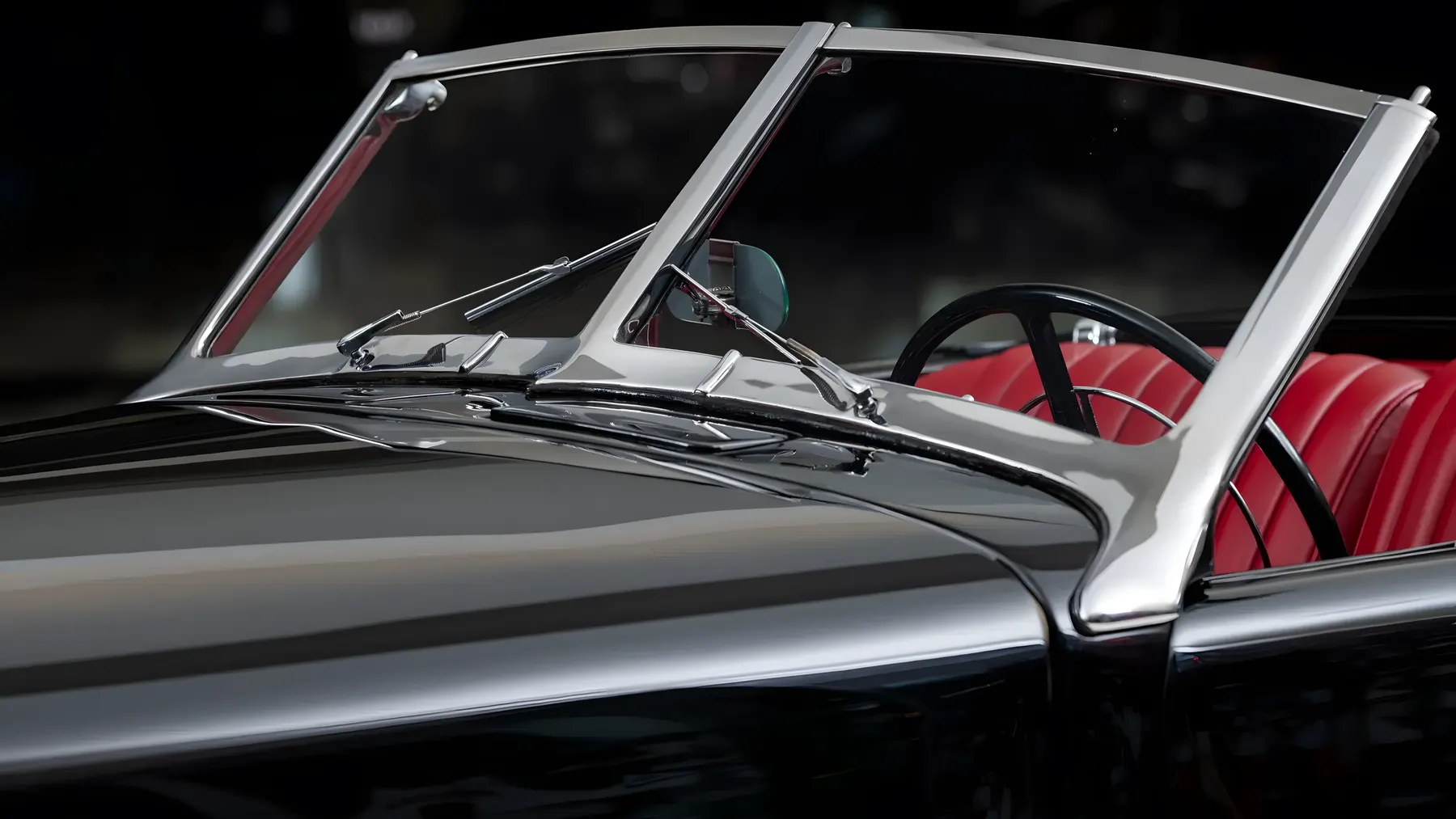
Other revolutionary design elements included hidden door hinges, a one-piece hood that opened from the front rather than the sides, and a body mounted so low to the ground that running boards were unnecessary. The convertible top mechanism was particularly innovative, disappearing completely under a flush-fitting tonneau cover behind the seats when lowered, giving the car an exceptionally clean profile whether the top was up or down.
The Cord’s body construction was equally revolutionary, employing a semi-unitary method with the front “stub” frame (carrying the engine and transmission) bolted to a body structure built as a unit with the frame. This approach was decades ahead of mainstream automotive construction techniques.
Stepping inside the Cord 810 Cabriolet revealed an interior as forward-thinking as its exterior. The engine-turned dashboard housed complete instrumentation, including a tachometer and built-in radio, features that wouldn’t become industry standards until well into the 1950s.
The Cabriolet’s interior was typically upholstered in high-quality leather, with the red leather interior paired with black exterior and red canvas top being a particularly striking and classic combination.
The aircraft-inspired instrument panel featured an engine-turned aluminum fascia with innovative edge-lit instrumentation that used luminous dye applied to the edges of the glass dials for illumination, another industry first.
Beneath its revolutionary styling, the Cord 810 Cabriolet featured equally innovative engineering. It was powered by a 288 cubic inch (4.7-liter) Lycoming V8 engine producing 125 horsepower at 3,600 RPM and approximately 200 lb-ft of torque.
The front-wheel-drive configuration was unprecedented for an American production car of this class, with independent front suspension providing both superior handling and a lower profile. The transmission extended in front of the engine (similar to the Citroën Traction Avant), enabling the elimination of the traditional driveshaft tunnel and contributing to the car’s low stance.
Performance figures were impressive for the era, with a top speed of approximately 93-100 mph and acceleration from 0-60 mph in about 15-20 seconds. Fuel economy ranged from 10-15 mpg, typical for luxury automobiles of the period.
The Cord featured a four-speed semi-automatic transmission with an innovative electric pre-selector shift mechanism. The driver would select gears using a “key” on the steering column, with actual shifting accomplished by pumping the clutch pedal. While innovative, this system proved troublesome in early production and contributed to the car’s delivery delays.
The Cord 810 Cabriolet was built on a 125-inch wheelbase with overall dimensions of 189 inches in length and 77 inches in width. The car weighed approximately 3,815 pounds and featured hydraulic drum brakes. Original pricing in 1936 was set at $2,195, a substantial sum during the Great Depression when the average car cost around $760 and the average household income was just $1,780.
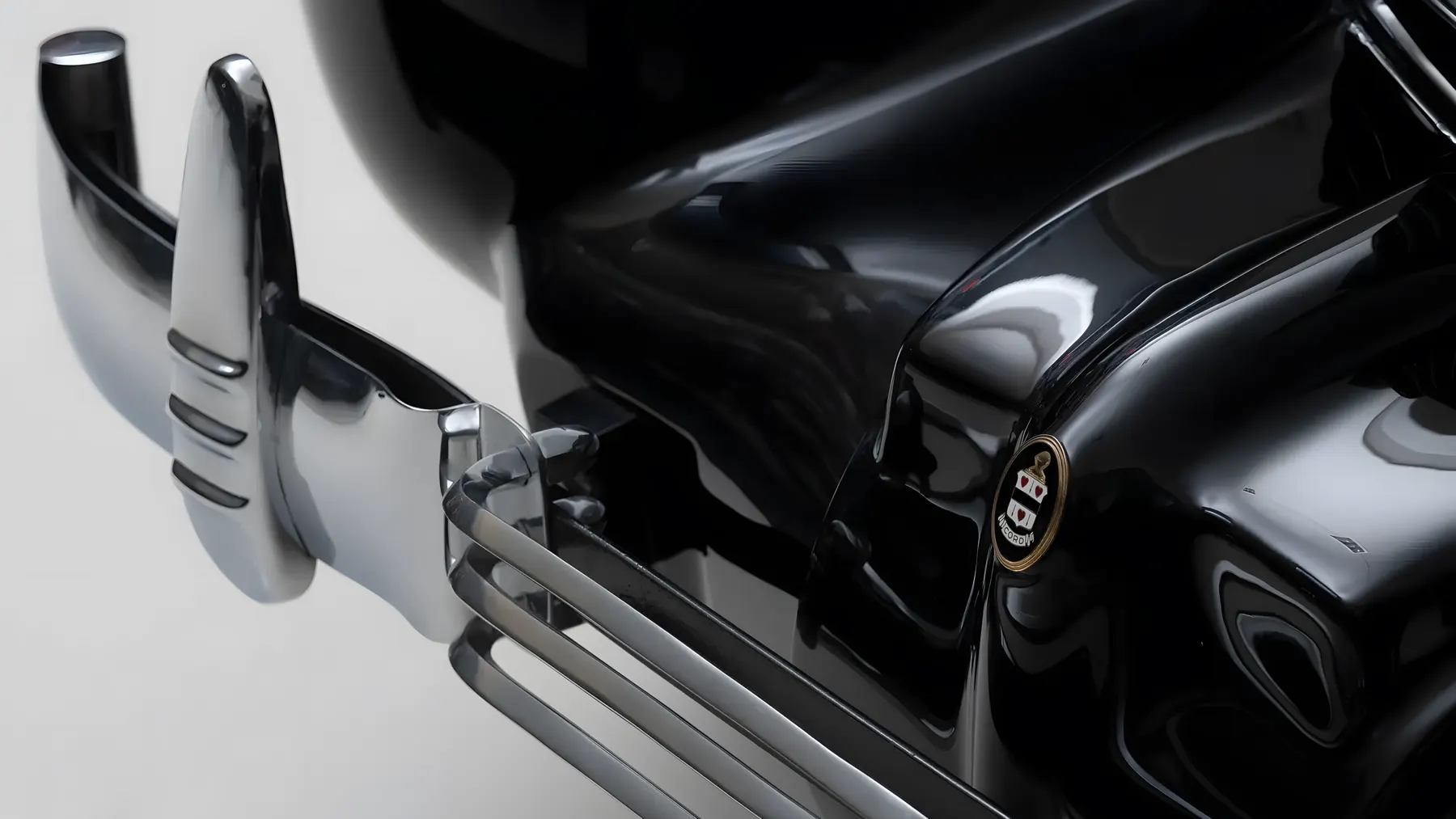
The early production Cabriolet offered as a 1936 model (like serial number 810 2375 F) had several features unique to the 810 series, including the distinctive design of the glove boxes and a smooth rather than ribbed finish to the steering wheel. It was also the first Cord to receive the upgraded, more efficient Bendix brake system, one of numerous rolling improvements made during production.
For the 1937 model year, the 810 became the 812, with largely similar styling but the addition of an optional supercharger that raised horsepower to 170. Supercharged models were distinguishable by their brilliant chrome-plated external exhaust pipes mounted on each side of the hood.
Despite its undeniable brilliance, the Cord 810/812 was commercially unsuccessful. By the end of 1936, only 1,174 units had been produced, far short of the company’s ambitious targets. Unsold 1936 models were renumbered and sold as 1937 Cord 812s. Total production across both model years reached just 2,972 cars, including only 205 convertibles, before production ceased in 1937.
Early reliability problems, including transmission issues and vapor lock, cooled initial enthusiasm. The dealer network shrank rapidly, and by December 1937, the company had entered bankruptcy.
Yet the Cord’s influence far exceeded its commercial success. The revolutionary design was celebrated by museums and design critics alike. When the Museum of Modern Art hosted its groundbreaking “Eight Automobiles” exhibit in 1951, a Cord sedan was featured prominently, with the catalog noting that it “suggests the driving power of a fast fighter plane”.
In 1996, American Heritage magazine proclaimed the Cord 810 sedan “The Single Most Beautiful American Car.” Today, these cars are highly sought after by collectors, with well-preserved examples commanding significant premiums at auction.
The design innovations pioneered by the Cord wouldn’t reappear in American automobiles for decades. Front-wheel drive wouldn’t return to American luxury cars until the 1966 Oldsmobile Toronado, and hidden headlamps became a staple of automotive design in the 1960s and beyond, all tracing their lineage to Buehrig’s revolutionary Cord.
Despite its brief production run, the Cord 810 Cabriolet stands as one of the most significant American automobiles ever created, a perfect marriage of revolutionary engineering and timeless design that continues to captivate automotive enthusiasts nearly nine decades after its introduction.
Join the discussion
Comments
Loading comments…
Leave a comment
Share a detail, memory, or perspective. Every comment is reviewed before publication.