Delahaye 135 M Cabriolet by Chapron: A Le Mans Winner in Restrained Couture
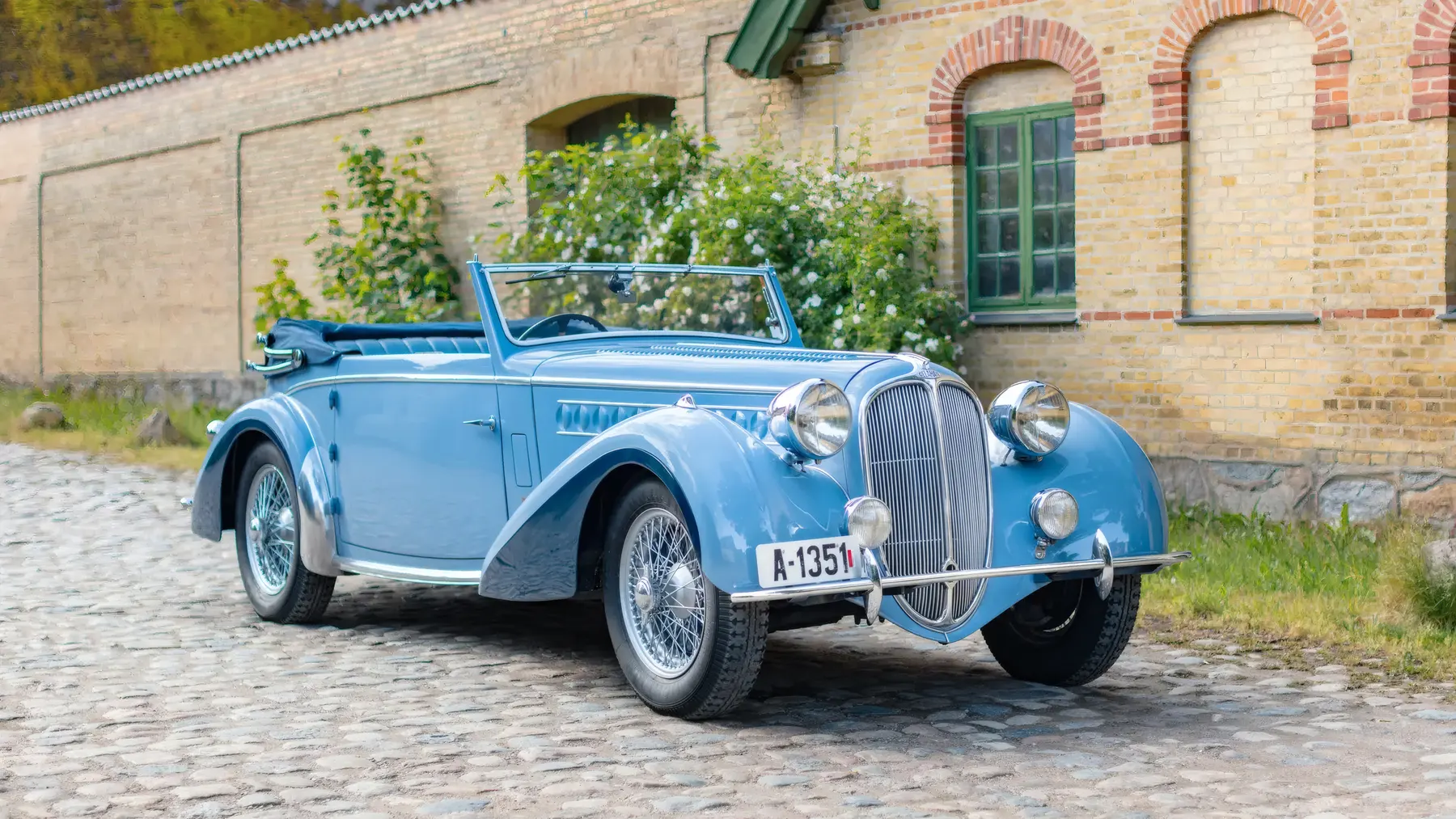
1938 Delahaye 135 M Cabriolet by Chapron

Images: Kevin Van Campenhout / RM Sotheby's
Not every great coachbuilt Delahaye is trying to catch your eye from across a lawn. The chassis that Delahaye launched at the 1935 Paris Salon became, within a few short years, the favourite canvas of French coachbuilding’s most theatrical talents - Figoni et Falaschi’s teardrop Goutte d’Eau bodies chief among them, all swept fenders and cinema-star drama. But the same rolling chassis, the same engine, and often the same customers also went to Henri Chapron, a coachbuilder who built his reputation on the opposite instinct: dress the car well, dress it tastefully, and never let the tailoring upstage the client. The Delahaye 135 M Cabriolet by Chapron is the clearest expression of that other tradition, and it is arguably the more interesting one to understand, because it asks a different question about what a coachbuilt car was actually for.
The 135 itself was no wallflower mechanically. Designed by engineer Jean François, it arrived on a lowered chassis with a rigid, box-sectioned “Bloctube” structure and independent front suspension on transverse leaf springs, a live rear axle on quarter-elliptic leaf springs, and cable-operated Bendix drum brakes at all four corners. It was a serious departure for a manufacturer that had spent decades building trucks and fire engines, and Delahaye leaned into the departure hard, campaigning the chassis in period competition almost from the start. A 135 finished the 1935 Le Mans in seventh place; the following seasons brought a Monte Carlo Rally victory in 1937, a second place overall at Le Mans that same year, and then the high-water mark in 1938, when Delahaye 135s took first, second and fourth at Le Mans outright, with Eugène Chaboud and Jean Trémoulet leading the field home. A second Monte Carlo Rally win followed in 1939. This was, in other words, a genuine competition chassis wearing a suit - not a boulevard car dressed up to look sporting.
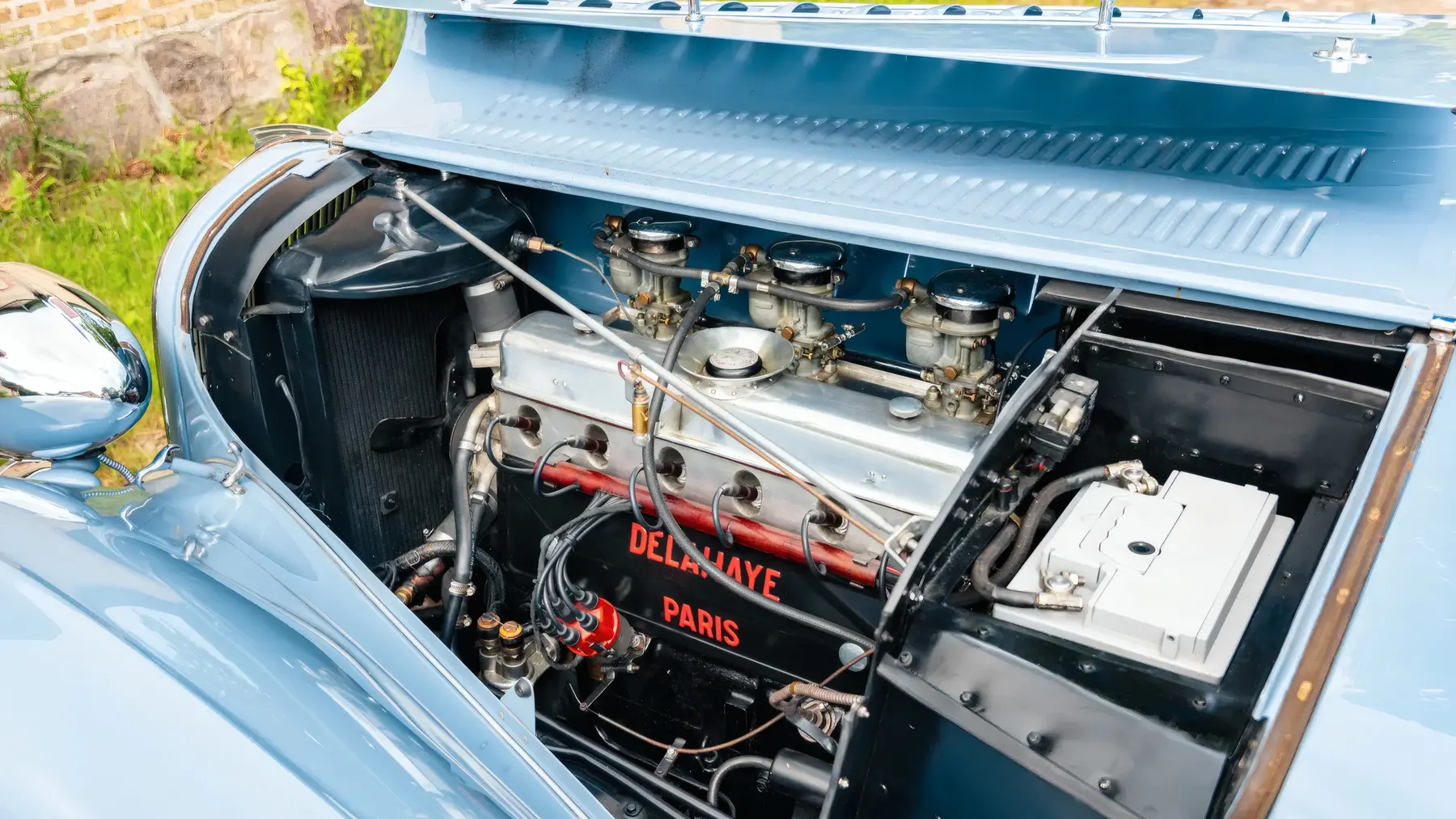
In 1936 that chassis was joined by the 135 M, fitted with a larger 3,557 cc overhead-valve straight-six with a cast-iron block, roughly square-ish long-stroke dimensions around 84 mm by 107 mm, and a modest 7.0:1 compression ratio. Delahaye sold it in a genuinely bewildering spread of states of tune - a single Solex carburettor was good for around 90 bhp, two carburettors brought that to roughly 105 bhp, and the full triple-carburettor specification is generally credited with around 115 bhp, though this is one of several points on which period and specialist sources disagree; some credit the same triple-carb engine with as little as 110 bhp, others with as much as 120 bhp, depending on tune, gearing, and the specific reference consulted. What is not disputed is the character that resulted: a flexible, torquey six that pulled cleanly from low revs and, in period road tests, was praised for combining genuinely capable roadholding and steering with instantly responsive controls - a car that, as one 1938 British road test summarised approvingly, could not fail to please the keen driver.
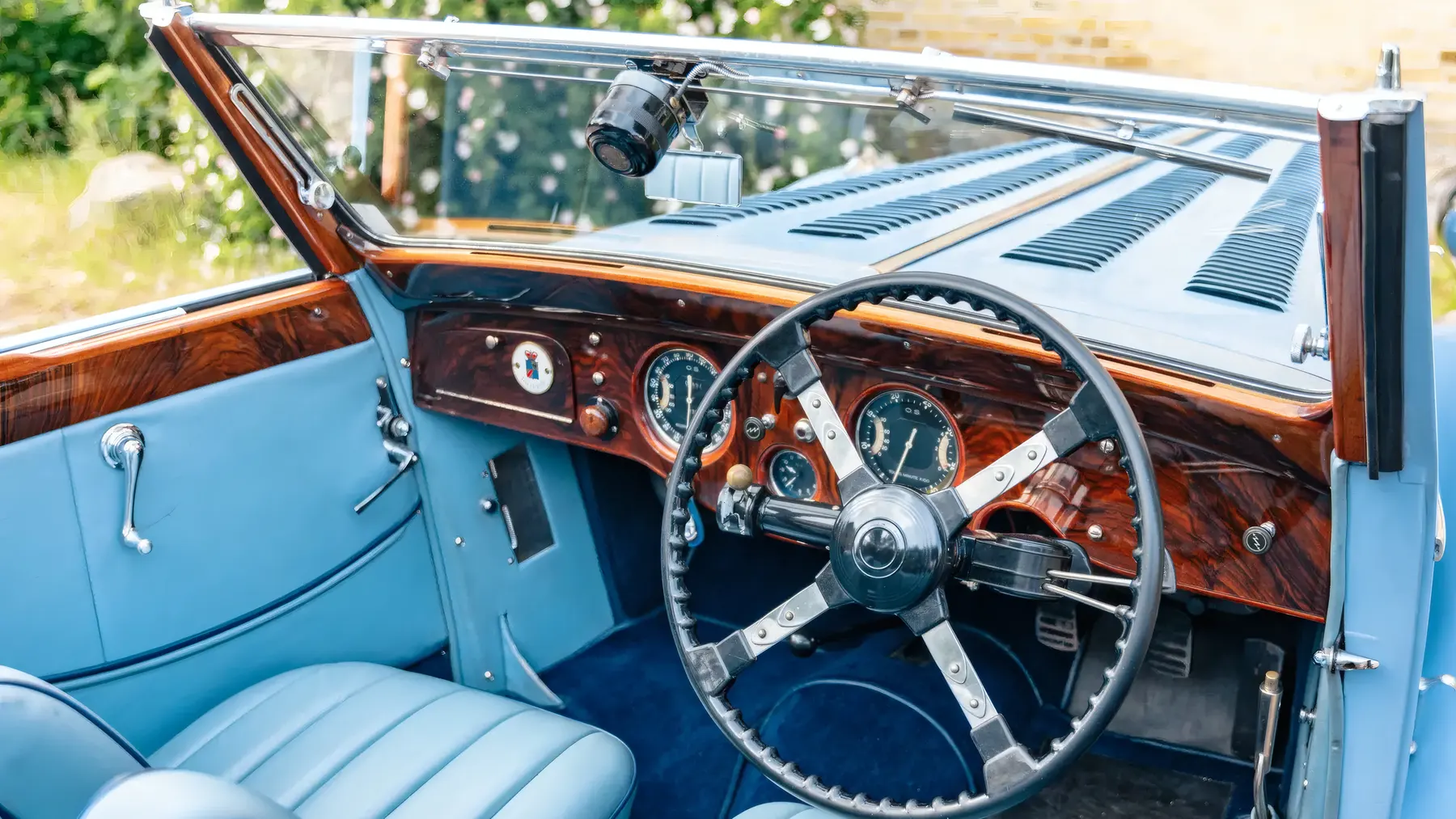
The 135 M’s other genuine engineering talking point was its transmission. Buyers could specify a conventional four-speed manual gearbox, only partially synchronised and therefore demanding proper double-declutching technique on the lower ratios, or they could pay for the Cotal electromagnetic pre-selector gearbox - a small, jewel-like Bakelite switch mounted on the steering column that let the driver select the next ratio in advance and engage it with nothing more than a flick of the finger and a dab of the clutch pedal. Contemporary and modern drivers alike have described the Cotal as something close to a 1930s equivalent of a paddle-shift transaxle: unusual to learn, oddly intuitive once mastered, and a genuine engineering flex for a manufacturer that had built its name on agricultural machinery a generation earlier.
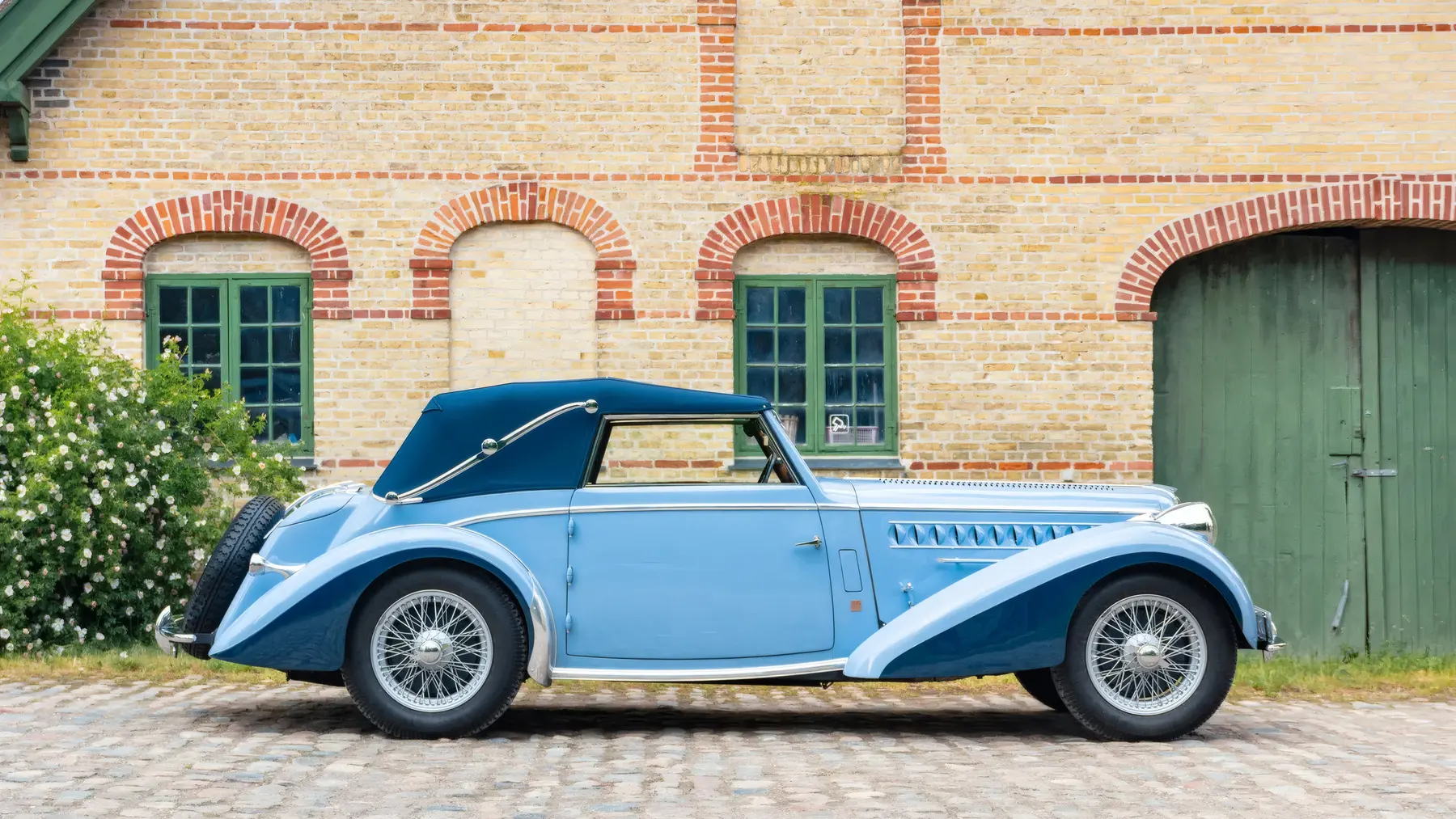
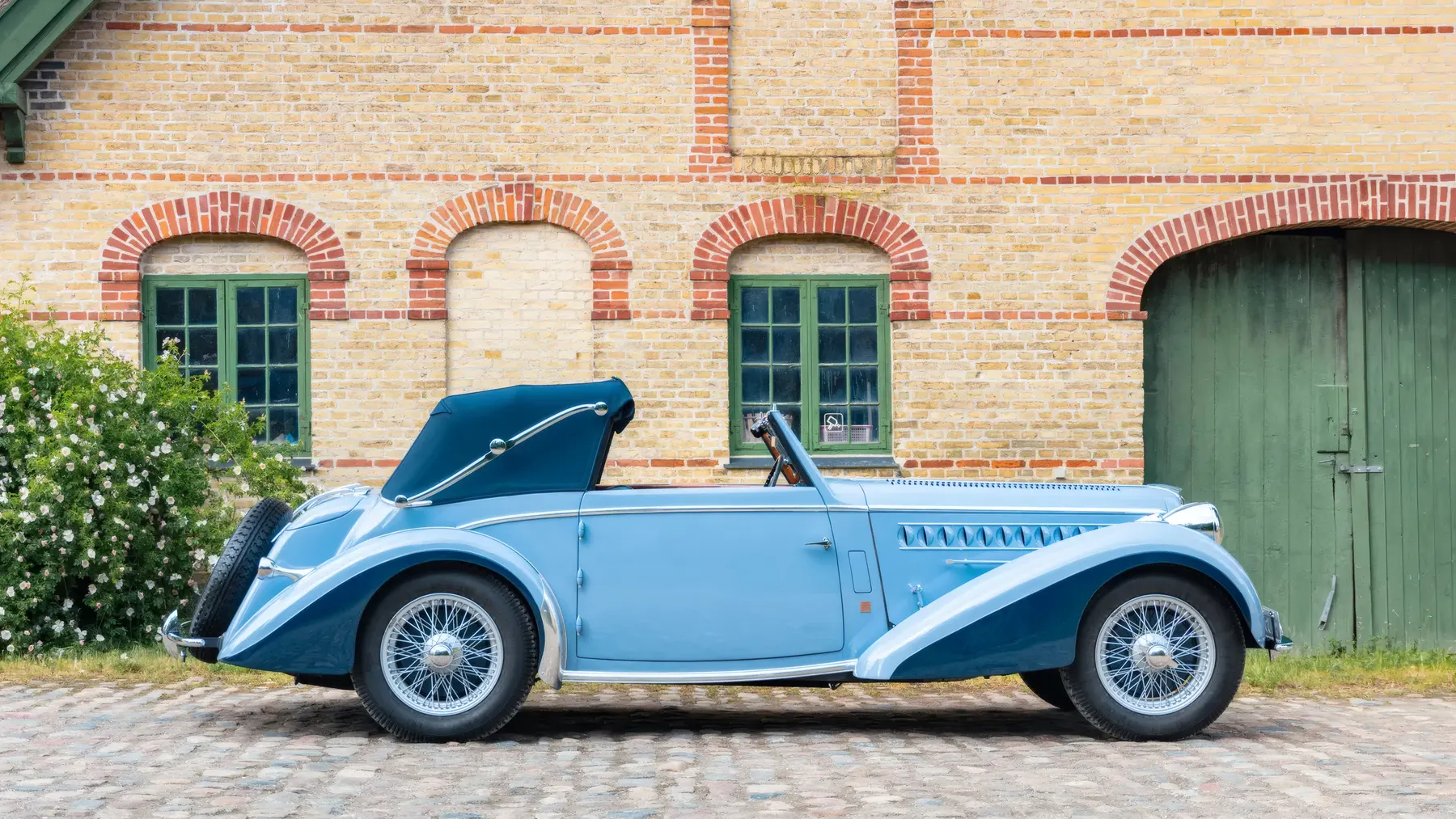
Onto this chassis, Henri Chapron built cabriolet coachwork that was, by the standards of his more flamboyant contemporaries, deliberately unadventurous. Chapron had founded his atelier in Levallois-Perret in 1919, initially rebodying Ford Model Ts left behind by the departing American army, and by the mid-1930s he had become, in terms of sheer volume, something close to Delahaye’s house coachbuilder - the supplier of what one former Delahaye design chief later called cars that were “never revolutionary, reflecting only his classical spirit.” Where Figoni chased spectacle, Chapron chased proportion: sweeping but restrained pontoon-style fenders, a broad two-tone belt-line moulding, a three-position folding top, and a four-passenger cabin that prioritised comfort and usability over pure visual drama. Rather than one-off bespoke sculptures, Chapron effectively ran a small catalogue of named cabriolet styles on the 135 M chassis - bodies sold under titles like “Dandy,” “Vedette” (introduced at the 1948 Paris Salon), and “Luxe” - built not as continuous mass production but in short factory-ordered batches, typically somewhere between ten and two dozen cars at a time, each one hand-formed over a wooden body frame in steel panels. It was a genuinely odd hybrid of the bespoke and the semi-standardised, and it is a large part of why no two surviving Chapron 135 M cabriolets are ever quite identical, even when built to the same nominal body style.
Production resumed after the wartime hiatus, and Chapron continued to body 135 M chassis well into the postwar years, with detail styling evolving gently across the decade - heavier, more pronounced two-tone schemes, semi-recessed headlamps on some later cars, and a more prominent grille treatment as Delahaye’s design language drifted from prewar to postwar idiom. Across the whole run, Delahaye is generally credited with somewhere in the region of 2,500 to just under 3,000 Type 135 chassis of all specifications built between 1935 and the early 1950s, though sources differ on the precise figure and on how many of those were completed specifically as 135 M variants rather than the base 135 or the more highly tuned 135 MS competition version. What can be said with confidence is that the 135 M was never the rarest of the family, but a genuine coachbuilt example - Chapron or otherwise - remains a scarce, individually documented object rather than a car built to any fixed production run.
Behind the wheel, the 135 M rewards a driver willing to meet it on its own terms. The driving position is dominated by an enormous, thin-rimmed steering wheel; the doors are low and close with a precise, expensive click rather than a slam; and once under way, the low-revving six delivers real torque from just above idle, enough to cruise comfortably at speeds that would embarrass many contemporaries while turning modest engine revs. The Cotal gearbox, when fitted and properly maintained, remains genuinely delightful to use even today - arguably more usable, in traffic, than the non-synchro manual alternative. It is a car that, mechanically, still does exactly what admirers of the type have always said it does: ride well, steer accurately, and cover ground with unhurried authority.
None of that should be mistaken for a car without real, specific drawbacks, and it does the model no favours to pretend otherwise. The brakes are the most obvious: cable- or rod-actuated mechanical drums, not hydraulics, meaning stopping distances and pedal feel are honestly poor by any standard later than about 1950, let alone by modern ones - a genuine limitation in a car capable of close to 100 mph in its more highly tuned states of tune. The raked, low windscreen that gives these cabriolets their handsome profile in period photographs also puts a taller driver’s eyeline above the glass rather than behind it at speed, a real ergonomic compromise rather than mere period charm. The cast-iron six, robust as it generally was, is documented as susceptible to block cracking related to cooling issues, a known failure mode that period and modern owners alike have had to manage. The non-Cotal manual gearbox’s lack of synchromesh on first and second gear meant that a poorly-judged shift by an unskilled or inattentive driver produced an audibly clumsy result, in a car that was otherwise marketed on refinement. And Delahaye’s own model strategy compounded these mechanical realities with genuine confusion at the showroom level: 135, 135 M, 135 MS, short competition chassis, long touring chassis, 138 and 148 derivatives, and a dozen or more coachbuilders each offering their own named variants on top - a commercially ambitious spread that, even now, makes it difficult for historians to pin down a single, agreed specification sheet for what looks, at a glance, like one car. Chapron’s own conservatism cuts both ways as well: it has aged gracefully and never looks dated in the way some of the more extravagant 1930s coachwork now can, but it also means these cars have rarely commanded the auction-room theatre, or the prices, of the rarest Figoni or Saoutchik-bodied 135s - handsome rather than sensational, and priced accordingly. Most consequentially, the entire proposition ran straight into French postwar fiscal policy: a steeply progressive tax regime on engine displacement made large-engined luxury cars like the 135 M ruinously expensive to license and run in their home market just as peacetime demand should have been recovering, a policy shift that throttled Delahaye’s business model and, within a few years, ended it altogether.
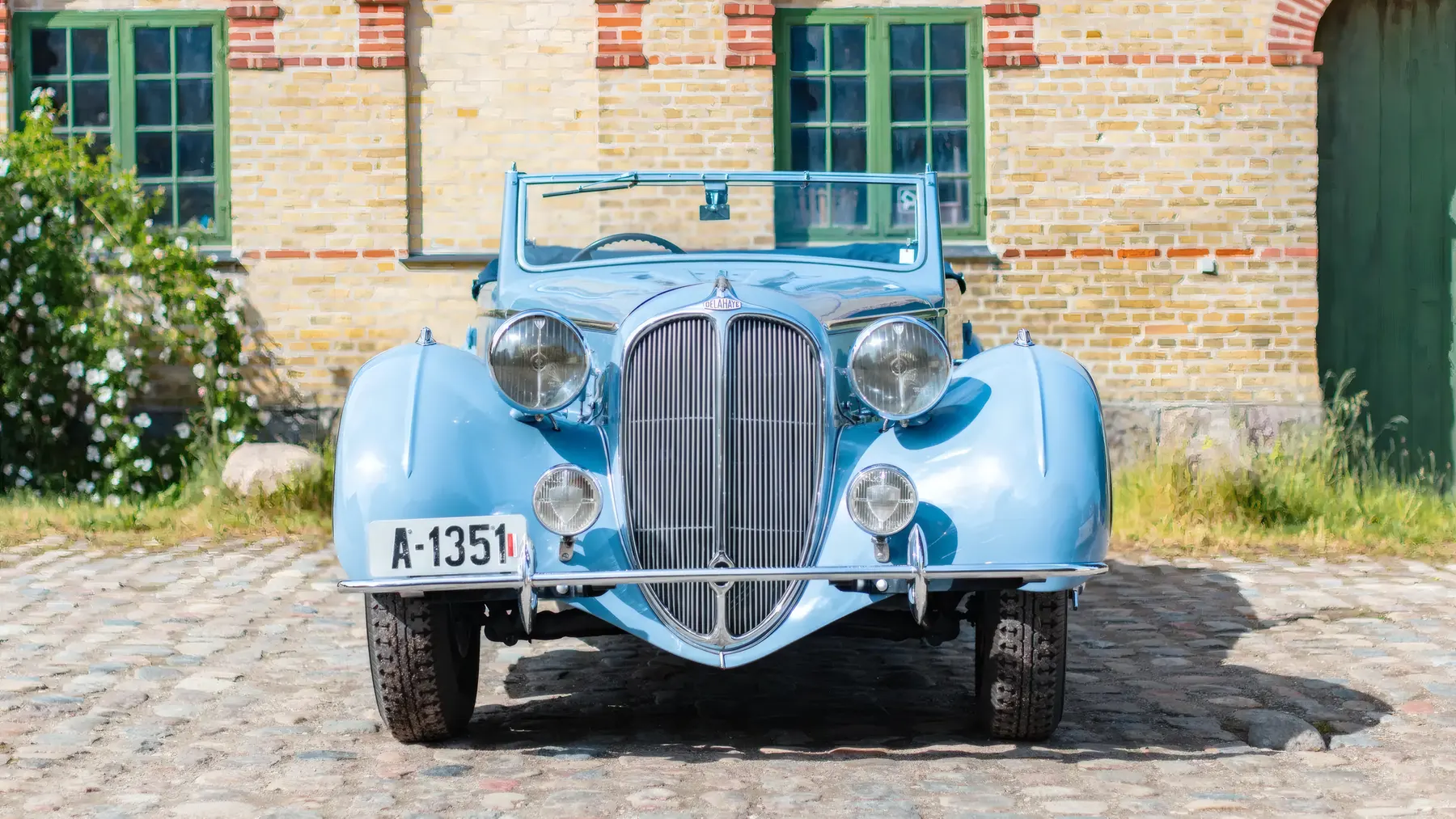
Within the wider hierarchy of coachbuilt Delahayes, the Chapron cabriolets have long occupied a distinct, slightly more attainable tier. The genuinely spectacular Figoni et Falaschi teardrop bodies, built in tiny numbers and treated today as rolling sculpture, dominate the very top of the market and the auction-house headlines; Chapron’s more numerous, more conservatively styled cabriolets have historically traded a step below that rarefied air, which is precisely what has made them viable as usable event and touring cars rather than static investment pieces. Recent auction estimates for well-documented, well-restored examples have clustered in the low-to-mid six figures - one late-1940s Chapron cabriolet consigned to a major American sale carried a pre-auction estimate in the $200,000 to $275,000 range - figures that place these cars firmly in serious classic-car territory, but well short of the seven-figure sums the rarest teardrop-bodied 135s can command. For collectors who want genuine competition-descended French coachbuilt pedigree, a documented history with a recognised carrossier, and a car that can realistically be driven on a rally rather than trailered between concours lawns, that positioning has proven durable rather than a mark of lesser desirability.
Delahaye limped on with the 135 M-derived Type 235 - offered until the firm’s closure in 1954, but built in only a small final run - before folding for good, unable to survive in a France that no longer wanted to tax, insure, or fuel cars like this. Chapron himself proved more adaptable than his client, pivoting almost immediately to rebodying the newly launched Citroën DS as a cabriolet, a partnership that would define the second half of his career far more visibly than his prewar and postwar work for Delahaye ever had. That pivot says something important about how to read the 135 M Cabriolet today: it is not simply a beautiful old convertible, but the last full flowering of a particular French industrial and artisanal arrangement - an independent chassis manufacturer with real competition credentials, paired with an independent coachbuilder working in short, semi-bespoke batches - that the economics of the 1950s made impossible to sustain. Chapron’s cars from this era survive not because they were the wildest expression of that arrangement, but because they were, in their own quiet way, the most complete one: a genuinely capable, Le Mans-proven chassis, wearing coachwork built by a man who understood that not every good car needs to shout about it.
Sources
- Delahaye 135 - Wikipedia
- Henri Chapron - Wikipedia
- 1948 Delahaye 135 M Cabriolet “Dandy” by Chapron - RM Sotheby’s, The Monterey Auction 2026
- 1947 Delahaye 135 M Cabriolet by Chapron - RM Sotheby’s, Amelia Island 2022
- 1949 Delahaye 135 M Cabriolet by Chapron - RM Sotheby’s, Amelia Island 2023
- Delahaye Takes Detroit: A 1937 Type 135M Restored to Proper Elegance and Performance - Hagerty Media
- 2022 Detroit Concours’ Best of Show Is Only Surviving “Grand Luxe” Delahaye 135M Roadster Cabriolet - Hagerty Media
- 1937 Delahaye 135M Cabriolet by Chapron Named Best of Show at the Inaugural Detroit Concours d’Elegance - Hagerty Newsroom
- Driving the Type 135 M Delahaye - VeloceToday
- Driven: 1938 Delahaye 135 MS Competition Cabriolet by Figoni & Falaschi - Classic Driver Magazine
- The Car: Delahaye 135 MS Cabriolet Vedette, Henri Chapron, 1947 - 12cylinders
- 1950 Delahaye 135 M Cabriolet Luxe par Chapron - Artcurial
- Chapron - Coachbuild.com, The Coachbuilders Encyclopedia
Join the discussion
Comments
Loading comments…
Leave a comment
Share a detail, memory, or perspective. Every comment is reviewed before publication.