Ferrari 250 GT Coupé by Boano: The Ferrari Nobody Credited - and Why That Was Always the Wrong Call
1957 Ferrari 250 GT Coupe by Boano

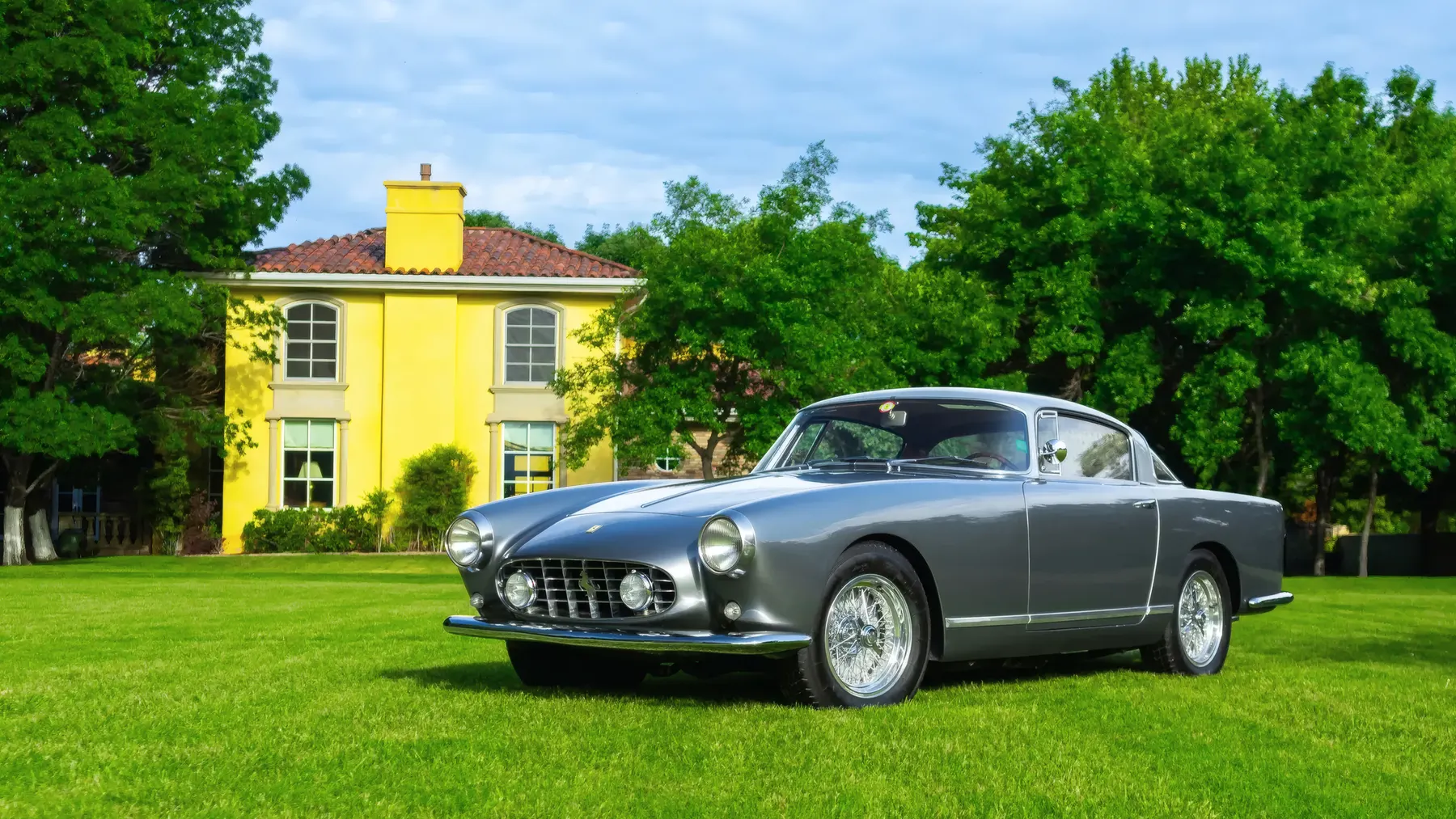
Images: RM Sotheby's
When Ferrari needed to build road cars properly - in series, with consistent bodies, on a schedule - it turned not to its own factory, not to the house that designed the car, but to a quiet Turin atelier whose name would appear on none of the promotional material. The Ferrari 250 GT Coupé bodied by Carrozzeria Boano between 1956 and 1957 is, depending on how you look at it, either Ferrari’s most self-effacing production car or its most important one. It was the moment Maranello stopped being an assemblage of brilliant one-offs and became something that could credibly be called a manufacturer of series grand touring cars.
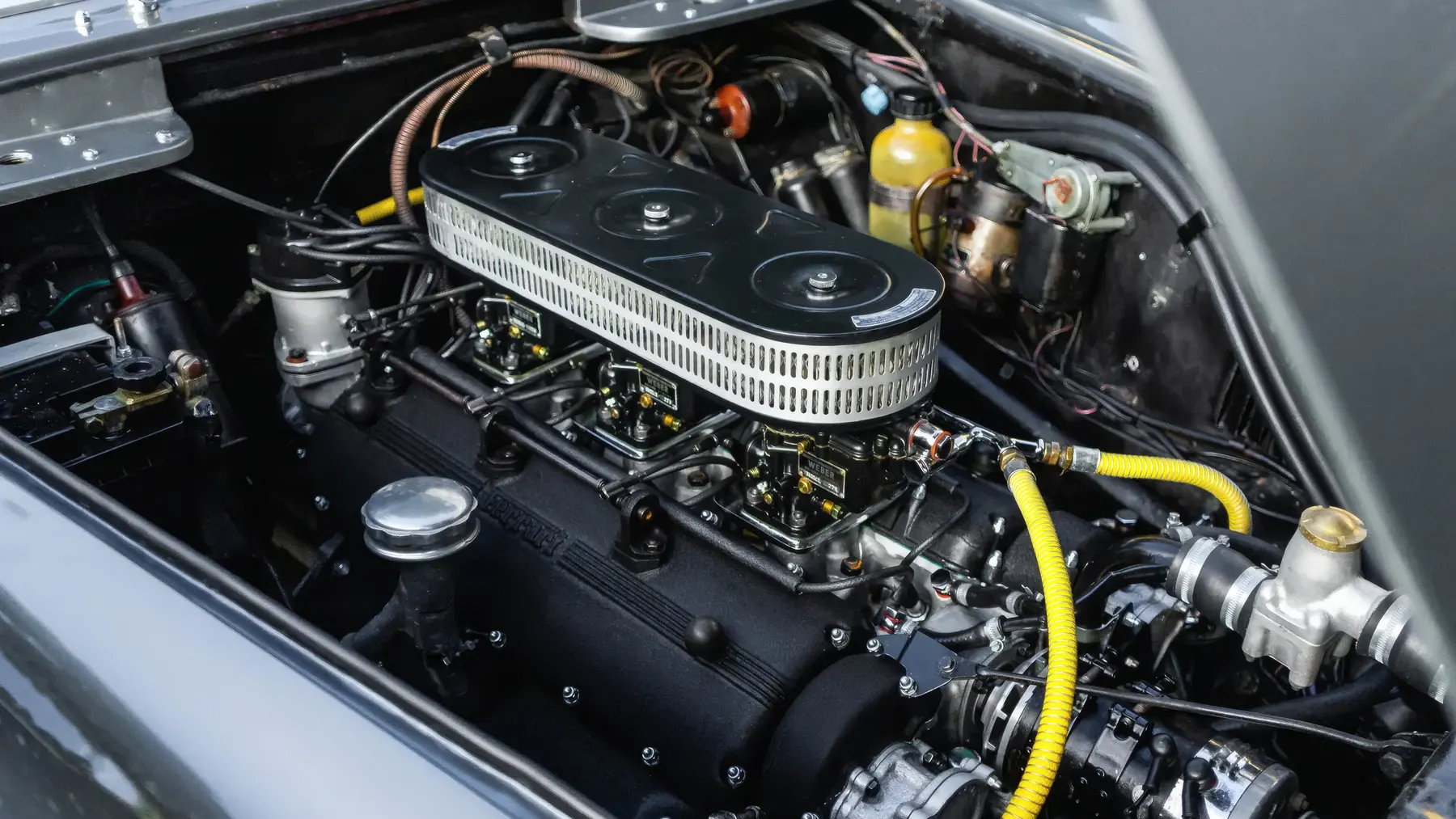
The 250 GT lineage had begun with the Europa GT, which debuted at the 1954 Paris Motor Show wearing a body by Pinin Farina over a 2600mm wheelbase chassis and Gioacchino Colombo’s aluminium alloy V12. That engine - a 60° unit of 2953cc, fed by three Weber carburettors and breathing through a single overhead camshaft per bank - had been conceived as a racing unit and never quite shed that character. In the Europa GT it produced around 220 bhp, which in a car weighing somewhere over 1,000 kg translated into performance that placed it above almost everything its wealthy customers might have encountered on a public road. But Ferrari was cautious about committing Pinin Farina to large-scale production, and cautious was exactly the right instinct: the Turin studio’s new factory at Grugliasco was still under construction, and its existing capacity was at its limit.
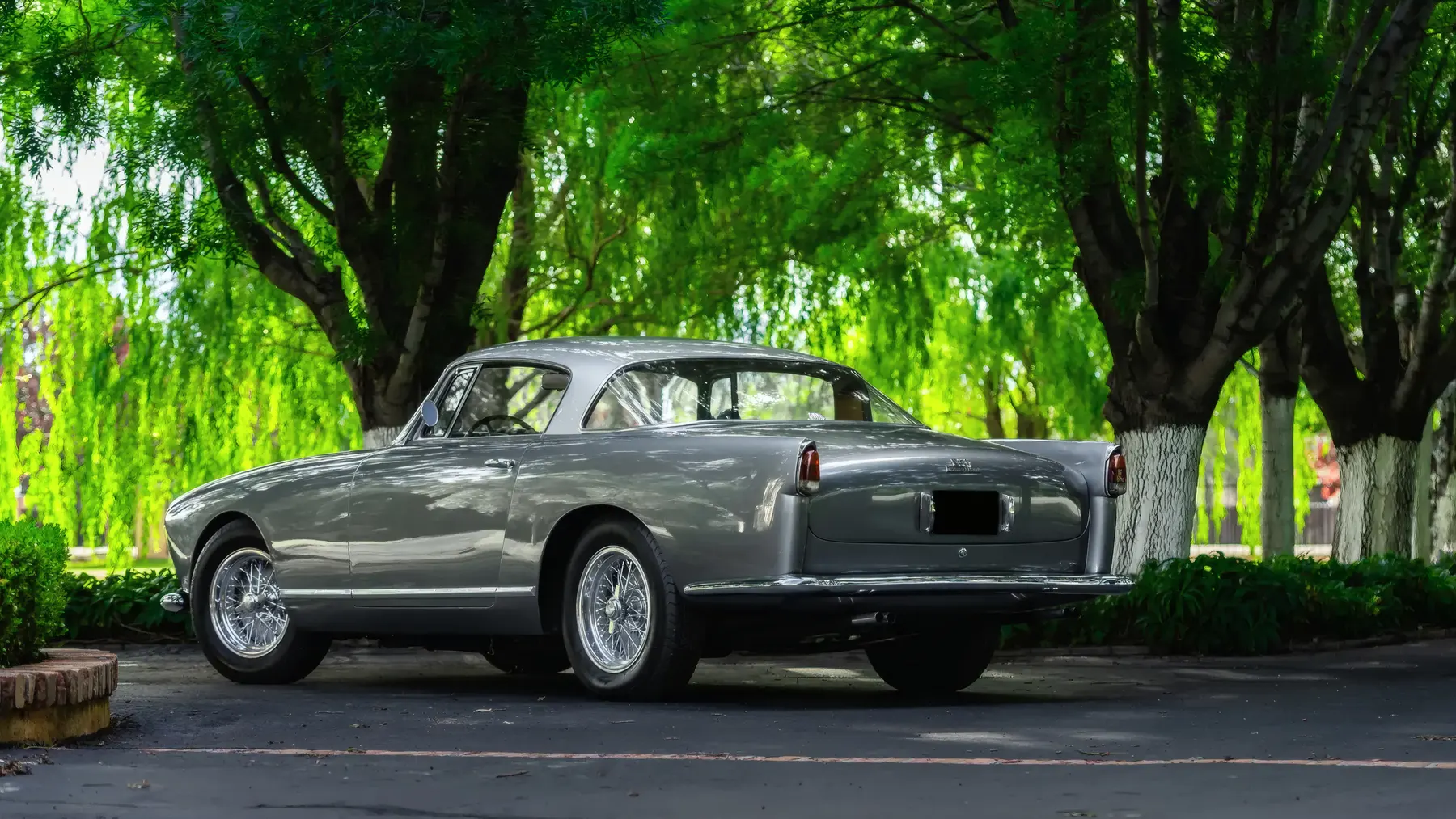
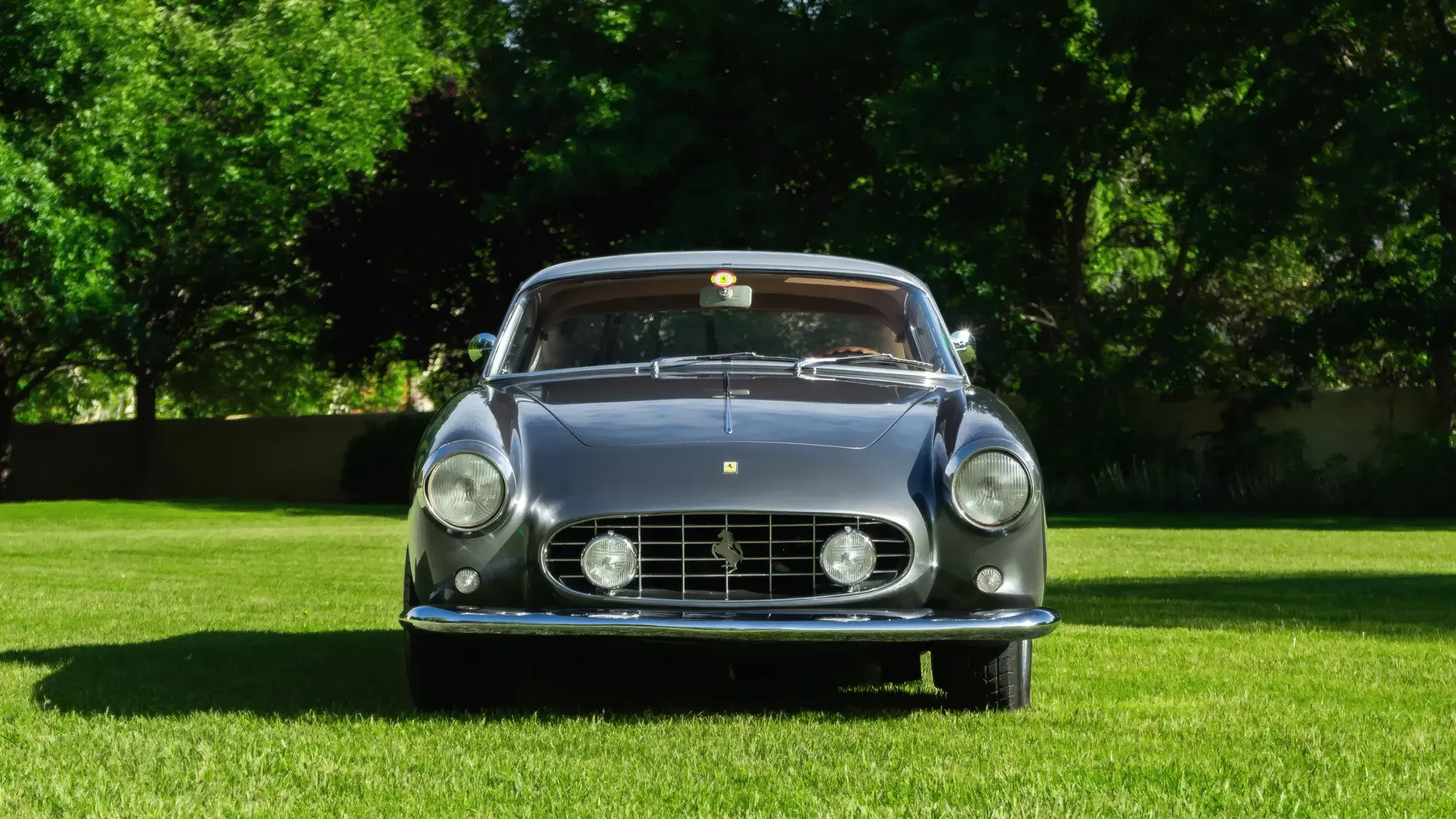
At the March 1956 Geneva Motor Show, Ferrari presented the evolved car - a refined shape carrying the Pinin Farina design language into something cleaner and more resolved. The frontal treatment was updated with a smaller radiator opening and discreet tail fins borrowed from the Series II 410 Superamerica. But the firm that would actually build these cars was Carrozzeria Boano, a company fewer than three years old at the time, operating out of facilities in and around Turin. Mario Felice Boano had an extraordinary curriculum behind him: he had joined Pinin Farina as early as 1930, then in 1944 had purchased Carrozzeria Ghia alongside Giorgio Alberti after the death of their friend Giacinto Ghia. During his tenure at Ghia, he was central to several landmark low-roofline designs, including contributions to the Lancia Aurelia, the Alfa Romeo 1900 SS, and the Volkswagen Karmann Ghia. After selling Ghia, he founded Carrozzeria Boano in 1954 with his son Gian Paolo, and it was this new firm that would give the 250 GT its production body. Because Boano was operating as a subcontractor following the Pinin Farina design, his name never appeared in Ferrari’s marketing for the car.
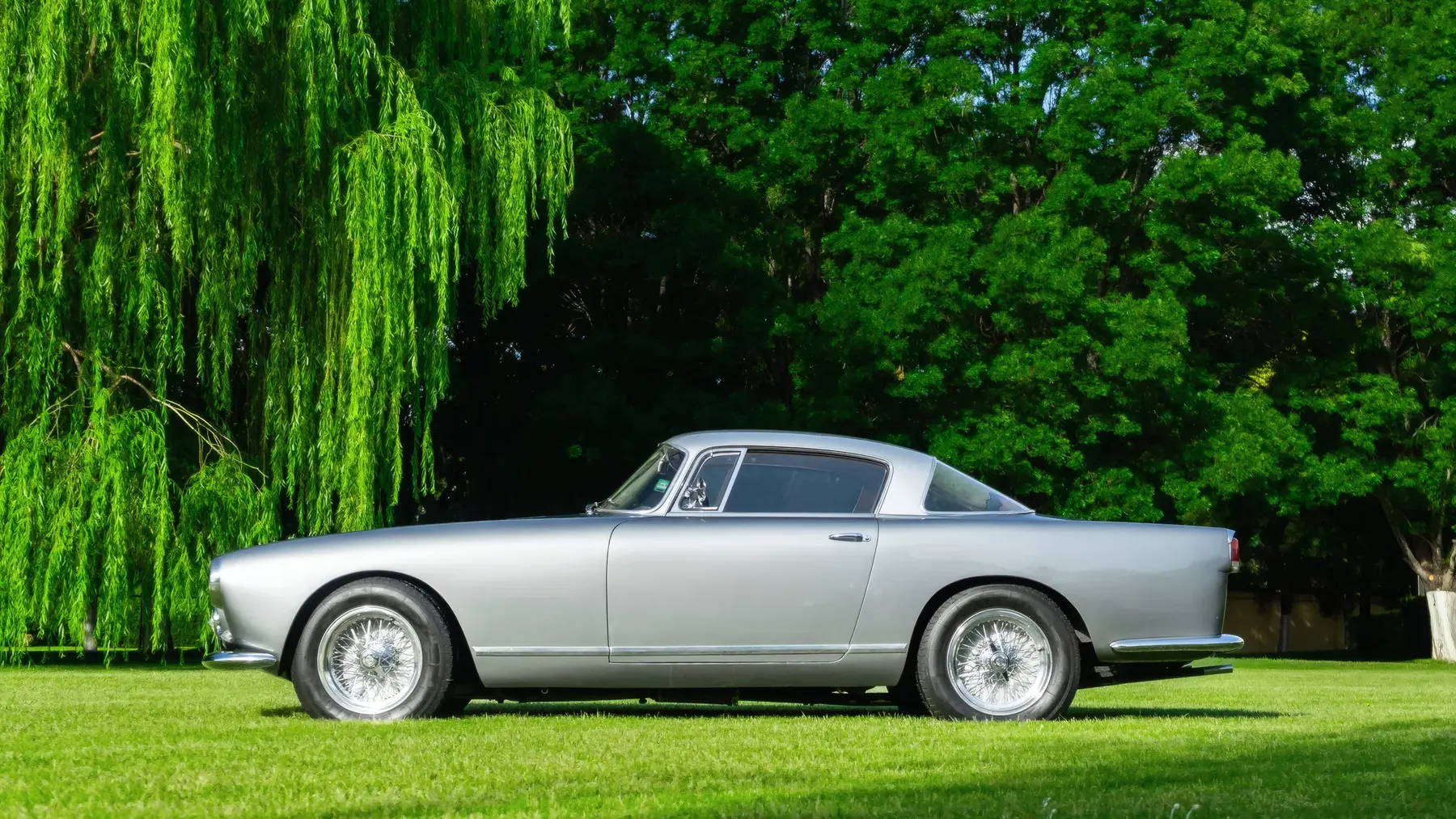
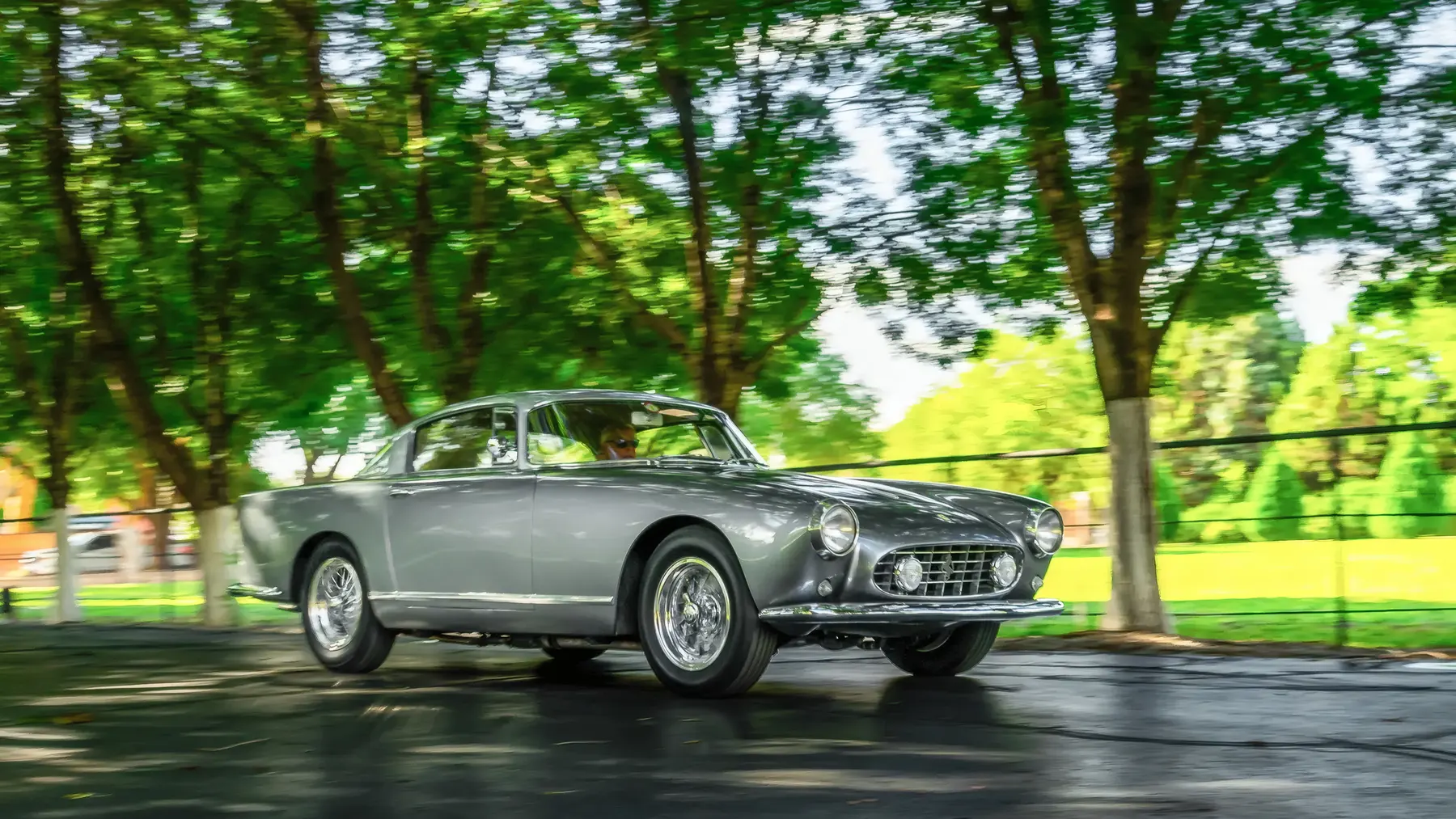
Boano took the Pinin Farina template and adapted it intelligently for repeatable production. The most consequential change was a reduction in the wing line height, giving the car its defining low roofline - the trait by which these cars are still identified today, and the characteristic that distinguishes them entirely from the higher-roofed Ellena cars that followed. The belt line ran straight and unadorned from nose to tail, and the glass sections were gently curved in a manner that spoke of careful hand-forming rather than pressed steel simplicity. Boano eliminated the kicked-up rear fender treatment visible on the Pinin Farina prototypes, a practical decision that also made the production silhouette more coherent. The result was a coupé that sat notably low for its era - rakish without aggression, poised without theatricality - and which wore the Pinin Farina design rather better in production form than it had in some of the prototypes.
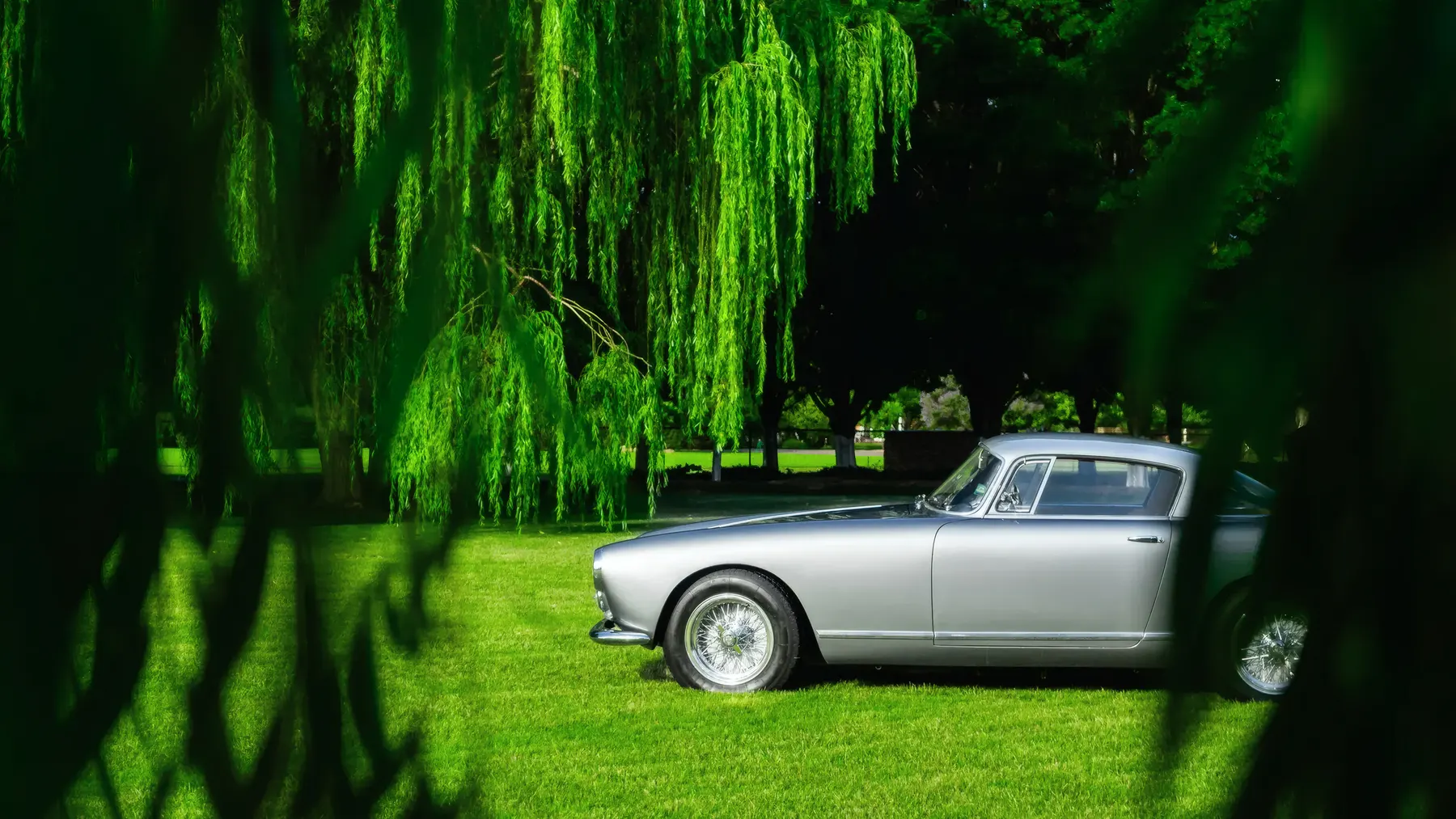
Approximately 63 to 65 bodies were built at Boano’s facilities before the end of production, with chassis numbers running from 0429GT into the high-600s. The vast majority were built with steel bodywork, but around sixteen were hand-beaten in aluminium - a distinction that matters considerably to collectors today, since the aluminium examples are lighter, inherently more resistant to corrosion, and rarer. One extraordinary outlier in the run was a single convertible, sold off the New York Auto Show stand in 1956 on Enzo Ferrari’s personal instructions. Everything else was a coupé.
The V12 engine, designated Tipo 128 in this application, delivered power figures that varied across the production run. Earlier cars were rated at around 220 bhp, with the unit in later 1957 examples attributed closer to 240 bhp at 7,000 rpm. Torque was in the region of 193 lb-ft at 5,000 rpm. These are an engine’s numbers, not just a car’s: the Colombo V12 was vivid in a way that few contemporary road-car engines could match, with a mechanical directness above 4,000 rpm that reminded the driver of its competition origins. The four-speed Type 508B transmission was fully synchronised - a period point of note for a performance car - and the top speed was in the order of 125 mph. The 0–60 mph time is estimated at approximately 5.9 seconds, though this figure varies with body material and final drive ratio.
In character, the 250 GT Boano was what Ferrari intended the words “Grand Touring” to mean: genuinely capable of sustaining high speeds across long distances, predictable enough for a wealthy amateur to drive confidently, and sufficiently thrilling in the upper registers of its rev range to remind its occupants that they were not in a saloon car. The V12 was best approached with commitment rather than caution; it responded to being worked rather than merely pointed. In the rare occasion that road conditions permitted, the engine’s appetite for revs was met by a chassis that remained fundamentally stable at pace, though not without some understeer built in for the sake of composure in less experienced hands.
None of this, however, should obscure the car’s engineering limitations, which were real and which were beginning to look dated even in the late 1950s. The braking system relied entirely on drums at all four corners - the 250 series did not receive disc brakes until the end of the decade - and a car capable of 125 mph with drum braking required a driver who thought well ahead. In the hands of a confident driver on period roads this was manageable; by modern standards it is the car’s most significant dynamic limitation, demanding significant investment of planning on any fast descent or emergency stop. The rear suspension, meanwhile, used a live axle located by semi-elliptic leaf springs, a configuration that was already common to many Ferrari models of the era but which lagged behind the independent rear setups then appearing on some European rivals. Under hard cornering, the handling remained sorted but the rear axle’s responses were less nuanced than the rest of the car’s character suggested. The Houdaille lever-arm shock absorbers front and rear served adequately in their time but by any contemporary benchmark left the ride quality unresolved, particularly at lower speeds on rough surfaces.
The interior, by all period accounts and photographic evidence, was functional rather than indulgent. Leather upholstery and a wood-rimmed steering wheel were standard equipment, and Nardi steering wheels appear across a number of surviving examples, but the cabin was narrow, headroom was limited by the assertive low roofline, and the appointments lacked the richness of, say, a contemporary Aston Martin DB2/4. This was not a car designed for prolonged motoring in heated or cooled luxury; it was designed to be driven. At a time when Bentley and Mercedes-Benz were producing road cars with genuine cabin refinement, the Boano’s interior represented a compromise between the racing minimalism of earlier Ferraris and the requirements of a touring market that wanted more than a stripped racer. It served the driving experience but not much beyond it.
The transition away from Boano was as much circumstantial as commercial. At the end of 1957, Mario Felice Boano accepted an invitation from Fiat to establish and direct their new styling centre, an opportunity that was prestigious enough to supersede the Ferrari contract entirely. Production of the remaining 250 GT coupé orders was transferred to his son-in-law Ezio Ellena and former Boano partner Luciano Pollo, who continued under the name Carrozzeria Ellena. The first eight or so Ellena cars retained Boano’s low roofline; the remaining approximately 40 to 45 examples introduced a raised roofline that provided more headroom but sacrificed much of the Boano car’s visual tension. It is no coincidence that the low-roofline Boano cars command considerably more collector interest than the Ellena high-roof variants.
The Boano coupe’s history is also shadowed by a legacy of parts-raiding that has diminished the overall survival rate of the series. During the decades when the 250 GT Tour de France, Testa Rossa, GTO, and California Spider commanded spectacular auction premiums and the Boano-Ellena cars were seen as lesser 250s, a number of Boano coupes were used as donor platforms for replicas or tribute builds of the more sought-after models. The standard-issue 250 GT chassis and Colombo V12 made the Boano cars ideal candidates for such conversion. This has had the predictable effect of both reducing the pool of survivors and - as the market has matured and historians have properly assessed the Boano coupe’s place as Ferrari’s first true series production GT car - making intact, unmodified examples considerably more valuable than they once appeared.
Surviving Boano coupes, particularly those in aluminium, are now recognised as foundational objects in the story of what Ferrari became. They are eligible for the Mille Miglia Storica and other historic events, and those in strong original condition or with thorough documented histories have found appreciative audiences at major auction houses. The critical reception they receive today is rather more generous than their period obscurity - remembered as a contracted subcontractor, barely credited at the time - might have predicted. What is understood now, that was not understood then, is that Ferrari’s ability to grow into the road-car manufacturer it became in the 1960s depended on the discipline of series production that the Boano contract forced Maranello to accept. The cars that nobody credited with a name proved to be the ones that changed the name of everything that followed.
Sources
- Supercars.net – Ferrari 250 GT Boano Coupé
- Conceptcarz – 1956 Ferrari 250 GT Boano
- Coachbuild.com – Boano Ferrari 250 GT Coupé
- Wikipedia – Felice Mario Boano
- RM Sotheby’s – 1958 Ferrari 250 GT Coupé by Ellena
- RM Sotheby’s – 1955 Ferrari 250 GT Europa Low-Roof Alloy Berlinetta by Boano
- Coachbuild.com – Boano & Ellena Overview
Join the discussion
Comments
Loading comments…
Leave a comment
Share a detail, memory, or perspective. Every comment is reviewed before publication.