Ferrari 250 GT SWB Berlinetta: The Dual-Purpose Ferrari That Won Its Era
1961 Ferrari 250 GT SWB Berlinetta by Scaglietti

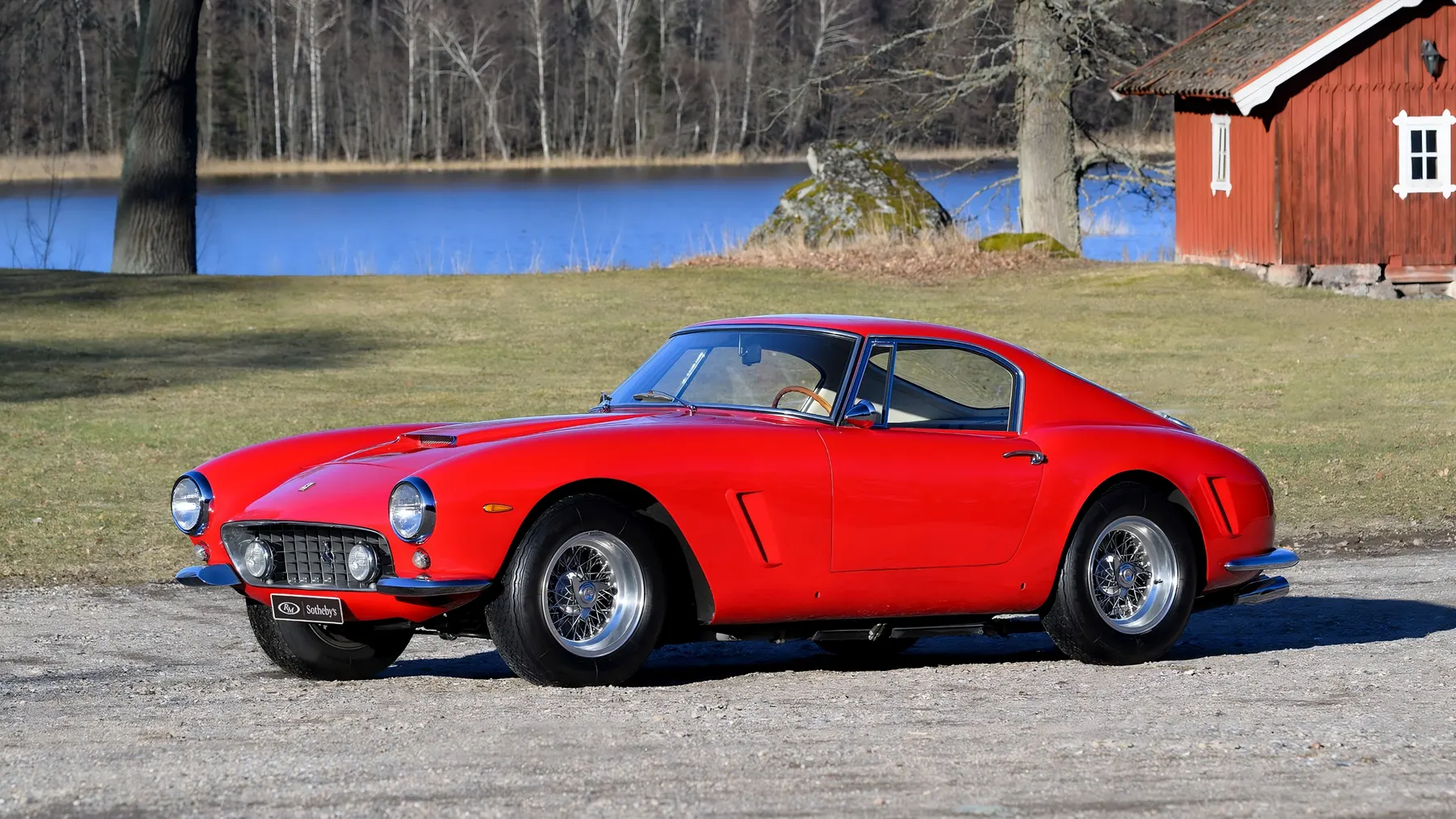
Images: Tim Scott / RM Sotheby's
Pininfarina drew the short-wheelbase Ferrari at a moment when the studio was producing some of its most confident work, and the result is a body so well-resolved that it seems to resist the passage of time in a way few automotive designs ever manage. But the beauty of the 250 GT Short Wheelbase Berlinetta is, in a fundamental sense, the least surprising thing about it. The more interesting question is how a car riding on a live rear axle, breathing through a twelve-cylinder engine conceived in the 1940s, competed at the highest level of international GT racing at the turn of the 1960s while remaining genuinely manageable for the wealthy private drivers who were most of its customers.
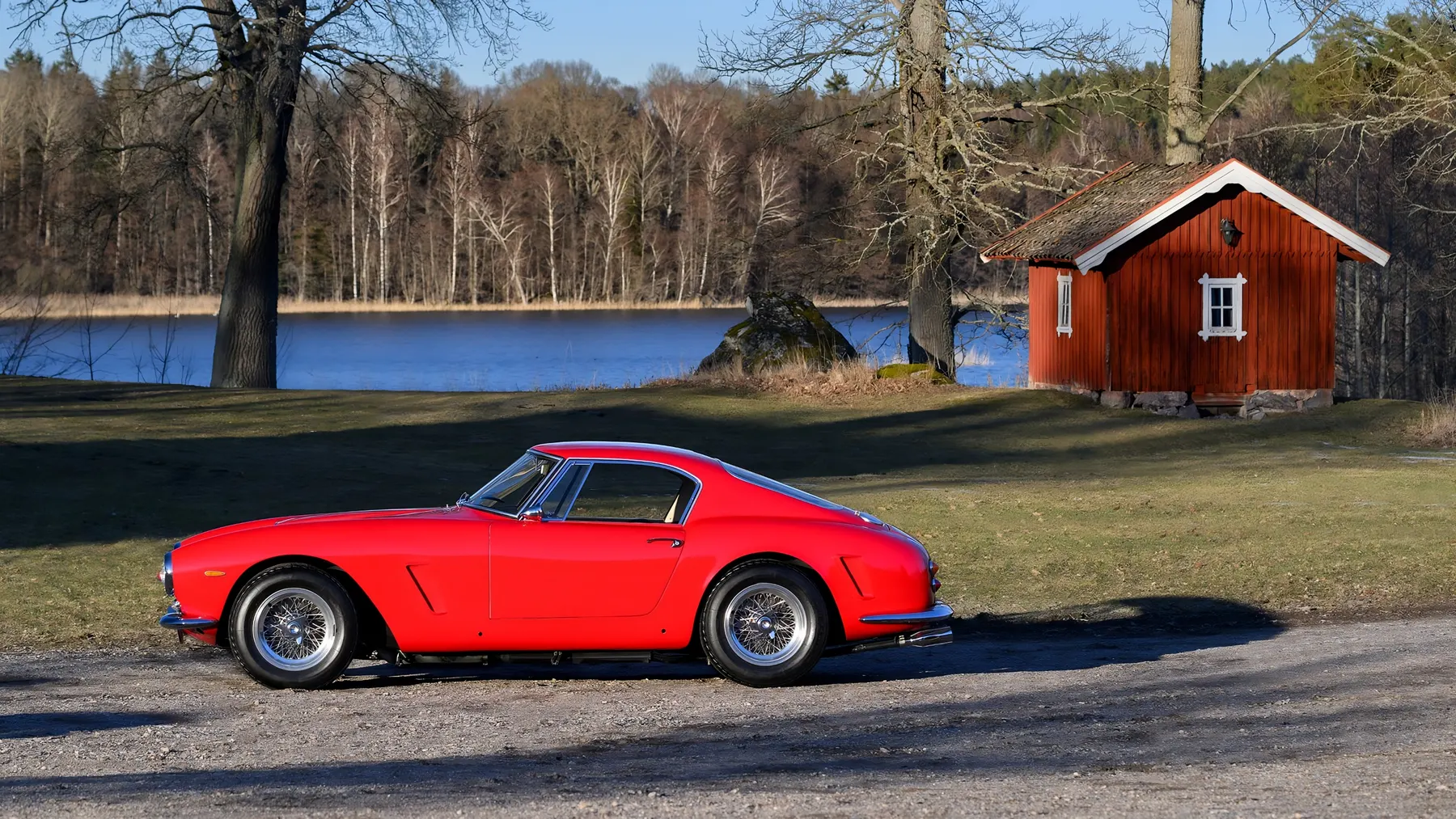
The SWB arrived in 1959 as the direct successor to the 250 GT Berlinetta that Ferrari had been building on the longer 2,600mm wheelbase - the series of cars that earned the informal name Tour de France through their repeated wins in that marathon event across the mid-1950s. Shortening the chassis to 2,400mm was not a cosmetic gesture. The reduction fundamentally altered the handling character, making the car quicker to respond and better balanced under the combination of power and cornering force that serious GT competition demanded. It also made the body shorter and more compact, concentrating Pininfarina’s design into proportions that the longer car had never quite achieved. The name decoded simply enough: 250 referring to the individual cylinder displacement of approximately 250cc across twelve cylinders, totalling 2,953cc in all; Berlinetta indicating the closed coachwork body style. The SWB was designed to be raced by factory drivers and by customers with equal credibility, and the entire programme was organised around that dual-purpose premise.
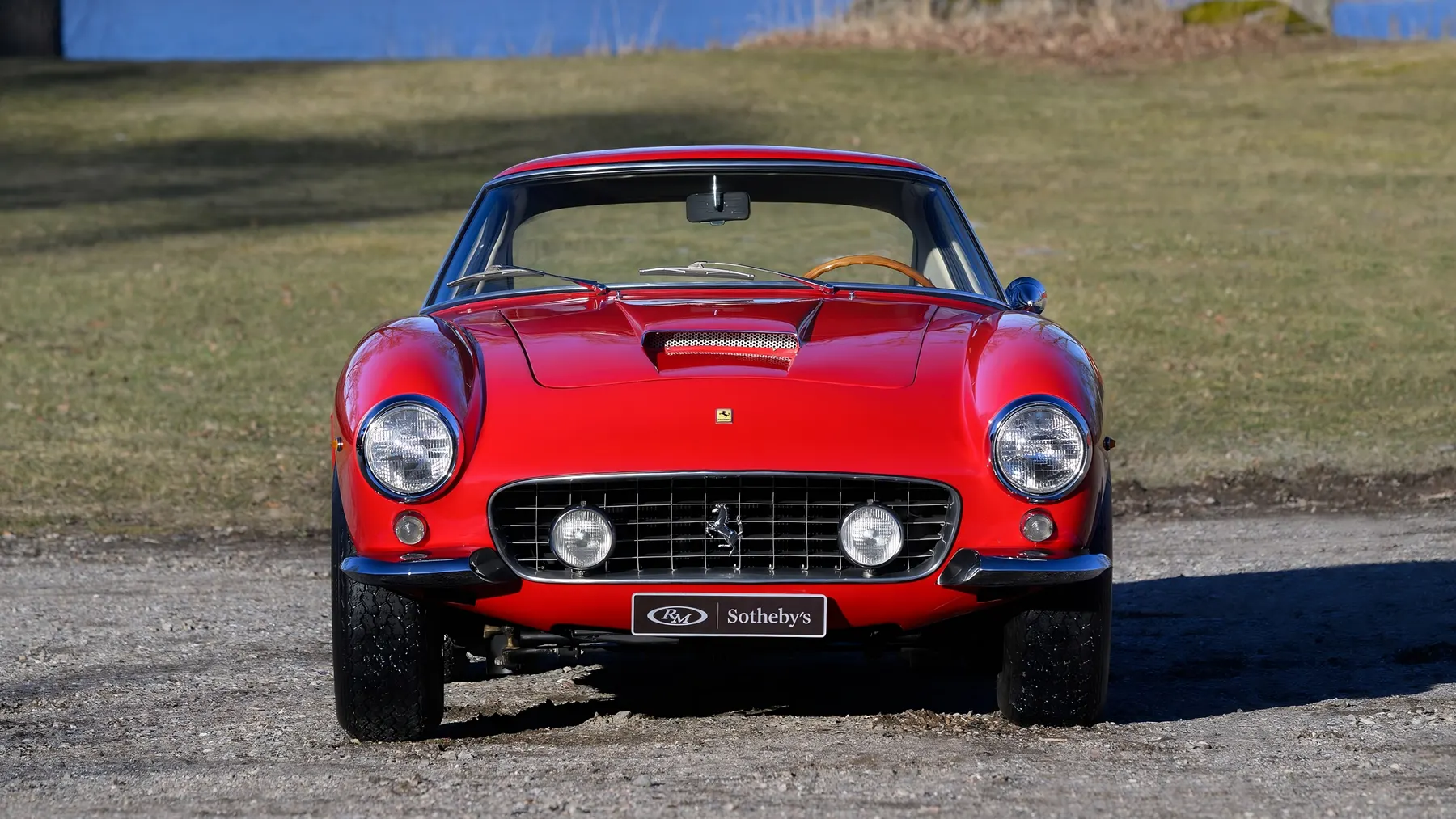
The Colombo-designed three-litre V12 that Ferrari had been refining since the late 1940s powered the SWB in two broadly distinct states of tune. In road-going specification - the Lusso or Stradale trim intended for customers wanting a fully finished car - the engine produced approximately 240 bhp through three twin-choke Weber carburetors, the single overhead camshaft per bank characteristic of the Colombo layout giving the unit a particular spread of power: usable from moderate revs, building confidently toward a peak well beyond what most road-going machinery of the period could approach. Competition-specification cars, tuned more aggressively and breathing through modified carburetion, were quoted closer to 270-280 bhp, though the precise output depended on the degree of preparation any given car received. Ferrari’s racing department in this period was not rigid about keeping specifications identical across a production run, and customer cars varied accordingly, sometimes significantly.
What most visibly and dynamically distinguished the road cars from the competition variants was the choice of body material. The Stradale used steel panels throughout, producing a kerb weight in the region of 1,100 kg - not exceptional for the class, but meaningfully higher than the competition cars, in which Scaglietti replaced the steel outers with hand-formed aluminium alloy. The lighter variants shed enough mass to bring the weight comfortably below 1,000 kg, a difference felt most acutely in braking distances and in the way the chassis could be loaded and unloaded mid-corner. Scaglietti’s craftsmen produced both versions to the same Pininfarina template, meaning that the two variants were visually almost identical; the alloy competition cars sometimes wore aluminium bumpers where the road cars carried chromework, and the interior of a fully prepared racer would be stripped to the minimum - a bare metal dash, a period racing wheel in place of the standard wood-rimmed item, instruments and little else. The craftsmanship required to produce alloy panels to the same flowing form as the steel originals was not trivial, and it was central to Scaglietti’s reputation.
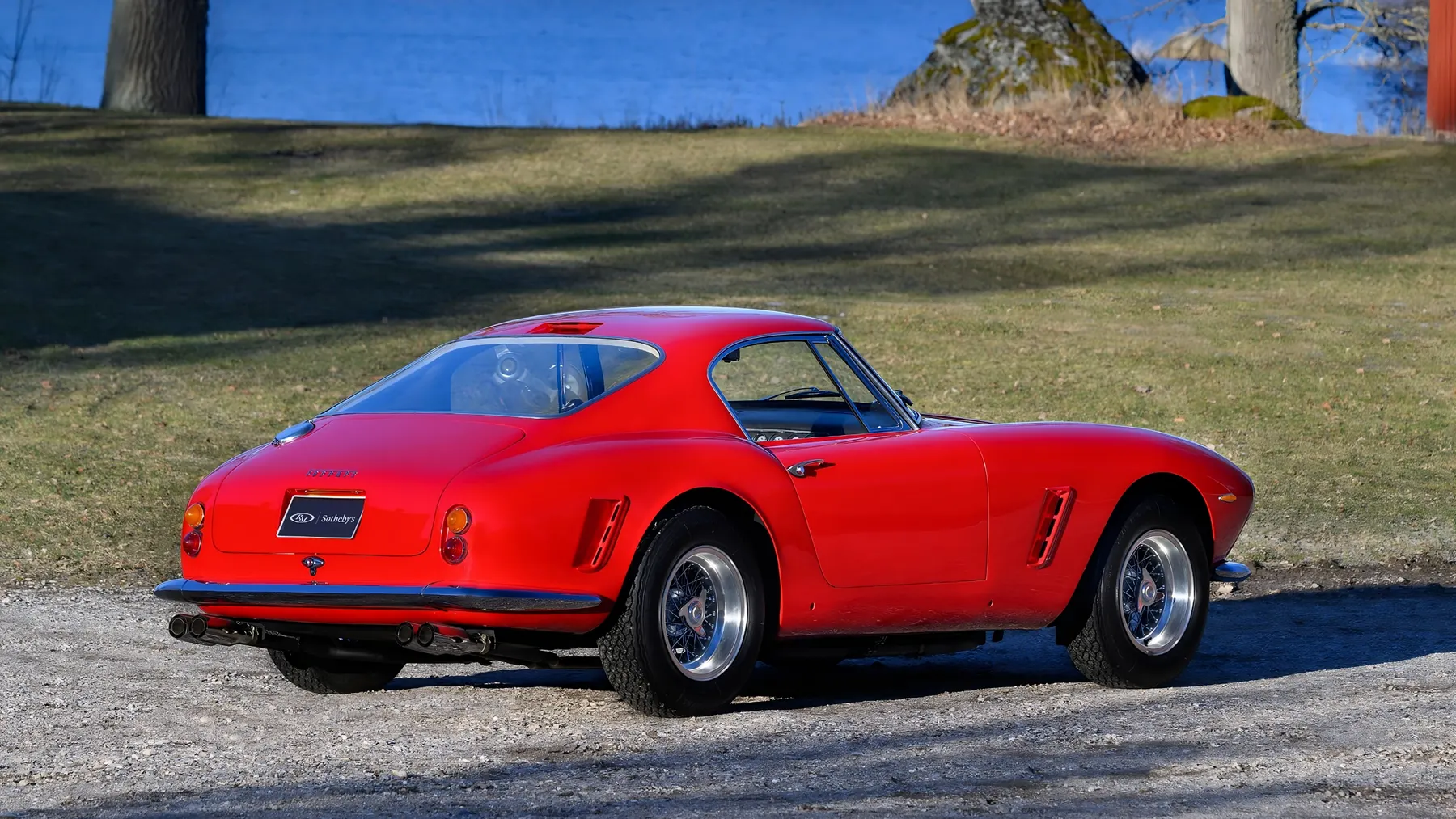
The chassis was a tubular steel spaceframe, standard practice for this class of machine, and the suspension combined double wishbones and coil springs at the front with a live rear axle located by semi-elliptic leaf springs at the back. Disc brakes on all four corners, adopted by Ferrari across its racing programme in the period, gave the SWB a meaningful advantage over competitors still relying on drums in endurance conditions. The braking stability and fade resistance that discs provided at circuits like Le Mans - where slowing from high speed required both power and consistency over many hours - were not trivial, and they helped offset some of the scrutiny that the rear axle arrangement attracted from engineers watching where suspension technology was heading.
Ferrari’s racing programme for the SWB was built around the major GT calendar events: the Tour de France Automobile, the 24 Hours of Le Mans, the RAC Tourist Trophy at Goodwood, and the significant national GT championships across Europe. The factory ran works entries alongside private customer cars at these events, creating a competitive environment in which the gentleman racer who had purchased his car for weekend events would sometimes find himself lining up against professional drivers in nominally identical machinery. Stirling Moss drove SWBs in period - his association with the car at Goodwood gave it a profile that the factory’s marketing could never have manufactured independently. The SWB took GT class honours at Le Mans in the early 1960s and won the Tour de France Automobile outright, establishing itself as the dominant machine in its category until the 250 GTO arrived in 1962 and changed the terms of the argument entirely.
The most credible rival across this period was Aston Martin’s DB4 GT, a car that represented a fundamentally different interpretation of what a dual-purpose GT should be. The British machine’s twin-cam straight-six was technically sophisticated in several respects, its interior more consistently polished, and its overall finish more deliberately oriented toward road use. The two cars competed directly for GT class honours at several events, and while the Ferrari generally held the advantage in outright results, the margins were not always comfortable and conditions played a role. That the SWB succeeded against a car of the DB4 GT’s quality was not simply a matter of Ferrari’s reputation; the combination of power, reduced weight in alloy form, and chassis balance that rewarded skilled driving made it genuinely fast across a range of conditions.
The honest accounting of what the SWB was not begins with that rear axle. On smooth circuits and well-maintained road surfaces, its behaviour was predictable enough to manage, and skilled drivers learned to exploit the car’s natural tendency to load the rear under power in a way that produced tractable oversteer. On broken surfaces, or when asked to change direction sharply on imperfect roads, the axle could become unsettled in ways that independently suspended cars of the following generation would not permit. The technique required to extract full performance from the SWB - smooth inputs, committed lines, no abrupt provocation - was within the repertoire of an accomplished driver but demanded a narrower margin than the car’s competition ambitions might ideally have warranted. Several rivals were already moving toward independent rear suspension, and the SWB’s persistence with the live axle was a pragmatic choice rather than a principled engineering statement; Ferrari knew the layout and was competitive with it, which is different from claiming it was optimal.
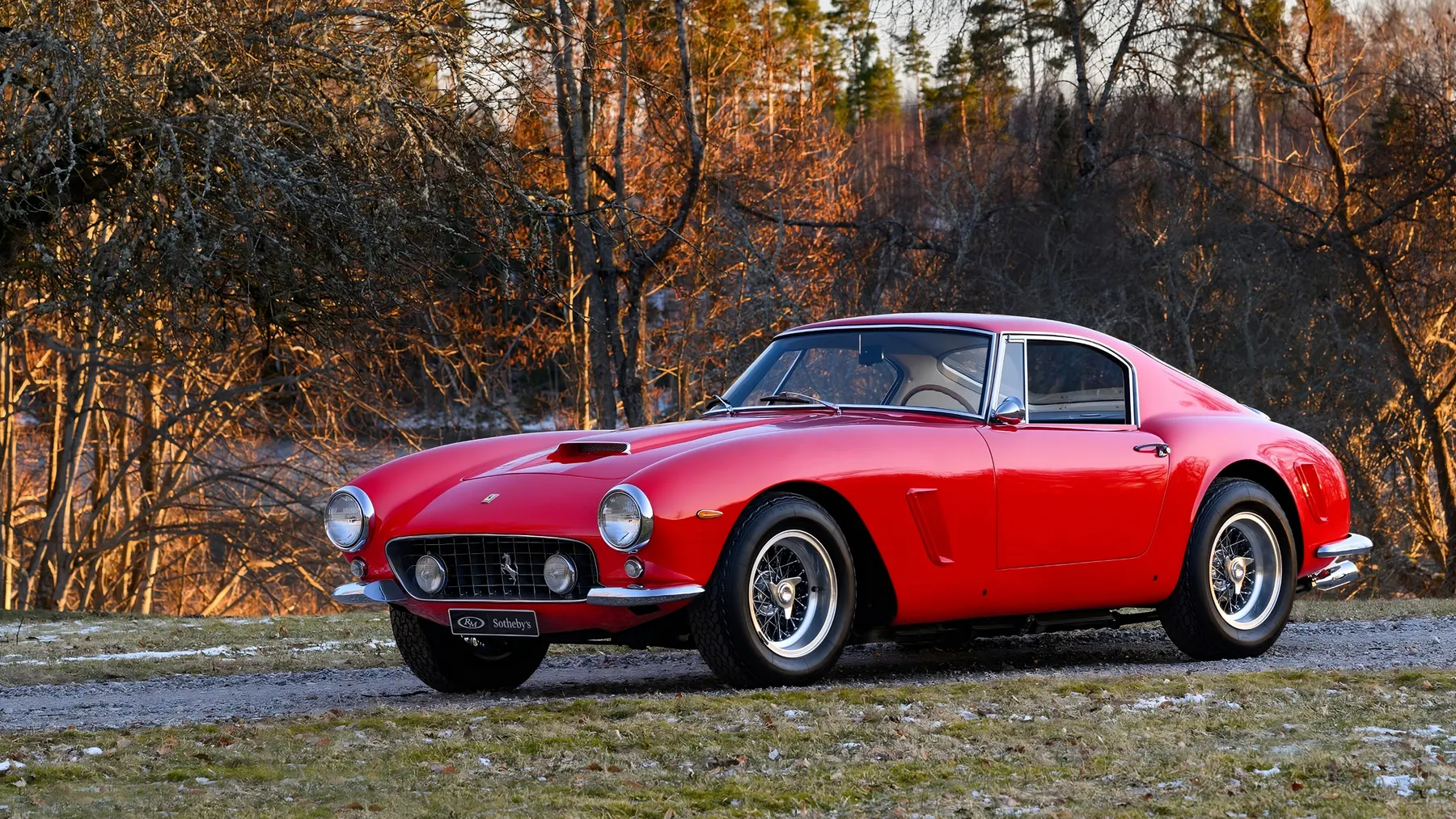
The interior of the Stradale also deserves honest assessment. Ferrari’s cabin finishing in this period was well-executed in terms of leather quality and the essential instruments, but the switchgear, minor controls, and secondary details reflected a company whose primary attention lay elsewhere. The cockpit ran warm at sustained speed, the exhaust note was intrusive over long distances, and the seating position - pitched lower and further back than a pure road car’s optimum, shaped partly around the demands of the competition programme - was demanding for taller drivers and unforgiving for anyone who hadn’t acclimatised to it. Entry and exit through the narrow door apertures was never gracious. These are not complaints projected backward from modern expectations; they were practical compromises that a customer using the Stradale as regular road transport in 1960 would have encountered, and they distinguished the SWB from rivals who had prioritised road-car ergonomics more consistently.
Ferrari built fewer than 170 examples across the SWB’s production run from 1959 to 1962, a figure that reflects both the hand-built character of Scaglietti’s coachwork and the necessarily limited market for a car at this price and performance level. The precise breakdown between steel road cars and alloy competition variants is complicated by the number of cars that moved between categories during their early lives - road cars campaigned by their owners, competition cars occasionally modified further, some built to one specification and converted to another - and the total count that different historical sources give varies slightly at the margins. What is consistent is that the production was distributed across Europe and North America, that a significant proportion of the cars were raced from new, and that the factory supported competition use actively enough that the boundary between a road customer and a semi-works entrant was often blurred by mutual convenience.
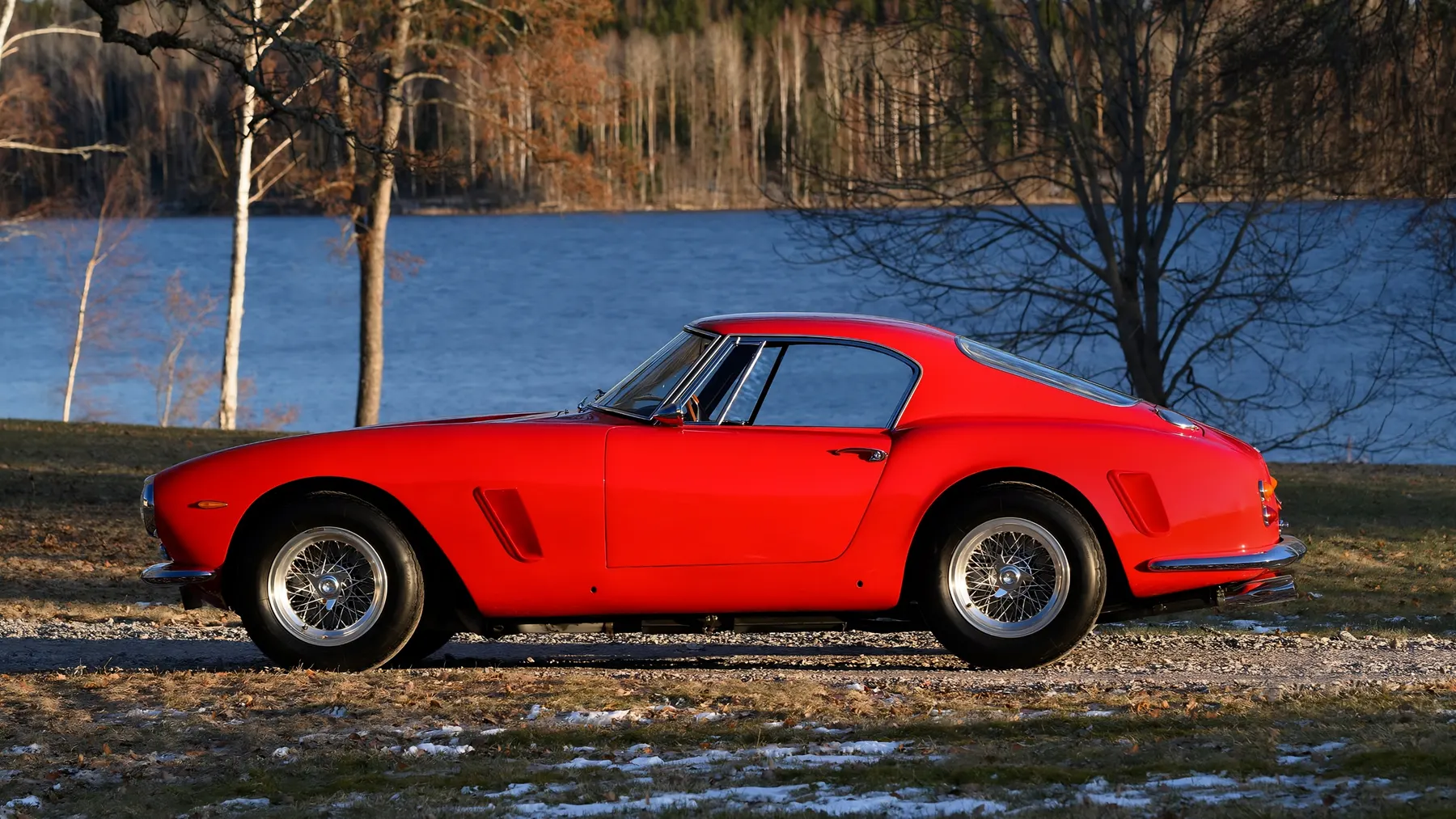
The 250 GT SWB and the 250 GTO share enough engineering DNA that understanding both clarifies each one separately. The GTO, which arrived as the SWB was leaving production, was designed from the outset on the assumption that its racing purpose was absolute and road utility essentially irrelevant; it was homologated as a GT car through what was, at minimum, a creative interpretation of the relevant regulations, but the car’s relationship to genuine road use was notional. In making that choice, Ferrari closed the chapter the SWB had represented. The GTO was a more effective competition instrument in outright terms, and it has acquired its own mythology, but the SWB’s achievement - producing a car genuinely competitive in international GT racing while remaining a civilised object that its owner could actually drive to the circuit - required a more precise balance of priorities that the GTO did not attempt to replicate. The SWB is, in some respects, the more difficult thing to have built.
What survives in the 250 GT SWB Berlinetta is a record of a specific industrial and creative moment: the last time Ferrari’s coachbuilders, engine builders, and competition department were working toward the same object, producing hand-formed panels and bench-built engines for a single car expected to satisfy all of them. Pininfarina’s proportions and Scaglietti’s execution were not decorative additions to something that would have functioned equally well in any shape; the beauty was structural, part of how the car communicated its purpose and why it worked as a total object. That the aesthetic has proved more durable than the engineering - which has been comprehensively superseded - says something about what was actually achieved at Maranello in 1959, and why the 250 GT SWB remains the reference point for what a GT car can be when the people building it have not yet decided which compromise to accept first.
Join the discussion
Comments
Loading comments…
Leave a comment
Share a detail, memory, or perspective. Every comment is reviewed before publication.