Ferrari 250 GT Lusso: The Grand Tourer That Ended a V12 Dynasty
1963 Ferrari 250 GT/L Berlinetta Lusso by Scaglietti

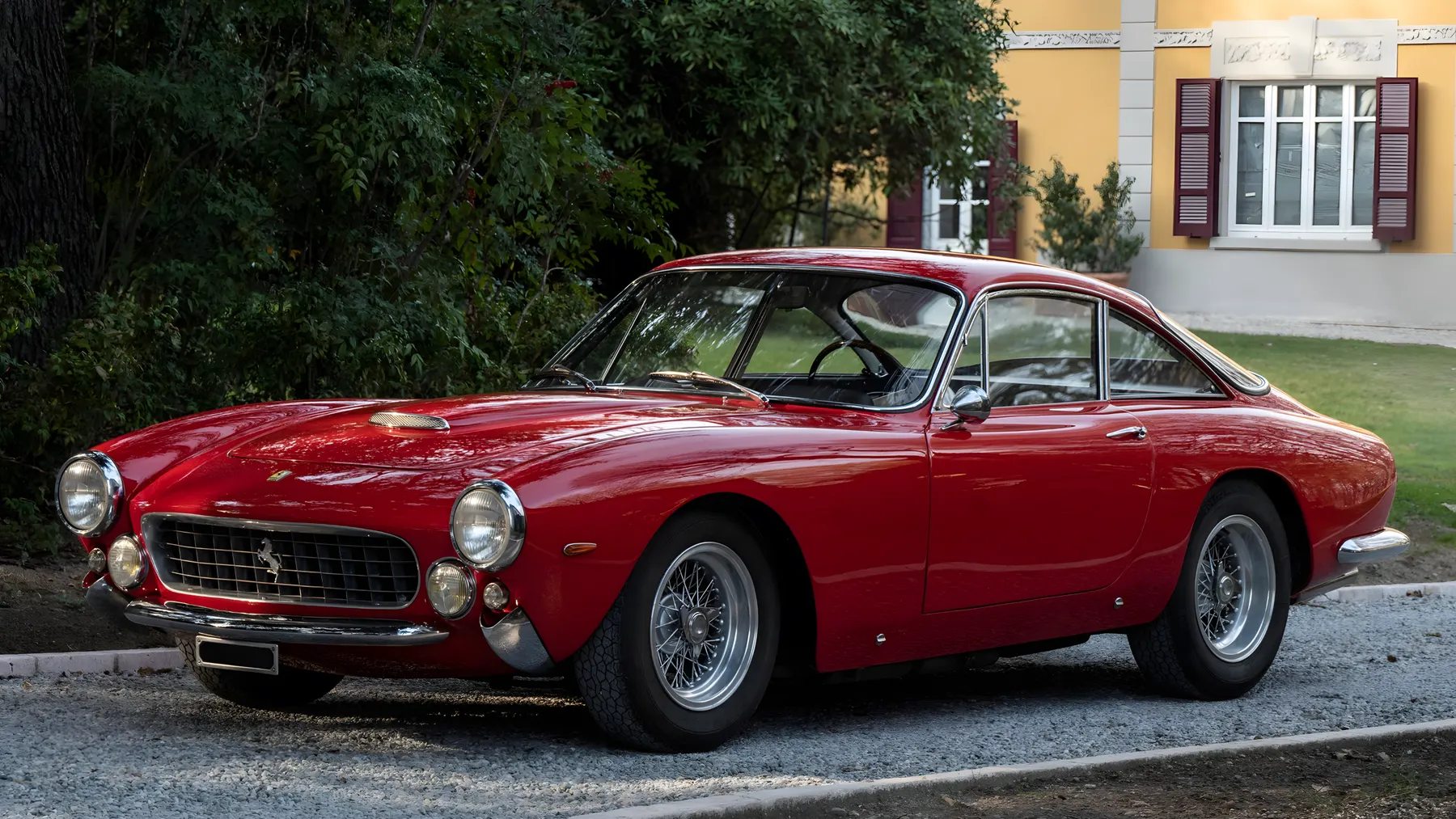
Images: Paolo Carlini / RM Sotheby's
By 1962, Ferrari had spent a decade discovering that racing success and road-going comfort rarely wanted the same car. The 250 GTO existed purely to win outright; the 250 GTE existed purely to carry four adults and their luggage without complaint. Into the gap between them, Enzo Ferrari and Pininfarina placed a two-seat berlinetta that borrowed its underpinnings from the racer and its ambitions from the tourer, then sent it out not as a stopgap but as the valedictory statement for the entire 250 GT bloodline. The factory called it the GT/L; the press almost immediately settled on a simpler name lifted from the Italian word for luxury, Lusso, and it stuck. It would be the last road car built around Gioacchino Colombo’s short-block V12, a designation that had first appeared on Ferrari’s production and competition cars back in 1952, so retiring it after a decade of racing pedigree was no small statement of confidence in whatever would follow.
The Lusso made its debut at the Paris Salon in October 1962 as the direct successor to the steel-bodied 250 GT SWB Berlinetta, the road-going cousin of the alloy competition SWB that customers had been driving to and from the racetrack for two seasons. The SWB itself had originally existed in two forms, an aluminium-bodied competition car and a steel-bodied road version, built in the numbers required to satisfy GT racing homologation rules. Once the GTO took over that competition role in 1962, the steel SWB no longer had an obvious reason to exist, and the Lusso was conceived explicitly to replace it, more spacious and more civilised than the outgoing car without drifting into the four-seat comfort of the 250 GTE. It filled that gap for around eighteen months before the 275 GTB took over at the end of 1964, by which point Scaglietti had built 350 examples of the Lusso, though a small number of sources put the figure at 351, a modest production run even by early-1960s Ferrari standards.
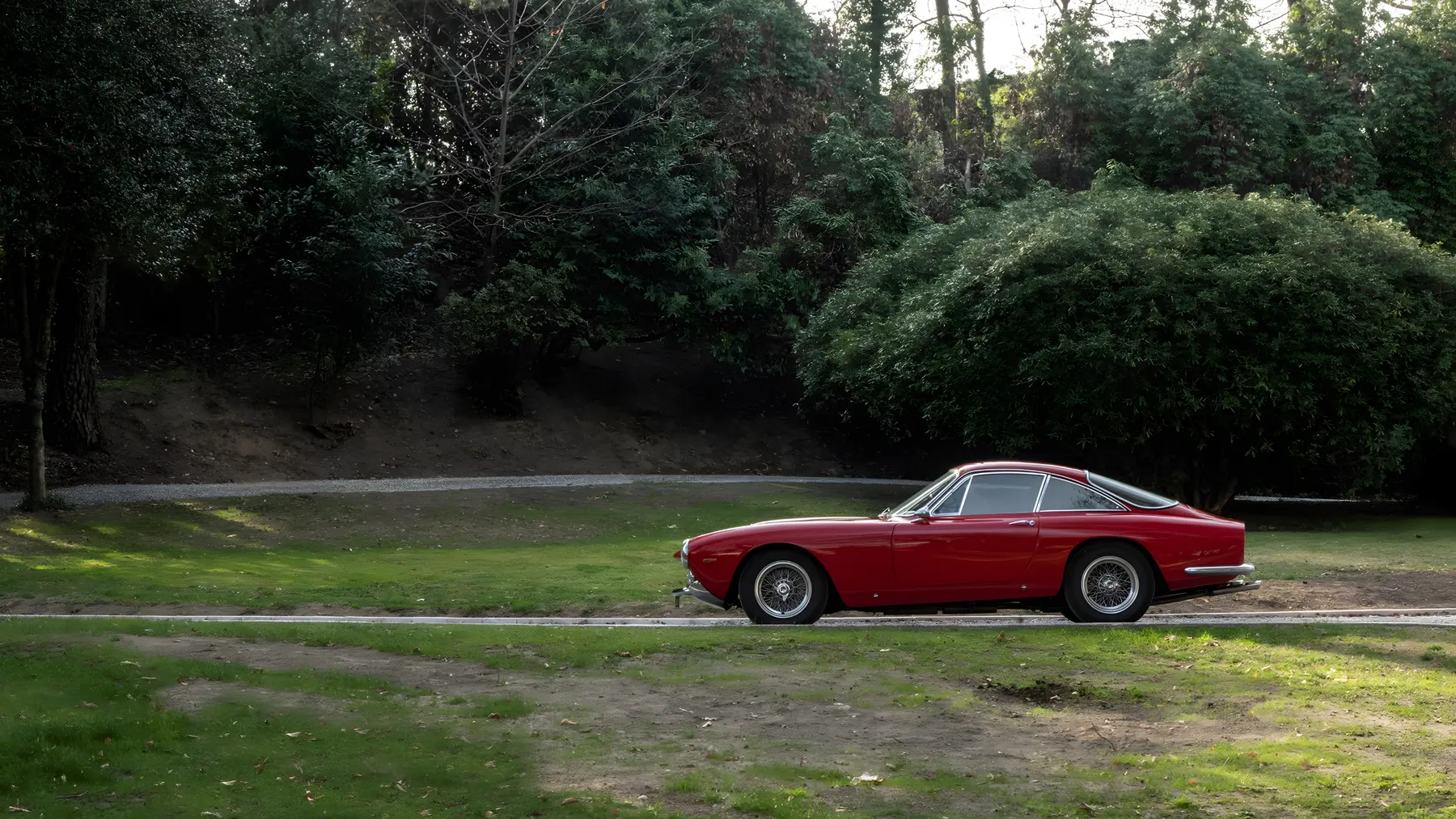
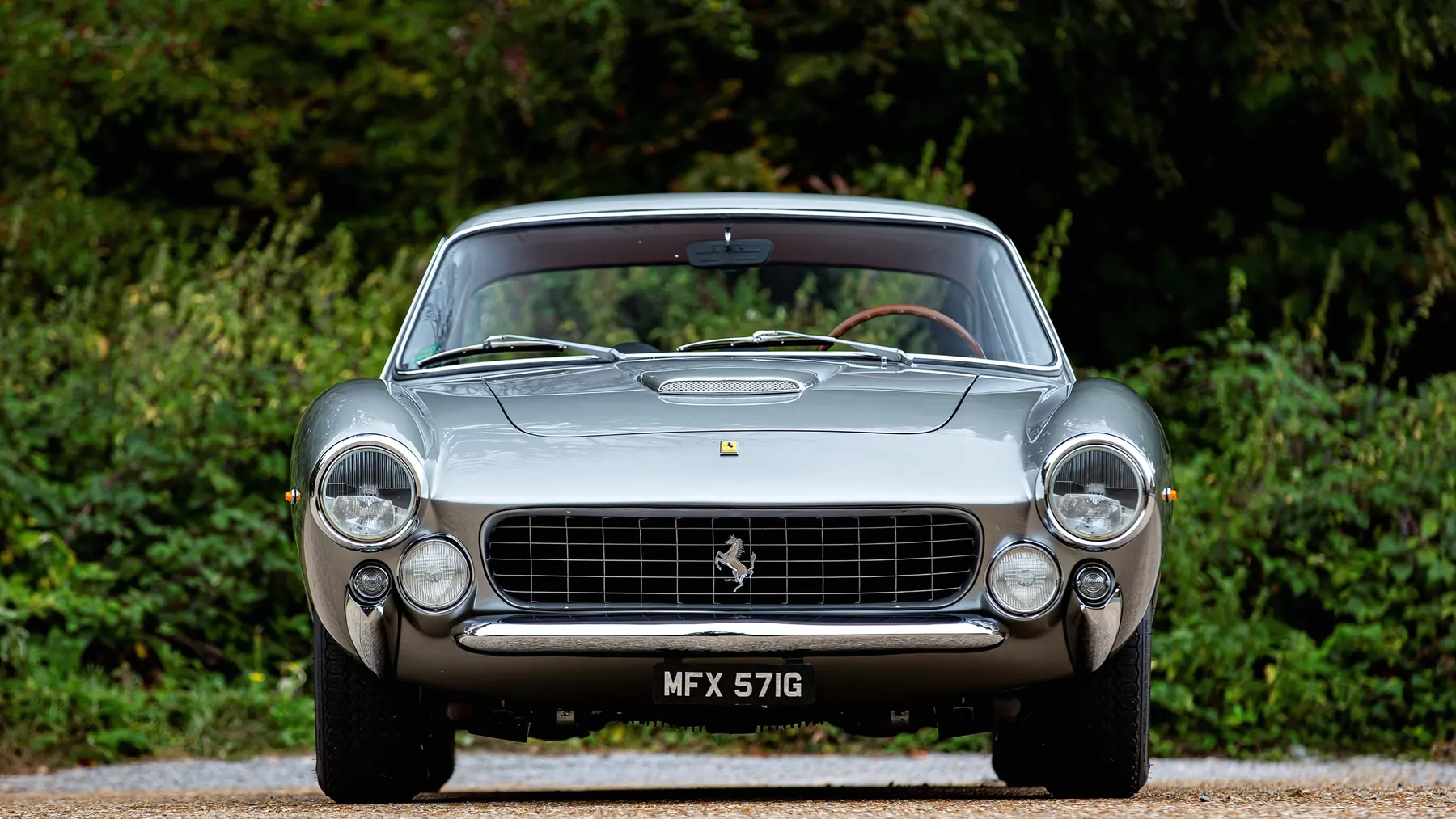
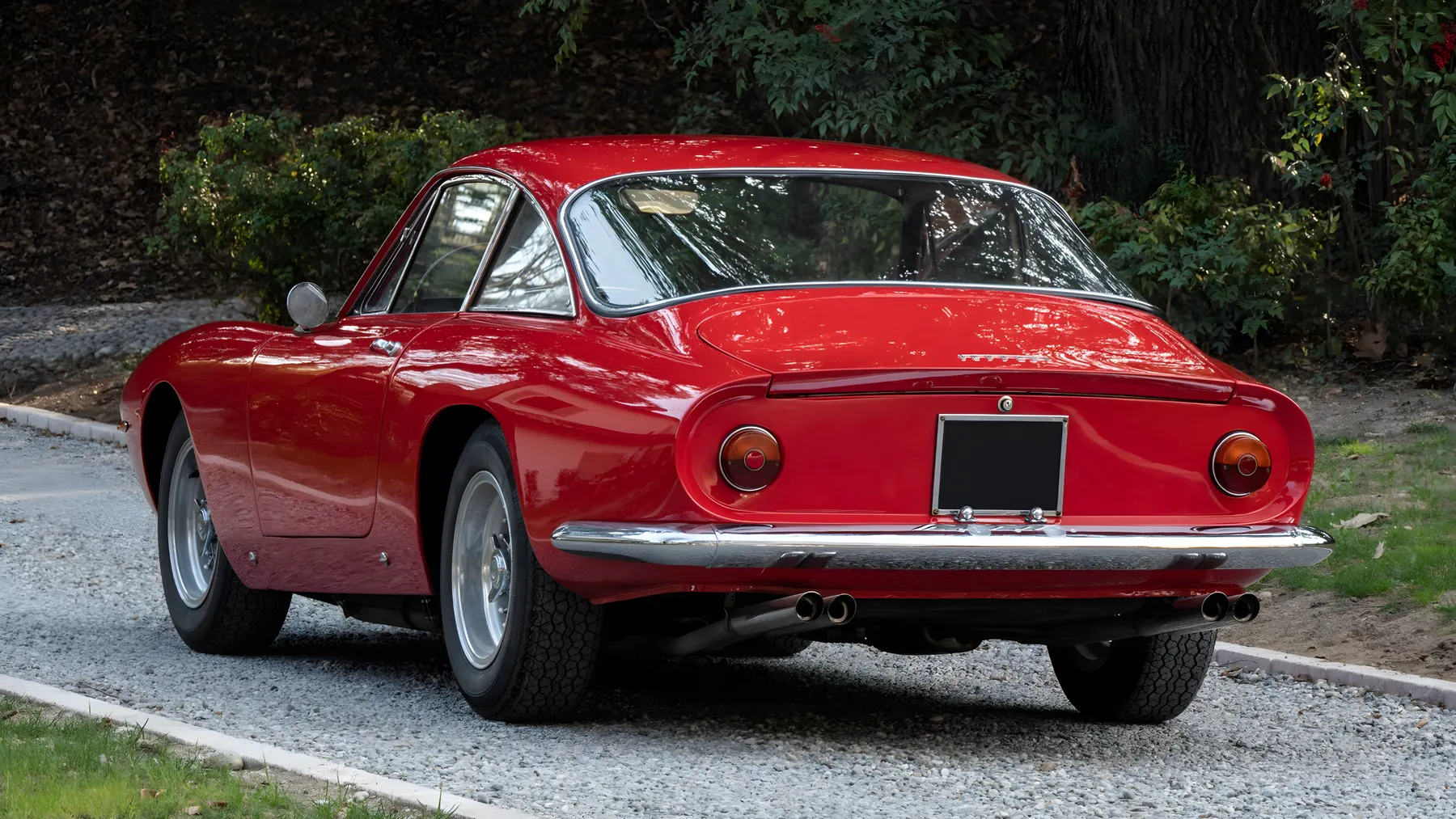
Pininfarina’s design drew visibly from both ends of the 250 GT family. The nose kept a clear resemblance to the outgoing SWB, while the tail was cut off abruptly in the Kamm style pioneered on the GTO, a shape wind-tunnel testing had shown helped detach airflow cleanly and settle the car at speed. In between, the details were the Lusso’s own: a distinctive three-piece front bumper with vertical over-riders beneath the headlights, a fastback roofline carried on remarkably slender pillars, and a rectangular vent pressed into the bonnet. The glazing was generous by the standards of any low, swoopy 1960s berlinetta, wrapping the cabin in slim triangular quarter windows and a genuinely panoramic rear screen that gave the driver close to an unobstructed view in every direction, a quietly practical virtue rare among cars this pretty. The single circular tail-light treatment would carry straight over onto the 275 GTB that replaced it, making the Lusso’s Kamm tail as much a design bridge as a full stop to the 250 GT story.
Beyond the styling, Ferrari fitted the Lusso with genuine concessions to daily comfort that hadn’t featured on the harder-edged 250 GT road cars before it. The cabin used considerably more leather than earlier 250s, and engineers added a thermostatically controlled radiator fan along with a driver-operated radiator shroud, a detail aimed squarely at cold-climate American buyers, since restricting airflow through the radiator helped the heater and demister work properly in winter rather than simply keeping the V12 at temperature during a track day. Of the 350 cars built, only around 20 were right-hand drive, a split that reflects how heavily the model’s fortunes depended on the American market Ferrari was increasingly courting by the early 1960s.
Underneath sat a tubular steel chassis, factory reference 539/U, built to the same 2,400mm short wheelbase as the outgoing SWB but using the narrower-gauge tubing developed for the GTO. To free up cabin space for the Lusso’s more generous seating and its leather-lined luggage shelf, engineers pushed the engine slightly further forward in the frame than on the sportier SWB and widened the front and rear tracks by around 40mm each. It was a sensible packaging decision, and it worked, but it also nudged weight distribution away from the near-perfect balance that had made the SWB such a celebrated corner-carver, a trade Ferrari was evidently happy to make in pursuit of everyday usability. Dry weight came in at around 1,020 kg, though period sources note that a fully equipped car with all its leather, sound-deadening and optional fittings could climb to around 1,300 kg, a meaningful spread for what was still nominally a competition-derived lightweight. Front suspension remained unequal-length wishbones and coil springs; at the rear, Ferrari kept a live axle located by radius arms, semi-elliptic leaf springs and a Watts linkage borrowed directly from the GTO, working alongside co-axial coil springs and telescopic Koni dampers. Four-wheel hydraulic disc brakes were standard, as were wire wheels by Borrani.
Power came from the final three-litre expression of Colombo’s short-block 60-degree V12, a single-overhead-cam-per-bank unit displacing 2,953cc from a 73.0mm bore and 58.8mm stroke, fed by three twin-choke Weber 36 DCS carburettors rather than the six carburettors reserved for the more highly strung competition-bred 250s. Most reputable sources converge on a maximum output of around 240 bhp at 7,500rpm, Hagerty describes it as roughly 40 bhp short of the contemporaneous 250 GTO’s race engine, though at least one specification archive lists a higher 250 bhp at 7,000rpm; the discrepancy most likely reflects individual engine tuning rather than a formal factory revision. Torque figures vary even more widely across sources, with credible references citing anywhere from around 180 to 215 lb-ft at 5,500rpm, and no single number stands out as definitively authoritative. Drive went through a four-speed manual gearbox to the live rear axle; a handful of owners specified an aftermarket five-speed conversion with a bespoke final-drive ratio, usually paired with harder-edged carburettors for weekend competition use, though this was never a factory option.
On the road, the Lusso rewards exactly the patience Colombo’s engines have always demanded. Below roughly 1,500rpm in a tall gear it runs out of ideas and fluffs badly, meaning second gear, sometimes first, is the only realistic way through a slow junction or a tight town corner. Push it past that point, though, and the engine wakes up properly, the thrash of its timing chains and the bark of triple Webers building to a genuinely intoxicating top end that leaves no doubt this is a race-bred unit wearing a well-tailored suit. The ride, helped by generous wheel travel and well-chosen spring rates, manages to feel both taut and genuinely comfortable over poor surfaces, a combination period and modern testers alike have found surprisingly composed even decades on. The steering, by contrast, feels noticeably heavier and less immediately chatty than the 250 GT SWB’s celebrated helm, a direct consequence of the extra weight and more forward engine position that came with the Lusso’s roomier cabin. Inside, the instrument layout is a genuine quirk: the large tachometer and speedometer sit skewed toward the passenger side of the dashboard rather than square in front of the driver, a layout period road testers and more recent reviewers alike have singled out as a real distraction when driving briskly, however handsome the wood-rimmed Nardi wheel and leather-trimmed dash look sitting still.
For all its polish, the Lusso carried compromises that go beyond forgivable period idiosyncrasy. Its live rear axle and leaf springs, inherited wholesale from the SWB and GTO, already looked dated in 1962 against something like Jaguar’s E-Type, which had launched the previous year with fully independent rear suspension as standard; Ferrari itself abandoned the live axle for the 275 GTB within two years, tacitly conceding the point. The engine’s reluctance below 1,500rpm made the car genuinely awkward in heavy traffic despite its grand-touring branding, and the fixed-position seatbacks, a deliberate simplification for weight and packaging, meant the cabin suited drivers of fairly standard build far better than anyone needing real adjustability. The skewed instrument binnacle was a real ergonomic misstep rather than a charming quirk, criticised by period road testers and still noted by anyone who drives one today. None of this stopped the Lusso being a hugely accomplished road car for 1962, but in outright dynamic sophistication it sat closer to the SWB it replaced than to the fully independent-suspension 275 GTB that followed it, and buyers paying for a slice of GTO-adjacent pedigree were, underneath the elegant bodywork, getting a chassis philosophy that was already on borrowed time. Ownership carries its own modern-day compromise, too: values have climbed so far, averaging well over a million pounds at auction, with the finest examples clearing more than two million dollars, that a car conceived as the relatively usable, accessible end of the 250 GT range has become one of its most expensive members, with thorough restorations now routinely running past $500,000 and putting genuine ownership far beyond the enthusiast market it was originally built to serve.
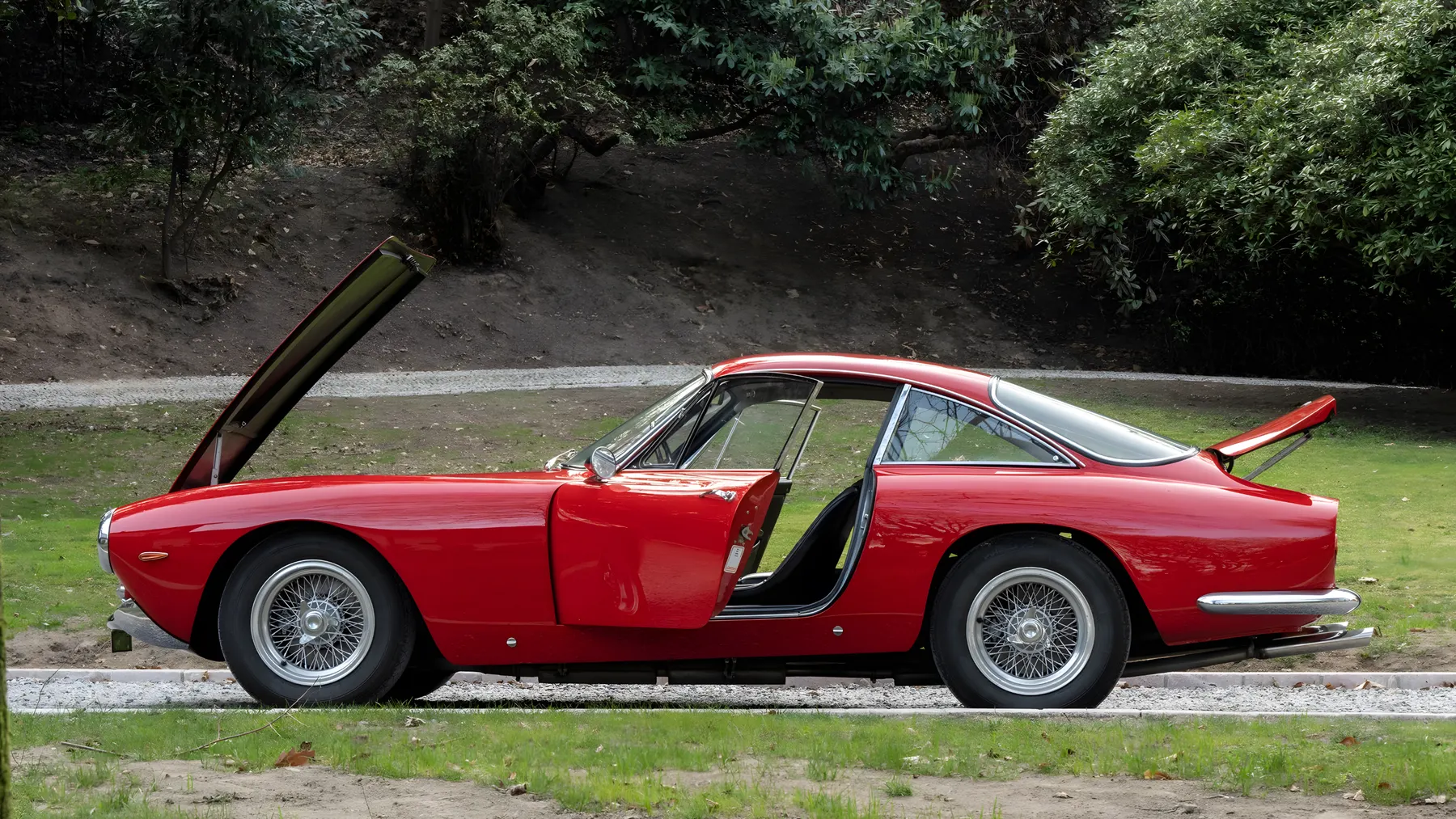
Ferrari never intended the Lusso to race, but its GTO-derived hardware meant a handful of owners took it into competition regardless. Factory historical material records modest, respectable outings at the Targa Florio in both 1964 and 1965 and at that year’s Tour de France, with one entry finishing thirteenth overall. Independent privateers pushed further still: a Swiss entrant running a Lusso prepared with GTO-specification camshafts and six Weber carburettors took ninth overall in the GT class at the 1964 Zolder Grand Prix, then twenty-fourth overall and fifth in the three-litre GT class on that year’s Tour de France. These outings were the exception rather than the rule; most Lussos lived exactly the life Ferrari intended, as fast, comfortable road cars for owners who valued usability over lap times.
The combination of striking looks and genuine usability made the Lusso a natural fit for a certain kind of 1960s clientele, and its owner roster has long included Steve McQueen and Eric Clapton, a detail that has done its collector standing no harm at all. At least two cars received genuinely bespoke treatment straight from the factory: one built for Battista Pininfarina himself, with flush door handles and an elongated nose carrying faired-in headlights, and another built for a Milanese client who had originally wanted a 250 GTO but, with the competition department fully booked, was sold a Lusso instead, finished with a GTO-style nose and a six-carburettor engine. New, the Lusso cost around $13,375 in the United States, a serious sum, though still within reach of a wider audience than Ferrari’s most exclusive coachbuilt commissions. It spent decades as one of the more genuinely attainable classic V12 Ferraris before values began climbing sharply from around 2013 onward, a trajectory that has since carried it firmly into seven-figure territory at auction.
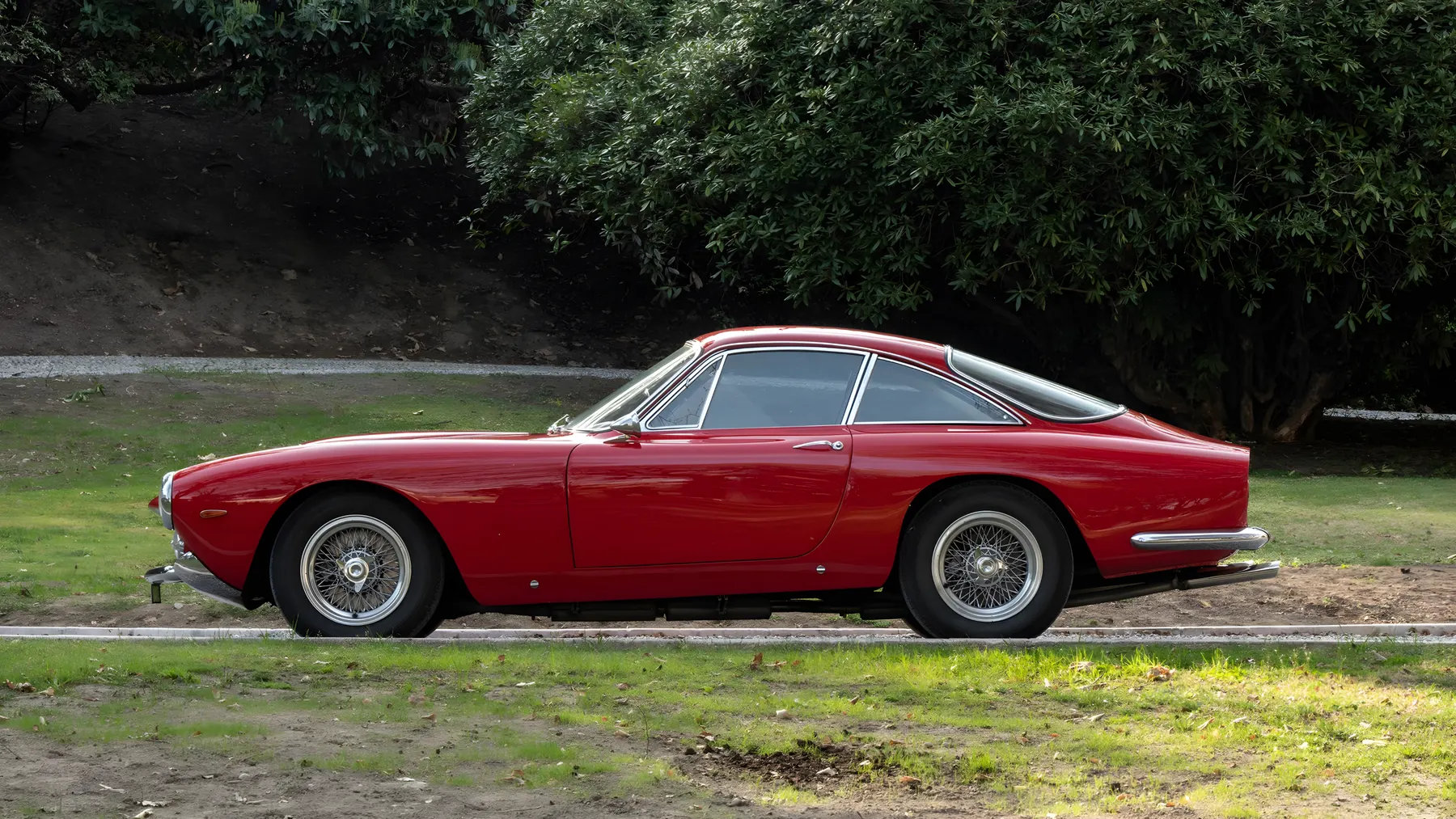
What makes the Lusso endure isn’t that it perfected every element of the SWB formula it replaced. It didn’t, and in outright dynamic terms it arguably traded some of that car’s edge for comfort. What it did instead was capture, more completely than almost any Ferrari of its era, the moment the company first took seriously the idea that a road car could be beautiful, usable and desirable entirely on its own terms, without needing to justify itself on a racetrack. It closed out the 250 GT story not with the outright drama of the GTO, but with something quieter and, in the end, just as influential: proof that a Ferrari road car didn’t have to apologise for being a road car.
Sources
- Wikipedia: Ferrari 250 GT Lusso
- Ferrari.com: 250 GT Berlinetta Lusso
- Ultimatecarpage.com: 1962–1964 Ferrari 250 GT Lusso
- Ultimatecarpage.com: Ferrari 250 GT Lusso Specifications
- Supercars.net: Ferrari 250 GT Lusso – The Ultimate Guide
- Hagerty Valuation Tools: 1964 Ferrari 250 GT Lusso
- GTspirit: Road Test – 1963 Ferrari 250 GT Lusso
- Supercar Nostalgia: Ferrari 250 GT Berlinetta Lusso Guide
- Premier Financial Services: Vintage Corner – Ferrari 250 GT Lusso
- The Classic Valuer: Ferrari 250 GT Lusso Buyer’s Guide
- Beverly Hills Car Club: Ferrari 250 GT Berlinetta Lusso Selling Guide
Join the discussion
Comments
Loading comments…
Leave a comment
Share a detail, memory, or perspective. Every comment is reviewed before publication.