Jaguar E-Type Series 1 3.8 Roadster: Racing Architecture at a Price Ferrari Couldn't Match
1962 Jaguar E-Type Series 1 3.8-Litre Roadster

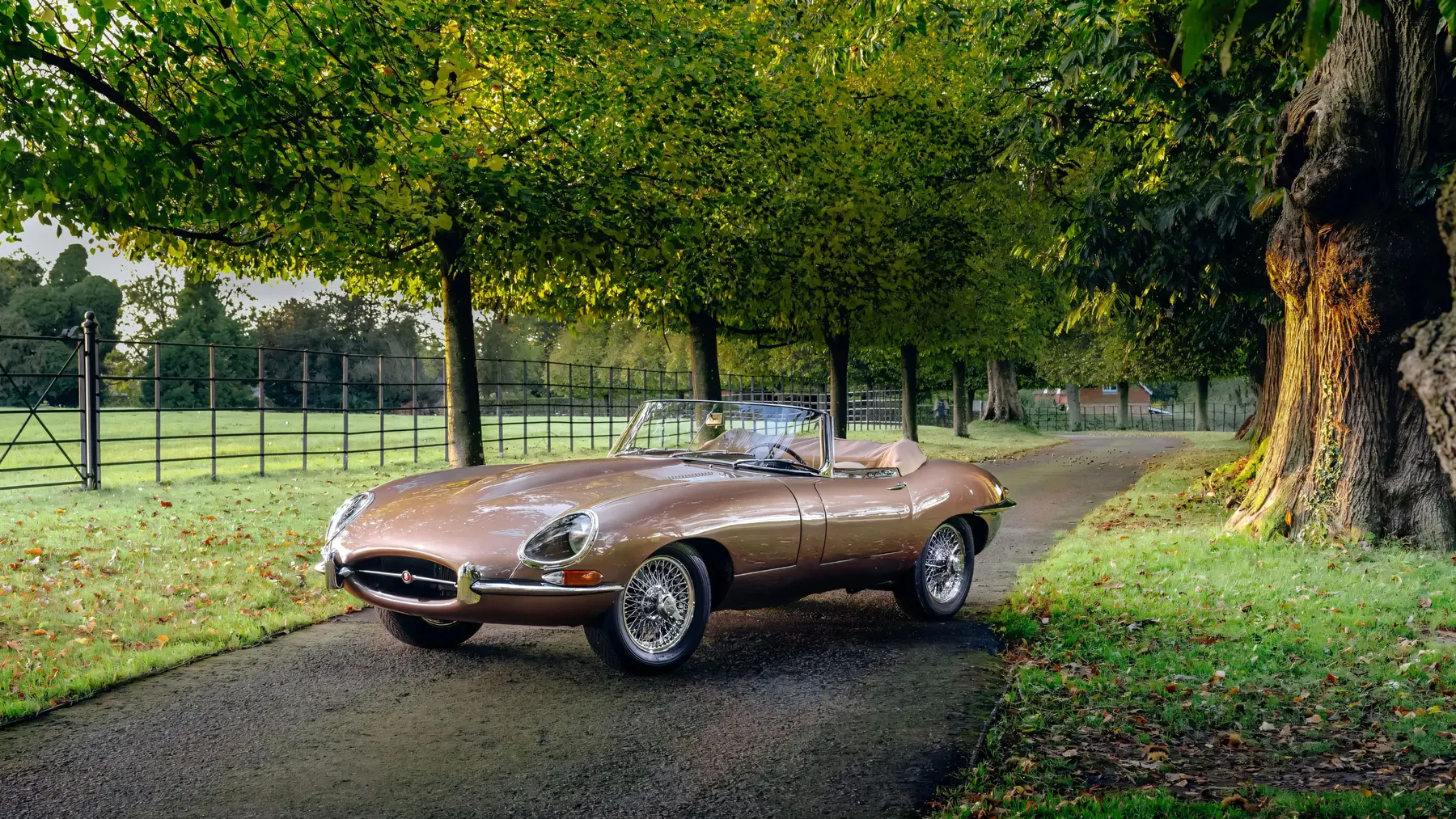
Images: Jayson Fong / RM Sotheby's
When Jaguar PR man Bob Berry drove the pre-production fixed-head coupé registered 9600 HP flat-out from Coventry to the Parc des Eaux-Vives in Geneva, he arrived on the morning of 15 March 1961 with twenty minutes to spare. The car had been kept in Britain until the last moment so that select members of the motoring press could prepare road tests in advance; the result was a cross-channel sprint conducted through the night, and the car was still being frantically wiped clean when Sir William Lyons arrived at the stand. Alongside it, test driver Norman Dewis had made a separate overnight run from Coventry with the first production OTS Roadster, registered 77 RW, to serve as a second demonstrator. The E-Type’s Geneva debut, then, was conducted under conditions of barely controlled panic - which was perhaps fitting, because what it revealed to the world was a car that had no right to exist at its price, and every right to reshape the conversation about what a sports car could be.
The Jaguar E-Type Series 1 3.8-Litre Roadster went on sale later that year as the open counterpart to the fixed-head coupé shown at Geneva. Jaguar called it the OTS - Open Two Seater. The reception at the show had been extraordinary, the New York Motor Show sequel equally rapturous, and a waiting list had built before a single example reached a customer. Jaguar had planned to build 250 examples total; pre-orders exceeded 500 before the Geneva press days were finished. What was unusual about the reaction was its breadth: the E-Type did not merely please buyers, it genuinely disoriented engineers and competitors who understood what they were looking at. A full semi-monocoque structure derived from Le Mans racing practice, all-round independent suspension, four-wheel disc brakes, and aerodynamically resolved bodywork - for a launch price of approximately £2,250. The Aston Martin DB4, the E-Type’s nearest British rival, was priced at just shy of £4,000. Ferrari, whose founder reportedly called the new Jaguar “the most beautiful car ever made” - a quote so perfect it has been polished to the point where its exact origin is difficult to verify - charged rather more and delivered less outright performance.
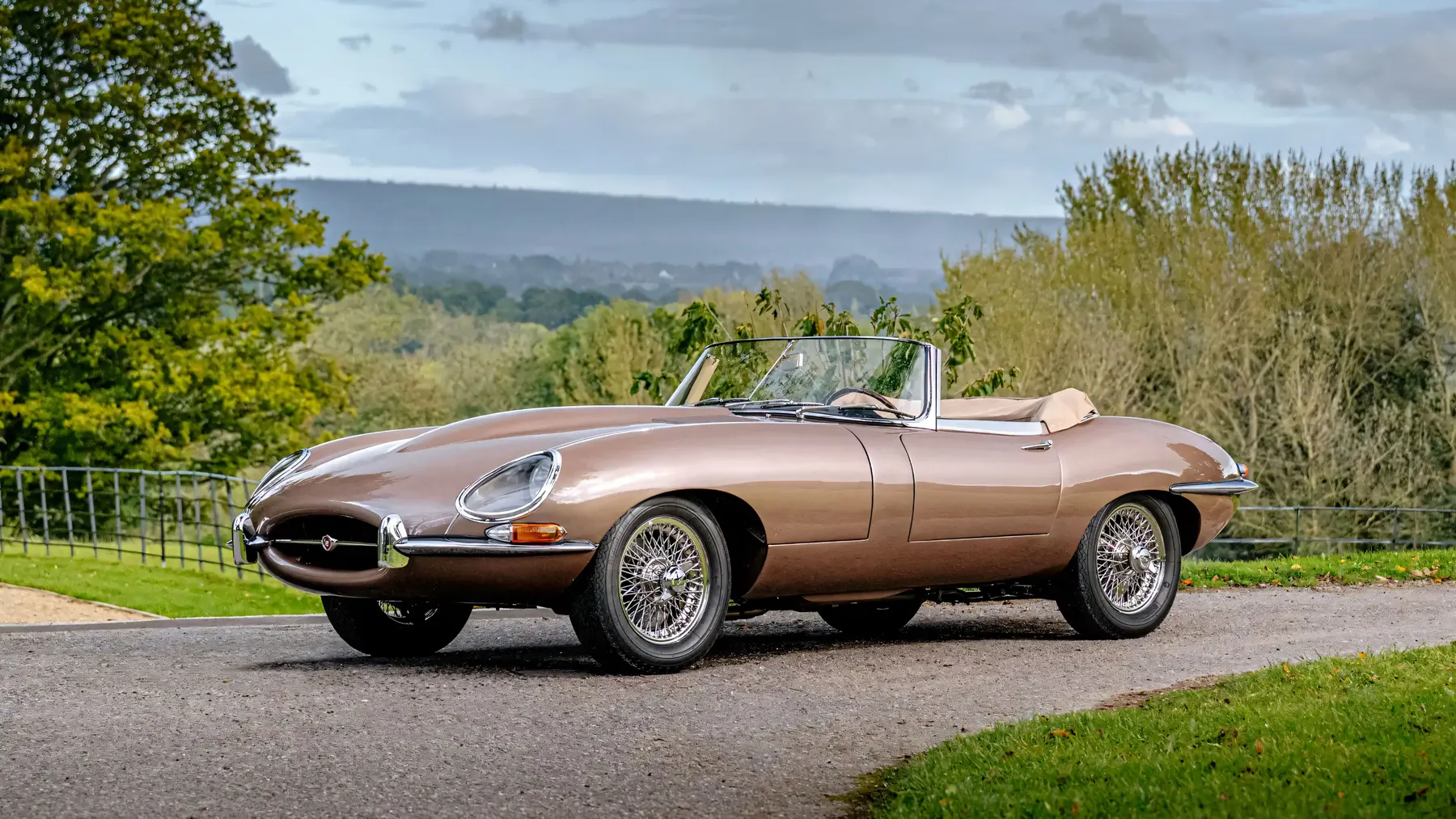
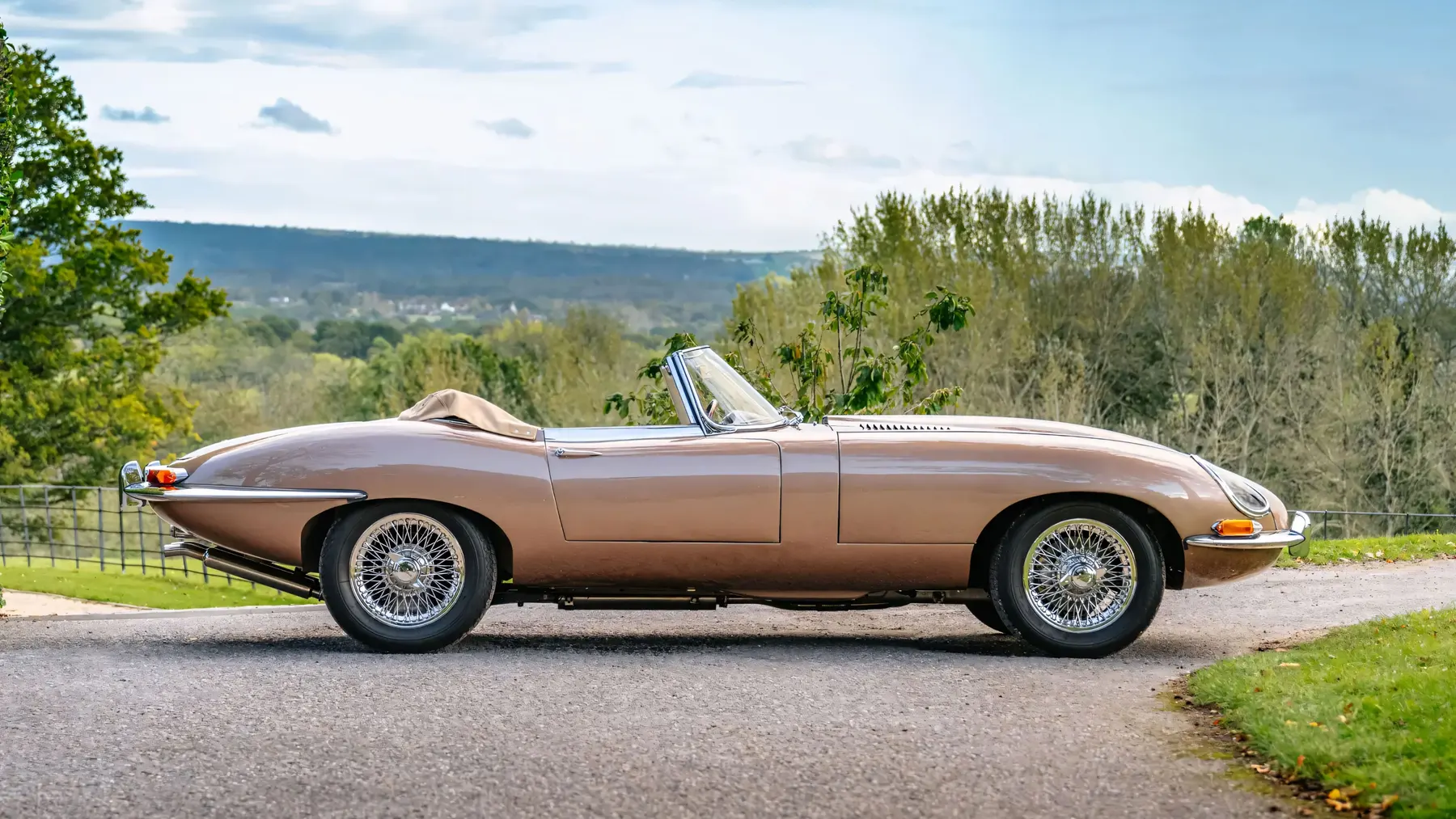
The engineering DNA ran directly back to the D-type, Jaguar’s Le Mans conqueror of 1955, 1956 and 1957. The E-Type’s structure comprised a pressed-steel semi-monocoque tub with front and rear subframes bolted to it in the manner of the D-type’s central monocoque philosophy, abandoning the body-on-frame construction that most of its road car rivals still employed. The front subframe carried the engine, suspension and steering rack; the wheelbase of 2,438mm gave 152mm more cockpit space than the racing car’s platform. At the rear, the fully independent suspension - lower wishbones with upper driveshaft links, radius arms and coil springs, with inboard rear disc brakes mounted adjacently to the differential - provided a technical standard that Ferrari, still using live rear axles on most of its GT cars, could not immediately match. Weight distribution settled at near-perfect 51:49 front-to-rear. The Dunlop servo-assisted disc brakes measured 279mm at the front and 254mm at the rear; Jaguar had, after all, pioneered disc brakes in racing competition with the C-type at Reims in 1952. The 72-spoke centre-lock wire wheels wore Dunlop RS5 tyres. Rack-and-pinion steering was accurate and pleasantly weighted.
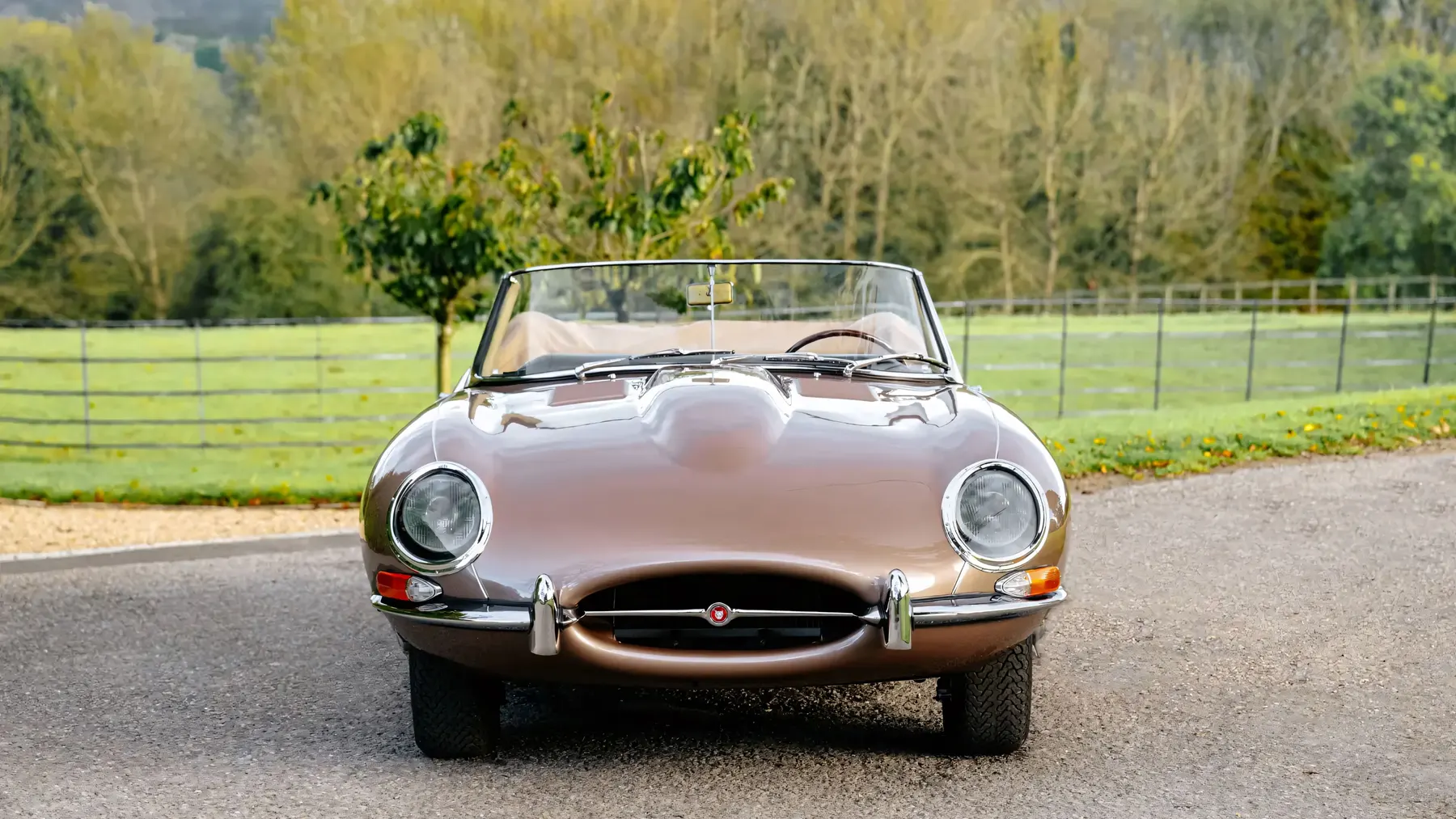
The body was the work of Malcolm Sayer, an aerodynamicist who had shaped the C-type and D-type for competition and who approached the E-Type’s form from mathematical principles of airflow rather than from a stylist’s clay model. The result was a body whose continuity of surface - from the elongated oval nose intake, along the louvred bonnet with its low power bulge, over the swelling haunches, and back to the tapered tail - was simultaneously functional and beautiful in a way that purely functional design rarely achieves. Sayer designed the OTS Roadster; the Fixed Head Coupé variant was adapted by Bob Blake, adopting a fastback roofline with a side-opening rear hatch to the luggage area. Both were striking. The windscreen on both versions was so low in profile that three miniature wipers were required rather than a conventional pair. The headlights, faired under chrome-rimmed glass covers, were another distinguishing feature of the Series 1 cars; that distinctive glass cover would be deleted on later Series 2 production, partly at US regulatory insistence.
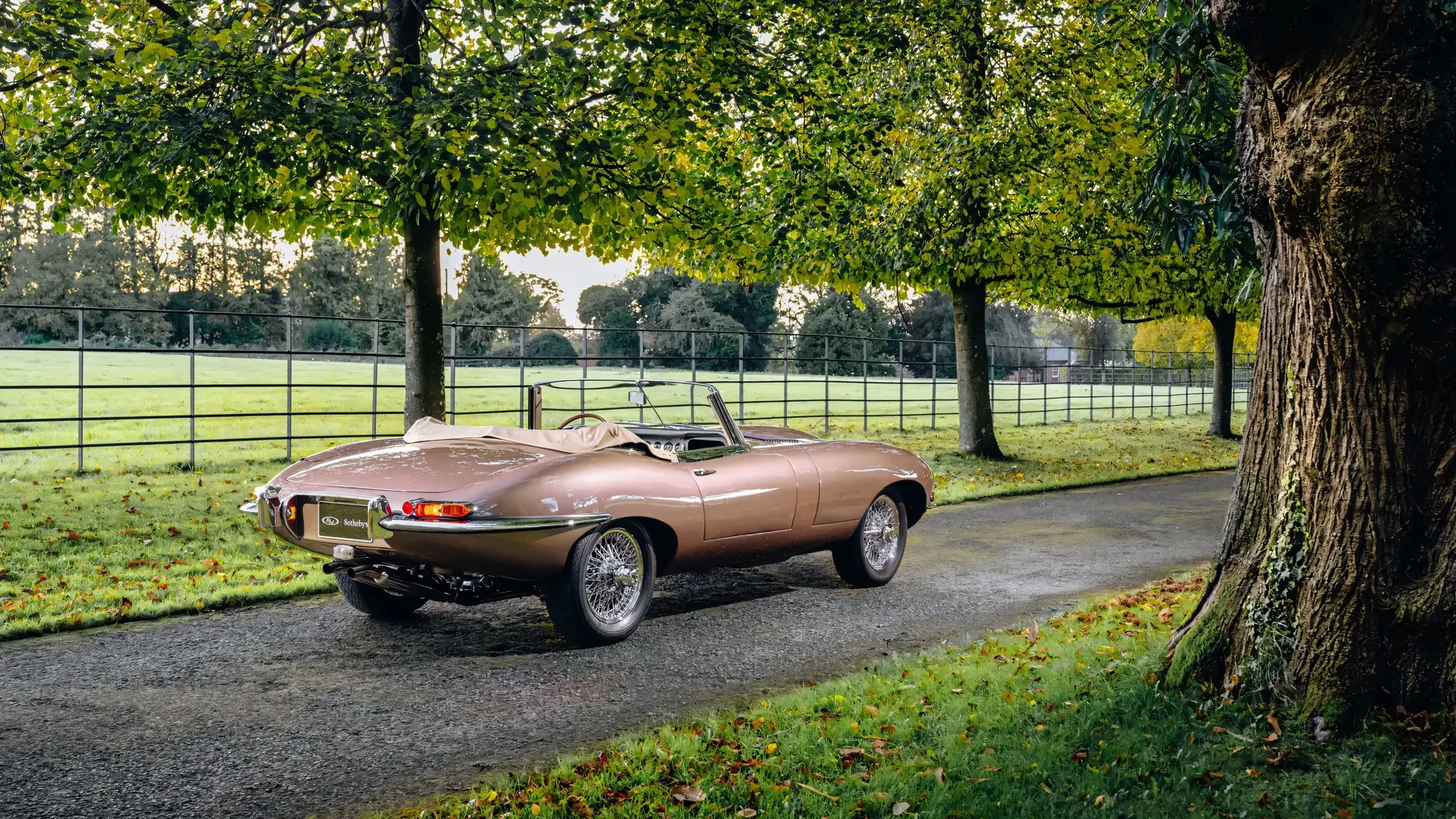
Inside the earliest examples, the character was as much aircraft as road car. The turned aluminium fascia panels ran across the central section of the dash and along the top of the transmission tunnel, housing a bank of toggle switches, supplementary gauges for water temperature, oil pressure, fuel and battery charge, and a radio bay. The two main instruments - a large tachometer and speedometer - sat ahead of the driver in a black vinyl surround. Leather covered the bucket seats, door panels and transmission tunnel sides. It was a purposeful, idiosyncratic interior that managed to feel luxurious and functional simultaneously. These aluminium fascia panels were quietly dropped in September 1963 in favour of a more cohesive vinyl treatment; the cars built before that change are the ones that collectors most prize, and the very earliest examples - with their external bonnet latches and flat floorpans - are the rarest of all. The first 92 right-hand drive and 386 left-hand drive roadsters were built with bonnet latches that required a tool to open, and floorpans that offered little foot room for taller drivers. By late 1961, internal bonnet latches had replaced the external ones and the floors had been dished to improve space for both feet and legs. These two details define the “flat-floor” classification that now drives a significant premium in the collector market.
The engine was the 3,781cc twin-cam straight-six that had appeared in the XK150S in October 1959 - a proven and capable unit with a cast-iron block and light alloy head, seven main-bearing crankshaft, and bore and stroke of 87mm and 106mm respectively. Three twin-choke SU HD8 sidedraught carburettors were fitted on a 9.0:1 compression ratio. Peak output was quoted as 265bhp at 5,500rpm and 260lb-ft of torque at 4,000rpm, though these were gross SAE figures; Hagerty UK’s buyer’s guide notes that the net installed figure, by contemporary measuring methods, was nearer 220bhp. The 4.2-litre car that replaced it in 1964 produced nominally the same gross power figure. Transmission was through the four-speed Moss gearbox with synchromesh on second, third and fourth gears, a Borg & Beck single-plate clutch, and a Salisbury limited-slip differential at the rear.
To drive a properly sorted 3.8-litre roadster today is to understand why the car’s period impact was so lasting. Below 3,000rpm the straight-six is relatively unhurried, its long-stroke character providing useful flexibility rather than sporting urgency. Above 3,500rpm it sharpens, and between 4,000 and 5,500rpm it pulls with a sustained confidence that remains impressive against modern machinery. The exhaust note through the twin centrally exiting pipes is dry and purposeful without theatricality. The ride quality is exceptional for a sports car of the period - the independent rear suspension doing precisely its intended job, keeping all four wheels in contact with uneven road surfaces while maintaining a composure that made sustained cross-country pace genuinely practical. Steering is direct and accurately weighted. The E-Type is not a taut, reactive instrument but something more expressive and flowing - a car that rewards commitment rather than correction, and which covers ground with an unhurried authority that belies its age.
The competition credentials were not merely theoretical. Graham Hill drove an E-Type to victory at Oulton Park on 3 April 1961 - barely three weeks after Geneva - and the model’s racing programme gathered momentum immediately. By 1963, Jaguar had committed to a batch of twelve Lightweight E-Types for serious competition use. These used bodies built entirely from aluminium instead of steel, with engines fitted with alloy blocks, dry-sump lubrication and Lucas mechanical fuel injection producing in excess of 300bhp. Some of the Lightweights also used ZF five-speed gearboxes. Malcolm Sayer designed revised low-drag coupé tail sections for two of them - the cars campaigned by Peter Lindner and Peter Lumsden - with more aerodynamically efficient rooflines and trailing exhaust vents that reportedly added around 20mph over the standard car’s top speed. Briggs Cunningham ran a team of three Lightweights at Le Mans in 1963. The programme was aimed directly at the Ferrari 250 GTO in the newly elevated GT Manufacturers’ Championship category, and over shorter distances the Lightweights proved genuine competition. At endurance races, the alloy-block engines’ overheating tendencies became a limiting factor, preventing the emphatic victories at Le Mans and Sebring that would have fully vindicated the programme.
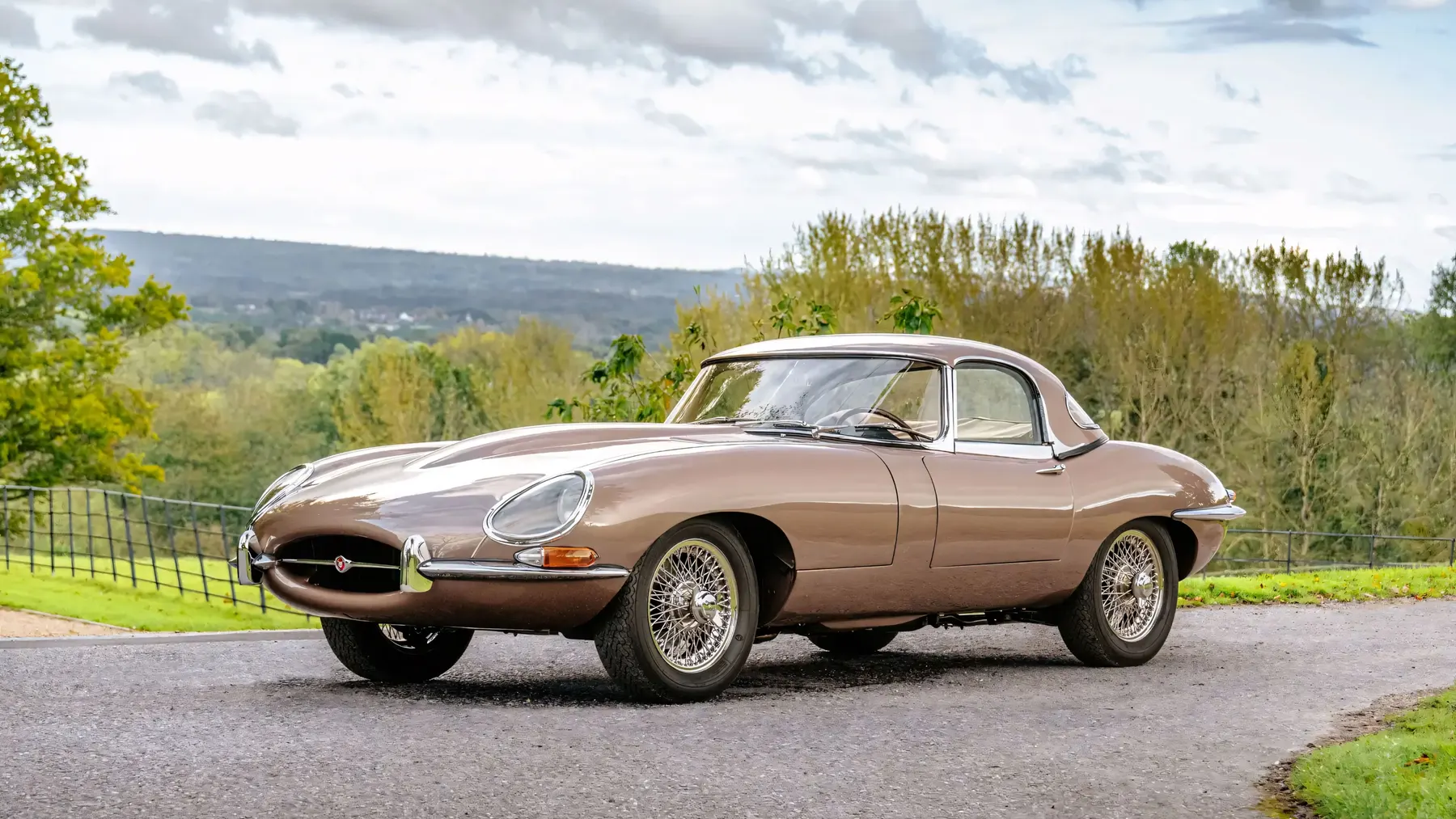
The weaknesses of the 3.8-litre roadster were present from the beginning and were noted plainly in period. The Moss gearbox was the most persistent and commented-upon flaw. Designed for the XK series before it, the Moss unit provided synchromesh only on second, third and fourth gears, leaving first and reverse to be engaged by careful timing rather than natural selection - a technique that approached double-declutching in demanding conditions. Octane Magazine’s buying guide describes it as “slow and obstructive,” and notes that it was “rumoured to have been designed for a pre-war truck.” CarsGuide’s assessment records that its poor shifting quality was “universally acknowledged in period.” Even Hagerty’s buyer’s guide, written with genuine affection for the car, acknowledges that a driver must understand the Moss box and accept its demands before finding any satisfaction in it - and notes frankly that a great many owners subsequently removed it in favour of alternative transmissions. The all-synchromesh Jaguar gearbox introduced with the 4.2-litre car in 1964 made that model the more practical driver’s car by most accounts, despite the 3.8’s enduring purity in other respects.
The brakes were the second significant failing. Disc brakes at all four corners sounded impressive for 1961, and at moderate speeds they functioned adequately. But for a car routinely used at sustained high velocity - and many owners drove them exactly that way - the stopping power at the outer limits of a fast road run was insufficient. Octane’s guide confirms directly that the brakes were not up to consistently checking a hard-driven E-Type at its genuine performance ceiling. The Dunlop discs were not badly designed so much as undersized for the performance they had to manage, a compromise that Jaguar addressed in later Series 1 and Series 2 development. The bucket seats, while handsome and leather-trimmed, were of the uncomplicated kind: supportive enough over short distances, but lacking the depth and lateral bolstering that a 149mph car might reasonably be expected to provide. Taller drivers also found the combination of shallow windscreen and low roofline genuinely restrictive rather than merely snug, a point Jaguar implicitly acknowledged by deepening the floorpan footwells during the production run.
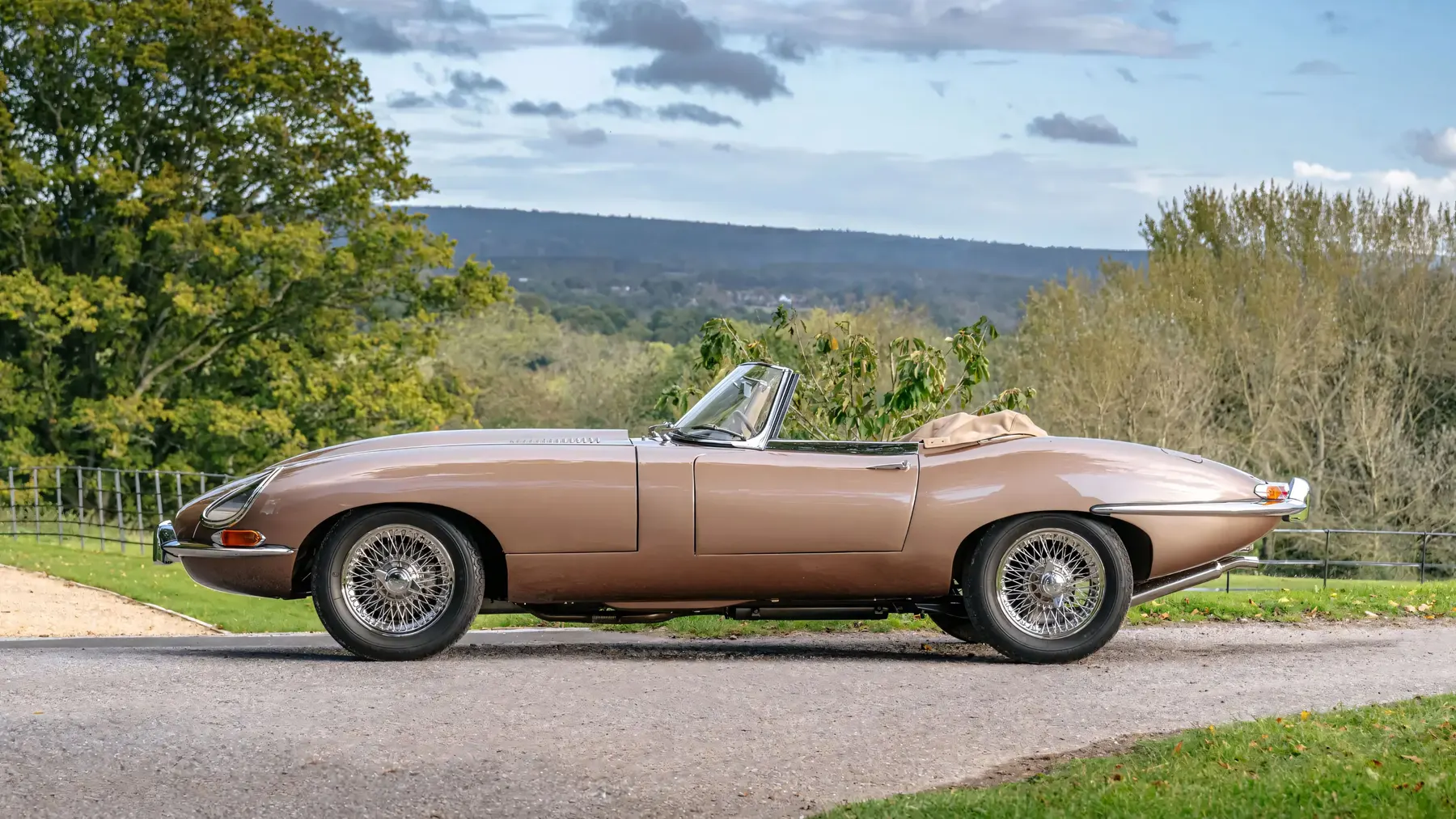
By the time 3.8-litre production concluded on 10 August 1964, Jaguar had built 15,493 examples: 7,822 OTS Roadsters and 7,671 Fixed Head Coupés. Of those roadsters, just 936 were right-hand drive. The production split reflects a structural reality of the E-Type’s commercial life: the overwhelming majority of production went to export markets, and North America in particular, where it was sold as the XKE. The domestic UK launch had not followed until July 1961 specifically because of Britain’s post-war balance of payments priorities. Celebrity owners on both sides of the Atlantic reinforced the car’s cultural currency: George Harrison, Roy Orbison, George Best and Tony Curtis among them. Frank Sinatra was said to have demanded one on sight at the 1961 reveal. The E-Type became a mobile emblem of a particular version of 1960s aspiration - used simultaneously in performance fuel advertisements and shampoo commercials with equal conviction, because the shape was compelling enough to sell almost anything it appeared alongside.
What distinguished the 3.8-litre Series 1 Roadster from anything that preceded it was the comprehensiveness of its argument. Jaguar did not simply produce a car that was fast, or beautiful, or technically advanced; it produced one that was conspicuously all three, at a price point that made every one of its competitors look either expensive or technically conservative. The gearbox it borrowed from the previous generation, the brakes that could not quite contain its speed, and the cockpit that asked tall drivers to accommodate rather than be accommodated - these were real limitations, not period charm. But the independent rear suspension that would serve Jaguar for a quarter century, the aerodynamically derived body that Sayer drew from racing principle rather than styling convention, the straight-six that pulled strongly and sounded right, and the overall coherence of a car that was both a daily sporting road car and a viable competition machine: these were achievements that the 3.8-litre Roadster delivered with a specificity that no amount of subsequent revision has entirely replicated.
Join the discussion
Comments
Loading comments…
Leave a comment
Share a detail, memory, or perspective. Every comment is reviewed before publication.