1966 Jaguar E-Type Series 1 4.2-Litre Roadster

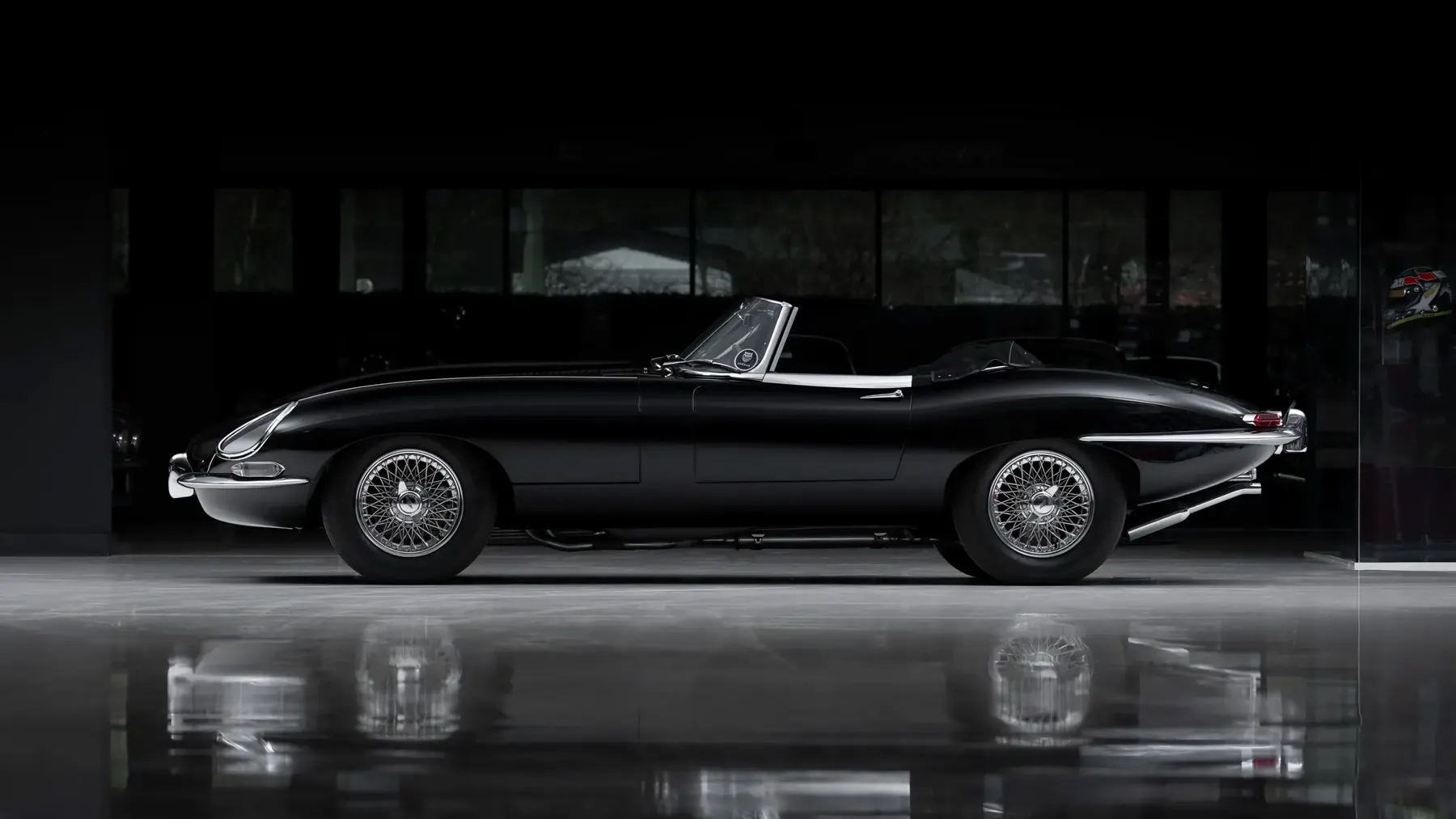
The story of the Jaguar E-Type Series 1 4.2-Litre Roadster is about the creation of an automotive icon that would forever change how we think about sports cars. When this magnificent machine burst onto the scene in the mid-1960s, it represented the perfect evolution of an already revolutionary design, combining breathtaking aesthetics with pulse-quickening performance in a package that left both critics and the public utterly spellbound.
The Jaguar E-Type made its dramatic debut at the Geneva Motor Show on March 15, 1961, creating an immediate sensation. The car’s arrival was the stuff of legend, Jaguar executive Bob Berry drove one of the display models flat-out from the Coventry factory to Geneva, arriving just 20 minutes before the unveiling. Such was the demand for the car that pandemonium ensued when it was revealed to the waiting press.
While the initial Series 1 E-Types featured a 3.8-litre inline-six engine, Jaguar introduced the improved 4.2-litre version in October 1964. This wasn’t merely a displacement increase but represented a comprehensive refinement of an already exceptional sports car. The 4.2-litre engine featured a completely redesigned block that was made longer to accommodate 5mm larger bores, and the crankshaft was modified to use newer bearings.
The genius behind the E-Type’s breathtaking form came from the collaborative efforts of Sir William Lyons (Jaguar’s founder), Malcolm Sayer (the brilliant aerodynamicist), and William M. Heynes (Jaguar’s chief engineer). Their creation wasn’t just beautiful-it was revolutionary. The E-Type emerged as the product of dedicated development following the Jaguar D-Type’s iconic success at the Le Mans 24 Hours race.
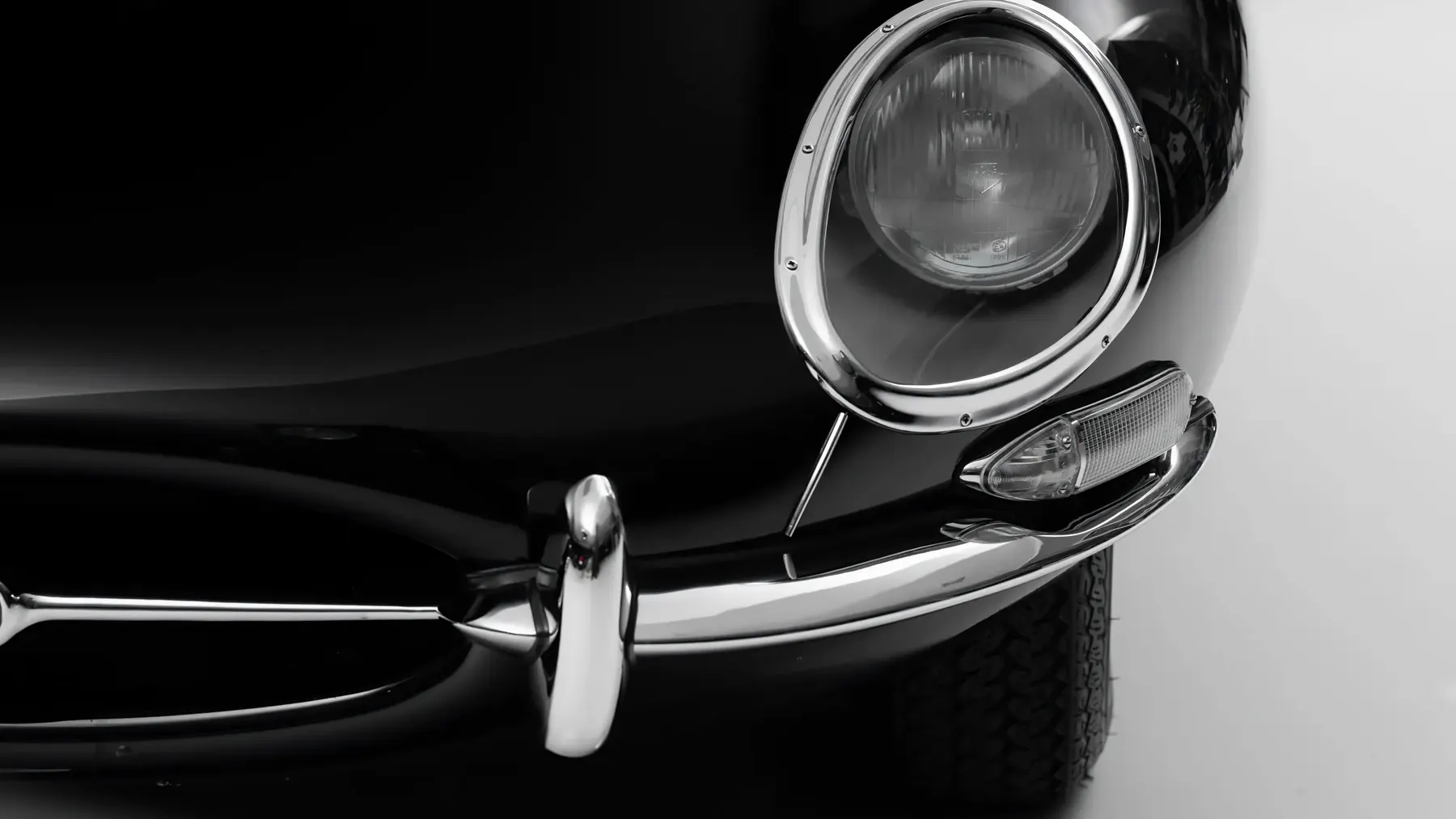
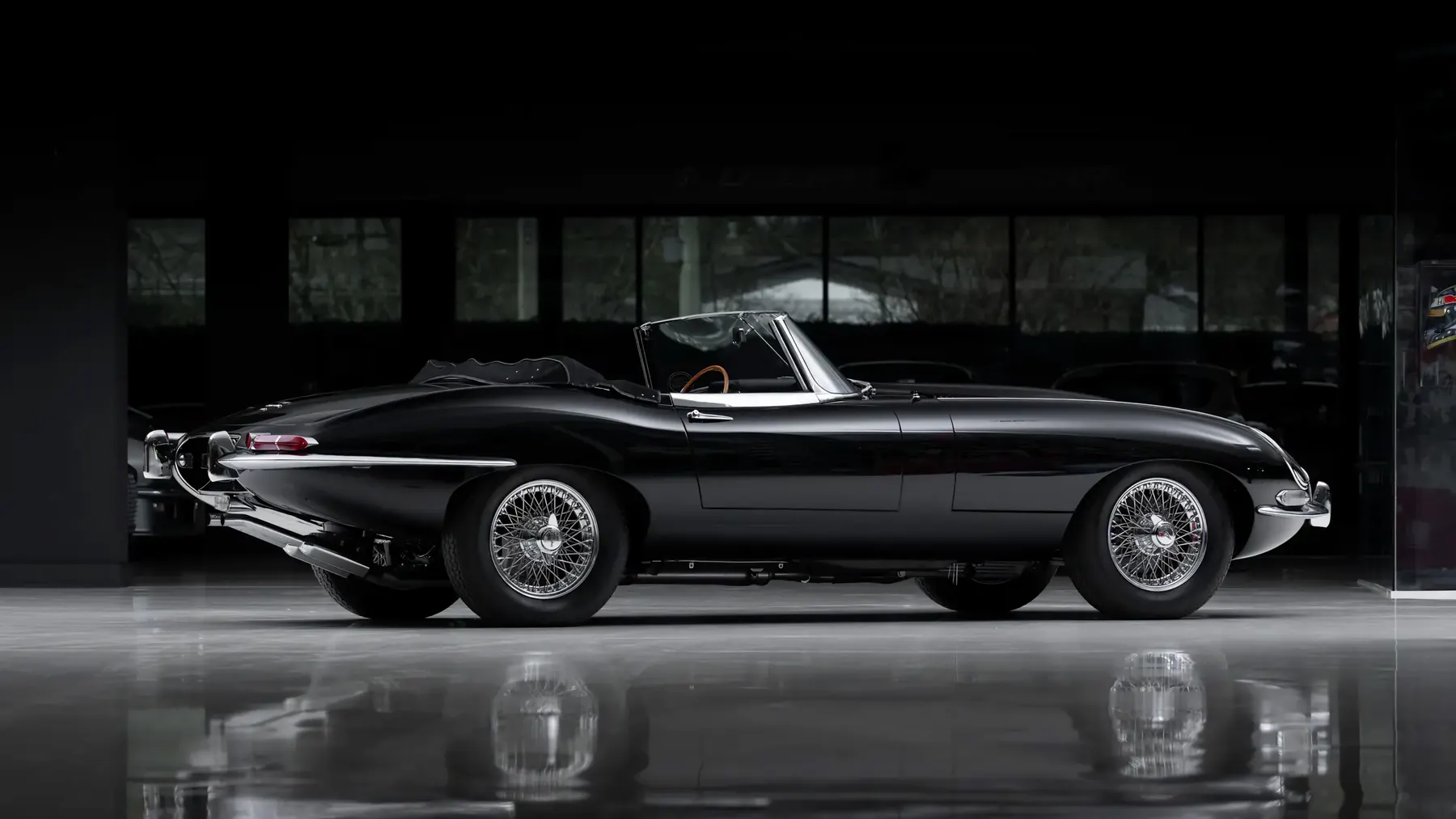
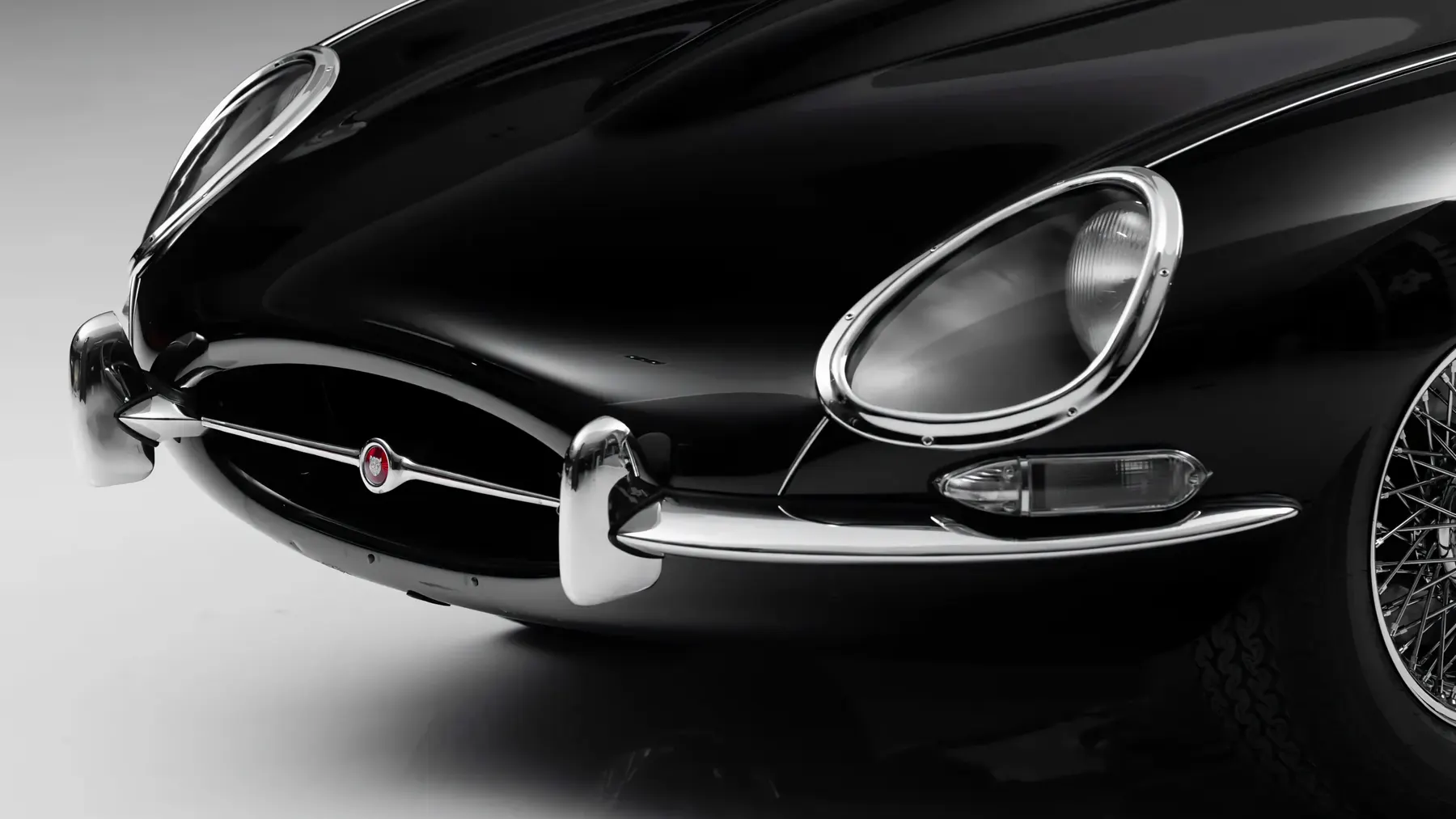
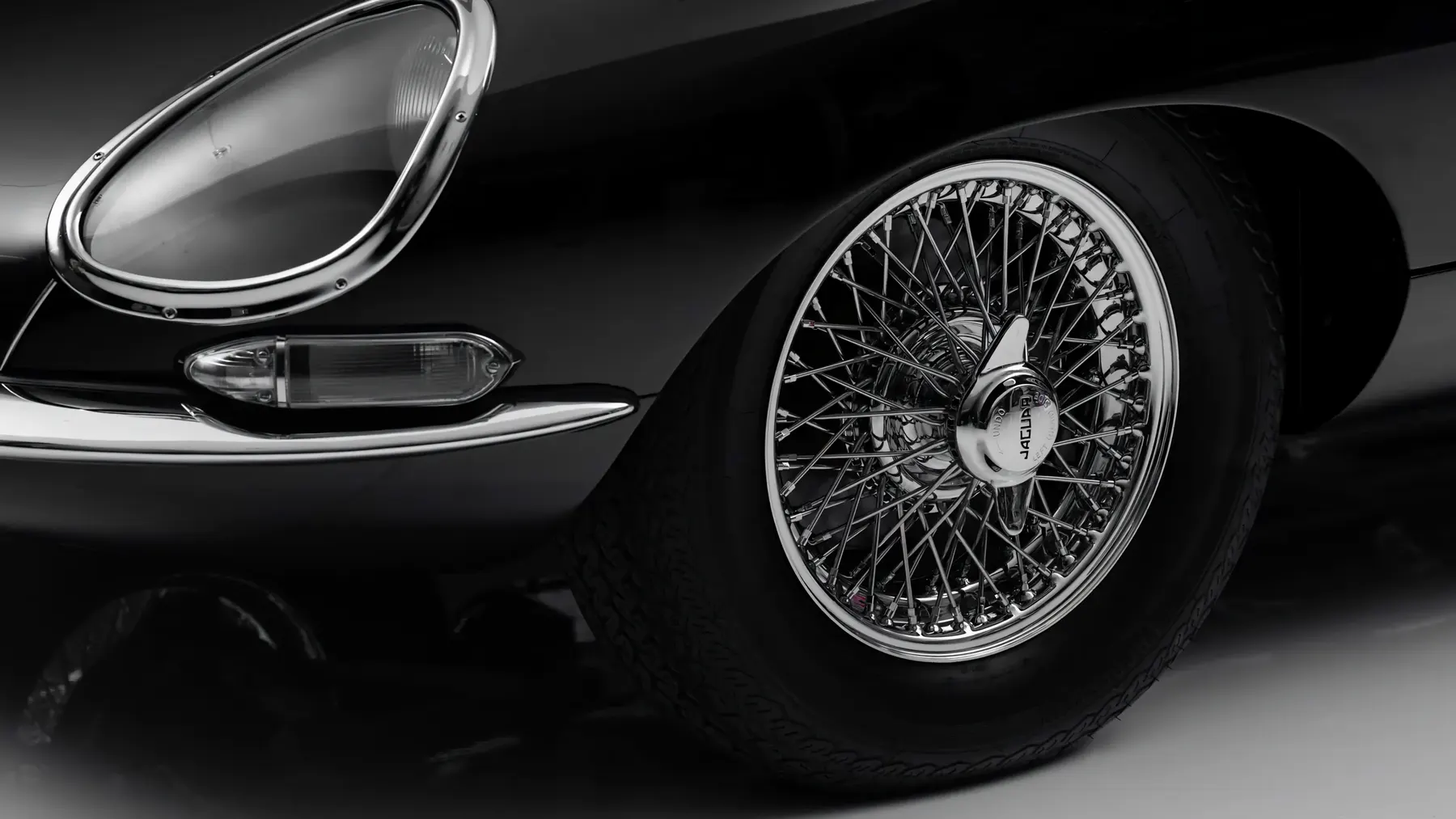
The E-Type’s silhouette represents one of the most instantly recognizable shapes in automotive history. Its long, predatory bonnet, muscular haunches, and elegant tapered tail created a form that was both sensuous and purposeful. The design featured distinctive elements like faired-in headlights and a centered twin exhaust that set it apart from everything else on the road at the time.
So striking was this design that Enzo Ferrari himself reportedly declared it “the most beautiful car ever made”. This wasn’t just hyperbole-the E-Type’s beauty has been formally recognized by institutions outside the automotive world. The New York Museum of Modern Art includes an E-Type Roadster in its permanent collection, acknowledging it as a sculpture rather than merely a vehicle.
The Roadster variant, with its convertible top, perhaps best showcased the purity of the E-Type’s design. Without a roof to disrupt its flowing lines, the open-top version allowed for an unobstructed view of the car’s sensational profile. With the top down, the driving experience became even more visceral and engaging, allowing drivers to feel more connected to both the machine and the surrounding environment.
What made the 4.2-litre Series 1 special wasn’t just its exquisite bodywork-it represented significant mechanical advancement over the earlier 3.8-litre models. The engine itself, while maintaining the same 265 bhp power output as its predecessor, delivered substantially more torque-283 lb-ft compared to the 3.8’s 240 lb-ft, an impressive 18% increase. This translated to better throttle response and stronger acceleration without requiring drivers to downshift as frequently.
The 4.2-litre engine reached its peak power at 5,400 rpm versus 5,500 rpm in the 3.8, making it more accessible and usable in everyday driving. Perhaps more importantly, the 4.2-litre E-Type introduced Jaguar’s own all-synchromesh four-speed gearbox, replacing the Moss transmission used in the 3.8 models that lacked synchronizers on first gear. This made the car significantly more pleasant to drive, especially in urban environments.
The electrical system also saw a comprehensive overhaul, switching to negative earth and replacing the dynamo with a more reliable alternator. A new copper cross-flow radiator with thermostatically-controlled electric fan improved cooling efficiency, addressing one of the few criticisms of earlier models.
The 4.2-litre E-Type’s performance was nothing short of extraordinary for its era. With a top speed of 150 mph (241 km/h), it was among the fastest production cars in the world. Acceleration was equally impressive, with the 0-60 mph sprint dispatched in approximately 7 seconds-blistering performance by 1960s standards.
When tested by Motor magazine, the conclusion was emphatic: “The new 4.2 supersedes the early 3.8 as the fastest car Motor has tested. The absurd ease at which 100 mph can be exceeded in a 1⁄4 mile never failed to astonish”. Similarly, Autocar declared it “the fastest car we have ever tested” and praised it for offering “just about the easiest way to travel quickly by road”.
This exceptional performance was delivered with surprising refinement. The inline-six engine, with its seven main bearings and twin overhead camshafts, operated with remarkable smoothness, especially by the standards of the day. The comprehensive chassis design with fully independent suspension provided handling to match the straight-line performance.
The E-Type’s chassis was just as advanced as its engine and styling. It featured independent suspension at all four corners, with torsion bars up front and coil springs at the rear. This was complemented by rack and pinion steering that offered precision control.
The braking system was equally impressive, with disc brakes at all four wheels-the rear ones mounted inboard to reduce unsprung weight. This was cutting-edge technology for the era, putting Jaguar ahead of much more expensive rivals from Ferrari, Maserati, and even Mercedes-Benz.
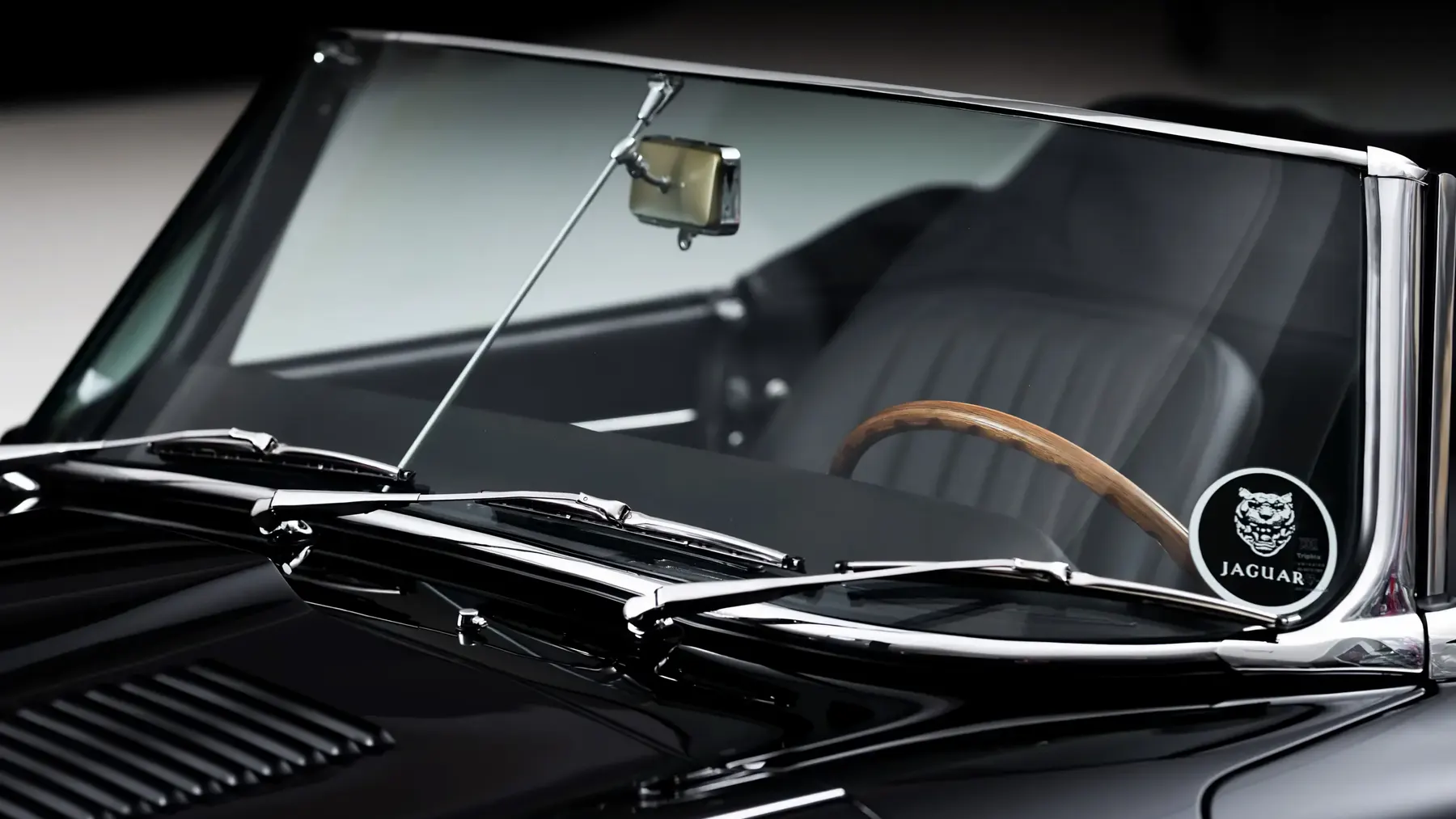
Inside, the 4.2-litre models benefited from redesigned seats that offered more comfort than the “bucket” style found in the 3.8-litre cars. The interior featured a blend of luxury and sportiness, with leather upholstery and a wood-rimmed steering wheel creating an atmosphere of refined performance.
Externally, the 4.2-litre Series 1 models were distinguished from their 3.8-litre predecessors by badges on the boot lid proclaiming “Jaguar 4.2 Litre E-Type”-the earlier cars simply carried a “Jaguar” badge. Otherwise, the styling remained gloriously unchanged, preserving the pure form of the original design.
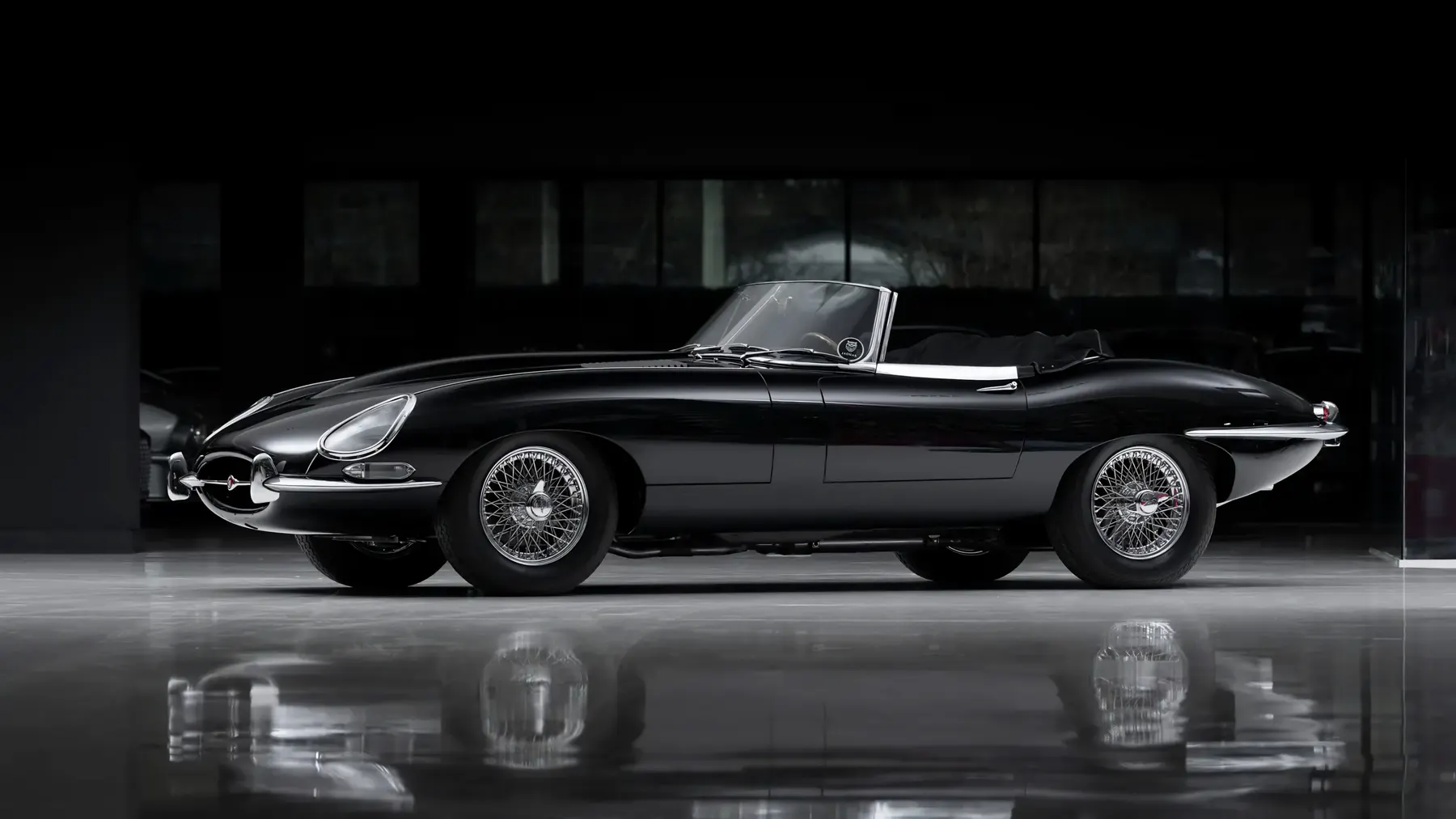
While the initial E-Type lineup consisted of just two body styles-the Fixed Head Coupé (FHC) and Open Two Seater (OTS) Roadster-a 2+2 version of the coupé was introduced in September 1965 to meet public demand. This variant featured a wheelbase extended by 9 inches (229 mm) and a slightly higher roofline to accommodate two small rear seats. It also became the first E-Type available with an optional automatic transmission.
Production of the Series 1 4.2-litre Roadster began in August 1964 for left-hand drive markets and September 1964 for right-hand drive cars, continuing until July 1968. During this period, Jaguar produced 9,550 Roadsters, with the vast majority (8,367) being left-hand drive examples for export markets, particularly the United States.
The E-Type wasn’t just a commercial success-it became a cultural phenomenon and a symbol of the swinging sixties. It represented British design and engineering excellence at its finest, and its relatively affordable price (around £2,250 at launch, equivalent to approximately £38,000 today) made it accessible to a wider audience than other exotic sports cars.
The car’s appeal transcended the automotive world, attracting admirers from all walks of life. Frank Sinatra famously expressed his desire for an E-Type with characteristic directness: “I want that car, and I want it now”. This sentiment was shared by countless others, making the E-Type one of the most coveted automobiles of its era.
Today, the Series 1 4.2-litre Roadster remains among the most desirable E-Type variants for collectors, often commanding premium prices at auction. Particularly exceptional examples have become investment-grade classics, with perfectly restored specimens achieving six-figure sums. One example, described as “one of the finest E-Types in existence” and a three-time 100-point Jaguar Club of North America National Champion, sold for $280,000 at auction.
The driving experience of an E-Type Series 1 4.2-Litre Roadster is something truly special. Contemporary road tests praised its exceptional performance and handling, but perhaps what makes it most remarkable is how these qualities are delivered with a sense of grace and refinement.
With the top down on a winding road, few automotive experiences can match an E-Type Roadster. The responsive engine, with its increased torque, provides effortless acceleration from virtually any speed. The improved all-synchromesh gearbox allows for smooth, quick shifts that perfectly complement the engine’s character.
Modern drivers of these classics often remark on how the E-Type manages to feel both vintage and timeless simultaneously. There’s a directness and purity to the controls that’s largely absent from modern sports cars, yet the performance remains impressive even by contemporary standards.
While a modern driver might notice the heat and noise that enters the cabin (characteristics of most 1960s sports cars), these minor inconveniences are quickly forgotten when experiencing the E-Type’s magnificent performance and character. As one owner noted, the car tends to cool down once at speed, and the engine note becomes part of the experience rather than an annoyance.
The Jaguar E-Type Series 1 4.2-Litre Roadster represents the pinnacle of classic British sports car design and engineering. It combined breathtaking beauty with exhilarating performance, advanced technology with day-to-day usability, and exotic car presence with relative affordability.
What makes this particular variant special is how it refined the already exceptional E-Type formula. The increased torque, improved gearbox, more comfortable seats, and enhanced electrical system addressed virtually all the criticisms of the original 3.8-litre models while preserving their stunning looks and character.
Nearly six decades after its introduction, the E-Type Series 1 4.2-Litre Roadster continues to captivate enthusiasts and collectors alike. Its timeless design, thrilling performance, and historical significance ensure that it will forever remain one of the most celebrated and desired automobiles ever created. In a world where automotive designs come and go, the E-Type stands eternal-a true masterpiece that transcends its era to become something truly timeless.
Join the discussion
Comments
Loading comments…
Leave a comment
Share a detail, memory, or perspective. Every comment is reviewed before publication.