1959 Jaguar XK 150 3.4-Litre Roadster

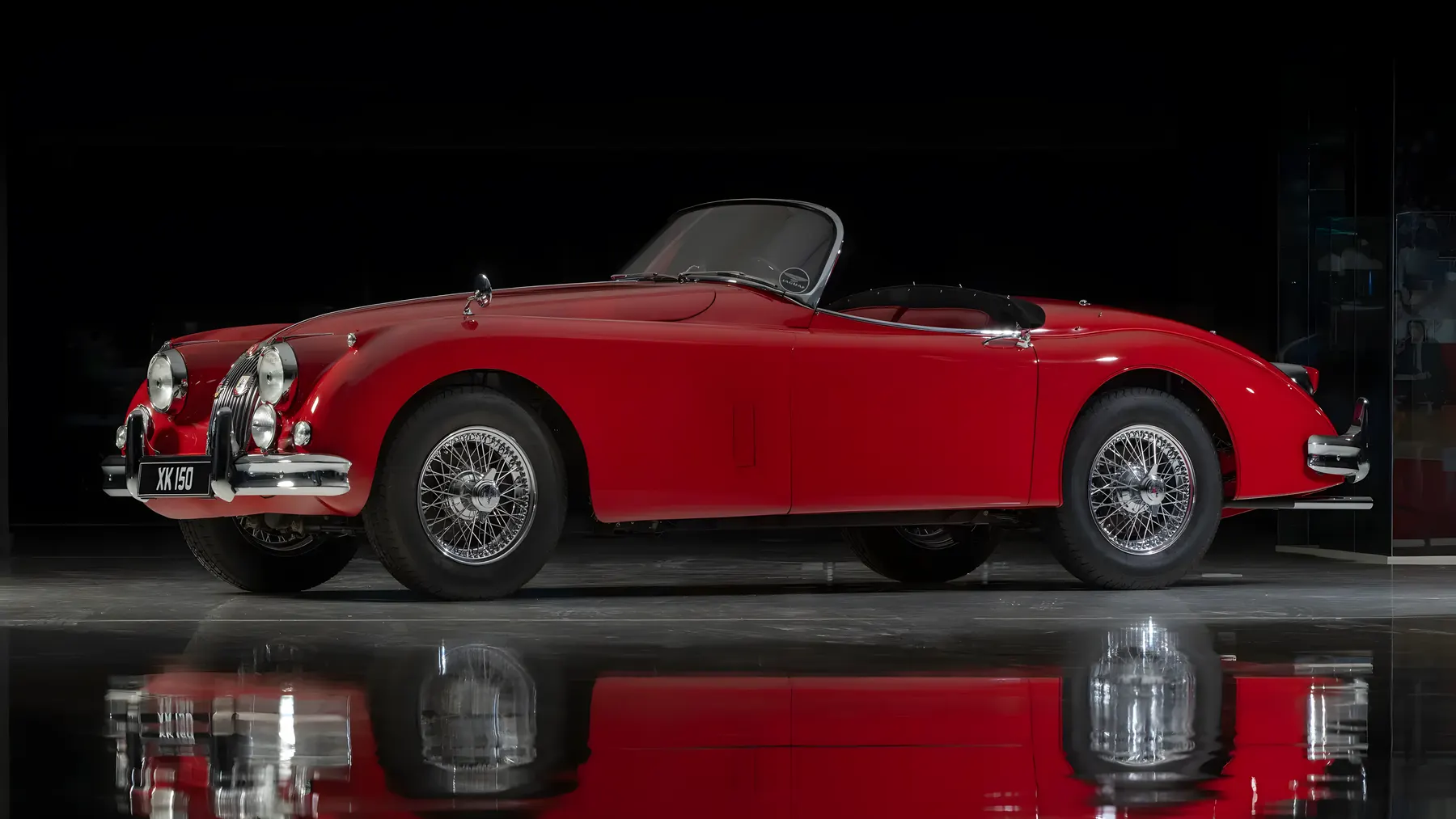
When Jaguar unveiled the XK150 in 1957, it represented the culmination of nearly a decade of sports car development that began with the revolutionary XK120. The XK150 3.4-Litre Roadster, specifically, arrived in 1958 as the open-top variant of what would become the final chapter in Jaguar’s iconic XK series before the E-Type’s arrival. This magnificent machine combined racing pedigree with newfound refinement, creating a sports car that remains a coveted classic more than six decades later.
The story of the XK150 begins with its predecessors. When Jaguar first revealed the XK120 at the 1948 London Motor Show, it created an immediate sensation with its stunning design and impressive performance claims. What was initially conceived as a promotional showcase for Jaguar’s new dual overhead camshaft engine quickly became a production model due to overwhelming demand.
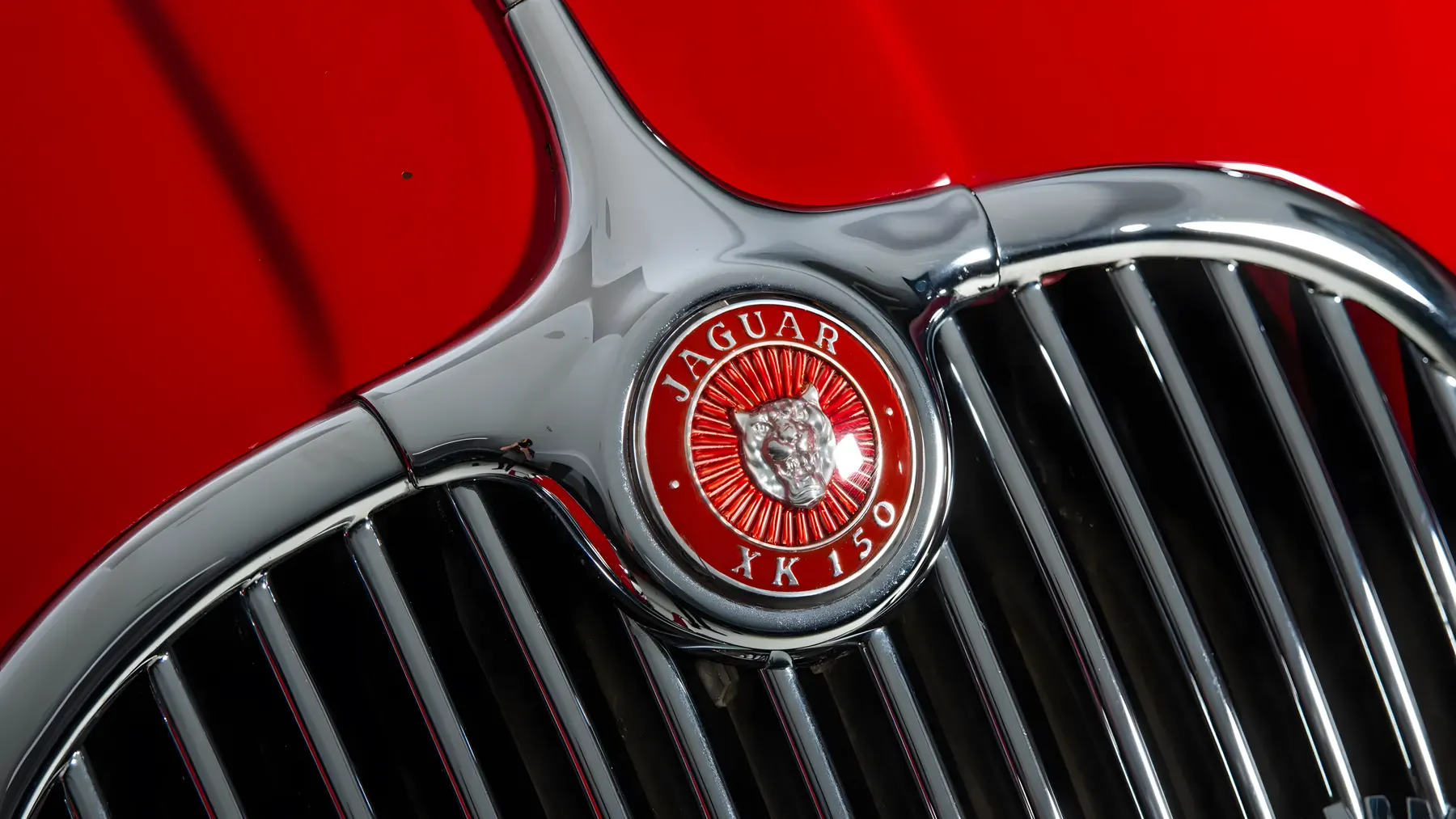
After the XK120 and subsequent XK140, Jaguar launched the XK150 in May 1957, initially offering only fixed-head coupé (FHC) and drophead coupé (DHC) body styles. The roadster variant – officially designated as the “Open Two-Seater” (OTS) – arrived ten months later in March 1958. Interestingly, these roadsters were initially produced primarily in left-hand drive configuration for export markets, with the United States being the primary destination.
The XK150 represented a significant evolution in design and engineering. While maintaining a family resemblance to its predecessors, it featured a more muscular and modernized body style. The styling may have lost some of the lithe grace that characterized the earlier XK120, but it compensated with a more substantial, purposeful appearance that hinted at its increased performance capabilities.
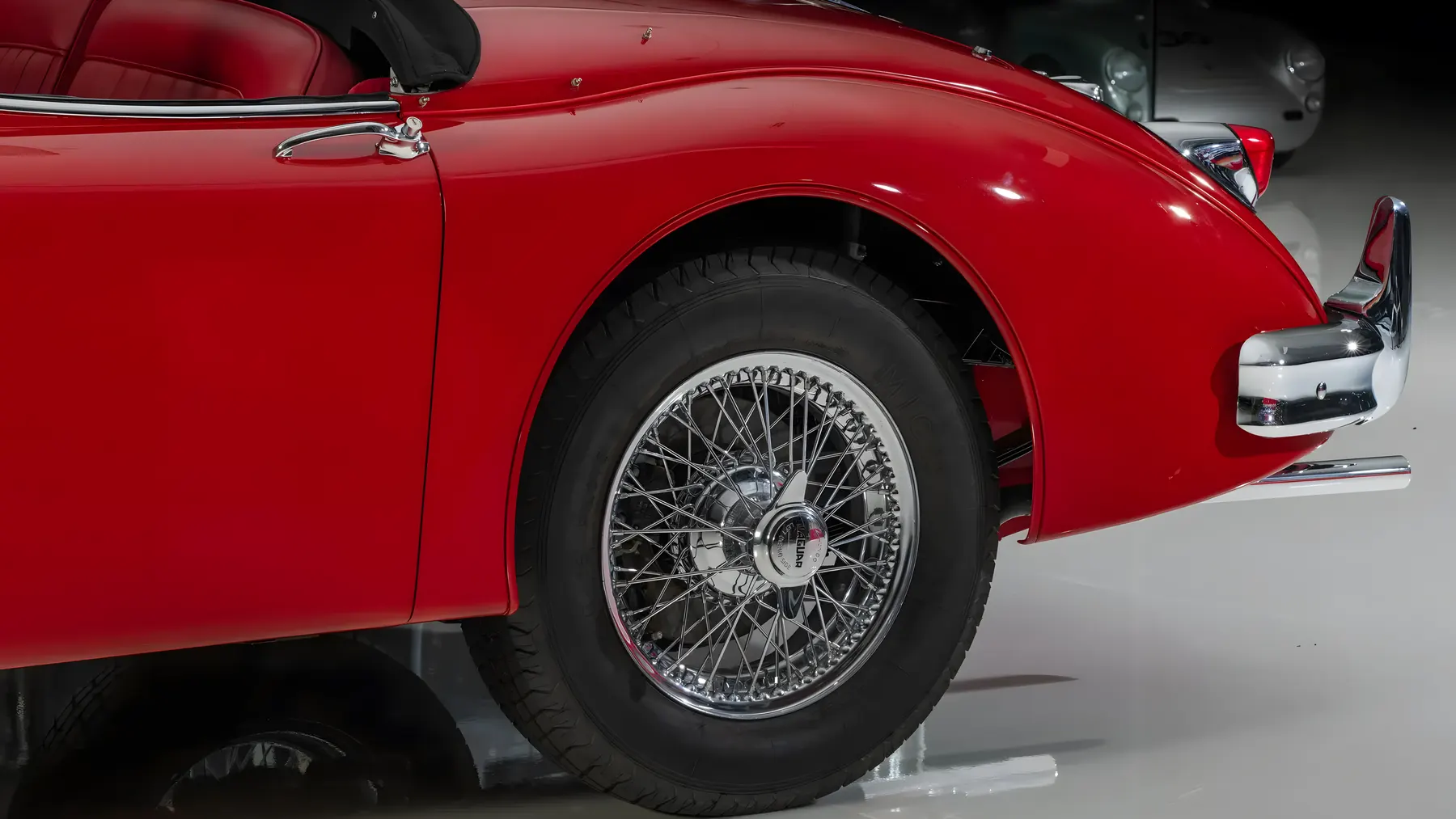
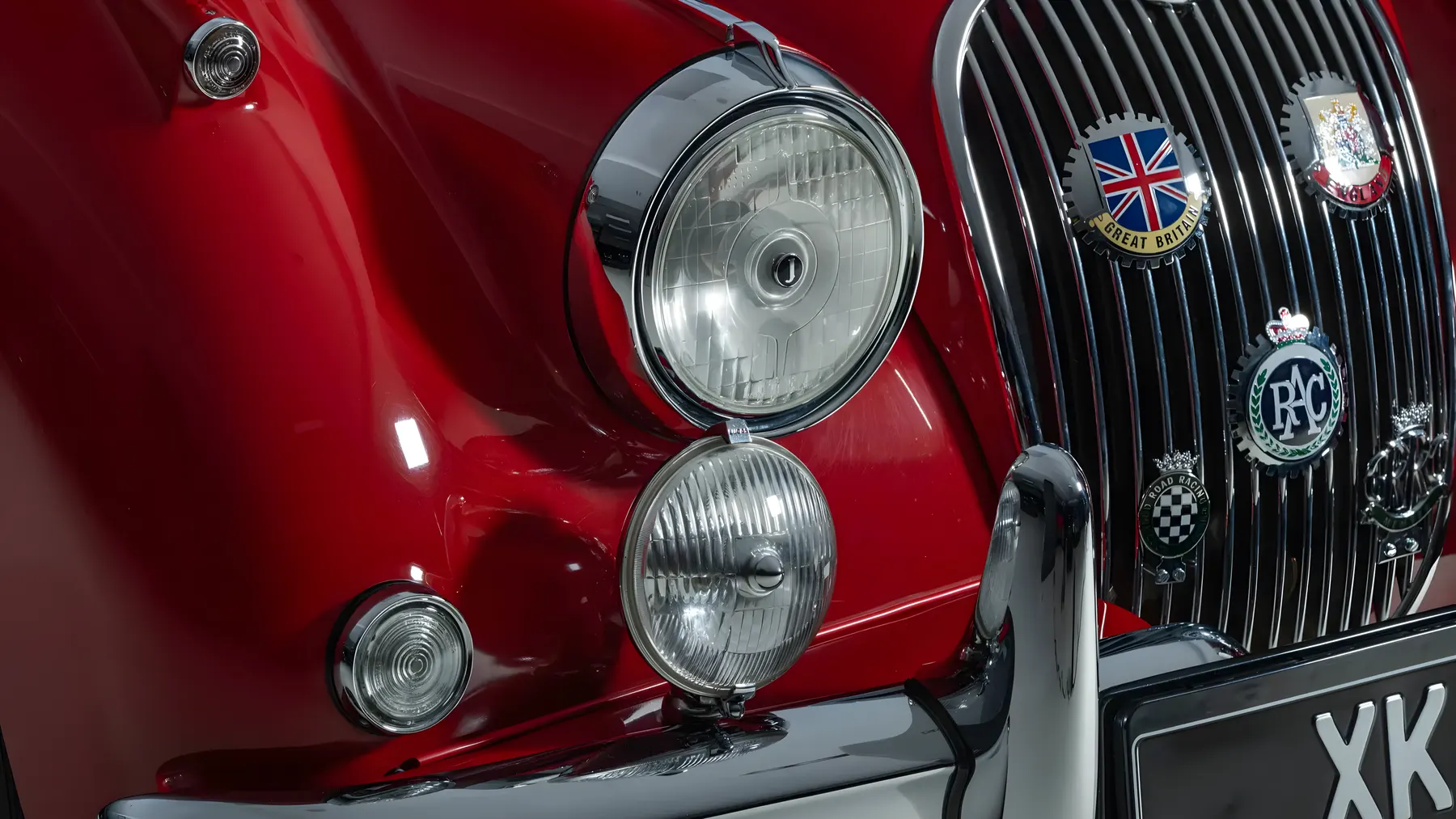
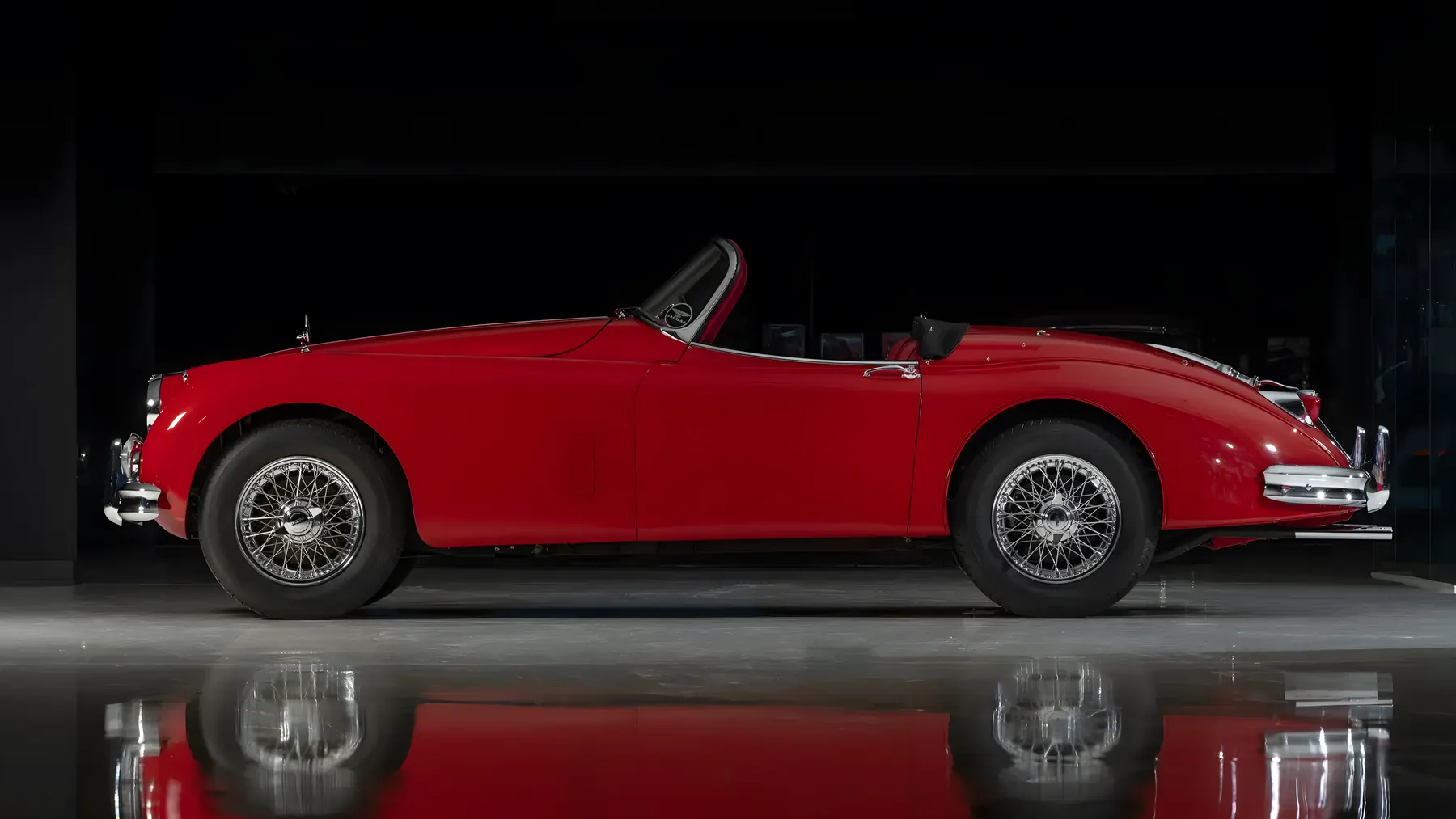
Perhaps the most immediately noticeable design change in the XK150 Roadster compared to earlier XK models was the adoption of conventional wind-up windows. Previous XK roadsters used detachable side screens, making the new arrangement a significant improvement for everyday usability and weather protection. Another practical upgrade was the addition of external push-button door handles, replacing the interior pull-cord system used on the XK120 and XK140 roadsters.
The XK150 Roadster featured several unique characteristics that distinguished it from its closed-roof siblings. Its windscreen was mounted four inches further back compared to the FHC and DHC variants, which necessitated the removal of quarter lights. This adjustment, along with the elimination of rear seats, allowed for a longer bonnet and more spacious cockpit, making the Roadster significantly more comfortable for drivers. Despite these refinements, the XK150 OTS retained the simple folding roof mechanism of its predecessors, maintaining its pure sports car character.
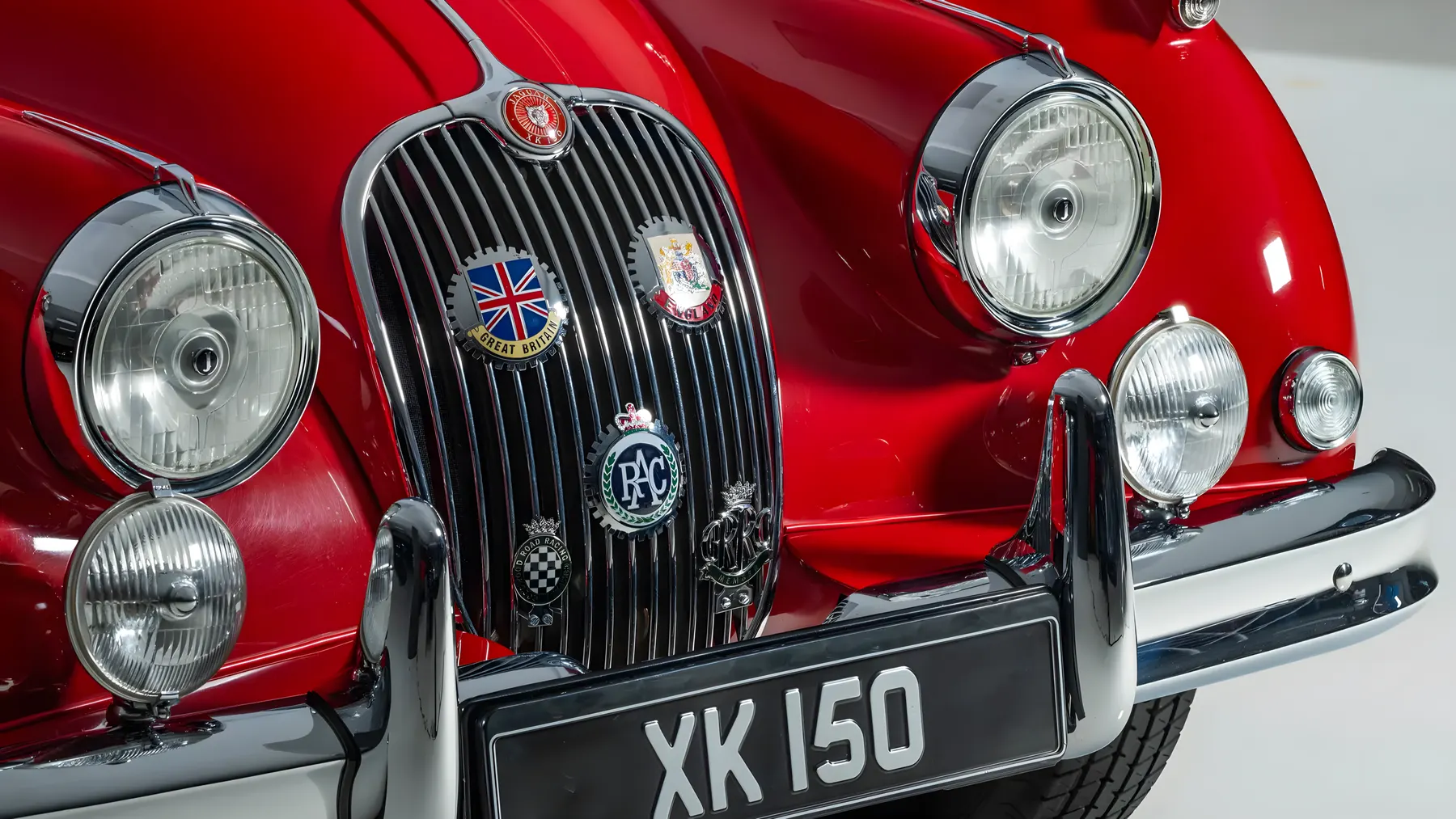
At 1447 kg, the OTS was the lightest XK150 variant available, enhancing its performance credentials over the slightly heavier FHC and DHC models. The interior featured leather upholstery and an elegant dashboard that could be optionally trimmed in walnut. The cockpit was dominated by a large four-spoke steering wheel, which proved essential for low-speed maneuvering due to the absence of power steering.
The true magic of the XK150 Roadster resided beneath its sculpted bonnet. The 3.4-litre dual overhead camshaft inline-six engine was a masterpiece of engineering, derived from the powerplant that had dominated motorsport competitions including the 24 Hours of Le Mans.
In standard form, this engine produced 190 bhp, but most XK150s were delivered in “Special Equipment” (SE) specification, which increased output to 210 bhp through the use of twin SU HD6 carburetors and a modified cylinder head. In March 1958, coinciding with the Roadster’s introduction, Jaguar unveiled an even more potent “S” variant featuring triple SU HD8 carburetors and a straight-port cylinder head, boosting power to an impressive 250 bhp.
The performance figures were remarkable for the era. The XK150 3.4S could accelerate from 0 to 60 mph in approximately 7.3 seconds and reach a top speed of 136 mph (219 km/h). Even more impressive was the car’s flexibility – it could pull away from under 20 mph in top gear despite being engineered to safely rev beyond 5,500 rpm.
One of the XK150’s most significant technological advancements was its braking system. It became the first production Jaguar available with four-wheel disc brakes, representing a revolutionary improvement over the drum brakes that were standard on most contemporary vehicles. The 12-inch Dunlop disc brakes with Lockheed vacuum-servo assistance provided powerful, fade-resistant stopping power that was described by period reviewers as “superb” and “one of the outstanding features of this outstanding car”.
What made these brakes particularly impressive was their progressive, non-aggressive nature. As noted in a 1958 Motor Sport Magazine review, they delivered “powerful retardation and complete absence of fade” while remaining “in no way fierce,” allowing effective stopping without requiring delicate pedal modulation. This braking capability complemented the car’s high-speed performance, creating a balanced and confidence-inspiring driving experience.
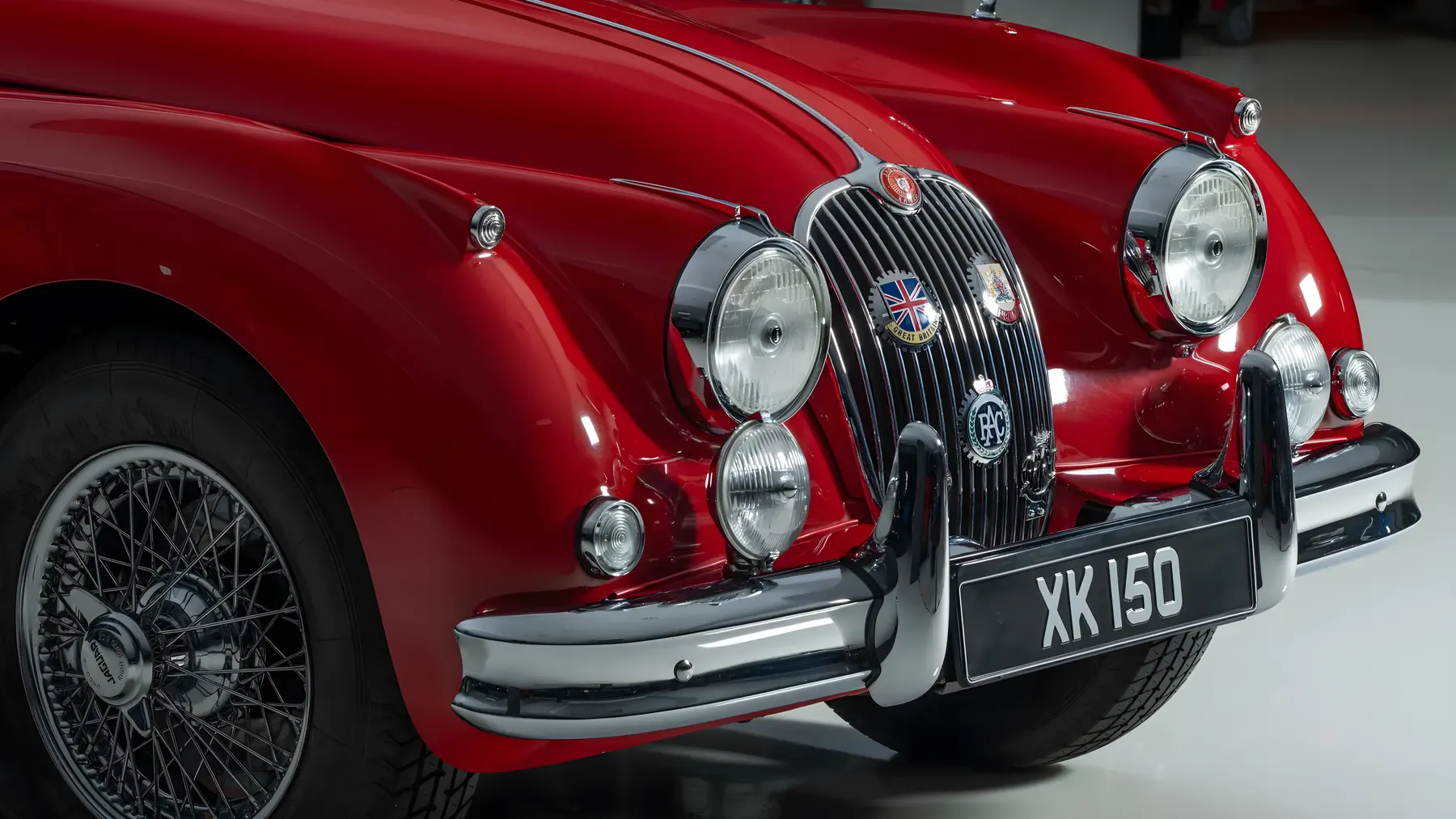
Jaguar produced the XK150 series from 1957 until 1960, with production ending in October 1960 as the company prepared to unveil its revolutionary successor, the E-Type. During this period, a total of 9,382 XK150s were manufactured across all body styles, with the OTS Roadster accounting for approximately 2,265 units.
The 3.4S version was particularly rare and desirable. Of the XK150 OTS models produced, only 888 were built with the high-performance 3.4S engine specification. This rarity, combined with its exceptional performance and the historical significance of being the final evolution of the XK roadster series, has made the XK150 3.4-Litre S Roadster one of the most collectible Jaguars today.
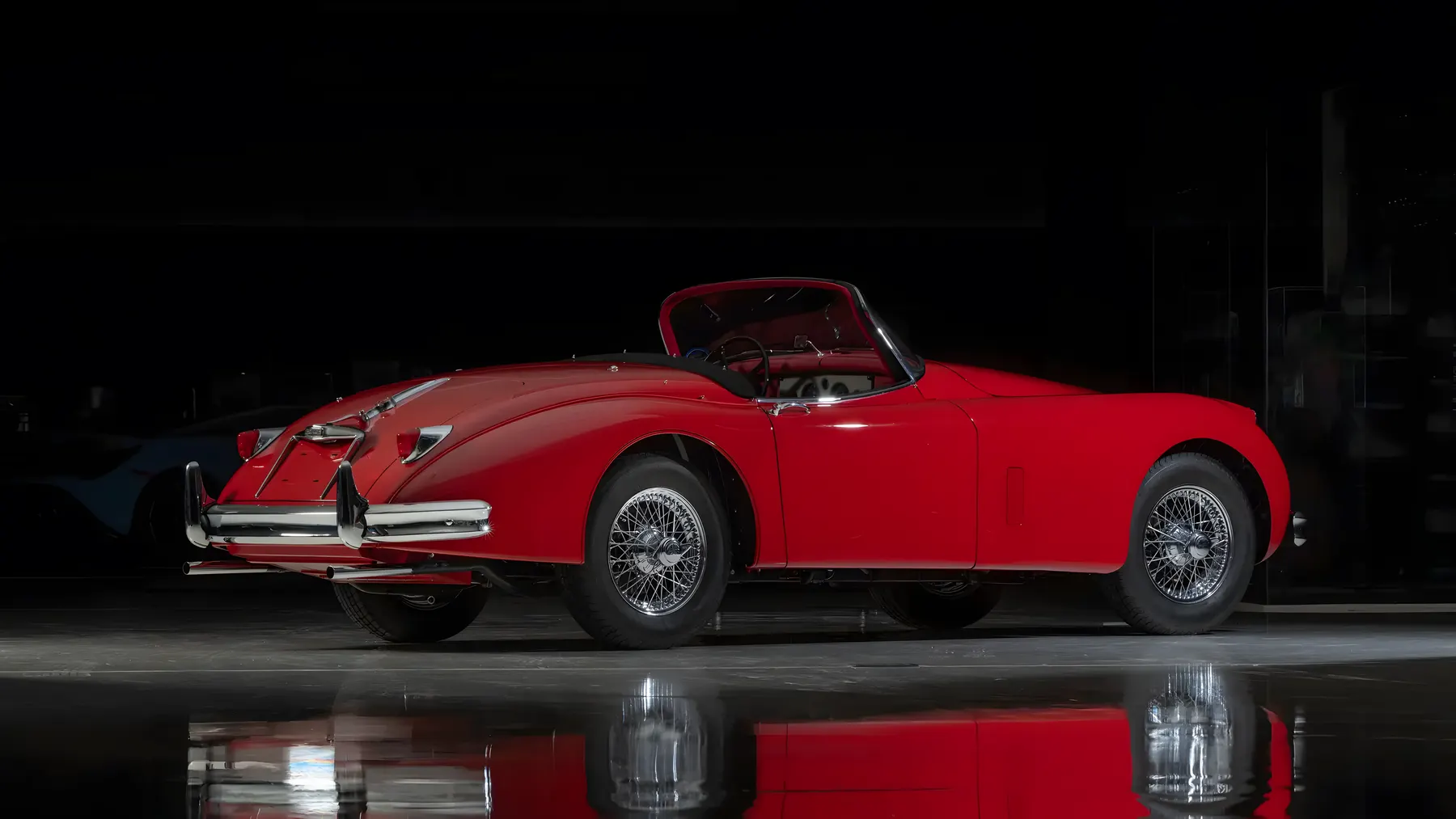
The XK150 Roadster represented the perfect balance between raw sporting character and refined grand touring capabilities. It offered genuine high-speed performance combined with luxurious appointments at what was considered a remarkably accessible price for its capabilities. As Motor Sport Magazine concluded in their 1958 review, “For an outlay of under £1,800 the purchaser of this latest addition to the twin-cam Jaguar family buys more safe speed and convenience than it is possible to obtain elsewhere”.
Today, the XK150 3.4-Litre Roadster remains a coveted classic, celebrated for its combination of timeless beauty, exhilarating performance, and historical significance as the culmination of Jaguar’s legendary XK series. Its legacy lives on as one of the finest British sports cars of its era – a magnificent machine that continues to captivate enthusiasts more than six decades after the last example rolled out of Jaguar’s Coventry factory.
Join the discussion
Comments
Loading comments…
Leave a comment
Share a detail, memory, or perspective. Every comment is reviewed before publication.