1960 Austin-Healey Sprite Mk I

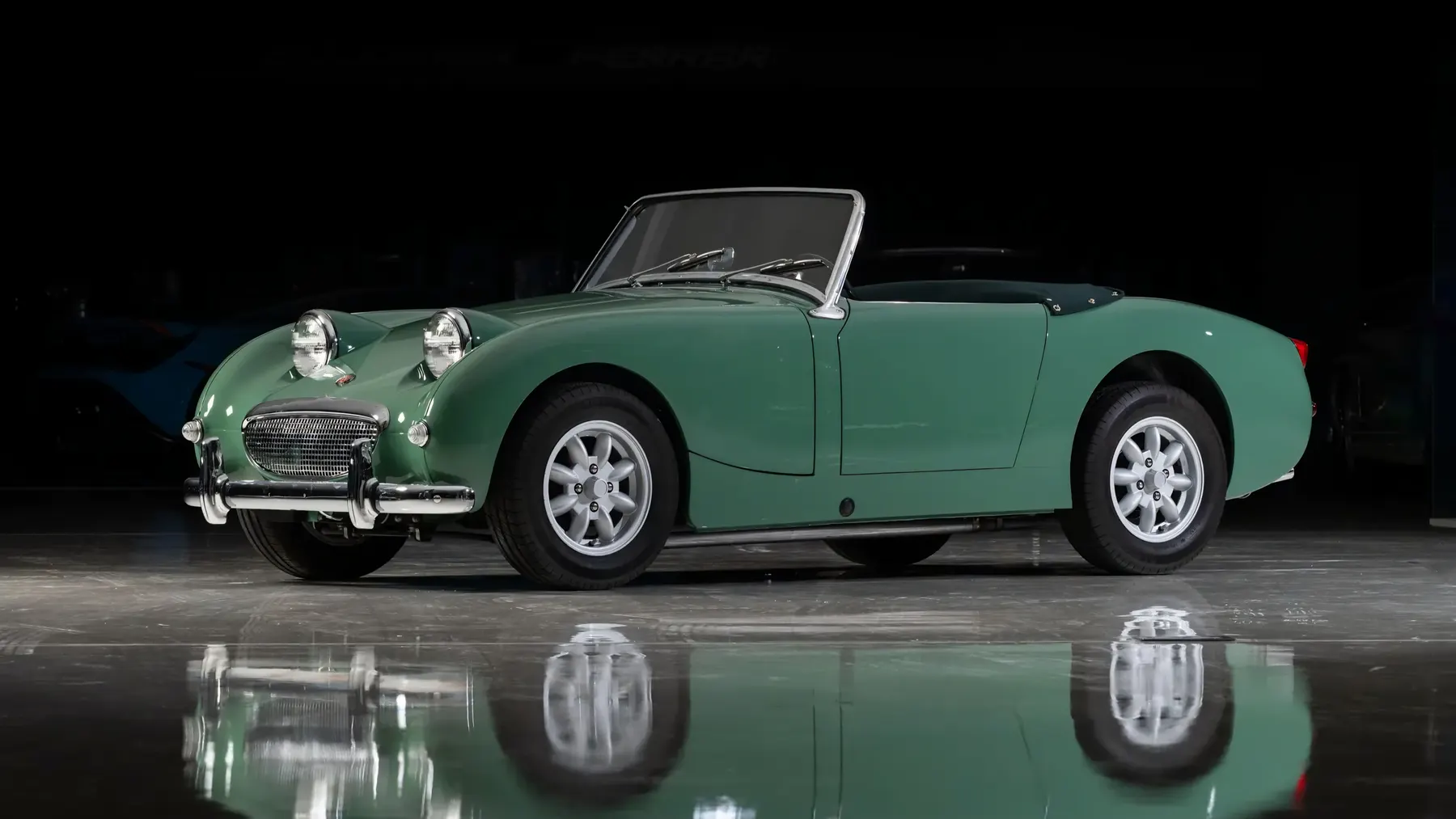
In the automotive landscape of the late 1950s, sports cars were typically exclusive, expensive machines that most enthusiasts could only dream about. Then came a car that would change everything. The Austin-Healey Sprite Mk I burst onto the scene in May 1958, unveiled in Monaco just after the Grand Prix, introducing a revolutionary concept: sports car thrills for the average motorist.
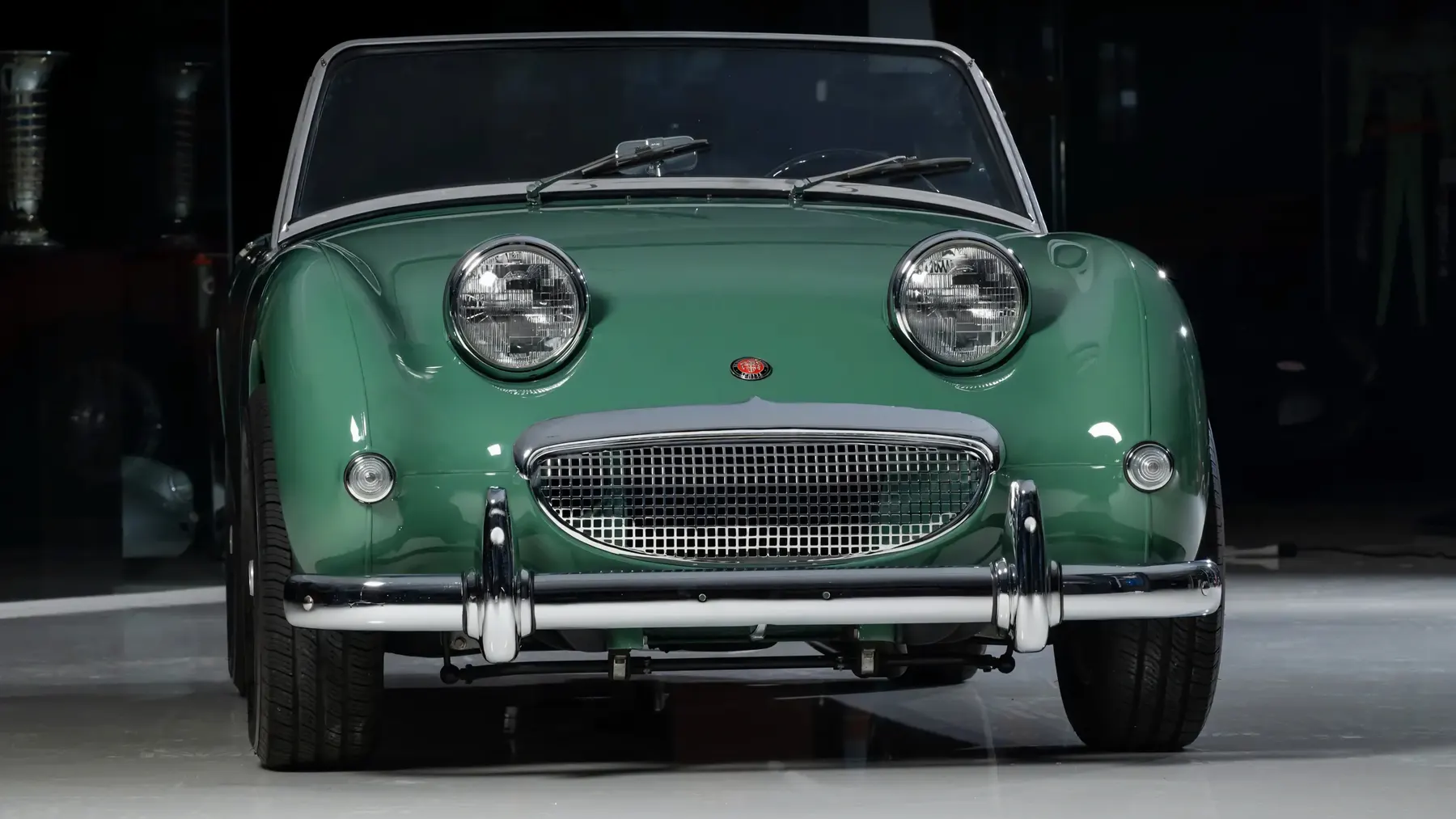
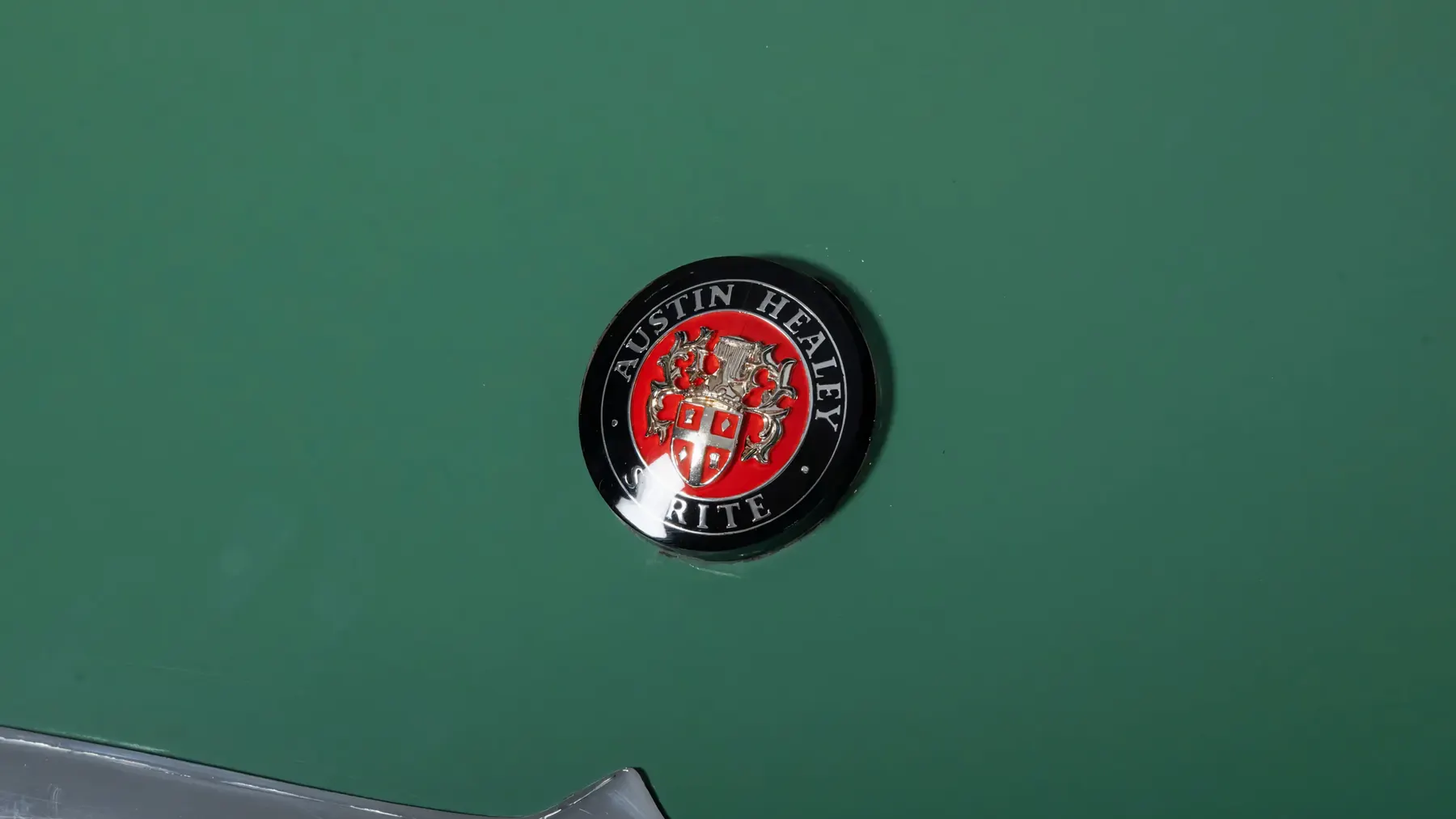
The tiny roadster, quickly nicknamed “Frogeye” in Britain and “Bugeye” in America due to its distinctive protruding headlights, wasn’t just another sports car. It was the physical manifestation of a beautiful philosophy - that driving enjoyment shouldn’t be reserved for the wealthy. As the British Motor Corporation (BMC) intended, it was a car “a chap could keep in his bike shed,” yet still experience the joy of open-top motoring.
The story of the Sprite begins with the formation of BMC in 1952, when various British manufacturers including Austin, Morris, Wolseley, Riley, and MG merged to ensure their survival in an increasingly competitive market. Donald Healey, who had already established a reputation for creating exciting sports cars, led the design team for this new affordable roadster.
The Sprite was conceived as a spiritual successor to the sporting versions of the pre-war Austin Seven, cars that had launched the careers of racing legends like Bruce McLaren and Graham Chapman. With a price tag of just £669 when launched (£678 including taxes), it cost slightly less than a Morris Minor deluxe saloon of the same period.
Production began at the MG factory in Abingdon, with the car making its first public appearance on May 20, 1958. It immediately captured hearts with its cheerful appearance and accessible performance credentials.
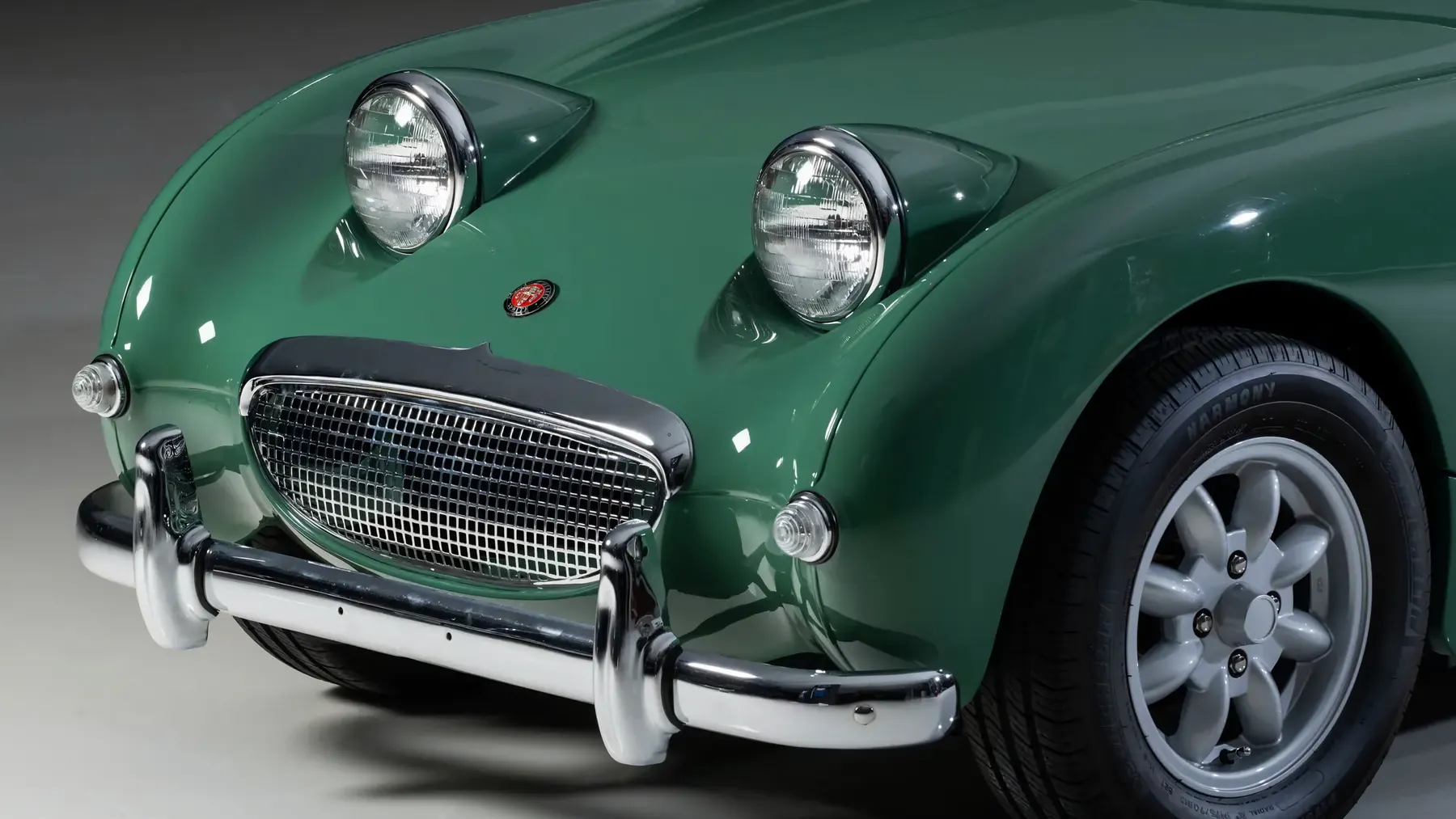
The most striking aspect of the Sprite’s design was, of course, those iconic headlights perched atop the bonnet. What many don’t realize is that these weren’t actually meant to be fixed in that position. The original design by Gerry Coker called for retractable headlamps that would flip up when needed (similar to what Porsche later used on the 928), but BMC cut this feature to keep costs down.
This cost-cutting decision accidentally created one of the most recognizable automotive faces ever produced. The fixed, protruding headlights gave the car an eternally surprised, friendly expression that contributed immensely to its charm.
Beyond its adorable face, the Sprite was revolutionary in its construction. Barry Bilbie, Healey’s chassis designer, created what would become the world’s first volume-production sports car to use unitary construction, where the body panels took many of the structural stresses. This approach, adapted from ideas used in the Jaguar D-type, routed rear suspension forces through the bodyshell’s floor pan, creating exceptional rigidity for an open-topped vehicle.
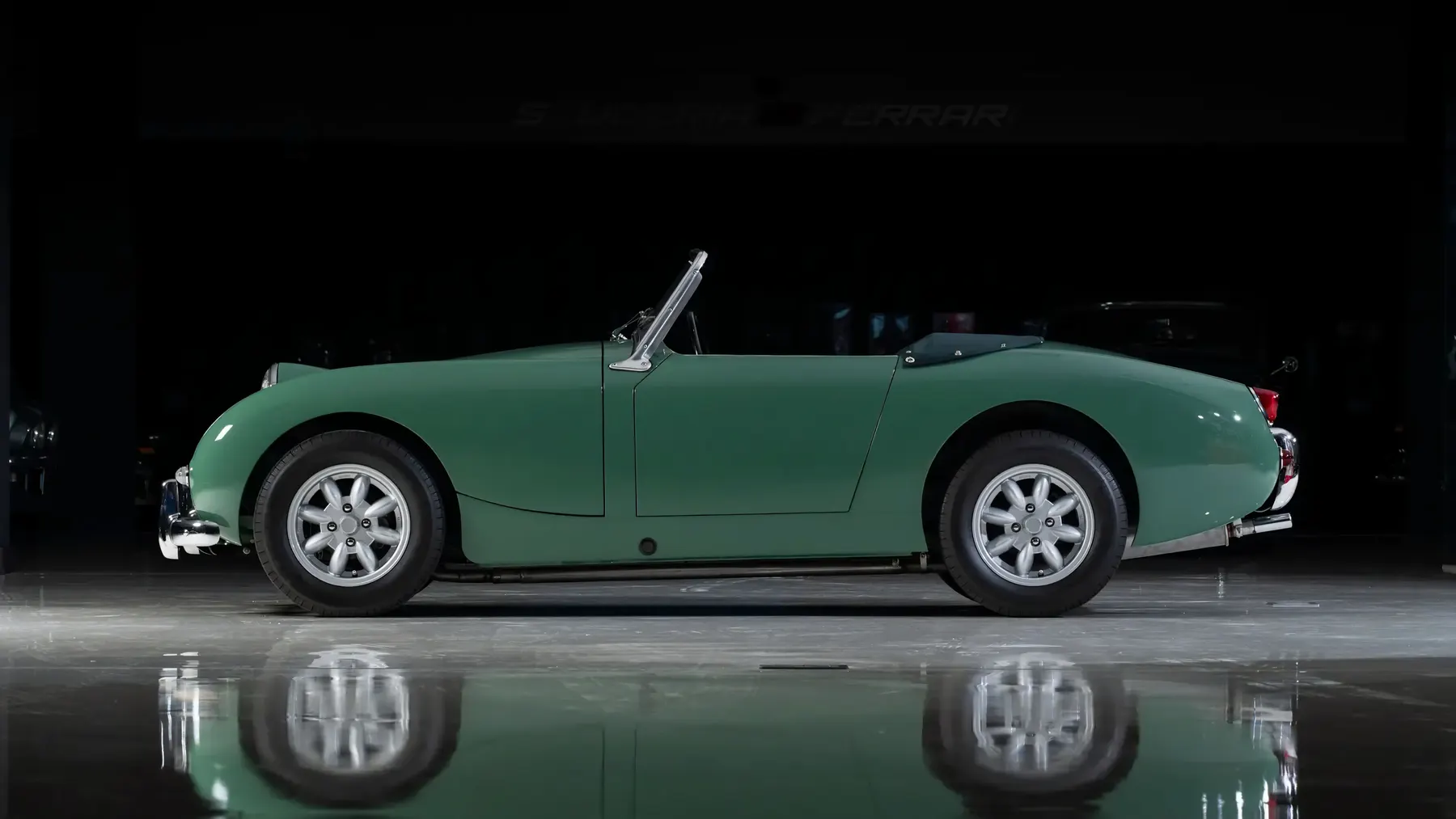
The one-piece front end, including the bonnet and wings, was hinged from the back, swinging up entirely to provide unparalleled access to the engine compartment. This elegant solution became a signature design element, though it wasn’t without quirks. The car had no exterior door handles, requiring occupants to reach inside to open the doors, and no boot lid, meaning luggage access was through the interior in what owners jokingly compared to “potholing”.
Under the hood, the Sprite employed a tuned version of BMC’s proven A-Series engine, the same basic powerplant used in the Austin A35 and Morris Minor 1000. For the Sprite, this 948cc four-cylinder was upgraded with twin 1⅛ inch SU carburetors and stronger valve springs, boosting output to 43 bhp at 5,200 rpm with 52 lb-ft of torque at 3,300 rpm - a significant improvement over the A35’s 34 bhp.
This modest power was delivered through a four-speed manual gearbox with synchromesh on the top three gears. With just 627 kg to move around, the Sprite delivered sprightly performance for its time. When tested by The Motor magazine in 1958, it achieved a top speed of 82.9 mph (133.4 km/h) and could accelerate from 0-60 mph (97 km/h) in 20.5 seconds, while returning impressive fuel economy of 43 miles per imperial gallon.
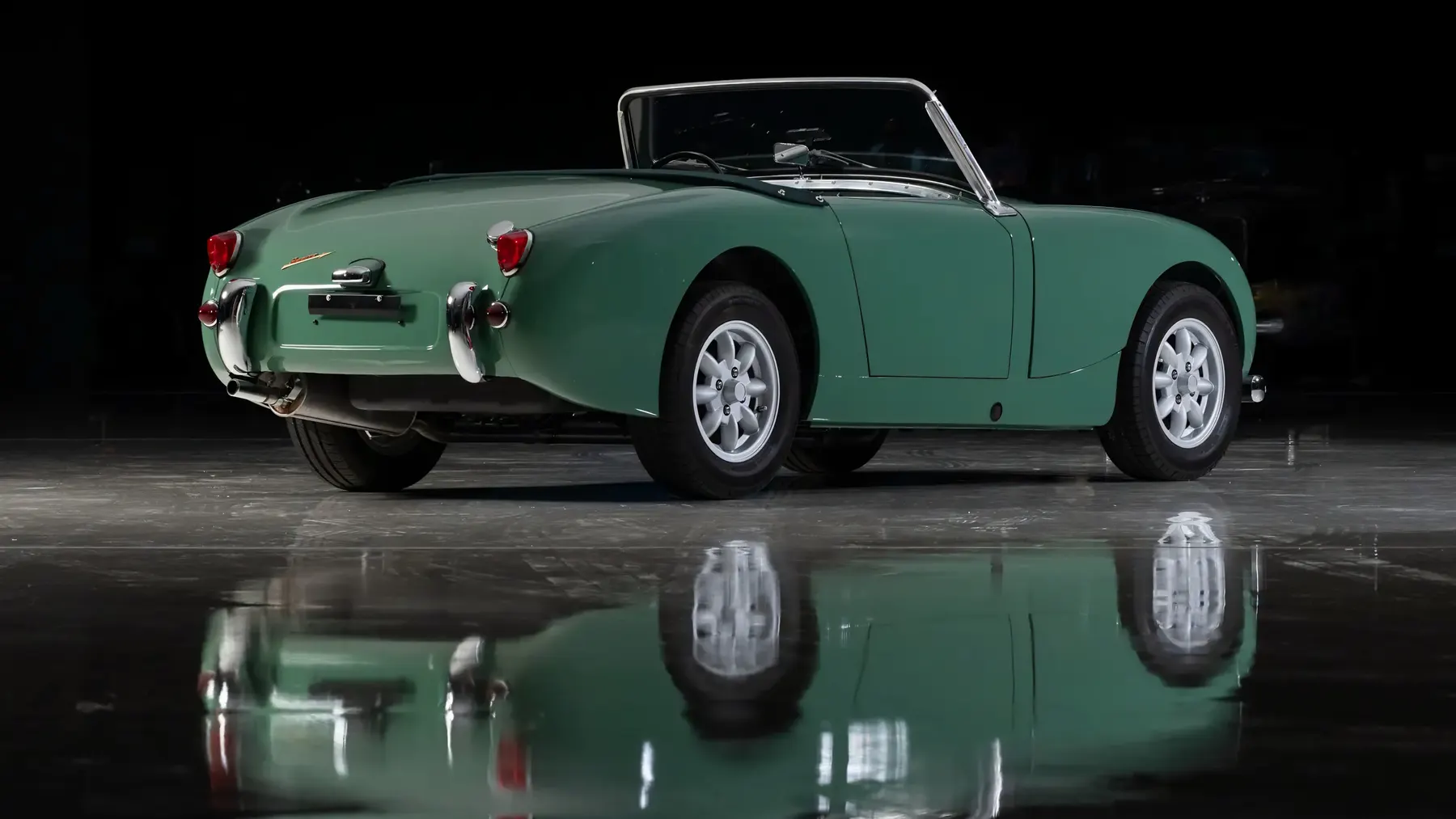
The Sprite’s handling characteristics truly set it apart. It used rack and pinion steering from the Morris Minor 1000, with front suspension from the Austin A35 consisting of a coil spring and wishbone arrangement. At the rear, quarter-elliptic leaf springs both located and sprung the axle. This combination, along with the car’s low weight and rigid structure, gave the Sprite remarkably nimble handling that punched well above its modest specifications.
The Sprite quickly proved it wasn’t just a cute face but a genuine sports car with racing pedigree. The BMC Competitions Department wasted no time entering Sprites in major international races and rallies, with John Sprinzel and Willy Cave securing the first major success by winning their class in the 1958 Alpine Rally.
In 1959, the Sprite made its American market introduction in dramatic fashion by winning its class in the 12-hour race at Sebring, Florida. Throughout the 1960s, works Sprites competed internationally with impressive results, including a remarkable 12th-place finish at Le Mans in 1965. BMC’s works entries recorded class wins at Sebring with legendary drivers including Stirling Moss, Bruce McLaren, and even Hollywood star Steve McQueen behind the wheel.
Private competitors also found success with the Sprite, which evolved into a formidable competition car with numerous specialist variants developed by John Sprinzel, Speedwell, and WSM. The car’s combination of affordability, nimble handling, and mechanical simplicity made it the perfect entry point into motorsport for countless enthusiasts.
The Mk I Sprite remained in production until 1961, with a total of 48,987 “Frogeyes” manufactured before the introduction of the Mk II. Its successor was joined by a badge-engineered MG version called the Midget, reviving a name used by MG from the late 1920s through the mid-1950s.
These later models, often collectively referred to as “Spridgets” by enthusiasts, continued the Sprite’s legacy of affordable sports motoring. The MG Midget would remain in production for an impressive 18 years, long after the Austin-Healey brand had ceased to exist.
The Sprite’s cultural impact was profound, introducing an entire generation to the joys of sports car ownership. It proved that motoring excitement wasn’t exclusively for the wealthy, and that charm and character often matter more than raw performance numbers.
The enduring appeal of the Sprite was perfectly demonstrated on May 24, 2008, when the 50th anniversary of its introduction was celebrated with “Spridget 50 – The Big Party” at the British Heritage Motor Centre. Up to 1,000 Sprites, Midgets, and their derivatives gathered for the occasion, representing what was likely the largest-ever assembly of these beloved cars.
Today, the Frogeye Sprite remains one of the most charming, characterful, and entertaining British sports cars ever created. Its combination of innovative engineering, distinctive styling, and pure, uncomplicated driving pleasure continues to captivate enthusiasts more than six decades after its introduction. In an age of increasingly complex automobiles, the simple joy embodied by the Sprite Mk I reminds us what sports cars should truly be about: fun.
Join the discussion
Comments
Loading comments…
Leave a comment
Share a detail, memory, or perspective. Every comment is reviewed before publication.