1968 Maserati Ghibli 4.7 by Ghia

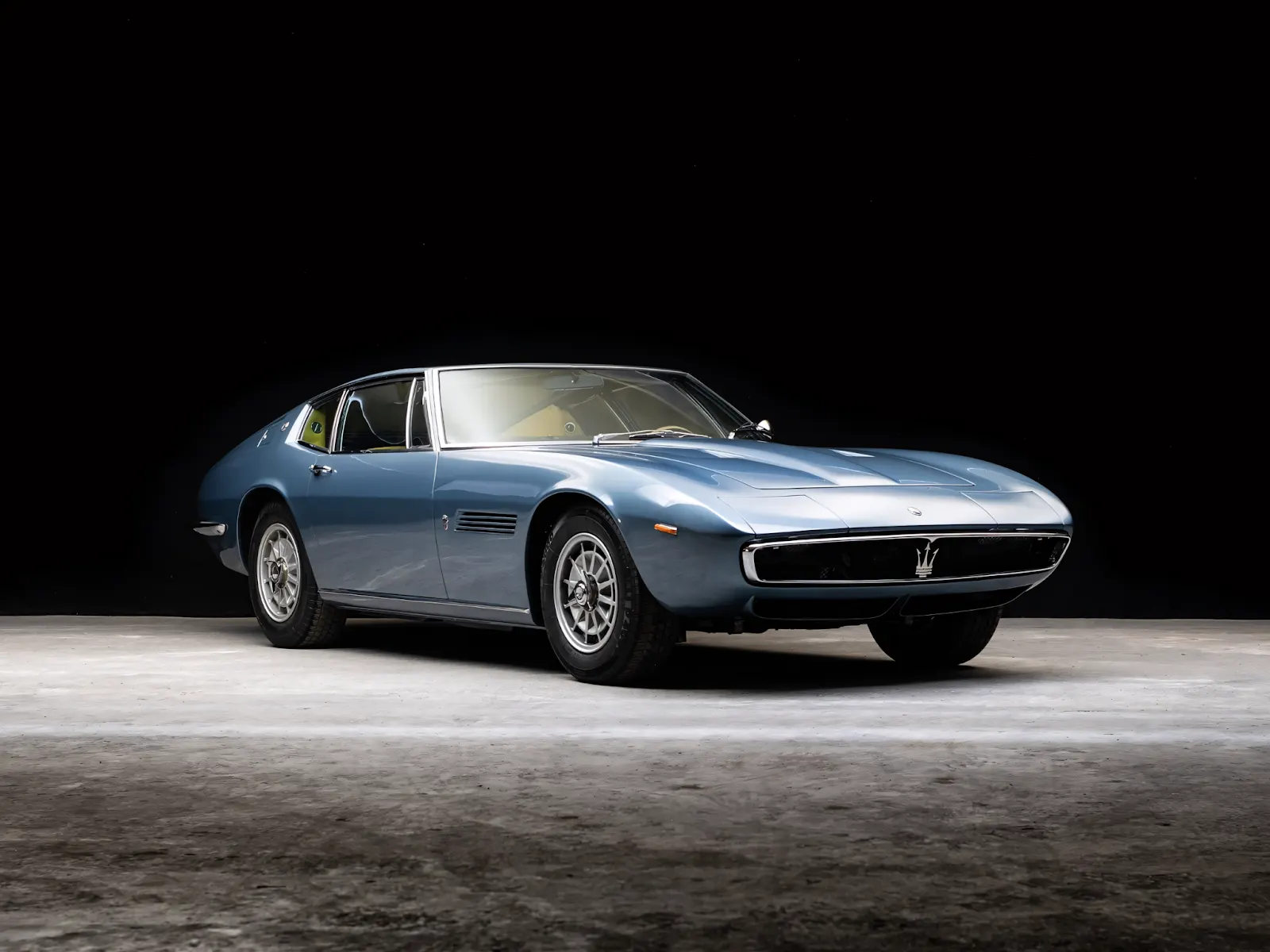
In the tumultuous era of the late 1960s, where rebellion and innovation danced hand in hand, Maserati unveiled a masterpiece that would leave an indelible mark on automotive history,the 1968 Maserati Ghibli 4.7 by Ghia. A symphony of power, style, and sophistication, this grand tourer epitomised the spirit of the times, and its legacy echoes through the corridors of automotive excellence.
Picture the scene: November 1966, the Turin Motor Show. The air is thick with anticipation as car enthusiasts from around the world gather to witness the birth of a legend. And there it is,the Ghibli, initially revealed as a tantalising 2-seater concept car. Crafted with precision and passion, the steel body bears the unmistakable touch of a young design virtuoso, Giorgetto Giugiaro, then lending his genius to Ghia.
Ghibli’s visual allure lies in its distinctive features,a low, shark-shaped nose that slices through the wind with a predatory grace. The pop-up headlamps add an element of intrigue, creating a profile that is both captivating and aerodynamically efficient. This was a work of art hurtling through time and space.
As the concept transformed into a production model, the Ghibli emerged as a 2-door 2+2 fastback coupé, a testament to its dual identity as a high-performance machine and a practical grand tourer. Leather front sport seats cradled the driver and passenger in luxury, while alloy wheels and 205R15 Pirelli Cinturato N72 tires embraced the road with a tenacious grip.
Underneath the sculpted hood lay the beating heart of the Ghibli,a front-placed quad-cam 4,719 cc V8 engine. This dry sump marvel, married to a five-speed ZF manual transmission (with an optional three-speed automatic), produced a symphony of power,310 PS (306 hp) to be precise. The Ghibli danced from 0 to 97 km/h (60 mph) in a mere 6.8 seconds, claiming a top speed of 250 km/h (155 mph).
Beneath its elegant exterior, the Ghibli housed a tubular frame with a meticulously spot-welded body. The front suspension, a double wishbone type with coaxial dampers and coil springs, ensured a smooth ride even at breakneck speeds. At the rear, a live axle on semi-elliptic springs, complemented by a single longitudinal torque arm, hydraulic dampers, and an anti-roll bar, provided stability and agility in equal measure.
Standard issue for the Ghibli were magnesium wheels, a testament to Maserati’s commitment to lightweight performance. Originally adorned with Pirelli Cinturato 205 VR15 tires (CN72), a change in 1972 saw the adoption of 215/70VR15 Pirelli Cinturato CN12. For those who sought the pinnacle of classic aesthetics, Borrani wire wheels stood as an optional indulgence.
In an era when fuel efficiency was not a prime concern, the Ghibli unapologetically consumed generous amounts of fuel. Maserati, however, demonstrated foresight by equipping the car with two independent 50 L (13.2 US gal; 11.0 imp gal) fuel tanks. Conveniently located flaps on either side of the roof pillars allowed for easy refuelling, emphasising the Ghibli’s duality as a thoroughbred sports car and a practical tourer.
As the Ghibli hit the roads in March 1967, it didn’t just drive; it soared. Its roar echoed in the halls of automotive acclaim, earning it the prestigious ninth spot on Sports Car International’s list of Top Sports Cars of the 1960s. This wasn’t just a car; it was a cultural icon, a statement of rebellion and refinement.
The 1968 Maserati Ghibli 4.7 by Ghia wasn’t merely a vehicle; it was a symphony on wheels. Its design, performance, and sheer audacity encapsulated the essence of an era defined by revolutions and revelations. As enthusiasts look back, the Ghibli stands as a testament to the marriage of engineering prowess and artistic vision, a true masterpiece that transcends time and continues to inspire awe on every open road.
Join the discussion
Comments
Loading comments…
Leave a comment
Share a detail, memory, or perspective. Every comment is reviewed before publication.