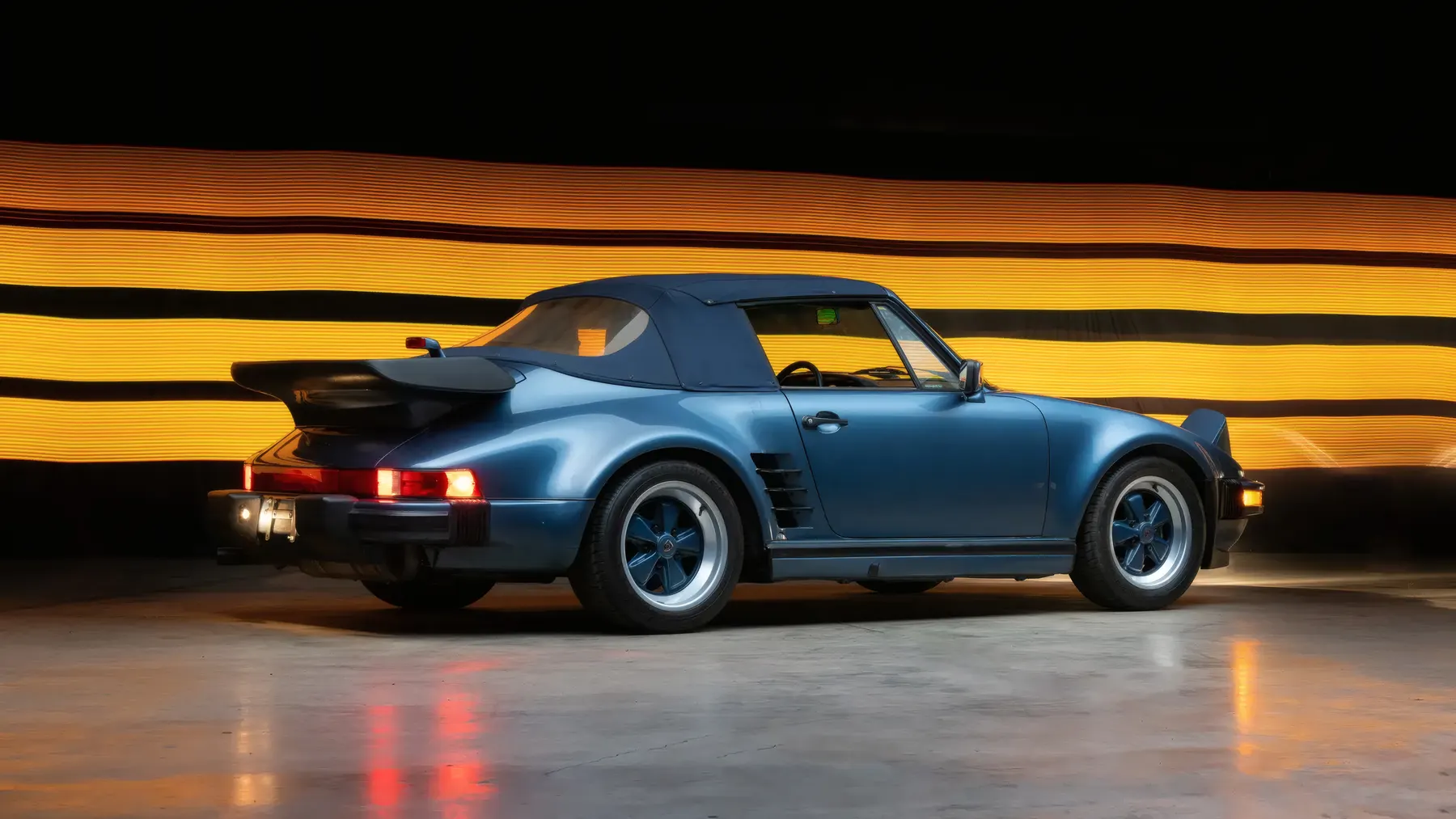
1989 Porsche 911 Turbo 'Flat-Nose' Cabriolet

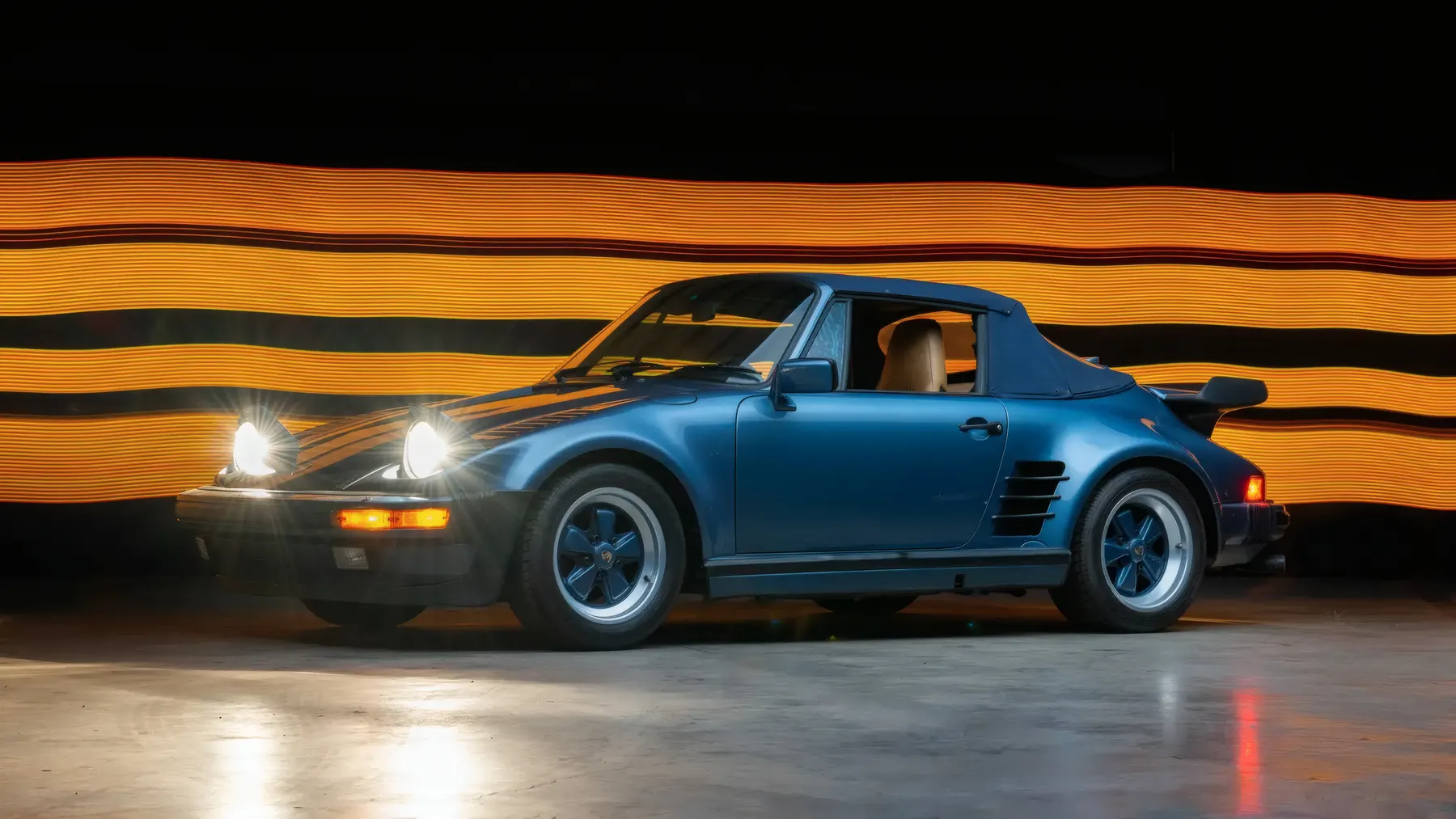
The Porsche 911 Turbo ‘Flat-Nose’ Cabriolet is one of the most extravagant objects Zuffenhausen ever offered for money - a race-car silhouette draped over an open-top body, built to order for customers who found the standard 930 Turbo insufficiently theatrical. To understand what the Flat-Nose actually is, you have to start on a racetrack in 1976, where the Porsche 935 Group 5 car was winning everything in sight and doing so wearing a nose so low and swept-back it barely seemed to belong to the same species as the road car that inspired it.
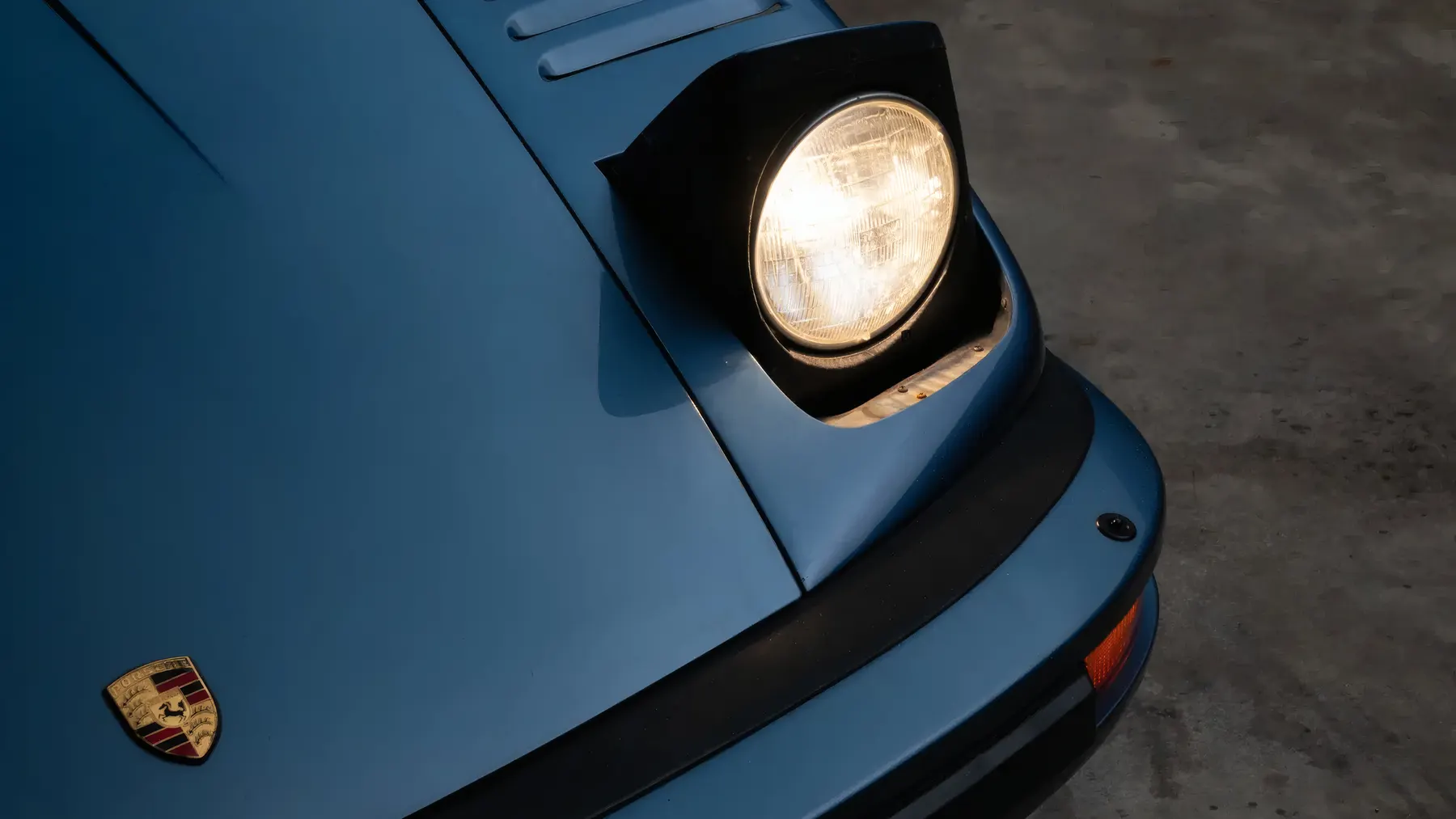
Racing sponsors and wealthy enthusiasts looked at the 935’s front end - its faired-in pop-up headlamps, its absence of the 911’s characteristic round “bug eye” housings, its almost contemptuous dismissal of the production car’s friendly face - and immediately wanted it for the road. Porsche heard them. The result, offered initially through the Sonderwunschprogramm, or Special Wishes programme, was the Flachbau: a 930 Turbo whose entire front body structure was replaced with a steel nose that slanted, raked, and resolved into pop-up headlamps directly transplanted from the 935 aesthetic.
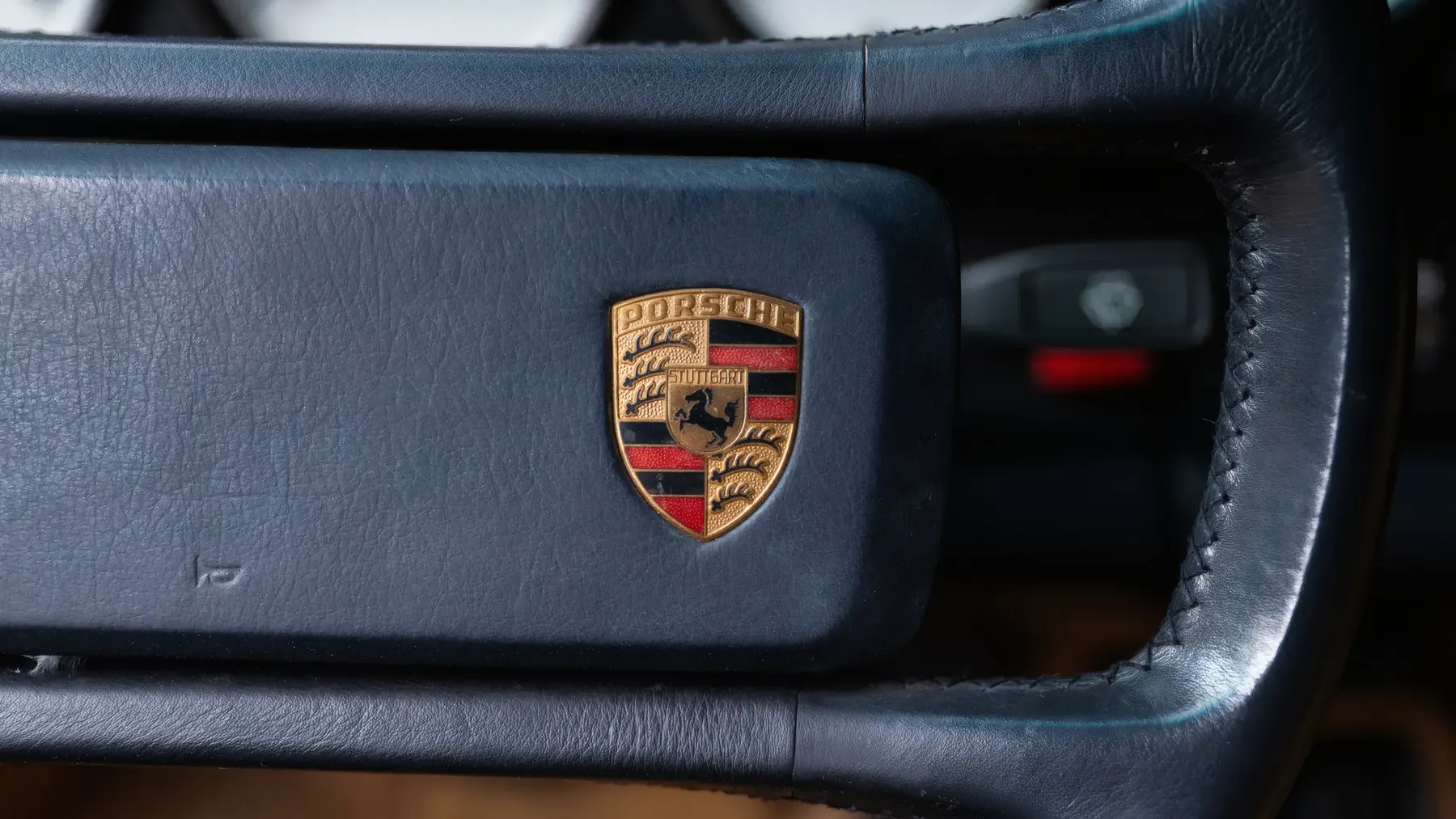
What made the Cabriolet variant so singular within an already exotic subspecies was the compounding of two separate extravagances. The standard 930 Turbo was already a wide-body, whale-tailed, turbocharged provocation with a reputation - only partly deserved, though richly cultivated - for punishing inattention at the limit. The Cabriolet added structural vulnerability and open-air drama to that formula. Then the Flat-Nose body modification removed the last traces of visual restraint from the front of the car, leaving an object that managed to look simultaneously faster and more vulnerable than anything else on a public road.
The Flachbau programme existed in informal fashion before Porsche gave it factory status. Coachbuilders and independent workshops - most notably DP Motorsport - had been converting 930s to the slanted-nose configuration as customer commissions since the early 1980s, and Porsche watched carefully. From the 1981 model year onwards the conversion was available as a factory special-order item under option code M505, and by the 1986 model year it had matured into a fully catalogued offering. Critically, “factory” here meant that the transformation was carried out by Porsche’s own craftsmen, not a third party - every slantnose panel was fabricated in steel and fitted at the Zuffenhausen facility, making these cars genuine factory products rather than aftermarket modifications dressed in dealer paperwork.
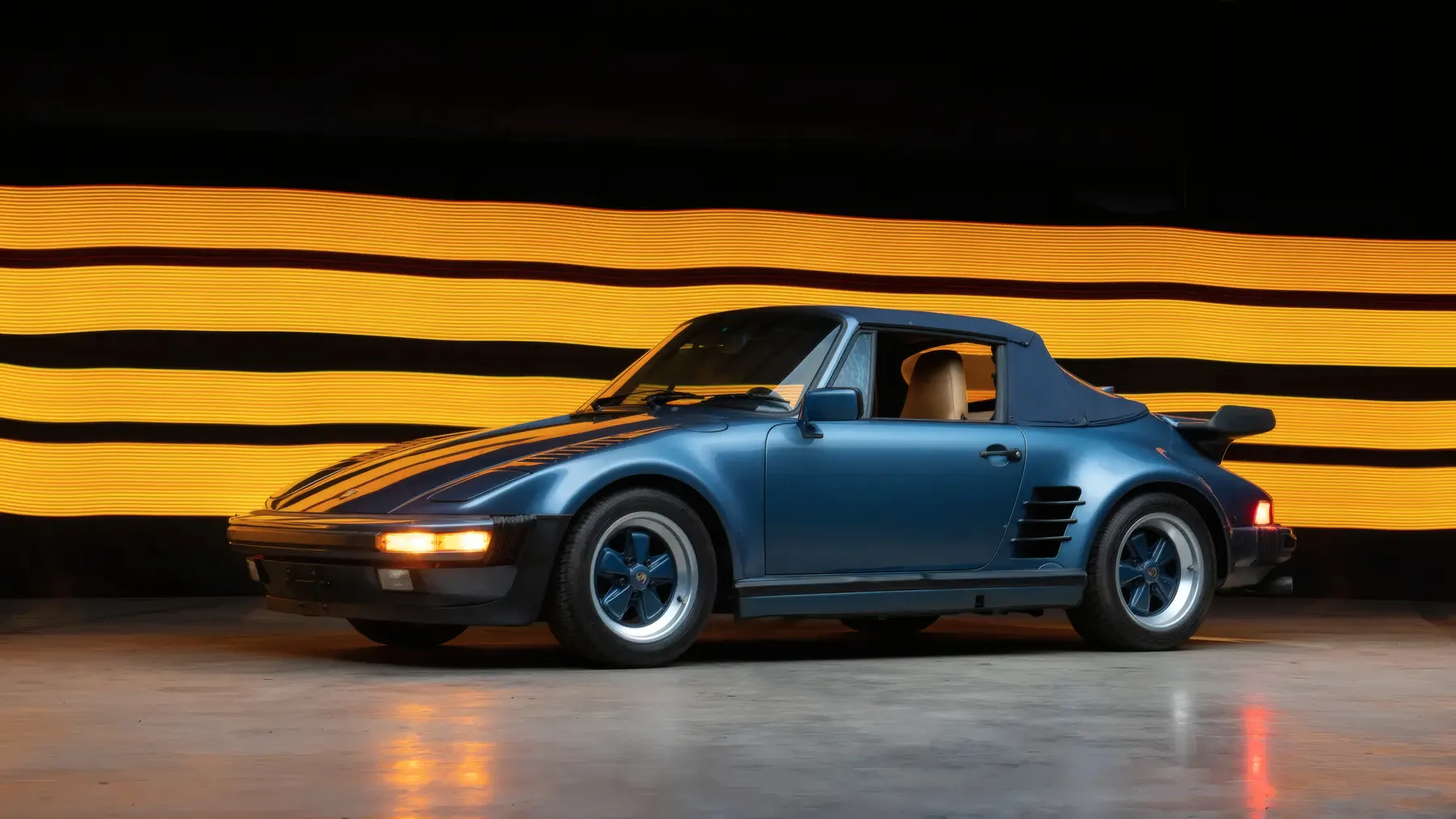
The 1988 model year brought a significant change in status: the Flachbau moved from purely special-order territory into the regular production programme, meaning customers no longer needed to negotiate the conversion as a bespoke commission but could simply specify it as an option on an order form. This also meant the Flat-Nose Cabriolet became properly catalogued, with defined pricing rather than the somewhat unpredictable costs of the earlier special-order era. Even then, the numbers remained strikingly small. Across the entire Cabriolet Flachbau production run, approximately 200 examples were built in all markets combined, with the US market receiving just 50 cars for the 1989 model year alone.
The mechanical heart of the Flat-Nose Cabriolet was the 930’s 3.3-litre turbocharged air-cooled flat-six, carried over from the standard Turbo in its 300 bhp state of tune for most production. European-specification Flat-Nose cars, however, were typically delivered with the WLS performance kit - a factory-fitted uprated specification that raised output to 330 bhp and endowed the car with a claimed top speed of 278 km/h and a 0–97 km/h time of 4.85 seconds. That the Flat-Nose was the fastest of all 930 variants in period was partly a consequence of its aerodynamics: the slanted nose reduced frontal drag compared to the standard car’s blunter profile, and the altered airflow over the front end contributed meaningfully to high-speed stability.
The 1989 model year brought the most significant mechanical upgrade in the 930’s entire production history: the adoption of the Getrag G50 five-speed gearbox, replacing the four-speed unit that had served the 930 since its 1975 launch. The four-speed had always been a blunt instrument - its ratios wide enough that the engine spent considerable time working toward the boost threshold between changes - and its reputation for brutality at the limit owed something to the way drivers were forced to manage large speed differentials when changing down. The G50 brought a fifth ratio and much more closely spaced gearing, transforming the car’s behaviour on the road. US-specification Flat-Nose Cabriolets built with the G50 manual are now considered the most desirable configurations in the collector market, combining the visual peak of the model with the most resolved mechanical package.
The transformation that defined this car deserves more careful attention than it usually receives. The standard 930 Turbo was not an ugly machine - its wide rear haunches and whale-tail spoiler gave it a purposeful, slightly delinquent authority that no other production car of the late 1970s and 1980s could match. But its front end remained fundamentally the 911’s friendly oval face: round headlamp housings, a smooth hood line, the familiar Porsche visual vocabulary. The Flachbau erased all of that.
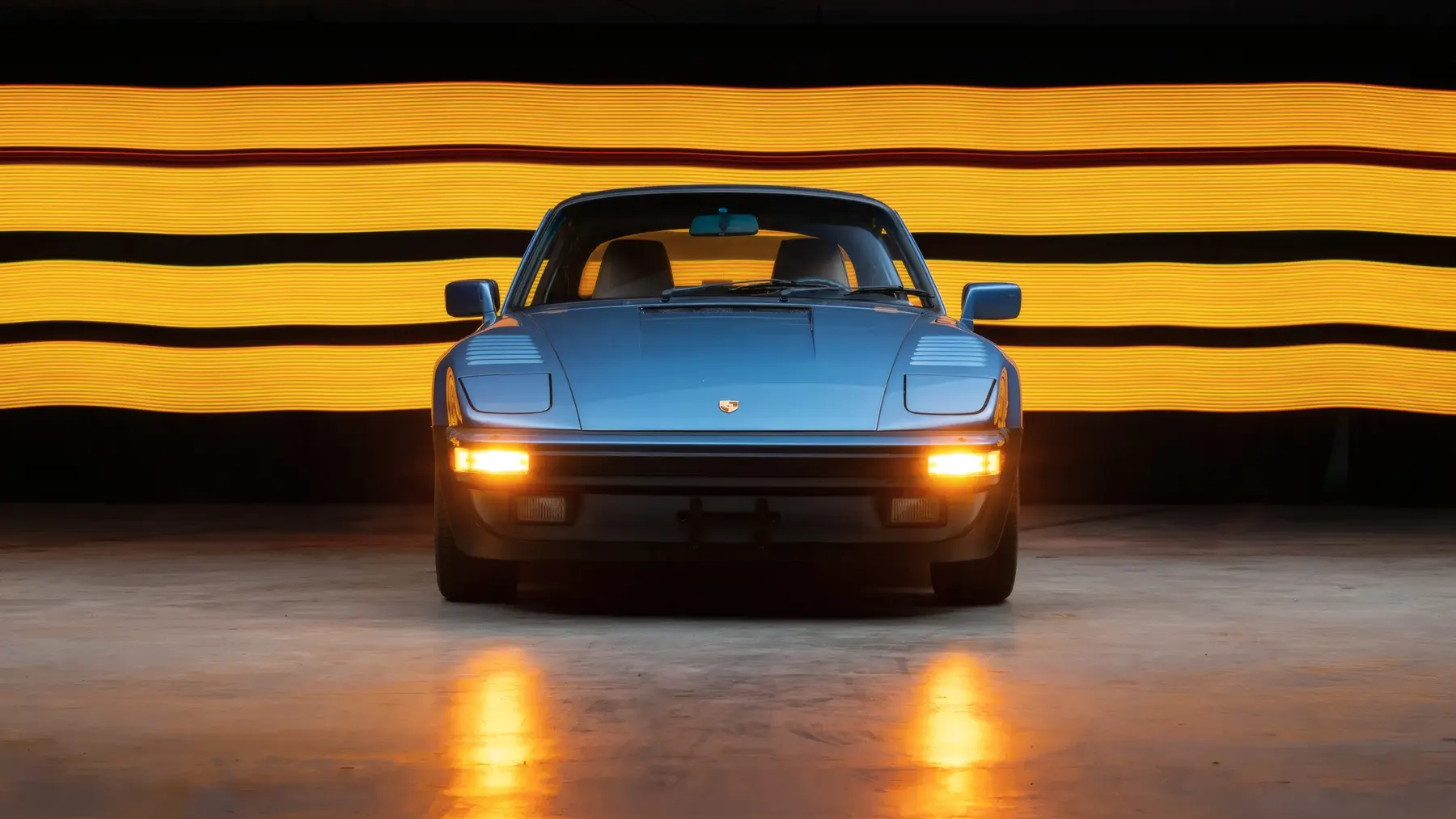
The replacement nose slanted sharply downward toward the road, incorporating faired-in recesses for pop-up headlamp units that sat flush with the body surface when retracted. The bonnet line dropped continuously from the windscreen base to the front apron without the rise that housed the standard headlamps. The effect was something between predatory and aeronautical - a car that looked as though it had been designed around the air it displaced rather than the occupants it carried. On the Cabriolet body, this nose sat at one end of a car with no roof and very little visual interruption between its extremities, creating a profile that emphasised both length and aggression more dramatically than the coupé configuration allowed.
Porsche’s own craftsmen hand-fitted each nose in steel, which meant dimensional consistency was high but production pace was necessarily low. No two cars were quite identical in their finish or fit, reflecting the workshop reality of a conversion that required significant hand-finishing to achieve the flowing panel gaps that distinguished a proper factory car from an independent conversion. The quality difference between a genuine M505 factory Flachbau and a conversion was visible to anyone who looked carefully, and the factory knew it - which is partly why the genuine articles commanded such a substantial premium over standard 930 Turbos even when new.
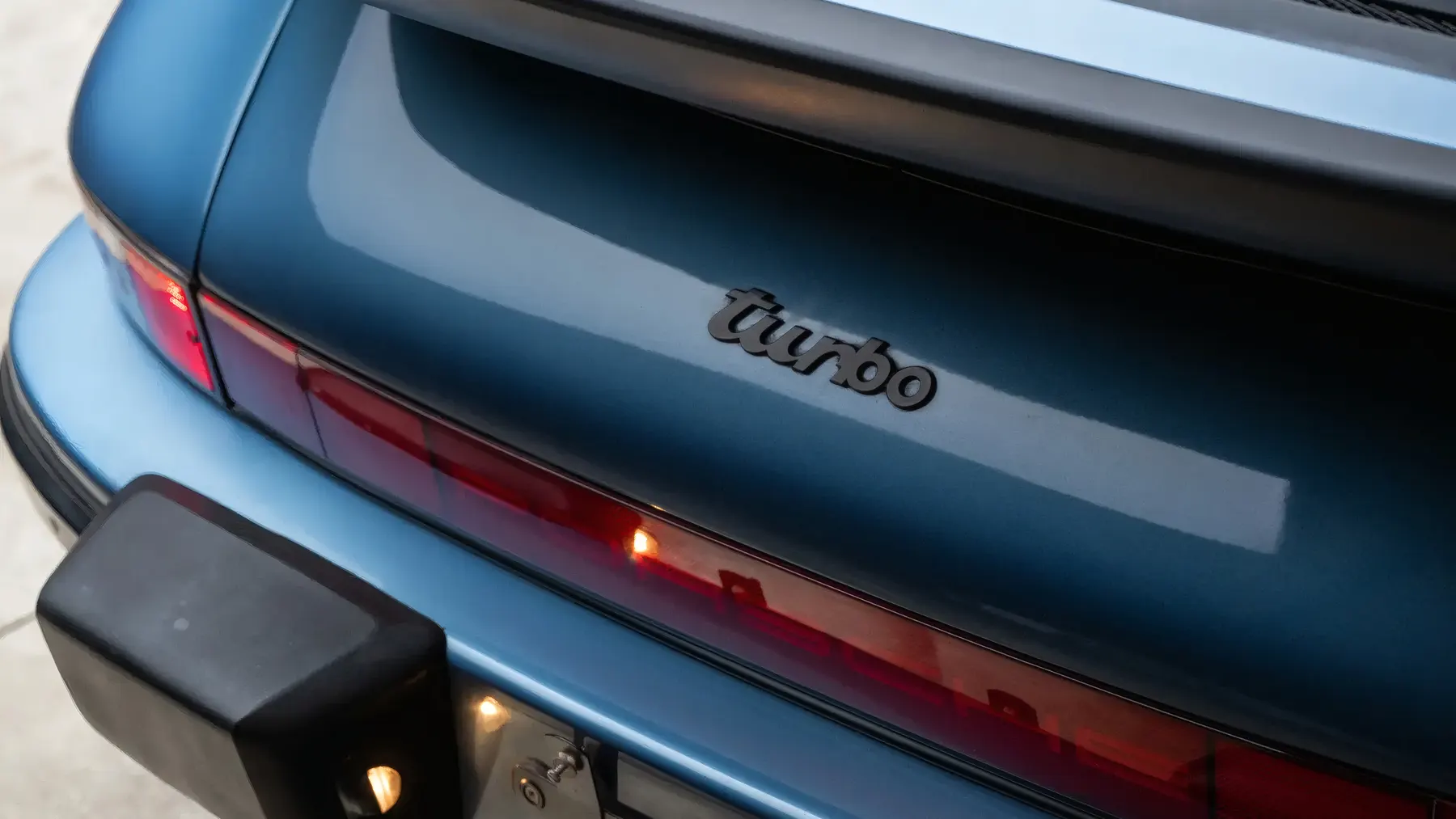
The 930 Turbo had a specific reputation in period that was not entirely undeserved: a car of binary character, docile below boost and dramatic when the turbocharger came properly online, with a rear-engined weight distribution that amplified the consequences of misjudgement. The Flat-Nose Cabriolet added a further layer of complexity by removing the roof, altering the structural rigidity of the platform and changing the aerodynamic environment around the occupants at speed. The whale-tail spoiler still dominated the rear, generating downforce over the trailing axle, but the Cabriolet’s rear body was necessarily modified around the hood mechanism and folding structure, which changed the airflow management compared to the coupé.
None of this made the car dangerous in experienced hands. What it made it was entirely uncompromising: a machine that rewarded preparation and planning, that liked to be committed to rather than second-guessed, and that delivered its 330 bhp in a manner that required the driver’s full attention at higher speeds. The combination of the slanted nose - which improved high-speed stability - with the open body meant that wind management at autobahn pace was genuine rather than merely theoretical. Passengers in the Cabriolet experienced the 935’s aesthetic at close quarters and the 930’s boost surge in the open air simultaneously. It was not comfortable in the conventional grand touring sense. It was completely, thrillingly itself.
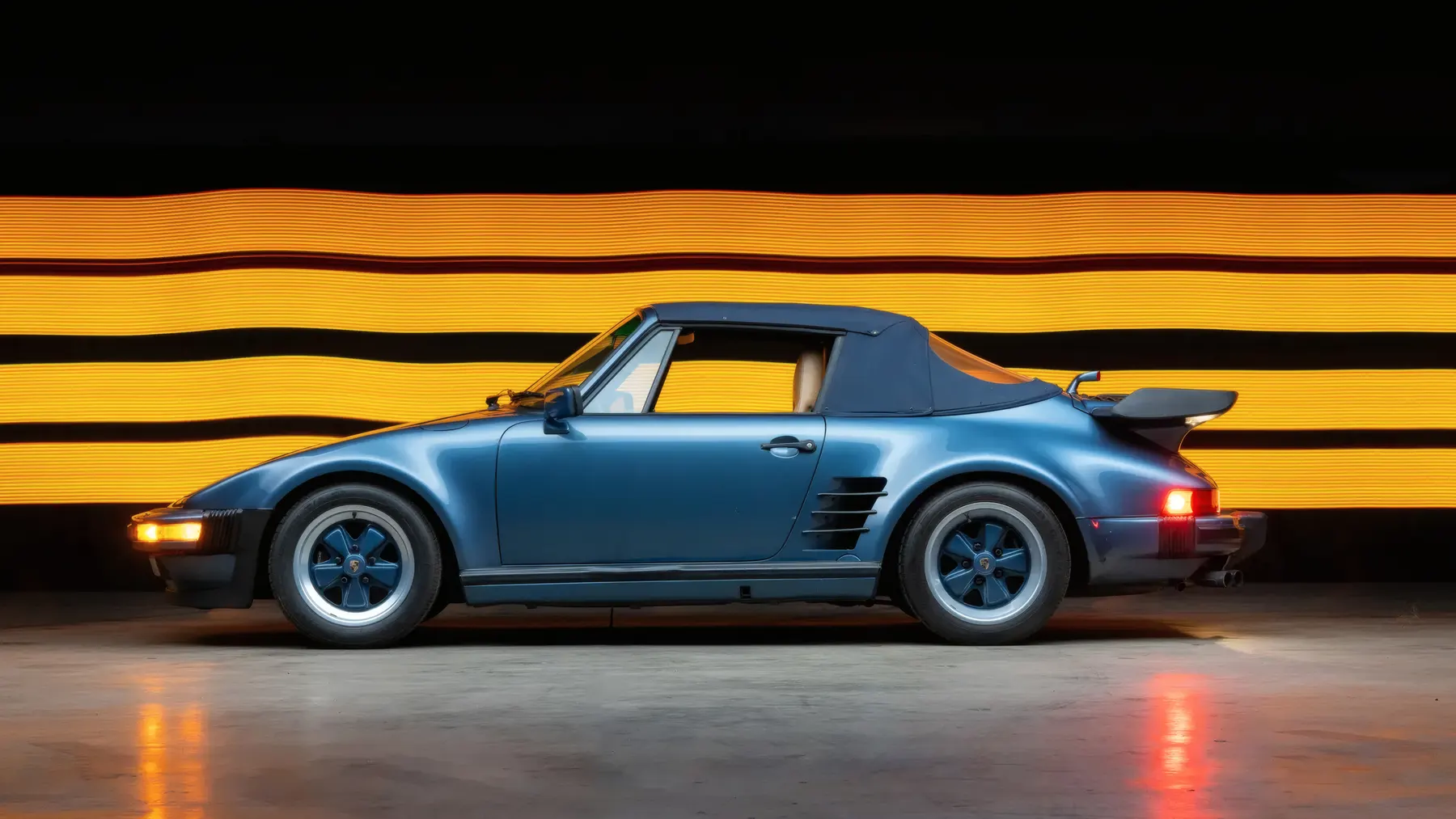
The Flat-Nose Cabriolet’s position in the collector hierarchy has only strengthened with time. Approximately 200 total examples across all markets across the programme’s entire run represent a production number that makes even other rare 930 variants look prolific by comparison. The intersection of the Cabriolet body, the factory Flachbau conversion, and desirable specifications - US-market cars, G50 gearbox, period colour schemes, original interior trim - has produced a spectrum of values that reflects how granular collector interest in this model has become.
Auction results tell the story directly: a top sale of $428,500 at auction in February 2025 for a 1989 example represented the current ceiling, with average prices across documented sales running at approximately $228,370 for representative examples. Bonhams recorded its own high of approximately £354,946 for a particularly well-specified car in 2018. The spread between high and low reflects condition and specification more than any other factor - cars with matching-numbers engines, original paint, correct interior trim, and clean title commands dramatically above the median, while attrition, restoration, and specification anomalies pull others downward.
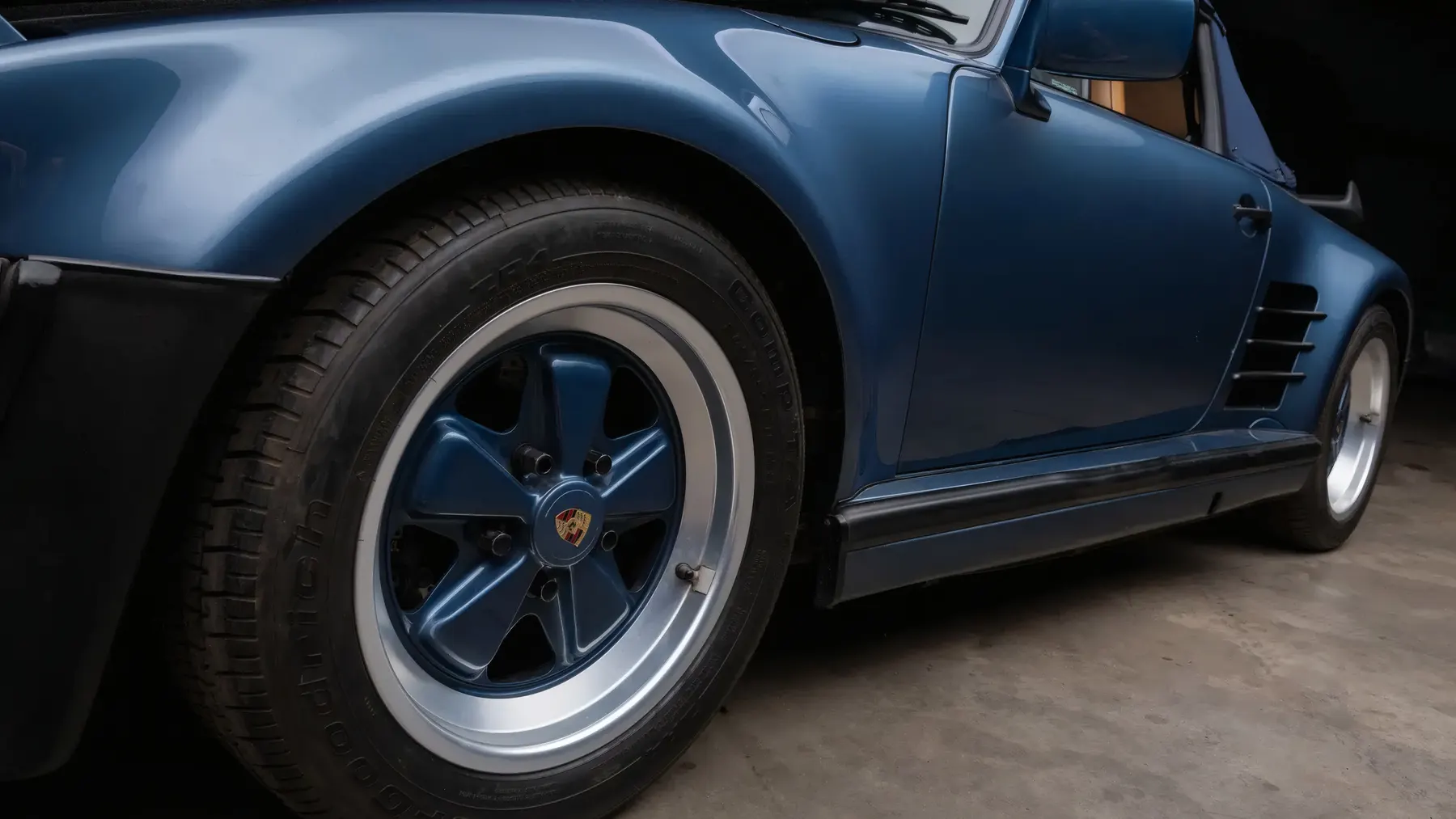
The Porsche 911 Turbo ‘Flat-Nose’ Cabriolet represents something genuinely unusual in the automotive landscape: a successful translation of a racing car’s visual identity into a convertible road car, executed not by a bespoke coachbuilder working outside the factory system, but by the manufacturer itself, using its own craftsmen and carrying full warranty and provenance from new. The 935’s nose achieved on the racetrack what it was always meant to achieve - reduced drag, lowered frontal pressure, aerodynamic priority over pedestrian aesthetics - and the Flachbau transferred that logic to the road with sufficient fidelity that the visual kinship between the two cars remains unmistakable forty years on.
That Porsche chose to offer it on the Cabriolet body at all is the detail that still raises eyebrows. The standard argument against open-top turbocharged rear-engined cars - that they ask too much of the driver in too many directions simultaneously - was simply set aside. Porsche made the car because customers asked for it, because the Sonderwunschprogramm existed precisely to say yes to questions the standard catalogue refused, and because there is a particular kind of automotive conviction that only a car this deliberately, comprehensively excessive can satisfy. The 930 Turbo was already one of the defining performance cars of its era. The Flat-Nose Cabriolet was the version that refused to stop.
Join the discussion
Comments
Loading comments…
Leave a comment
Share a detail, memory, or perspective. Every comment is reviewed before publication.