2004 Maserati MC12

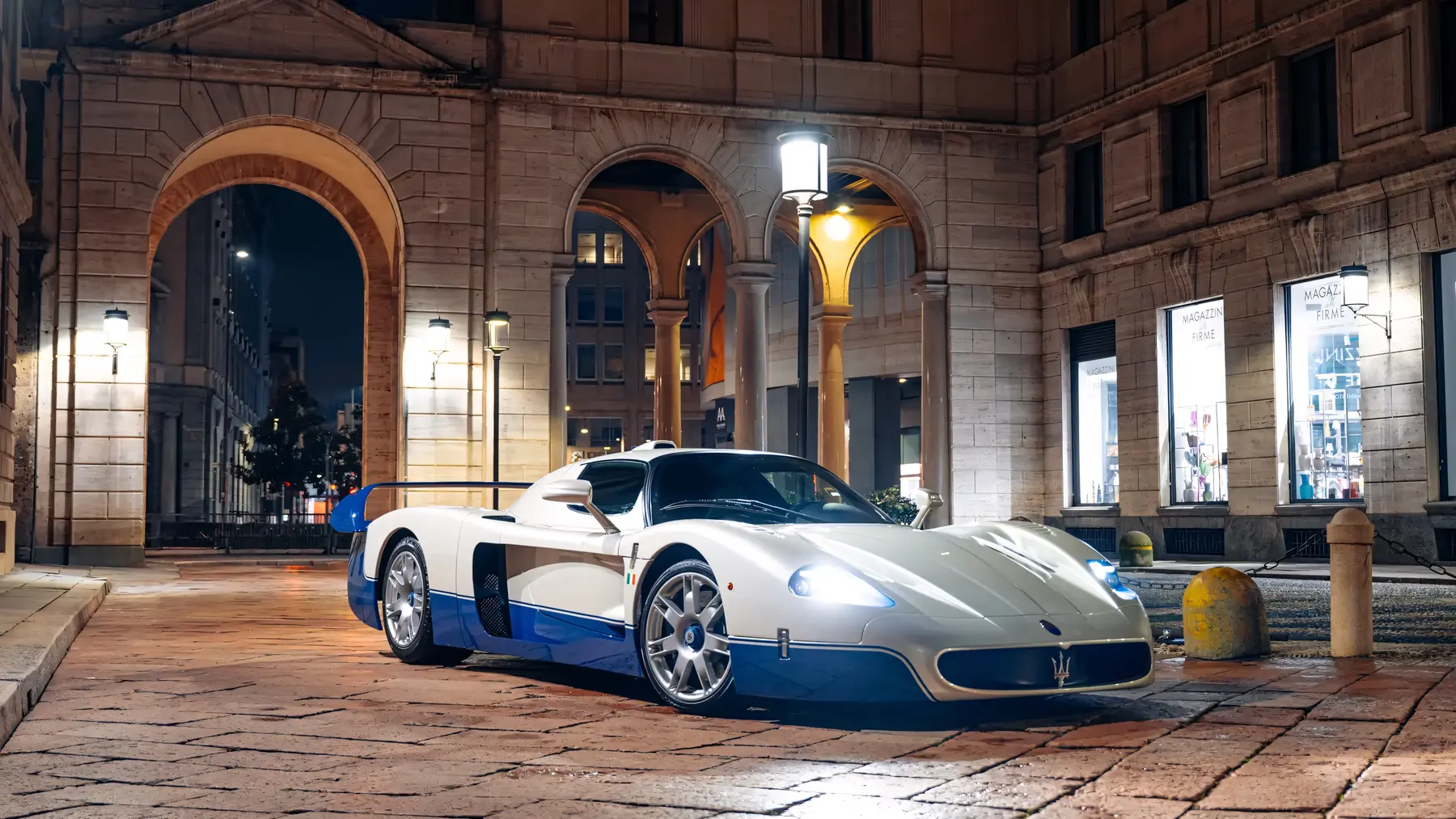
The Maserati MC12 (Tipo M144S) is a standout example of Maserati’s racing heritage fused with high-performance engineering. Created in a limited run between 2004 and 2005, this two-seater sports car was designed with one primary goal: to reestablish Maserati in competitive racing, specifically in the FIA GT Championship. Only 50 road-going units of the MC12 were made,25 each year,plus an additional 12 track-focused models, making it a rare collector’s piece.
The MC12 was built on the foundation of Ferrari’s Enzo, but Maserati took the design further to create a car longer, wider, and smoother than its Ferrari sibling. Frank Stephenson, Maserati’s director of design, shaped the MC12’s carbon-fibre bodywork to optimise downforce and stability. Unlike the Enzo, the MC12 has a drag coefficient that enhances cornering and stability at high speeds. Maserati also added a two-metre-wide spoiler and a targa-style roof, which, while detachable, cannot be stored within the car. This combination gave the MC12 a distinctive look and aerodynamic advantage, though it restricted its top speed to 330 km/h (205 mph), slightly below that of the Enzo.
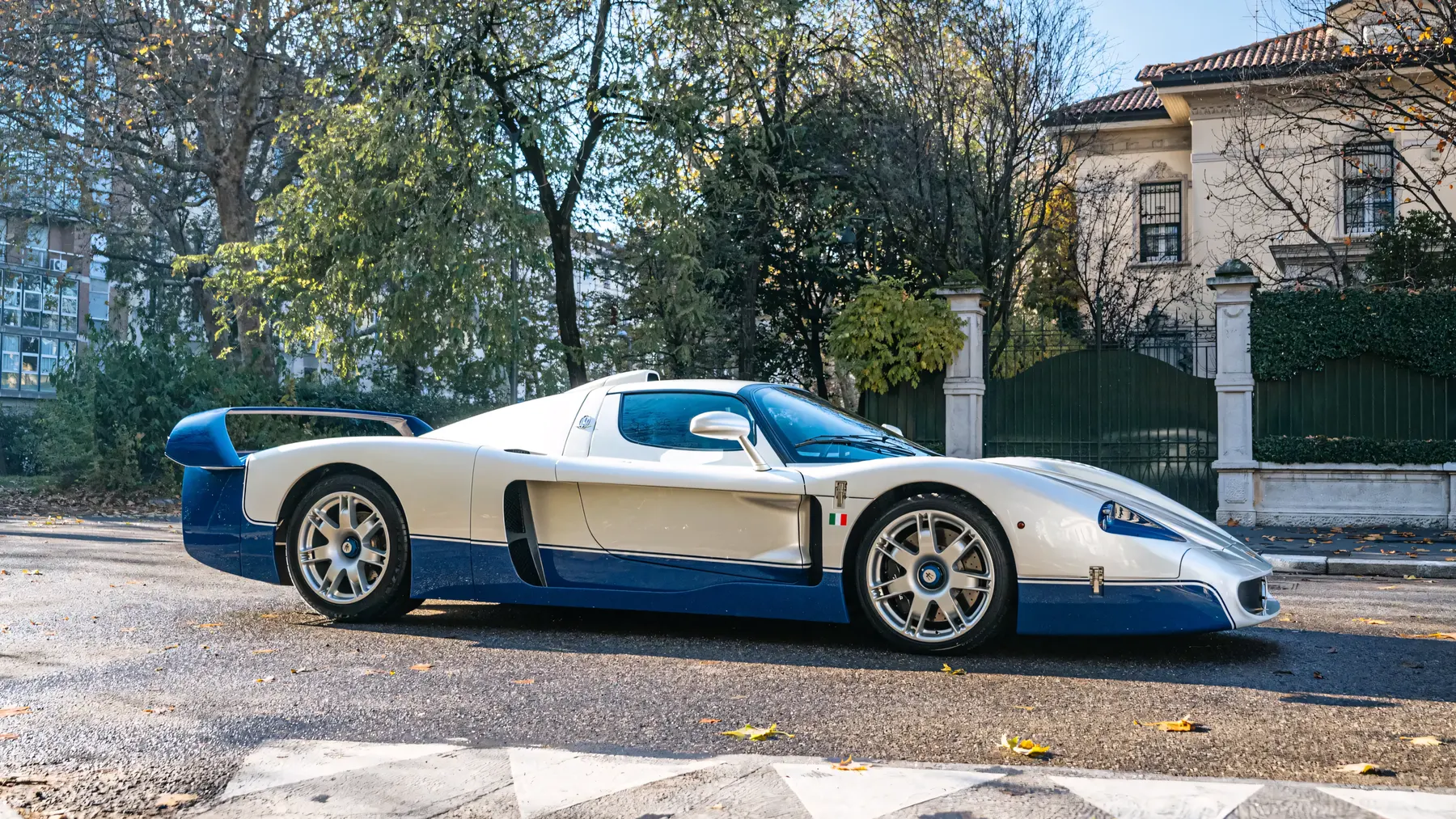
The MC12 is powered by a Ferrari-derived 6.0-liter V12 engine, delivering 630 PS (621 hp) and 652 Nm of torque. Despite a slightly detuned power output compared to the Enzo, it accelerates from 0 to 100 km/h in just 3.8 seconds, reaching 200 km/h in under 10 seconds. Maserati’s adaptation of Ferrari’s F140 V12 engine, equipped with a custom “Cambiocorsa” six-speed automated manual gearbox, allows for rapid 150 ms shifts. The MC12’s structure,a combination of carbon fibre and Nomex honeycomb with aluminium subframes,adds rigidity and stability without excess weight.
The MC12’s development marked Maserati’s comeback in racing after nearly four decades. Maserati used the road version to homologate the MC12 GT1 race car, which quickly found success in the FIA GT Championship, including a major win at Zhuhai International Circuit. In 2005, Maserati won the FIA GT Manufacturer’s Cup, outperforming competitors, including Ferrari. The race cars saw limited but impactful participation in the American Le Mans Series (ALMS), where the MC12’s substantial dimensions earned it weight penalties, complicating its competitive standing.
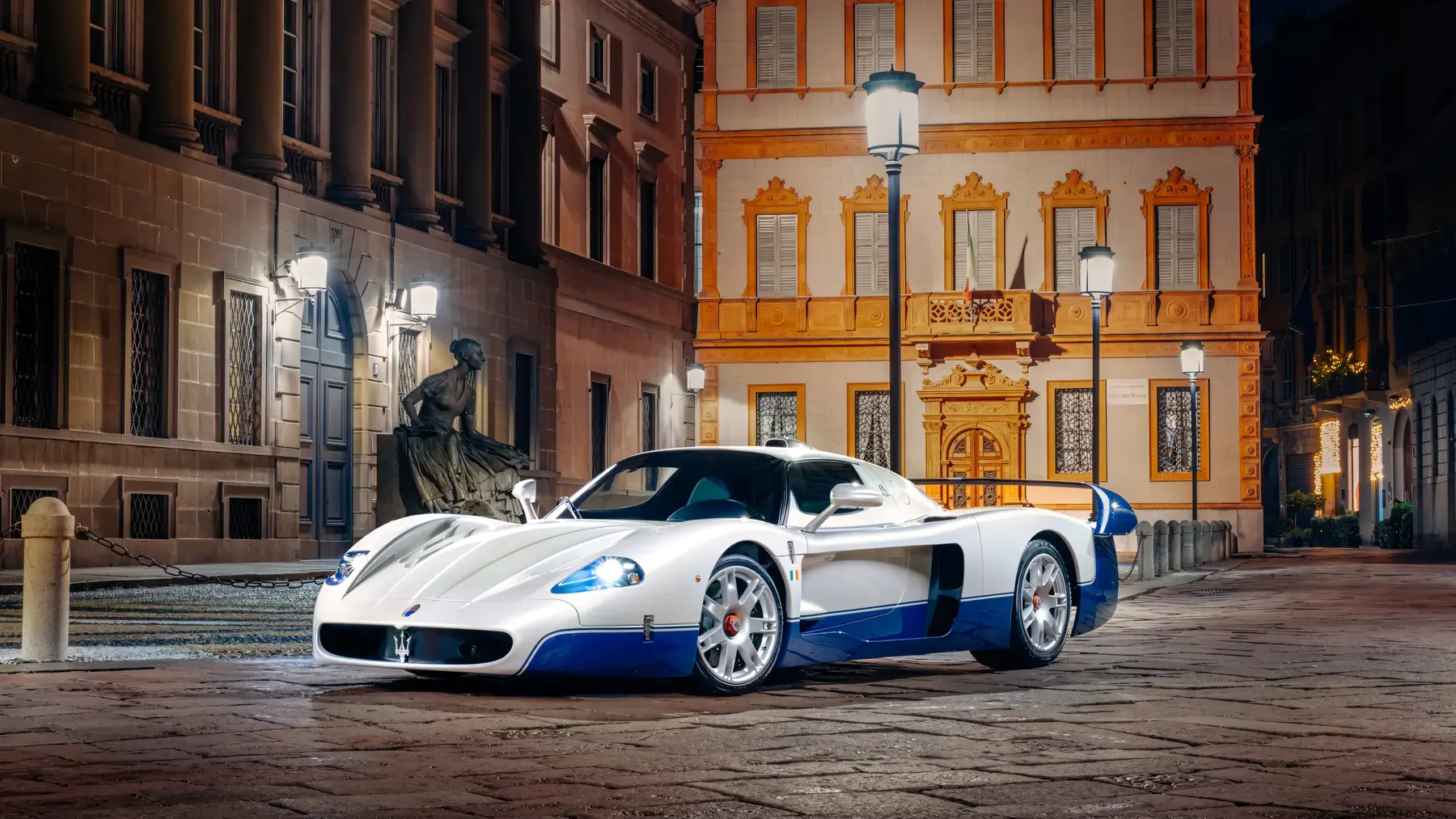
While rooted in racing, the MC12’s road version provides a surprisingly forgiving driving experience, thanks to fine-tuned traction control and anti-slip regulation (ASR). The mid-engine layout creates an optimal weight distribution (41% front, 59% rear) and a 66% rear downforce at higher speeds, enhancing stability and grip. The double-wishbone suspension and adjustable dampers provide enough adaptability to handle challenging road conditions. Reviewers have noted the MC12’s balanced handling, complimenting the car’s controlled drift and predictable reactions, which make it more approachable at the limit than the Ferrari Enzo.
While the MC12’s race-inspired exterior suggests a no-frills approach, the interior has unique luxury touches, including blue leather, gel-coated carbon fibre, and Brightex, a high-end synthetic material. However, it lacks certain amenities, including a radio or rearview window, which Jeremy Clarkson of Top Gear and others have criticised. Parking can be challenging due to the car’s wide body, longer dimensions than a Hummer H2, and absence of rear visibility. Yet, these quirks contribute to its distinctive personality on the road.
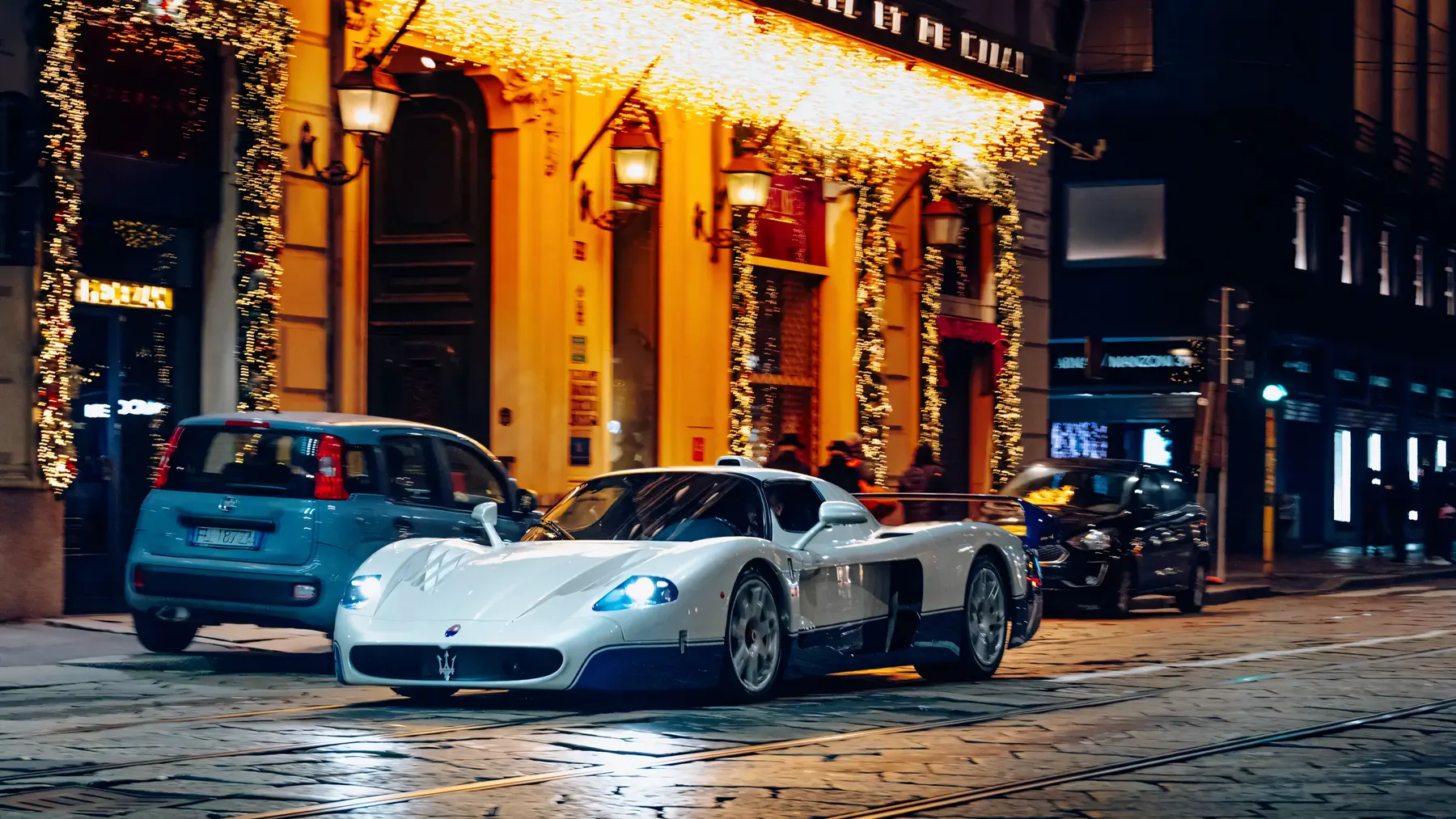
Opinions on the MC12 have varied. Clarkson found it difficult to drive and overpriced, while others, like Motor Trend’s Frank Markus, admired its stability and handling, highlighting its more forgiving nature compared to the Enzo. The MC12’s unique styling, high performance, and exclusivity have solidified it as a modern classic and a key piece in Maserati’s history. With its limited production, the MC12 remains a rare, sought-after supercar that represents both Maserati’s racing resurgence and a rare Italian engineering feat.
Join the discussion
Comments
Loading comments…
Leave a comment
Share a detail, memory, or perspective. Every comment is reviewed before publication.