2012 Lexus LFA

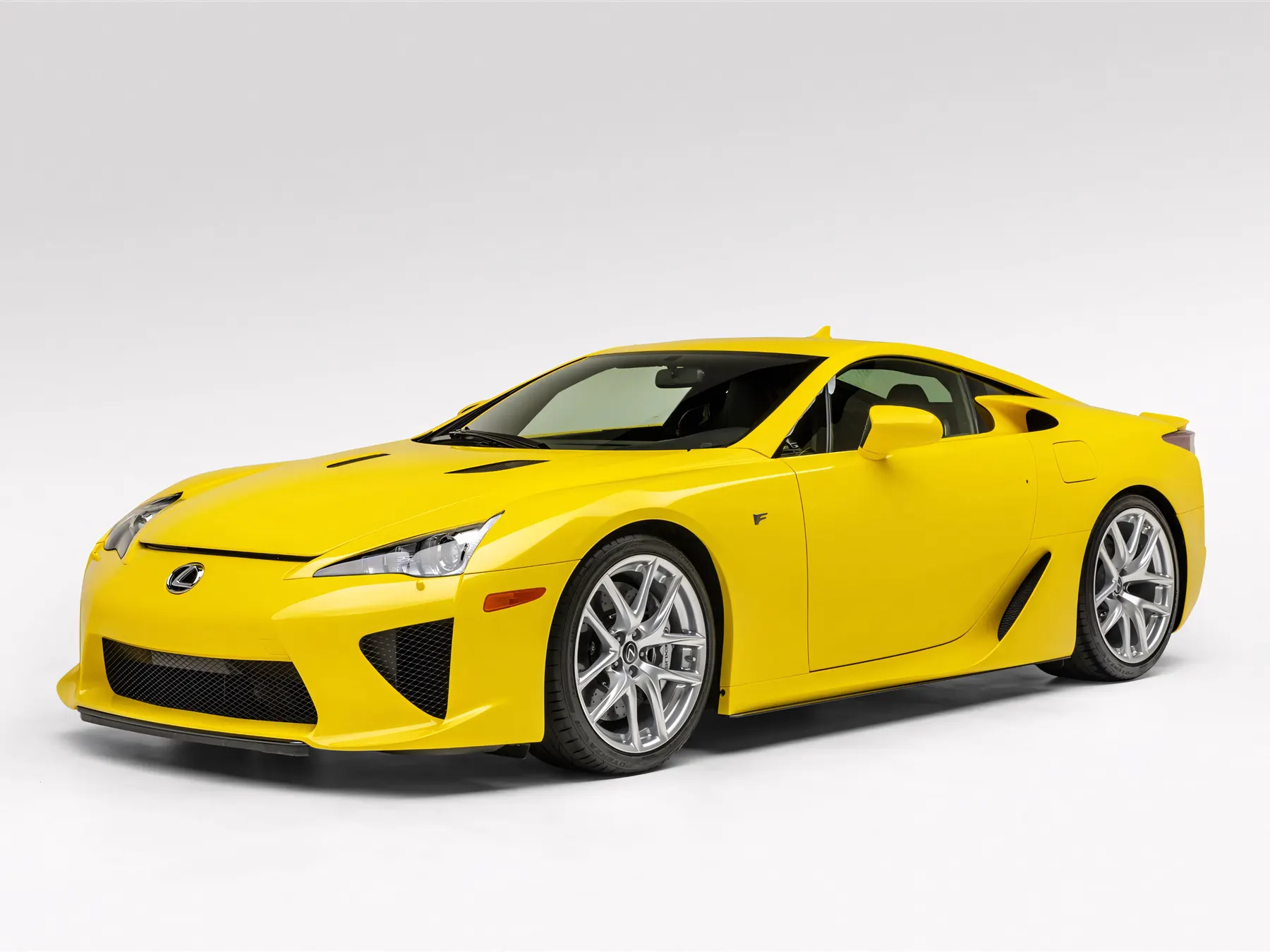
In the vast landscape of supercars, where speed and style converge, the Lexus LFA stands as a testament to Japanese engineering prowess. Unveiled at the 2009 Tokyo Motor Show, this two-seater marvel, with only 500 units in existence, etched its name in automotive history from 2011 through 2013. The journey of the Lexus LFA, from conception to asphalt, is a symphony on wheels, blending performance, technology, and artistic design.
The ‘A’ in LFA, as Lexus proudly declares, stands for “Apex,” and rightly so. This supercar represents the zenith of Lexus’ engineering endeavours. It’s 4.8-liter V-10 engine, a collaborative creation with Yamaha, is a marvel of modern engineering. Crafted in the same facility that birthed Toyota Racing’s Formula One V-10s, the LFA’s power plant is a blend of aluminium, magnesium, and titanium,a testament to weight reduction without compromising power.
Each of the ten cylinders boasts an independent, electronically controlled throttle body, enabling the V-10 to perform a balletic dance from idle to 9,000 rpm in a mere six-tenths of a second. This astonishing feat, a world record at the time, unleashes 552 horsepower that propels the LFA from 0 to 60 mph in under four seconds. The instrument cluster, all-digital, mirrors the lightning-quick revolutions of the engine, as an analog tachometer would be left gasping for breath in its wake.
Controlling this automotive symphony is a six-speed automated sequential manual transmission,a work of art in itself. Operated by paddle shifters, the ASG intelligent transmission can upshift in a mere two-tenths of a second, providing the driver with precise control even under the most demanding driving conditions. Unlike the smooth transitions of a dual-clutch system, the LFA’s transmission delivers a visceral, engaging experience, placing the driver at the heart of the performance.
The LFA’s exhaust note, a composition by Yamaha’s music division, is legendary among automotive enthusiasts. Lexus engineers affectionately describe it as “the roar of an angel.” This auditory masterpiece, harmonising with the V-10’s performance, is a sonic signature that sets the LFA apart in the realm of supercars.
The LFA’s journey from concept to reality is a tale of meticulous development. Three concept versions, unveiled at the North American International Auto Show, paved the way for the production model. The first concept emerged in 2005, followed by a more refined version in 2007. The third, featuring a roadster body style, graced the stage in 2008. The production model, trademarked LFA, made its grand entrance at the Tokyo Motor Show in October 2009, setting the stage for a limited production run of 500 units.
Under the hood lies the heart of the beast,an awe-inspiring 4,805 cc V-10 engine, designated 1LR-GUE. Generating a formidable 560 PS (553 hp) at 8,700 rpm, and torque peaking at 480 N⋅m (354 lb⋅ft) at 6,800 rpm, this powerhouse is a marvel of engineering. Constructed with forged aluminium pistons, titanium connecting rods, and solid titanium valves, the V-10’s 72-degree bank angle ensures balanced firing forces without the need for a split-journal crankshaft, reducing weight and enhancing efficiency.
The decision to opt for a V-10 over other configurations wasn’t arbitrary. Lexus aimed for higher revs and lower reciprocating mass, allowing for rapid engine response. The engine’s ability to rev from idle to its 9,000 rpm redline in 0.6 seconds necessitated a digital tachometer, a testament to the LFA’s unrivalled performance.
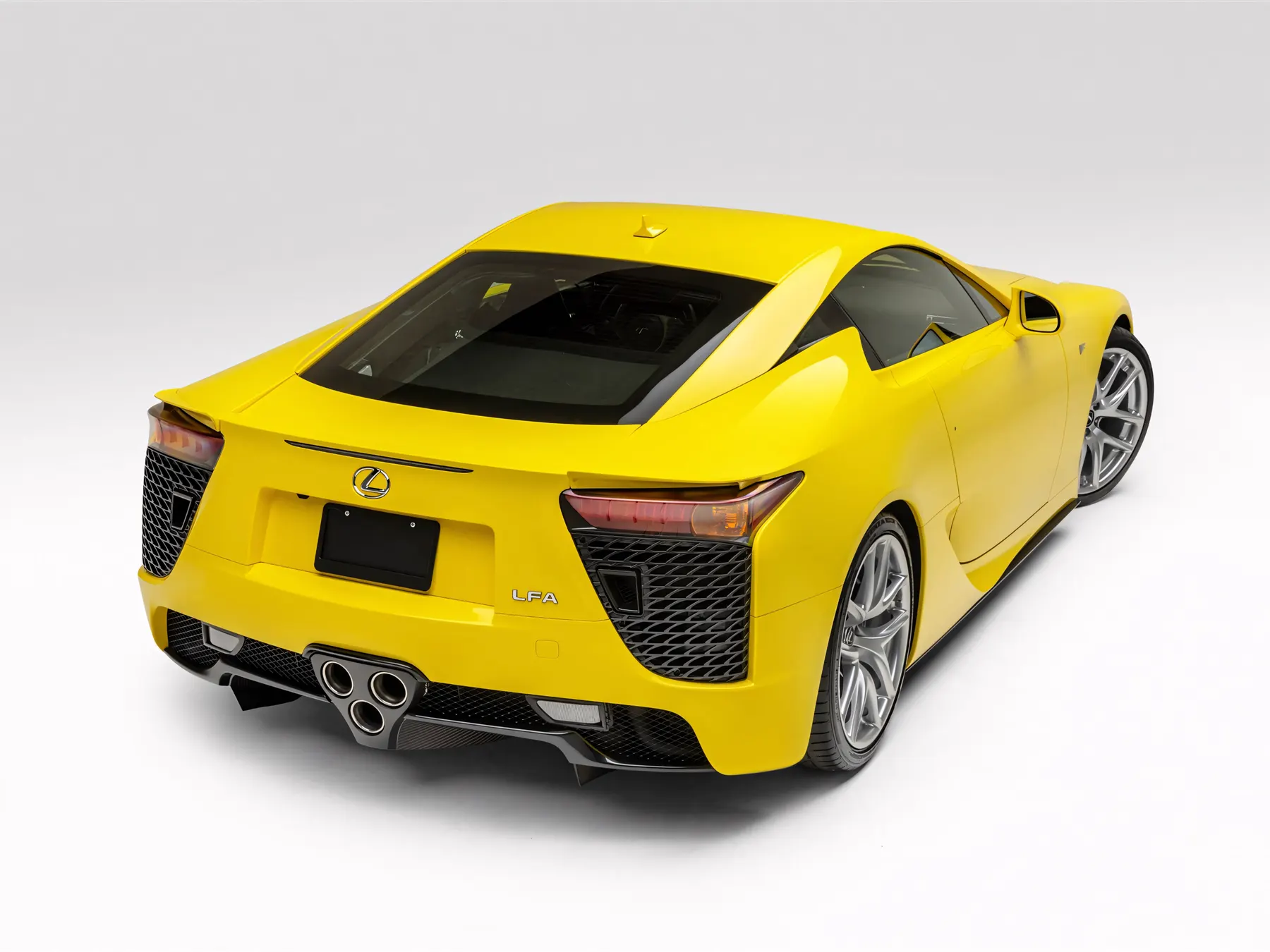
The LFA’s frame is a marriage of carbon fibre-reinforced polymer (CFRP) and aluminium. The centre monocoque, crafted in-house, is a showcase of advanced materials. CFRP constitutes a staggering 65 percent of the body composition by mass, achieving a delicate balance between strength and weight. The subframes, both front and rear, are aluminium, joined to the monocoque with a specially developed aluminium flanged collar, creating a robust yet agile structure.
Manufactured with a laser-monitored circular loom, the CFRP material matches aeronautical grades, and the entire body, comprising 35 percent aluminium, exemplifies the pinnacle of automotive materials engineering. The use of CFRP alone saves 100 kg (220 lb) over equivalent aluminium materials, contributing to the LFA’s exceptional power-to-weight ratio.
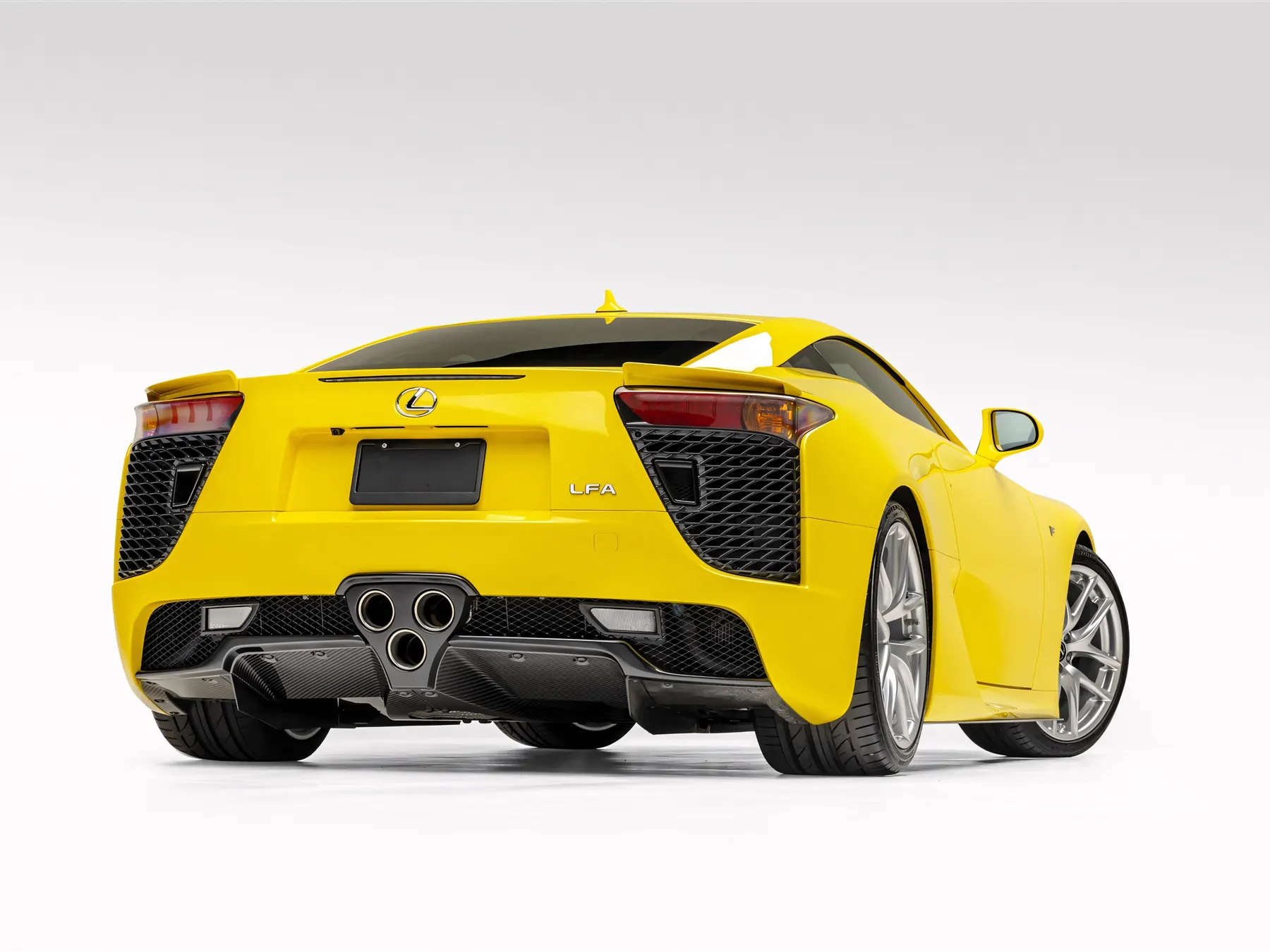
The LFA’s chassis is a work of art, optimising weight distribution and enhancing performance. A rear transaxle, positioning the fuel tank ahead of the rear axle, and rear-mounted radiators contribute to near-ideal weight distribution,48 percent at the front, 52 percent at the rear. The electric power steering rack, with a 14.3:1 gear ratio, ensures precision control.
The suspension system is a marriage of science and art. A double-wishbone arrangement graces the front, while a multi-link setup adorns the rear, complemented by coil-over dampers at all corners. The dampers, a monotube design with a remote fluid reservoir, exemplify a purely mechanical system that enhances the driving experience. To further elevate performance, the LFA features six-piston front and four-piston rear Brembo monobloc brake callipers, hugging carbon ceramic discs, controlled by Toyota’s Electronically Controlled Brake-by-wire system.
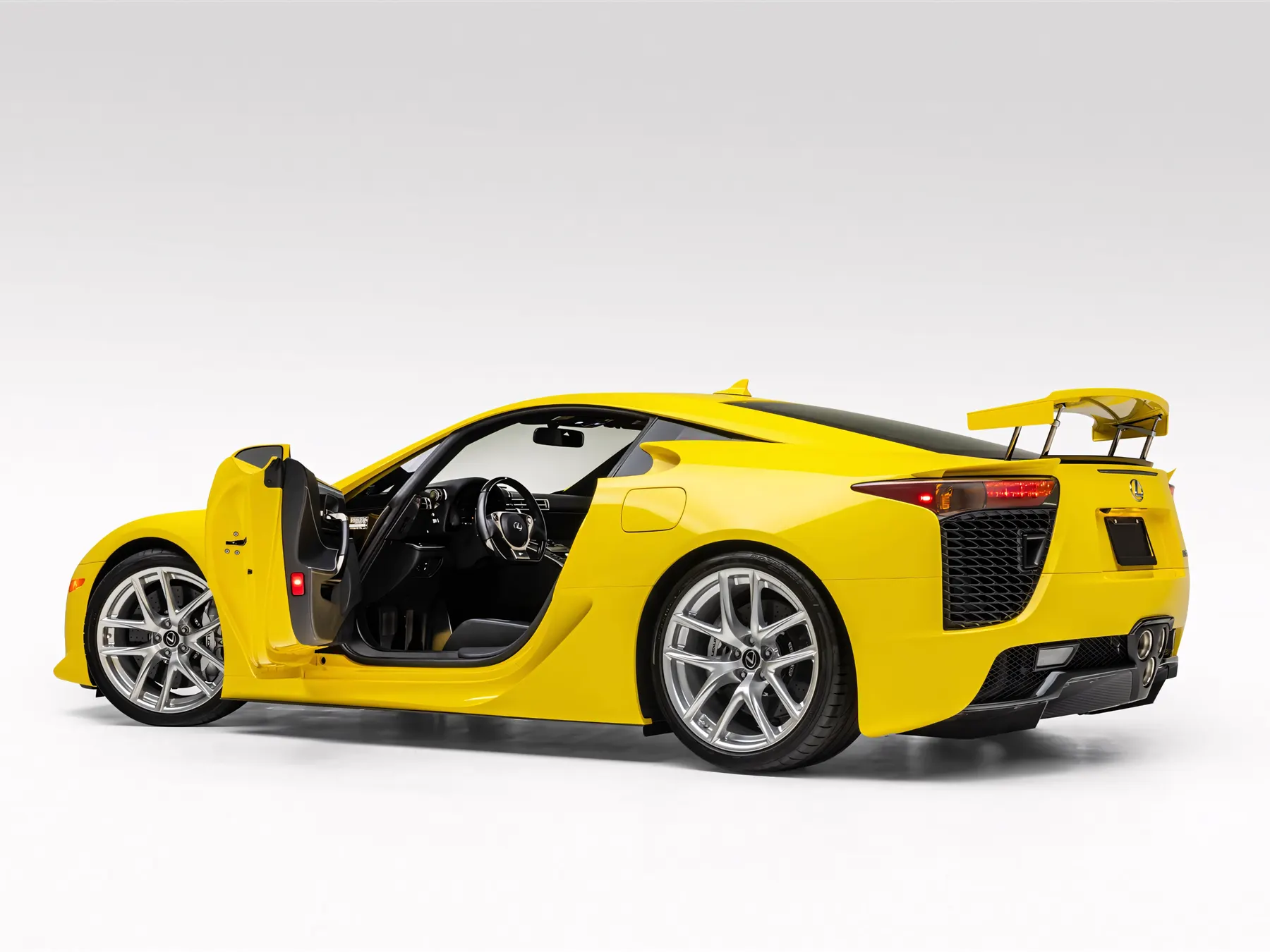
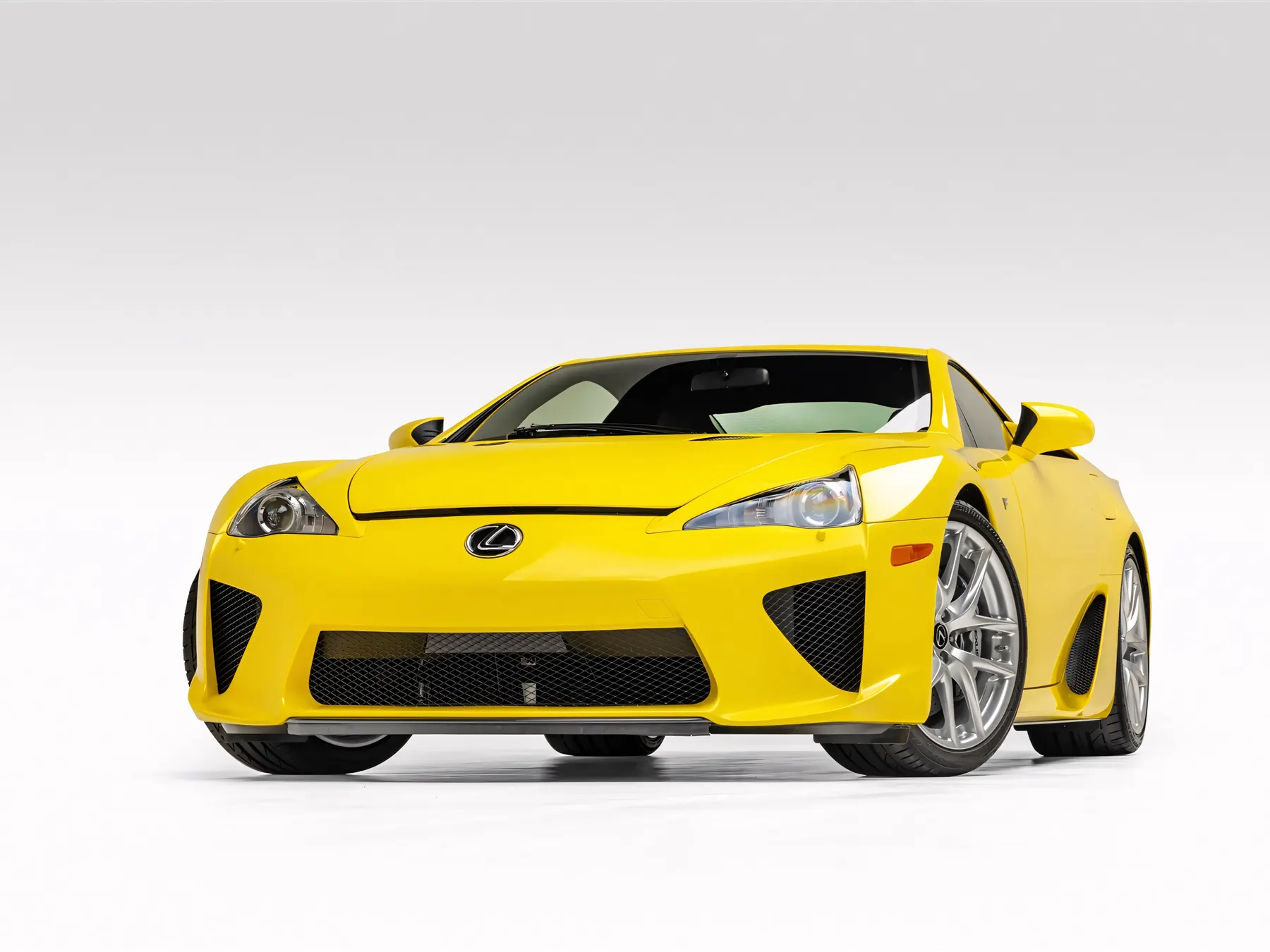
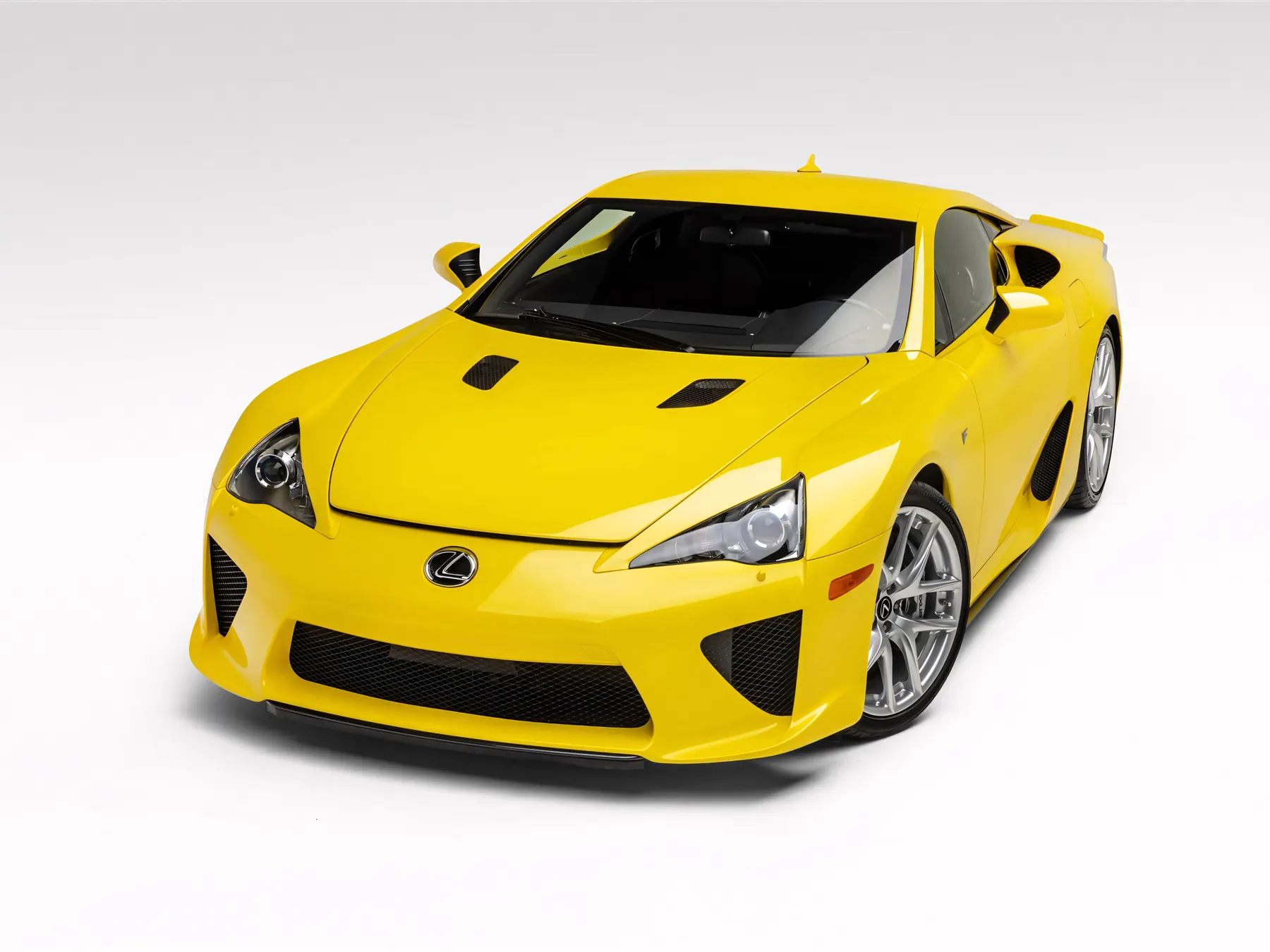
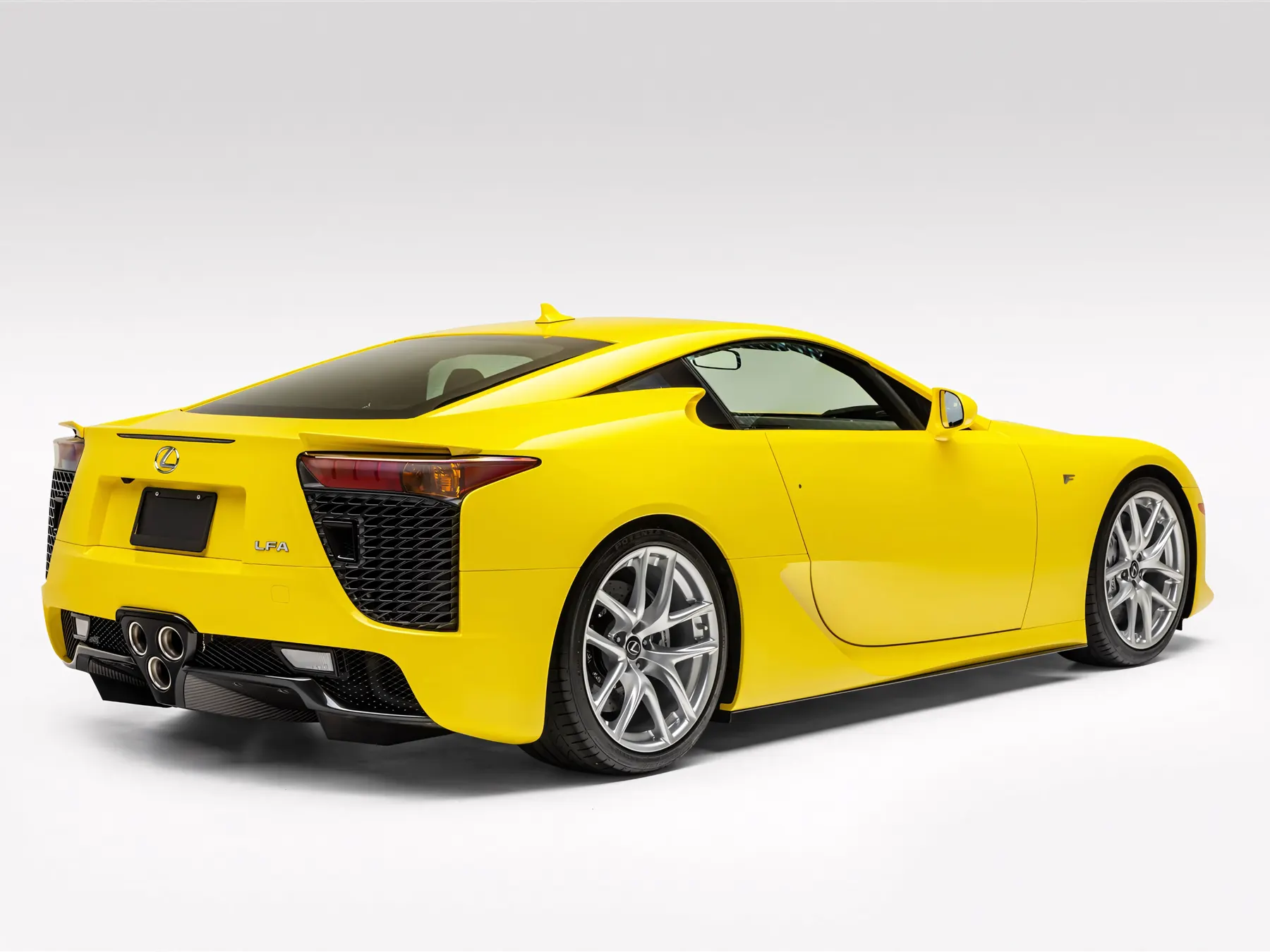
The LFA’s design is a language of aerodynamics, where every curve and edge has a purpose. A symphony of sharp edges and cutoffs contributes to improved aerodynamic performance, made possible by the lightweight, strong carbon fibre body. Air scoops over the rear fenders, a horizontal hood gap, and small aft vents work in unison to cool critical components. The speed-sensitive rear wing, deploying at speeds over 80 km/h (50 mph), adds not only to aerodynamics but also to the LFA’s visual drama.
Stepping into the LFA’s cabin is entering a realm where art meets comfort. Carbon fibre, leather, alcantara, and metallic surfaces create an ambiance that complements the car’s performance pedigree. Two bucket seats cradle the driver and passenger, with the Lexus Remote Touch controller interface offering a blend of intuitive control and cutting-edge technology.
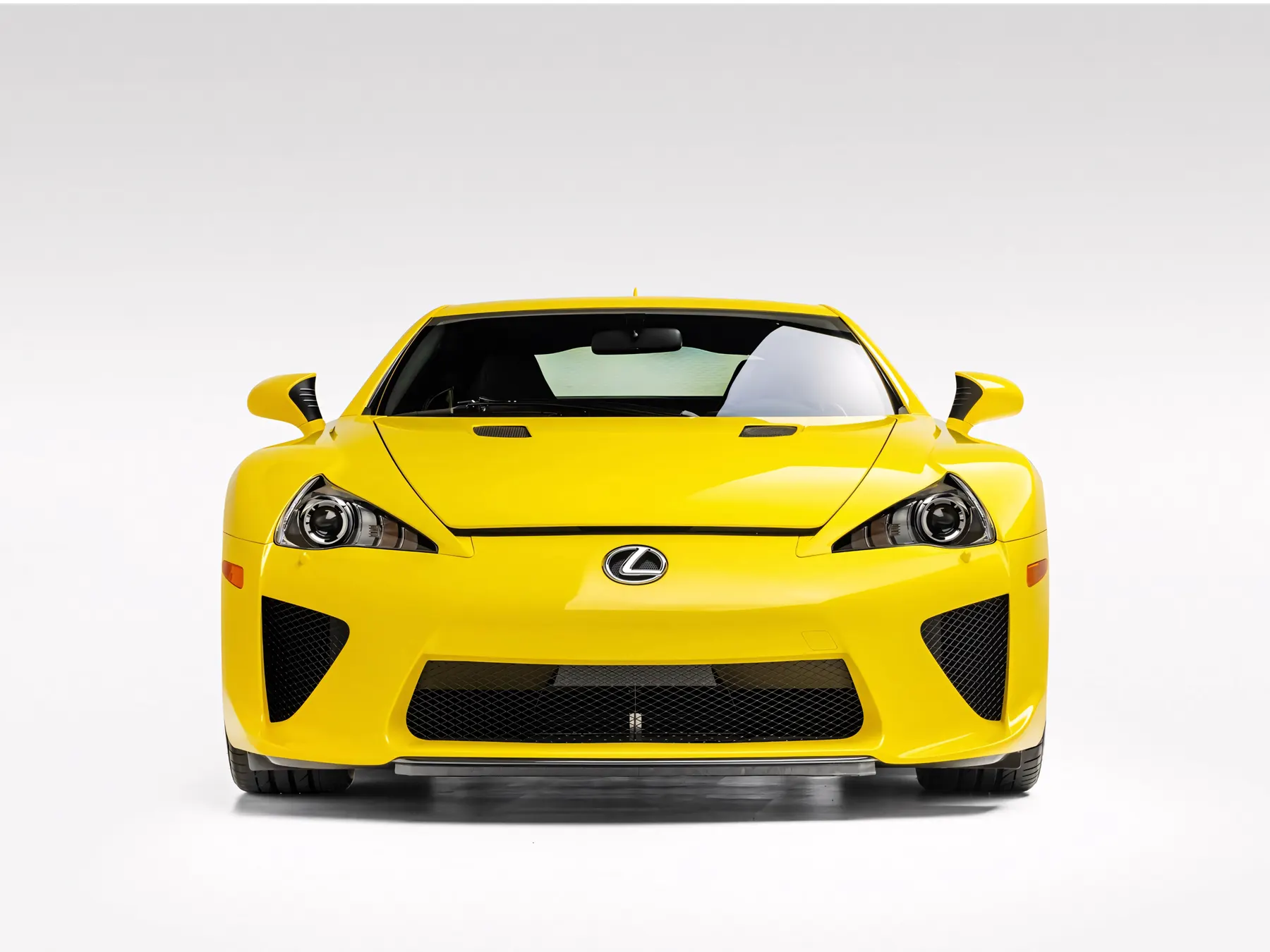
The instrument display, a digital thin-film transistor (TFT) speedometer, reflects the dynamic nature of the LFA. In automatic mode, small digits dance across the display; in normal mode, larger and bolder numbers take centre stage; sport mode transforms the display with inverted colours, a moved redline, and stark numbers, providing a visual cue to the car’s heightened performance.
The steering wheel, adorned with alloy paddle-shifters and a right-mounted start button, encapsulates the driver-focused design. Engine sound, channelled into the cabin via twin ducts, creates an auditory experience tuned to perfection,like an Ovation guitar played at the hands of a virtuoso.
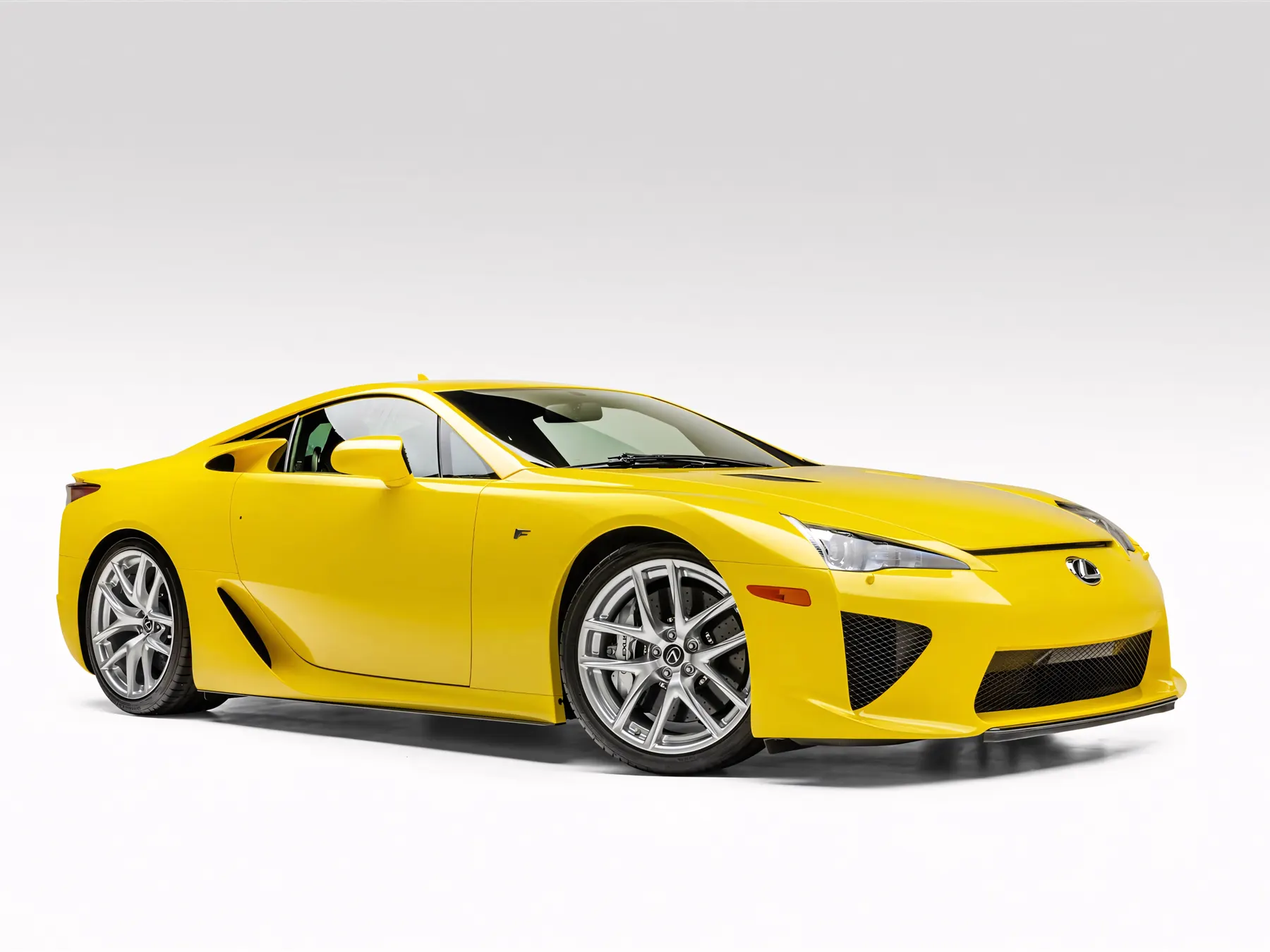
In the realm of supercars, the Lexus LFA isn’t just a mode of transportation; it’s a masterpiece of automotive art. From the first strokes of its design to the roaring crescendo of its V-10 engine, the LFA embodies the relentless pursuit of excellence by Lexus. It’s a limited-edition symphony on wheels, where speed, technology, and design harmonise to create an experience that transcends the ordinary. As the curtain falls on the production of the LFA, its legacy reverberates in the hearts of automotive enthusiasts, forever etching its name as a true icon of automotive engineering.
Join the discussion
Comments
Loading comments…
Leave a comment
Share a detail, memory, or perspective. Every comment is reviewed before publication.