Ferrari 488 Pista 'Piloti Ferrari': The Road Car You Had to Race to Buy
2020 Ferrari 488 Pista 'Piloti Ferrari'

Images: Andrew Link / RM Sotheby's
Ferrari has always understood that exclusivity is a more powerful marketing instrument than performance alone. But with the 488 Pista ‘Piloti Ferrari’, Maranello did something more precise and more interesting than simply limiting production: it made eligibility conditional on participation. To buy one, you had to already be racing a Ferrari GT3 or GTE car as a client driver in the company’s motorsport programmes. Wealth was not the entry ticket. Commitment - demonstrated through actual wheel-to-wheel competition - was.
The occasion that prompted it was specific. In 2017, the Ferrari 488 GTE campaigned by AF Corse had won both the Drivers’ and Manufacturers’ titles in the LM GTE Pro class of the FIA World Endurance Championship, with Alessandro Pier Guidi and James Calado sharing the number 51 car. It was a significant result for Ferrari’s customer racing effort, achieved in the sport’s most demanding endurance category against the full weight of the professional GT paddock. Rather than celebrate the victory with a conventional limited-edition press release, Ferrari chose to honour it through the Tailor Made programme - the bespoke customisation division that handles anything from a non-catalogue paint shade to an entirely bespoke interior architecture - and to direct the resulting car exclusively at the people whose own racing activities made the culture of that victory possible.
The ‘Piloti Ferrari’ specification was announced on 15 June 2018 and made its public debut at the Circuit de la Sarthe on the eve of that year’s 24 Hours of Le Mans. The timing was not incidental. Launching it there, in front of the people who had earned the right to order one, gave the occasion a directness that a motor show reveal could never have matched.
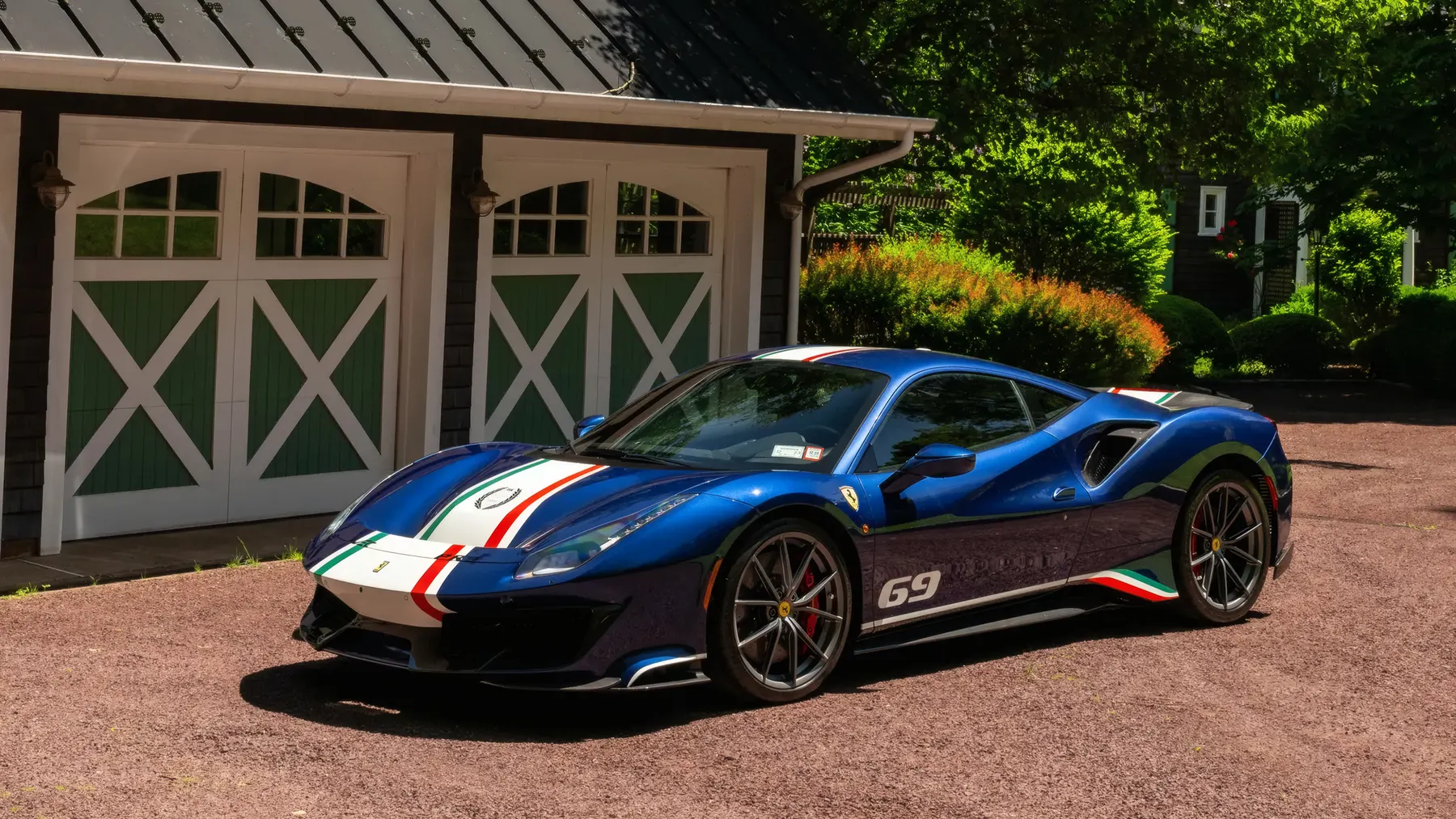
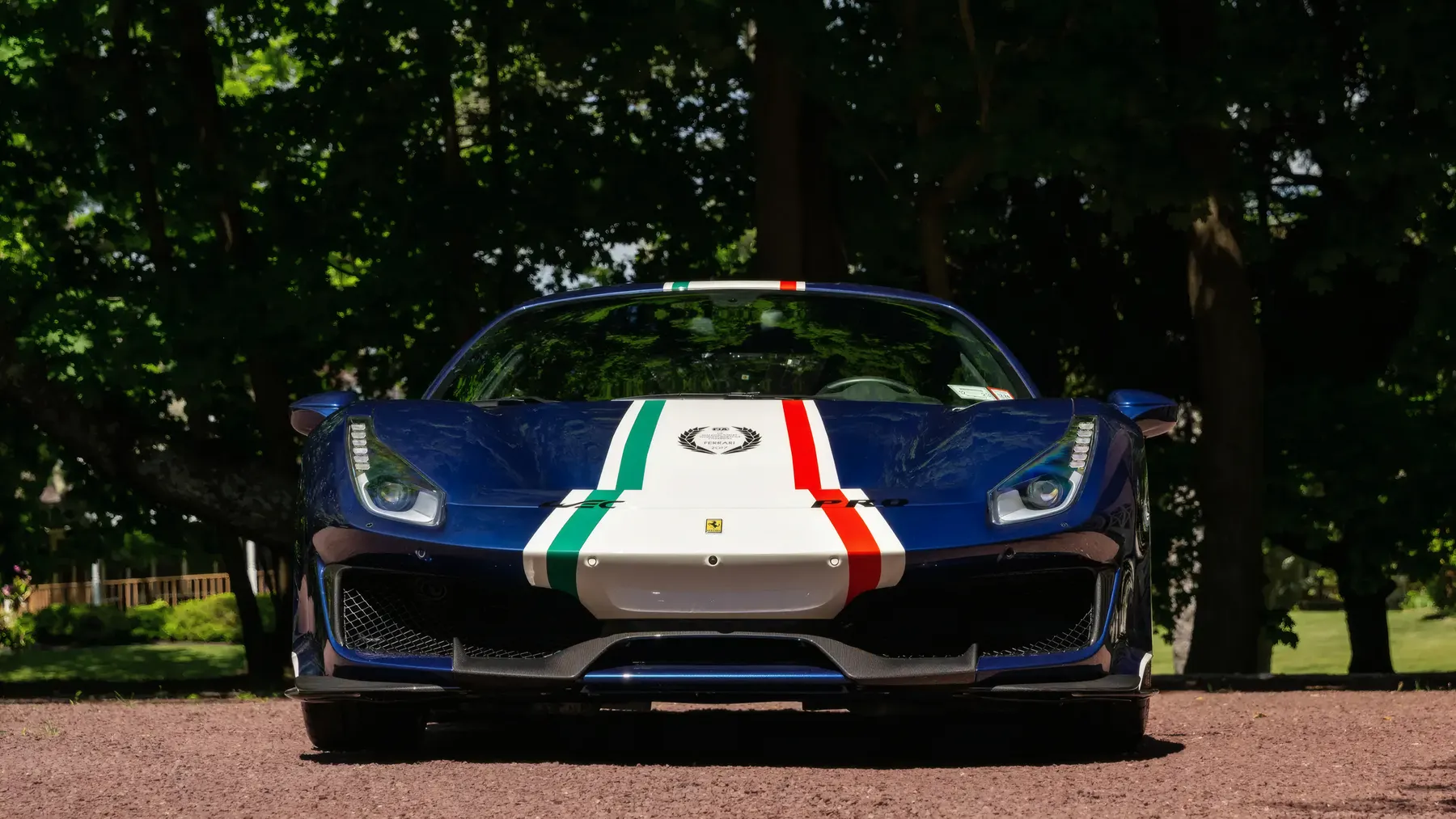
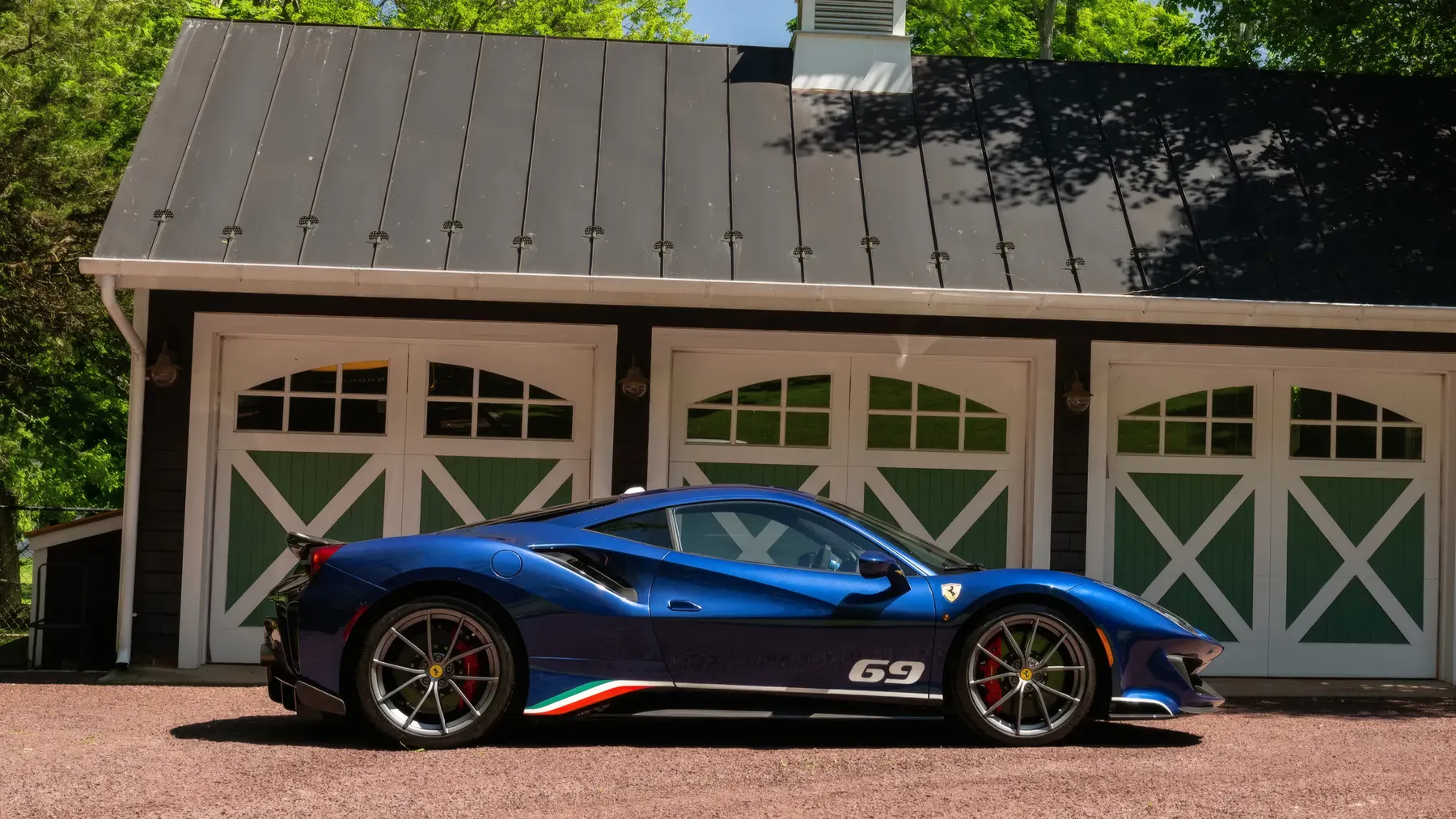
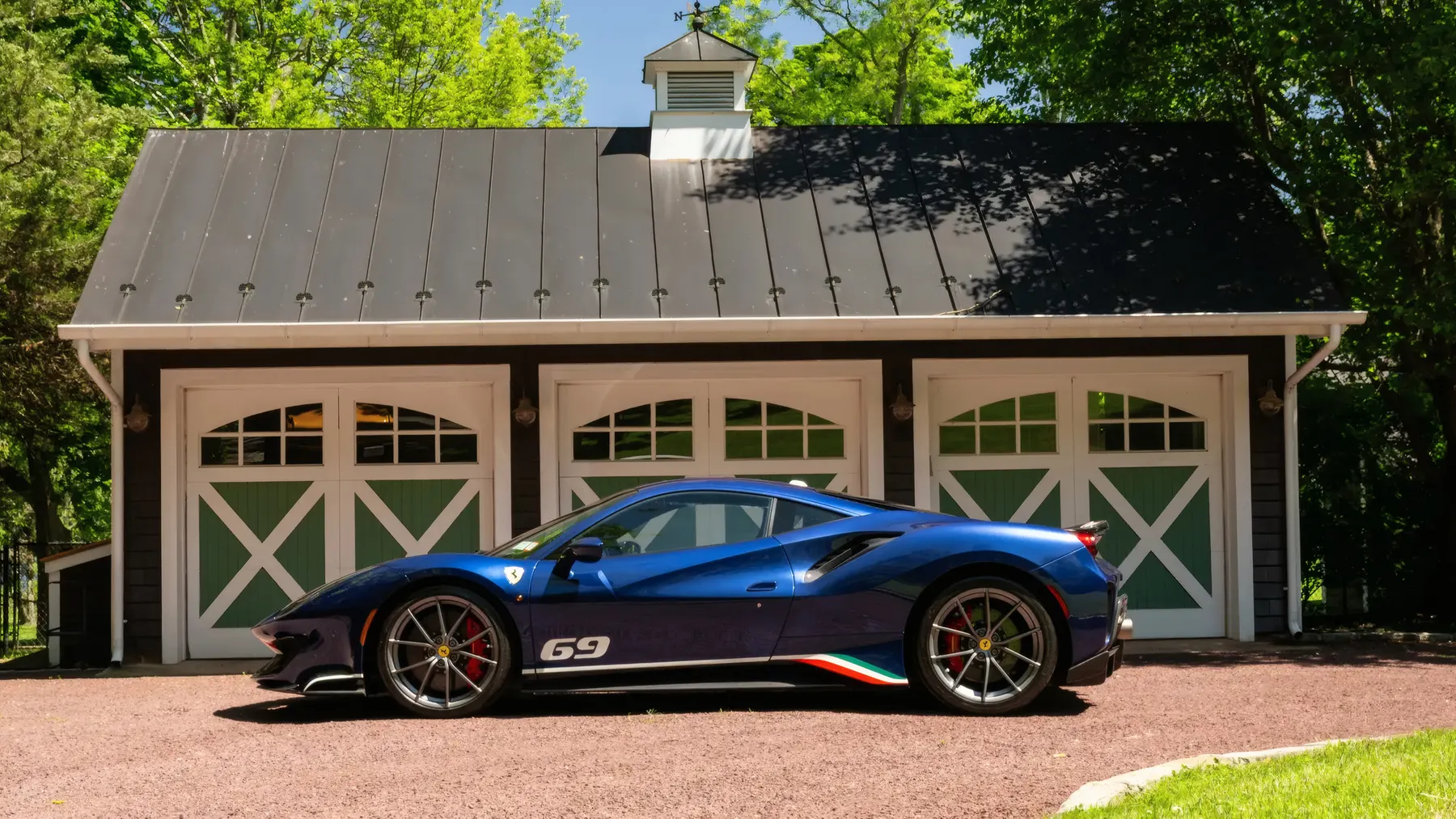
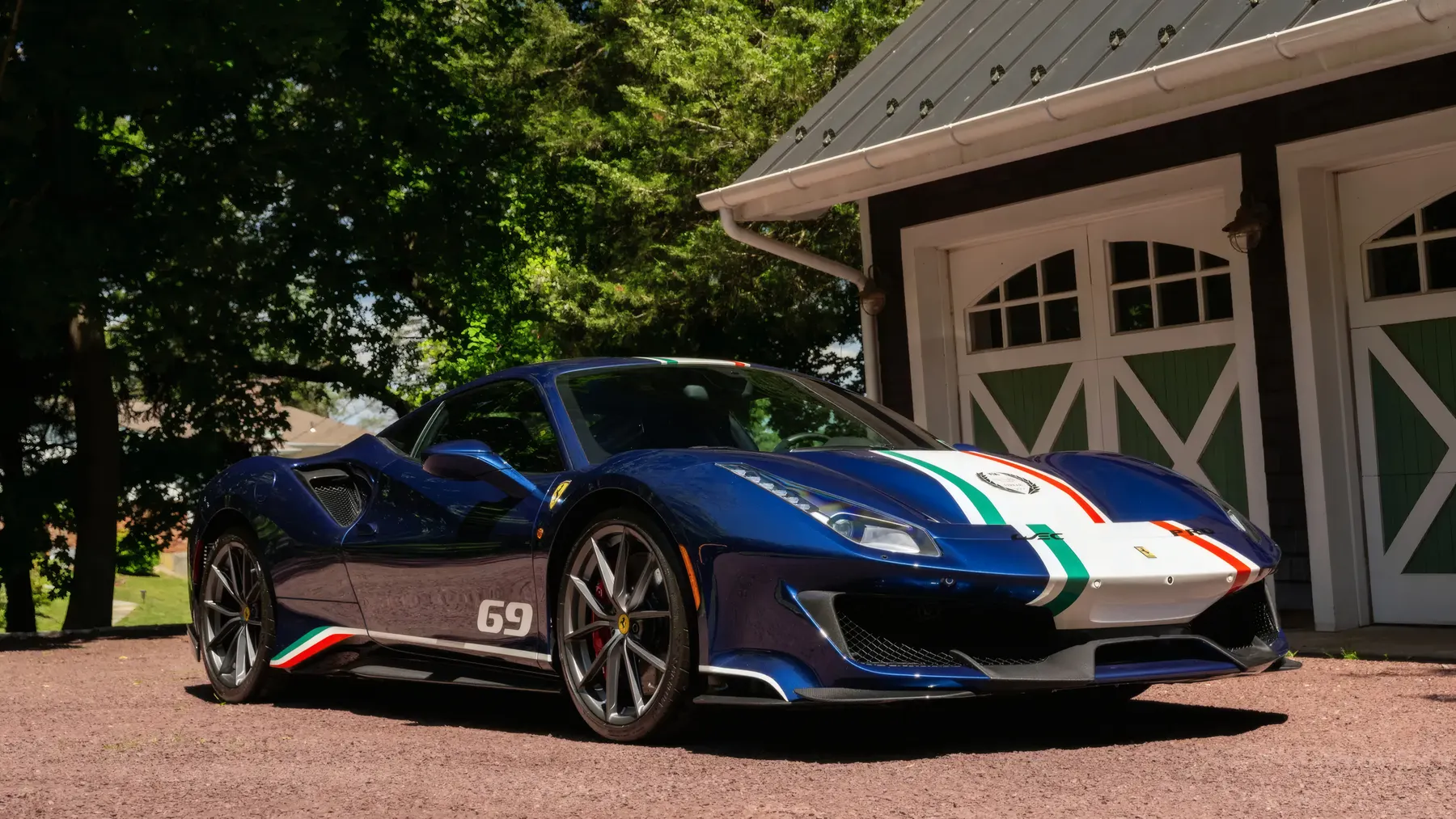
What the specification actually delivered, as a physical object, was built around the livery of the number 51 car. Italian tricolour stripes ran the full length of the body, starting at the front bumper, diving through the S-Duct and continuing rearward to the spoiler - following the same aerodynamic pathway that defines the standard 488 Pista’s visual identity. The front end carried the WEC logo and championship laurel, together with the word “PRO” denoting the racing class. On the doors, a racing number of the customer’s choosing was applied, with the presentation car naturally wearing 51. The S-Duct was rendered in matte black rather than the body colour, and the rear spoiler and vent surrounds were left in natural exposed carbon fibre. Four body colours were offered, all drawn from circuit heritage: Rosso Corsa, Blu Tour de France, Nero Daytona, and Argento Nürburgring.
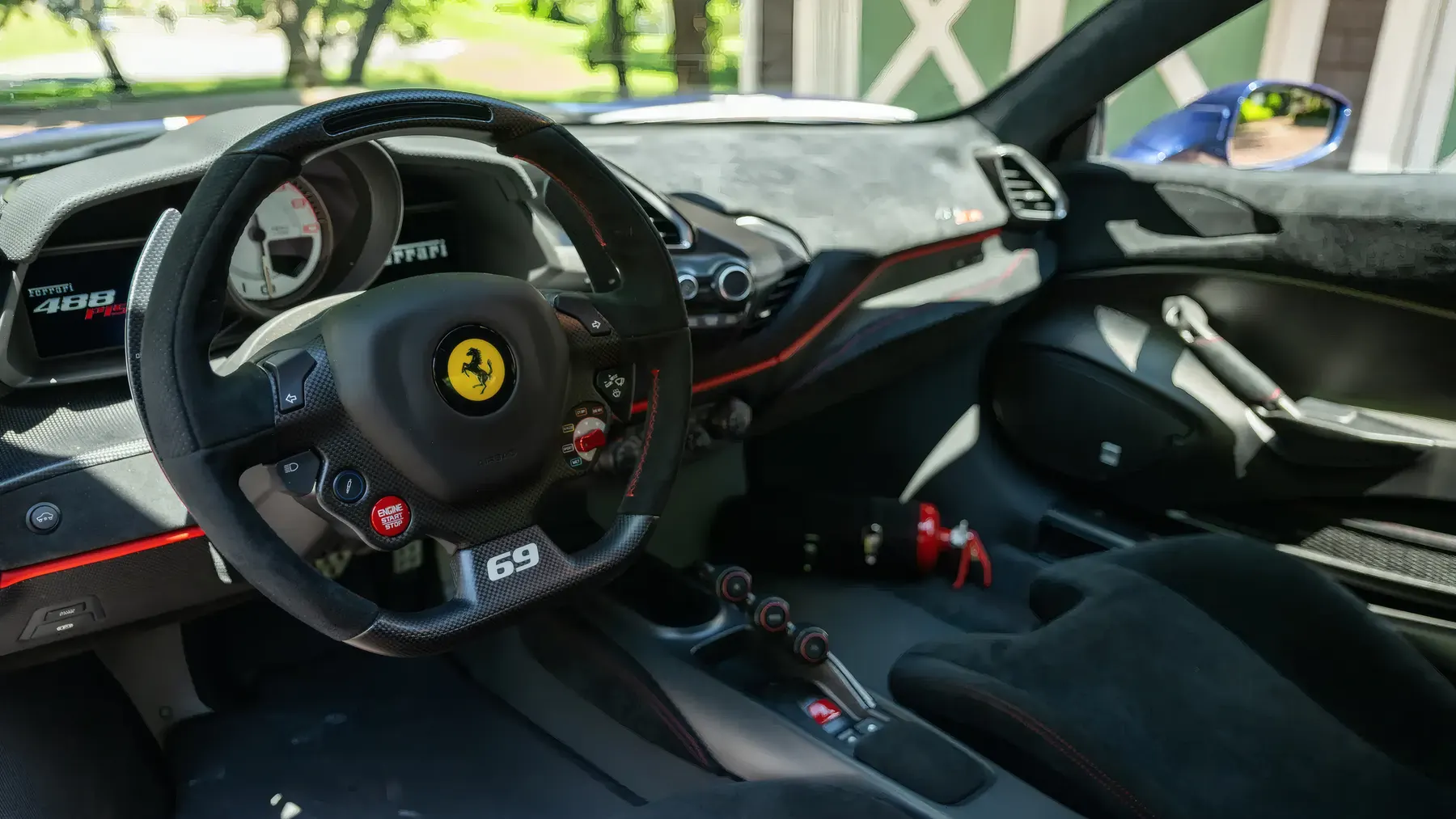
Inside, the standard 488 Pista’s mix of leather and Alcantara was replaced entirely by Alcantara, extending the race-car reference through the cabin. The seat backrests incorporated a faded Italian flag rendered in the perforated Alcantara of the central band, while the paddle shifters carried tricolour edging and the floormats were made from a special technical fabric matched to the carpeting. The chosen race number appeared again on the base of the steering wheel, mirroring the exterior. All carbon-fibre trim was given a matte rather than gloss finish, and an exclusive identification plate and sill trims bearing the Tailor Made logo completed the package. It was a considered interior, not an extravagant one - tightly thematic rather than opulent.
What it was not, mechanically, was anything other than a standard Ferrari 488 Pista. The engine, chassis, aerodynamics, electronics, and dynamic hardware were identical to the production car. This is worth dwelling on, because the 488 Pista on which it was based was already an extraordinary engineering proposition in its own right.
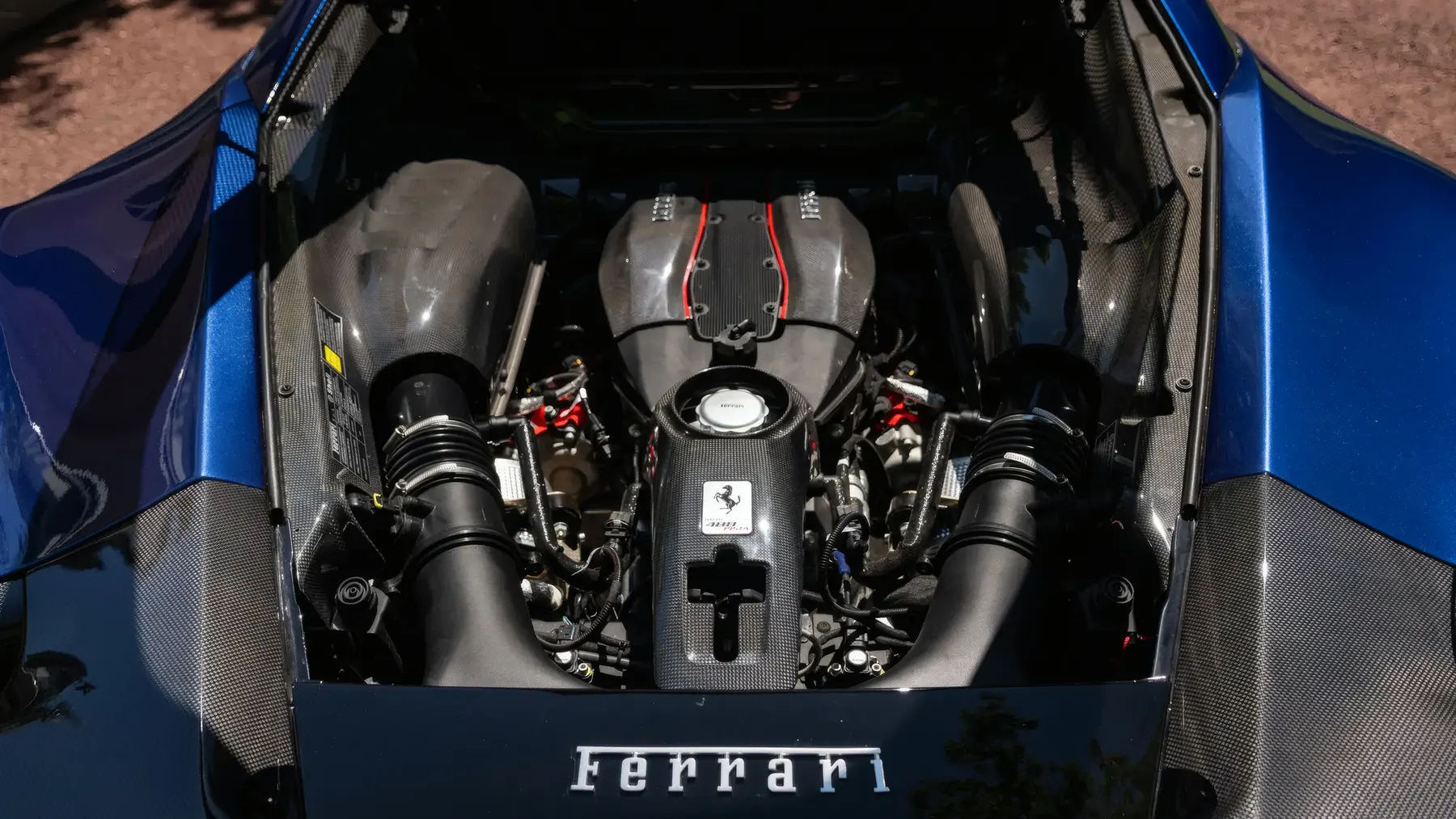
The 3.9-litre twin-turbocharged F154 V8 in the 488 Pista was substantially reworked relative to the unit in the standard 488 GTB. Titanium connecting rods - sourced, according to Ferrari, from the Formula 1 supply chain - replaced the steel items, saving 43 per cent of the component’s weight. A lighter flywheel and crankshaft reduced the rotational inertia of the drivetrain by around 17 per cent, making the engine more responsive and faster-revving. Inconel exhaust manifolds - the same heat-resistant alloy used in aero-engine turbines - replaced steel items, saving mass and changing the acoustic signature. New camshafts, a larger intercooler, revised combustion chambers and an insanely high compression ratio for a turbocharged engine conspired to extract 710 bhp at 8,000 rpm and 568 lb-ft at 3,000 rpm from a forced-induction unit that somehow behaved with near-natural-aspiration immediacy under light throttle loads. Ferrari claimed - and the engineering bore it out - that the 50 bhp jump over the 488 GTB was the largest power leap ever achieved between a Ferrari road car and its special series derivative.
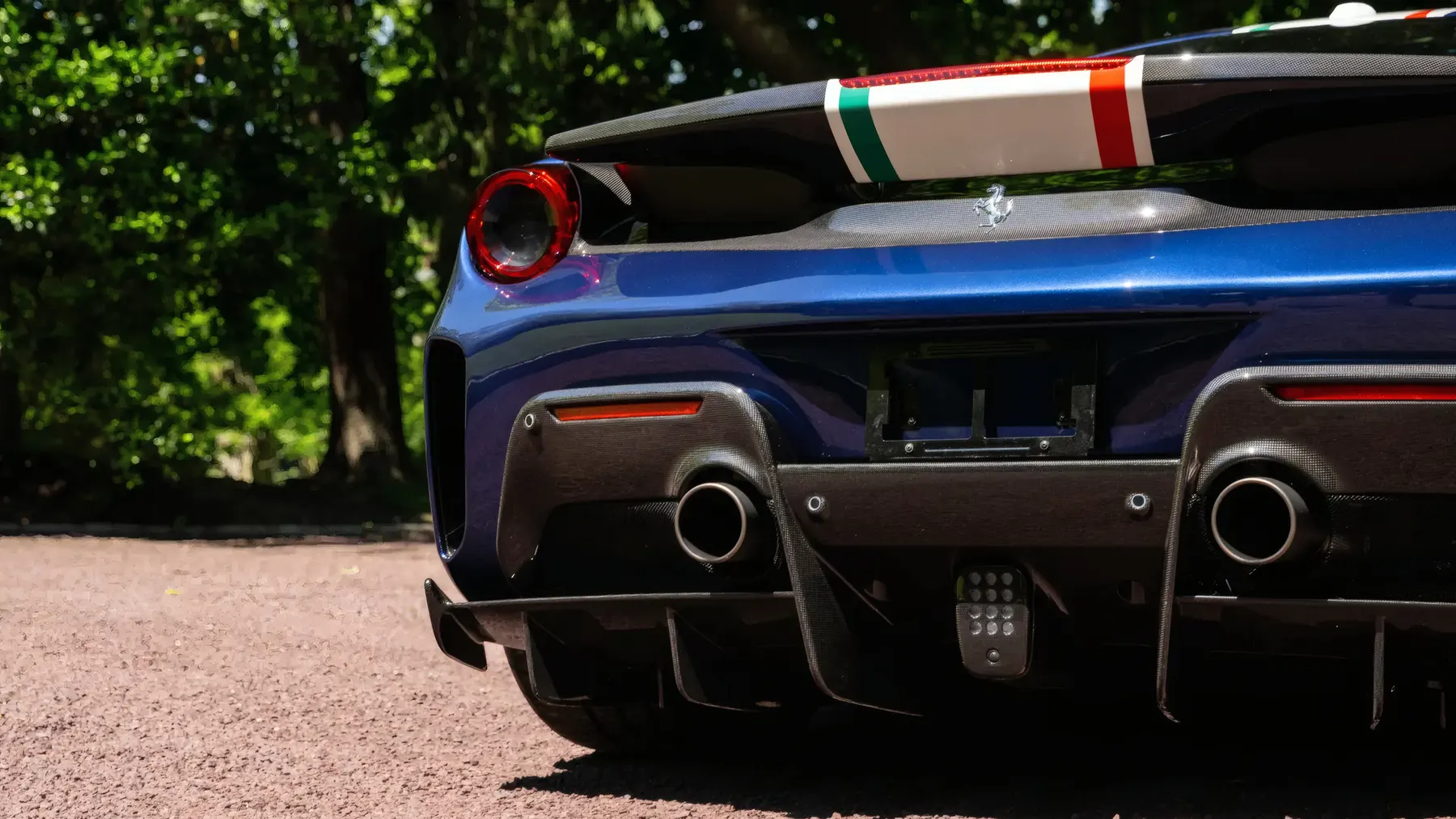
The aerodynamics were, if anything, even more remarkable as a piece of applied engineering. The S-Duct was, at the time, the first use of that F1-derived solution on a Ferrari road car. Air enters at the front of the nose, is routed through the interior of the bodywork in an S-shaped path, and emerges upward through a vent in the bonnet, creating a low-pressure zone that generates front-axle downforce without a conventional splitter that would also increase drag. The rear diffuser borrowed a double-kink profile directly from the 488 GTE endurance racer, and the repositioning of the combustion air intakes to the upper surface of the rear spoiler - rather than through the side openings - freed up the flanks for larger intercoolers and dramatically lowered the intake charge temperature. Net downforce versus the 488 GTB rose by 20 per cent, while aerodynamic efficiency improved by the same margin. The result was a Fiorano lap time of 1 min 21.5 sec in testing conditions - eight seconds faster than an F40, two seconds faster than a 458 Speciale, and only 1.8 seconds behind the LaFerrari.
At a fuelled kerb weight of around 1,385 kg, the 488 Pista was no heavier than many performance saloons, and the combination of that mass, 710 bhp, and rear-wheel drive would in lesser hands suggest a difficult car. In practice, the electronics suite - comprising E-Diff3, F1-Trac, Ferrari Dynamic Enhancer, and magnetorheological dampers with an adaptive suspension system - made the performance broadly accessible even to drivers without professional training, while still offering genuine reward when exploited. The Dynamic Enhancer, a system that modulates brake pressure at individual calipers to refine the car’s cornering line and balance, made its road car debut on the Pista, and even in the Manettino’s Race setting there was a progressive quality to the way the car communicated grip and slip angle that allowed non-professional drivers to operate close to the limit with confidence.
There are, however, genuinely important things the 488 Pista - and therefore the Piloti Ferrari - gave up in the act of being what it was. The most persistent and widely noted is the relationship between the turbocharged V8 and the driver’s right foot at partial throttle and low revs. The 458 Speciale, the naturally aspirated car this lineage was built to surpass on stopwatch terms, offered a quality at modest engine speeds that the Pista’s architecture cannot replicate: the sense of an engine building continuously from idle to maximum power, with the driver’s inputs directly proportional to the response they provoke. The Pista’s V8 is remarkably lag-free for a turbocharged unit, and at the upper end of its rev range it is ferociously, addictively alive. But in town, at low speeds, at partial throttle on narrow roads, there is a different texture to the experience - a slight discontinuity between intent and effect that the best naturally aspirated engines never impose. The sound, too, is genuinely good but not the operatic thing the Speciale produced. The 488 Pista’s exhaust note is visceral and purposeful, louder than the standard 488 by a meaningful margin. But it lives in the shadow of its predecessor’s screaming top-end.
The other practical shortcoming is road noise. The Michelin Pilot Sport Cup 2 tyres developed specifically for the 488 Pista delivered the grip the car’s aerodynamics and power demanded, but at motorway speeds the tyre roar was conspicuous enough that Top Gear’s road test of the production car specifically noted it as undermining the prospect of longer journeys. This was not a car for comfortable grand touring, and on rough British or northern European tarmac the noise floor in the cabin could be intrusive.
For the Piloti Ferrari, there is a further complication that is simultaneously its most defining quality and its most obvious limitation: the purchase eligibility itself. By restricting access to customers actively competing in Ferrari’s GT programmes, Maranello ensured that every Piloti Ferrari was owned by someone with a genuine racing context for the car’s livery and badging. The integrity of the tribute was protected. But it also meant that a specification which might have found enthusiastic buyers among serious road and track day users around the world was, by design, unavailable to them. The racing number on the door had to have been earned on circuit. Whether that makes the Piloti Ferrari more meaningful or simply more difficult to obtain depends on which side of the rope you stand on.
No official production total has been published by Ferrari. The nature of the Tailor Made programme means that cars are produced to confirmed individual customer orders, and the pool of eligible buyers was inherently small - defined entirely by the active participant list of Ferrari’s client racing programmes in the relevant period.
What the 488 Pista ‘Piloti Ferrari’ actually represents, viewed with some distance, is the moment when Ferrari’s customer racing culture and its road car prestige hierarchy converged into a single object. The 488 GTE had won at the highest level of GT endurance racing. The 488 Pista was, at the time of launch, the most technologically accomplished production Ferrari outside the hypercar LaFerrari. The Piloti Ferrari brought both stories into one cabin and put a race number on the door to mark the intersection. For those who qualified, it was a road car that functioned as a sporting credential. That it rode on the full engineering capability of one of the great driver’s cars of its era made the credential genuinely worth having.
Sources
- Ferrari Official – 488 Pista & Piloti Ferrari specification (ferrari.com)
- Motor1 – Ferrari 488 Pista Piloti Ferrari (15 June 2018)
- Top Gear – Why the Ferrari 488 Pista is so special (April 2018)
- Top Gear – Ferrari 488 Pista first drive review (Paul Horrell, April 2018)
- Top Gear – Ferrari 488 Pista UK road test
- Wikipedia – Ferrari 488
- TopSpeed – 2018 Ferrari 488 Pista Piloti Ferrari (15 June 2018)
- The Drive – Piloti Ferrari 488 Pista (June 2018)
- Goodwood Road & Racing – The 710bhp Ferrari 488 Pista
- Autocar India – Ferrari 488 Pista prototype review (April 2018)
Join the discussion
Comments
Loading comments…
Leave a comment
Share a detail, memory, or perspective. Every comment is reviewed before publication.