2024 Porsche 718 Spyder RS

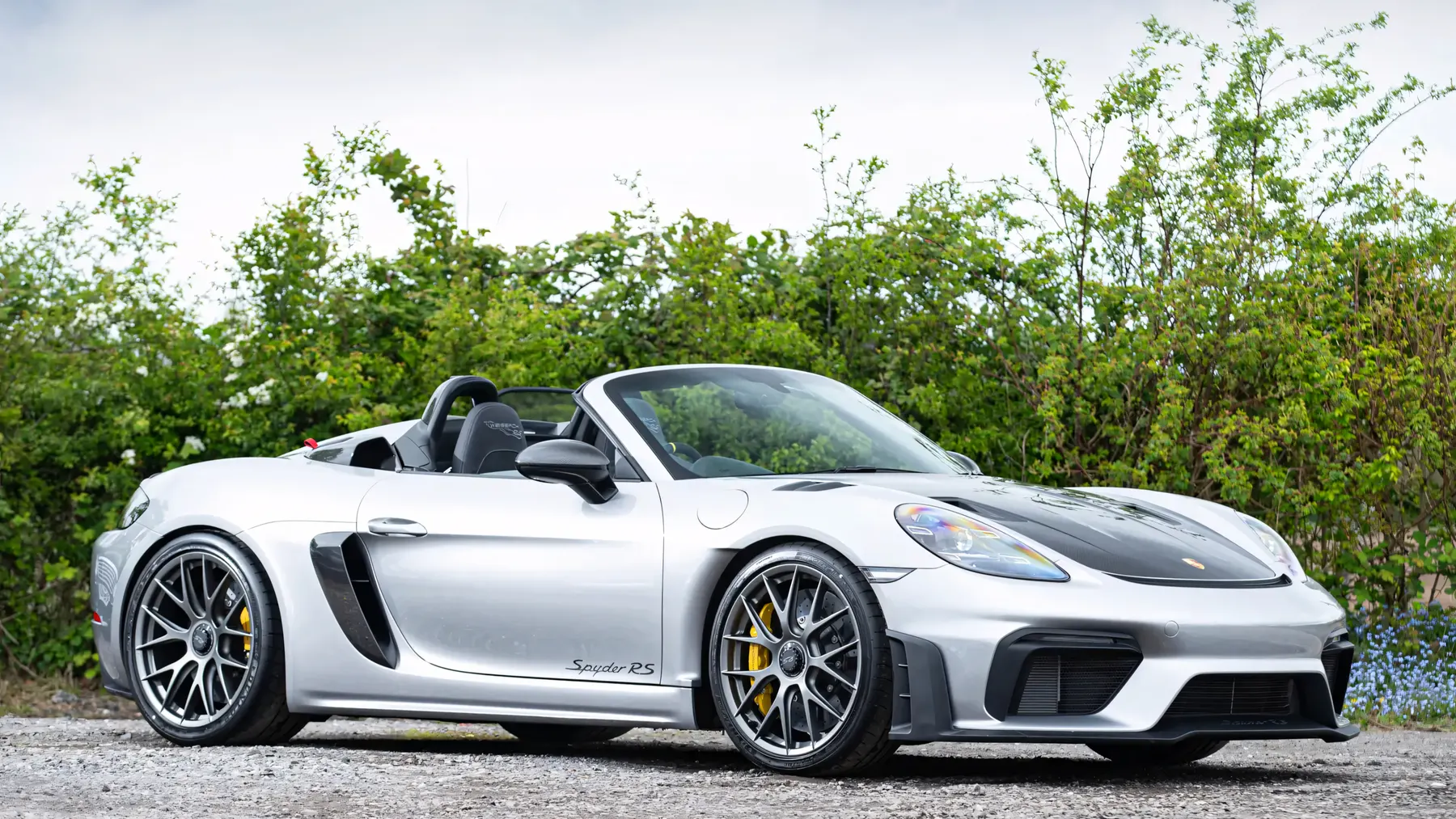
At the summit of Porsche’s 718 lineup sits the Spyder RS, an open-top sports car that channels decades of racing philosophy into what may well be the final statement of naturally aspirated performance in this platform. Sharing its mechanical foundation with its coupe sibling, the Cayman GT4 RS, this roadster strips away everything extraneous to deliver an experience centered on engagement, precision, and the visceral thrill of unfiltered driving.
Nestled behind the cockpit lies a 4.0-litre flat-six engine descended from the 911 GT3, spinning to an exhilarating 9,000 rpm redline while producing 493 brake horsepower and 450 Newton-metres of torque. This naturally aspirated powerplant marks a dramatic departure from the turbocharged four-cylinder units that powered earlier 718 models, delivering a soundtrack and throttle response that enthusiasts had long craved. Paired exclusively with a seven-speed PDK dual-clutch transmission, the Spyder RS launches from standstill to 62 mph in 3.4 seconds and charges onward to a top speed of 191 mph.
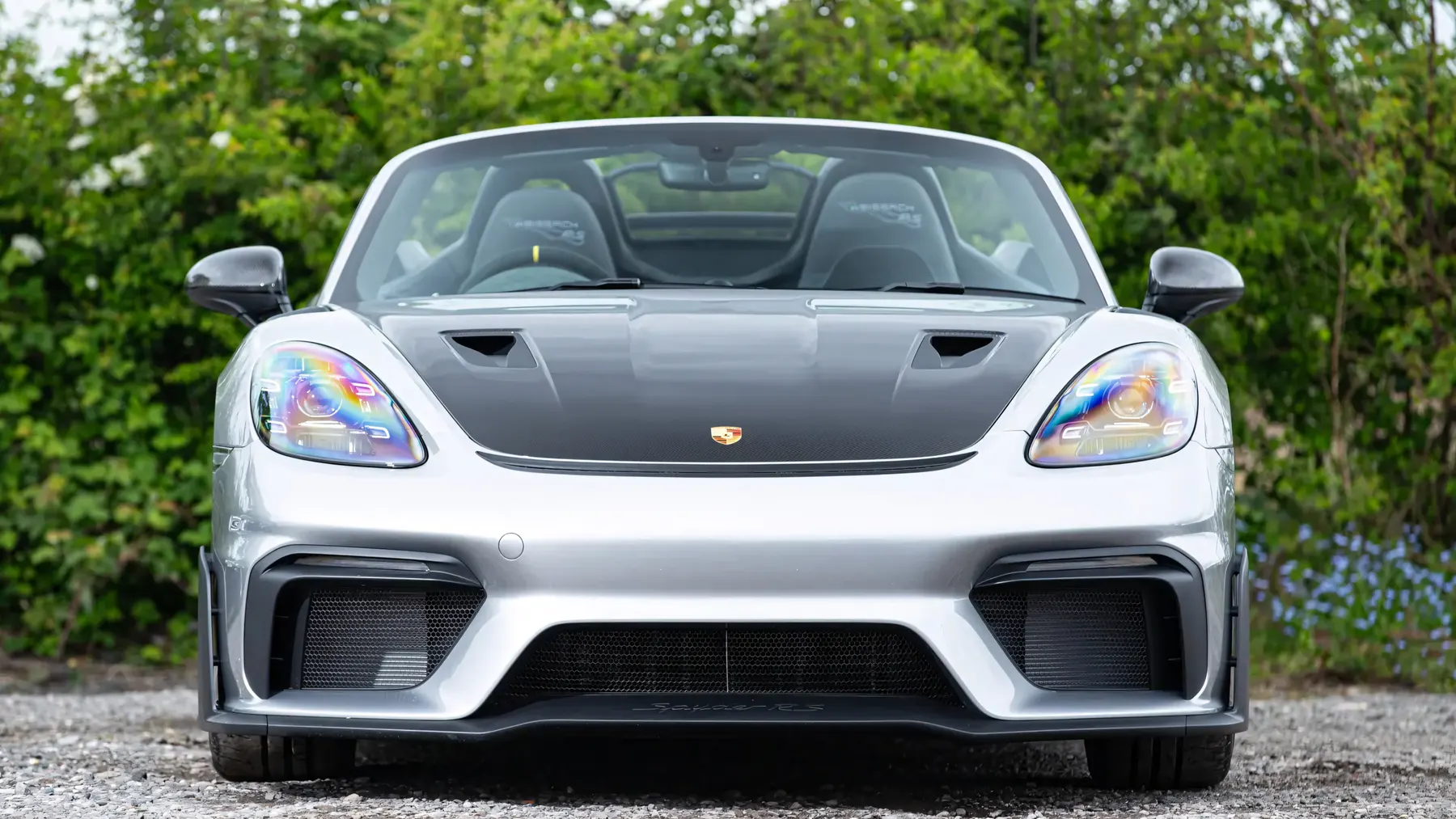
The Spyder RS achieves its performance not through brute force alone but through obsessive weight reduction. At 1,410 kilograms, it undercuts the standard 718 Spyder by 40 kilograms and even edges out its closed-roof GT4 RS counterpart by five kilograms. Carbon fiber-reinforced plastic forms the structural backbone, appearing throughout the bodywork from the standard CFRP bonnet to various aerodynamic elements. The car rides on 20-inch centre-lock forged magnesium alloy wheels borrowed from the GT4 RS, while the optional Weissach package shaves another 10 kilograms through strategic use of carbon-weave finishes on the bonnet, air intakes, and wing mirrors. Inside, lightweight carbon-fiber full bucket seats and Race-Tex dashboard trim continue the weight-conscious philosophy.
Every surface serves a purpose. Additional air intakes channel cooling air and feed the engine’s appetite for oxygen, while louvres over the mid-mounted engine help manage heat. Rather than the fixed rear wing fitted to the GT4 RS, the Spyder RS employs a distinctive ducktail-shaped tear-off edge that generates downforce without the visual mass of a wing. NACA ducts integrated into the front bonnet enhance brake cooling without compromising aerodynamic efficiency, and sideblades at the bumper’s outer edges work in concert with a shorter front spoiler lip to balance downforce front-to-rear.
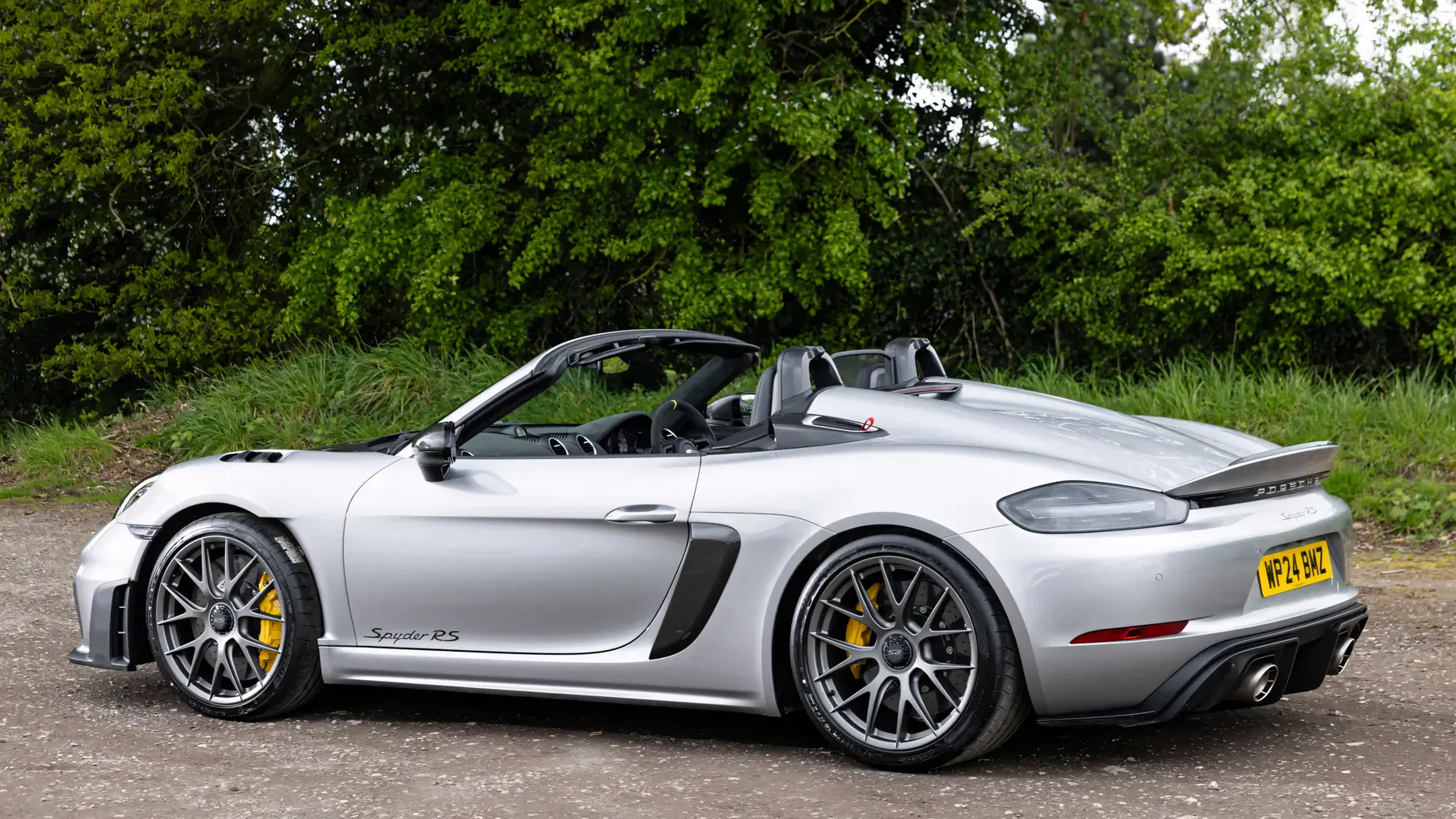
The Spyder RS features a remarkably minimalist roof system weighing just 18.3 kilograms-7.6 kilograms lighter than the standard 718 Spyder. This manually operated single-layer soft top consists of two removable components: a sun sail and weather deflector that can be used together for full weather protection or separately depending on conditions. The sun sail alone functions as a ‘Bimini top,’ shielding occupants from intense sun while leaving the sides and rear open. For those willing to gamble on favorable weather, the entire roof assembly can be left at home, trimming an additional eight kilograms from the car’s fighting weight.
The 718 designation reaches back to Porsche’s competition history, specifically honoring the 718 race car that captured overall victory at Sicily’s grueling Targa Florio in both 1959 and 1960. Those original 718 racers embodied a philosophy of achieving success through nimbleness and precision rather than raw power, often outmaneuvering larger, more powerful rivals through superior handling. This same ethos flows through the Spyder RS, which prioritizes engagement and driver connection over outright horsepower figures.
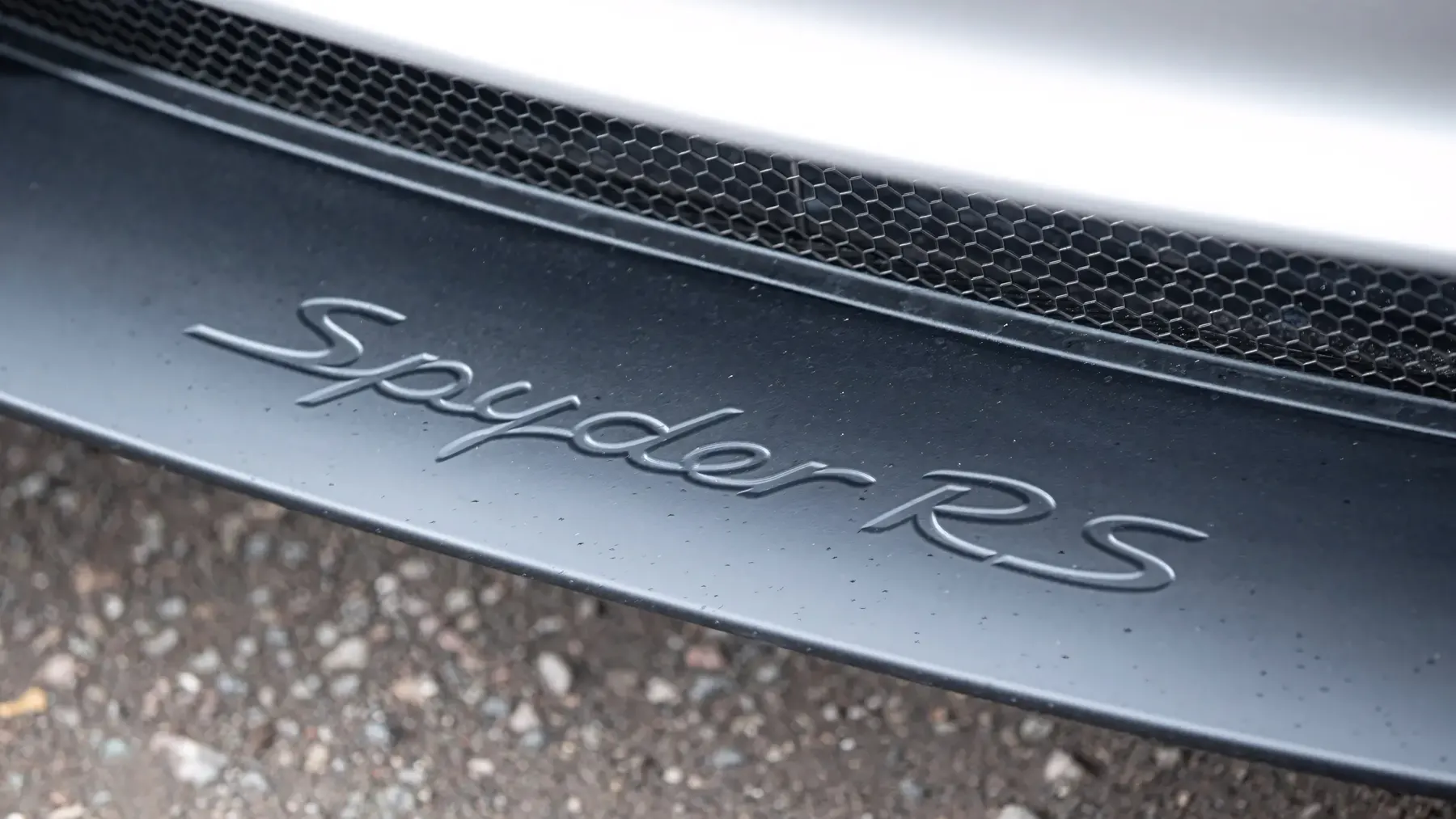
With Porsche’s 2022 announcement that the 718 platform would transition to fully electric propulsion by the middle of the decade, the Spyder RS represents something rare in modern automotive production: a genuine finale. As the ultimate expression of the naturally aspirated flat-six in Porsche’s mid-engine configuration before electrification reshapes the lineup, it stands as both a culmination of engineering refinement and a memorial to an approach that prioritized mechanical intimacy above all else.
Join the discussion
Comments
Loading comments…
Leave a comment
Share a detail, memory, or perspective. Every comment is reviewed before publication.