Rolls-Royce Phantom I Piccadilly Roadster by Brewster: Springfield's Sporting Phantom
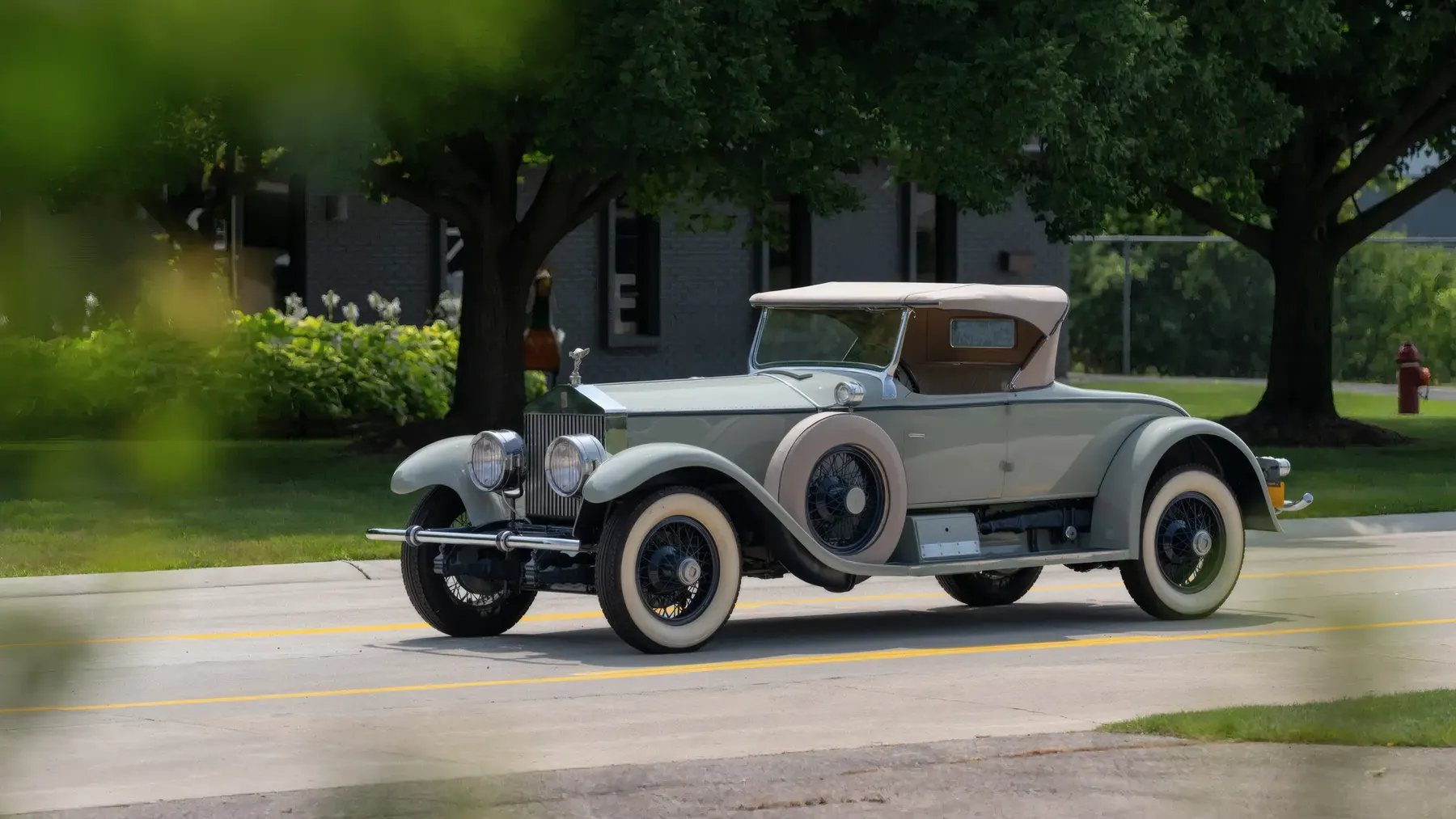
1927 Rolls-Royce Phantom I Piccadilly Roadster by Brewster




Images: Darin Schnabel / RM Sotheby's
Rolls-Royce of America liked to name its catalogue coachwork after English places, and the habit never sat more awkwardly than on the Piccadilly Roadster: a London street name, a chassis built in Springfield, Massachusetts, and a body that one auction catalogue credits to Brewster while another, describing the same style, gives to a Massachusetts firm called Merrimac. The muddle is not just a cataloguing quirk. It is a fair summary of how the Springfield Phantom I was sold, and it helps explain why the Piccadilly, a rare sporting body among mostly heavy and formal cars, is now regarded as one of the most sought-after designs on the American-built chassis.
Underneath it sat the Phantom I, introduced in May 1925 as the New Phantom and numbered retrospectively once the Phantom II arrived in 1929. Rolls-Royce was cautious about replacing the Silver Ghost, and the new car kept the Ghost’s frame. The novelty was the engine: 7,668 cc, with a 108 mm bore and a long 140 mm stroke, pushrod-operated overhead valves, and the cylinders cast as two blocks of three beneath a single detachable head. Hagerty’s Andrew English credits A.G. Elliott with the design and notes that a V12, a straight-eight and supercharged overhead-cam layouts were all considered first. The result was quiet rather than radical; The Motor reported at launch that no tap or click from the valve gear could be heard at any speed.
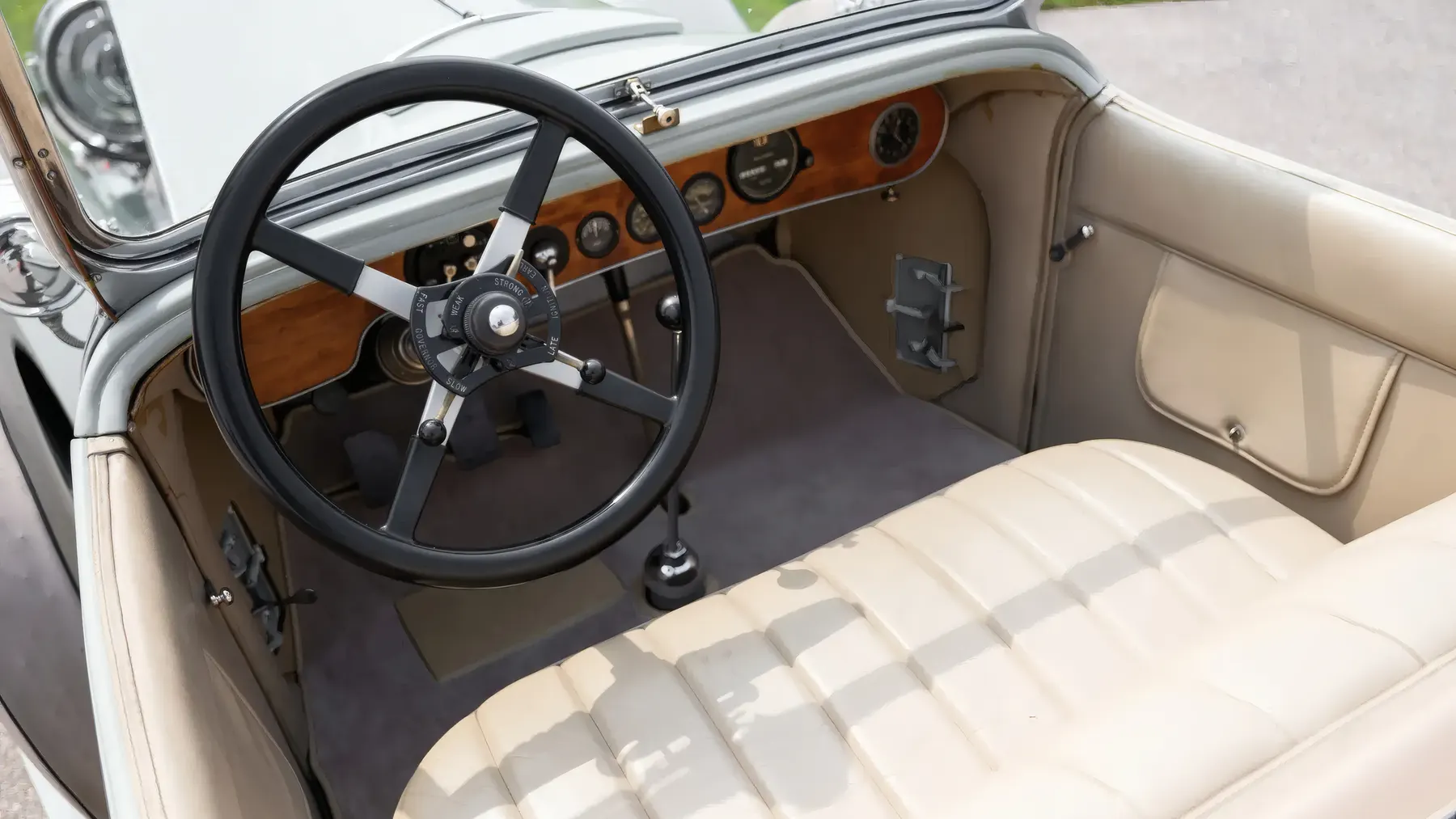
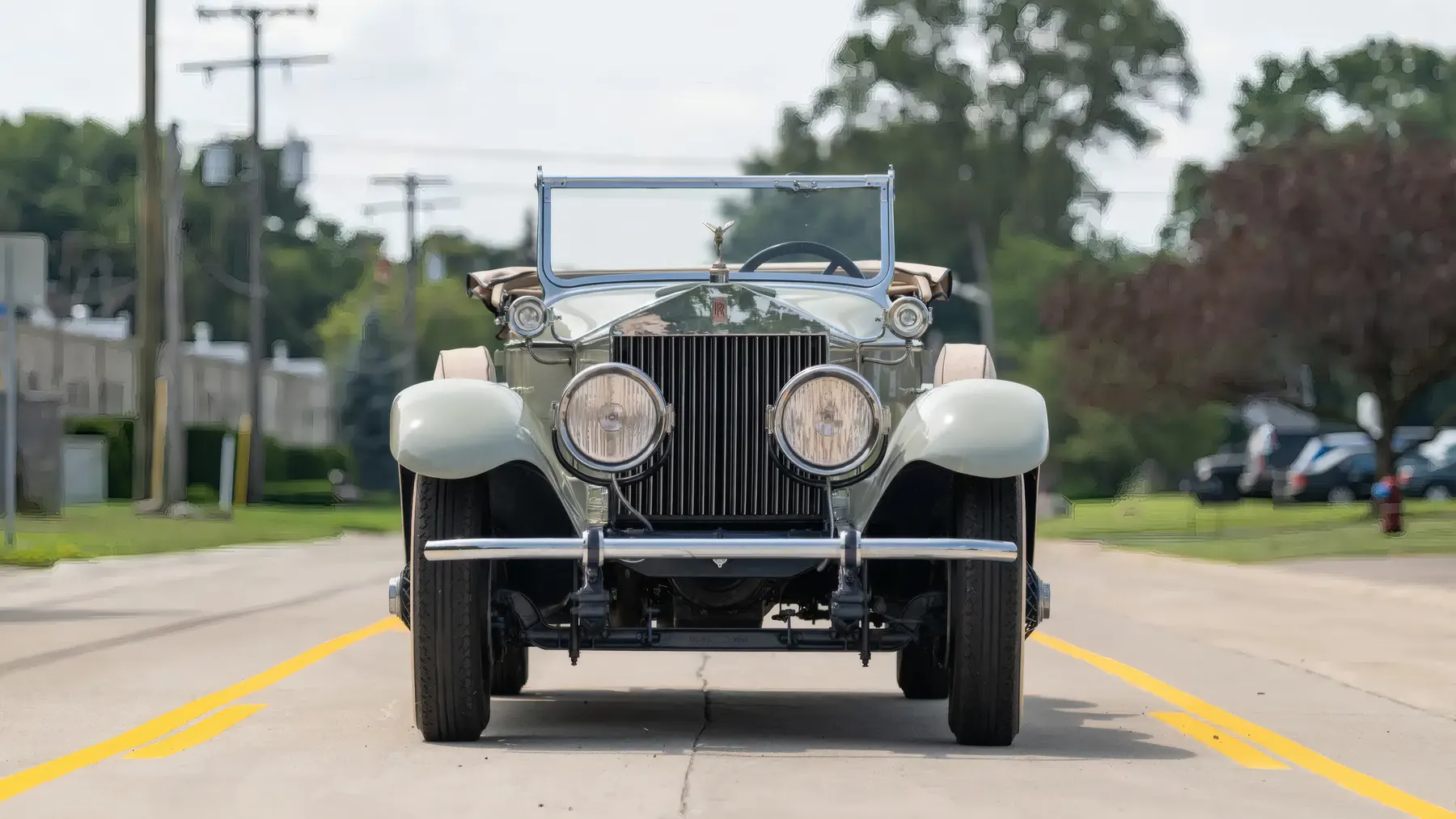
Springfield began building Phantom Is in 1926, about a year behind Derby, and the American cars were far more than English chassis with the steering moved across. They had left-hand drive and a centre-change three-speed gearbox where the British cars used a four-speed, dual coil-and-magneto ignition, American six-volt electrics, a fuel pump in place of the British Autovac system and the Bausch & Lomb headlamps and rolled aluminium bumpers that give a Springfield Phantom its slightly bluffer face. A centralised Bijur system lubricated the chassis from a single pump, replacing the British car’s long list of individual grease points. Two wheelbases were offered, 3,645 mm and 3,721 mm. Roughly 1,240 chassis were built before production wound down around 1931, at a rate of up to a dozen a week before the 1929 crash.
Derby sold bare chassis and left the bodywork to the customer. Springfield sold bodies. Under the Rolls-Royce Custom Coach Work label, catalogued styles were supplied by contract builders, most of them by Brewster but others by firms such as Hibbard & Darrin, Merrimac and Willoughby. Brewster itself had begun in 1810 as a New Haven carriage-maker and, by the 1920s, worked from Long Island City; Rolls-Royce of America bought it around the time the Phantom I reached Springfield, in late 1925 or 1926 depending on the source. The styles carried British place names, Ascot, Henley, Newmarket, York and so on, and the whole arrangement existed because bespoke coachbuilding on the British model did not suit American buying habits.
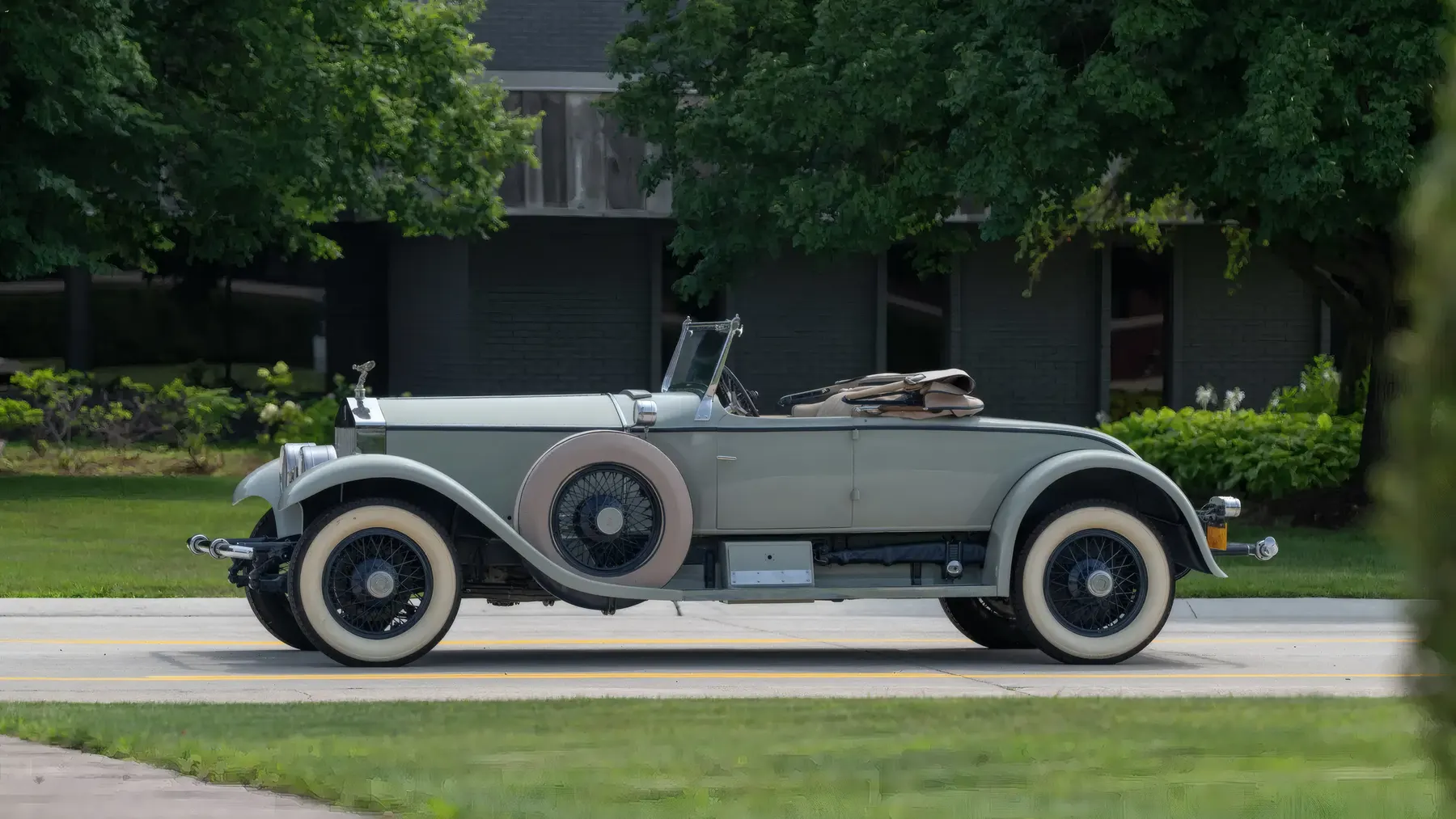
The Piccadilly was the sporting end of that catalogue. It was a two-seat roadster with a fabric top, a relatively small passenger compartment and a short tail, proportions that left the length of the engine ahead of the windscreen as the dominant feature, with a rumble seat behind and small doors to let its occupants climb in with some dignity. The style had first appeared on the Springfield Silver Ghost, of which RM Sotheby’s counts 105, before moving to the Phantom I chassis. How many Phantom I Piccadillys were built depends on whom you ask: RM Sotheby’s recent catalogues say 45, an earlier RM entry said about 20, and a dealer-oriented newsletter puts the total across both chassis types at around 120, of which perhaps 30 to 35 survive. Who built them is equally unsettled. RM’s most recent Piccadilly entry says the bodies came from various coachbuilders, most often Brewster and Merrimac, while two earlier entries credit Merrimac under the Rolls-Royce Custom Coach Work name. The tag “by Brewster” is best read cautiously, as the Springfield programme’s label rather than proof of where a given body was made.
What really shaped the Piccadilly’s story, though, was where it ended up. By RM’s account most Phantom I Piccadilly bodies were destined as replacements on used chassis. The logic, laid out in RM’s entry for a Brewster Henley Roadster, was commercial: the factory took older cars with heavy formal coachwork in part exchange, found those bodies hard to resell, and discovered that sporting bodies, which tended to have been ordered by younger and harder-driving clients, could be mounted on low-mileage trade-in chassis to make a very saleable car. Many Phantom Is therefore wore a limousine or town car first and a roadster later. It was ingenious sales engineering and it is a headache for anyone trying to decide what “original” means.
The Phantom I’s greatest virtue in open form is its torque. The long stroke gave it a reputation for pulling from walking pace to top speed without leaving top gear, and English describes the Derby-built car as slow-revving and unflustered, best driven by getting into top and managing the rest with the ignition advance and mixture control. Each piston displaces almost 1.3 litres, so the engine has no need to be hurried. The four-wheel servo-assisted drum brakes, derived from a Hispano-Suiza design with a servo of Renault type, were good for their period, though English says the technique is to draft the big car along rather than lean on them. Rolls-Royce itself described the output only as sufficient, and published figures differ widely: 95 bhp at 2,750 rpm in a British reference work quoted by English, and 108 to 113 bhp in various auction catalogues. A Derby-built bare chassis was quoted at roughly 1,810 kg, and a closed Brewster Riviera town brougham on the Springfield chassis weighed about 2,470 kg ready for the road, so there was a great deal of mass for any of those figures to shift. No documented weight or road-test figure for the Piccadilly itself turned up in the sources consulted. Early Brooklands tests showed how much the body mattered: a new Phantom with ordinary open touring coachwork could not match the top speed of the 1911 London to Edinburgh Silver Ghost, and only a deliberately lightweight Evernden-designed body pushed a car beyond 89 mph. Figures around 80 mph are quoted for heavily bodied cars.
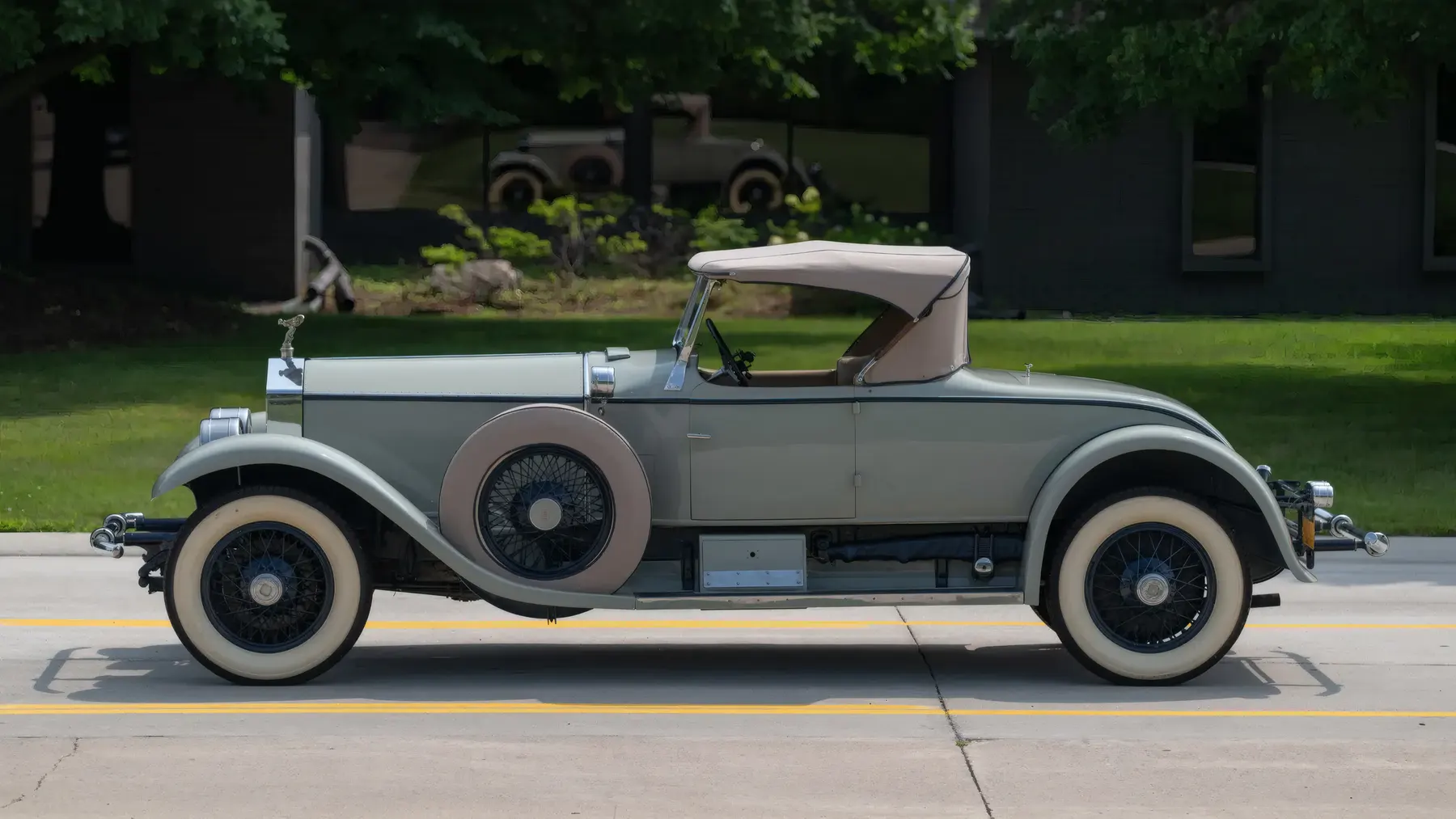
The Piccadilly’s weaknesses are those of the Phantom I itself, with a few of its own. Even in light form the car was working with an old chassis: English points out that the Phantom I was far from the technical vanguard, that Sunbeam launched a twin-cam 3-litre sports car a year later, and that Royce himself eventually argued in writing for the chassis improvements that became the Phantom II in 1929. Ernest Hives had written in 1922 that Rolls-Royce expected to be beaten on speed and hill climbing by cars with larger engines, and a roadster body could soften that problem but not remove it. Anyone expecting a sports car in the Bentley sense will find a dignified, heavy tourer with a good body. It is also a small-cabin two-seater on a wheelbase of more than 3.6 metres, so buyers paid for the chassis’ bulk without getting what it did best, carrying several people in formal comfort. Evidence on the cylinder head is contradictory: Wikipedia says the 1928 change from iron to aluminium caused corrosion problems, while a specialist dealer says it was made to cure corrosion, so the later head cannot be treated as an unambiguous improvement. And the paperwork is untidy. A style built in small numbers, by more than one builder, with many bodies fitted after the fact, leaves counts, attributions and originality open to argument, and Cars-On-Line notes that matching chassis, engine and body numbers are extraordinary to find.
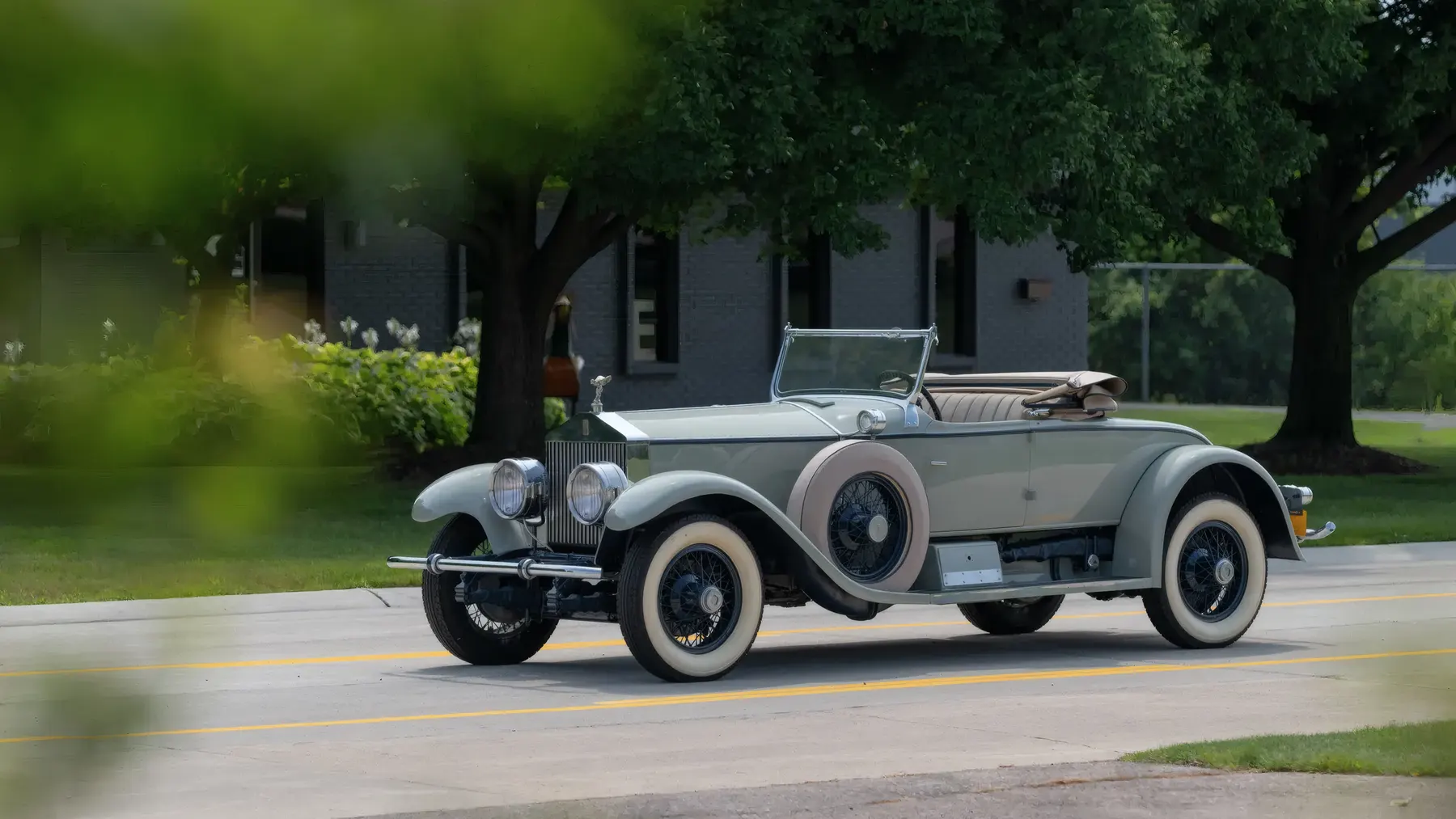
For all that, the Piccadilly’s reputation has held up well. British motoring writers of the period praised the Phantom I’s silence and refinement, and today RM Sotheby’s calls the Piccadilly one of the most sought-after designs on the American chassis, with catalogue entries that recommend these cars for club rallies as readily as for concours lawns. The wider Phantom I has recovered from a bleak middle age: English recalls that British examples were once cheap enough to be cut down for farm duties, whereas now they are valued for their size and quirks. The Piccadilly shares that affection and adds rarity, and it sat at the sportier end of a catalogue otherwise dominated by closed cars.
The Phantom I’s own run was short. Derby replaced it with the Phantom II in 1929; Springfield wound the Phantom I down around 1931, after which Brewster kept coachbuilding on Phantom II chassis shipped over from Britain until 1934. That makes the Piccadilly Roadster a snapshot of a brief arrangement: a British engineering philosophy, an American factory, and a coachbuilding programme flexible enough to sell one chassis as a limousine and later reclothe it as a roadster for a different kind of owner. It was never quick by the standards of its day and its provenance is untidy, but it showed what a Springfield Phantom could be when the body was allowed to be lighter than the chassis deserved.
Technical data
Performance Specifications
| Specification | Springfield Phantom I (1926 to c.1931) | Derby Phantom I (1925 to 1929), for reference |
|---|---|---|
| Engine | 7,668 cc overhead-valve inline-six, 108 mm x 140 mm | Same |
| Power | 95 to 113 bhp* | 95 bhp at 2,750 rpm* |
| Torque | Not published in sources consulted (omitted) | Not published in sources consulted (omitted) |
| Gearbox | Three-speed, centre change | Four-speed |
| Brakes | Four-wheel servo-assisted drums | Four-wheel servo-assisted drums |
| Wheelbase | 3,645 mm and 3,721 mm | About 3,650 mm and about 3,820 mm (sources vary) |
| Weight | Piccadilly not documented; closed Brewster Riviera about 2,470 kg road-equipped | Bare rolling chassis about 1,810 kg (without spare wheels and lamps) |
| Top speed | About 80 mph with heavy formal bodies*; over 89 mph on a lightweight Brooklands test body | 80 mph (museum listing); 90 mph (British reference work, per Hagerty)* |
| Price when new | Bare chassis US$13,335; Brewster Riviera US$19,965 | Chassis only, 1,850 or 1,900 pounds |
| Chassis built | Roughly 1,240 (sources give 1,241 to 1,243) | Roughly 2,212 to 2,269 (sources vary) |
| Piccadilly Roadster bodies on Phantom I | 45 (recent RM catalogues); about 20 (earlier RM entry); about 120 across Silver Ghost and Phantom I (newsletter) | Not documented |
Sources
- RM Sotheby’s: Rolls-Royce Phantom I Piccadilly Roadster by Brewster (Hershey 2024)
- RM Sotheby’s: Rolls-Royce Phantom I Piccadilly Roadster (Arizona 2022)
- RM Sotheby’s: Phantom I Piccadilly Roadster by Rolls-Royce Custom Coach Work (London 2014)
- RM Sotheby’s: Rolls-Royce Phantom I Henley Roadster by Brewster (Meadow Brook 2010)
- RM Sotheby’s: Springfield Phantom I Riviera Town Brougham by Brewster (Villa d’Este 2011)
- RM Sotheby’s: Springfield Phantom I Town Car by Hibbard & Darrin (Monterey 2011)
- RM Sotheby’s: Phantom I Ascot Sport Phaeton by Brewster (Monterey 2011)
- Hagerty Media: What It’s Like to Drive the First Rolls-Royce Phantom
- Wikipedia: Rolls-Royce Phantom I
- Wikipedia: Brewster & Co.
- National Motor Museum: Rolls-Royce 40/50 New Phantom
- The Metropolitan Museum of Art: Brewster & Company history
- RM Sotheby’s: Springfield Phantom I Newmarket Convertible Sedan by Brewster (Amelia Island 2012)
- Gooding & Company: 1929 Rolls-Royce Phantom I Newmarket
- Hyman Ltd: Springfield Phantom I (Tilbury sedan listing)
- Hyman Ltd: 1928 Rolls-Royce Phantom I Newmarket
- Hyman Ltd: 1929 Rolls-Royce Phantom I Newmarket Phaeton
- Cars-On-Line: Piccadilly Roadster newsletter item
Join the discussion
Comments
Loading comments…
Leave a comment
Share a detail, memory, or perspective. Every comment is reviewed before publication.