Lincoln Model K Convertible Victoria by Brunn: The Style Edsel Saved
1938 Lincoln Model K Convertible Victoria by Brunn




Images: Darin Schnabel / RM Sotheby's
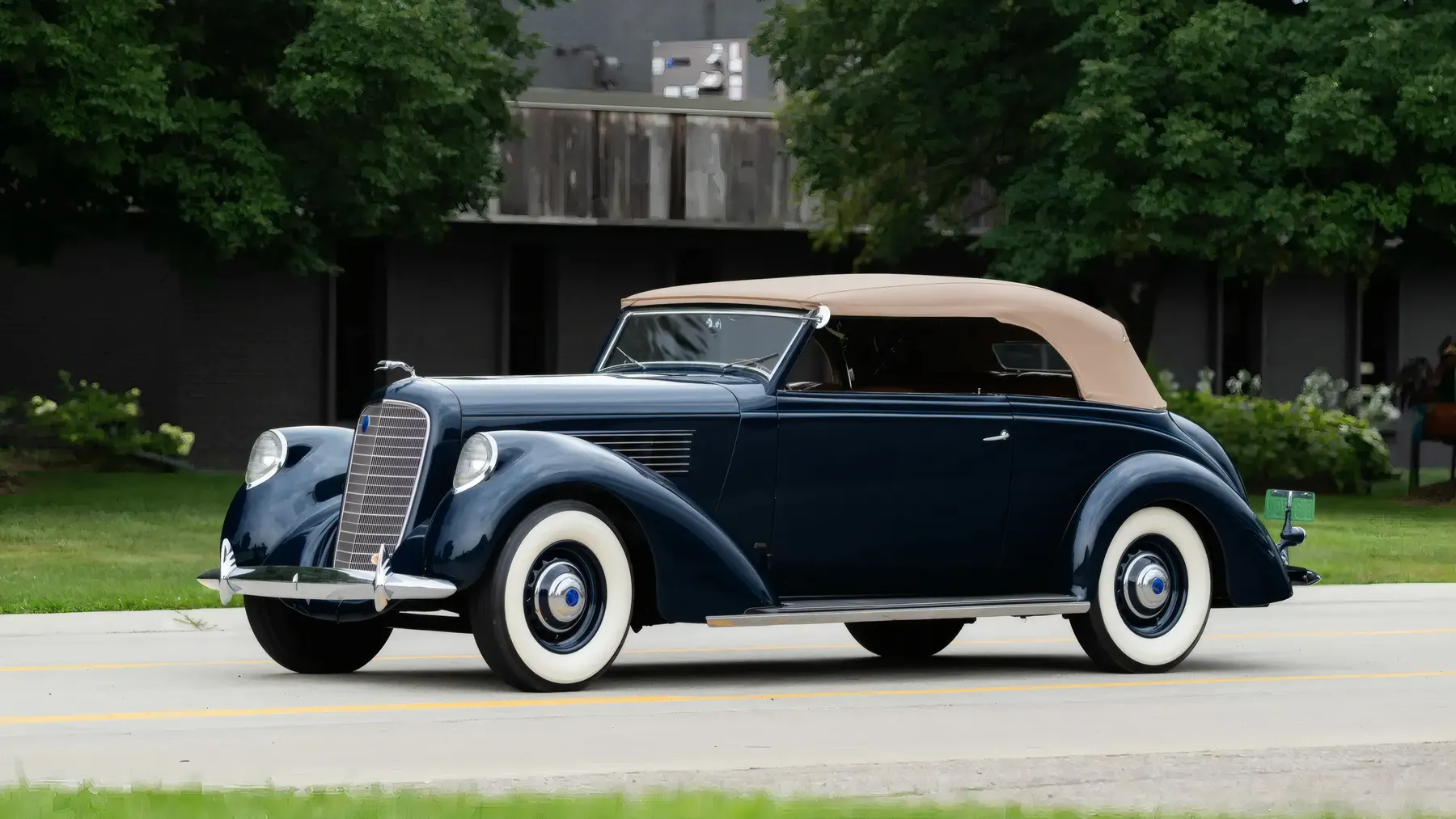
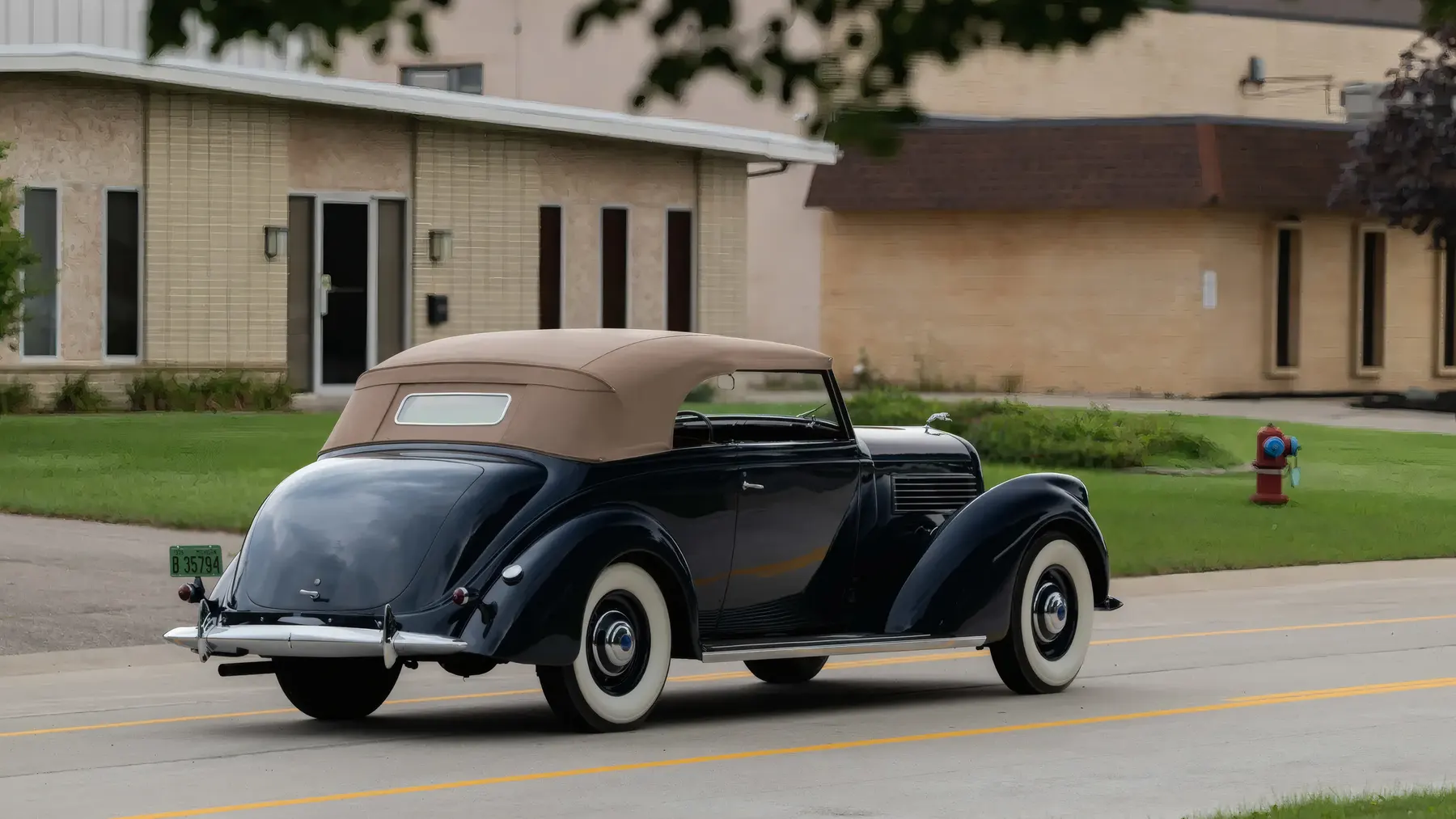
The Lincoln Model K Convertible Victoria by Brunn exists, in a roundabout way, because a Massachusetts coachbuilder went under. The blind-quarter convertible victoria had been a staple of Waterhouse of Webster, and when that firm foundered in 1932, Edsel Ford lobbied to keep the body style alive. According to RM Sotheby’s catalogue history, the result was that Brunn & Company of Buffalo acquired the Waterhouse design rights and, from 1933, supplied Lincoln with a series of Convertible Victorias that carried on, in changing forms, through to 1939. The name describes a precise object: a two-door, five-passenger convertible whose rear quarters are solid panel rather than glass, so that the raised top has a closed, formal profile that sits oddly, and rather attractively, against the open-car brief.
Brunn was the natural custodian. Hermann A. Brunn came out of the carriage trade and founded the firm in 1908; Lincoln was its first car-maker customer, a relationship that predates the Ford takeover, and the University of Michigan’s Brunn archive records Henry Leland retaining the firm in 1922 to advise on styling and body engineering. Under Edsel Ford the supplier roster was divided by specialism. Judkins took berlines and coupes, Willoughby limousines, LeBaron convertible sedans, and Brunn town cars and convertibles, a remit that covered cabriolets, dual-cowl phaetons and victorias. At its peak Brunn employed around 150 craftspeople and turned out some 20 bodies a month, mostly for Lincoln, though only small orders were built in Buffalo while larger quantities went to Detroit-area companies. Bodies reached Detroit in small batches, were fitted to chassis and were finished to each customer’s specification. That makes the Convertible Victoria an awkward hybrid: it sat in the Lincoln catalogue like a production model, yet its annual build was counted in single or low double figures.
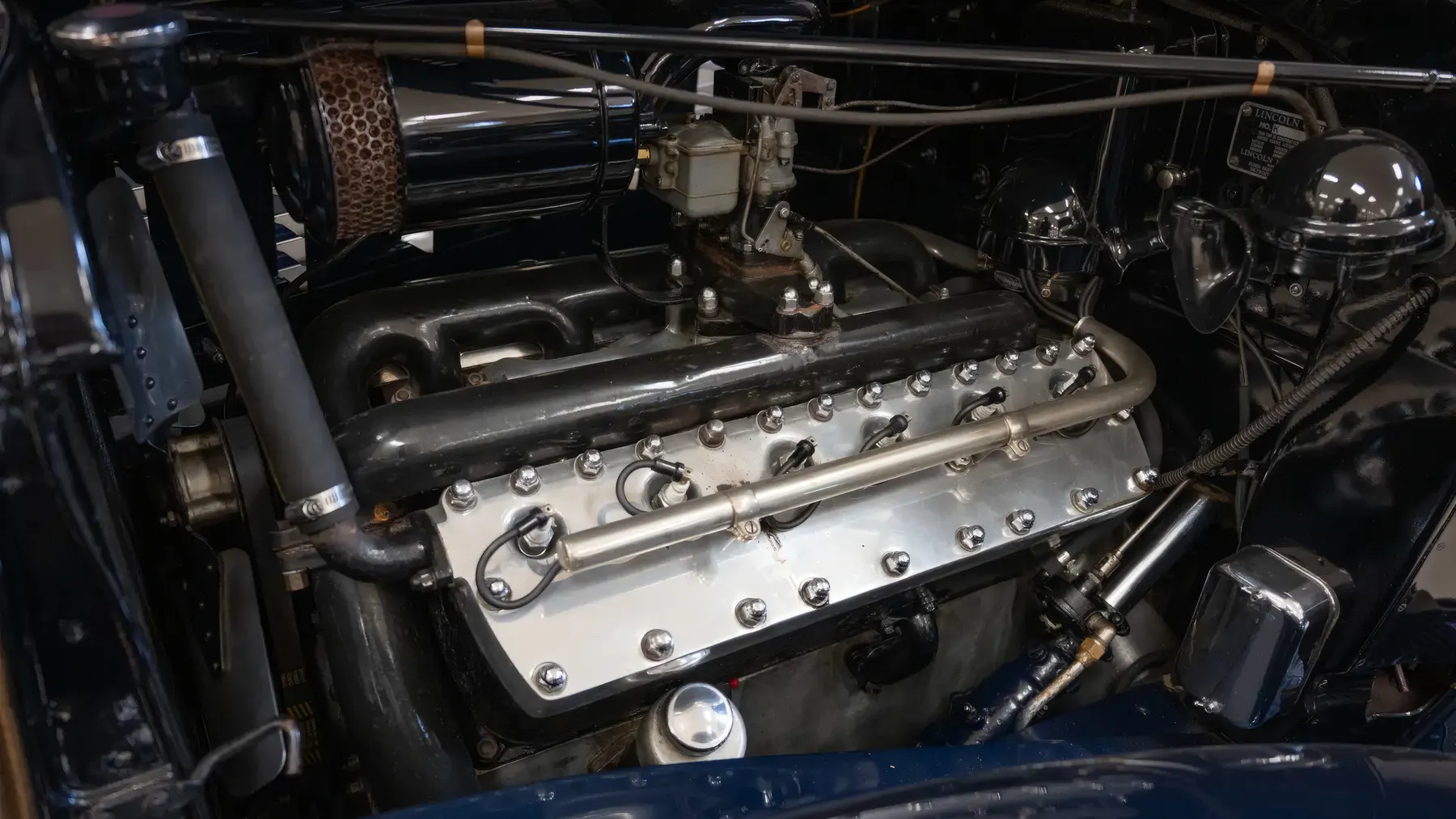
Underneath sat a platform that changed a good deal during the seven years the style was offered. The Model K arrived for 1931 on a 3,683 mm wheelbase with a 384.8 cu in V8 descended from the Model L engine, rated at 120 bhp after a downdraft Stromberg carburettor, higher compression and altered timing. For 1932 the range split in two. The V8 carried on in the shorter KA, while the KB took Lincoln’s first V12, a 447.9 cu in, 65-degree L-head with fork-and-blade connecting rods and seven main bearings, rated at 150 bhp at 3,400 rpm and 292 lb-ft at 1,200 rpm. Brunn’s first Convertible Victorias rode on that long KB chassis. For 1934 a single 414 cu in (6.8-litre) V12, enlarged from the KA’s smaller twelve, replaced both earlier engines. It matched the old engine’s 150 bhp, but RM Sotheby’s notes that it was more economical for Lincoln to build and gave better torque, flexibility and fuel economy, while the Lincoln & Continental Owners Club’s technical primer records it as the first Lincoln engine to use insert bearings rather than babbitt. From 1935 the KA and KB labels disappeared and everything was simply a Model K. The 414 received hydraulic lifters and a revised camshaft profile for 1937, and the Owners Club lists no further engineering changes before production ended.
The earliest cars are the ones many people find most beautiful. Lincoln’s 1933 catalogue listed the style as model 260, a five-passenger convertible coupe, among 26 KB body styles, 17 of them from outside coachbuilders. Only 533 KBs were delivered that year, and RM Sotheby’s records 15 Convertible Victorias from Brunn among them. Auction cataloguers praise the low windscreen, clean top line, close-coupled cabin and sweeping wings, and some call it the best-looking coachbuilt body on the 1933 KB chassis, which is partisan copy but not an unreasonable verdict. The 1934 cars, still on the KB chassis, were scarcer, with the figure usually put at about half a dozen. That year the five remaining approved coachbuilders, Brunn, Dietrich, Judkins, Willoughby and LeBaron, built just 159 semi-custom KBs between them, out of 2,149 Lincolns of all kinds.
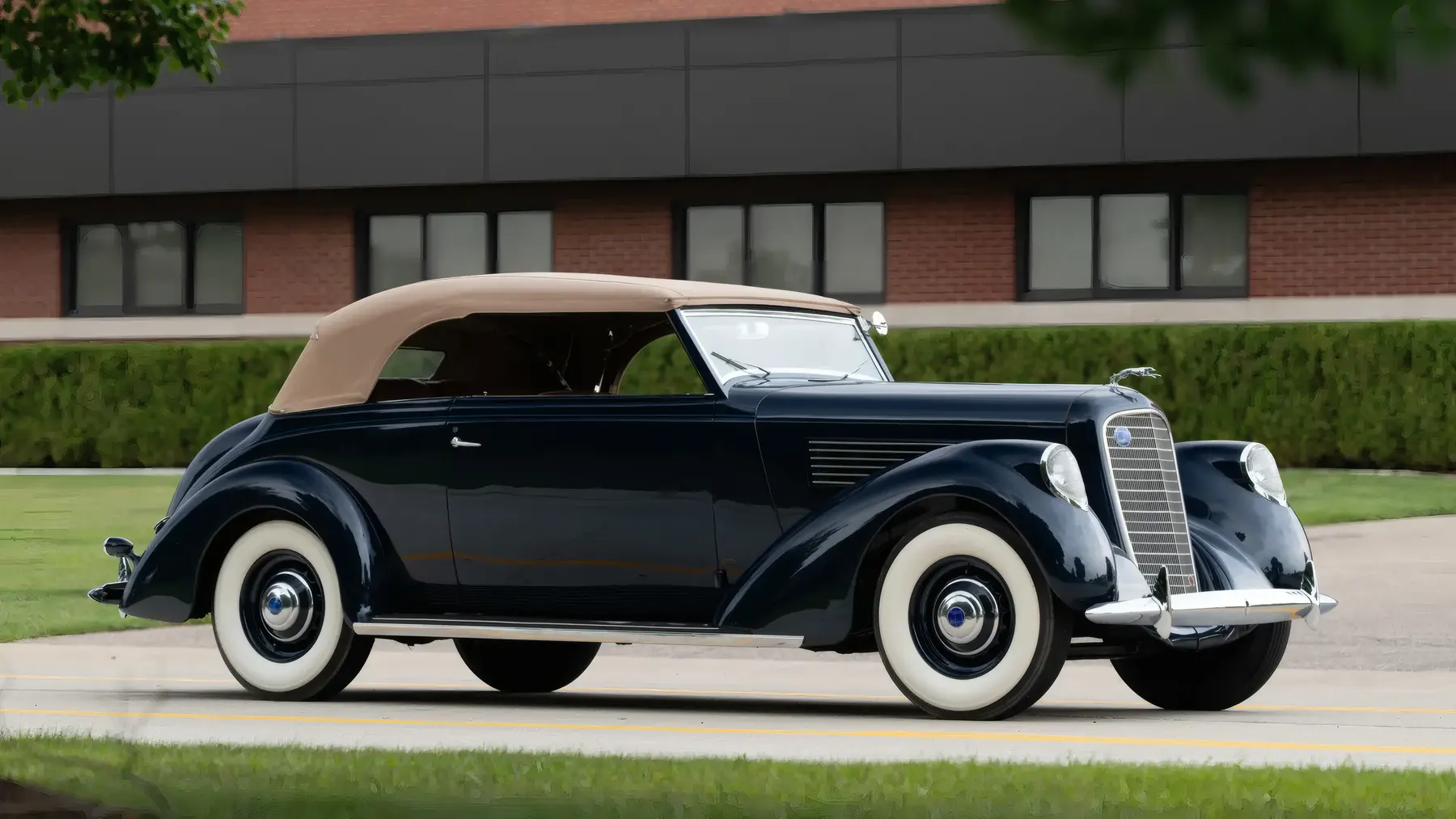
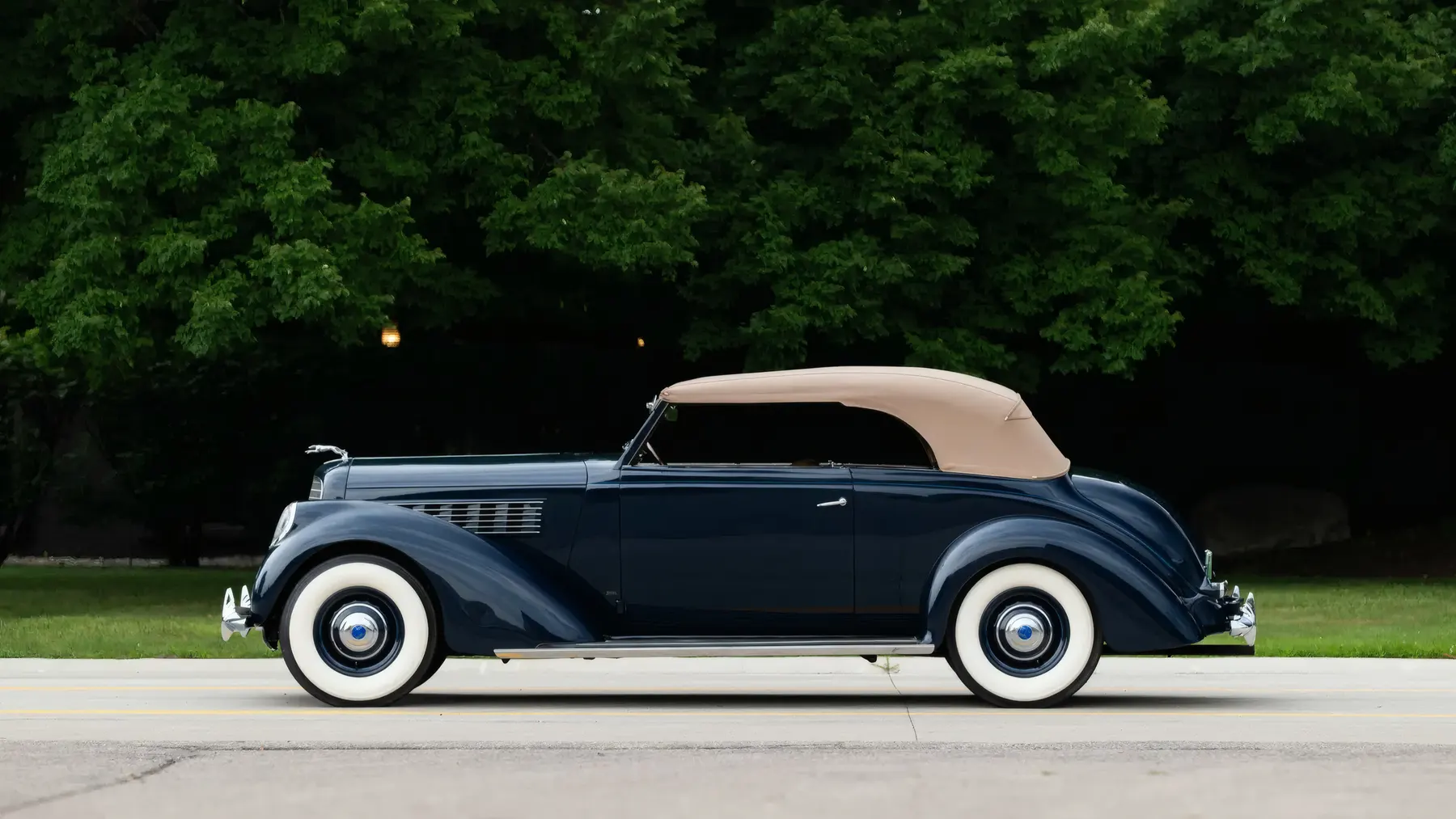
From there the Convertible Victoria tracked Lincoln’s fashion. RM Sotheby’s records ten built for 1936, with that year’s pontoon-style wings, pressed-steel wheels with large hubcaps and lowered headlamps. For 1937, in a year when most Lincolns took on Zephyr-inspired styling, the body gained a one-piece flat windscreen while keeping the blind-quarter top; the same auction house gives the build as 13 in one catalogue and 15 in another, a discrepancy best left unresolved. Convertible Victorias were built both with and without side-mounted spares. The pivotal car arrived late in 1937: a special-order Convertible Victoria on the long chassis with a vee windscreen, retractable rear quarter glass, skirted rear wings, teardrop step plates in place of running boards and a lighted Lalique glass mascot instead of the greyhound. Hermann C. Brunn later called it one of a kind, but he and his father liked several of its ideas, and the quarter windows carried over to the catalogued 1938 style 408, a flat-windscreen car on a 3,454 mm wheelbase of which eight were built. RM Sotheby’s describes those chrome-edged quarter windows as the first of what became industry standard, noting that Hudson alone offered anything comparable in 1937 and that its version was a side curtain fixed to the top and lowered with it. The last cars, for 1939, numbered just two, with a rakishly angled windscreen, fully disappearing side windows and a blind-quarter top that folded nearly flush with the bodywork, at a catalogue price of $5,800.
What the car was like to drive is harder to establish. Period road-test data for the Convertible Victoria specifically is scarce, so its character has to be assembled from the platform and from owner-club and catalogue accounts. The layout was conventional: RM Sotheby’s entries describe a three-speed manual gearbox, a solid front axle and live rear axle on semi-elliptic leaf springs, and four-wheel mechanical drum brakes with vacuum assistance. The V12’s strength was flexibility rather than speed. The Owners Club says these cars will happily idle along at walking pace in first gear, and Christie’s catalogue copy for a 1937 Model K describes a top-gear car from walking pace to a maximum of about 95 mph, an enthusiastic figure rather than a tested one. Weight matters here. RM Sotheby’s puts the 1939 Convertible Victoria at roughly 2,700 kg, which squares with the 2,730 kg or so that the Henry Ford museum lists for a related Brunn-bodied touring cabriolet of 1937. A car like that is more likely to gather momentum than to accelerate, and its appeal, as the catalogue copy suggests, lies in the smoothness with which twelve cylinders do the gathering.
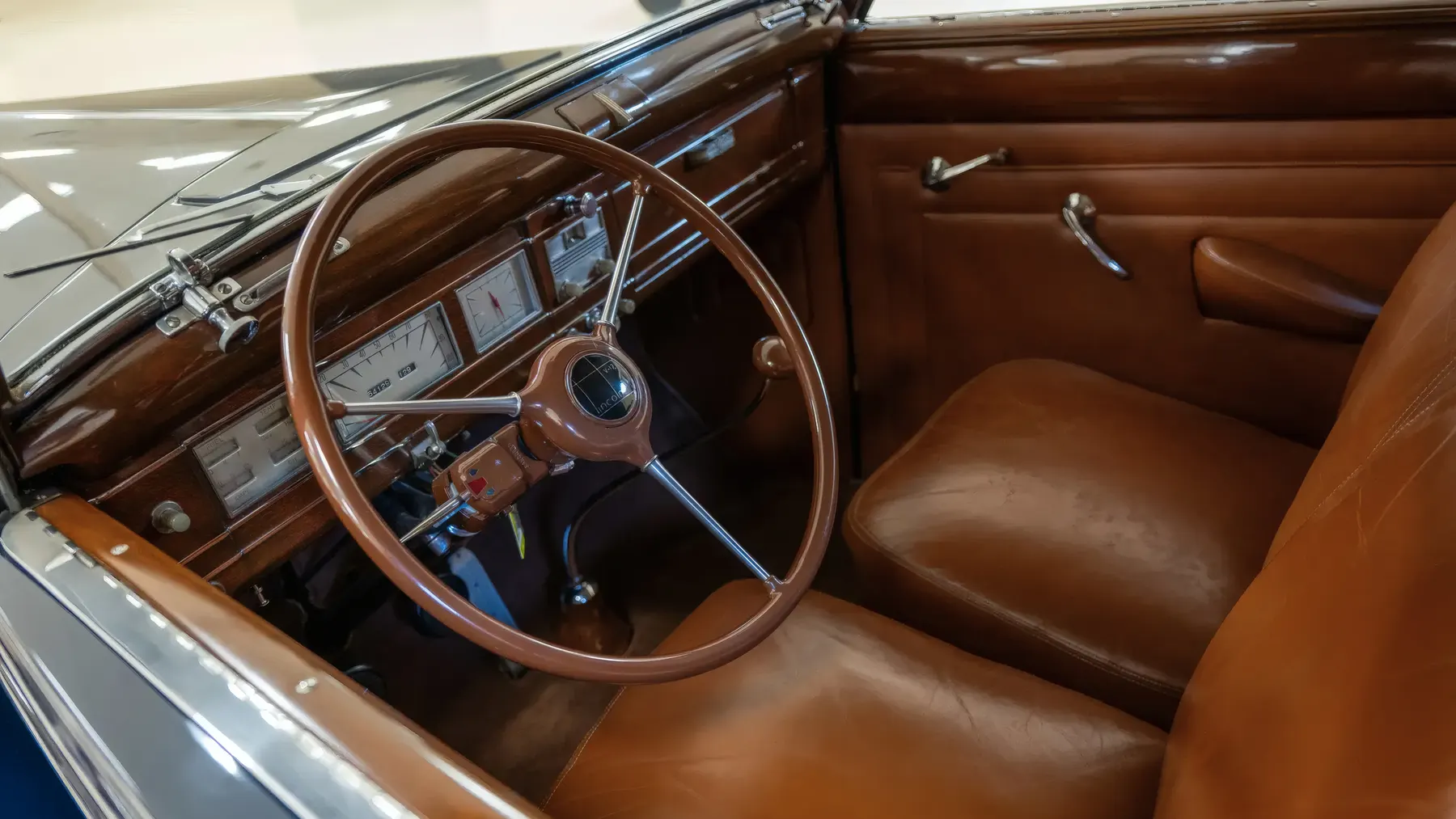
None of this hides the Convertible Victoria’s weaknesses, several of which were visible at the time. Start with the arithmetic: roughly 2,700 kg of car and 150 bhp, an output that had been unchanged since 1932 and that the Owners Club says saw no further engineering revision to the end of production. The engine was never especially efficient with its size, either. RM Sotheby’s contrasts the 447.9 cu in Lincoln with Cadillac’s overhead-valve 368 cu in V12 at 135 bhp, which means Lincoln needed roughly 80 cu in of extra displacement to find 15 bhp. Stopping all that weight relied on mechanically actuated drums, however well boosted, and a beam front axle on leaf springs looks modest beside the ambition of the engine. The body style carried its own compromise. Blind rear quarters flatter the raised top but cost rearward vision, and RM Sotheby’s credits the later retractable quarter windows with improving it, which tells you what the earlier cars gave up. Commercially the style was marginal: the most-quoted production tally for 1938 has 416 Model Ks against 19,751 Lincoln-Zephyrs, the Zephyr being cheaper and more modern, and by 1939 the Convertible Victoria asked $5,800 and found two takers. Lincoln had been an underdog for years, selling about 7,000 cars annually between 1922 and 1930 while Packard and Cadillac outsold it three to one, and the Model K’s name also sits close to the Zephyr’s unrelated twelve, whose reputation among enthusiasts is poorer than the K engine’s. Taste worked against the later cars too: the Owners Club primer notes that some people dislike the wing-mounted headlights of the 1937 to 1939 cars, one reason the 1932 and 1933 KB generally sits above them.
Reputation has been kinder than the sales ledger. The Classic Car Club of America recognises the Model K as a Full Classic, and catalogue writers routinely rank the Brunn Convertible Victoria among the most elegant semi-custom Lincolns, though that is sellers’ language. The same catalogues count only three or four known survivors for each of the 1933, 1934, 1936 and 1937 model years. The longer story is about a system ending. Hagerty notes that Brunn found the Zephyr’s unitary body harder to convert than starting from scratch, Hermann A. Brunn’s death in 1941 marked the end of the company, and Hermann C. Brunn went on to work on colour and trim at Ford. RM Sotheby’s suggests that the Convertible Victoria’s influence can be seen in the genesis of Edsel Ford’s Lincoln Continental, a plausible link rather than a documented one, and Hagerty adds that Willoughby’s chief designer, Martin Regitko, was hired by Lincoln to work on that car with Bob Gregorie. Perhaps the best way to read the Convertible Victoria is as the last confident answer to the question of how a huge, hand-finished, twelve-cylinder open car should look when it wants to be elegant rather than imposing. Lincoln stopped asking the question in that form after 1939, and the few surviving cars are the best record of how confidently it had been answered.
Technical data
Performance Specifications
| 1933 KB (catalogue model 260) | 1934 KB | 1938-39 style 408 | |
|---|---|---|---|
| Engine | 447.9 cu in (7.3-litre) 65-degree L-head V12 | 414 cu in (6.8-litre) L-head V12 | 414 cu in (6.8-litre) L-head V12 |
| Power | 150 bhp at 3,400 rpm | 150 bhp | 150 bhp (rpm quoted as both 3,400 and 3,800) |
| Torque | 292 lb-ft at 1,200 rpm | Not corroborated | Not corroborated |
| Transmission | Three-speed manual | Three-speed manual | Three-speed manual |
| Brakes | Four-wheel mechanical drums, vacuum-assisted | Four-wheel mechanical drums, vacuum-assisted | Four-wheel mechanical drums, vacuum-assisted |
| Suspension | Solid front axle, live rear axle, semi-elliptic leaf springs | As 1933 | As 1933 (one source differs, see notes) |
| Wheelbase | 3,683 mm | 3,683 mm | 3,454 mm |
| Kerb weight | Not documented | Not documented | approx. 2,700 kg* |
| Top speed | Not documented | Not documented | approx. 95 mph* |
| Catalogue price | Not corroborated | Not corroborated | $5,800 (1939) |
Technical data
Brunn Convertible Victoria build counts as catalogued:
| Model year | Built |
|---|---|
| 1933 | 15 |
| 1934 | About half a dozen |
| 1935 | Not established |
| 1936 | 10 |
| 1937 | 13 or 15 (sources differ) |
| 1938 | 8 (plus one special-order long-chassis car) |
| 1939 | 2 |
Sources
- RM Sotheby’s: 1938 Lincoln Model K Convertible Victoria by Brunn (Hershey 2011)
- RM Sotheby’s: 1938 Lincoln Model K Victoria by Brunn (Hershey 2022)
- RM Sotheby’s: 1938 Lincoln Model K Convertible Victoria by Brunn (Amelia Island 2013)
- RM Sotheby’s: 1937 Lincoln Model K Convertible Victoria by Brunn (Hershey 2019)
- RM Sotheby’s: 1937 Lincoln Model K Convertible Victoria by Brunn (The Dingman Collection 2018)
- RM Sotheby’s: 1936 Lincoln Model K Convertible Victoria by Brunn (Hershey 2013)
- RM Sotheby’s: 1934 Lincoln Model KB Convertible Victoria by Brunn (Hershey 2024)
- RM Sotheby’s: 1933 Lincoln KB Five-Passenger Convertible Coupe by Brunn
- RM Sotheby’s: 1939 Lincoln Model K Convertible Victoria by Brunn (Hershey 2026)
- RM Sotheby’s: 1939 Lincoln Model K Convertible Victoria by Brunn (Amelia Island 2012)
- RM Sotheby’s: 1934 Lincoln Model KB Convertible Roadster by LeBaron (Arizona 2012)
- Lincoln & Continental Owners Club: Classic Lincoln Caraven (Continental Comments, Nov/Dec 1999)
- Christie’s: 1937 Lincoln Model K Touring Phaeton catalogue essay
- University of Michigan Special Collections: Brunn & Company collection finding aid
- Hagerty Media: East Coast coachbuilders had their own take on custom looks
- The Henry Ford: 1937 Lincoln Brunn Touring Car
- The Henry Ford (Dalnet archive): Hermann C. Brunn oral history
- Wikipedia: Lincoln K series
- Wikipedia: Lincoln L-head V12 engine
- conceptcarz: Lincoln Model K (1938 production and Brunn Convertible Victoria)
- conceptcarz: 1932 Lincoln Model KB
- conceptcarz: 1936 Lincoln Model K Series 300
- conceptcarz: 1934 Lincoln Model KB
- Supercars.net: 1933 Lincoln Model KB
- Curbside Classic: Cohort Sighting, 1932 Lincoln KB V12
- Gooding & Company: 1938 Lincoln Model K Convertible Victoria (cited for a source conflict only)
Join the discussion
Comments
Loading comments…
Leave a comment
Share a detail, memory, or perspective. Every comment is reviewed before publication.